Tuesday, July 7, 2026

Suspicion or Empathy?


Terry here with our question of the week: 

How has writing crime fiction changed the way you see ordinary people and everyday life—and has it made you more suspicious, more empathetic, or both? 

 I have been blessed or cursed with a sunny disposition. I once went camping with a woman who was always morose (for many good reasons, but that’s another story). One morning she groused that she hated waking up to my cheerful voice around the morning campfire. So in that sense, I guess it can be a curse. Not that I don’t have my grumpy days. But my “set” disposition is cheerful. 

Writing crime fiction has not changed that. About halfway through every book I write, I say to myself, “Terry, everyone in the book is too nice. You have to have some characters who aren’t so nice.” Then the real writing begins. Because I do know that in real life there are lots of people who lie, cheat, steal, snark, criticize, and murder…sometimes with no conscience. 

I also know that even ordinary people can find themselves in situations where they think their only way out is to lie, cheat, steal…or murder. And it may not even be "their only way out." It may just be for a lark. I once knew a perfectly lovely girl in college. She stole things. All the time. And had no qualms about it. She shrugged it off as stealing from people who could afford the loss. The crazy thing is, she gave away the things she stole. She tried to give me things she’d stolen and I didn’t feel right about it. But did I turn her in? No. 

Have I ever lied? You bet. In fact, in my callow youth I used to find it funny to lie about who I was. People I met and whom I’d never see again, I’d tell all kinds of outlandish things. Have I ever cheated…at cards or whatever? Not that I can remember. But when I was a kid and played monopoly, I’d hide money under the board so other players wouldn’t know how much I had. Someone told me that was cheating, but I didn’t think so. I haven’t murdered anyone, though. At least, not intentionally. 

 My point is that no matter how much I view the world with good cheer, I’m not a fool. I know that people do bad things. Writing crime fiction has not significantly changed my assessment that most people may commit “small” crimes, but most people don’t commit “big” ones. And it’s the big ones we write about as crime writers. 

I frequently run into people who are suspicious of others. They are quick with tales of how something bad happened to someone out of the blue. So I know it can happen. I know people who have been mugged, victims of home invasion, and in one case a woman who was threatened with rape and murder (she talked the guy out of assaulting her, managed to get him to give her his knife, and then ran). I also know people who have been under siege from people with guns. They survived, but people near them did not. I can, and do, imagine their horror, grief, and terror. 

But when I write, I have to dredge up the feelings of victims because I don’t live with that kind of suspicion or fear in daily life. As to whether it has made me more empathetic, not really. Samuel Craddock, protagonist of twelve books, is an empathetic lawman. He understands what drives people to commit crimes. But that doesn’t change his view of justice. No matter how kindly he feels toward someone who has been driven to commit bad crimes, he believes that justice must be done. In fact, he believes that deep down, criminals feel a sense of relief when they are caught. Is it true? I don’t know. Maybe for some; and for others, they justify their behavior and are furious when they are caught. 

There is one brand of criminal that stands out—the lunatic. I once spoke to a guard at San Quentin who said that most men on death row are dangerous because they are absolutely nuts and will do anything with no sense of guilt. Can you be empathetic about someone like that? I guess you can if you think they would have preferred not to be nuts. 

But then, who designates whether someone is crazy? I’d argue that abruptly cancelling USAID, which resulted in thousands of lives lost, was the work of a crazy person. But that person and his helpers are walking around free, and thought by many to have no blame attached to their actions. Am I empathetic toward people like that? People who are cruel to others and feel no remorse? Not really. In fact, I hope one day they get the other end of the stick. But writing crime fiction didn’t change my view about that. I’ve always felt that way.

Sunday, July 5, 2026

Imagine a Crime... by Matthew Greene

How has writing crime fiction changed the way you see ordinary people and everyday life—and has it made you more suspicious, more empathetic, or both?

I think one of the reasons I've been drawn to crime fiction is my propensity to imagine drama everywhere I go. And I'm not talking about run-of-the-mill-soap-opera-style stuff: crushes and grudges and love triangles, oh my. I mean something a bit more sinister.

You could try this yourself. The next time you're at a boring party, in an interminable meeting, or stuck on the subway, start to imagine what would happen if someone in your midst suddenly dropped dead. (This is, and I cannot stress this enough, strictly imaginary.) Who would do this him him/her/them?! And then, like you'd do in any good closed-circle mystery, let your eyes flit from one suspect's face to the next. Was it the brooding man in the corner? The aloof older couple? The single mom at the end of her rope? It's surprisingly easy to assign motives to strangers if you just let your mind wander to some of its darker corners.

The trick, I've found, is to believe that anyone is capable of anything if pushed. (Except me, of course. I would never hurt a fly.) I find this thought endears me to the strangers I see in situations like these. Instead of letting them pass me by, I suddenly find them endlessly interesting. I want to plumb their hidden depths and understand their hopes and dreams.

Although I know the sensationalized story I spin about them isn't accurate, neither was the knee-jerk narrative that popped into my head when they first came into view. At least this way, I'm training myself to believe that everyone around me is complex, multi-faceted, and worthy of attention. I may be casting them in a short-lived mental drama, but it only serves to remind me that there is more to everyone than meets the eye.

Of course, I make no promises that you'll find a solution to your impromptu improvised mystery. Endings are hard, but character intros are so much fun. And I can assure you that before you've had time to interrogate all your suspects, the party will be picking up, the meeting will be ending, or the train will be pulling into the station.

I'm starting to realize how terribly strange this all may sound, and I'm tempted to delete this rambling confession and start the blog post over again. (Perhaps this is the danger of missing too many therapy sessions while I'm rehearsing a new show.) But where's the fun in that? After all, I'm complex and multi-faceted, too.

So...does anyone else do this? Am I assuming this behavior is more normal than it really is? Is this like that time, before I came out, when I insisted to a group of guy friends that "all guys check each other out" and expected them to back me up? (Spoiler alert: they didn't, and I'm gay.) Or is this common among crime writers? 

God, I hope it is...

Friday, July 3, 2026

Rinse and Repeat by Poppy Gee

Aside from promotion, what’s the first thing a new author should do after publishing their first book? 

1. Start work on your next one. A new novel is the best way to promote the old one, and working on a new novel is the best way to keep yourself busy and productive during the rollercoaster of publicity. This is my key advice, but there are two other things I also do...

2. Mark the milestone. On the day I signed my publishing contract, I bought a small glass jar with some shells in it from an second hand shop. I keep it on a shelf in my house. Everytime I see it, I think of the excitement of that day. When my first novel came out, I cooked a nice dinner and my husband and I celebrated with a glass of bubbles. In some ways, that was nicer than the actual book launch because I wasn't feeling nervous about my speech!

3. Take photos of your book in the wild. It's incredibly special to see your book in a library, a bookstore, or in the hands of a friend or stranger who's about to read it. This is your books' most special birthday and you'll cherish all those photos in years to come! I have a slightly skewed photo my mother took of my book in a newsagency (a shop that sells newspapers, magazines and birthday cards) in St Helens. My book was set in that area and the staff were excited and created a wonderful display of my book. I cherish this photo now!

Mum took this picture in the St Helens Newsagency, 2013.


Thursday, July 2, 2026

It's later than you think, by Catriona

Aside from promotion, what’s the first thing a new author should do after publishing their first book?

Angela, Gabriel and Eric have said a lot of it and very well already this week, but I'll chip in. It's about promotion, The thing is, by the time your book's out it's quite late (too late?) to start promoting it. I've learned this the hard way. Ideally, you should be on the case months before the publication date - sending out review copies, pitching articles and guest posts, building a list for a newsletter, getting a vibrant online presence up and running . . . putting the finishing touches to the bunker where you'll go and hide because that all sounds too dreadful to be borne.

Truly, it's quite an unusual combination to find inside just one human skin: a love of sitting alone in a room typing for 90% of the time; and a passion for jumping up and down saying "buy my book!" for the other 10.

What makes it less dreadful is to be among friends. Angela's point about building community is really key. If people are boosting your signal because you're a good 'un who lifts up other voices in between hoping they'll lift yours, it's a lot less soul-destroying, like peeing in the ocean, lonely.

I don't know what writers would do who don't LOVE reading books quite like the books they write - not my only or even main question for these individuals (because isn't that kind of weird?) - but it's quite easy for me to spend almost all my online time talking about the wonderful books I've read, am reading, want to read, can't believe I've only just heard about . . .

For example. here's what's happened since I got to Scotland on the 2nd of June:


The one bit of promotion that does need to wait until the book actually exists - so yay you're not too late for it! - is personal appearances. Whether it's public libraries, schools, Rotary clubs, bookclubs, writers' groups, conventions, festivals . . . there are a lot of committees with a lot of speaker slots to fill year after year. If you're willing to travel a bit, donate profits from books sales to a good cause and be felixible, easy to deal with and entertaining, you can be quite busy while you write that second book, submit satellite short stories all over the place, plan the next round of promo further in advance and . . . remember to take your book off the shelf and smell its wondrous pages every now and then,

Cx


Wednesday, July 1, 2026

Get (back) to it by Eric Beetner

 Aside from promotion, what’s the first thing a new author should do after publishing their first book?


There are a lot of answers to this including taking a moment to enjoy the feeling, be proud of what you’ve done. There are an equal number of things authors should NOT do, including obsessing over reviews on Amazon or Goodreads. 

I think one thing that doesn’t get discussed enough, or practiced enough, is to get to work on the next thing. Always be writing. Ideally, this process should have started long before a book is released in that slow liminal space while the gears of publishing grind slowly to move the lumbering beast forward inches at a time. But please don’t ever sit back and enjoy the glow for too long. Anyone who has ever sat in front of a fire knows that in time, usually shorter than you think, the fire dims, the coals stop giving off heat and you are left cold and alone.

Let’s think positively and say your book does well. Readers, agents, publishers will all be anxious for your next book. Maybe it’s a sequel, maybe another stand alone, but either way if you haven’t even started it yet, then the gap between books will stretch to a point where readers might move on.

Use the momentum of a fresh release to urge you on. Writing is all about inertia. If you don’t let the engine stop turning, then it won’t fight you the next time you try to fire it up. 

And don’t rely on a contract deadline because there will come a time when you don’t have that to motivate you. Every writer starts writing without that looming deadline to all them along, so you know you can do it. Write each new story under your own deadline where the goal is simply to finish and make it great. You don’t need the carrot on a stick to keep you trotting along. 

Yes, take the time to share each new triumph whether it is appearing on a best seller list or just getting a 5-star review. But never dam up that creative river with a book that’s already out in the world. Keep writing, keep working. 

There is a difference between a writer and someone who has written. If you are a writer, then you have more than one story to tell. Keep writing as if hordes of readers are banging down your door to get to the next story. Write as if Hollywood producers are pacing the floors of their ocean-view offices wondering where the next blockbuster will come from your pen. Write because you are a writer and that’s what you do.

Every writer should be able to tell anyone what their latest book is about and also be able to give a tease about the thing they are working on now. Don’t delay.

If you look at the output of your favorite writers, the most prolific and most successful, they will all be working constantly on the next thing.

So congratulations. Now get back to the keyboard and do it again.

Tuesday, June 30, 2026

Welcome to Heartbreak Hill


Aside from promotion, what’s the first thing a new author should do after publishing their first book?


Truth be told—it never changes.


Whether it’s your first book or your twentieth, you celebrate. And you should. You did what Hemingway famously described: you sat before the typewriter—or the keyboard—and bled.


You wrote the story. Then rewrote it. Then rewrote it again.


You waited for developmental edits, line edits, copy edits, and proofreads. You listened to beta readers. You listened to well-meaning people explain they have a million-dollar idea...if only they had the time. Some even offered to let you write their book in exchange for a cut of the profits.


If only.


You crossed out if only because you found the time. Usually at the expense of weekends, sleep, family dinners, and whatever social life you once enjoyed. The dog forgave you. The cat is still considering its options.


If you were especially organized—or were fortunate enough to possess the rare mutation known as a marketing brain—you built a website, established a social media presence, lined up reviewers, contacted bookstores, booked podcasts, and courted influencers before publication day.


You’ve climbed a mountain.


You just don’t realize you’ve reached Heartbreak Hill.


That’s where every author asks the same question:


What do I do now?


If it’s your debut, you probably think you’ve done everything possible.


You haven’t.


That realization stings.


If you’re a veteran, the question changes slightly: What can I do better? What can I do differently? The champagne has been poured, the congratulations accepted, and while it’s still gratifying, you know publication isn’t an ending. It’s a checkpoint.


Then you look at the keyboard.


There are really only two choices.


You can walk away because you’ve said everything you wanted to say.


Or—far more likely—you start another book. Maybe a short story. Maybe something entirely unexpected.


Because that’s the inconvenient truth about writers.


There is no finish line.


There’s only the next blank page.

Monday, June 29, 2026

Celebrate!


Aside from promotion, what’s the first thing a new author should do after publishing their first book?

CELEBRATE! For all the years of writing, re-writing, hoping, praying, despairing, and finally just persevering. For the hundreds of query letters, the never-ending string of thanks, but no thanks. For all the times you thought this would be it, but it wasn’t. Celebrate. You have earned it. And you will never feel this exact feeling again.

Then throw yourself a big old, ain’t I special party! At least that’s what I did. And I have zero regrets. Zero. There will be plenty of time to worry about sales reports, and selling enough for the publisher to want number two, and earning out. But for one night, or a month, or however long you want, celebrate that moment. You accomplished something extraordinary, whatever else happens.

Once the champagne bubbles have burst and you sink back to earth, get back to work on writing your next novel.

Finally, take advantage of all the opportunities to fully become part of your writing community. Join the organizations. Show up to reader/writer conferences. Talk to readers to let them know you have arrived. And most importantly. Go to the Debut Author Breakfasts, they are phenomenal, but will cost you at least one minute of your fifteen minutes of fame, because you will feel like a star, for a minute.

But above all else, I say again, Enjoy this moment for all it’s worth.

Thursday, June 25, 2026

I Sell TENS of Books from James W. Ziskin

Do you keep track of your sales numbers? If so, how? What tools and processes do you use? Would you recommend doing so?

The Royalties Statement

“I sell TENS of books!”

I’ve been singing that tune for years. In fairness, I must give credit where credit is due. I stole (borrowed) that line from my wife. And even though we don’t reside in a community property state, we do own property in one. So I’m claiming half the credit for the quote and full credit for the meager sales numbers.

No, I don’t keep track of my sales for a couple of reasons. I’ve alluded to the first above. Another reason is that I don’t particularly trust the numbers. I know I’ve sold more books than my royalties reports show, but I simply don’t have the energy to dispute them. The difference probably wouldn’t be that great anyway. Certainly not enough to make me rich. So, instead of tilting at that windmill, I’ll sit in my own juices and stew. Maybe someday I’ll ask for an audit.

If you’re a masochist, however, there are a few readily available tools to monitor your sales. Amazon Author Central, for example, will show you some sales, though I don’t know for sure how accurate it is. But there’s no charge. You can wallow in your anemic sales for free! 

Of course you can also pay for sales data, though I’ve never done that. And since it’s a service you have to pay for, I’m certainly not going to give them publicity here. Plus, from what I hear, the results are anything but reliable.

All of this is to say that I don’t see the utility in monitoring my sales. In any case, the only measure that truly matters is what my publisher reports. I’m not saying those reports are accurate, but those are the ones used to calculate my royalties. If you self-publish through Amazon, they supply sales reports and pay you accordingly. I don’t know how accurate those are since I know little about self-publishing. If you’ve got experience with that, please post in the comments below.

*****************

THE PRANK…enigmatic and unnerving. The pace never flags for a second. This is some masterly plotting. I loved it.”

—Liz Nugent, author of Strange Sally Diamond


“The Holdovers meets The Bad Seed,”

THE PRANK. A picture clipped from Playboy magazine, a missing Swiss Army Knife, and a prank gone terribly wrong conspire to make Christmas 1968 a deadly holiday to remember.


From two-time Edgar Award finalist, Anthony, Barry, and Macavity award-winner James W. Ziskin, THE PRANK releases July 2026.


836


Lasdjkgfdljg


Wednesday, June 24, 2026

The Ignorance-Is-Bliss Approach

Do you keep track of your sales numbers? If so, how? What tools and processes do you use? Would you recommend doing so?

by Dietrich


You finish your novel, send the manuscript to your editor, and now you’re faced with a choice: stress over marketing metrics, or close the laptop and let the universe take the wheel.


If you lean toward the latter—like I do—you’re not alone. Some of us share a similar philosophy: obsessing over data can choke the creative process. We figure that if something earth-shattering happens (like a book hitting a major bestseller list), the phone will ring.


This attitude lets us focus on writing the next book while we occasionally check reviews to keep a finger on the pulse. This hands-off approach helps keep our mental health intact, but it’s also a little like driving blind. Relying solely on a publisher or publicist has a few snags. Publishing houses tend to move slowly, and royalty statements don’t arrive weekly. By the time you notice a dip or spike, months could have passed. Also, publicists eventually move on to other projects, leaving no one to monitor your daily metrics. Small victories can slip by unnoticed. For example, your book might be climbing a specific Amazon subcategory, but you’ll never know if no one is watching.


Fortunately, tracking your numbers doesn’t require a degree in data science. The industry has evolved, making the process relatively painless. Amazon Author Central offers free geographic data on your weekly BookScan sales (which capture physical book sales in most major retail stores) and tracks your historical Amazon Author Rank. Additionally, some major publishers now provide internal author platforms with up-to-date print and e-book sales data.


You don’t need to check the numbers daily. A simple monthly check-in works well: set a calendar reminder for the first of the month and spend ten to fifteen minutes reviewing your data. Or, you could just check the data after a specific event, such as a major media interview or a promotion, to see whether the buzz has translated into sales.


Knowing your numbers can tell you where your readers are buying your books, which marketing efforts are paying off, and how your career is moving. It removes some of the guesswork from the business side of writing. That said, if the idea of tracking data still triggers a headache, you still have reader feedback through reviews and comments.


Ultimately, there is no single best way to manage a career. Whether you dive into data science or remain blissfully detached, the goal is to find a routine that supports the business without draining your creativity. One thing most of us can agree on is that the best marketing tool we will ever have is that next great release.


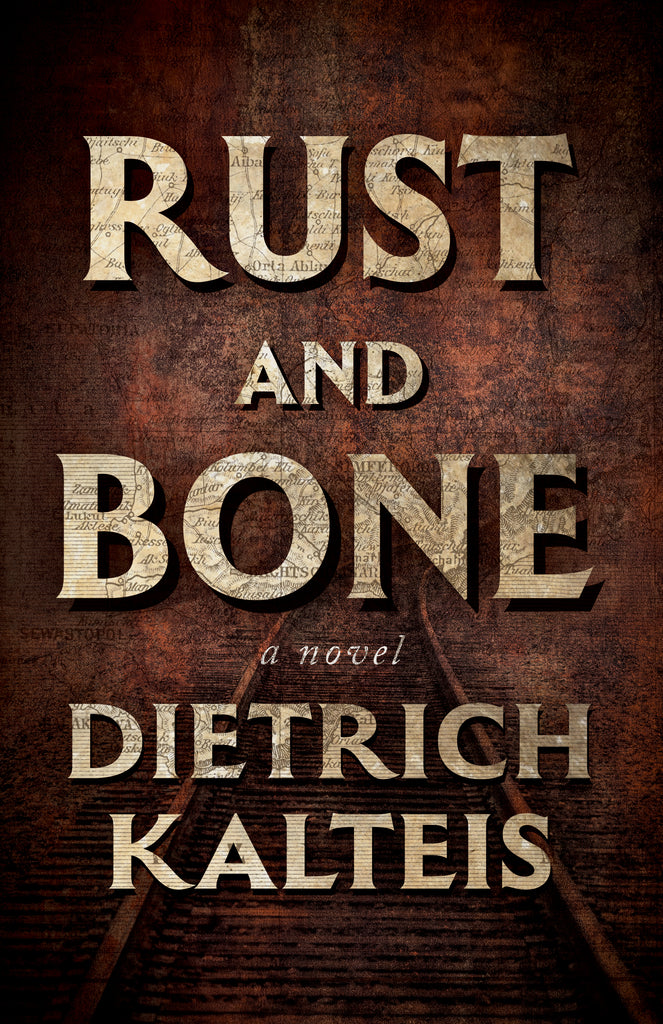
Cover: Rust and Bone: A Novel by Dietrich Kalteis


Part coming-of-age story and part family drama, set against the harsh backdrop of World War II Ukraine and Germany.
In the winter of 1945, a German village deep inside Ukraine burns under Russian assault. Young Jakob Fritsch, torn from his family, is forced onto a cattle car bound for a work camp where death looms. When a Stuka’s bomb derails the train, Jakob escapes the smoking wreckage alongside two untrustworthy survivors. They forge through snow-laden wilderness, hunted by soldiers and partisans.
A tragic turn forces Jakob to go on alone. Starving and freezing, he braves the perilous countryside of Poland en route to Berlin — the only place he can go — which is being torn apart from all sides.
Far away in the shattered outskirts of Berlin, Frida Beckmann lives amid relentless bombing raids and encroaching Soviet forces. With her father in a prison camp and her mother broken by grief, Frida shoulders the weight of her family’s survival. Tested by hardship, betrayal, and loss, she is pushed well beyond her years.
Jakob and Frida navigate their war-torn paths, struggling to survive in a time stripped of mercy — seeking refuge when all the world’s gone mad.


Tuesday, June 23, 2026

Wanna Buy a Book?


Terry here, with our question of the week:

Do you keep track of your sales numbers? If so, how? What tools and process do you use? Would you recommend doing so? 

I wouldn’t have the foggiest notion how to keep track of my sales numbers. Way back when I was a fledgling author, I was interviewed by someone who asked how many books I’d sold. I told him I didn’t know. The next day I called my editor to ask him so I could tell the interviewer. He said, “That’s none of his business. And the only thing you need to know is that you sell enough so we want you to write another one!” 

As I understand it (poorly) even if you track your sales numbers, it’s usually wrong because 1) not all sales are reported 2) it doesn’t include x, y, or z, or 3) the numbers are just wrong. 

What I do know is that my current publisher, Severn House, will only give me a contract for another book if I reach a threshold of a certain number of hardcover books sold. It seems like an incredibly low number, but apparently not. Now, the publisher has been sold to another “umbrella” company and the focus will be different. Something about “number of ebooks sold.” Fine. Whatever. I’m dancing as fast as I can to get the word out about my books. If I also had to keep track of the number of books sold, I’d go crazy. 

One of my former agents, with whom I have a cordial relationship notified me a few years ago that she had been “checking” the sales numbers of all her clients. She discovered that the publisher I was with at the time had failed to report a number of sales and they owed me money. Not an astronomical amount, but enough for a nice dinner out in Los Angeles (which ain’t cheap). I didn’t ask her how she checked. I still wonder how the publisher got away with it. I also wonder if other authors in the publishing house had eagle-eyed agents, so they too found out they were owed money. I have my suspicions. 

I’m a traditionally published author, which may have something to do with my inability to check sales. I know independently published authors who check their sales every, single day. They can tell you how many they’ve sold at any given time. I don’t know what tools or process they use. But I actually roomed with one of them at a conference, and first thing every morning she checked her sales. I was in awe.

For those who do check their sales, either traditionally or independently published, here is what I wonder: 1) Do you trust the sales numbers? Is there any way to make sure the numbers are accurate? If not, what do you do about it? Is there someone you can complain to? 2) If the sales aren’t good, what do you do about it? Do you buy another ad? Hire a publicist? Discuss it with your agent or editor? 

One last thing I wonder: do those who sell millions or copies keep track of their sales numbers? Or do they have “people” for that?

Monday, June 22, 2026

What do I keep track of? by Matthew Greene

Do you keep track of your sales numbers? If so, how? What tools and process do you use? Would you recommend doing so?

This is a tricky one, since the short answer is: "No, I don't." And the longer answer is something along the lines of: "I know I should keep track of this and so many other things, but my irrational fear of numbers is something I really should process with my therapist."

Of course, I'm trying to get better about keeping an eye on the business-related side of things, especially with some exciting career developments in the works. (Watch this space.) One of the rude awakenings I've had about pursuing a creative career is the amount of mental energy I have to devote to the non-creative parts. And clearly, it's something I'm still getting comfortable with.

But, rather than writing a whole blog post about some numbers I don't track, I thought I'd try and identify some numbers that I do track. Are these are significant as sales numbers? Debatable. But they are, in fact, numbers. And they include:

Number of hours spent writing last week: 12 (This was lower than usual this week because I started rehearsals for a play and got consumed, but enough with the excuses!)

Number of words I'm averaging per hour: 700 (Always looking for tips on how to increase that number. Are my fingers not fast enough? Possibly.)

Number of Nerds Gummy Clusters consumed while writing in a typical session: 18

Number of regrets about the aforementioned Nerds Gummy Clusters: 0 (Life is hard enough.)

Number of gay books read during pride month so far: 4.5

Number of projects I'm bouncing between at the moment: 9

Number of projects I should be working on at one time: 3, tops

Number of margaritas it would take for me to agree to taking on another project: 1.5

Number of days I spent this week being grateful I get to spend (most of) my time doing creative things: 7 (awwwww...)


But, all those fun things aside, I fully acknowledge that keeping track of sales numbers is important, and I should be much better about it. (More to talk about in therapy.) I look forward to hearing from the other authors on this topic this week, who are undoubtedly better at this than I am!

Saturday, June 20, 2026

Bad Reviews by Poppy Gee


What advice do you have for new authors on reviews? Do you read reviews? What is the best ever review you’ve received? What’s the worst and most hilarious? Share it with us!

An effective piece of writerly advice is to go online and read the one-star reviews of your favourite authors. It's perversely pleasurable and reassuring to be reminded that even bestselling authors get bad reviews.


Can you guess which bestselling author received this shocker? 


Oh but then it gets so so so much worse. Just a few hours after the wifey leaves, the author introduces a hot young Yankee law student, who is rich and smart. Despite her being over qualified for the job she begs Jake to let her "carry his briefcase" and work as his free law clerk. This bra-less (yes they mention that she is bra-less at least 5 times in the book) scantly clad liberal lady throws herself at Jake again and again. Of course he dutifully denies her. Why is this character introduced? To feed the male fantasy of course. What's hotter than lording over a smart strong woman who happily follows your every bidding and drools over your amazingness...


Oh, dear. Poor John Grisham. As a fan of his work, I don’t agree with this take at all. In this next review, the reader describes all the things they hated, which are the things I like about Patricia Highsmith:


This novel moves at a dismally slow pace. The reader has to wade through more than 100 pages before any real hint of a plot appears. The story line is weak and drawn out with repeative descriptions of topography and bland dialog. I only finished it because I paid handsomely for it.


Another reader admitted: 


At one point, I actually chose to scrub my bathtub instead of sitting down to finish the book...


Ouch. Poor Patricia Highsmith.


It’s a good idea to avoid looking at reviews for a few weeks or months after your book first comes out. Unless you’re a professional actor, it’s hard to do publicity or events after reading a sharply worded account of the disappointment and dismay you’ve wreaked on an innocent reader.


But after the excitement and anxiety of launch fades, it can be productive to read your reviews. Do this analytically. See if there are some common reactions. For me, many readers were frustrated by my ambiguous ending in BAY OF FIRES. That’s something I won’t repeat, or at least, I’ll work harder to make sure my next endings are stronger.


My worse reviews are etched into my aching heart:


God Awful


That was it. I felt terrible for that poor reader. And then this one:


The ending was so bad I wanted to throw the book against the wall when I finished, but it was an iPad so I couldn’t.


Ouch. Poor me!


The best one I ever got was in a newspaper where the reviewer likened my writing to Annie Proulx. That was lovely to read.


Reviews are for readers. Try not to worry too much. 


If you’re feeling disheartened by a particularly vicious one star, pour a nice cold drink and head to your favourite author’s Goodreads page. It works a dream!

Thursday, June 18, 2026

One Star, Shining in the Darkness, by Catriona

What advice do you have for new authors on reviews? Do you read reviews? What is the best ever review you’ve received? What’s the worst and most hilarious? Share it with us!


I read trade reviews when I'm lucky enough to get them - the Wall Street Journal said "Hitchcock-like suspense" about The Dead Room and all of a sudden I know what my first tattoo would be. 

And I read Amazon reader reviews too - but with one proviso: I read them about books I'm maybe going to buy and read. That's what they're for. I don't read Amazon reviews of my books; they're not for me. 

So my advice to new authors would be - don't read your Amazon reviews. Don't read the five-star ones and don't read the one-star ones. They're not for you! It's impossible not to see how many reviews you've got and what the overall star-rating is but you don't need to click through.

I'm a hard-core non-clicker - I don't click on anything online that I didn't specifically search for - so it's easy. Hang on, sometimes I click on things that friends send me. At the moment that's mostly videos of very refreshed Scots being jolly in Boston.  

My favourite review was probably the first one I ever got. Stuart Kelly writing in the Scotsman called me "an exemplary crime-writer". You could have fanned me flat with an eyelash. And I was already so cool and professional that I immediately wrote to him to say thank you. Shudder. He was kind enough not to say anythimg about that when I met him at a festival soon after. 

My funniest review was from another UK newspaper - I genuinely can't remember which one - that accused me of not writing tartan noir. Um, guilty as charged, m'lud. It's not actually obligatory to write disaffected cops in seedy settings because you're a Celt. Right? It was such a bizarre complaint. 

I do love a good stupid review, mind you - almost as much as I love a good non-apology - and the one-star reader reviews of inarguably five-star books are a rich seam. I'll never forget the review of Pride and Prejudice that called it "an older and more boring Bridget Jones". Oh burn. Or the review of Catch-22 that said "It's like Mark Twain's Huck Finn, just an endless barrage of needless prose, instead of focusing on plot and character development by showing not telling". Oy-oy, I thought, someone's taken a class and reckons Twain and Heller would have got a lot out of it too. Brilliant.

Cx

Tuesday, June 16, 2026

Do You Trust the Source?


What advice do you have for new authors on reviews? Do you read reviews? What is the best ever review you’ve received? What’s the worst and most hilarious? Share it with us!


My advice to authors about reviews is simple: DON’T.


The easy answer, which is not a cop-out, is to say that the writer you are today is not the writer you will be tomorrow. If you are serious about writing, let your skills unfold naturally. Listen to yourself first. Trust yourself. If you have an editor, that should be enough. A good editor will show you the gaps and force you to think about your skills and structure. Agree or disagree, the friction should force you to question your intentions and capabilities.


Reviews are different, though they are supposed to be unbiased.


Think of reviews as drinking water. You go to the sink, run the tap, and fill a glass. Water should be clear and tasteless. It’s a public commodity from a trusted source. Most people never think about where it came from, who tested it, or whether the pipes between the reservoir and the faucet did their job.


Sites such as Amazon and Goodreads are public, a democratization of opinion.


The Good is that readers no longer have to depend on the arbiters of culture, those newspaper critics who decided what deserved attention.


The Bad is, to paraphrase Thomas Jefferson on democracy, the review you get is the review you deserve.


The Ugly is trolls and the complete absence of standards. Nobody agrees on what those stars mean. There are no half-stars. Is it a B+ book awarded a B because of the editing? A four star book merits three or two stars because a stray wet gremlin ruined the formatting? Then there are paid reviews, and the occasional author who uses an alias to knock down another writer.


The Absurd are the nonsense reviews we’ve all read: “Three stars. Book arrived damaged” or my favorite, “Five stars. DNF.”


An algorithm replaces word of mouth, which is how books are found now. The reality is that the marketplace is vast and the field uneven. Publishers publish what they think will pay their rent. Bookstores stock what they think will sell or what they can return to a warehouse. Marketing budgets matter. Money matters, while authors just want to be read.


Most of my reviews have been glowing, but the funniest one came after I had the book (now out of print) reissued. Context: the book had profanity in it, and I tend to use profanity as a pressure release, so it’s never gratuitous. Before I reissued it, I systematically un-F’d my manuscript.


Lo and behold, a generally positive review appeared, except for one criticism: the author resorted to profanity.


Confused, I did a word search for all the usual suspects. The offending epithet?


A single use of the word damn.


It would be nice if readers gathered and discussed my novel while they enjoyed an aperitif. That’s how art survives. That’s how word of mouth works.


The paradox is that writers know all of this and yet we seek validation from reviews. We’ve all done it. We’re human. Like all humans, we need water to survive. Just remember that not every glass is clean. Look at the water, smell it first, and then decide whether you really want to drink it.


Trust the source because it might just kill you (or so says Adrian Monk).

Monday, June 15, 2026

To Read or Not to Read...


What advice do you have for new authors on reviews?

The most consistent advice I’ve received as a newer author is, don’t read the reviews. I didn’t get that advice, at first, but time has taught me the error of my ways, as it does. I won’t say that I am 100% cured of my affection for a great review, especially if it says something like, I read this book in one setting because I couldn’t put it down. For me that is that review is the chef’s kiss of reviews. But it is no longer an obsession. When my book first released, I sat huddling over my phone refreshing it every few seconds watching and reading every review as it rolled in, trying not to care too much, while feeling like my whole life depended on those words. With every good review, my pride soared through the roof. I had never been so happy and confident, sure that those words written by some stranger, proved that I was to be a writer.

So, what’s so bad about that? Nothing. Not really. But what about when the review says, and it will, eventually, because there’s no pleasing everyone, and trolls, “this book was the worst book I ever read.” What happens to all that pride then? It’s a strange, but very human trait, our ability to believe the worst far easier than the good. I’m sure that’s not true for all, but it’s true for a lot of writers I’ve met. Maybe it’s because of what the great Erykah Badu said, “I’m an artist and I’m sensitive about my shit.” But a bad review will stick in your craw like a popcorn husk stuck in your back tooth. You’ll still be trying to understand exactly what they meant, long after the buzz from all those previous five-star reviews are long gone. So, you have to ask yourself, is it worth it?

Being a writer was not only hard to do; it was hard to even dream about. There weren’t a lot of successful writers in my neighborhood. In fact, becoming an actual writer with books in a bookstore or a library seemed as big a dream as being Michael Jackson, fantastical and unrealistic. So, achieving that dream deserves to be acknowledged by applause, a pat on the back, or a review.

But maybe, like everything else, in moderation. I don’t think it’s anything wrong with celebrating your own success. I admit that I have snuck a peak or two at some of my reviews, the good ones and the stinkers. The good ones for an ego boost. But sometimes the bad ones can provide some insight, especially if the bad ones start to reveal a trend. It’s not nice, but if everyone mentions, the same issue, I’d probably take note. I once got a one-star review that simply said, “not my type of book.” Best one-star review ever.

So read them, or not. Use the good ones as a pick me up, the bad ones for whatever they can teach you, if anything. As long as you don’t try to write to the opinion of others and remember reviews are simply opinions. And as we all know, opinions are like…I think you know the rest.