Thursday, August 22, 2019

It is a truth universally acknowledged ...

By Catriona

"Readers often read the opening few lines or page to a book before deciding to buy. What makes an opening sentence stand out above the rest? Give examples of openings, including your own, that you believe work brilliantly. Any tips or lessons learned for new authors about what to avoid on that first page?"

Funnily enough, it was today I got an email from the organisers of Desert Sleuths' Write Now! with the rules, deadlines and - most importantly - the 47 entries in this year's first line competition, which I'm co-judging. (I haven't looked at any of them before writing this blog.)

Also today, I paid a visit to the brand-new Portobello Bookshop, and overheard one of organisers of the Portobello Book Festival discussing, with one of the booksellers, a plan to have a composer write a piece of music inspired by ten first lines. I can't quite imagine it but I'm looking forward to hearing it.

So "What makes a great first line?" is a question I'm going to be asking myself a lot int he next wee while. 

So what makes a great line?

One of my lifelong favourites is from Dodie Smith's I Capture The Castle. 


"I write this sitting in the kitchen sink." 

This is so beloved a first line that, when the narrator in the film adaptation said it, the entire audience (me included) breathed out and settled back ready to enjoy the screening.

What makes it good? It's straightforward and it's got a frankness to it, but it raises a question. Why are you sitting in a sink? You read the second sentence hoping you will find out. And you do find out. So straight away you know this is a narrator you can trust. But while that second sentence answers one question, it raises another. So you read the third ...

Some people might have trouble with the way the narrator admits that this is a story being written. I don't. It's the mildest of mild metafiction, and besides, Cassie really is writing - she keeps a diary. 

Italo Calvino's If on a Winter's Night A Traveler, on the other hand, begins: "You are about to begin reading Italo Calvino's new novel, If On A Winter's Night A Traveler." And I always wonder how often that one sentence makes itself untrue. But then I'm a noted Philistine. 

I don't think you need to be overly clever to make a reader keep going. Sometimes, all that's needed is to start as if in the middle. A great example of this is Barbara Comyns' A Vet's Daughter (horrible title, but that's a different blog), which opens on the line: "A man with small eyes and a ginger moustache came and spoke to me while I was thinking of something else." We never see the man again or find out what it was the narrator was thinking of, but it doesn't matter; we're plopped right into her life there and then.

But then some wonderful first lines do the exact opposite, taking a wide view of the terrain, setting out the stall for the novel. "I was born twice: first as a baby girl, on a remarkably smogless Detroit day in January of 1960; and then again, as a teenage boy in an emergency room near Petsokey, Michigan in August of 1974." is how Jeffrey Eugenides kicks off 800 brilliant pages of Middlesex. It's got something of Dickens about it, and it takes a lot of confidence to jam in two dates and three place names, but what a promisory note. To show us a newborn baby and tell us she's going to have to deal with something, usually counselled and prepared for, in an emergency room? If you don't want to make sure that baby is okay, your heart's not working.   

But then some wonderful first lines, in complete contrast, creep up and whisper in a reader's ear. Alice Walker's "You better not never tell nobody but God." in The Color Purple is among the best of these, in my opinion. In fact, I think it's among the best first lines of any: high stakes hinted at, a strong voice addressing you directly, an irresistible pull into the heart of a life . . . if anyone can come up with a better first line than that, then slap my thigh and call me Ishmael. 


Snagged at the Porty Bookshop yesterday. (Plus evidence of rare Scottish sunshine).


Wednesday, August 21, 2019

...and start all over again (some Big News today!) by Cathy Ace

Two jobs for me today - answer the "set question" and tell you about a bit of news...

So, news first: over the summer I've negotiated the reacquisition of all the rights to my Cait Morgan Mysteries (except English language print, which remains with the original publisher). This means I can now relaunch the digital versions of all eight novels. The first Cait Morgan Mystery was published in 2012 - that's seven years ago (where does the time go?) and the eighth came out in 2016. The books have, necessarily, been given a great deal less attention than new publications by the publisher, and I felt I could give them the attention they deserve. So - to "relaunch" the books - I am offering the first in the series, THE CORPSE WITH THE SILVER TONGUE - at a flash-sale price of $2.99 USD (or your local currency equivalent) on amazon, Kobo and Nook digital platforms. If you haven't "met" Cait Morgan yet, this might be the best time to do it...here's a handy-dandy link to allow you to access, sample and buy the book, should you feel so inclined. Thank you! (Link: click here.)

Now that the Blatant Self Promotion is done, here comes the real stuff...

Craft: Readers often read the opening few lines or page to a book before deciding to buy. What makes an opening sentence stand out above the rest? Give examples of openings, including your own, that you believe work brilliantly. Any tips or lessons learned for new authors about what to avoid on that first page?


I LOVE bookstores...and did even before they sold my books!
I’ve been a reader for a lot longer than I’ve been an author, and I certainly read the opening of a book to work out if it’s going to engage me. So, yes, I expect potential readers of my work to do the same…and it terrifies me! I am keenly aware of how critically important it is that the opening few pages of a book allow the reader to “sample” the book they are making a decision about, so the opening has to be not only engaging but also true to the rest of the book, because if they buy (and buy into) the book in its first few pages then the style/tone cannot really change after that because they will be (rightly) annoyed…no one wants to have a bait and switch scam run on them. That being said, I am a reader who likes to sample a couple of chapters rather than a couple of paragraphs; I find that amazon’s “Look Inside” feature is just about perfect, and I cannot recall buying a book I haven’t “Looked Inside” before purchase/borrow from the library (even if I order a print copy through my local bookstore, though it's much more common for me to now read on my Kindle).

In terms of crime fiction, Martina Cole’s debut novel Dangerous Lady drew me in with its opening chapter which is a heart-rending, no-holds-barred description of the start of a new life within a poor family in 1950 (OK, I’ll admit this might have something to do with the birth of the eponymous character taking place exactly 10 years before my own!) link here:  https://amzn.to/2KMHsR5 Openings have a LOT of work to do! 


Using my own work as an example, I’ll share with you the opening chapters of my debut novel, The Corpse with the Silver Tongue. I realize it’s not really for me to say, but I do think they capture the essence of the character of Cait Morgan, as well as providing a total, and pretty-quick-out-of-the-gate, traditional murder mystery set-up: here’s a link, but the first two paras are below. https://amzn.to/2Kvw2CC

This book's just $2.99 USD right now....HINT, HINT!!
The chatter among the dinner guests was bubbling along nicely, when Alistair Townsend suddenly clutched at his chest, made gurgling sounds and slumped into his bowl of escargots. Reactions around the table varied: his wife told him to stop messing about, one of his guests looked surprised, one a little concerned, and a couple were quite cross. All of which led me to suspect that “How to react when one’s host drops dead at the dinner table” is not tackled in any modern etiquette books.
    I was the only one who leapt up, rushed to Alistair’s side, and shouted that someone should call an ambulance. Silly of me, really. Any fool could have seen he was dead before his face hit the garlic butter. I felt I had to do something, because everyone else was glued to their seats, agreeing with Tamsin Townsend that her husband was putting on some sort of attention-seeking show for us all.

I must emphasize that it's NOT just an opening sentence that grabs me. I need more than that, but that doesn't stop me from working “extra hard” on the opening of a book (there’s no such thing really…writing every sentence of every book is hard!). Then I rewrite it more than any other part of the book. I think I’m right when I say it’s always been the most-rewritten and the last-to-be-finalized part of every book I’ve written. Most recently I reworked the opening to my latest novel of psychological suspense, The Wrong Boy, many, many times. Here are some of the versions of the opening paragraphs I worked through – from what went out to early-blurbers to what finally appeared:

Version #10?) End-August (ARC)

John Watkins pulled back the heavy bedroom curtain, and scraped a hole in the frost on the inside of the glass with his thumbnail. ‘Somebody’s lit a fire over on the hill above the village.’

His wife tutted her annoyance at him letting in the cold, but didn’t bother to say anything – there was no point. ‘All the way up there? Surely not.’

‘They have. Come and take a look.’ Brass rings clattered as John dragged the worn brocade aside to expose more frozen panes.

Dilys gripped her steaming mug of tea as she shuffled across the room to peer out. The moon hung in the coal black sky, its light glistening on the sea. She turned her gaze to the hillside, which rolled to meet the beach below. ‘They’re up by the old RAF listening station, by the looks of it.’

V15?) End-October (CORRECTED PROOF)

John Watkins hooked open the gap in the bedroom curtains and wiped away the frost feathering the inside of the glass. ‘I thought that’s what I could see. Somebody’s lit a fire on the hill above the village.’

His wife tutted her annoyance at him letting in the cold. ‘All the way up there? Surely not.’

‘They have. Come and take a look.’ Brass rings clattered as he dragged the worn brocade aside. He breathed hard on a couple of panes to clear them.

Dilys gripped her steaming mug of tea as she shuffled across the room. The moon hung in the coal black sky, its light glistening on the sea. She peered up at the hillside, which rolled to meet the inky beach below. ‘They’re up by the old RAF listening station, by the looks of it.’

V18?) Mid-November (‘PROBABLY’ FINAL)

John Watkins hooked open the gap in the bedroom curtains, and wiped the inside of the frost-feathered glass with his pajama sleeve. ‘I thought that’s what I could see. Somebody’s lit a fire on the hill above the village.’

His wife tutted her annoyance at him letting in the cold. ‘All the way up there? No.’

‘Yes. Come and take a look.’ Brass rings clattered as he pulled at the worn brocade. He breathed hard on a couple of panes to clear them.

Dilys gripped her steaming mug of tea with both hands as she shuffled across the room. The moon hung in the coal black sky, and glistened on the coal black sea. Her eyes shifted from the sparkling surf to the inky hillside above. ‘That’s up by the old RAF listening station, by the looks of it.’

V20?) Definite FINAL FINAL!

John Watkins hooked open the bedroom curtains and wiped the frost-feathered window with his pajama sleeve. ‘I thought that’s what I could see. Somebody’s lit a fire on the hill above the village.’

His wife tutted her annoyance at him letting in the cold. ‘All the way up there? No.’

‘Yes. Come and take a look.’ Brass rings clattered as he pulled at the worn brocade. He breathed hard on a couple of panes to clear them.

Dilys gripped her steaming mug of tea with both hands as she shuffled across the room. The moon hung in the coal black sky, and glistened on the coal black sea. Her eyes shifted from the sparkling surf to the inky hillside above. ‘That’s up by the old RAF listening station, by the looks of it.’

AS you can see, getting the opening “right” is a painful, and slow process – for me, in any case. If you’d like to read more, here’s a link: https://amzn.to/33vii25

Other authors have also captured me with a few pages and have then delighted me through multiple volumes. I could give you a long list of them, but I think that’s missing the point – which is that an author either speaks to the reader in question, or they don’t; they and the reader are in tune with each other, or they aren’t. Yes, an author might write a book or two that doesn’t “click” for even a dedicated fan, but we forgive them that, because they “come back to us” with another title.

Thus, to sum it up, I think what I’m referring to here is what reviewers call “voice”; the “voice” of the author is what we react to – positively or negatively – within the reading of a chapter or so. We know by then whether we’re going to be happy to listen to that voice telling us its tales. I have tried reading books that have sold in their millions, or won many awards,  to find I’m not drawn in at all, while I have fallen for voices that have reached far too few readers and have received too few plaudits. It’s absolutely a matter of personal taste. So I won’t say “try this list” or “don’t bother with these” because it will be very much a hit and miss affair. Instead, I’ll urge you to use the technique of reading a couple of chapters of the work of authors whose work you don’t know, hoping you’ll find a voice that reaches you in a way that makes you want to listen.

Finding a new author whose work you enjoy is the happiest discovery I can imagine – please venture forth to a local library, bookstore…or even the “Look Inside” feature on amazon…and have at it! Happy dipping in!

If you'd like to find out more about Cathy's work, you can click here. 


Tuesday, August 20, 2019

First Lines Matter

Readers often read the opening few lines or page to a book before deciding to buy. What makes an opening sentence stand out above the rest? Give examples of openings, including your own, that you believe work brilliantly. Any tips or lessons learned for new authors about what to avoid on that first page?  

From Frank

This is a great question, and near and dear to my heart. I think first lines matter a lot, whether in a story or a novel. In fact, the only line that matters as much as the first line is the final line.

I did a whole series last fall about first lines on my personal blog, All The Madness in My Soul, beginning with my first novel. I shared the first line, gave a few thoughts on it, graded it, and then shared some background info on that particular book. The series continues forward through all of my novels and a few novellas, ending just this past May with In the Cut, a book scheduled for a January 2020 release. It was a fun exercise, if you want to get into the weeds a bit.


But keeping it a little more at the twenty-thousand foot level, what makes an opener stand out? It can be a number of things. The line can be different, it can be mysterious, it can hold promise. But the biggest thing is that it captures your attention, and makes you want to read more. The best openers do that. They're like the hook of a great song.


Examples?


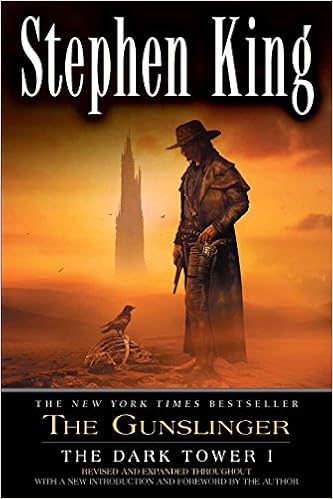
Stephen King's Gunslinger series opens with: 

Image result for the gunslinger
The Man in Black fled across the desert, and the Gunslinger followed.  

Seriously, how do you not want to read more after that? In one sentence, there are at least four compelling questions. Who is the Man in Black? Why is he fleeing? Who is the Gunslinger? Why is he following the Man in Black? Add to that the desert setting, which certainly sets an particular tone.


Or how about Kurt Vonnegut's Slaughterhouse Five? 


All this happened, more or less. 


Perfect lead in. Some mystery, a little off-kilter.  Isn't that Vonnegut? Don't you want to learn more? Of course you do. But you're also wondering if you're up to deciphering what you learn. That's some magic, all in one sentence.


Same thing with Ray Bradbury's Farenheit-451.


It was a pleasure to burn.


What can I say? If you stop after that opener, I don't know what to tell you. I guess you're wired differently than most.


How about some crime fiction?  Here's a couple of my favorites:


Winter came in like an antichrist with a bomb.

Ed McBain, The Pusher

Like an antichrist with a bomb. Talk about throwing some power words into a simile.

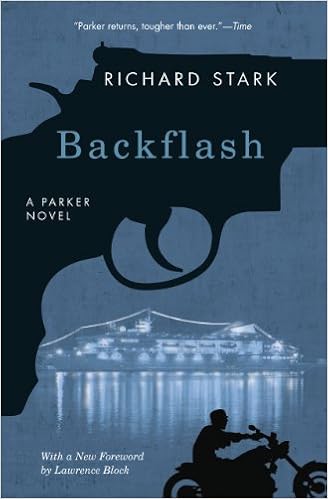
Image result for richard stark backflashWhen the car stopped rolling, Parker kicked out the windshield and crawled through onto the wrinkled hood, Glock first.
Richard Stark, Backflash

Can you envision that scene? This is such a powerful en medias res beginning. It doesn't just capture your attention - it kidnaps it at gunpoint.


And because Stark was so good at it, here's another...

When the phone rang, Parker was in the garage, killing a man.

Richard Stark, Firebreak

Less direct action, but just as interesting. You immediately know something about Parker and how dangerous he is. And I maybe wrong since it has been a while since I read this one, but I'll drop and give you twenty if the opener doesn't continue with Parker answering the phone and leaving us wondering about the intended victim in the garage for a little bit. Great tension.


There are more. Both Dennis Lehane and Lawrence Block write a good opening line, and so did John D. MacDonald. And Elmore Leonard. I could point to a slew of my colleagues who nail their openers, too.  


Even though I know I can't compare to any of those masters, but here are a few of what I think are some of my best opening lines....
Coming Jan 2020

Rolling up on trouble shouldn’t feel so cold.
 - In the Cut

This book takes place against the backdrop of an outlaw motorcycle gang.


***

There’s always some cop who thinks he can beat the system. It’s my job to stop them.
- Good Shepherd

Not really an anti-hero, but certainly despised by most readers of my River City series, Lieutenant Alan Hart of Internal Affairs is the narrator of this novella.

***

- At Their Own Game

Former cop turned criminal Jake Stankovic narrates this book.

***
- Blood on Blood 

This comes from Gar Sawyer, the father of the two protagonists in this book I wrote with Jim Wilsky. It's his only POV chapter, but it sets the tone for the whole book, the rest of which is a dual first person narrative with alternating chapters between his sons, Mick and Jerzy.

***

-Heroes Often Fail

My second River City novel opens with a chapter told from a child's point of view...

***

And since it remains one of my favorite books (especially the final line), I'll include Waist Deep here, too: 


This is the first in a spin-off of my River City series starring Stefan Kopriva, who made a terrible mistake and is living with the guilt from it.

So, did I grab you at all?


**************************************

If I did, I hope you'll check out more of my work on my website, including my current release, Charlie-316. I didn't include the first line of this one, since my co-author, Colin Conway, wrote it.


Monday, August 19, 2019

Grabbing the reader

Q:  Readers often read the opening few lines or page to a book before deciding to buy. What makes an opening sentence stand out above the rest? Give examples of openings, including your own, that you believe work brilliantly. Any tips or lessons learned for new authors about what to avoid on that first page?  

-from Susan

Multiple award-winning crime fiction wrier Rhys Bowen gave me the most important bit of advice about that opening page. She had just read my first 20 pages and smiled her lovely smile and said in her charming British accent, “Well, it’s all lovely, but your story actually begins on page 19.”

I had stuffed the first part of what became my debut novel with such interesting material. Alas, it was interesting only to me. Back story, detailed setting descriptions, exposition on the protagonist’s reasons for being there, smart little observations about the museum world. Charming but going nowhere.

A jangling cell phone and a barked order to get downstairs fast because “All hell’s breaking loose” moved from page 19 to page two, with just enough first person narrative ahead of it to set some context and give readers a taste of Dani’s attitude toward life and work. The information that a body has fallen from the museum’s high windows is on page four. 

It’s not that what I had included wasn’t important to know, Rhys said, just that none of it needed to be pushed at the reader before something happens, before the reader cares. And, indeed, everything that turned out to be important was tucked in here and there throughout the book. In fact, because I wanted the reader to understand her fraught relationship with her ex-husband, I allowed him to enter as a character, not an element of her back story, and he bloomed into an indispensible part of her current life, much to my surprise. Had I not listened to Rhys, he would have remained a cardboard cutout somewhere in the past.

The books I like best draw me into the setting and create enough of a character sketch that I can relate to the protagonist on some level right away. I believe strongly in Rachel Howzell Hall’s LA homicide detective Lou Norton. Everything she does makes perfect sense because of the way Hall pulls me into Norton’s life. Here’s how SKIES OF ASH begins:

I took Greg back the first time because he said he loved me.

I took Greg back the second time because my heart still ring-a-dinged every time he touched me. 

I took Greg back the third time because my sister’s bones had been discovered after twenty-five years and my heart and my head had become tangled messes and I needed him to fix me. 


Boom! We hear her voice, we get a sense of her needs and vulnerabilities, and then Hall hits us with the mystery.

I am not someone who believes you need a body on the first page, or even the tenth. What you need within a page or two is intimations of a conflict, a problem, a peculiarity, something that makes you curious. You want to get a whiff of something not as it should be, presented in the context of a character you can, on some level, identify with.

That’s a start, anyway. I know my Minds colleagues will have much more to add.


Friday, August 16, 2019

Read All About It!

By Abir

Out of all the books available to read and limited time, what influences your choices? What books have you read this summer and which would you rate as your top recommendation?


This year, I’ve been fortunate in that I’ve been asked to be a judge for a couple of literary prizes: The McKitterick Prize, awarded by the UK Society of Authors for the best debut novel by a writer over the age of forty (the winner gets £3,000); and the Wilbur Smith Award for best adventure novel (which comes with a big money cash prize of £15,000). It means that for most of the time from January through to the end of July, I was wading through a stack of books taller than me, many of which were great. 


Nevertheless, there are certain authors, such as Val McDermid, Ian Rankin, Martin Cruz Smith, Denise Mina and Robert Harris, for whose latest release I’ll drop everything to read, and the judging was put on hold so that I could devour Denise Mina’s new book, Conviction.

Mina is, in my opinion, one of the finest writers in the UK. Her last book, The Long Drop won a whole host of awards and is one of the my favourite books of the last few years, so I was thrilled to receive a preview copy of this, her latest novel.

Conviction revolves around a woman who is obsessed by true-crime podcasts and decides, one day, to investigate one of the unsolved crimes herself. While The Long Drop was based on a real-life crime from the 1950s, Conviction is a bang up-to-date thriller taking us from the Highlands of Scotland, via the coast of France, to Venice and Paris. As usual, Mina's writing is an absolute joy and her insight and commentary into human nature, second to none. For me, The Long Drop still shades it, but this is still a fantastic book.


Earlier in the spring, there was a similar hiatus for Metropolis, the final Bernie Gunther novel from the late, great Philip Kerr. Kerr was one of the authors I most admired, and I consider Bernie Gunther to be one of the finest creations in detective fiction. It was a terrible day for fans of his work when he passed away from cancer last year, yet that blow was tempered by the knowledge that Mr Kerr had left us one final gem to look forward to. Metropolis is a wonderful finale to the series, and sees Bernie, not at the end of his career, but at the beginning: as he becomes a detective in the Murder Commission section of the Berlin police force in 1928. For fans of Philip Kerr, this book will be bitter-sweet. A fine addition to the canon of Bernie Gunther, but the last we'll ever get.

I doubt there’s an author who has influenced my writing more than Kerr, and it was therefore an honour to be asked by The Sunday Times of London to take part in a podcast, alongside Kerr’s wife the author, Jane Thyne, to celebrate Kerr’s life and work and the launch of Metropolis.


 The reading for the prizes also uncovered some jewels, opening my eyes to the sort of novels  such as Swan Song by Kelleigh Greenberg-Jephcott: a wonderful recreation of Truman Capote and his social circle; or Meet Me at the Museum, by Anne Youngson: a beautifully written and heart-warming tale of a burgeoning friendship between an elderly woman in England and a museum curator in Denmark. I didn’t expect to like this book, but in the end, I loved it.


 From the Wilbur Smith Award side, I can’t tell you my favourite as the winner is yet to be chosen, but I can tell you that the shortlist is fantastic. I believe that the best fiction can educate while entertaining us, and the Wilbur Smith shortlist is testament to this. Three of the books, Firefly by Henry Porter, The Map of Salt and Stars by Jennifer Joukhadar, and To the Lions by Holly Watt, all deal with urgent and tragic plight of refugees from the Middle East and North Africa, seeking sanctuary in Europe. Each book tackled the subject in a different way, and each brought home the terrible suffering of these unfortunate souls and our own shameful indifference to their circumstances.


Now though, it is August, and I'm finally able to read whatever I want to. So what do I choose? My tastes are eclectic. Of course I obviously read a lot of crime, thrillers and mystery novels, especially those set in a place or period setting which interests me, or which I'd like to learn more about. 


One such example is the Harry Virdee series by AA Hand, set in the north English city of Bradford, once one of the richest cities in the world, now, if Dhand is to be believed, a hollowed out, post-industrial town riven by drugs, violence and ethnic tensions. DCI Virdee is a Sikh of Indian origin, who is fiercely proud of his British identity but caught between love  for his muslim wife and his family who have ostracised both her and him. The books are pacy and gritty and packed full of tension, but also shed light on what it means to be a British-Asian in this day and age. 

His latest novel, One Way Out, is a ticking time bomb of a novel, with a bomb planted in one of Bradford's hundred and fifty mosques, with Harry having only 24 hours to find it and save his family and his city.


I'll also read quite a bit of non-fiction, especially history, and certain biographies. I also like to read modern classics, the most recent of which was London Fields, by Martin Amis.


London Fields is Amis's murder story with a difference. Set in London in 1999 during some unspecified world crisis, the novel deals with the efforts of a young woman, Nicola Six, to orchestrate her own murder. Nicola is a "black hole" of sex and self-loathing intent on orchestrating her own extinction. All that’s in doubt is the identity of the killer: will it be yobbish Keith Talent, petty criminal, 'cheat' and darts fanatic, or Guy Clinch, rich, good-looking and hopelessly ineffectual? 

It’s narrated by fictional American author, Samson Young, who himself is dying of cancer, and indeed, death, universal death – of the protagonist, the narrator, the millennium and even the planet – is the underlying theme. The opening scenes establish the scenario (she knows where and when but not who); the rest of the book plots the trajectory of Nicola's - and the century's - journey towards annihilation.

It’s a special book, in parts brilliant, in others frustrating but mainly, it keeps you off balance. The main characters are almost all dislikeable and you never know who to root for. What's more, the writing is sublime. No matter what you end up think of the book, you won’t forget it in a hurry.


You might think that my reading is very British-centric, full of British authors writing with British sensibilities, but one of the authors who've really wowed me be recently is an American, Steph Cha. 

Cha is of Korean descent and her books are infused with the sort of insights into US life that most Americans take for granted, but which are poignant to those who are the children of recent immigrants. 

Her latest novel, Your House Will Pay looks at the real life LA riots of the late 1980s and their impacts on two families almost thirty years later. If you haven't read Cha's books, now's the time to start.


My final recommendation

And now the one you've all been waiting for, my top recommendation. I have read some excellent books this year, but if there's one that deserves special mention, it's This Green & Pleasant Land by Ayisha Malik. 


Malik is a hijab-wearing British muslim woman, and one of the most witty and intelligent authors writing in the UK today. Her first novel, Sofia Khan is Not Obliged, was described as the muslim Bridgette Jones, and was hilarious.

In her latest novel, Malik turns her attention to the question of identity, what it means to be British, and who has the right to call themselves British. This Green and Pleasant Land tells the tale of mild mannered Bilal, family man and accountant, and his wife, Mariam.  For years they have lived contented, quiet lives in the sleepy rural village of Babbel's End. Then everything changes. On her deathbed, Bilal's mother reaches for his hand. Instead of whispering her final prayers, she gives him a task: build a mosque in his country village. Of course many of the locals are outraged. What unfolds is a tale of differences and acceptance, told with real love and a dry, sly turn of phrase.

I must admit, I didn't think I would like this book. My parents were Hindus from India, with a vivid recollection of the Hindu-Muslim violence that went hand in hand with partition of the Indian subcontinent. My father always viewed muslims en masse with a certain suspicion (which was odd, because on an individual basis he had some really close muslim friends), and while I consider myself more enlightened than my old man, I confess, the idea of a mosque in an English village unsettled me. Nevertheless, the book is a wonderful testament to tolerance and too Britishness. It's a book that helps bring people together - to show that we are not all that different - and that to me is a most worthwhile endeavour.


Thursday, August 15, 2019

Read Any Good Books Lately?

Out of all the books available to read and limited time, what influences your choices? What books have you read this summer and which would you rate as your top recommendation?

For me, this summer has been a whirlwind (read torture) of final edits on TURN TO STONE, my seventh Ellie Stone mystery, which comes out January 21, 2020. I’ve completed eight full revisions in addition to the edits done by my publisher. And still I find maddening little errors. 

If not for the palate-cleansing respite I found in reading several books this past spring and summer, I might have choked on my own self-loathing, or at least the loathing of my book. Because, make no mistake, after combing through 110,000 of your now least-favorite words eight times in the space of three months, you want to leave an angry one-star review for your own magnum opus on Goodreads.


So, I’m grateful to the authors—and their books—who made this period bearable. I was honored to provide the following blurbs for these novels, all of which I enjoyed greatly.


Charlie-316 by fellow Criminal Minder, Frank Zafiro and his co-author, Colin Conway.


Conway and Zafiro deliver an engrossing socio-political drama that packs plenty of action and intrigue, while asking the difficult questions. Corruption, conspiracy, and compromise frame the downfall of a perfect cop. And Wardell Clint is the most nuanced, fascinating detective I’ve read in a very long time.
This one tackles tough issues and will leave no reader indifferent. Compelling.


Careful What You Wish For, Hallie Ephron


A masterclass in airtight plotting, obsessive characters, and sleight-of-hand twists and turns. CAREFUL WHAT YOU WISH FOR is a maddeningly compelling tale of shady schemes and ambushed trust. Ephron’s is a master storyteller at the top of her game. CAREFUL WHAT YOU WISH FOR is a hold-your-breath winner. 


The Pearl Dagger, L. A. Chandlar


An action-packed romp through 1930s New York’s dance clubs, hotels, and halls of power. Lane Sanders is a heroine with charm, brains, and guts. Working on special assignment for her boss, Mayor Fiorello LaGuardia, she pursues a criminal syndicate with long-buried ties to her own late parents.

Chandlar’s research is impressive, from lovingly detailed architectural descriptions to transatlantic crossings and swank 1930s New York nightlife. But it’s Lane herself, the engaging star of this series, who will delight readers most.


Judge Thee Not, Edith Maxwell

Rose Carroll lives in a world on the cusp of modernity, where horse-drawn carriages are giving way to bicycles and electric trams, and social change is on the march. Edith Maxwell’s latest Quaker midwife mystery teems with authentic period detail that fascinates as it transports the reader back to a not-so-simple time. A complex, subtle, and finely told tale, JUDGE THEE NOT’s sensitive portraits and vivid descriptions, along with Rose Carroll’s humanity, intelligence, and—yes—snooping, make this a sparkling addition to a wonderful series. A sublimely delightful read.


Dread of Winter, Susan Bickford


From the first page, Susan Alice Bickford’s DREAD OF WINTER grabs onto you and refuses to let go. Like a tongue frozen to a metal pole in frigid January. A harrowing, frostbitten sleighride through Central New York’s most forbidding winter landscapes and drug-addled small-towns, this is a hard-driving, thrilling novel. Beautifully written in all its harsh coldness and murderous rage.


Valley of Shadows, Steven Cooper 

A withering, sweltering trial by endless sun and swirling dust storms, VALLEY OF SHADOWS is a masterful mash-up of police procedure and psychic investigation. Gus Parker and Alex Mills form one of the most memorable detective teams in crime fiction today. You won’t put this down no matter how parched your throat or sweaty your brow. Steven Cooper has written a fiery gem of thriller, full of visions of tragedy and acts of loving devotion.


In addition to the ones I blurbed, I read some outstanding books over the past several months. Here is a sampling (in no particular order): 

Under a Dark Sky, Lori Rader-Day


November Road, Lou Berney


Below the Fold, R. G. Belsky


Blanche on the Lam, Barbara Neely


A Voice in the Night, Andrea Camilleri


The Widows of Malabar Hill, Sujata Massey


Murder at  the Mena House, Erica Ruth Neubauer


Give some of these a try. You won’t be disappointed.