Wednesday, February 15, 2023

Ready for my close-up? by Cathy Ace

Reading - Why do you think so few beloved books become equally beloved films? Do you have a personal list of exceptions?

Phot courtesy of Free@LastTV
I’ve just been through an exceptionally interesting process – reading the screenplay for a book of mine. 

The prospect was exciting, because it was the first step in bringing my Cait Morgan Mysteries to the screen:  Free@LastTV (Agatha Raisin) has been working on this process right through the pandemic pause, and now beyond. It was slow going for a while – understandably – so this step was a big, and much anticipated one. 

Even before the screenplay was written, we had long conversations about who should be approached to do the work; I knew it wouldn’t be me because I don’t possess the skill-set required of a screenplay writer, and I certainly felt the right call was to have a true professional, with a slate of successes already under their belt, to do it. We finally agreed on who that should be (no, I can’t tell you, sorry!) and then…it eventually happened.

The Corpse with the Silver Tongue is the first Cait Morgan Mystery, so made it most sense that this should be the book to be adapted for the pilot for the series. The plan was for the treatment to be a 90 minute made-for-TV movie but, almost immediately, the writer came back and suggested making it a 2 hour version instead to be able to “fit in” the plot; when that was agreed they got going with their job – ripping my work to pieces then fitting it all back together again…distilling it in some areas, adding aspects in others.

Coming to a TV screen near you "soon"

The day the script arrived with the production company, they emailed it to me, so we read it simultaneously. I was terrified…then relieved…then delighted. The characters are my characters…still there in the notes for direction and in the dialogue; the story survived intact – and thrived due to the tautness required of a script; the pace is – surprisingly, to me – something you can actually deduce as you read the script, and it’s just perfect.

First of all: I know I couldn’t have done as good a job with it, and I truly believe the right thing to do in any part of life or business (and all of this is about business) is use the best person for the job.

The second thing: while the screenplay is still my book…it’s quite different. And that’s the thing: you have to leave out some things that were in the book to make it the best possible version of a book for the screen, but you also have to add elements too…to make it the best possible version of the same story, featuring the same characters, living the same life, in the same places.  

Thus, in general, I look at it this way: a book is a book, a film is a film. They are two entirely different artforms, and the reader/viewer interacts with each in entirely different ways. I come to each with my hopes and expectations focused on the artform in question, so I have never watched a movie based on a book that I know expecting it to be the same as, or worse than, or better than the book, and the same could be said when I’ve read a book having already seen the film – I approach each version knowing it will be different. The only time this personal truism isn’t…true…might be when a short story has been made into a film; then there’s a real chance for a true filmic representation of the original work, as opposed to a filmic interpretation of it.

Photo from Canva

Yes, I know that in writing they always say, “Show, don’t tell”, but even so, what the writer “shows” is still interpreted by the reader in their mind’s eye…which is significantly different that the visual input to a viewer being completely controlled by the team who creates the visual/aural elements of the movie.

I am living in hope that, when this book of mine finally makes it to the screen, those who watch it who have read the book will feel it is the best possible filmic interpretation of the book they read (and, hopefully, enjoyed), but some will see the film who haven’t read the book, so it has to work well for them, too – which I also believe is what will be achieved when the script I have read is brought to life.

Now? Well, now I have to wait for all the other things to happen…but I am keeping my fingers (and toes) crossed that it all goes as well as it has to date 😊

Meanwhile - coming to an e-reader, library, or bookstore near you...THE CASE OF THE CURSED COTTAGE (WISE Enquiries Agency Mysteries Book 7) will be published on February 20th...NOT LONG NOW! 

Pre-order links here: https://www.cathyace.com/wise-enquiries-agency-mysteries

Sign up at my website if you want to receive my newsletter containing sneak-peek chapters ahead of the launch here: https://www.cathyace.com/


Tuesday, February 14, 2023

Why This | Why That by Gabriel Valjan


Why do you think so few beloved books become equally beloved films? Do you have a personal list of exceptions?


Screenwriters are told, ‘Do not submit a screenplay longer than 120 pages.’ Likewise, the sweet spot for novels is somewhere between 80,000 to 100,000 words. The reason why is simple: one page of a screenplay is one minute of film. Time is money to movie studios, and it costs publishers to print books. The page length may explain why, historically, the short story and novella are ideal formats for adaptation from page to screen. Stephen King’s Rita Hayworth and Shawshank Redemption, anyone?

I lay Success or Failure at the editor’s door. An editor could have spared us page after page of wheat fields in War and Peace. The publisher’s and film studio’s editor has to exercise judgment and honor the work. There’s also the difference between the two media, the book and the movie.

The Word on the page and the Image on the screen are at war. To the victor goes the eyes of the audience, at home or in the cinema, and in different ways. One pan of the camera can decimate hundreds of words of lush exposition. Some people rather see the movies than read the book. Words on a page, or the voice in audiobooks and radio of yesteryear compel readers and listeners to visualize the story in their minds. Special effects or CGI may wow the viewer, but they do little for the imagination.

Whether a story has legs all comes down to the writing. The script writer has to balance the essentials of the story, leave room for interpretation for the actors and the director, and be mindful of the budget. The writer, mindful of the outer marker of 100,000 words, has ample room for the story, in all of its moving parts, to breathe and move at the pace of its own logic. The writer for the screen is, by definition, a minimalist for style in search of maximum effect.

One zigs while the other zags.

            Films from books where the camera work did not do a disservice to the author are most Merchant Ivory films—and note how many are E.M. Forster novels. When producers wish to convey scale, the novel becomes a series, as was the case with Brideshead Revisited, Roots, and Winds of War.

The World According to Garp and Crazy Rich Asians manage to capture ‘the heart’ of the writing though a judicious balance of cinematography and text, even though both books have wonderful parts that are untranslatable to film. Little Women has been a darling for directors, with 19 adaptations, and the works of Jane Austen remain reliable horses in the stable.

If compression and distillation are done in the name of economics, then talk is indeed cheap. Dialogue is both Action and Plot in films from the works of Elmore Leonard. Ditto for George V. Higgins’s Friends of Eddie Coyle. Too much of good thing, though, is a bad thing. Both Higgins and his literary idol, John O’Hara, produced novels that were 90% dialogue. Thumb through James Cain’s Double Indemnity and you’ll see that the script to the film of the same name wrote itself. Cain is my model for the Yin and Yang of Description and Dialogue.

In some instances, film editors have made bad decisions. Films that meandered from their sources—and conclude what you will about genre—are A Clockwork Orange, Dracula, Psycho, The Exorcist, and I Am Legend. Crime and historical works of fiction lend themselves well to film because there is a blend of action and resolution, but that’s not the case (most of the time) for fantasy and sci-fi. We have had unfaithful adaptations of Dune, The Hobbit, Minority Report, and The Wizard of Oz. The most egregious departure from page to screen (for me) is a tie, between First Blood and The Shining. It seems the studio saw a cash cow with Rambo, and I don’t dare speculate what Kubrick was thinking.

There are times when the editor and screenwriter improve on the original. Examples where the movie was better than the author’s book? Ridley Scott’s Blade Runner, the adaptation of P.K. Dick’s Do Androids Dream of Electric Sheep? PKD’s ‘ideas’ were always better than his writing. The one instance where the film equaled the book?

William Goldman’s Princess Bride.


Monday, February 13, 2023

To Be or Not to Be Truthful to the Author

 Q Why do you think so few beloved books become equally beloved films? Do you have a personal list of exceptions?

-from Susan


Great question, and one that I think about whenever the air goes out of a hopeful balloon of anticipation. I read and hear stories of contemporary authors who are crushed or furious when the dream they had of seeing their novel turned into a movie or series turns out to be something else entirely. 


We all know some of the authors who’ve made that transition successfully: Harlan Coben, Craig Johnson, Janet Evanovich, Lee Child, Michael Connolly, Liane Moriarty, Elizabeth George…The list is impressive. Even when the results aren’t quite what the author envisioned (think Tom Cruise as Reacher), they can say, as he supposedly did, that he was crying all the way to the bank. Or, if the author is pissed enough, as Louise Penny was at the first adaptation of her Three Pines mysteries, buy back the f*king rights and insist on a complete re-do. 

                                                            Robert Taylor as Craig Johnson's hero, Walt Longmire


But what about viewers who read the book first and choke on their popcorn seeing a five-foot seven actor pretending with all his might to act six-foot four? And, even when a screen writer, director and actor get it right, we can still be left feeling let down. Why is that?


I will say, without shame, that I am a fan of Jane Austen’s small catalog of novels, as she wrote them. I do not need to see them “refreshed” for 21st century tastes, re-made as cloying, contemporary romances, or abridged with important characters left out. Occasionally, a contemporary actor will nail a performance embedded in one of these wishy-washy edits, witness Bill Nighy as Mr. Woodhouse, the hypochondriac father, in the 2020 version of Emma.


More often than not, though, these leave me cold because I see, hear, and have my own perceptions of Austen’s character painting, and her fine-tuned ear for human frailty, and my imagination is my own, distinct from anyone else’s. The closest any film has come to being a Yes! For me is the 1995 film of Persuasion with Amanda Root and Ciarán Hinds, in which Sophie Thompson almost stole the entire show with her hilarious portrayal of one of Austen’s slyest satires, the narcissistic hypochondriac Mary Musgrove. That film might have been cast and directed by Austen herself. Emma Thompson’s adaptation of Sense and Sensibility had its fine moments too. 

                        Amanda Root and Ciarán Hinds as Elizabeth and Captain Wentworth in Persuasion
                    Emma Thompson and Kate Winslett in Thomson's film version of Sense and Sensibility


The core answer to the question is two-fold: Readers inhabit the worlds created by good novelists and we prefer our worlds, thank you; and too many screen versions are deliberately dumbed down, spun around, and distorted in the belief that they will fit the marketing and sales departments’ mandates to make the most money by catering to the lowest common denominator viewer. I say, bah humbug! (I bet Catriona has a much more colorful Scottish phrase she could insert.)

Friday, February 10, 2023

I Am a Writer

 In Lucy Worsley’s biography of Agatha Christie, we learned that Christie always wrote “married woman” in the “occupation” line on her passport. How did you navigate going public with being a writer? 


Abir here, and today’s question is a poignant one: when were you happy calling yourself a writer? 


It’s the dream, right? The day we can stand up in a room and honestly call ourself a writer – it’s what many of us aspire to. It’s the prize, the goal, it's what sustains us over the years of hard work; of trying and failing; of manuscripts e-mailed in hope and rejections received like a punch to the chin. The idea that one day it’ll all come good. One day, it’ll all be worth it. One day, I’ll be published and then I’ll be a writer.


And yet the reality is different.


The truth is, if you write, you’re a writer. The effort, the sacrifice, the long nights, the juggling of jobs and priorities and family life, the damn, bloody writing – these are the things that make a writer, not the sight of your name on a dust jacket.


And yet…


And yet, we never really see it that way. Whether you’re paid or not, the same work goes into writing: the same emotional sacrifice, the same opening up of yourself to criticism, the same creation of worlds and characters and stories. So why the reluctance to call ourselves what we are? Why the reluctance to say, ‘this is me, this is who I am, this is what I do’?


In my mind it’s linked to the imposter syndrome many of us feel; something that stays, that never quite goes away. There hasn’t been a time when somewhere during the writing process of each book that I haven’t felt like a fraud, when I haven’t felt like yelling, ‘I can’t do this.’ 


And yet...


And yet I am a writer. I won’t go as far as to say it’s what gives my life meaning, but it makes my life so much more enjoyable.


Is it because we require the validation of others? Maybe we feel we can’t call ourselves writers unless others see us as such?  Maybe we feel we are not writers until we can tell others that we earn money from it? Earning money, isn't that part and parcel of an occupation?


It’s a fair question, but I ask you, does a doctor stop being a doctor if they’re not earning? Does an accountant stop being an accountant when they retire? Aren’t these people the sum of their experiences and their knowledge and their expertise? Isn't writing the same?


Writing is different though. A writer doesn’t need formal training or a certificate that tells the world they’re a writer. As Dietrich in his blog entry earlier this week so deftly put it: writing is not just an occupation, it’s a passion, and that makes it harder to define.


The truth is, even when my first book was published, I didn’t call myself an author. I didn’t feel I’d earned that right. I was an accountant who’d been lucky enough to have a book published. Even a year later, when the second one came out, I still wasn’t comfortable calling myself a writer. It took time: three, then four books, before I saw myself as a writer, and a bit longer before I was happy calling myself one in front of others. Looking back, I realise how wrong that was. I write. I am a writer. If you write, you are one too. Remember that.


As for Agatha Christie, it’s true that early in her career, she did describe her occupation as ‘married woman’, but later on there are documents where she did indeed list her profession as ‘author’. It seems she went through the same process of self doubt as I did - as many of the authors on this blog did – and it seems she came to the same conclusion:


I write. I am a writer.

Thursday, February 9, 2023

Claiming the Title of Writer from James W. Ziskin

In Lucy Worsley’s biography of Agatha Christie, we learned that Christie always wrote “married woman” in the “occupation” line on her passport. How did you navigate going public with being a writer? 

Me “writing” my name at
Interabang Bookstore, Dallas
I don’t recall there was ever any mention of profession in my passport, but, when traveling abroad, I used to write the word “business” on landing cards in the space earmarked for profession. Not sure why I balked at putting “businessman.” Maybe I didn’t want to be that. Most certainly didn’t want to be that. During my business career, I was a square peg in a round hole. I loved the work, yes, but hated many of the things required of management. Pushing pencils and counting beans were bad enough, though I could live with those. It was the laying off of people and scrounging for cost cuts, all to improve profits—ever so slightly and usually short-sightedly—that was killing me slowly. It made me sick, especially when the goal of efficiency was usually an exercise to maximize bonuses for the folks making the most money already. The lowest employees on the flowchart were deemed to be expendable though, ultimately, their salaries were not the ones hurting the company’s profitability.

So I felt sick about much of what I did and, as a result, never wrote “businessman” on my landing cards.

Neither did I write “writer.” I didn’t feel I’d earned it. Sure, I was writing in my spare time. Had been writing and trying to break through for forever, but I had to earn a living. Hence the roundish hole of a day job and my square-peggishness. I’d finished six novels over several decades, but had never managed to find the elusive publishing deal. I’d dreamed of being a writer since having tapped out my first novel on a blue portable Royal typewriter at age twelve. The identity of writer was important to me, a name I yearned for to define me. As such, it didn’t seem right to claim the title until I’d achieve some kind of demonstrable success in the field. Kind of like claiming the girl you can’t live without is crazy for you when—um, actually—she isn’t. Has, in fact, rebuffed your overtures in no uncertain terms. (Think rejection letters, writers.)

I needed to have something published before I could write “writer” on my landing cards.

It finally happened, of course. I finally wrote something someone felt was worthy enough to pay for and publish. Forty-one years after I’d written my first awful novel, by the way, with several other orphaned manuscripts along the way. It was torture to wait for that first morsel of satisfaction, doubting and despairing for so many years that it would ever happen. But that’s why the reward was so thrilling, fulfilling, and inspiring to me when it did happen. I could claim the title of writer at last and not feel like a fraud.

Today, I make no apologies. You can bet I tell people I’m a writer when asked what I do. I’ve paid my dues after all. Played by the rules, agonized over each failure, and put in the hard work. I studied and learned. Rubbed my paining backside and climbed back up on the horse countless times. Experimented and fell short. But I kept typing. Kept dreaming. Kept writing. As a writer does.

Wednesday, February 8, 2023

Bonified

In Lucy Worsley’s biography of Agatha Christie, we learned that Christie always wrote “married woman” in the “occupation” line on her passport. How did you navigate going public with being a writer? 

by Dietrich


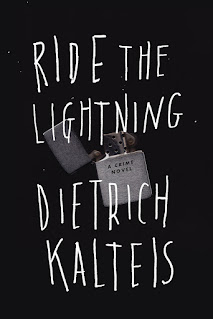
Around the time of my first novel, Ride the Lightning, somebody asked me, “So, what do you do?” And it felt odd saying that I was a writer. It had taken many short stories and a completed novel for me to say it aloud — more importantly — believing it myself. So, I had to adjust my own definition of myself, at least in terms of what I did for work.


Sure, we all go deeper than what we do for a living, and writing feels like more than just an occupation. It’s a passion — an occu-passion. I think any creative endeavor is that, coming from our depths, from our hearts and souls. It may be work, but it never feels like a job.


Telling somebody that I’m a writer is usually followed with, “So, what do you write?” And then, “What’s your book about?” The first time I was asked that question, I had trouble answering it, and it taught me to always have a pitch ready. It’s not that I expected the person to rush to the bookstand and buy a copy. It’s just that it felt dumb to bumble through the storyline with a lot of uhm and ahh, and with a good chance of sounding like I didn’t know what the story was about myself —  one that I just spent the better part of a year writing. So these days, I always have a short pitch ready for when somebody asks.


Another thing that felt strange was putting that down on my income tax form for the first time. Occupation: writer.  

With the first novel out there, I got to work on the follow-up novel. It just felt like a natural thing for me to do, and I was eager to get to it. And that eagerness has stayed with me every day since.


There were other affirmations that I was going down the right road, like seeing that first book on a store or library shelf. Being asked to sign a copy. Then along came some positive reviews, followed with kind comments from readers, followed by interviews, getting asked to give readings, and being invited to participate in writers’ festivals.


Then there’s also the tremendous support of the writing community — folks who’ve gone done the same road. 


And there’s the support on the home front — something I’m fortunate to get in spades. In fact, I don’t think I would be writing now without that. Where would any of us be without that kind of support?

Tuesday, February 7, 2023

Writer, What Else?


Terry here, with the topic for this week: In Lucy Worsley’s biography of Agatha Christie, we learned that Christie always wrote “married woman” in the “occupation” line on her passport. How did you navigate going public with being a writer? 

 It’s hard to imagine that the prolific and unendingly popular Agatha Christie identified her occupation as “married woman.” By that standard, I suppose Jane Austen was “unmarried woman.” Dick Francis was “retired jockey.” Wallace Stevens? “Insurance salesman.” No matter how many mystery novels Bill Clinton could write, he will always be “former POTUS.” 

 Can you imagine a male writer, even one who has never published, as dubbing himself “Married man” as occupation? 

Is it possible that Miss Christie wrote that tongue in cheek? 

I never had any qualms about dubbing myself “writer” in the line for “occupation.” That was after I had burned out from being a computer programmer/analyst. Long before I was published, I proudly wrote “writer,” because in fact that’s what occupied me. I suppose there was a time when I could have written “mothering a horrible child,” which at one time seemed to take up all my time, but I didn't.


 I even wonder why “occupation” is listed on passports. Is it to weed out spies? Assassins? Smugglers? (“Oh, thank goodness we asked for occupation on the passport form! This guy says he’s a smuggler. We’re going to have to have a chat with him.” Cue ominous music). Maybe it’s to trip up people. (Oh, God, I’m actually a spy, but I can’t remember what I put on my passport. Chef? Horse trainer? Philosopher?) 

At one time I read a ridiculous argument about whether a published writer should call herself “writer” or “author.” My thought? Who cares? The occupation of a writer is to write. From the time I was a kid, I always declared that someday I would be a writer, so making the leap to actually saying that was my occupation was never a problem. 

What was a problem is that it took years of writing before I was published. People I hadn’t seen for a while would say, “Still writing?” (Uncomfortable moment follows—for me, at least). Then the miserable, “yes.” Hoping fervently that there would be no more questions on the matter. I was actually grateful to the occasional person who would tell me confidentially that they had a great idea for a story, and that they’d be glad to share it with me. Anything to divert attention from the fact that yes, I was endlessly writing, with nothing more than several “close, but no cigar” moments to show for it. 

I even had one friend who said to me as kindly as possible that she didn’t think she could continue to strive at something that never brought any rewards. My husband said the same thing. Ouch. And yet, I continued to think of myself as a writer and call myself a writer. 

Will I ever write “retired?” I don’t think so. I picture myself with the doctor standing by my bedside pronouncing me dead and me muttering, “Not yet. I have another paragraph to write.”

Sunday, February 5, 2023

In the Public Eye

In Lucy Worsley’s biography of Agatha Christie, we learned that Christie always wrote “married woman” in the “occupation” line on her passport. How did you navigate going public with being a writer? 

Brenda at the keyboard.

One only has to hear the intrusive stories of exploitation that some people in the public eye have suffered to know that privacy needs to be protected. Fame can be an incredible burden.Think of Princess Diana, Jennifer Lopez and Ben Affleck (first time around), Harry and Meghan ... cautionary tales all. The trick is to balance publicity and getting your name/book out there, with keeping your private life private -- to draw a line between business and personal.

Luckily, authors usually maintain anonymity, even the famous ones. I recall a story where someone was on a bus and kept looking at this woman sitting alone, wondering could it be? The woman finally stood to get off the bus but before she did, she leaned in to the person who'd been staring at her and said, "Yes, it really is me." Margaret Atwood then stepped off the bus and that was that. Urban legend made. So even Canada's most famous author still maintains a normal life and travels around Toronto in relative anonymity.

I write a weekly blog (taking the summers off) and decided early on that I wasn't going to get too personal. I write about 'the writing life' and the odd thing going on in my life, but I don't go deep. I keep personal opinions to myself when it comes to politics and the myriad of topics impacting our lives. I don't talk about my family, except surface-level stuff, and am always aware that once information is 'out there' in this social media society, you can't take it back.

Speaking of social media, I have a public Facebook author page as well as a private Facebook page where I connect with friends and post the odd more personal photo or comment that I do not post on the public page. I have two Instagram accounts with much the same set up, although I use the personal page rarely. I'm mainly posting on Twitter and Instagram for publicity.

As for being recognized by strangers for my writing, it's happened a few surprising times, but I wouldn't say this is the norm by any means. Even in my own neighbourhood, unless people know me, they have no idea I write murder mysteries. My first book was released in 2004, and I've been featured many times in local media, but still walk around unrecognized. I don't anticipate this will ever change :-) One thing that helps is that I kept my own surname when I got married, and many don't realize my husband's and daughters' last name is different from mine (which is also my author name).

On a final note, being Canadian, people in this country respect people's privacy for the most part, whether famous or not. There's generally a strong desire not to interrupt, intrude or offend. On the other hand, people here are strongly supportive of writers and help to quietly spread the word about books they like, especially if they know the writer personally, have seen them at an event, or met them out and about. It's not fame exactly, but heart-warming nonetheless to have a community of people cheering you on behind the scenes.

Website: www.brendachapman.ca

Instagram & Facebook: BrendaChapmanAuthor

Twitter: brendaAchapman


Friday, February 3, 2023

Everything is Personal, or Should Be, by Josh Stallings

Q: Now that 2022 is well and truly "in the books" (!) did you learn any business tips you can pass on?


A: Many years ago at Bouchercon I was asked to read at a Noir at  the Bar; I said yes. Writer’s tip #1, always say yes to readings. The bar was stacked with loudly drunk non-crime readers. The first couple of readers couldn’t be heard from five feet away. As my turn came, Tom Pluck, friend and writer extraordinaire, yelled in my ear, “Fuck the mic, be loud.” He had sussed out that the PA was garbling more than helping the readers. Tip #2, make friends with fellow writers, they will cover your back even when you don’t know you need them to. I set the mic on the bar, filled my lungs and projected into the room. Tip #3, part of a writer’s job is public speaking, if it doesn’t come naturally take some speech classes. What I didn’t know was that Scott Montgomery was in the bar. I knew of him but I’m not sure if we’d met yet. After the reading he came up to me and complimented my work. I thanked him, and gave him a copy of my book. Tip #4, always carry copies of your work and give them away. Scott has since become a good friend, he knows more about crime fiction than almost anyone I know. For many years he was head honcho of Mystery People, a book store inside Austin’s massive Book People. He hand sold over two hundred copies of TRICKY. I have been honored to do events in Texas with Scott and the likes of Terry Shames, Joe R. Lansdale and many others. 


For us writers who haven’t become household names, we need to make the personal outreach. Wether in a bar, from a panel stage, or at a bookstore we need to reach readers, intrigue them, make them cry or laugh. To do this we need to be our genuine selves. Life is full of hucksters and pitch monsters. They fill our phones with their robocalls and texts. We are immune to their sales tactics. Readers are smart critical thinkers, so I always try to be myself. Both when I’m “pitching” and when I’m writing. My personal view of the world, my odd syntax, my open hearted hard man is unlike anyone else's.


Ideas are easy. Find your voice. Own it. Your  approach will ultimately set you apart from others.


NOTE: I feel like we toss writerly words around without knowing if we all agree on their meaning. When I say VOICE, I mean more than word choice or short or long sentences. How we write is part of voice, but what we write about, how we feel about the world is a huge part of a writer’s voice. Part of my writing time is spent stringing words together, and part of my day is spent thinking about the world I’m writing about. The hardest part about writing Tricky was all the interviews I did and the nonfiction books I read to come to an understanding of how I felt about the current state of policing in America.


Last tip; I often think when in the middle of a book, if I get hit by a train tomorrow will I be glad I spent my final days working on this book? If not then I dig deeper. The book I chose to write isn’t wrong, I just haven't discovered the true heart of it yet. 


What does this last part have to do with business tips? 


Um, everything. Agents, editors, publishers and most importantly readers scour the shelves for pages that will move them. We all want to discover something new yet familiar, unique and yet universal. That begins with the writer’s voice and passion.


Don’t waste any more time trying to understand the market. Dig deeper. Discover your corner of the quilt and get to stitching.


Thursday, February 2, 2023

Simon Says: Don't be Trouble (or Strife), by Catriona

Now that 2022 is well and truly in the books (!), did you learn any business tips you can pass on?

You know how tins of food used to have "serving suggestions" depicted on the labels? (Maybe they still do.) And it was always stuff like "Why not serve this Spam on a plate with some side vegetables?" or "Why not serve this soup in a bowl with a bit of parsley on top?" 

Well, asking me for business tips is like looking at soup tins for recipes, instead of reading a cookbook. Seriously, Cathy, Gabriel and Susan are your best bet till Josh weighs in tomorrow.

But I'll try. 

The KJV has a quote for everything!

1. Last year, I hit on the brilliant idea of writing down in a wee book how many payments I was due in a two-book deal or whatever, along with the rough dates to expect them, so I could cross them off when the money arrived. That's the level I'm starting from, folks.

2. If your books are issued in large print, always give the spare copies to a public library. Large print books are really expensive and library budgets are tight. If you save them the money on your LPs they might spend some on your ordinary hardbacks. Even if not, they will spend it on books, which keeps people reading, which is good business for writers.

My favourite large print edition

3. Trick yourself into dealing with your admin however you have to do it. Set aside an evening every week; clear your inbox every morning; deal with receipts on the last day of the month; email yourself a note of everything you have to do and keep a TO DO tab that you check regularly . . . It doesn't matter how you organise yourself, but get organised.

It's an extension of the old "write drunk; edit sober". We could call it "write drunk; edit sober; admin anal." But let's not. Apart from anything else, you can't have two semi-colons in a sentence without a colon to introduce the list.

It's a sub-tip of my main tip which is:

4. Be like Simon Wood. Simon is a Brit in NorCal, like me, whom I've known for years and who has the best business advice for traditionally published authors I've ever heard. We share nothing about process when it comes to the craft of writing, but Simon's approach to the business of being a writer in the world of publishing is gold. Basically, he says never blow a deadline, never ignore an email, never flake on a commitment, never be obnoxious at an event (and know if drinking makes that likely), and always treat everyone at the publisher with unfailing respect and professionalism. make sure that if your book is good but the publisher is swithering, nothing about working with you tips the scales the wrong way.

Keep reading for a giveaway!

It's the other thing we're in control of in this wild world: we can write our best books and we can make sure we're not a heartsink of myopic entitlement artistic temperament for the people who're in charge of the rest.

Are there multiple examples of writers who wrote solid enough stuff but ensured that no one would want to work with them? Oh yes. Find me in the bar at Left Coast Crime or Malice Domestic and I'll tell you.

5. A bit of promotion never hurts. So I'm offering a copy of Simon's short story anthology, with contributions from Steve Brewer, Susanna Calkins, Colin Campbell, Angel Luis Colon, Robert Dugoni, Paul Finch, Travis Richardson, Johnny Shaw, Jay Stringer, Sam Wiebe, Simon and me. Just comment here or on Facebook or Twitter to enter.

6. A bit of topical bragging is okay sometimes too.

This is up for a Lefty!

7.  As long as you don't overdo it.

This is up for a Lefty and an Agatha!

Cx


Wednesday, February 1, 2023

It's called "work" for a reason... by Cathy Ace

Now that 2022 is well and truly "in the books" (!) did you learn any business tips you can pass on?

Business tips are tricky, because, quite often, they are only really helpful given a quite specific set of circumstances. That being said, here are a few things I learned that you might find helpful:

DO NOT get overwhelmed when you’re reading about how phenomenal other authors are at their writing output.

This might not sound like “business advice” but it is, for authors, because writing is their business. Some authors – believe it or not – write and publish a dozen or more a books per year. Bear in mind they might have spent years writing them all, then are using a rapid release strategy because that’s what their target market demands/expects/wants. Other authors will write and publish one book every two years. Again, maybe they have a life plan that means they won’t be writing for the whole of those two years. So – slow release or fast release doesn’t necessarily signify current workload. And we, as authors, need to write the right number of books for us, according to how we want to live our lives. I have learned I can only write and publish a MAXIMUM of two to three books per year and not lose my grip on either reality or sanity – if you can write less, fine, if you can write more, go for it – but I have learned I have to be content to be me.

DO NOT get overwhelmed when you’re reading about how wonderful/active other authors are at their promotional effort.

When I had traditional publishers, they had a whole promotional department to work on my behalf, which organised my international book tours, advertising campaigns, appearances on local and national television chat shows…oh no, hang on, that wasn’t me…that was the author who signed a million dollar contract with one of the Big 5 publishers, who couldn’t be seen to fail! LOL! Silly me – I was the author who got a thirtieth share of the time of one overworked promotional person who did their best with miniscule budgets…and had to do the rest of it myself either out of my own pocket, or for free. Now that I self publish, everything is down to me…and I still need time to write enough to keep new books coming out. So – I have learned to breathe, accept that I cannot do everything, and now try to promote my work “smarter”.

DO consider ways you might be able to promote your work to readers beyond Facebook and Twitter.

As recent events have shown, if an author relies too much upon one channel of communication, they might find the people they need to speak to removing themselves from that platform for any number of reasons. A good author website that’s kept up to date, and building a mailing list for a newsletter that contains special offers, and actual NEWS, as well as an insight into one’s life and writing are both important, and often overlooked. That said, it’s critical to know how to reach your readers/potential readers: my books are NOT read by those who use TikTok, so it’s pointless me using it, for example.

DO whatever you can to try to work out who is reading your books, and how they choose to get their hands on them.

Libraries are important to society as well as readers and authors – I believe this deep in my bones. Do you know how many libraries have your books? Does your country have a way for you to make an income from this (Canada and the UK have funding for authors whose works are found on library stock lists, for example.) If people are buying your books do they buy print or digital? Where do they buy those books? If you have a traditional publisher, work with them to help you understand this – because then you can better target that time-sucking promotional effort. If you’re self-publishing, you can gather this information from your own data. And, boy, have I learned a lot this way – for example, I know that for my WISE Enquiries Agency Mysteries, libraries want hardcover vs paperback, buy them soon after release date, and buy multiple copies; by far the most sales are digital, through amazon vs Kobo vs Nook, with about 50% of sales in the USA, 30% in the UK, and the rest split fairly evenly between Canada and Australia/NZ. And the digital to print sales ratio? About 100:1 Knowing this? Priceless!

Not every writer wants to be involved in the business of publishing...BUT I BELIEVE THEY SHOULD AT LEAST UNDERSTAND IT.

While we all have to do our bit in terms of promotional effort (try keeping a traditional publisher happy without doing this!) for some, the craft and process of writing is where they want most of their focus to be – which is fine. So the business of publishing isn’t what you’re interested in – but that might leave you high and dry in the long run, so I urge you to read about the business you’re participating in and learn as much as you can about it. I recommend Jane Friedman’s website to everyone I can: it contains most of the answers, and direction for those areas where you want to learn more. KUDOS to her!  https://www.janefriedman.com/blog/

As for me? I have ANOTHER new book coming out:

On 20th February 2023, the 7th WISE Enquiries Agency Mystery will be published – the cover is above, and the blurb appears below. 

It’s available for pre-order NOW!

Click here to access pre-order links

‘IT MURDERED ONE OF OUR GUESTS, AND NOW IT’S TRIED TO KILL MY HUSBAND. YOU HAVE TO STOP IT!’ 

When the women of the WISE Enquiries Agency are approached by the desperate owner of a rental cottage in a picturesque Welsh seaside hamlet, they agree to help. After all, there can’t be any such thing as a killer cottage, can there? But a cursed cottage? Isn’t that just as unlikely? They’re about to find out…when Christine and Annie take up residence.

Meanwhile, Carol goes undercover to investigate a day spa at a swish country hotel with some dangerous treatments on offer, leaving Mavis to stake out a man who might be incapacitated because of a work-related accident, or might just be a malingerer; will this bricklayer become belligerent if he spots her on the job?

While our engaging private investigators are busy with paying clients, it looks as though it’s going to fall to Henry, eighteenth duke of Chellingworth, to try to solve the riddle of the missing christening mugs, which is a priority as far as his mother the dowager is concerned.

Early spring in Wales is a busy time for the WISE women – join them to find out how they cope, in this, the seventh book in the series.

Want to get all my news, and exclusive sneak-peeks FIRST? Sign up for my newsletter by visiting my website: https://www.cathyace.com/


Tuesday, January 31, 2023

Lessons Learned in 'The Business' in 2022


Now that 2022 is well and truly “in the books” (!) did you learn any business tips you can pass on?


This author’s public life has been a work in progress. I created a short listicle from practice areas where I am constantly learning. As I strive to improve my writing, I strive to continuously improve my digital footprint and the perception of my work and myself as an author. Any one of the bullets below are worthy of a full-length post, but I think you’ll get the idea without me having to belabor the obvious.


The Do and Don’ts of Blurbs

My view on the matter: Asking for them is like dating, you won’t know until you ask. Blurbs are a marketing tool to lure readers to your work.


·      Don’t wait to the last minute

·      Don’t make the blurb about prestige

·      Be professional with your request, in person or by email

o   Conferences are an excellent time to request a blurb

o   Don’t underestimate the face-to-face encounter

o   Target authors like or similar to what you write

·      Provide a clean and edited manuscript

·      Provide Word count (so they can estimate time-commitment)

·      Set expectation and propose a Target date

·      Provide a short description of your work (a mini-pitch of 100 words)

·      Never take it personal if a fellow author says No

o   Authors are busy people

o   Authors have their own deadlines

·      Store your blurbs in one place (The Credibility File)

·      Writing a blurb is hard work

o   If you write one, look at the latest fad in wording and avoid them (example: ‘propulsive’)

o   Make comparisons for the reader. It is X meets Y

·      Say “Thank you”

·      Promote the writers who promote you


Social Media

·      Work the platform where you are most comfortable (FB, IG, Twitter)

·      Check to make sure you tag the right person on Social Media

o   I keep two tabs open when I tweet

·      Use images or make graphics because they are more memorable

o   I use Canva, and search Unsplash for royalty-free graphics

·      Create content as opposed to always Retweeting someone else

·      Don’t scream BUY MY BOOK All. The. Time. (obnoxious)

·      Leverage your tweet

o   Give #shoutouts to:

§  Publishers

§  Authors who blurb the books

§  Fellow authors in an anthology

§  Local writing organizations

§  Local MWA chapter

§  Local Sisters in Crime

§  Other authors mentioned, if in an article (example: Crime Reads)

·      Communicate INFORMATION about Events

o   The 5 W:

§  Who

§  What

§  When (Don’t forget Time Zones)

§  Where

§  Why

·      Use an URL short-link

·      Make your tweet readable and not a string of hashtags

·      Use trending tags strategically

o   Example: I pimp my cat Munchkin on #Caturday

·      Be consistent and CREATE AN EXPERIENCE for the visitor (that is your brand)

o   I use humor on FB because I want visitors to have their first smile of the day seeing my page


Be PROFESSIONAL & Positive

·      Avoid political screeds, troll wars, and pile-ons [waste of energy]

·      Be cautious with humor and sensitive to tone in your wording, especially in emails

·      Act as if someone is always watching (readers, reviewers, and agents)

·      Everything on the web lives FOREVER