Wednesday, September 13, 2023

Comfort, with a body count, by Catriona

Are there crime-fiction books so good you hold on to them and re-read them? Name a few classics and inspirations.

I'm splitting this into two questions. 1. Do I hold onto crime-fiction books? Ahem.

2. Do I re-read them? 

Not many. I consult them a fair bit, looking for something I'm sure I remember seeing there, when I'm truffling around for examples (good or bad) to illustrate a workshop or article. And I visit lots of them briefly, reacqainting myself with the names of characters or the length of chapters. Of course, I could do that with the click of a button, but see that big, open book on the stand in the picture? That's my dictionary, over to which I scoot on my typing chair when I need to check a word. (On the shelves underneath are a Scots dictionary, a thesaurus, an etymological dictonary, and a nifty little book of 20th-century words, dead handy for weeding out anachronisms.)

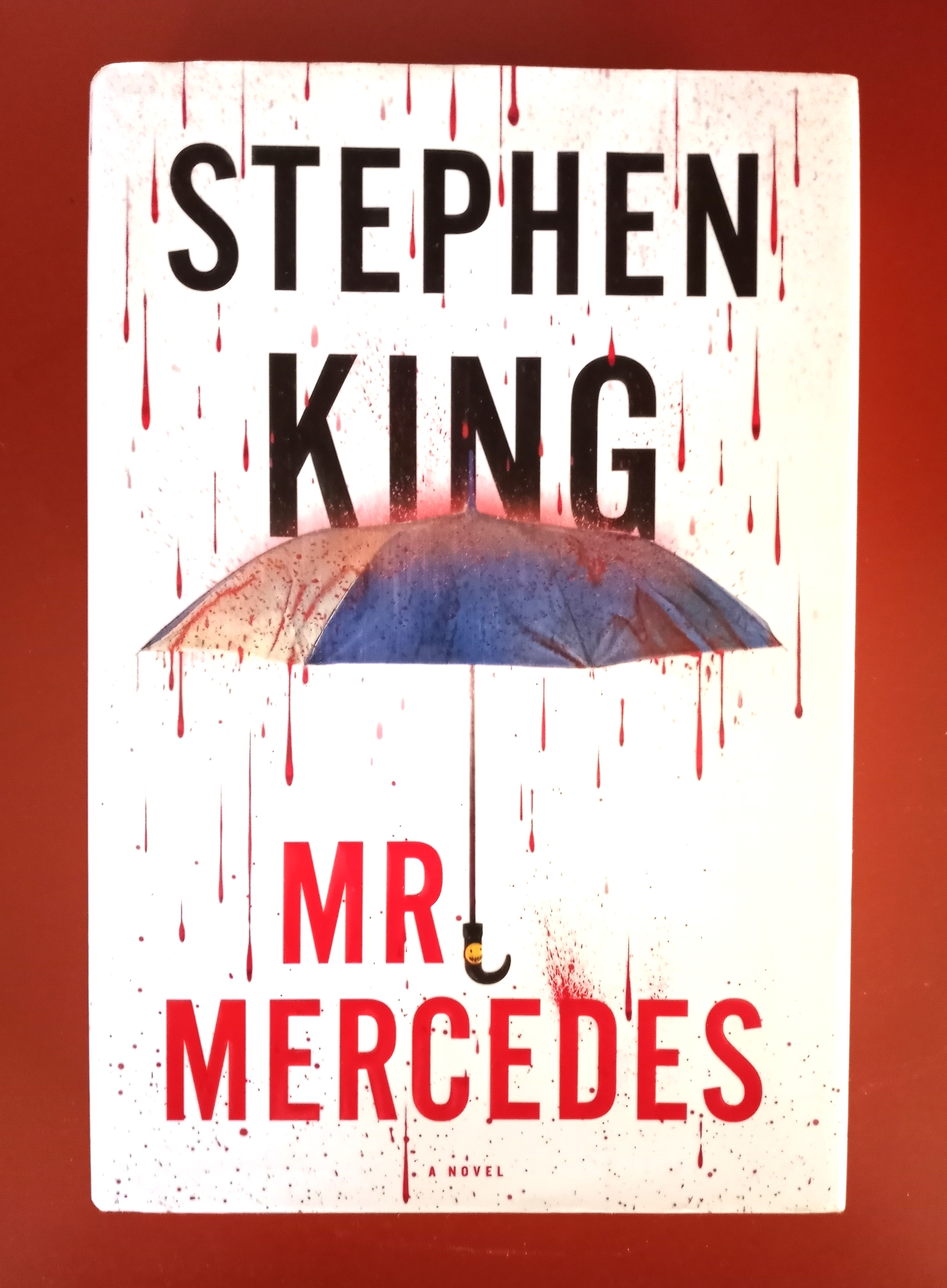
I do re-read by listening on Audible a fair bit. Right now, I'm refreshing my memory of Stephen King's  Mr Mercedes novels in advance of reading HOLLY (which I'm going to try to save for the Christmas holidays). And I listened to WHERE ARE THE CHILDREN, just before I read WHERE ARE THE CHILDREN NOW. But as a sighted person, I listen to books in a different way from how I read print: while cooking, cleaning, driving, falling asleep or gardening. Never while sitting in a chair and never while paying the attention owed to a first read.

Speaking of Christmas and Mary Higgins Clark, I do re-read the Willy and Alvirah stories regularly, by fairylight, breathing in the scent of spruce. They remind me of the Christmas I spent in Manhattan and always feel like a visit to old friends.


That's pretty much the case for all of my crime re-reading. It's comfort all the way.

 My top three re-reads are:

SLEEPING MURDER, by Agatha Christie (just edging out THE MOVING FINGER as my favourite). I love a house in a book and the house in this novel is front and centre as well as the plot being one of Christie's cleverest.

A SURFEIT OF LAMPREYS, by Ngaio Marsh. It's got another great house - complete with floorplan - and a family of eccentrics who're right on the line between endearing and insufferable. Marsh seeming to know that helps though. There's also a hefty dose of real creeping horror in here. Brrrrr.

THE TIGER IN THE SMOKE, by Margery Allingham. My favourite crime novel. It's not as oblique and tricky to follow as Marsh's books sometimes are (looking at you, THE BECKONING LADY and THE CHINA GOVERNESS), and she never revels in the gothic more than she does here. Also - as I've said before - the climactic scene is the best treatment of the difference between goodness and evil I've ever read, including "Paradise Lost", and I'm not even kidding.

Cx


Old friends...and new... by Cathy Ace

Are there crime fiction books so good you hold on to them and re-read them? Name a few classics and inspirations.

Oh good grief…how long have you got?

My house is awash with crime fiction books I can’t bear to get rid of…and, no, I might not re-read all of them, but…you know…you never can tell when the mood will take me to dive into a book for the second, or even sixth time, so stay with me they must - “just in case”.


Beautifully bound - my Christie collection

Those that have been with me the longest are those I found earliest in my life. My collection of Agatha Christie books made the trip with me when I migrated from the UK to Canada, and collecting them was a labor of love (or…maybe…obsession?). I was lucky to work in London just around the corner from the world-famous Foyles book shop on Charing Cross Road, so I was able to spend countless hours there “just browsing” (who am I kidding? I wore the numbers off my credit card in there!).

It took a couple of years to gather together all the titles you see here, and I have continued to add the “new” books by Christie that have come out since (though not in the same bindings, which is a shame). I look across at this shelf from my desk on a daily basis, and Christie’s work-ethic spurs me on, though I cannot imagine I’ll ever equal her output in terms of quantity, nor quality. But I can try!

More recently, my Kindle tells me that I have re-read books several times, and I don’t feel guilty about that at all. I don’t find it annoying to re-read books where I already know whodunnit, because I read them again for a different reason – to enjoy the writing as well as the storytelling. The books I have re-read most often turn out to be those written by Lawrence Block…which I think speaks to the richness of his writing, as well as his ability to spin a yarn that’s just as engaging on its third or fourth iteration – a true master. Indeed, his Evan Tanner books are so bizarre and complex that I usually can’t even remember “what happens next”, so there’s the added bonus of the constant delight of rediscovery as I read. And the Diamond books by Peter Lovesey also allow me the fun of a re-read that inspires, but isn’t dulled by familiarity.  

Much-loved copies of beloved books I've owned, and re-read, for decades!


Beyond that? While dealing with crimes of many types, I wouldn’t call Nana, by Zola, a work of crime fiction, but I find myself re-reading that frequently, and I revisit Thomas Mann’s Magic Mountain every couple of years too. Also, by way of full disclosure, I still find myself drawn to many of Shakespeare’s tragedies which never cease to astound and thrill me with their use of language and tempo.

If you'd like to find out more about my work, you can do that at my website: https://www.cathyace.com/


Tuesday, September 12, 2023

Be Kind, Rewind by Gabriel Valjan


Are there crime fiction books so good you hold on to them and re-read them? Name a few classics and inspirations.


Why revisit crime fiction when you already know who committed the crime? I’ve always been cautious about revisiting past reads because memory is beguiling, deceptive, and tinged with fear and apprehension. Nothing sucks more than realizing that something you liked in the past doesn’t hold up. You mumble to yourself, What was I thinking?


Certain books are Proustian to me, the feel of the pages and the scent return me to a particular time and place in my life. Movies do the same thing to me, but in a different way, as they remind me of time spent with others. Not the case with books since they were always solitary adventures for me. Me and my thoughts, at a certain age and stage in life.


It’s harder for me to enjoy books now because I’ve learned the ‘tricks of the trade.’ My metronome is jaded, if not sensitive to pacing, to the give-and-take of dialogue that either reveals Character or advances Plot. It’s hard for this Writer to be a Reader again. I don’t read Friends of Eddie Coyle for the story anymore. I search for familiar snippets of dialogue, and I analyze How and Why they work.


Writers start as Readers and we learn as we go to become Writers, or we remain Readers. There is a Yin and Yang delicacy to a writer’s appreciating another writer because we’ve all worked in the kitchen. There was a saying when I worked as a waiter as teenager, dealing with coked out chefs with sharp knives, ‘Once you’ve worked in the kitchen, you would never eat in the restaurant.’


Which is why I say, Be Kind, Rewind.


Agatha Christie’s AND THEN THERE WERE NONE (1939).


The standing policy in my elementary school was that if you were done with an assignment, you did independent reading. The school had a modest library. I mowed through those shelves, and my teacher loaned me her copy of the Christie title in her purse.


Nobody was ‘woke’ back then, and nobody blinked an eye at how wildly ‘problematic’ the book was. If you don’t know the controversies, Google the original titleor, if I may be self-serving, read my afterword to my Shane Cleary novel HUSH HUSH. I was a kid. I was Mikey from the Life cereal commercial. I read everything.


Thomas Harris’s SILENCE OF THE LAMBS (1988)

Gillian Flynn’s GONE GIRL (2012)

Donna Tartt, THE SECRET HISTORY (1992)


I lump these novels together because they were a revelation in narrative strategies. All three stories deal with unreliable characters. And rather than the crime story being a Whodunit, Howdunit or Whydunit, they were a Howcatchems. I marveled at how hard it was to create and sustain suspense.


Pierre Choderlos de Laclos’s DANGEROUS LIASIONS (1782).

Vladimir Nabokov’s LOLITA (1955)


It is difficult for me to explain to others why this I found this epistolary French novel both captivating and terrifying. Perhaps, it because it is depicts how both men and women are treacherous when it comes to affairs of the heart. Love. Betrayal. Revenge.


As I honed my chops as a writer, I found myself looking outside of my American-slash-Anglo-speaking culture for other approaches and attitudes to crime. French, German, Italian, and Spanish crime writers offer a different perspective on crime, justice, and especially violence. For instance, almost always in American cinema, the good guy has to kill all the bad guys. It’s not enough to leave them wounded. It seems like a weakness to show mercy. In foreign cinema and novels, the damage is done, the threat neutralized, so carry on.


Volumes have been written on Humbert Humbert and sexual obsession with Lolita, so I won’t say more.


Nabokov intrigues me as a writer because he is a trickster and a Word Nerd par excellence and like Joseph Conrad, English was his third language. Speaking of Conrad, his short story “Point of Honor,” the basis for the Ridley Scott film, The Duellists, is a favorite.


Walter Mosley’s DEVIL IN A BLUE DRESS (1990).


There was a time when I went on hiatus from reading crime fiction, turning instead to nonfiction because it was ‘real’ whatever that means. I’d burned through the Brother Cadfael series by Ellis Peters, Lindsey Davis’s Marcus Didius Falco books, and Robert Harris’s Cicero Trilogy. Sense a theme there?


Then I discovered Mosley’s Easy Rawlins, and I was hooked. Like early Ellroy, I enjoyed the flip-side to Raymond Chandler’s Los Angeles. I enjoyed Chandler, but I could see that he’s a dangerous influence for writers for his overcooked similes and metaphors. Hammett I enjoyed, but his corrupt landscape could be Anywhere, USA. Not the case with Mosley.


Dennis Lehane’s MYSTIC RIVER (2001)


I live in Boston, so the appeal is obvious. I don’t find many male writers who write women well, but Lehane does. MR is Shakespearean in scale and a chaotic and tragic tour de force. 


What books do you like to revisit and rewind?


Monday, September 11, 2023

Portable Magic

 Q: Are there crime fiction books so good you hold on to them and re-read them? Name a few classics and inspirations.


-       from Susan


There are a lot of crime fiction books I hold on to even though I’m not likely to read them again. Why? Because writers I admire, writers I’m in awe of, writers who are justly loved by everyone, or writers who - gasp - became my friends wrote them and signed them to me. I look at their spines and smile. Being in the same community has been an ongoing thrill for me. A line of books signed by Sara Paretsky, a fellow member of Sisters in Crime. A growing shelf of personally autographed novels by the prolific and creative Rhys Bowen. All of Terry Shames’ and Jim Ziskin’s signed books. Cara Black’s long-running Aimee Leduc novels….And there are more, more, more! 


There are books I keep because they or their authors made me wonder if I could write something as enjoyable when I first dared to dream: Marcia Muller, Lia Matera, Laurie King, Sue Grafton, Gillian Roberts- note they’re all women, their protagonists are female, they’re all from the same recent writing generation, and they were all accessible to new writers in northern California. Just having those books on the shelves reminds me of the early days when I tiptoed into the world of possibility. These authors and a few others genuinely and specifically inspired me.


There are classics in the genre that I just enjoy and re-read when I want the guarantee of a cozy, familiar experience. Rex Stout’s Nero Wolfe series have a permanent place, the tattered mass paperbacks lined up waiting for those moments. Some of Agatha Christies mysteries do that for me, although not all. I have the collected John Mortimer’s Rumpole of the Bailey stories and re-reading a handful at one time makes me smile. Sarah Caudwell’s sadly short series does the same and I have re-read all of them. Ditto Josephine Tey. Donald Westlake’s Dortmunder series stay fresh and funny for me.


Current writers I have gone back to include Tim Hallinan and his Poke Rafferty series set in Bangkok, Laurie King’sMary Russell/Sherlock Holmes stories, especially the ones set in exotic non-Western places, and Colin Cotterill’scompletely unpredictable Dr. Siri mysteries  set in broken down communist Laos, which seems to be hospitable to ghosts. The settings are so deeply part of the stories that I  always pick up something new in the re-readings.


I could go on. I am a book addict. Recently, I brought 250 paperback mysteries to Goodwill, and another 50 or so hard back crime fiction novels to Friends of the Library. It hardly made a difference, in part because most of my shelves had double rows of books and the more I removed, the more I exposed! 


I do use Kindle, but somehow those books don’t count. Why is that? Do you feel the same way about e-books that you do about paper versions?


My own latest:


Friday, September 8, 2023

Acting the Part

 You’ve done the impossible - sold your book/series for the screen. Who would you choose (living or dead) to play your protagonist? Why?


By Abir


Great question!


This is the dream of many a novelist, at least when they’re starting out, that their story will make it to the big (or increasingly the small) screen. The best part of that is what we call the game of fantasy casting, and I’ve been prone to a bit of that myself.


Now my Wyndham and Banerjee novels have three central characters: Captain Sam Wyndham, an ex-Scotland Yard detective who finds himself in India, working for the Imperial Police, mainly because it’s slightly preferable to suicide; Sergeant Surendranath Banerjee (known as Surrender-not by his British colleagues who can’t or won’t pronounce his name properly); and Annie Grant, an Anglo-Indian woman with whom Sam has a rather complicated romantic relationship.


In terms of casting, I’m going to come at them in reverse order, starting with Annie Grant, because that’s the easy one.


Annie Grant was inspired by the Hollywood actress Ava Gardner, particularly in her role as Victoria Jones in the film Bhowani Junction, based on the book of the same name by John Masters. Victoria is an Anglo-Indian woman, serving with the British Army towards the end of empire, unsure of her place in the racially divided world of British India. I remember watching the film and being captivated by Ava Gardner’s performance and when I came to writing A Rising Man, the first in the series, it was Gardner whom I pictured in my head as Annie, so much so that I gave Annie Grant her initials. So in an ideal world, I’d have Ms Gardner play the character who was based upon her.


Here's the Trailer for Bhowani Junction: 


https://www.google.com/search?q=ava+gardner+as+victoria+jones&sca_esv=563692770&rlz=1C5CHFA_enGB825GB825&tbm=vid&source=lnms&sa=X&ved=2ahUKEwj3maWJ55qBAxVTWUEAHVc5DToQ_AUoAnoECAUQBA&biw=1440&bih=815&dpr=2#fpstate=ive&vld=cid:32687c1d,vid:cGbIUEx9kg4


However, in the here and now, which actor would I wish to play Annie? That’s a tougher question. Like Ava Gardner, she would have to have that olive complexion – neither Indian or white – someone who could pass for either. In my head, I picture someone like Gal Gadot. But I heard her singing this during lockdown, and it’s put me off her a bit.


https://www.nbcnews.com/think/opinion/gal-gadot-s-imagine-instagram-video-was-peak-cringe-year-ncna1261685


In terms of others, there’s the Indian actor, Swastika Mukherjee, who’s starred in a range of Indian films, including the femme fatale in one of my favourites Detective Byomkesh Bakshy.


https://www.imdb.com/name/nm3054665/

Let’s move on to Sergeant Surendranath Banerjee. That’s also quite easy, because the actor Kunal Nayyar, who played Raj in the Big Bang Theory has expressed an interest in the role, and when we came to write the pilot script, we reimagined much of it from Banerjee’s perspective, increasing the weight of the role. 


If Kunal happens to be busy, then I’d go for Dev Patel or a young actor called Mikhail Sen, who provides Suren’s voice in the audiobook for the fifth in the series, The Shadows of Men. Mikhail also played Amit Chatterjee in the recent BBC adaptation of Vikram Seth’s A Suitable Boy.


https://www.imdb.com/name/nm1938354/


Then of course, there is my wife’s favourite, Sendhil Ramamurthy, who plays the deceased father in the Netflix series, Never Have I Ever. I personally think he’s far too handsome and that my wife should be banned from the whole casting process.


https://www.imdb.com/name/nm0707983/


And then, finally, we come to Captain Sam Wyndham himself. This is a tough one, mainly because I don’t know what Sam actually looks like. Maybe this is because when I’m writing, I tend to see the world through his eyes and don’t really look at him. You’ll be surprised at just how many authors have a similar blind spot for their main character. The truth is, my vision of Sam is less important than the reader’s vision of him. At the end of the day, that is what matters.


My old art teacher, Mr Wilson was kind enough to paint me a picture of what he imagined Sam looked like. It’s different from how I imagine him (even though I can’t picture him precisely), but then again, my wife’s view of him is different to mine too.


In terms of actors though, my list would include men like David Tennant and Daniel Craig, but really, I’m open to other opinions here. If you have a good one (for any of the characters) drop it in the comments below.


Cheers


Abir

Thursday, September 7, 2023

Casting Call for Ellie Stone from James W. Ziskin

You’ve done the impossible - sold your book/series for the screen. Who would you choose (living or dead) to play your protagonist? Why?

I confess that I’ve never been able to picture anyone playing Ellie Stone, the protagonist of my seven-book series. That’s probably because I don’t watch many new shows or moves. And thinking back over actresses of the past (do we still say actress?), I’m not having much luck either. 

She should be young, fairly small, with longish curly brown hair. Other than that, I can’t give you many more details. I like to think of Ellie as one of those characters you see on book covers. They’re all viewed from behind, so you don’t know what they actually look like. This gives readers the freedom to imagine them as they want to, with minimal guidance. I like that. And so, for Ellie, I offer no one.

But a friend who knows about these things once said that Hailee Steinfeld would be a good match for Ellie. What do you think? I’m not sure. She’s great, but I’m no expert on casting. They do wonders in Hollywood in recreating looks from the 1960s, so maybe she’d be perfect.


Okay, that’s Ellie Stone. What about her best pal, Ron “Fadge” Fiorello? Fadge is Ellie’s best friend in the world. He’s the huge, lumbering Watson to Ellie’s Holmes. He’s also a little sweet on her. This one was a little easier for me. I’ve always thought a John Candy type would be perfect for him. Especially as he appeared in Uncle Buck.


Let me know what you think. Suggestions from readers are welcome in the comments below.


Wednesday, September 6, 2023

Role ‘em …

You’ve done the impossible - sold your book/series for the screen. Who would you choose (living or dead) to play your protagonist? Why?

by Dietrich


I’m negotiating a film deal now, but it’s a bit early to say much about it. One thing’s for sure, it’s always exciting to imagine something I wrote ending up on the screen. The director of the proposed project did ask who I saw playing the characters and I did share my ideas.


When I come up with characters, I sometimes fan through photos in newspapers and magazines, finding the right images. It’s a starting point and it helps me to build them and begin to name them and to create backgrounds. It’s all part of the process of getting to know my characters in depth. Some characters have been partly based on actors or personalities living or dead. Sometimes they’ve been a combination of people real or imagined. Once or twice, a character’s been based partly on somebody I’ve known, but most of the time they’re imagined from scratch, a bit of this and a trait of that.


As I write the scenes, the characters begin to flesh out, and I get a sense of who they are. Sometimes the original idea shifts a bit, but usually by the second draft, I’m not referring to those original character images anymore. The characters have come to life, and it gets easier and feels truer writing their actions and dialogue.


There have been books and their film adaptations that I’ve loved, and I’ve sometimes been delighted, and sometimes disappointed by who was cast to play the characters I had imagined when I originally read the book the film was based on. Then there are those great films that did every ounce of justice to the books they were based on: One Flew Over the Cuckoo’s Nest, No Country for Old Men, The Shining, To Kill a Mockingbird would be high on my list.


As for characters, I couldn’t imagine a better Severus Snape as the Harry Potter books made their way to the screen. Alan Rickman was absolutely the perfect choice and just the way I pictured him back when I was reading those books to my then young son. Or how about Dustin Hoffman and Jon Voight in Midnight Cowboy? And you couldn’t come up with a better pregnant police chief than Frances McDormand in Fargo. There are actors who just own their roles. Think of Ian McKellan as Gandalf, or Maggie Smith as The Lady in the Van, or Denzel Washington in Fences, and the list goes on.


When I send a story off to be considered for publishing, the characters I had been working with for probably a year are then allowed to fade from memory as I start the next story, and the whole process starts again, this time with new characters and situations. My stories to date have all been stand-alones, so there have been a lot of characters that I’ve set loose in my make-believe worlds. And from the time a story gets submitted, and it finally makes its way to the store’s bookshelves, it could be two years later. So, those character notes and clippings that I collected are always good to go back over before I do an interview or when I need to read at a live event — or in the event that someone asks me who I would choose to play my protagonist. 


Tuesday, September 5, 2023

Coming Soon to Your TV


Terry here with our weekly question: You’ve done the impossible - sold your book/series for the screen. Who would you choose (living or dead) to play your protagonist? Why? 

 If TV producers only knew how many times people have asked me when my Samuel Craddock was going to be made into a TV series, I’d have had multiple offers by now. Alas, Hollywood (or whoever options TV series) isn’t listening. That isn’t to say I haven’t had interest. I actually had an “almost” offer. When we moved into our place in Marina del Rey, the people next door were producers. As soon as the wife found out I was a writer she said she wanted to read my books. She read the first one, said they were going to option the series, that I should not take any other offers!!! Then they moved. Never heard from them again. Luckily, I’ve heard too many “almost” stories, so I wasn’t holding my breath. 

 So now, when someone asks me “When, oh when?” my reply is, “If you know someone in the TV business who wants to make the series, let me know.” So far, the result has been crickets. Well, not entirely. One person said she knew somebody who knew somebody. I’m still waiting. 

 As for who should play Samuel Craddock, when I first started publishing the series, my first thought for an actor to play him was Sam Elliott. That voice! That laconic smile. That senses you get that Sam Elliott is a good guy with a strong ethical center.
Yeah, he would be the one. Of course, now he might be too old to play Samuel, because although Sam Elliott has aged a few years, Samuel Craddock has not. But then again, the question is “living or dead,” and I presume that means living, dead, or “aged out.” 

In preparation for answers to this question, I went through the photos of 200 other actors that might work. And NONE of them looked like Samuel Craddock. So, since this is fantasy, I’ll stick with Sam Elliott. 

 A couple of years ago I asked on Facebook who people thought should play Craddock. Wow, did I ever get a variety of answers! Which goes to show that people form different ideas about what our characters look like. Who, for example would ever have envisioned Lee Childs’ creation, 6’4” hunk Jack Reacher, as 5’8” Tom Cruise? It sort of worked, but only because Cruise is a really good actor. 

On the other hand, Gary Oldman’s version of Jackson Lamb from the Mick Herron’s Slough series, is absolutely spot on—at least in my opinion. Another example of what seemed like brilliant casting was Craig Johnson’s Walt Longmire. Johnson himself said the second he saw Robert Taylor, he knew he was perfect. I’d like whoever did that casting to do the casting for my Samuel Craddock. 

 So…to wrap up, if anyone out there knows someone in what is known in LA as "the business"….I’m open.

Sunday, September 3, 2023

Casting Call

You’ve done the impossible - sold your book/series for the screen. Who would you choose (living or dead) to play your protagonist? Why?

Brenda here.

A thought-provoking question and one that I've honestly not considered before for my new Hunter and Tate series. I have several reoccurring characters, but the three main protagonists are true crime podcaster/freelance reporter Ella Tate, Detective Liam Hunter and hairdresser/all-around-great guy Tony Venditto.


Ella Tate is in her late twenties. Her main physical features include startling green eyes and short, messy blonde hair. She's about 5'6" and slight in stature. Ella is intelligent, and a loner with little interest in possessions or fashion. Whoever plays her must be on the edgy side. My choice is Jennifer Lawrence.

Liam Hunter arrived in Canada as an Irish immigrant and he's got the brooding, intense factor -- leading-man material. Physically, he has dark, curly hair that he wears too long and black eyes, and he's fit. Colin Farrell would suit the bill if he can play a younger version of himself since Liam is in this early thirties. However, I could handle a slightly older actor in this case :-)

As for Tony Venditto, he's described at one point as resembling a young Brad Pitt. Tony is gay, hilarious and loves fashion. He's also empathetic and kind with hidden depths of pain and spirit. Colton Haynes would make a terrific Tony.

If all these actors signed on, I'm certain we'd have a hit series on our hands :-)

Website: www.brendachapman.ca

Twitter: brendaAchapman

Facebook & Instagram: BrendaChapmanAuthor

Friday, September 1, 2023

Five Simple Rules for Better Writing by Josh Stallings

 Q: What are the ten most important things you’ve learned in your time as a writer? Both useful and useless?


RULE #1 This is a business. Don’t spend hundreds of dollars to sell a few copies of your book. 


Two weeks ago I drove 1,300 miles to Austin Texas to read at Vintage Bookstore & Wine Bar where Scott Montgomery was hosting a Noir At The Bar event. I sold three copies, two to my niece. On a ledger sheet this made no sense. Clearly I’m no good at following rules, even my own. 


Intangible value added facts: Scott was the first book store person to push my writing, he turned Book People into my best selling venue. Over the years he has become a good friend. Also, my sister, nieces and nephews live in Texas. 


Best of all it was an opportunity for a road trip with my son Jared. We ate brisket burritos, Egyptian brisket, brisket and eggs. Driving across the west Texas wasteland at dusk a storm spit lightning bolts that stayed aloft long enough for us to really study them. Gallon sized raindrops exploded across the truck’s windshield. In a distant oil field, flames gave the horizon a hellish vibe. Before the reading we had an early dinner at “Old Thousand” where surrounded by family I had one of the finest Chinese meals of my life.      


It turned out to be a trip I didn’t know I needed, but I did. To cadge a phrase from Ted Lasso’s Dani Rojas, writing is life. So don’t forget to enjoy it.


RULE #1 AMENDED. Yes it’s a business, a long game brand building business. You never know if a person crossing your path might be the one holding your brass ring, or at least might invite you to an Egyptian BBQ food truck.  


RULE #2. Nope, not falling for that old trap. In the words of Dr Venkman: “I make it a rule never to get involved with possessed people. Actually, it's more of a guideline than a rule.” 


Guideline #2 Don't believe anyone who tells you the rules of writing fiction. Also don’t not believe them either. The hubris of thinking you know everything you need to about writing will inevitably lead to a poorly written draft. Sometimes you have to write a bad draft to get to the good one, but you don’t have to do it on purpose, unless you do, then bluster forward. 


I walk point on my writing journey. I am responsible for keeping the story safe, and sometimes that means trying things that feel silly. If a suggested change doesn’t make it better, I delete it. As a film editor I made the mistake more than once of showing a bad cut to a client hoping to prove it was a bad idea. They loved it and I had to see the bad cut go to finish. In books I am the client and the creator. Instead of showing a bad chapter, I assume the editor or agent or beta reader is smart or I wouldn’t be working with them, so I sometimes forget the note they gave and dig in to discover what and where the real problem is.


Guideline #3. My work can always be better, so I keep trying to make it better. Knowing this, I also need to know when to stop. Hit send. And take what I learned into the next book. I try to look at my writing in sections that I can put together later on a bookshelf. I will not judge myself by one book but by the ultimate body of work. 


Guideline #4. Marketing, by the time a book is out I’m already deep into my next book. My new obsession is all I really want to talk about. The book I should be talking about feels old and dusty. But not to readers. To them it’s a brand new shiny tale. Three years after finishing TRICKY, I’m in a packed room in the Idyllwild Library talking with book club members who are speaking enthusiastically about my work. I refuse to kill that buzz. Before going to book events I look through the published books, read over a few reviews (good ones only) and remember when that book was all I could think about. I remind myself these events aren’t about me, they’re about the readers. This way I come out of these talks feeling optimistic.


Guideline #5. Don’t yuck anyone’s yum. This is vital in both a writer’s life and life in general. 


Someone says, “I love carrot cake.” 

“What? Fucking vegetables for dessert? Yuck.” Is one way to go. Or “Nice. Triple chocolate fudge ice cream cake is my jam.” Might be a better response, if you don’t want folks to think you’re a dick.


Taste is personal. I am not the arbitrator of which books suck and which are brilliant. Putting down successful authors doesn't make me edgy or cool. Social media has convinced us that we need to “like” or “not like” everything with no real discourse on why and zero care for how it makes others feel. A world where we prove how smart we are by bagging on each other for misspelling or bad punctuation in a tweet, (or is than now an X?), instead of looking for the content of each other’s words we scream YOU USED TOO MANY COMMAS.


If we want to be perceived as peevish whiners, so be it. Buuut, from a sales point of view, telling a reader that they have bad taste will not endear you to them or make them want to run out and buy your latest tome.


I need to amend this, we have also lost the art of actual critiques. When I’m on a call with a fellow writer, say Thomas Pluck, we will delve into what works and doesn’t work in books we are reading. This week I compared the two books Jared and I listened to on our road trip, James McBride’s Heaven and Earth Grocery Store, and Dennis Lehane’s Small Mercies. Both are brilliant, both flawlessly written, both deal with racism in America. Ultimately what I needed to talk about was how they left me feeling. 


Heaven and Earth Grocery Store had me crying ugly tears as I drove through the Texas hill country, and yet the take away was one of hope. McBride’s personal alchemy is in finding the beauty in a hard world and the humanity in criminals and damaged folks. No pollyanna, he doesn’t shy away from the fact that there are evil motherfuckers out there. He makes no excuses for racists or abusers. But in the end, bad things happen to bad people and good things to good people. A cynic may say that is not how the world works, but I wouldn’t.  


Small Mercies had me crying as we crossed back into California. It didn’t give me hope, and it shouldn’t. It is an honest look at what hate does to a woman, a family, a neighborhood, our country. It does deliver an adrenaline pumping ending. It is victorious, and damned if it didn’t feel righteous. And this is where it gets personal, hope isn’t a necessary element for any book. But it is something I seek. If you’ve read my books you’ll know I look for a shard of sunshine even in the bleakest of times. 


I’m glad I read Lehane’s Small Mercies back to back with James McBride’s Heaven and Earth Grocery Store, they taught me something about myself as a writer and a human.


The last GUIDELINE, Write, write, rewrite, keep going. Every day you can find evidence that a seventy-five year old man sold his debut novel, that James Lee Burke had over 100 rejections before he was published, or that Raymond Chandler wasn’t published until he was in his fifties. Or you can find evidence that whoever you are and whatever you’re writing isn’t what they’re looking for. If the latter makes you angry and gets you typing, go with it. If the former gives you hope and gets you typing, go with it. Just get typing.