Showing posts with label writing advice. Show all posts

Friday, September 1, 2023

Five Simple Rules for Better Writing by Josh Stallings

 Q: What are the ten most important things you’ve learned in your time as a writer? Both useful and useless?


RULE #1 This is a business. Don’t spend hundreds of dollars to sell a few copies of your book. 


Two weeks ago I drove 1,300 miles to Austin Texas to read at Vintage Bookstore & Wine Bar where Scott Montgomery was hosting a Noir At The Bar event. I sold three copies, two to my niece. On a ledger sheet this made no sense. Clearly I’m no good at following rules, even my own. 


Intangible value added facts: Scott was the first book store person to push my writing, he turned Book People into my best selling venue. Over the years he has become a good friend. Also, my sister, nieces and nephews live in Texas. 


Best of all it was an opportunity for a road trip with my son Jared. We ate brisket burritos, Egyptian brisket, brisket and eggs. Driving across the west Texas wasteland at dusk a storm spit lightning bolts that stayed aloft long enough for us to really study them. Gallon sized raindrops exploded across the truck’s windshield. In a distant oil field, flames gave the horizon a hellish vibe. Before the reading we had an early dinner at “Old Thousand” where surrounded by family I had one of the finest Chinese meals of my life.      


It turned out to be a trip I didn’t know I needed, but I did. To cadge a phrase from Ted Lasso’s Dani Rojas, writing is life. So don’t forget to enjoy it.


RULE #1 AMENDED. Yes it’s a business, a long game brand building business. You never know if a person crossing your path might be the one holding your brass ring, or at least might invite you to an Egyptian BBQ food truck.  


RULE #2. Nope, not falling for that old trap. In the words of Dr Venkman: “I make it a rule never to get involved with possessed people. Actually, it's more of a guideline than a rule.” 


Guideline #2 Don't believe anyone who tells you the rules of writing fiction. Also don’t not believe them either. The hubris of thinking you know everything you need to about writing will inevitably lead to a poorly written draft. Sometimes you have to write a bad draft to get to the good one, but you don’t have to do it on purpose, unless you do, then bluster forward. 


I walk point on my writing journey. I am responsible for keeping the story safe, and sometimes that means trying things that feel silly. If a suggested change doesn’t make it better, I delete it. As a film editor I made the mistake more than once of showing a bad cut to a client hoping to prove it was a bad idea. They loved it and I had to see the bad cut go to finish. In books I am the client and the creator. Instead of showing a bad chapter, I assume the editor or agent or beta reader is smart or I wouldn’t be working with them, so I sometimes forget the note they gave and dig in to discover what and where the real problem is.


Guideline #3. My work can always be better, so I keep trying to make it better. Knowing this, I also need to know when to stop. Hit send. And take what I learned into the next book. I try to look at my writing in sections that I can put together later on a bookshelf. I will not judge myself by one book but by the ultimate body of work. 


Guideline #4. Marketing, by the time a book is out I’m already deep into my next book. My new obsession is all I really want to talk about. The book I should be talking about feels old and dusty. But not to readers. To them it’s a brand new shiny tale. Three years after finishing TRICKY, I’m in a packed room in the Idyllwild Library talking with book club members who are speaking enthusiastically about my work. I refuse to kill that buzz. Before going to book events I look through the published books, read over a few reviews (good ones only) and remember when that book was all I could think about. I remind myself these events aren’t about me, they’re about the readers. This way I come out of these talks feeling optimistic.


Guideline #5. Don’t yuck anyone’s yum. This is vital in both a writer’s life and life in general. 


Someone says, “I love carrot cake.” 

“What? Fucking vegetables for dessert? Yuck.” Is one way to go. Or “Nice. Triple chocolate fudge ice cream cake is my jam.” Might be a better response, if you don’t want folks to think you’re a dick.


Taste is personal. I am not the arbitrator of which books suck and which are brilliant. Putting down successful authors doesn't make me edgy or cool. Social media has convinced us that we need to “like” or “not like” everything with no real discourse on why and zero care for how it makes others feel. A world where we prove how smart we are by bagging on each other for misspelling or bad punctuation in a tweet, (or is than now an X?), instead of looking for the content of each other’s words we scream YOU USED TOO MANY COMMAS.


If we want to be perceived as peevish whiners, so be it. Buuut, from a sales point of view, telling a reader that they have bad taste will not endear you to them or make them want to run out and buy your latest tome.


I need to amend this, we have also lost the art of actual critiques. When I’m on a call with a fellow writer, say Thomas Pluck, we will delve into what works and doesn’t work in books we are reading. This week I compared the two books Jared and I listened to on our road trip, James McBride’s Heaven and Earth Grocery Store, and Dennis Lehane’s Small Mercies. Both are brilliant, both flawlessly written, both deal with racism in America. Ultimately what I needed to talk about was how they left me feeling. 


Heaven and Earth Grocery Store had me crying ugly tears as I drove through the Texas hill country, and yet the take away was one of hope. McBride’s personal alchemy is in finding the beauty in a hard world and the humanity in criminals and damaged folks. No pollyanna, he doesn’t shy away from the fact that there are evil motherfuckers out there. He makes no excuses for racists or abusers. But in the end, bad things happen to bad people and good things to good people. A cynic may say that is not how the world works, but I wouldn’t.  


Small Mercies had me crying as we crossed back into California. It didn’t give me hope, and it shouldn’t. It is an honest look at what hate does to a woman, a family, a neighborhood, our country. It does deliver an adrenaline pumping ending. It is victorious, and damned if it didn’t feel righteous. And this is where it gets personal, hope isn’t a necessary element for any book. But it is something I seek. If you’ve read my books you’ll know I look for a shard of sunshine even in the bleakest of times. 


I’m glad I read Lehane’s Small Mercies back to back with James McBride’s Heaven and Earth Grocery Store, they taught me something about myself as a writer and a human.


The last GUIDELINE, Write, write, rewrite, keep going. Every day you can find evidence that a seventy-five year old man sold his debut novel, that James Lee Burke had over 100 rejections before he was published, or that Raymond Chandler wasn’t published until he was in his fifties. Or you can find evidence that whoever you are and whatever you’re writing isn’t what they’re looking for. If the latter makes you angry and gets you typing, go with it. If the former gives you hope and gets you typing, go with it. Just get typing.


Friday, April 28, 2023

Writing The Book You Love, by Josh Stallings

Q: What advice would you have for emerging writers about writing satisfying endings? Pitfalls? Things to avoid? Tips?


A: There are three vital sections in a novel that you have to get right - 


1) The first twenty pages, get those wrong and most readers will move on to another book. Cold but true. And not just readers, agents, editors, publishers, hell everyone but your family will drop it. Honestly even your family will put it down, but most of them care enough to lie to you.

“I love your new book, Son.”

“Yeah, what part?”

“You know, the, um, the word choices and metaphors. It’s perfect.”


2) Next vital part is the end. It is as the say, “The take away.”  No matter how well you nail the book if the end fails to satisfy readers they will fail to tell everyone right down to the bus driver, that they all need to read your book. Book sales depend on evangelized readers.


3) The last vital part is everything in between the first twenty pages and the ending. Vital but not as vital. Readers want to love your book. If you hook them on characters they care about and root for, set in a unique/clever plot and world, do all that in twenty pages and most readers will forgive a stumble here or there. So I guess there are two vital sections and one very very very important section.


This week the Criminal Minds have out done themselves, you really should read each of their answers. The four earlier essays will ground you in the writing of a book's ending. Susan, Gabriel, Cathy, and Catriona have done the intellectual heavy lifting and left me to stop typing. But that feels lazy. So I’ll muddle down my synaptic highways and dirt roads in search of an answer I can claim as my own.


Last week the Ladybug Readers Book Club met at the Idyllwild Library to discuses TRICKY. They were kind enough to ask me to join them for a Q and A. Their questions and comments were witty and insightful. I’m not just saying that because they really got and dug TRICKY. One question they asked stumped me for a moment, paraphrasing, “Do you write with a particular reader in mind?”

“Absolutely, I write for intelligent, open minded, caring readers.” Would have been the correct answer. But hearing these readers share honestly about my work pushed me to do the same. “When I’m actively writing, not thinking but typing words, the only person I care to please is myself.” Is this egotistical or rude? Maybe. It is also the truth. I started writing because there were books I wanted to read that no one but me could write. 


Pragmatically I figure if I write a book I’d want to read, we have at least one sale. If I write a book I don’t want to read we may have zero. 


I understand that readers have expectations for a book’s ending. I don’t know how to write to that expectation without it coming off mechanical and manipulative. To pull off an organically satisfying ending I need to trust myself and write/rewrite until it clicks or sings or makes me feel.  


I don’t think too deeply about sub genre, or even genre as a whole. Having read a shit-ton of different types of books I feel I have internalized structural ideas and constraints leaving me free to follow the story and characters where they lead me. I used to give newer writers the advice that they should read voraciously. I stopped this when it hit me that every writer I know reads all the time. None of us go into the craft without a love of books. Same is true regardless of where you are on your writing journey. Get a group of writers together and the first thing we talk about is what we are reading. 


This is supposed to be about endings, right?


I’m on it.


Looking over the books I’ve written I discover I like the symmetry of going full circle. My first book Beautiful, Naked & Dead started with Mosses McGuire’s morning ritual of playing Russian roulette.


“There is nothing quite like the cold taste of gun oil on a stainless steel barrel to bring your life into focus.”


And ended with… 


I’ve stopped putting guns in my mouth and whiskey in my gut. Somewhere on the road, I had traveled from suicidal to homicidal, not much, but it’s growth. All in all, I have a good life, a dog who adores me, a friend to drink coffee with and another day above ground. For children of the battle zone that’s called winning.” - Beautiful, Naked & Dead. 


For a novel to feel complete I need for the main characters to have grown and gotten better at being humans, even if the movements are incremental. It is the struggle not the result that I find noble. I am a romantic and humanist at heart.   


Nihilism should be left to the young, and those lucky enough to have escaped the deep hurts that force you to realize most days hope is all we have. 


Suffering doesn’t ennoble, it just hurts. As Moses McGuire says, “That which does not kill you, leaves you scarred for life.”


If you’ve read all five essays this week, you will see every one of us has some gripes or what-not-to-do rules. And they are good to consider… then throw them away and write your own rules. 


What do you like — no that’s too weak — what do you love in a book? 


Write what you love even if doing that means breaking every rule you’ve been taught.


Write with passion. 


Believe in yourself. 


Remember, when you are done with that first draft there are scores of people who will take your work apart. Don’t you be one of them, unless it motivates you to dig deeper. 


Lastly — this is key — If and when someone takes your manuscript apart in a way that makes it better, don’t forget to thank them.  


Friday, March 17, 2023

Five Pieces of Advice and One Anecdote, by Josh Stallings

Q: What is the best advice you received from an agent, editor, publisher, writer, or florist? For bonus credit what was the worst?


Me trying to come up with an answer.

A: “Be furious in your quest for the truth.” As a young writer I gave myself that advice. This quest has led me to understand that truth is personal. Truth depends on one’s perspective. No I’m not saying I believe in “alternate facts”. There are historical and empirical facts, but human truths like the answer to “am I a good person?” Or “am I a complete fraud?” Or “Did my mother love me?” Those truths — the ones a character is made from — are personal and subjective. Villains rarely think they are bad people. Tyrants are sure they do what they do for the good of others. All the really good people I’ve met thought they had hidden monsters inside that must never be let loose. And as a writer it is these human truths I keep struggling to understand and capture.


Charlie Huston

Charlie Huston gave me several pieces of advice, if I wanted the words to rip and roar I needed to, “Write with velocity.” Literally type as fast and powerfully as humanly or dyslexically possible. Our old craftsman home used to sway on its foundation as I pounded words. I discovered that if I was typing at the outer edge of my thinking speed, I had no time to second guess or qualify. It was a way to connect my subconscious directly to my hands, bypassing the critical and logical part of my brain.


Another from Charlie came when I was up for an Anthony. “Awards mean everything, unless you don’t win, and then they don’t mean anything.” No that wasn’t the advice that mattered but it made me smile. What he said after hearing about my award nominations was, “That’s great, but what are you working on now? Awards are for something you did last year. They’re in the rearview mirror.” Keep my eye on the present or I'm guaranteed to crash.


“You will only be as great as you are willing to fail.” - Some Famous Actor. I read it on the wall of The American Academy of Dramatic Arts. I never do good work from a place of fear. The hard part of any creative’s life is that we will be told many times that we just aren’t good enough or current enough or salable enough. In the face of these slings and arrows we must be bold and have the unmitigated audacity to believe in ourselves.


Ian Ayris

I recently sent Ian Ayris a bleak letter full of why bother, and who cares. Here is his response:


“I fully believe writing is more than books on shelves. Writing is a communication in words of the darkness within, teaching us who we are, giving us the chance to express in words that which we are so fearful to utter aloud. Then when we see it written down, its power over us is diminished and we feel that little more whole for it. And we move on with our torch a little brighter further into the darkness... If we as writers can find the courage to put words to our own darkness, there will be someone who reads those words who will recognize the darkness they have inside them. And their torch will burn a little brighter because of it. They still have the dark path to tread - as do we all - but they will no longer feel so alone. And stuff like that, Josh, that goes well beyond books on shelves. Write your truth, my friend. That is all any of us need to do.” - Ian Ayris


Tell your truth.

Write with velocity.

Keep your eye on the present.

Never fear failure.

Tell your truth. (Yes I said that one twice.)


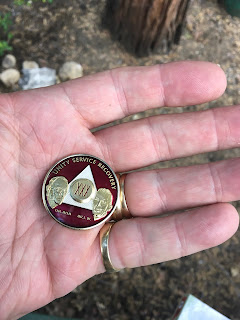
I’ll leave you with this, 32 years ago when I first got sober I asked my sponsor “If I slay my dragons, what will I write about?”


He laughed and laughed and finally explained, “Slay them? Oh no, at best you may learn to tame them just a little bit.”


For More About Charlie Huston https://www.charliehustonwrites.com/


For more on Ian Ayris  https://www.ianayris.org/


Friday, August 19, 2022

Dreaming Alone, by Josh Stallings

 Q: How do you beat procrastination? Do you use writing prompts? Tricks to get your motor running and word count climbing?

A: “Blue crazy fall creampuff dreaming alone car carcass oh here we go too long blinking stop light off pleasure timing clod hopper clinging to face long sea turtle love killing Aperol kicking ballerina sad time green supper oh damn vomit comixs fritz can go bigger than ever.”


WTF?


A: That is word-vomit. This was a two minute version but I usually do six minutes of writing gibberish. It’s harder that it seems, the brain keeps trying to stack words in order, to make sense. When I feel that happening I toss in another non sequitur. The point for me is to shut down the logical (editor) side of my brain. Allow the intuitive side to write the first drafts. When I get stuck, it is almost always that my logic brain has run an idea to its inevitable failure. My brain is really good at that. Sadly, it can’t help my writer’s brain. 


To train the writer’s brain to take over, I will next pull a title or two from the pile of “word-vomit.”


My picks: "Dreaming Alone" “Sea Turtle Love” or “Killing Aperol.” I’d write my favorite title at the top of the page, it’s like a writing prompt that my subconscious comes up with. Next I set a timer for twenty minutes and write or type as fast as I can. No stopping to correct or fix. Full tilt word boogie. I give my mind the freedom to roar and roam without worrying about getting it right. I used this process exclusively to write All The Wild Children. Really, that Anthony nominated memoir was the product of weekly word vomit sessions. Yes it took some editing, everything takes some editing, but the meat of All The Wild Children was written in twenty minute bursts.


The thing I love to do, the thing that keeps me sane, is writing. And when I need it most I avoid doing it. Why? That’s not rhetorical, really I want to know why? If you know why I avoid a task that gives me so much pleasure, drop it in the comments.


Charley Huston used to say, he’d think about an idea, research it, hold himself from starting to write until “wheels were smoking,” then pull off the brakes and let it fly. He talked a lot about writing with velocity. I interpret that as writing so fast and hard that your logic brain can’t keep up.


I believe my best ideas come when I am careening around the corners in a smoking four wheel drift, pounding keys and shaking the house. Everything I do is to get to that state.


That said, I have also learned that if I’m avoiding writing it could mean somewhere in the book I’ve lost the thread. I need to walk and think. Re-read and try to see where I lost it. If all else fails I use word-vomit to hit a mental re-set. Often half way through my wild typing of nonsense I hit a meditative state. Fingers type and I start to see images. I mentally note them and let them flow through me. The images often become a starting point for the chapter.


To get ready to write I build playlists for every book. Music I blast while writing. I write in Scrivener, it helps to organize my research. I collect folders full of photographs that tell me something about the world I’m writing. I collect newspaper articles. A folder labeled “Characters” has bios on folks in the story, and a collection of names I may want to use some where. What I read in the early part of the writing matters. For the book that’s on submission I only read books published in the late 70’s and early 80’s. For the book I’m working on now I’m reading John Steinbeck exclusively. I don’t know why only Steinbeck, just a hunch that it is what’s required to write this book.    


All of this is to build a world that is complete and will pull me into it.  


Here are some inspirational statements I’ve taped up on my office walls at different times:


“If not now, when.”


“These may be your last words.”


“Write fiercely.”


“Type bravely.”


“Above all, tell the truth.”


“You will fail, so what.”


I guess these are more confrontational than inspirational. None of them are easy. Writing isn’t easy. It’s amazing. It forces us to take deep inner journeys. It allows us to daydream and call it a job. And some days it is just hard work. But what worth doing isn’t hard from time to time? (Don’t answer, that one was rhetorical.)


Friday, October 8, 2021

Stop Rebelling and Learn to Take Editorial Advice. By Josh Stallings

 Q: Bad Advice – Not everything works for everybody. Give us some examples of writing advice, given to you in good faith, which just didn’t work for you. Tell us why you think it didn’t work.


“What am I rebelling against? Whadda you got?” - That’s from Marlon Brando in The Wild Ones. Words young me lived by. I distrusted authority and advice sounded like rules to be broken. This allowed me to create inventive and award winning movie trailers in my early twenties. It also made learning tough.


I didn’t write anything worth reading until after I gave up on contempt prior to investigation. I still distrust authority, but I’m willing to listen to advice, then see if it helps or hurts the writing. I always reserve the right to toss it away, which doesn’t make it bad advice, just wrong for me and my process. 


When my mother read my first screenplay, it was about youth, drugs and rock music in San Francisco. She gave me advice she’d read from an in flight magazine, “You should write about what you know.” Two problems, A, I knew a lot about the subject matter even if I wasn’t a good enough writer to capture it yet. And B, that advice is total crap, or at the least it’s overly simplistic. Time has allowed me to rethink it and state it as, “You should know about what you write. If you don’t, learn it.” 


Want to write about the homeless and you have been lucky enough to never have been on the streets? Volunteer in a soup kitchen, and then spend a few days on skid row. Talk to people, no wait REWIND… Stop talking and listen to people. Every one of us wants to be heard and seen. It’s easy, start with, “Hi, I’m Josh, how’s your day going?” You’d be surprised how open people get once you reach out. Also I take back what I said about working in a soup kitchen. That’s too easy. Try lining up and eating lunch in one, without saying “I don’t really belong here, I’m a writer.”


Stepping out of your comfort zone is how you meet people you want to write about. When writing TRICKY I needed to learn about the LAPD. Walking into Parker Center the first time felt scary, entering the Death Star scary. My grandfather was a cop, but he never let that world into his home. My parents were activists, I was raised in the counter culture. As a teenager I committed petty and not so petty crimes. Two days ago a Highway Patrol car followed me up the mountain. I sweated bullets for ten miles. Uniforms freak me out at an animal level. And yet, I knew I needed to spend time with the LAPD if I was to write about them. Lectures by cops, cop camp, ride alongs are all good ways to find facts, but truth is easier accessed over coffee.   


“Cool, but where do we go to meet criminals?” you ask. First, talk to your family and friends, you might be surprised at how many solid citizens have criminal pasts. My grandfather the cop? As a kid, he sold bootleg hooch to sailors on the pike. His 6th grade teacher said he’d spend the rest of his life behind bars, and he did, he retired as Chief of Corrections. Or, if your family is squeaky clean but you are lucky enough to be a sober alcoholic, they have these meetings where you’ll meet all kinds of folks. Some of us used to be criminals. Get to know us and we might even share how it felt. 


However we do it, we need to break free of the notion that there is an us and them. Cops and robbers. Freaks and straights. There is only us on good and bad days. You are not your worst idea or your best. This isn’t an intellectual idea you can learn from a book or Google, it can only be learned hanging with people and getting to know them.


Moving on. Here is some other writing advice that chafed me, “Never start with a flashback.” Never, unless it works. Flashbacks are by nature problematic in that they can put a protective layer of time between the events and the reader. Get them right and they can be brilliant.  


I heard an editor I respect once say, “Never have multiple POVs. Every time you change POV you go back to square one for the reader.” I didn’t yell from the audience “Bullshit.” I thought it, didn’t say it and that’s growth. In Jamie Mason’s brilliant Three Graves Full she changed POV almost every paragraph. Hell she even had a police dog’s POV. It works. It builds rhythm and tension and humor alternately. 


That doesn’t mean the editor was wrong. We all aren’t Jamie Mason, so if we’re going to be switching our POVs we should do it with caution, run it by a reader we trust to tell us their true reaction. Notice I didn’t say a reader willing to tell THE truth. Writing is subjective, there is no one truth. 


On the day of my wedding to Erika, my grandfather pulled me aside and told me, “You will have a happy marriage once you realize she’s right.” I could have taken this as a joke, or bitter cynicism, but my grandfather was a deep thinker and he planted thoughts inside jokes like zen koans. Years later I finally understood it. If I approach disagreements with Erika from the position of, “I know you’re right, but I don’t see it yet, explain it again please.” Then we are having a discussion not an argument. 


Writing is easier than marriage. As the writer of record, I am the ultimate arbitrator of what gets published. This gives me the freedom to listen to anyone’s opinion. A publisher has the power to not publish the book if I don’t change it. An agent can drop me if I don’t take their advice. Readers may not flock to my work if I don’t listen to anyone's advice. All of these are consequences of my decisions. The reason I have the final word is I alone will be held accountable for the book.


The best writing advice I’ve ever been given came from Charlie Huston. We were sitting in an Atwater bar, I was going on about my book being nominated for some award. He listened for a bit then stopped me, “Enough, what are you working on now?” I must have looked hurt so he explained, “Awards are for things you already wrote. They’re in the rear view. The important stuff is in front of you.” 


I think that’s also true for our disappointments. No one picked up your amazing MS, got it, sorry… But what are you working on now?   

Sunday, August 2, 2020

Getting Crafty by Brenda Chapman

When you have craft questions, where do you go for answers? A particular website? A book? Podcasts? Writer friends?

 Like all writers, I’m constantly on the look out for any new information that will advance my craft, be it improvements on writing style, story arcs, character development, building suspense, or pretty much anything. I can’t say that I have one website or one writer friend to turn to when I have questions. My method for acquiring knowledge is more of a shotgun approach — I’m constantly absorbing information from wherever or whomever I can get it.

One of my primary resources is the wealth of books written by my fellow authors. Not only do I read for enjoyment but I also read to analyse why a story works and even why it doesn't (in my subjective opinion). I look at word choice, sentence structure, plot, character development ... you name it. This isn't to copy their style or to steal from their stories but rather to improve on my own writing. (A lot of this goes on subconsciously at a mystical level that authors sense but can't explain.)

I've also read a lot of writing wisdom online as well as watched writing workshop videos. There's an amazing amount of solid writing advice at our electronic fingertips. Stephen King's famous rules of writing are a good place to start. Last year I gave a writing workshop on point of view and found an amazing amount of information online. I also turned to a book that I bought at a book conference a few years back Write Away by Elizabeth George.


A little anecdote about the book. I bought a hard copy and stood in line to have Elizabeth George sign it. I've long been a fan of her Inspector Lynley series and was excited to meet her The lineup was long as you can imagine and the wait time was more than I had to spare so I bowed out after about twenty minutes. Anyhow, when I finally opened the book back in my hotel room, lo and behold, I'd unknowingly bought a signed copy! This reminds me that book conferences and attending panels have also been great ways to glean tidbits to improve the writing craft. I can't tell you how many times a bit of advice from an author on one of the panels comes back to me as I write or market my work.

Back to this week's question. I've been fortunate to belong to two crime-writing organizations that are into writing development and information-gathering in the crime field. Any writers getting started in the business can't go wrong joining an organization or two for support, friendship and information.

Capital Crime Writers is Ottawa-based. Over the years, they've had numerous experts in to speak about everything from art theft to gambling in sport to gang activity. Psychologists have spoken about narcissism and detectives have given workshops on murder scenes. In addition, authors have spoken about various aspects of the craft and generously given tips and advice. Every speaker has donated their time, making this an invaluable resource that I've never taken for granted.

Crime Writers of Canada is our national organization for crime writers and they offer online workshops on the writing business and the craft of writing. I recently watched a presentation on poisonous plants, for example. Canadian crime writers - I urge you to join if you haven't already!

I also belong to The Writers' Union of Canada and note that they have a number of online presentations not tailored to crime writing specifically but still very informative about all aspects of the writing business. I've yet to watch any although several are of interest. I read their newsletter, which is also a good resource. 

As for specific craft questions, I've worked with various editors assigned by my publishers and have learned a great deal from each one. The key is to be open to their knowledge and to absorb whatever makes sense for my writing going forward. I've also learned a lot speaking with other authors and reading their blogs and like nothing better than getting together with another author to 'talk shop'.

Ultimately, what to use from all the advice on craft that one takes in is up to each individual writer, but we're lucky to be in the community of people who like to share and mentor. I can't imagine the day will ever come that there won't be something new to learn or to tweak.

website:  www.brendachapman.ca

Twitter: brendaAchapman

Facebook: BrendaChapmanAuthor

Friday, March 22, 2019

To Prologue or Not to Prologue

Which writing advice tropes do you follow, and which do you ignore in your books and short stories? 

by Paul D. Marks

Before I get to this week’s question: I did a post for SleuthSayers, the other blog that I write for, that’s very personal to me. The post is “Sometimes The Big Sleep Comes Too Soon”. And it’s something a little different. More personal. But something everyone can relate to. Friends. Friendship. Regrets. Mortality. I lost two friends recently, I talk about them there. I don’t usually tout another post here, but this one is close to my heart and I hope you’ll check it out. Thanks.

https://www.sleuthsayers.org/2019/03/sometimes-big-sleep-comes-too-soon.html  

***

And now for today’s question:


There’s all kinds of writing advice tropes. People tell you to write what you know, don’t use flashbacks, don’t use the word “was” or “is”. No prologues. Don’t use adverbs. Don’t open on the weather. Don’t end on a preposition. Don’t use a thesaurus. Stephen King says, “Any word you have to hunt for in a thesaurus is the wrong word. There are no exceptions to this rule.” I find that sophomoric – and yes I got that from the thesaurus when I really wanted to say absurd. But it’s not a word I would use generally. The thesaurus is a great help. Of course – I also tend to use ‘of course’ a lot – you don’t want to get those hundred dollar words when a two dollar word will do. But the thesaurus is extremely helpful in helping you see things a little differently. But then he’s a lot more successful than me so maybe he knows something I don’t.

I follow or ignore any particular writing advice, depending on the story I’m working on. It’s not that I set out to be transgressive and break rules as an act of rebellion. I just do what works best for a particular story. I’m going to focus on one of those elements here: prologues. Personally, I find this one especially annoying. I like prologues…sometimes.

I’ve heard all the advice about not opening with prologues. And I think that might be good advice sometimes, but not all the time. And people who stop reading when they see the word “Prologue” might be missing out on some good stuff.

In my novel White Heat I open on chapter one – no prologue. Things get moving right away when a potential client comes into private eye Duke Rogers’ office with a job for him. In the sequel, Broken Windows, I start with a prologue.

If the prologue is simply to give backstory and exposition then maybe it’s not a good idea to open with it. But if the prologue opens on action, as it does in Broken Windows, which opens with a woman climbing to the top of the Hollywood Sign and jumping to her death, then it’s a different story. This prologue, which doesn’t involve the main character, hopefully intrigues the reader to want to find out who she is and why she jumped. And, once we get into the main story in chapter one, how she ties into that story.

In my World War II homefront mystery that I may have mentioned here previously, which will be coming out in, I think, 2020, I have both a prologue and an epilogue. I think they’re both appropriate to that story because those two sections take place in the present, whereas the body of the story takes place during the war. So they set up the action with characters that are related to or were in the main story. But they’re not exposition dumps. I think they frame the story and give it a certain perspective that just opening in the war years wouldn’t do.


Back in the day, when I was doing a different kind of writing, there was a producer who said if he saw ellipses in a script he would stop reading. Maybe he had a good reason for doing that. On the other hand, he may have missed out on some pretty good scripts, maybe even something he would have wanted to produce. Being so rigid, whether it’s ellipses or prologues – or other things – limits your possibilities. The key is whether those things work in the context of the story.


So that’s the bottom line for me. There are rules. And sometimes rules are made to be broken. As long as what you do works, go for it and be true to yourself and your story.

What do you think?

~.~.~
And now for the usual BSP:

The third story in my Ghosts of Bunker Hill series, Fade Out on Bunker Hill, appears in the March/April 2019 issue of Ellery Queen Mystery Magazine. If you like the movie Sunset Boulevard, I think you'll enjoy this story. In bookstores and on newstands now:


Please join me on Facebook: www.facebook.com/paul.d.marks and check out my website www.PaulDMarks.com