Tuesday, October 22, 2024

O the Horror, O the Writer


It’s Halloween week. Do you read horror? Have you written any? Why or why are you not a fan?


I don’t read the genre as much as I did. Like the child Cole Sears in The Sixth Sense, I see horror everywhere.


We live in a world where images are manipulated and some graphics are done so well that you don’t know whether they are real or not. An ‘alleged’ example of this phenomenon are the moon landing photos. There are some among us who believe Stanley Kubrick created them in a Hollywood studio for the US government.


We live in a world of perpetual surveillance. The GPS in our cars, and in our phones act as personal beacons. Cameras mounted on traffic lights watch us. Web cookies track our browser history. We have been reduced to eyeballs and dollar signs. We research a product on Amazon, then Facebook serves us ads. We subscribe to a newsletter, and the hounds of internet marketing are unleashed. That we are made complicit in the technology that enslaves and mesmerizes us is a form of horror to me.


Then there is the horror of perpetual anxiety. Fact-checking doesn’t exist. Inundated with information, we don’t know what to believe because contradictions abound everywhere. The SNL skit that goes back and forth in time about whether eggs, butter, and cholesterol are good or bad for you or not illustrates Information as a case of Orwellian newspeak. The Truth and the Lie will be televised simultaneously tonight.


As a child, I burned through the pages of Carmilla, Dracula, Frankenstein, The Invisible Man, and The Strange Case of Dr. Jekyll and Mr. Hyde unafraid because I knew those supernatural creatures didn’t exist. I liked to compare the stories to their film adaptations. I loved the Gothic atmosphere, mist on the moor, but I read with a keen awareness that horror was about unspoken fears and desires. The Victorians equated the erotic with horror. Paging Dr. Freud.


As I ventured deeper into the genre, I never lost sight that horror (and most creative writing) is a metaphor for something else. Hawthorne made real the Puritan fear of the devil in the woods. Vampires were either supernatural bloodsuckers or a metaphor for parasites. German currency once displayed the vampyr as a symbol of rampant inflation. We came to know how the Nazis portrayed Jews as monstrous creatures. We became the robots, the mindless automatons, and monsters. We are the zombies, the unaware and mindless consumers. Both Frankenstein and Jekyll and Hyde showcase science gone unchecked. Horror held up a mirror to social issues. The Shining is a hard exploration of alcoholism—although the topiary animals scared me. 1984 and The Handmaid’s Tale are horrific allegories about the authoritarian state. True crime is the new horror. We started with Dr. Moriarty and ended with Dr. Lecter.


A shortlist of what truly scared (and scarred) me as a kid were:

Almost all of Grimms’ Fairy Tales.

Almost all of Kafka.

Horacio Quiroga’s Jungle Tales (Cuentos de la Selva). He is the Spanish Edgar Allan Poe.

Collodi’s Pinocchio, especially the scenes with the Blue Fairy and the ravens.


As a writer, I try to challenge myself and not confine myself to one genre. It’s fun to stretch and test our skills. I’ve written and had horror short stories published.


·      “Star of the Sea” in Writers Crushing COVID-19. A ‘ghost ship’ is discovered at sea and boarded. Rats have replaced the crew. A ghost ship is an abandoned ship found at sea.


·      “Coming up Roses” in the Sandy River Review. Rivalry during the annual rose competition takes a dark turn when a contestant uses special soil and finds a statue of a gnome in her garden.


·      “Last Royal” in Horror USA: California Anthology. A cub reporter scores the scoop of a career when a reclusive Hollywood star grants him an exclusive interview at her mansion.


·      “Diet Girl” in Levitate Magazine. A young girl with body image issues discovers a novel way to lose weight.


·      “Saving Grace” in Snowbound: Best of New England Crime Fiction. Set in colonial Massachusetts, Mercy Goodfeet hides a terrible secret.


·      “Zombees” in Black Chaos II Anthology. A small New England town experiences a strange new strain of bees.


·      “The Undead” in Paper Tape Magazine. Man renews his license at the local DMV, only to be told he is listed as dead and he has to prove he is alive to the state.


·      “La Santa Muerte” in the Doctor T.J. Eckleberg Review. Two young cousins, an injustice, and the Mexican death cult.


What’s on your shelf that scares you?


Monday, October 21, 2024

The Secret War of Julia Child

 Diana Chambers is a world traveler and a member of Sisters in Crime Norcal. She worked on this book idea for years and it's great it's now been published! So, here goes with her fascinating guest post.

THE SECRET WAR OF JULIA CHILD AND ME

By Diana R. Chambers


In my university days, I used to be intrigued to discover connections between seemingly unrelated ideas and concepts, people and places. About ten years ago, I had such a light-bulb moment when I read that Julia Child had served with the OSS in WWII Asia. My brain practically exploded. The Julia Child? In America’s first spy agency? In India and China?!


Figure 1: China-Burma-India, The Pacific War's Second Front: Museum display, Chongqing, China


These three elements had connected in a way that seared my brain.

It was like a coup de foudre, love at first sight: I was swept away. This fated discovery has captivated me for the past ten years. But only after The Secret War of Julia Child was finished did I realize that Julia and I had both landed in India at around age thirty. After drifting through our twenties, we both began our formative years.


While I flew into the old Delhi airport in the middle of the night, Julia arrived on a trans-Pacific troopship in Bombay, barely missing a huge explosion in Victoria Harbor before boarding a train across India, then south to the teardrop island of Ceylon, off India’s southeast coast. 


Figure 2: Colombo, Sri Lanka railway station: narrow-gauge steam train to Kandy


Back in the day, I’d studied Indian art history, then continued my studies and explorations of the subcontinent over the years.


Figure 3: Ajanta caves, India


I was deep into The Secret War of Julia Child when Penguin India published my novel about a Hollywood actress, the last days of princely India, and the dawn of Independence, The Star of India—with its espionage subplot—in the first months of Covid. 


Figure 4: Cooch Behar Palace


Figure 5: Nancy Valentine and HH Jagaddipendra Narayan, the Maharaja of Cooch Behar


Besides India, I’ve traveled all over China, where The Secret War of Julia Child ends. So I felt on solid ground undertaking a book about Julia’s experiences in the spy trade of WWII Asia. 

As it turned out, I was shocked by how much I didn’t know. In school, we’d barely touched on wartime events in what was then known as the Far East—which was to most of us, very far indeed. I realized why it’s known as the “Forgotten War of Asia.” Digging deeper, I discovered how imperialism had shaped regional history—as well as intriguing conflicts between America and Britain, which became a backdrop of this story, Julia’s story. But I also wanted to give justice to the other story: the suffering and sacrifices of the Asian peoples who became swept up in the Second World War.

The Indians put aside their century-long independence struggle to join the global one. The Chinese pressed on with their grueling ten-year war of resistance against the Japanese, holding back the Imperial Army from sweeping across Central Asia to Germany’s aid. Their contribution to fascism’s defeat deserves greater recognition and our profound gratitude. 


Figure 6: Worshipper at the Temple of the Sacred Buddha Tooth, Kandy, Sri Lanka


Figure 7: Flower Market, Kandy

As the novel opens, Julia McWilliams has risen to run the Office of Strategic Service’s secret file Registry in Washington, DC, holding the highest security clearance and working directly under OSS founder, General “Wild Bill” Donovan. He later sends her into the field to set up document Registries in Kandy, Ceylon (South East Asia Command), then Kunming in southwest China (China-Burma-India). To the end of her days, Julia honored her vow of secrecy by insisting she was “only a file clerk.” However, given my knowledge of her character, discipline, and drive, I believe it highly likely that Donovan also used her as a trusted source. 

Growing up in Pasadena, Julia had been a meat and potatoes girl, barely acquainted with a can opener—until Bombay. At her first taste of the local food, her taste buds salute. The curry! Grilled naan! Fresh pulpy mango juice! All these mysterious little dishes. It’s a revelation. As she discovers a new world of flavor, the world opens up to her. And she plunges right in, heart and soul.


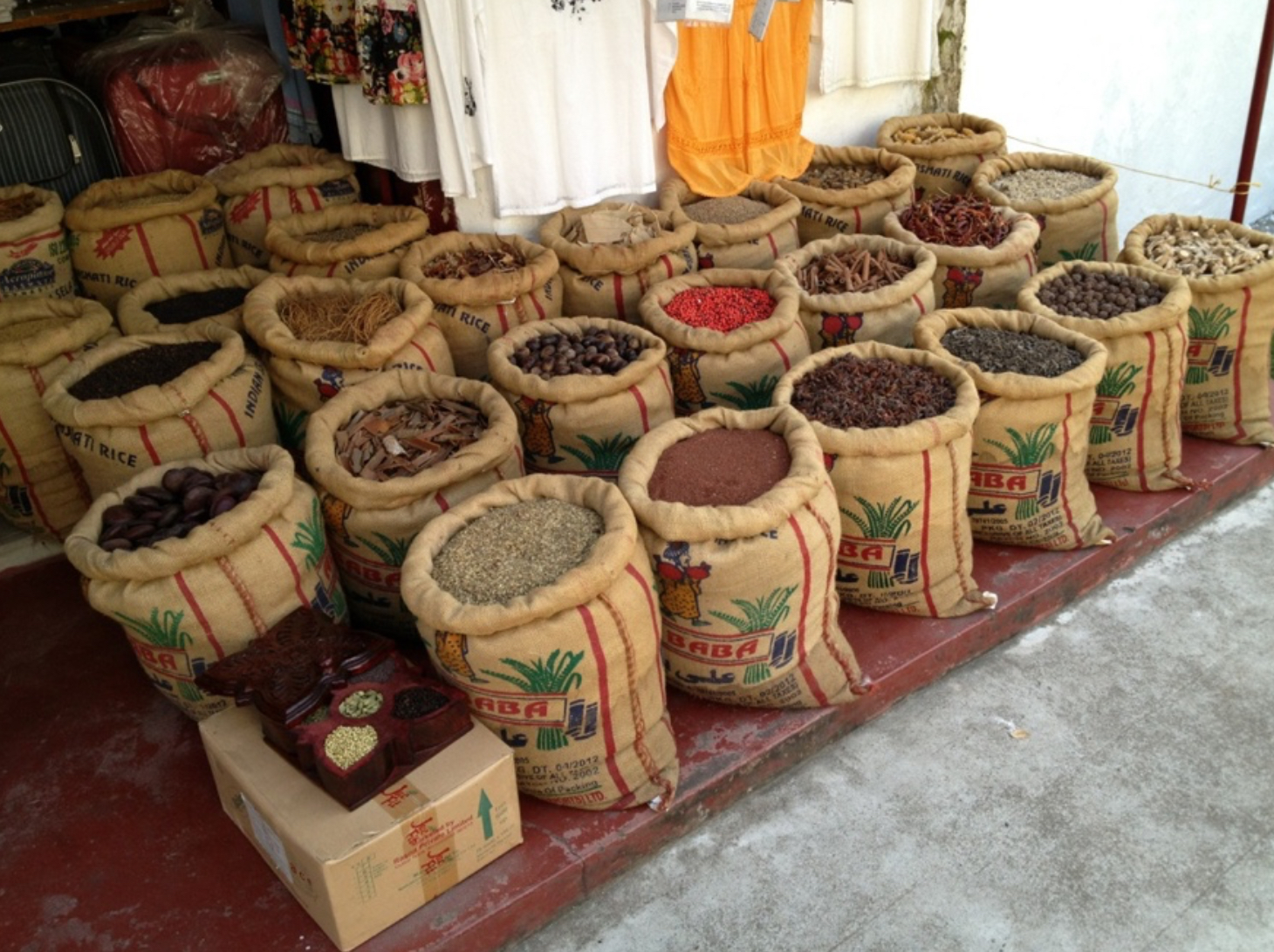
Figure 8: Kerala  spice market


Figure 9: Bangalore market


Then in a former Kandy tea plantation, OSS Detachment 404, she meets chief mapmaker, Paul Child—short, balding, almost forty, a humorless pedant. This annoying man turns out to be a brilliant artist, world traveler—and sophisticated foodie who’s lived in Paris. They’re stuck together on a small base in a distant corner of the world, more than a little reminiscent of Casablanca


Figure 10: Reclining Buddha, Kandy temple


By the time they fly “over the Hump”—the Himalaya—to China and the perilous front lines of Kunming’s Detachment 101, Julia has begun to admire his better qualities, and he’s stopped looking at other women. They continue to share meals...and more.


Figure 11: “Over the Hump” display, Chongqing Museum


One thing is certain: The rich and sophisticated cuisine of China remained the couple’s second favorite for the rest of their lives.


Thursday, October 17, 2024

You Can't Beat The Classics - By Harini Nagendra

We keep writing new books, but there are so many classics out there. What are the crime fiction classics you think every writer should read?

Like most mystery/crime fiction authors, I started writing my series because I fell in love with this genre when I was very young. Here, in semi-chronological order were the books and authors I loved reading, and still find myself returning to - despite the anachronisms that make me cringe (for some of them).

1. Enid Blyton, Five Find Outers series - The Mystery of the Spiteful Letters

I loved the Five Find Outers, five children who sleuthed with their dog. I especially loved this one because - unlike many other Blyton books, which were strong on characterization and setting, but could be very thin on plot - this one had a lovely mix of red herrings, real clues - and red herrings which the children laid out to fool their nemesis, choleric Inspector Goon, but which turned out to be real clues. I do find these more difficult to read now. The characters are still as loveable, and so is the setting of an old English village - and the food! How does Enid Blyton manage to make boiled eggs sound so appealing? But her books also have an annoying tendency to make the girls seem weak and in need of some masculine help, and overly involved in cleaning and cooking for the boys. While this series is better than many others (the Famous Five being one of the worst offenders), it still bears strong traces of the time in which it was written. Great plotting though!

2. Carolyn Keene (ghostwritten by Harriet Stratemeyer Adams), Nancy Drew series - The Thirteenth Pearl   

After reading far too mysteries where girls were relegated to bit players, I fell in love with the Nancy Drew series. Plots are thin, adventure high, and the settings are deftly sketched out - the bit I liked best was the chance to travel across the world through the eyes of the books. As an older reader, I jumped at the chance to purchase a full set of the books when they were reissued with the original hard covers - some were harder to read now, again because of the way in which some gender roles are characterized. Nancy's best friends, cousins George and Bess, tend to annoy me now - but as a historical fiction writer, I love the way in which these books weave history and science into the story. I selected this one because I got to learn a lot about pearls, natural and artificial, especially how they are made and sold, and what makes some kinds of pearls especially valuable to collectors. This - communicating interesting facts about the world around you without using a series of boring info-dumps - is a skill that's good to have.

3. John Buchan, Richard Hannay series - Thirty Nine Steps

 I love the Richard Hannay series. My personal favourite is book 4, Three Hostages, because it delves deep into the art of hypnotism, and especially into why some people can remain immune to its effects while others are especially susceptible. But Thirty Nine Steps is better known, also made into a movie directed by Alfred Hitchcock (though some would say the movie is loosely based on the book). It's more of a spy thriller than a mystery, and the anachronistic descriptions of race and country are rather obvious when one reads them today, and the language rathe more flowery than we are used to now. But the entire series is a fun read, and I love the way Buchan keeps the action rolling, intense but never overwhelming, keeping the anticipation high and the villains evil but steering the book away from the truly gruesome. Not easy to do in a book about war and international intrigue. This book was set in 1914 and written in 1915, in the early part of World War 1 - Buchan was writing about events that would change the face of the world, without the advantage of hindsight, which writers setting books in WW1 now possess. Quite a feat, when you think of it.

4. Dorothy Gilman, Mrs. Pollifax series - The Unexpected Mrs. Pollifax

OK, I love all the Mrs. Pollifax books, and I couldn't pick one, so I settled on the first one. The plots are completely unbelievable - Mrs. Pollifax is a senior citizen, retired, spending time in her garden with her potted plants - and through a series of accidents, ends up becoming a CIA spy, sent off on various international assignments. In this one, she travels to Mexico but ends up in prison in Albania. Set in the Cold War, what I love about these books - which can get fairly dark in spots - is the regard and appreciation for diverse cultures that Gilman brings to her writing, and the social critique that she subtly embeds into the plots - without overwhelming the books. When I re-read them now, that's what I am looking for, and trying to learn from.

5. Agatha Christie, Why Didn't They Ask Evans

This is the only one in my list that is not part of a series - but it's one of my favourite Christies, nevertheless. The title gives away one of the main plot points - and yet it doesn't. A man dies, but not before asking his rescuer the question. The rest of the book is devoted to figuring out a number of associated puzzles - who is Evans, who are 'they', why didn't they ask Evans, what should 'they' have asked Evans... it's a long list. And the twist, when it comes, is unexpected yet delicious, in the way only Agatha Christie can make it. Small wonder that she's the mistress of crime and mystery writing! 

 What are some of your favourite classics?


Did the Ancient Romans Have Posh British Accents? From James W. Ziskin

Do books get lost in translation? What are some non-English novels you love and are there any that didn’t work over the cultural divide? 

I’ll veer slightly off topic this week since I don’t read a lot of works in translation. I did, however, do my graduate work in Romance languages, which means that I read a lot of novels in the original French, Italian, and Spanish. Everything from Elsa Morante to Manzoni to Stendhal and Sartre. And while I have read many European books in translation, I wouldn’t know if anything was lost in translation if I didn’t read the originals. Makes sense, right?

More recently, within our genre, I’ve read Scandinavian authors such as Stieg Larsson, Jo Nesbø, Ragnar Jónasson, Arnaldur Indriðason, and Yrsa Sigurðardóttir, but since I don’t speak Norwegian, Swedish, or Icelandic, I wouldn’t know if the translations were lacking in any way. I have a sense, however, that Nordic languages translate more easily into English than, say, Italian. Maybe it’s because English and the Scandis all sit on the Germanic branches of the Indo-European family tree of languages and are more closely related to each other than to the Romance languages. While it’s true that English enjoys a rich French legacy—about thirty percent of our words—thanks to those conquering Normans, our language shares fewer of the grammatical and lexical similarities that French, Italian, Spanish, and Portuguese do with each other.

Laurence Olivier


So, in movies, a British accent always sounds believable coming from a German or Swedish character. On the other hand, how many Italian characters speak with the clipped precision of Received Pronunciation? The exception here, of course, is the Ancient Romans. In film, they all speak like John Gielgud, Ralph Richardson, or Laurence Olivier, and we like that.


Franco Nero
Rossano Brazzi
Louis Jourdan
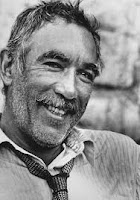
Anthony Quinn


But if we’re talking French characters, they’re usually Americans parroting—how you say—zee phony accents. Unless they’re Louis Jourdan, Charles Boyer, or Maurice Chevalier. Maybe Jean Reno more recently. And Italians? Back in the 1950s and 1960s, it was undoubtedly Rossano Brazzi or Franco Nero playing the handsome Italian in American movies. Those two also played Frenchmen in a pinch, but never with a posh English accent. And, if we wanted a good-ol’ American to play a Mexican, Greek, or Italian, well, there was always Anthony Quinn. Hell, even Fellini cast Quinn as an Italian in La strada. Okay, Quinn was born in Mexico, so he’s in the same boat as Brazzi and Nero playing Frenchmen. My point, I suppose, is that those guys were Latin types, not British, and, as such, somewhat interchangeable by Hollywood standards. Just as Brits and Ancient Romans are.

But back to books. Which foreign language mysteries do I enjoy reading? I confess to a cultural bias, having read mostly Western European authors. I love Georges Simenon’s Maigret novels, Andrea Camilleri’s Inspector Montalbano, and Eco’s The Name of the Rose, which is one of the greatest crime novels of all time (in my opinion, at least.) I also recommend Ilaria Tuti, alongside whom I was a finalist for the Sue Grafton Memorial Award in 2021. Alas, neither of us took home the hardware. That went to Rosalie Knecht. Right now, I happen to be reading Fred Vargas’s Pars vite et reviens tard. Super!

I suppose I need to branch out and read more broadly. Please post some suggestions in the comments below.


Wednesday, October 16, 2024

The Top Shelf

We keep writing new books, but there are so many classics out there. What are the crime fiction classics you think every writer should read?

by Dietrich


I think it’s subjective, and we’ve all got our own favorites, but there are crime-fiction classics that I’ve enjoyed reading, then rereading and some of these novels remain among my favorites. While some of the authors are long gone — Elmore Leonard, George V Higgins, Charles Willeford, and James Crumley, Sue Grafton and Agatha Christie — their novels live on in classics like Freaky Deaky, The Friends of Eddie Coyle, Miami Blues, The Last Good Kiss, A is for Alibi, And Then There Were None — all of them deserving that top shelf. 


And there are many talented writers with new releases that are sure to become tomorrow’s classics.


After reading Don Winslow’s latest, City in Ruins, the third installment in the Danny Ryan series, it’s a good feeling knowing Winslow’s in fine form and going strong. It would be hard to pick a favorite among his novels, but The Winter of Frankie Machine does stand out for me, and it’s one I highly recommend. It’s about a retired hitman who has a botched attempt put on his own life, and he sets out to find his would-be killer and turn the tables.


James Lee Burke – The Neon Rain was the first in the Dave Robicheaux series, another classic and another great series, right up to his latest and 24th in the series, Clete, which currently sits on top of my reading stack. The tale’s told from the perspective of Dave’s partner Clete as the two of them aim to stop a gang of ruthless drug smugglers.


Karin Slaughter’s This is Why We Lied is the latest in her Will Trent and Sara Linton series. It’s a locked-room mystery of the first order that kept me turning the pages. Excellent writing that’s sure to become a classic series. 


Mick Herron — From the first in his Slough House series, Slow Horses, Herron had me hooked on this bunch of washed-up MI5 spies whiling away what’s left of their failed careers. Book 8 in the series is Bad Actors, in which Jackson Lamb and his slow horses are called on once more to do what they do best, adding chaos to an unstable situation. There’s also a collection of novellas set in the Slow Horses universe titled Standing by the Wall, which I’m looking forward to reading.


James Sallis’s Lew Griffin novels are top-notch reading. The series started with The Long-legged Fly (1992) ending with the seventh, Ghost of a Flea (2001). Lew’s a boozy, jaded, cynical black private detective on a missing person’s case on the mean streets of New Orleans in the 60s. It’s first-rate detective fiction that’s loaded with great characters and fabulous dialogue.


Daniel Woodrell’s Under the Bright Lights was the first in his The Bayou Trilogy and one I thoroughly enjoyed. It’s fast-paced and hard-hitting, and when you read it, you’re sure to go on to Muscle for the Wing and The Ones You Do — another highly recommended series.

Sunday, October 13, 2024

Not Lost in Translation

Do books get lost in translation? What are some non-English novels you love and are there any that didn’t work over the cultural divide?

Brenda here

This week's question has me thinking. I'm certain that I've read many non-English, translated novels over my lifetime, but the first ones that come to mind are Swedish or Scandinavian mysteries. I've read most of Liza Marklund's Annika Bengtzon series, and Stieg Larsson's The Girl with the Dragon Tattoo series, amongst others. I've judged some translated passages to read awkwardly, but this has never been a major concern as long as the story flows.

Then there are the South African (Afrikaans) books by Deon Meyer that I've read and enjoyed in translation. His Benny Griessel series is terrific. 

I've, of course, read other translated books, although none immediately pops into my head. I guess that means the translation was good enough not to bother me. As when I watch a foreign film with English subtitles, I get into the rhythm of the text and genre and don't get bogged down by errors as long as the sense of the piece or dialogue isn't lost. The word choices can be charming at times.

I studied French in high school and throughout my government job (even going on French-language training full-time for a year), and know first-hand how difficult it can be to find the word with the exact same meaning in another language. There are often cultural nuances that cannot be dismissed. And let's face it, the English language is a nightmare. (There, their, they're. Double/triple meanings. Slang....)

My view is that translated works can enrich and broaden our own lives - a kind of journey into someone else's world without the need to leave home. Whatever helps to build greater empathy and to bridge commonalities in the human condition is a wonderful thing. Learning about other countries and cultures by way of translated stories, mais c'est magnifique!

And to all my Canadian readers:

website: www.brendachapman.ca

Facebook & Instagram & Threads: BrendaChapmanAuthor

Twitter (X): brendaAchapman

Friday, October 11, 2024

10 Books Every Crime Writer Needs to Read, or a Quick Guide to Hard Boiled, by Josh Stallings


Q: We keep writing new books, but there are so many classics out there. What are the crime fiction classics you think every writer should read?

A: The longer I’m on this planet, the less I get what is and isn’t a classic. Dylan enjoys listening to Classic Rock when we’re driving, I do too. My problem is, when they play a band from 2014. I think Classic? Really. A classic car show featured a DeLorean. The Go-Go’s are a staple of classic rock radio. I love the Go-Go’s, but their music is only two years older than my favorite coke filled douchemobile. Can they both be classics, or is the term “classic” flexible, meaning  a certain age, that changes with what you’re referring to? Or is it a value judgement, i.e. Classic is what I like, what I believe will stand the test of time.


I’ll go with ten foundational novels that helped me discover or improve my love of crime fiction. To do this, I’ll break them down like a Venn diagram into sub-genres that all overlap in the larger genre of crime fiction. 


Hard-boiled


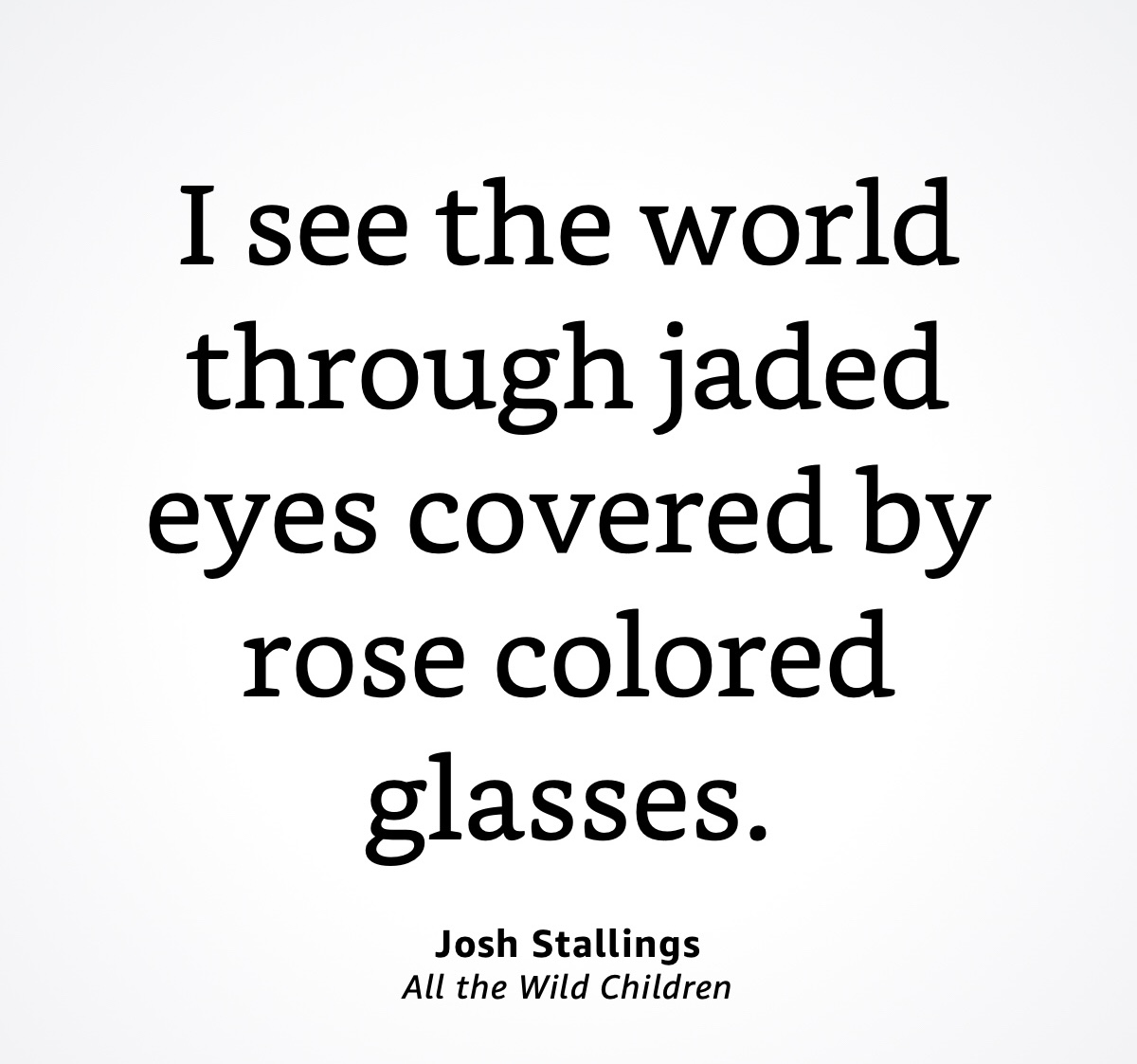
Here’s a quote that captures the hard-boiled point of view; 


“I see the world through jaded eyes covered by rose colored glasses.”— All the Wild Children by Josh Stallings.


Here are four foundational hard-boiled novels:


#1 The Big Sleep, by Raymond Chandler, is where I discovered hard-boiled. Witty and tough. Philip Marlow was the original knight in tarnished armor. Chandler cares more about character than buttoning up every plot point. If you love puzzle mysteries, he might drive you mad.


#2 Cotton Comes to Harlem, by Chester Himes. I could have picked any of the "Grave Digger" Jones and "Coffin Ed" Johnson books, but this is the first one I read, so it remains my favorite. The names Himes gave his detectives are two of the best character names in crime fiction. Because they are police, this also fits into Police Procedural. Himes' exploration of racism and black on black crime could label this as Social Commentary. But its tone is pure hard-boiled.


#3 Devil in a Red Dress, by Walter Mosley. First of the long running Easy Rawlins series. Easy is a school janitor and amateur detective. He also collects emotionally lost kids and builds a family over the series. They are quintessential LA novels, set in Watts over multiple decades. He shows us an LA Chandler never saw. 


#4 Dancing Bear, by James Crumley, could’ve been Hunter S Thompson and Raymond Chandler’s booze soaked collaboration. Yes, it has sex, drugs, and rock-n-roll. Brilliant similes describe a painfully harsh but romantic world view. Dancing Bear is the best hard-boiled novel ever written. It says the world is a rotten and mean place, but it is still worth saving. Reading it as a young thuggish man, I thought even I, with all my flaws and scars, could be the one to save someone or something.


Country Noir


#5 Tomato Red, by Daniel Woodrell. Fuck J.D. Vance and his condescending Hillbilly Elegy. If you want to read about hard scrabble hill folk from a writer that knows and more importantly loves them, read Daniel Woodrell. Winter’s Bone is equally fine. Hell any Woodrell is great reading. Tomato Red just grabbed me harder than the rest. 


#6 No Country for Old Men, by Cormac McCarthy. My Love affair with McCarthy started with the border trilogy, amazing books. But No Country sticks in my mind like a fishhook.


Latin American Hard-Boiled 


#7 An Easy Thing, by Paco Ignacio Taibo II. This is the first in the Héctor Belascoarán Shayne detective series. Actually it is the second, but Días de Combate has not been translated into English. Which is a bloody shame. Taibo reads like stream-of-consciousness word jazz. He plays out in the realm of absurdists and surrealists while adhering to the hard-boiled genre close enough to keep my heart pumping a staccato rhythm.


#8 Death in the Andes, by Mario Vargas Llosa. Magical realism kicks hard-boiled in the nuts. Hard-boiled goes down to one knee but comes back swinging. Mario Vargas Llosa is a Nobel Prize-winning Peruvian author. After finishing Death in the Andes I flew through most of his English translated books.


#9 Dark Echoes of the Past, by Ramón Díaz Eterovic. Chilean P.I. Heredia investigates a murder with links back to political prisoners held, tortured, and disappeared during the time of dictator Augusto Pinochet. Eterovic mixes wry humor with horror and heartbreak delivering one stunning cocktail.


Epic Crime Fiction


Mario Puzo’s The Godfather books should dominate this sub-genre. But I’m not sure I ever read them. I saw the films enough times to think I read them. Fifth grade, a kid stole a copy of Godfather from his parents and read to me and three other boys, the sex scene from the wedding. Wow. That’s all I remember, wow. So as my foundational work, let me present:


#10 Cartel trilogy by Don Winslow. Power of the Dog was published in 2005, Cartel in 2015, and The Border in 2019. By any standard, does that make it a classic trilogy? Hell yes, by my standard. Fanatically researched, it tells the tale of the growth of the Mexican cartels from multiple POVs, DEA agents, cartel members, Irish hitmen, Mexican journalists, doctors. Readers gain a deep view of the war on drugs being fought on the Mexican border. It is also one of the finest examples of multi story line novels I have ever read. I’m following Callan, a young Irish hit-man, and just when I’m wondering what happed to Adán Barrera’s story line, it arrives. It is as violent and hard as the world it’s set in. Never gratuitous, it is nuanced, and willing to challenge the readers’ ideas of the border. Just stunning, must read for writers and readers alike. 


I’ll leave you with this quote:


“The central question of crime fiction is how do you live decently in an indecent world.”

— Don Winslow 


What am I reading today:


Finished, We Will Be Jaguars: A Memoir of My People, by Nemonte Nenquimo, Mitch Anderson. Nemonte Nenquimo Indigenous activist, author and leader of the Waorani Nation in the Ecuadorian Amazon basin. How she got from a jungle girl who wanted to be white like the missionary’s daughter to a powerful force uniting multiple indigenous factions in a battle against big oil’s destruction of their homes is miraculous. And a damn fine read.


Still reading, Creation Lake, by Rachel Kushner. If you aren’t reading Kushner, get to it.