Friday, October 16, 2026
The time is now, and tomorrow is not promised by Faye Snowden
Thursday, October 15, 2026
Mark Pryor, May His Memory Be a Blessing — from James W. Ziskin
I met Mark in 2013, shortly before my first book came out. It was at Bouchercon in Albany, New York. We had lunch with our editor, Dan Mayer, and two other Seventh Street Books authors, Terry Shames and Lynne Raimondo.
![]() |
| From The French Widow |
![]() |
| From The Book Artist |
Wednesday, October 14, 2026
What Would Mother Think?
Would you prefer to write a sex scene or a murder scene?
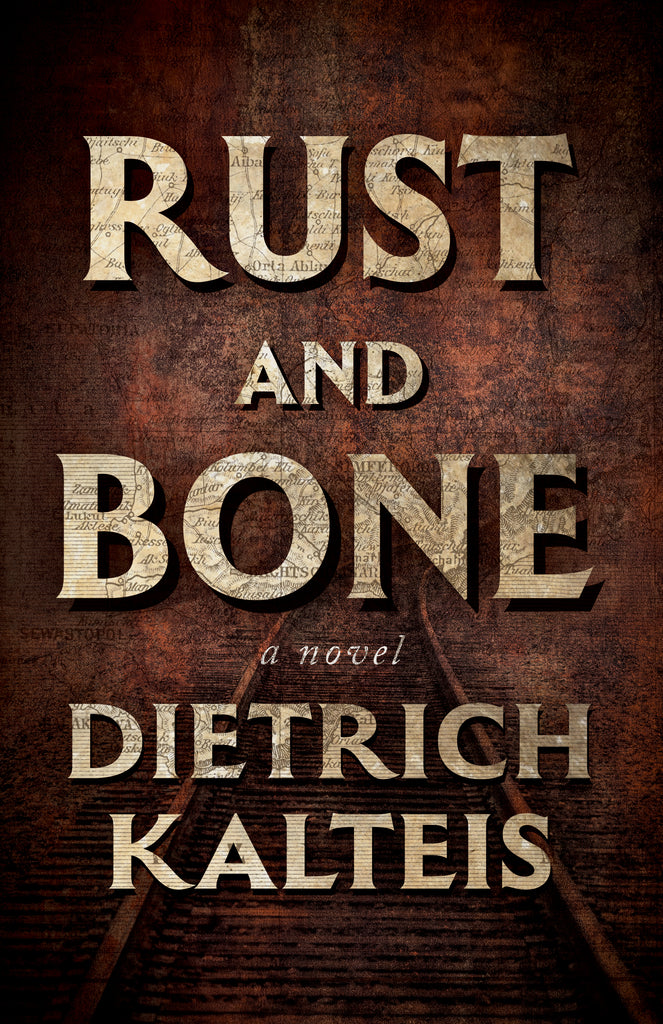
By Dietrich
Ask a writer if they’d rather script a bedroom scene or a killing, and they’ll take the murder any day of the week. It’s funny because most of us know our way around a bed but haven’t ever seen a corpse.
But writing sex leaves you exposed. You’re putting your own business out there on the page. A killing is smooth—all logistics, mechanics, and moving pieces around on a board. You just throw in some gunplay and hide behind the action beats. And nobody finishes a shootout and worries if their mother is going to read it.
Turns out we’re terrified of folks judging how we love, but we don’t mind applause for how we kill.
Sex is different. It’s messy. You have to deal with actual heat, people being awkward, and making reckless choices. The second you try to manage it too tightly, it stops feeling like two people in a room and starts sounding like you’re checking off anatomical boxes.
Throwing in a sex scene just to sweat up the page is cheap, and killing a guy just to run up the body count is a stunt. Readers aren't dumb. They might not know why a scene feels hollow, but they know the difference between a writer pulling a fast one and something that happens because of who the characters are and the mess they got themselves into.
The genre is already crowded with inherited furniture—the lone wolf, the body in the alley, the femme fatale. Shoving in obligatory sex or violence just piles more junk into the room. You don't follow a checklist; you write what the plot demands. The scenes that stick with readers are the ones that sound fresh and like they could have happened, whether that realism arrives between the sheets or at gunpoint.

Tuesday, October 13, 2026
Sex and Murder
Terry here with our question of the week:
Monday, October 12, 2026
Carnage and Carnal Delights - by Matthew Greene
They say you should write what you know. And I only have first-hand experience with one of these. (Please don’t guess; it might hurt my feelings.)
I’ll add that one of the joys of writing cozy mysteries is not having to delve into the details of graphic violence or explicit sex. They’re remarkably hard to get right, to describe with much novelty. I admire the hell out of the people who can bring their own fresh take to carnage and carnal delights, of course. But when I sit down to write either one, during my less-than-cozy pursuits, I find myself oddly blocked.
If it’s a sex scene, I worry I might be sensationalizing the spicy bits, using titillation as a cheat code to cover up cliché. I wonder if there’s any element of wish fulfillment at play, and even if there’s not, I wonder if other people will wonder the same.
If it’s a murder scene, I fret over the details, well aware from my EMT training how ludicrous a lot of fictional deaths can be. In a world so saturated with violence—both real and imagined—I have real moral qualms about anything gratuitous. But should I really be afraid to delve into the real, visceral consequences of the story conventions that underpin the crime genre generally? Am I overthinking? Probably.
(Not to mention the fear that someone may be looking over my shoulder while I I’m typing either of these types of scenes, strangers assuming I’m a pervert or a murderer or both…)
All that being said, I would so much rather write a murder scene.
I think a lot of mystery writers try their hand at romance at least once. It’s too big a market not to be tempted by, after all. But my forays into the realm of longing looks, heaving bosoms, and (REDACTED TO PROTECT THE INNOCENT) have been less than stellar. I can’t manage to construct a narrative around something as trivial as…love.
No, for me, it’s not really a story until somebody dies.
A lot of the books I read and write keep the violence off the page. (And the sex purely speculative.) But the threat of death is the beating heart (or lack thereof) of the genre I love so much.
Maybe I’m not much of a romantic. But at least the stakes stay high.
Friday, October 9, 2026
The Heart is a Lonely Hunter by Poppy Gee
When I reflect on my regrets as a writer, it's the small sacrifices and compromises I have made, that come to mind. We beg, borrow and steal our writing time, the chance to sit uninterrupted for hours is not something most of us take for granted. You have to miss out on things, and we're willing to, but sometimes I've made mistakes. Here are some:
1. We were living in Zermatt, a mountain village in Switzerland. It was the summer of 1999, there were wild flowers all over the mountainside, mother and baby deer grazing on dewy grass outside my window, and a perfect blue sky above the white-crested majestic Mattherhorn. My boyfriend (now husband) was going caving with a group of our friends. This involved climbing down into caves, and wandering through caverns and creeks. We were all in our twenties, we'd worked the winter ski season together, and were having a beautiful summer of friendship and fun in the idyllic tiny village. On that day, it was my one day off from being a nanny. I chose to stay in our studio apartment and work on a novel that would never see the light of day. I still think about that decision. I wish I went caving.
2. Once I didn't go to the funeral of a person who was not close to me, but was close to someone I know, because I was writing. Again, it was my one writing day and my kids were babies and I had organised care for them for a few hours. I regret my choice for many reasons. At the least, it would have been an interesting way to spend the day - funerals are great material for novelists. But mostly, I regret not being a better friend. At the time, I felt like I had no time to write, and the compulsion to lock myself in a room and write for those few hours was stronger than my integrity as a friend. I regret that.
3. I spend so much time alone, and don't invest a lot of time in my friendships, and I wonder if there will come a day when I don't have any friends left, except a few stragglers who, like me, have spent most of their lives doing something insular. I don't say that to feel sorry for myself, but there is a real chance. The question is, will a life of interiority and solitariness, of spending most time alone reading and writing, be worth it. The answer is, I don't know.
There are lots of scenarios like these in my life. Some I don't regret, such as not going to parties because I want to use the weekend to write, or not going away on girls weekends because I'd prefer to have a solo weekend and write. It's hard to find the time, and justifiy the time, to be a writer. My advice for emerging writers is to never put your writing before your family and loved ones. Always put precious people first. You can think about your writing while you're with them, and then scribble it down in stolen moments later. The challenge is getting the balance right. For me, the balance is a work in progress.
Thursday, October 8, 2026
If I Had a Penny, by Catriona
What have you sacrificed as a writer?
Apart from the obvious: paid holidays, paid sick leave, a pension and a monthly salary (although I'd have lost the first three when I left Europe anyway and waved goodbye to the last by aging into gig economy times), what *have* I sacrificed by being a writer instead of doing some unthinkable other job that it still scares me to imagine having to return to? (At a push, I could clean pub toilets again. But I'd hate to have to go back to being an academic.)
![]() |
| Book 39! Buy links |
There are only three real sacrifices that I've managed to identify, and they're barely worth the name.
1. People believing I've got a job.
I've lost count of the times this has happened. Early on, I tried to decline a standing invitation to a weekday coffee get-together. "I work on Thursdays," I said. "Oh," came the reply. "You got a job?" I might have blinked. "Yeaahh," I said. (This person had been at my book launch.) "I'm a writer."
Another time, I dropped everything to step in and deal with a fraught situation. It wasn't my family. I did it anyway. I sort felt that maybe there might be a mild "thank you" coming my way. Imagine my surprise when, instead, there was an "It's lucky you don't work, so you had time to do this."
Or a no-longer neighbour, who'd regularly phone me up to ask things during the day, because evenings were when her husband and mine came home for family time. You know, after they had finished . . . what was it? . . . Oh yeah: work. I actually went as far as giving her Neil's office number and saying she could phone him instead. Gasp. "But he's at work!" she said, recategorising me as the kind of wife who deserved to be run out of Stepford.
Sometimes it's just people I haven't seen for a while asking, "Are you writing anything at the moment?" and then being surprised that I am. Doesn't happen to plumbers.
But hey-ho.
2. People recognising that it's *my* job
This really bugs me. It happens to everyone who writes. I don't know if it happens to painters and musicans, but I doubt it. Here's how it goes: you're at a party, or the dentist, or a funeral - you exist, okay? And someone you don't know sidles up and makes you an offer they are astonished you can refuse. "How long's it take you to write a book?" they say. I find that a hard question already. A year? I write two books a year but it's like being able to wash clothes and make bread at the same time. You can hang the washing out while the bread's rising, and you can knead the dough while the sunshine's drying the clothes. Leaving drafts to rise (or dry) is an essential bit of the process. But let's say a year. "Okay," says the party/dentist/funeral guy - and I don't use "guy" in a genderless way, believe me - "I tell you what. I've got a killer idea. I'll share it with you and then you write the book, okay?"
What I actually say when this happens is, "Oh no! No, don't give it away. It's *your* precious idea, burning in *your* belly. *You* should write it. I'll come to the launch party when it comes out."
What I want to say is, "Okay. You spend ten minutes telling me the idea and I'll spend six hours a day for three months on the first draft and then another seven weeks per re-draft, then a further month on copy edits, and a week for the proofs. How would you like your 0.0000134% paid, when it's done?"
But I don't say that, because hearing the split that drunk-toothache-coffin guy was expecting will make my eyes start to bleed. You do know the split that's suggested every single last damned time this happens, don't you? Correct. 50/50.
3. People connecting my job with pay (just like their job).
It's not even people asking you to do speaking events for "exposure" although that's bad enough. I'm actually fine with people saying up front that their fundraiser or volunteer event can't stretch to a stipend but they'll pay travel expenses and take you out for a nice lunch. Naw, I'm talking about these two things. 3a. People who're themselves drawing a salary for running events they charge people to attend, but never considering paying the authors who're central to the event. 3b. The somewhat related people not mentioning money at all and reacting as if shocked by the intrusion of grubby commerce when they're asked about it. Hmmmmm. Try that anywhere else - at the end of a meal in a restaurant, at the door of a cinema, on the phone to an airline. "I'm sorry? What is this "bill" of which you speak? Qu'est-ce que c'est "ticket"? I'm not familiar with "fare"? Can you explain, please?"
But even that isnt my biggest peeve. (Do I mean biggest? Or smallest? You can't have read this far and still not have noticed that this entire blog is a petty little whingefest.) Anyway, that prize goes to my friend and yours, Climbing-into-the-coffin-with-a-party-hat-on-and-blaming-the-novocaine-Guy. He's ba-ack. And the bad news is he listened to what I said and he's written his book. Now he wants an evaluation of it. Two things are wrong now. 3c. No, he doesn't. He doesn't want to hear what you think. He wants to hear that it's a cathedral of dizzying genius and 3d. He doesn't want to pay for your time.
Why would he, when he's doing you such an enormous favour? And how do you know he thinks it's a favour? Because of the missing word in this heartsink of a sentence: "I've finished my book. I'll _____ you read it now."
You know the missing word right? Right.
Cx
![]() |
| Book 40! Coming in December. I'll _____ you read it then. |
Wednesday, October 7, 2026
Sacrfice by Eric Beetner
Life: What have you sacrificed as a writer?
(TV? Fitness? Family? Marriage? A well paying job?! and how do you feel about that.)
When I made a conscious effort to slow down in recent years, this question was on my mind quite a bit. Much of it needs to be measured by the business side of things. The ROI or Return on Investment. Not so much financially, though that is a factor, but in the intangibles, mostly having to do with time.
I set myself a goal to finish my first novel before my youngest daughter came home. I met that goal and it signaled my switch from screenwriting to primarily novel-writing. Since then I have sacrificed family time for sure. I don’t think I ever gave up a detrimental amount of time. My kids always took priority over any book event or arbitrary deadline I had looming. I made it to the swim meets and the lacrosse games for both of my girls. They both enjoyed seeing me head off to a book festival or a bookstore signing. They weee supportive and never asked me to slow down. If they had, I would have. Now they are off in college and I have more supposed free time, right when I need to slow down for the other looming specter: my health.
I get more exercise now than I did a decade ago for sure. Again, a conscious choice. Has my word count suffered? Absolutely. And that’s okay.
My late nights aren’t as late as they once were. I shifted my schedule so I can get up at 6 am to go exercise by playing volleyball on the beach a few times a week. It’s a worthy trade-off in my opinion.
I’ve never spent excess amounts of money on my writing career. I’ve been able to pay for most conferences out of book royalties, I don’t make rash investments in the latest online ad fad going around until I know anyone who has seen success. I’ve been lucky to have a well-paying day job so my writing has never had to sustain the family. We’d be living in a cardboard box under an overpass if it did.
The trade-off there is the old adage that you need to spend money to make money. I’m sure I have missed out on some sales or slowed the growth of my career because of my frugality, but keeping a roof over our heads, saving for college, being able to take a vacation now and then are all much higher priorities than my Amazon ranking. I have seen far more authors who spend that money only to see little or no return, though.
I can honestly say I have sacrificed a little of my mental health pursuing a writing career. My day job comes with its own stresses. I’ve been a part of many creative industries including the music business, Film business, TV business and publishing business. None of them are for the faint of heart. All of them will crush your soul.
I have endured frustrations, humiliations, heartbreaks, brushes with success so close you can feel the heat and also betrayal, jealousy and disrespect. And guess what? So have all of us who take this on. It comes with the territory.
The decades of rejection can wear on a person though. I hope I never let it bleed into my home life or I never took out my frustrations on my wife or my kids, but I’m sure I was in a sour mood from time to time. I’m only human.
I do feel I have created a fair balance in my own life. I know that any successes I’ve had have been of my own making. I still long to be let into the exclusive club of working authors, but I know there is only so much room on the other side of those doors. I will likely never make it inside. At the same time, there are writers behind me in line who wish they were as close to the door as I have gotten.
To them I would say, protect your most valuable asset: your own time. If I stopped to calculate my hourly rate based on how much time I have spent on writing vs. how much monetary compensation I’ve gotten back I might go insane. But it’s about more than that. Creating something and letting it out in the world is, and always should be, about the process itself, not the financial reward. The chances are slim that you will ever make a decent buck at this pursuit. If you don’t enjoy the process, then you are guaranteed disappointment. So you must temper your expectations, and keep your time as your own. If all the business does is make you miserable, then you shouldn’t do it. I’ve know many authors who decided they were sacrificing too much, on any or all of these fronts, and they walked away and are happier for it. Good for them. Sacrifice, like suffering, shouldn’t be a key part of the writing life. Only give up what you are willing.
Tuesday, October 6, 2026
When the Old Powers Lost the Room
The Strait of Hormuz is in the news again.
In 1956, another strategically vital waterway became the center of a crisis that exposed how quickly assumptions about power can collide with reality. Britain and France still regarded themselves as great powers with the ability to shape events far beyond their borders. Israel had its own calculations. Egypt’s President Gamal Abdel Nasser had nationalized the Suez Canal, threatening Western interests and the assumptions of an imperial order that was already beginning to crumble.
There are historical events that become dates, then footnotes, then trivia questions.
And then there is Suez.
Britain, France, and Israel made a secret agreement.
It was clever. It was audacious. It was also the sort of plan that works beautifully until the United States and CIA Director Allen W. Dulles find out about it.
That is where THE QUIET EAGLE begins.
The fifth novel in The Company Files series takes Walker to Cairo during the Suez Crisis, where he encounters a world in which governments, intelligence services, and individuals are all pursuing different versions of the same thing: control. The problem is that control is an illusion once enough people begin acting on their own calculations.
That is what drew me to Suez in the first place.
My previous Company Files novel, EYES TO DECEIT, took me to Iran in 1953, and to another moment when an old power confronted the consequences of nationalization. Prime Minister Mohammad Mosaddegh had nationalized Iran’s oil industry, and British and American intelligence responded with Operation AJAX, the covert effort to remove him from power.
Three years later, Suez offered another variation on the same underlying problem: Western powers confronting a world in which their ability to dictate terms was becoming increasingly uncertain.
The crisis is often remembered as a confrontation over a canal. It was considerably more than that. It was a collision between an Old World order and a new political reality, played out against the machinery of the Cold War. Britain and France were trying to preserve influence they were rapidly losing. Nasser was asserting Egyptian sovereignty and a new kind of Arab nationalism. Israel had security concerns and strategic objectives of its own. Washington and Moscow had interests that did not necessarily coincide with those of their supposed allies.
And behind the public story were the intelligence services, where diplomacy becomes calculation and yesterday’s ally can become today’s liability.
That makes Suez unusually fertile ground for a spy novel.
The connection to the present is not that today’s world is a repetition of 1956. It isn’t. The circumstances are different, the players are different, and the stakes have changed. But the underlying problem remains recognizable: what happens when governments mistake power for control?
In THE QUIET
EAGLE, Allen Dulles is at the center of that question. Here I have
deliberately taken literary license. As I explain in the Afterword, I imagined
Dulles setting a personal act of revenge in motion against Britain, France, and
Israel because they negotiated the Protocol of Sèvres without his knowledge or
input.
That motivation is fiction.
The world around it is not.
The Protocol of Sèvres existed. The secret agreement existed. The Israeli invasion of Sinai happened. Britain and France did intervene. And the extraordinary political consequences that followed helped expose just how far the assumptions of the old European powers had drifted from reality.
That distinction—between the historical record and the imaginative space of a novel—is important to me.
I don’t write historical espionage to disguise fiction as fact. I write it because History gives Fiction something wonderful: pressure.
Put a character in Cairo in 1956 and he doesn’t have to wonder whether the world is changing. He can feel it. Old loyalties are potential liabilities. Intelligence services are pursuing agendas that their own governments don’t entirely understand. People who thought they were important discover that they are expendable.
And Walker, characteristically, would rather be somewhere else writing his next screenplay.
But beneath the intrigue, THE QUIET EAGLE is interested in something darker: what happens to individuals when great powers begin making decisions in secret and then discover that consequences cannot be kept secret.
If Suez seems like history you may know, I invite you to look again.
The canal and Cairo provide the premise and setting. The real story is what happens when the people who believe they are running the world discover that they no longer are.
THE QUIET EAGLE is fiction.
The shadows are real.
Thursday, October 1, 2026
Semantic Satiation from James W. Ziskin
Thank
Thank
Thank
Thank
Thank
Thank
Thank
Thank
Thank
Thank
—Liz Nugent, author of Strange Sally Diamond
Wednesday, September 30, 2026
The quietest drama
Acknowledgements vary between a terse paragraph and pages of prose. How do you manage them? (And do you read them in others' books?)
By Dietrich
Sometimes a single paragraph does the job (“Thanks to my editor, my agent, and the usual suspects”), other times acknowledgements want to sprawl across pages. Both can feel right—or wrong—depending on the book and the author.
I keep a running list while I write. Names, specific help, the moment someone said the exact thing that unlocked a piece of the puzzle. When the manuscript is done I sort the people without whom the book wouldn’t exist, and the people who made it better with their encouragement, help and patience.
There is one pitfall. I’ve been with the same publishing house for 14 titles and counting, spanning more than a dozen years. The same core team—editor, publicist, art director, copyeditor—appears over several titles. So, it’s easy for the acknowledgements to sound repetitive, the same phrases recycled until they start to sound obligatory rather than heartfelt. The risk isn’t just boredom for the reader; it’s that the people I’m thanking begin to feel my gratitude is on autopilot. So I look for concrete details each time: the exact note that fixed a structural flaw, the cover concept that finally clicked, the quiet support during a rough patch that no one else saw.
Freshness keeps it honest.
I usually decide early whether the acknowledgements will be public performance or private gratitude. Some readers treat them as part of the reading experience; others skip straight past. I write them primarily for the people named, secondarily for the curious reader who likes to see the scaffolding.
And yes, I almost always read them in other people’s books. Not for the thank-yous themselves, but out of curiosity. I can learn something deeper about an author, who they credit with hard truths, how they talk about collaboration and so on. Depending on the book, the acknowledgements can seem like the most revealing pages between the covers.
Sometimes they can be funny and inventive too. Here are a few good ones:
Sue Coletta’s from Cleaved:
A special thank you to all the men and women in law enforcement…
…and Alexandria Taxidermy for the plethora of information about deer antlers. You all went out of your way, and I’m so grateful.
“I spoke with other members of NH Fish & Game, too. You know who you are…thank you for dealing with a crazy crime writer who forgot to mention the deceased was, in fact, fictional when calling in a report of a body in the marsh. That situation could’ve gone a total different way!”
From Christopher Currie’s The Ottoman Motel:
“If it’s possible to fall more in love with someone every day, then that’s what I do.
To my favourite, to the reason I live my life, Leesa Wockner, who, if she reads this, I hope will agree to marry me, despite the number of commas in this sentence.”
And from Nelson DeMille’s Wild Fire”:
“So, on the off chance that this is helpful, I wish to thank the following people: the Emperor of Japan and the Queen of England for promoting literacy; William S. Cohen, former secretary of defense, for dropping me a note saying he liked my books, as did his boss, Bill Clinton; Bruce Willis, who called me one day and said, “Hey, you’re a good writer”; Albert Einstein, who inspired me to write about nuclear weapons; General George Armstrong Custer, whose brashness at the Little Bighorn taught me a lesson on judgement; Mikhail Gorbachev, whose courageous actions indirectly led to my…”