Showing posts with label 7 Criminal Minds. Show all posts

Wednesday, January 25, 2023

If it’s in there, get it out.

A lot of folks will have resolved that 2023 is THE year when they write the book they have inside them. Any tips for absolute beginners?

by Dietrich


If you feel the urge to write, don’t let anybody tell you different, especially that little voice in the back of the head.


Don’t put it off, and don’t kick the can down the road. Sit down and get started. Be in it for the long-haul and have fun every inch of the way.


You work at home, so there are plenty of distractions. Don’t play with the cat, switch off the phone, and stay away from the internet. I like to crank up the music before I start. I know that’s not going to be for everyone, I get that, but it’s good to find whatever works to help get yourself into that writing zone.


Don’t aim for War and Peace. Do some trial and error, find what works — find your voice. I wrote short stories, quite a few of them, trying to find what worked for me.  


Read the kind of books you want to write — and read a lot of them. Personally, I love to read fiction, non-fiction, biographies and autobiographies. There’s so much inspiration in any great book. And there are some good how-to books too. If you haven’t, check out Stephen King’s On Writing. It’s like the how-to bible for writers. 


And there are classes and courses that are worth checking out, many of them online. 


Refrain from reading the daily noise, and anything else that might distract, depress, or keep you from planting that bum in the chair.


Find a mentor. Meet some published writers. They hang out at writers’ conferences, festivals, writers’ events. They’re generally a fun and helpful bunch and easy to approach — especially in a bar.


Create your own best set-up for writing. A desk, a quiet corner, and if possible, find the best time of day to write. And by all means, jot down those little ideas that come to mind, and keep them handy.


Don’t be in a rush to send your masterpiece off in hopes of finding an agent or publishing house. Get it right first. There’s nothing worse than sending something off that has potential before it’s ready. It’s like self-sabotage and a set-up for hearing, “No thanks.”


If you’ve been out of school for awhile, you may want to brush up on your grammar. 


When you get through a first draft, set it aside for a few days before going back through it again. And don’t have a total number of drafts in mind. Four, five, six, or more — who cares. Rework it until it feels ready. How do you know when it’s ready? When you write enough, the confidence will build, and you’ll know.


Get set to hear, “No thanks.” Then get ready to hear it again. You’re putting yourself out there, and that takes a certain amount of courage. Go for it.


Last thoughts: When you edit, look for anything that doesn’t move the scene forward, and cut it. You want to make them laugh, and you want to make them cry, but mostly, you want to keep them turning pages. 


When you read a chapter over, read it aloud. 


Never worry about what anybody thinks of your writing. Write it bold.


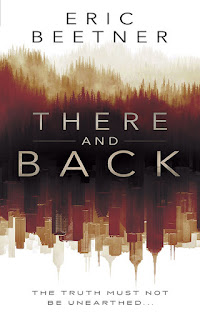
Lastly, I asked fellow author Eric Beetner to weigh in on the topic, and he had some pearls:


“My biggest tip for new or aspiring writers is to lose the notion that writing a book is a monumental task. I think too many people treat it like scaling Everest or circumnavigating the globe alone in a boat. Go into any bookstore or library and look around you. Books everywhere. Millions of new books every year. How can it be that hard and be done so often by so many people?


Now, writing a good book is no easy task, and that should be where the hard work goes in. But if you free yourself with the idea that starting on page one is the beginning of an arduous journey that will bring you to the brink, then you can focus on the real work of writing a good book. The rest is just typing.”


“Can we please stop this nonsense attitude that a first draft is supposed to be crap? Why would you write a terrible first draft? The work of a first draft, to me anyway, is to get it as close to right as you can. Then the rewrite process isn't spent "figuring out the story" as too many people seem to do, it becomes refining, making it better, elevating what you already have. If you need a whole first draft to find the story, then you're doing it backwards. Make notes, outline, keep voice memos on your phone, but know your story when you start so the first draft isn't awful. So your rewrites and revisions aren't torturous. Writing is supposed to be joyful. If it's a slog then that will come across on the page to the reader.

But, you do you. If you like the tortured artist thing, then go ahead and write a terrible first draft. Just please stop complaining about it.” — Eric Beetner
Wednesday, June 15, 2022

Gas in the tank

Would you ever consider retiring from writing? Under what circumstances? How does it make you feel to consider retiring?

by Dietrich


Retirement was the reward that came after decades spent working at my career. Meaning, from that point on, I had time to turn my attention to what I really wanted to do. And I’ve got no idea what you’d call giving up on that.


While I ran a business, I dabbled at writing fiction now and then over the years, abandoning a couple of attempts at a novel, now and then trying my hand at short stories and screenplays. I wrote in snatches of time, often at the end of a long day. I didn’t know it then, but I never put in the kind of time needed to really develop a style. What I had was desire, and when I retired, I was finally able to put in all the time I wanted, and I didn’t hold back.


“You have to put off being young until you can retire.”  


I’m not sure who said that, but it’s true. After leaving the career, I’ve always felt fully charged, getting to do something that I love, something that has never felt like work. Since day one, I’ve been getting up every morning, sitting at my desk and getting back into whatever make-believe world I’ve created, seeing where it will take me on that day — and nothing beats that.


Back when I started, I often wrote morning till evening. These days, I tend to write for a few hours at a stretch, occasionally going longer. I spend less time writing, but I do a lot less rewriting, so in the end I actually get more accomplished in less time. After the first year of writing all day and into the evening, I became aware of the need for balance, allowing time for the batteries to recharge, meaning there was also more time for family, friends, commitments and other interests.


Writing is a mental exercise. Physically, we show up, plop in our chairs, and move our fingers. How hard is that really? While we’re not exactly pro athletes, it’s good to stay in shape in order to keep sharp. Unlike the middle-age pitcher whose fastball isn’t so fast anymore, many writers actually seem to get better with age, as long as we take care of ourselves. 


If the time comes and I feel that the mental well is drying up and I’m turning out rubbish, then I hope I’ll have the good sense to pack it in, or that someone will come along and pull the plug … I mean on my Mac. But, for right now, it’s all good fun, and as long as the ideas keep flowing, then I’ll keep on writing.

Released June 7th, 2022

Wednesday, March 9, 2022

A guest post by John Lansing

This week, I’ve invited my good friend John Lansing to do a guest post. Before writing his best-selling Jack Bertolino series, he started out as an actor in New York City, performing the lead in the Broadway production of Grease at the Royale Theatre before putting together a rock ‘n’ roll band and playing the iconic club CBGB.

After heading to the West Coast, he landed a co-starring role in George Lucas’ More American Graffiti, and guest-starred on numerous television shows.


During his lengthy writing career, John wrote and produced Walker Texas Ranger, co-wrote two CBS Movies of the Week, and co-executive produced the ABC series Scoundrels. His first book was Good Cop Bad Money, a true crime tome he co-wrote with former NYPD Inspector Glen Morisano. He followed it with the Bertolini novels: The Devil’s Necktie,, Blond Cargo, Dead is Dead, and The Fourth Gunman. John now resides in Los Angeles, and we’re fortunate to have him here. — Dietrich

John: My father was first generation Italian American, my mother, first generation Polish American. They met and married post World War II, and because of the discrimination their parents suffered, they were all about assimilation. Dad didn’t speak Italian at home, and Mom never uttered a word in Polish. And after living on spaghetti every day of his childhood, my father vowed never to eat pasta again. We were American’s and ate American food.


Dad was one of seven brothers and sisters, and my culinary life changed the first time I went to a Sunday dinner at his sister’s house in Floral Park. I stepped past the door into Aunt Mary, and Uncle Chip’s home and was grabbed by the most wonderful scent I’d ever experienced and would never forget. 


Unlike my father, Aunt Mary kept the old recipes alive. There were two major pots of sauce simmering on the stove, one filled with meatballs, the other with sausage. The entire table was covered with homemade pasta noodles drying on flattened brown paper bags. Chip’s father was sitting at the table with a gallon jug of red wine under his chair that he’d tip into a jelly jar and partake throughout the day. 


Uncle Chip assembled the most wondrous antipasto I’d ever seen. The base of the salad was diced celery and onions, dressed with olive oil and red wine vinegar, covered in salami, prosciutto, provolone cheese, pickled peppers, artichoke hearts, pepperoni, anchovies and olives.


Are you kidding me? One bite of Mary’s meatballs and I was in heaven. How could my dad have ever given this up?


I learned how to cook Italian from Chip and Mary as the years went on. How not to over-mix the beef, veal, pork, egg, onion, garlic and Parmigiano Reggiano cheese for my meatballs to keep them light and flavorful. To use torn white bread soaked in milk instead of dense, dried bread crumbs. And I discovered, doing my own research, that by poaching the meatballs in the sauce, instead of pan frying them first, they became so light, they floated.


Years later, when I wrote my first novel, The Devil’s Necktie, the protagonist’s last name was Bertolino, and the foods he loved to eat came from my own experience.


Jack Bertolino was a decorated Inspector with the NYPD standing at the cross-roads. After taking a bullet wound to the back, and six months of painful rehab, he turned in his badge, not willing to become a decorated desk jockey. He suffered a contentious divorce, that left his relationship with his son in shambles. Jack accepted full responsibility and vowed to make things right. 

When his son won a baseball scholarship to Stanford, Jack packed his belongings and moved into a loft in Marina Del Rey, California. Close enough to try and mend their relationship, but not close enough to be annoying.


The loft had a balcony reminiscent of old New York City buildings and was in a mixed-usage neighborhood. One of the first things Jack purchased was a gas grill and two tomato plants that he set up on the balcony. Jack enjoyed his wine, but wasn’t a big drinker. When life got him down, he’d put on a red sauce. As soon as the tomatoes ripened they’d go into his pot. Until that time, he discovered the nearest Italian deli, and stocked up.


It was a simple sauce he loved. San Marzano whole canned tomatoes, garlic, onions, salt and pepper, fresh basil, dried oregano, extra virgin olive oil, red-pepper flakes and Pecorino Romano cheese. As soon as the garlic and onions hit the sizzling oil, and the scent filled the room, his heart rate ticked down a few notches. Jack let the garlic and onions cook until translucent, then he hand squeezed the tomatoes into the pot and gave them a stir. He added the red pepper, tore a few leaves of basil and dropped them into the pot before adding a pinch of dried oregano. He salted and peppered to taste. As soon as the sauce came to a rolling boil, he turned the heat to simmer, poured a glass of cabernet, and tossed a few picante Italian sausages onto the grill. The spaghetti would be DeCecco, because it held a good al dente. Firm, just the way he liked it.


While Jack waited for the salted water to boil, he watched a string of jets cross the sky, reflecting silver off the setting sun as they came in for their final approach to LAX. Jack had to smile. Things were starting to look up. A well-deserved feeling of peace washed over him. 


And then his cell phone chirped.


Dietrich: Thanks to John Lansing for dropping in. Fans of his work can find out more about him and his books at his website here.

Wednesday, February 23, 2022

A Guest Post by Nick Kolakowski

Nick Kolakowski is the author of eleven novels. His work has also appeared in The Washington PostMcSweeney’sThuglitShotgun HoneyNorth American Review, and Carrier Pigeon, among other venues. He lives in New York City, and he’s sitting in, answering this week’s question:

As authors we’re often put in an enviable position – we get to read books ahead of publication because we’re asked to provide comments for other authors to use as blurbs, or as early reviews. Do you approach “early reading” differently than the way you read already published books on your TBR pile?

I do, and it depends on how early I’m reading a particular book or manuscript. Sometimes I’m lucky enough to receive a book before it’s settled into its final form — when the author and editor are still tweaking certain scenes or adjusting the plot’s flow. In those circumstances, I’m usually asked to act as a beta reader, and I’m more than happy to offer suggestions about how to refine the manuscript.


Obviously, you’re really forgiving about books at that stage, because they’re very much a work in progress. Even if there are rough spots, you grind through (and take notes). You offer constructive criticism. You stay as positive as possible. 


With most of the pre-publication books I read, though, it’s later in the process, and it’s because the author or publisher wants a blurb and/or early review. I’ve been very fortunate in that I’ve never been asked to blurb or review a book that I found unreadable. That being said, if I’m not wholly engaged by the text — and sometimes that’s my fault, if there’s a lot going on in my life at the moment, or a towering stack of reading to get through — I sometimes resort to skimming a bit more than I usually would.


When I read books that’ve been published, the game changes. Years ago, I was more willing to keep reading books I didn’t find all that compelling, or even outright hated. There was something about not finishing a book that felt like defeat. But, as I’ve grown older and more viscerally aware of the hours of my life ticking by, though, I’ve gotten much harsher about whether I finish a book or not  — if I’m not gripped, I generally close it after 50 pages or so. If the book comes off as a pastiche of something better (a continual issue in crime fiction and horror, especially), I might not make it past page three.


If I don’t like a published book, I don’t leave a negative review — there’s just not enough time. If the book comes up during a discussion with someone, I might warn them away from it, but I’m under no delusions that posting something negative will make a difference amidst the tide of Goodreads and Amazon reviews. Plus, I know how much work goes into the creation of a book, and I don’t want to broadcast something that’ll potentially give a long-suffering author an apocalyptically bad day, just because the writing wasn’t quite to my taste. 

Being able to read books early isn’t a privilege I take lightly. I’m appreciative of every chance I get to blurb or review something before it hits bookshelves. With a published work, though, I’m often a lot more stringent about whether I stick with it — even if I end up keeping my opinions to myself. 


Thank you to Nick Kolakowski for dropping in. And be sure to check out his latest: “Love & Bullets: Megabomb Edition.”


Wednesday, November 10, 2021

A guest post by Lisa de Nikolits

Lisa de Nikolits has been hailed as “the Queen of Canadian speculative fiction” and is the international award-winning author of ten novels. Her short fiction and poetry have been published in various international anthologies and journals. Originally from South Africa, Lisa lives and writes in Toronto, and I’m very pleased to have her here as my guest, answering this week’s question. 

You’re writing a novel set in the current time. Do you include covid, politics, climate change among the background or foreground parts of the environment? If so, why? If not, why?


by Lisa


So you’re writing a new novel and you’re tempted to use Covid-19, politics/politicians, climate change or current events in the plot. But before you dash off that first draft, I invite you to take a small pop-up quiz! 


1: I need this person/event or I can’t write my book. 


2: This person/event will be as relevant in three years as it is today.  


3: Everyone will know who and what I am talking about. 


4: The person/event will engage the majority of my readers. 


5: It’s not vital to my plot but it’s important to me to have my say when it comes to this person/event.  


6: If I don’t write about this person/event, I will regret it down the line.  


7: I have a unique spin on this person/event that no one else will have. 


8: I’ve run the idea past a few beta readers – do their eyes light up or glaze over? 


9: Is there a more interesting way I could tell this story without having to be specific about this person/event? 


10. Am I being lazy or savvy by using this person/event? 


In my experience, when it comes to writing, my imagination comes up with far better ideas than a fact that precipitated it. I like to use IRL as a seed for an idea and no more than that because while truth can be stranger than fiction, it can be more boring when transcribed as such. And, even if a thing is true, it may not ring true in a book. Truth may be stranger than fiction, but that doesn’t mean that strange truths make for good fiction.  


If I’m stuck for an idea, then I start off by using IRL event or person, but I invariably end up completely rewriting. With The Rage Room, I was concerned that by the time the book was published, that rage rooms would either have been written about by a bunch of other people or they’d become so commonplace that no one would be interested in them.   

But I answered my own questions like so:  


1: I need this or I can’t write my book. Yes. I need a room where people smash stuff.  


2: This will be as relevant in three years as it is today. Yes. Even if rage rooms become commonplace, my spin on them will be like no one else’s.  


3: Everyone will know who and what I am talking about. It doesn’t matter if they don’t because I’ll contextualize it via plot and backstory.  


4: The person/event will engage the majority of my readers. The concept will excite some readers and turn others off, but I have to write this book anyway.


5: It’s not vital to my plot, but it’s important to me to have my say when it comes to this person/event. It’s pivotal to the whole book.  


6: If I don’t write about it, I’ll regret it down the line. Yes! I would have kicked myself several times over if I didn’t write it. 


7: I have a unique spin on this person/event that no one else will have. Absolutely. Time travel like it’s never been done before (and it’s not just me saying that, reviewers and readers have said the same thing.) 


8: I’ve run the idea past a few beta readers – do their eyes light up or glaze over? Light up! 


9: Is there a more interesting way I could tell this story without having to be specific about this person/event? No. I have to do it this way.  


10. Am I being lazy or savvy by using this person/event? The Rage Room was the most difficult book I’ve ever written. It challenged me like no other book, and I’m really proud of my tenacity at seeing it through. In the end, it said everything I wanted it to say.  

Thank you for having me as a guest today, and I hope you’ve enjoyed the post. 


You can find out more about Lisa and her writing at her website here.

Wednesday, September 29, 2021

Guest post by Rob Brunet

Rob Brunet writes stories that find humour in the dark, the twisted, and the criminal. He’s the author of Stinking Rich, and if you haven’t read his debut novel, you’re missing out. His short fiction has appeared in Ellery Queen Mystery Magazine, Thuglit, Shotgun Honey, Out of the Gutter, Noir Nation, Crimespree Magazine, and Exiles: An Outsider Anthology, among others.

Rob’s also a digital media producer who is prone to overindulge in travel — especially where dirt roads are involved — and he’ll will never pass up a chance to swap tales by a bonfire.


And he's here this week answering the question: Do you have any tricks/advice/hacks/best practices for effective video conferencing? 


by Rob 


It seems almost funny to be writing about video conferencing at a time when we’re finally able to get back face-to-face. Has anyone else noticed how hugs are bigger and longer than ever now? But, Zooming is gonna be part of life from here on in, and that’s probably a good thing for a host of reasons.


I’ve been lucky to avoid most of the online calamities recounted the last year and a half — though I was on one call where a fresh-from-the-shower husband made an unexpected appearance — but by now we all know most of the faux-pas of video meetings, and now that we’re allowed back outside, we probably don’t need to be reminded to put our pants on anyway.


Apart from regular bi-weekly or monthly family calls — why weren’t we always doing that?— and cocktails with friends who live across the country and around the world, most of my Zooming has been with my co-host Hope Thompson on Noir at the Virtual Bar Toronto and giving my online novel writing classes through George Brown College. Both were among my favourite pre-Covid activities, and both made a happy transition on line. In fact, regarding the classes, I doubt I would return to in-person delivery, but more on that later.


I say Zooming because that’s the platform I like working with. I’m sure there are better, and depending on your requirements, I’d encourage you to check them out. Better yet, talk directly to someone hosting on a platform you’re curious about and hear what they have to say. For me, the decision was simple. After a career in tech, I knew the easiest platform to use is whichever one most of your audience is already familiar with. Less headaches for the host. 


Similarly, to get people out, tried and true email works well for us, from a MailChimp platform. We also let people know on Facebook, but the email list is the best producer, as it is for our live in-bar events.


For the first couple virtual Noir at the Bars, we did dry-runs and had things scripted out tightly. Especially with two hosts, making the delivery appear casual (as befits a Noir at the Bar) means practice and preparation. We got it down smooth enough that I was able to co-host from Thailand, for which the only hitch was forgoing a shot of Maker’s Mark, given the time difference. Irish coffee made up for that.


I’ve always considered live reading to be a performance art. I think that’s even more important on line, both in terms of my own work and when inviting people to read for us. It takes a particularly strong reader to hold audience attention on line. As much as I find casual works best for me, don’t let the comfort of your living room lull you into a lacklustre delivery. This isn’t the time for a fireside story. I find myself using more hand gestures than I usually would, and like that I can see them reflected on-screen while I do. 


I like to read with a typist’s stand holding my pages beside my screen. Some people read from the screen itself. Both help build better eye contact than looking down into your book. I guess the point is, it ain’t radio. 


We added Q+As to our format, which isn’t something we do live in the bar. We wanted to create an opportunity for people to mingle a bit at the end of show, much as they would in-person. Most of our audience stay on line the extra 20 minutes or so. All-in, our run-times are about 75-90 minutes.


A much longer format is my 3-hour classes, which went on line mid-semester in March 2020. I want to mention them because the experience I’ve had underlines one good thing the pandemic has brought us.


The first thing I noticed was that the quieter students would provide longer, more in-depth comments than they would be able to deliver in-person. That brings up the quality of the learning for everyone. But there’s more.


When I taught in-person, I found that by about halfway through the 12-week course, people would start seriously opening up and our WIP discussions unearthed personal stories from both writers and those providing critiques. With online, that happens by the second Zoom session. People discuss their sexuality, family trauma, huge life choices — whatever drives them, or does the opposite. They go further, sooner, and share back and forth in ways that I feel must be brought on by a combination of being comfortable in their homes during class, and knowing that while they have the mic, they have the full attention of their peers. When the focus is on writing as close to the truth as one can, it’s pure gold. And for me, it means I’ll likely continue to teach online. Never mind that I can appear from the comfort of my own home, or wherever I may find myself.


So even as we take Noir back to the bar, knowing this virtual business is here to stay doesn’t bother me at all.

Many thanks to Rob Brunet for taking part in Criminal Minds, and if you’d like to find out more about virtual Noir at the Bar Toronto, click the link here.

Wednesday, January 22, 2020

Writing crime: easy money the hard way

What made you decide to write crime & mystery fiction? And if you hadn’t been an author, what would you have been doing?

by Dietrich

When I started writing fiction, I wrote short stories and dabbled in different genres, and by the time I found a steady rhythm to my words, I was writing stories inhabited by marginal characters that often ended hip-deep in committing some crime or other. I think my lean toward dark humor had a lot to do with it too, something that I think goes hand in glove with good crime fiction. There’s nothing funny about crime or violence, but there is a certain levity that humor brings to the tension found in that kind of story. And I like writing my characters, some who are desperate, some living by their wits, some lacking wits altogether, but all of them just wanting to make easy money the hard way.

The first three novels were set in present time and close to home on the west coast, surroundings I’m familiar with. Then I tried a period piece because the timeframe suited the story I was working on. At first I wondered about all the research that would be needed to pull it off, writing about a time and place that I hadn’t experienced. But, once I got into it, I found that I really enjoyed doing the digging and sifting. After that novel, I let my settings land in whatever period in time that best suited the story, some in present time, some back in time.

Writing dialogue sure isn’t exclusive to crime fiction, but I enjoy letting the characters tell their story through their own words. The characters that live in my novels always seem to be working some kind of angle, and what they’re not saying often conveys more than the words that they are saying.

When I get a fresh idea for a story, I just start cranking out the pages, letting the first draft take its course. I don’t plan much. I just type away, trying to stay out of the way of the characters, letting them steer their own course and tell their story. 

And I don’t try to guess what readers will be buying. Sure, I’d love to nail a million-seller as much as the next writer, but I don’t believe I’ll get there by guessing what’s going to sell. I just try to stick to what works best for me.

Over the years I read a lot of fiction: Hemingway, Steinbeck, Orwell, Salinger, Thompson, Bukowski, Burroughs, and so on, and I guess the best of it kept that dream alive inside me, inspiring me long before I started writing. And I still read a lot and still draw inspiration by some of the greats writing today.


The second part of the question, about what I’d be if I hadn’t become an author … Well, I had a career in commercial art, and that came long before I finally started writing. Writing was that something that I just always wanted to do going back to when I was in my teens. Yeah, it took a long time before I started doing what I always wanted to do. But, once I finally did make the jump and got serious about it, I’ve never looked back, and I’ve been loving every minute of it. 

Wednesday, March 27, 2019

Look who dropped in

What’s the most important thing a publisher can do for an author?

Well, look who I found! Our very own Rachel (RM) Greenaway and Robin Spano. I really miss having them here, so it’s a special treat to have them both make a guest appearance and answer this week’s question. 

Robin is the talent behind the Clare Vengel Undercover novels, and she’s currently working on her fourth novel, only she claims to be doing it extremely slowly.

And Rachel’s the author of the awesome B.C. Blues crime series. The fourth one is Flights and Falls, which was just released on March 16th. Congratulations, Rachel.


Thanks, Dietrich, and thanks for inviting me back to Criminal Minds! I've missed the challenge. This week's question was more troublesome than I expected, and my answer is also a confession.

But here goes:  

What is the most important thing a publisher can do for (this) writer?

A fat advance? No. I'd rather get one I can pay out fast.

Send me on world tours? Would be nice, but I've heard those days are over. So I count myself lucky that I got sent to the NY BEA (was fab!). Any further travels are likely on my own dime. 

Provide more honest feedback? No. That's great on the upswing, but otherwise ignorance is just fine with me.

Cooperate on cover art and other visuals? Very important, but not the most ...

So what is my answer? It finally pinged this morning: My publisher should LOVE MY PUBLISHED BOOKS.

What kind of a stupid answer is that? In my case not so much, because I have this condition -- and I'm sure I'm not alone -- unofficially called finishtabookaphobia.

Strange to fear my own finished books, because the WIP is all joy and light. From conception to ISBN I love that thing to death. I edit it a billion times. I lie awake considering its width and breadth, its cadence and credibility, what pitfall to place before my hero next, et cetera.

But as soon as it's done and out of my control, this cold feeling clamps over my heart. Doubt. Even dread. It's like the child I've nurtured has become a slightly menacing stranger. 

I know that's wrong, and a bad attitude, something to do with fear of failure, and it's something I need to fix. But in the meantime, until I get some psychological help, I need my partner in creativity, my publisher, to take custody of that freshly published work and give it the unconditional love it needs to hit the market.

So in a nutshell that's my answer: Cherish and promote is the most important thing a publisher can do for its authors, at least when the author is not so great at doing it on their own. — R.M.

And here’s Robin:

Q – What is the most important thing a publisher can do for an author?

A – Help the author write a better book.

Promotional help is great too, but books sell through word of mouth. If a great book gets read by three initial readers, and two of those readers eagerly thrust the book into the hands of three more people, eventually that book will become a bestseller. If an okay book is blasted onto prime position on airport shelves and finds a thousand initial readers, but only one out of ten readers is excited enough to tell a few friends, that book's sales will fizzle and eventually die.

My goal for each book I write is simple: to take the idea I have, the character and themes and premise that are milling around in my head, and turn all that into a story that readers are excited to read.

Making that happen is not quite so simple. By the time I'm finished working those characters and themes and premise through their first draft, multiple revisions, and final edits, I'm so close to the story that I can't possibly see the forest for the trees.

A good editor will clean up the messy parts, help tighten and polish the book on a sentence level, and  identify the loose ends the writer should tie up in the plot. A great editor will see what the author is trying to say and help them say it better, more clearly, more compellingly. They will help the author nail the big picture and fine tune the microtension to make sure the book will have emotional resonance for the reader.

Yes, it's the writer's job to write a great book—both in the plotting stage and in the revision. But a writer's career is a lifelong trajectory of learning. I don't know a single writer who doesn't push their limits and try to make each book better and different from the last. (If we were looking for a career where we could do the same thing over and over again for easy money, we would have become brain surgeons.) 

The best gift a publisher can give an author is an editor who is also a great writing teacher, who challenges the author to get better at her craft from one book to the next, who can take those ideas that are milling around in her head and turn it into a book that readers are excited to thrust into the hands of ten friends. — Robin 

— 

A big thanks to both R.M. Greenaway and Robin Spano for dropping in and answering this week's question.

And if you're attending Left Coast Crime you can catch all three of us on the Vancouver Noir panel, Friday morning at 9:00 AM in Regency A. Drop in and say hello. 

And you can also find R.M. online here, and Robin here