Showing posts with label noir. Show all posts

Friday, October 9, 2020

What a Long, Strange Trip It’s Been

Tell us about the first story/stories you ever wrote. First book, published or no.

by Paul D. Marks

I don’t really remember what the first story I wrote was. But when I started writing I was trying to write more mainstream or literary fiction. And just in the last few weeks I resurrected one of those ancient stories, rewrote it as crime fiction and sent it out into the world to hopefully be picked up somewhere. The theme is the same as the original story, as well as some of the elements, but I like it better as a murder mystery than as “serious” fiction. Especially because, as one of my first stories I was horrified at how badly written it was. But I liked the idea enough to keep it in the back of mind all these years and try again with the basic elements from it. I think it works better this time. Hope so anyway.

Breaking News: Speaking of stories, and before I get back to the current question, Coast to Coast: Noir from Sea to Shining Sea, volume 3 in the Coast to Coast series of crime fiction anthologies that Andy McAleer and I co-edit dropped last week. Twelve noir stories from twelve terrific authors, with stories set throughout the US from…coast to coast. The “chronology” of the book (if that’s the right word) goes from the West Coast to the East Coast, noir all the way. The authors are: Colleen Collins, Brendan DuBois, Alison Gaylin, Tom MacDonald, Andrew McAleer, Michael Mallory, Paul D. Marks, Dennis Palumbo, Stephen D. Rogers, John Shepphird, Jaden Terrell, Dave Zeltserman. See the post I did earlier this week at SleuthSayers for more on this collection: Hope you’ll want to check it out: 

Available at Amazon and Down & Out Books

And now we return you to our regular programming already in progress: Another thing I remember is that I began by writing poems and song lyrics. I wanted to be a rock star—who didn’t? But I was always writing something.

One of my early novels—maybe my first completed novel, that’s also hard to remember—a satire about a screenwriter trying to make it in Hollywood, was almost published way back in the 80s. Almost. It was accepted for publication (if that's the right terminology) by a major publisher.  But then there was a "housecleaning" at that publisher: the old team of editors and assistant editors got swept out. And the new team didn't want most of the old team's slate of projects, so I got swept out with the "new broom". So that one almost got published. But by the time it was put into “turnaround” it was too late for it as a lot of the humor was dated. Remember Fawn Hall, Jessica Hahn, Donna Rice and Gary Hart—see what I mean, dated. ’Cause even though it was about a guy trying to make it in Hollywood, it had a lot of topical and satirical humor of the day. I work on it every once in a while to remove the dated satirical elements and make it more neutral in terms of topicality. So one of these days it might see the light.

The first writing that I got paid for was a piece in one of the L.A. papers about John Lennon on, I believe, the one year anniversary of his murder. It wasn't fiction, but it felt awfully good to actually get paid for writing something. But even though it felt good to be paid, I had mixed emotions because of the subject matter. Appropriate that this should appear today as today is John Lennon's birthday.

Available on Amazon
My first published fiction, but certainly not the first story I wrote, was a short story called Angels Flight (before Michael Connelly borrowed the title from me ðŸ˜‰). It was published in the Murder by Thirteen anthology and republished in L.A. Late @ Night, a collection of five of my stories. A review of L.A. Late @ Night in All Due Respect calls Angels Flight the reviewer's favorite story in the collection and says this about the two main characters, "They're a dynamic pair, and I'd like to see them together in more stories," so I might just have to oblige him.

The title for Angels Flight was inspired by the famous funicular railway in downtown L.A. and my love for old Los Angeles. I think the story was inspired when they drained one of the lakes in L.A. and found all kinds of junk there. So in my story they drain Echo Park Lake, find a dead body and the story takes off from there. And even though it was originally published a looooooooong time ago, it's still one of my favorites. I think it's (hopefully) surprise ending brings to mind Shakespeare's quote, "There are more things in heaven and earth, Horatio, than are dreamt of in your philosophy." 

Angels Flight

After Angels Flight, I had more stories published and eventually my novel White Heat, and others. And then I happily reached one of my major short stories goals, getting published in Ellery Queen Mystery Magazine and its sister publication Alfred Hitchcock Mystery Magazine. Another thrill was to be listed on the cover of EQMM, as well as winning their Readers Award. So there’s always hope, don’t give up.

All I can do to end is quote another rock band, the Grateful Dead, "What a long strange trip it's been." 

~.~.~

And now for the usual BSP:

The Blues Don't Care got a nice review from It was a Dark and Stormy Book Club.

“On one level it’s a mystery where Bobby Saxon, with secrets he wants no one to find out, works to solve a murder and clear his name under extraordinary racially tinged circumstances. With a lot of twists and turns, this is an excellent mystery.  It takes place in World War II-era Los Angeles, and the author does a brilliant job that brings the long-gone era alive with memorable characters, scents, descriptions, and most of all, jazz. Highly recommended."


Buy on Amazon or Down & Out Books

***

And Tom Bergin at The Name is Archer Facebook page had this to say about Coast to Coast Noir:

"This is the new book out that contains stories by Archer group members Paul D. Marks and Dennis Palumbo. There are 12 stories in all in this collection and so far I've read the stories by Paul and Dennis. They are both really good stories. Paul's story is called Nowhere Man. The story is set in Southern California and the year is 1965. The story does conjure up the Beatles song but is also a very clever nod to the 1944 movie Laura. The story by Dennis is titled Steel City Blues and is set in Pittsburgh in the year 1970. Here's the opening line of the story - I'm sitting at my usual spot on the roof, back against one of the brick smokestacks, the revolver across my upraised knees. Dennis never wastes any time getting the reader involved in his stories and Steel City Blues is no exception. Interestingly both of these stories deal with obsession. Both stories show what can happen when a man becomes obsessed with a woman. It's noir. Things don't go well. Check the book out. I have a feeling the remaining ten stories will be as good as these two."


Please join me on Facebook: www.facebook.com/paul.d.marks and check out my web site www.PaulDMarks.com

Friday, July 3, 2020

Sympathy for the Devil

Do characters need to be sympathetic? Why? Why not? Does it make a difference in different genres?

by Paul D. Marks


...get rid of my flaws and there would be no one left.
                                                           ―Sarah Vowell, Take the Cannoli

No. Definitely not. But if you want readers to go along with you they should probably have at least some redeeming qualities. The anti-heroes in many film noirs aren’t good guys, but they have something that puts us on their side anyway. Nor do I think genre makes a difference.

I haven’t read any of the Save the Cat books about storytelling and writing, but I gather that the point of “saving the cat” is to show the reader or viewer a good quality in the character so they’ll root for that character on some level.

Curley and Moe, a couple of cats we actually did save
So let me talk about the people (characters) I know best, the ones I’ve created. Many of my characters are flawed one way or another. Some of them with major flaws like racism, others with everyday flaws like vanity or envy. I think we’re long past the days where the good guys wear white hats, don’t cuss, don’t smoke and don’t throw people off the tops of buildings. And if you look at the examples below I think you’ll see that I’m not “uncomfortable” with much in terms of flaws. Not because I like these traits, but because I think they’re real. And if I want my characters to ring true they have to have real flaws because no one is perfect.

Philip Marlowe, the quintessential knight errant private eye, was misogynistic, racist and more, just as a matter of course. But he was also a product of his times. We notice it today when we read Chandler, but I’m sure many people reading those stories when they first came out wouldn’t have thought anything of it. Nor do I think Chandler would have given it a second thought or consciously put it in his stories. It was just the zeitgeist of the times (if I’m not being redundant). But today, when most of us write characters with these traits we are doing it on purpose to make a point of one kind or another and to round out the character.


In my just-released book The Blues Don’t Care, most of the characters are flawed or less than sympathetic to one degree or another. The main character, Bobby Saxon, is flawed. His goal in life is to play piano with the Booker Taylor band at the famous Club Alabam on Central Avenue in L.A. during World War II. He’s got one obvious major problem to achieving that goal: if he gets the gig he’d be the only white player in the otherwise all-black band. But he’s on a mission. So when Booker offers him a shot with the band…if Bobby will help find the real murderer that James, a band member, is accused of, does Bobby go for it? For selfish reasons? To help the band? To clear an innocent man? Or just to get the gig he’s pining for? All of the above?


Bobby also has other issues to deal with and is a pretty complex character, but I don’t want to give away spoilers. Is he sympathetic? In some ways, he is. He’s also a little selfish. But mostly he’s a young, wet behind the ears guy trying to figure out how to be a man in the world of the World War II home front.

Sam Wilde is someone Bobby comes across in his quest to find the murderer. Wilde is a tough, rough around the edges man who, especially at first, is antagonistic towards Bobby both verbally and physically. But as they get to know each other they both see each other beyond initial impressions.
Bobby also crosses paths with Sgt. Nicolai, of the Los Angeles County Sheriffs Department. Nicolai is also rough around the edges. And he’s corrupt, on the take. He’s given up on the system. He doesn’t believe James is guilty, but the word’s come down from the brass: James is going down for it. So Nicolai’s faith in the system is gone. He’s tired and cynical. He drinks. But he still has a little of the idealism left that brought him to join the force and when Bobby taps into that Nicolai helps Bobby with the case.

Both Wilde and Nicolai have the prejudices of their era, sexist, racist and homophobic, but in the end Bobby appeals to their better angels. The question is who wins, the better angels or the darker ones?

The two main characters in my novels White Heat and Broken Windows are both seriously flawed. Duke, the P.I. main character, is a screw-up in more ways than one, only that’s not the word he uses to describe himself. His partner, Jack, is majorly flawed. He’s a racist—at least on the surface. He says things that maybe other people only think. But a lot of them do think those things. If you only listened to Jack talk you’d think he was a really bad guy, but if you watch his actions, you see that it’s not that simple. Jack is also a good guy. He may say the wrong thing, but he pretty much does the right thing. In Jack’s case actions definitely speak louder than words.

White Heat takes place in and around the 1992 “Rodney King” riots in Los Angeles. And, though it’s a mystery, it deals with many racial issues and concerns—which are still relevant today. So the book is sort of a prism on today, though set in the not-too-distant past. I was so concerned by the raw nature of some of it that I put an author’s note in the beginning of the book. I put the disclaimer in, but I also left in the raw language and actions of the characters. But I was still nervous about how people would react. Luckily the reaction was pretty positive on all fronts and the book ended up winning a Shamus award.


I also see Jack as the little devil on Duke’s shoulder, like you would see in the old cartoons. Jack is sort of Duke’s alter ego, the bad side of Duke, the nature he must fight. And he does. But why, one might wonder, would Duke even be friends with Jack? Because, besides their personal history, Duke sees beyond Jack’s posturing to the real Jack underneath and maybe that person isn’t quite what the surface person comes off as. We all say things we regret, and sometimes do things we regret. Jack pretty much does the right thing, even if he spouts off the wrong thing. And ultimately we are all flawed and can relate to the flaws in others. It makes the characters more human, more accessible. And more real.

In Vortex, Zach Tanner is on the run—mostly from himself, from his past. In that past he might not have been the most upstanding citizen or the most squared away soldier. He did some bad stuff. But recuperating from wounds received in Afghanistan he has an epiphany about his life and realizes the error of his ways. So when he returns home he wants to go straight. The problem is some of his cohorts in crime don’t want to let him, especially because they think he has something they’re entitled to. So, in a sense it’s a story of Zach’s redemption, but the road to redemption is paved with figurative IEDs and landmines (and real guns) that Zach must circumvent if he wants to come out on the other side.
The main character—a cop—in 51-50, a story first published in Dave Zeltserman’s Hard Luck Stories—Psycho Noir edition (so the edition title alone might tell you something about the character), and now in my LA Late @ Night story collection, shoots a gang banger out of sheer frustration, not because of a life-threatening situation. The cop is unraveling throughout the story, the pressures of life on the street are too much for him to deal with anymore. The story was written and published some years ago, but again is relevant in light of what’s been happening in the country today. The cop is not a bad guy. He wants to do the right thing. But dealing with the stress of the streets and the thugs he has to deal with just wears him down.

Ray Hood in Dead Man’s Curve (Last Exit to Murder anthology) is an aging rocker, his glory days as a road guitarist for Jan and Dean are long behind him. He’s selfish, he does bath salts (not the kind you put in the tub), he doesn’t appreciate what his sister is trying to do for him. Definitely not a model of perfection. And he wants to get back in the game. To that end he will do just about anything.

In Poison Heart (Deadly Ink 2010 anthology), Winger is a crime beat photographer, who can’t adjust to the modern world and has become jaded by all the violence he sees in the real world. So he decides to take things a step further and goes way beyond the bounds of the law to get a good pic, selling his soul (so to speak) in the process. Another desperate character who will do desperate things to stay on top and be a modern-day Weegee. Again, his flaws are the petty flaws we all have, but he takes them to another level. A more personal level of envy and the desire to be on top and what he’s willing to do to be there.

Howling at the Moon (November 2014, Ellery Queen Mystery Magazine): This one’s a little different in that the character is not a bad person. Not selfish or suffering from envy or any of the other seven deadly sins: lust, gluttony, greed, sloth, wrath, envy, pride  But he is disaffected and has separated himself from his American Indian roots, especially after coming home from the war in Iraq. He ultimately does something we might think is immoral, but we empathize with him and understand why he does it. Nonetheless, he becomes a flawed person by the actions that he takes.


Most of my characters are flawed because people are flawed. I don’t necessarily set out to write a character with this or that flaw, but the character comes to life in the writing and develops those flaws, just as people do as they go through life. Ultimately, I think the reason most of us like flawed protagonists is that we can relate to them more.  They are more like us. Not perfect, not saints, more like real people, just trying to get by in a flawed world.

~.~.~

And now for the usual BSP:

The Blues Don't Care is getting some great reviews:

"It’s the first entry in what promises to be an entertaining and thoughtful series --- mysteries that not only have the requisite twists, turns, surprises and reveals, but also offer a penetrating look into our ubiquitous all-too-human flaws: greed, corruption, fear of the “other” and, especially, racism."
—Jack Kramer, BookReporter.com

"This is a beautifully noirish book, set firmly in the dark days of wartime and offering a sharp insight into the life and times of Los Angeles, 1940s style. Yes, it’s a mystery thriller, but The Blues Don’t Care is so much more than that, with historic detail, chutzpah, a cast of hugely entertaining characters, a really unusual protagonist and, best of all, a cracking soundtrack too."
—DeathBecomesHer, CrimeFictionLover.com


Please join me on Facebook: www.facebook.com/paul.d.marks and check out my website  www.PaulDMarks.com

Friday, December 13, 2019

Blind Date With a Book

Books make wonderful gifts. What are your recommendations this year?

by Amy Marks and Paul D. Marks

I thought I’d do something a little different this time. Instead of me recommending books I’m turning it over to my wife, Amy, and some books she’s read and enjoyed. And I’ll have some non-fiction recommendations at the end. So take it away, Amy:


Picking books as gifts is kind of like setting up a friend for a blind date. You never know if they’re going to hit if off or have a miserable time. But, as they say, it’s the thought that counts. So, with that disclaimer, here are my recommendations for mystery/suspense books to gift. I like them and there’s gotta be someone else out there who will like them too.

In The Woods by Tana French

A twelve year old girl is found murdered in the woods near a suburb of Dublin, Ireland. The detectives assigned to the case, Rob Ryan and Cassie Maddox, are cop-buddies who have each other’s backs and share a secret from the past. Twenty years earlier, three children went missing in the very same woods. One was found with his shirt torn and his shoes filled with blood, but with no memory of what happened. The two missing children are never found. What Rob and Cassie know is that Rob was that third child, the one who was found. His family had moved away after the incident in order to escape the accusations from the locals. And Adam (Rob) was sent to a boarding school in England where he started using his middle name, Rob. He returned to Dublin as an adult to join the murder squad. Cassie knows Rob’s secret and agrees to keep silent when he convinces her that they are the only detectives who can really investigate this murder. But the demons of the past cling and threaten to tear Rob and Cassie apart. Tana French writes with an intimacy that makes you feel that you know these characters personally. You can imagine throwing back a few pints with them at the pub. And you can feel the darkness surround you as you enter the woods with them.


The Snowman by Jo Nesbo

Oslo police officer Harry Hole investigates the disappearance of a woman. Her young son wakes up to find his mother gone and a mysterious snowman constructed outside their home facing the house, as if looking inside, and wearing the scarf he gave her as a present. Harry discovers a pattern of similar disappearances and murders and the hunt for a serial killer begins. Harry Hole is like the Dirty Harry of Norway. He breaks the rules and stops at nothing to find the killer. The murders are grisly and shocking, so this not for the faint of heart. But what makes this a great thriller are the intriguing plot twists and Harry’s tortured, alcoholic personality.


By Gaslight by Steven Price

William Pinkerton, son of the famous Allan Pinkerton, who created the Pinkerton National Detective Agency, and famous in his own right, travels to Victorian London in search of the con man, Edward Shade, who eluded and haunted his father for decades. At the same time we follow the story of Adam Foole, who Pinkerton suspects knows the whereabouts of Edward Shade. If you know someone who loves Victorian London, the fog, the mysterious atmosphere and the whole steampunk thing, they will enjoy this book.


This Body of Death by Elizabeth George
This is book 16 in the Inspector Thomas Lynley series, but it was the first Elizabeth George book I read and I loved it. You can easily pick up any book in the series and don’t have to start at the beginning (although I am going back now and reading her books from the beginning after reading a few out of order). A woman who has recently relocated from Hampshire to London is found murdered in a London cemetery. The story is interwoven with the description of a shocking child murder that happened several years in the past. Don’t let the description of Thomas Lynley as an aristocratic Scotland Yard detective fool you. This is not one of your cozy British crime mysteries where they solve murders in between playing croquette and sipping tea. They are very gritty and meticulously plotted. And the characters are complex and realistic.


The Death of Mrs. Westaway by Ruth Ware

Harriet “Hal” Westaway receives a letter from a lawyer saying her grandmother has died and the family is gathering for her funeral and the reading of her will at her estate. There’s just one problem, Hal’s grandmother died years ago and this is just a case of mistaken identity. But Hal, whose mother died a year ago, is in trouble with a loan shark and is desperate for money. She decides to take a chance on trying to impersonate Mrs. Westaway’s granddaughter in hopes of maybe getting a little bit of cash to get her out of her situation. What happens after that is pure gothic mystery complete with ill-tempered, mysterious housekeeper. This book is one of those guilty pleasures. If you analyze the plot too much, you’ll say “this couldn’t happen, it’s not realistic,” but you just have to go with the flow on this one and enjoy it.


Still Life by Louise Penny

Is it a cozy or isn’t it? It has the small cozy village of Three Pines, the bistro where the characters are always eating freshly baked croissants, the bookstore where everyone knows everyone, and snow is always falling in beautiful sparkly drifts. But the plots and characters are so much deeper and more interesting than most cozies I’ve read. I’m not putting down cozies, I love a good cozy as much as anyone else, but face it, some of them are the equivalent of Hallmark Christmas movies. Louise Penny’s Inspector Gamache books are both warm and cozy, but also deep, mysterious and haunting. In this one the body of an elderly woman is found in the woods, the apparent victim of a hunting accident, but Gamache suspects foul play. You could probably pick any book in the series, but I like starting with the first one in this case.


Christine Falls by Benjamin Black

This is the first book in the Quirke series. Set in Dublin (yes, I have a thing for novels set in Dublin) in the 1950s, it deals with Quirke, an alcoholic pathologist, who begins to suspect his brother-in-law when he finds him tampering with the death records of the corpse of a young woman brought into the morgue. He begins to investigate the woman’s death and it leads to uncovering a conspiracy that takes him to Boston and back to Dublin again. Benjamin Black is the pseudonym for Man Booker prize winner, John Banville. Banville’s writing is wonderful. His descriptions, insights and voice are almost like reading poetry. I started by reading the Silver Swan, which is the second book in the series, and do think it’s best with this series to read from the beginning as many things that happen in this book influence what happens in the next.

Oh, and two other books I’d recommend are White Heat and Broken Windows by Paul D. Marks. These crime thrillers follow PI Duke Rogers and his un-PC sidekick Jack Riggs through 1990’s Los Angeles and deal with real-life issues that continue to be in the news today: racism and immigration. I know you won’t believe me if I say I’m totally unbiased, so I just won’t say that. But give them a read and see what you think.


So maybe you’ll hate the blind date I picked out for you and you’ll take me off your gift list next year. Or, maybe it will be a match and you’ll be reading happily ever after with your new favorite writer. Happy Holidays and happy reading!

***

Thank you, Amy!

And just for good measure, I’m (Paul) tossing three non-fiction books into the mix:

The Annotated Big Sleep by Raymond Chandler, Owen Hill, Pamela Jackson, Anthony Dean Rizzuto, Foreward by Jonathan Lethem

I think on this the list of authors is longer than my comment. One of the classics of American crime literature and really all literature. And this book gives the context of the times and the place to The Big Sleep. It helps lead to a greater understanding and thus enjoyment of a great novel.


Pulp According to David Goodis by Jay A. Gertzman, Forward by Richard Godwin

As I’ve mentioned many times and in many places, David Goodis is one of my favorite crime writers. Geoffrey O'Brien called him the “poet of the losers”. And though he had some success as both a novelist/short story writer and a screenwriter, he definitely had some personality quirks. But until recently it’s been hard to come by much good biographical writing on him. There was Goodis: A Life in Black and White Paperback by Philippe Garnier, with an introduction by Eddie Muller. For years that book only appeared in French so it was wonderful when the English translation finally came out. And there was Difficult Lives: Jim Thompson, David Goodis, Chester Himes by James Sallis. And good as it is it’s relatively short and covers three writers. So now, with all three of these books, David Goodis fans can finally dive deep into Goodis, his life and his writing.


High Noon: The Hollywood Blacklist and the Making of an American Classic Hardcover by Glenn Frankel

A look at the Hollywood Blacklist via the making of High Noon, which starred Gary Cooper, definitely not a left-winger. But the movie was made by many people on the left. A fascinating look at the blacklist and the Red Scare era through the prism of the making of one classic movie.


Thanks for stopping by. And Happy Holidays! See you next year.

~.~.~

And now for the usual BSP:

Please join me on Facebook: www.facebook.com/paul.d.marks and check out my website  www.PaulDMarks.com


Friday, December 14, 2018

Classic Year-End Reads

Okay, let’s have it, your end-of-year reading recommends. 

by Paul D. Marks

To be honest, I never like answering questions like this. The main reason, as I believe I’ve mentioned before, is because if I recommend a contemporary’s book – or several contemporaries’ books – inevitably other people will be left out. And since I know a lot of contemporary writers I always feel bad recommending someone’s book but not someone else’s. I may even like the left out book but just forgot to include it or I may not have read it – or I may not have liked it. So why go there? I’m not a critic who works critiquing books. So, instead I think I’ll just recommend some classics and older books that I like.

If I mention Raymond Chandler or Alexandre Dumas, who lived a couple hundred or so years ago, I don’t think anyone can feel left out or hurt that I didn’t mention their current book. I’ve probably mentioned all of these before in one form or another but they’re worth another mention, another look and for those who aren’t familiar with them a first-time experience. Most are in the crime field, but several aren’t. And a couple are semi-contemporary, though not in the crime field so I don’t feel bad including them.

And, there’s always an exception to every rule: Broken Windows. I guess that’s contemporary since it came out a few weeks ago. See the review excerpts in the BSP at the end of this post and maybe give it a shot.

My favorites in the crime genre are Raymond Chandler, Ross Macdonald and James Ellroy. Chandler for his elegant descriptions, metaphors, characters, depiction of the mean streets and his ville fatale relationship with Los Angeles, will always be on top, MacDonald with his psychological insights and Ellroy with his corrupt and sultry grittiness.

The Big Sleep (1939), by Raymond Chandler. This is the book/story that really turned me onto crime fiction. Whatever issues it might have, it’s still a wonderful piece of writing. My mom had a two volume Treasury of Great Mysteries with a very sinister cover of a mysterious cloaked man that was half on one volume, half on the other. I saw that book on her shelf for years until one day I finally decided to crack it open, starting with The Big Sleep. I’ve been hooked on crime ever since.

Pretty much all Chandler would be on my list. I don’t think you could go wrong with any of his books – because he’s just such a damn good writer. But if I had to pick a favorite I think I’d choose The Long Goodbye (1953), though I’m not sure it would be the best introduction him. Better to start at the beginning. 

The Chill (1964) – Ross Macdonald. This is the story that turned me onto him. A book club sent me a three-novel anthology of his books (The Chill, The Galton Case and Black Money – all good) by mistake. I wasn’t about to spend money to return it, that was on them. So I read it and was hooked on Ross M. He blows me away with his explorations into the psychological aspects of crime and stories that boomerang back on the characters – the past always comes back to haunt them. I like pretty much everything by both him and Chandler. And, at the moment,  I’m rereading the Zebra Striped Hearse.


Both Chandler and Macdonald would be good for pretty much anyone interested in mysteries and the crime fiction genre, but especially as an intro to a young or new reader of mysteries. And as an introduction to classic mystery and detective fiction.
The L.A. Quartet (The Black Dahlia, 1987; The Big Nowhere, 1988; L.A. Confidential, 1990; White Jazz, 1992) by James Ellroy. All are good, but if I had to pick one as a fave it would be The Big Nowhere. To try to describe Ellroy’s fever dream style is an exercise in futility. The story is set in LA in the 50s right after WWII. In part, it follows Sheriff’s deputy Danny Upshaw through the investigation of a series of mutilation crimes and exposes corruption and hypocrisy amid the “red scare”. I used to go to many Ellroy book events and signings and he truly is the Demon Dog of American Crime Fiction. At one event he even had a band with him. He’s a trip. His writing is a trip. His books are a trip. They would be good for anyone who’s into new noir with a retro setting, LA history buffs and the usual suspects.

Down There (a.k.a. Shoot the Piano Player) (1956) by David Goodis. David Goodis has been called the “poet of the losers” and his stories of people on the skids certainly bear that out. I came to Goodis through the movies, which is how I’ve come to several writers and/or novels. I’m a fan of the Bogie-Bacall movie Dark Passage, so after having seen it a couple of times I decided to check out the David Goodis novel it was based on. I liked it enough that I began to read pretty much anything of Goodis I could get my hands on, but this was before he came into vogue again so mostly I had to pick up very scarred paperbacks (many, though not all of his books were only published in paperback), and I devoured his whole oeuvre. And, though I liked pretty much everything to one degree or another, Down There really stood out for me. It’s the story of a World War II vet, a former member of the elite Merrill’s Marauders who, for a variety of reasons, is down on his luck – way down. Francois Truffaut made the book into a movie called Shoot the Piano Player which, to be honest, I don’t like very much, but that’s why the title of the book was changed from Down There and is probably better known today as Shoot the Piano Player. I think it would be good for fans of classic noir, old movie buffs, and others.

Ask the Dust (1939) – by John Fante. A must read for any writers living in Los Angeles. If for nothing else but to marvel at how someone could still eke out a living writing short stories. It’s also a must read for anyone interested in L.A. The setting is Los Angeles in the 1930s, in the “shabby town,” of Bunker Hill in Chandler’s words. I discovered Fante and this book before the new surge of interest in him and was so impressed that I wrote to him at his home. Unfortunately he was already so sick by then that I didn’t hear back, or maybe I wouldn’t have anyway after some of the things I’ve heard about him.

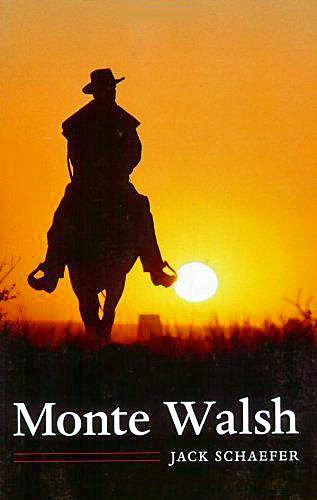
Monte Walsh (1963) – by Jack Schaefer & The Shootist (1975) by Glendon Swarthout. I put these two westerns together because they’re both about men who’ve outlived their time – and time is passing or has passed them by. This is a theme I enjoy reading about and write about often myself.

The Grifters (1963) by Jim Thompson. A good book and an even better movie. If you like people living on the down low, if you like con artists, and if you like the grift, this is the book for you. It would be good for fans of Jim Thompson (how’s that for stating the obvious?), noir fans, hardboiled mystery readers.

Devil in a Blue Dress (1990) by Walter Mosley. The book that introduced Easy Rawlins. That’s enough.

Double Indemnity (published in a magazine 1936) / The Postman Always Rings Twice (1934). Classics that made even better movies than the books.

The Razor’s Edge (1944) by W. Somerset Maugham. My favorite book of any genre. A book which is, at the risk of sounding corny, about a man seeking the meaning of life. But a book that I could relate to on many levels and which deeply affected my life in many ways, Larry Darrell’s disillusionment after the war (WWI), and his search for peace and meaning in life.


The Count of Monte Cristo (1844) by Alexandre Dumas (père): The ultimate revenge novel needs no description. But I believe this is what led to the saying “revenge is a dish best served cold”. I love revenge stories and this is the Big Daddy of them all. And the way Edmond Dantes gets revenge on his nemeses is clever, brilliant and very satisfying and revenge is so satisfying, served cold or otherwise.

The Tartar Steppe (1940) by Dino Buzzati. A novel about waiting for something momentous to happen that never happens – waiting and waiting and waiting, like so many of us do. And no, it’s not about waiting for your clams in some snobby restaurant so you can put tartar sauce on them. And no, it’s not about waiting for some guy name Godot. A soldier is posted at the Tartar Steppe, hoping to be called on to show his courage and bravery in the glory of battle. Time slips by – he grows old – and the wished for attack is always just beyond the horizon.

World’s Fair (1985) by E.L. Doctorow (or maybe I should leave the periods out of his initials…). Probably my favorite coming of age story about a boy growing up around the time of the 1939 World’s Fair.

Chronicles Vol. 1 (2004) by Bob Dylan. Dylan talking about, uh, Dylan. Fascinating. Wish he’d come out with Vol. 2 already.

High Noon: The Hollywood Blacklist and the Making of an American Classic (2017) by Glenn Frankel. I’m fascinated by the Blacklist and that era. And this is a good look at it via the making of a one particular movie. But, because of the people involved, it covers much more than just that movie. I knew one of the Hollywood Ten somewhat and found it very interesting talking to him and getting a first-hand account of those years.

The Waste Land (1922) a poem by TS Eliot that shouldn’t be forgotten.

What are your choices?

 ~.~.~

Happy Holidays to everyone!


***

And now for the usual BSP:

Holiday shopping? Consider Broken Windows for the mystery fans on your list. H

Here’s a small sampling of some of the great reviews:

Kristin Centorcelli, Criminal Element

"Although it’s set in 1994, it’s eerie how timely this story is. There’s an undeniable feeling of unease that threads through the narrative, which virtually oozes with the grit, glitz, and attitude of L.A. in the ‘90s. I’m an ecstatic new fan of Duke’s."

"Duke and company practically beg for their own TV show."

John Dwaine McKenna, Mysterious Book Report:

"This electrifying novel will jolt your sensibilities, stir your conscience and give every reader plenty of ammunition for the next mixed group where the I [immigration] -word is spoken!"

Betty Webb, Mystery Scene Magazine:

"Broken Windows is extraordinary."


Please join me on Facebook: www.facebook.com/paul.d.marks and check out my website www.PaulDMarks.com


***

Friday, October 5, 2018

The Big Squeeze

Overheard at Bouchercon in Florida last month: “I don't write series *or* standalone; I write books.” Do you love/hate/mind/notice/use/ignore the publishers' and booksellers' classifications of your work?

by Paul D. Marks

It’s not a question of loving/hating/minding/noticing/using or ignoring the classifications. I do all of those, well maybe except for the first. But it’s something we have to live with. What annoys me is when the Powers That Be want to stuff us or our work into a small bag or can’t figure out what bag to stuff us into.


Pigeonholing:

Early on in my switch from scripts to prose, I wrote a novel based on a screenplay I had written. The screenplay had been optioned many times by many people or entities, but ultimately never produced – story of my life. So I decided to turn it into a novel. It’s a mystery-thriller with a touch of sci-fi. An editor at a well-known publisher wanted it. But whatever committee of faceless people make the final decisions on such things rejected it. Why? Because they didn’t know how to classify it. Was it a mystery? A thriller? Sci-fi? How do we sell it? What section of the bookstore would it go in? Things like that. So the editor, much to her regret, had to reject it.

I also agree with what Susan said on Monday re: agents or publishers trying to squeeze you into a box.

Series vs. Standalone

Why not do both? Initially, I didn’t think I’d want to be writing a series character. I thought it might get stale. But there are ways to keep series fresh and exciting. To this point I’ve written two Duke Rogers P.I. novels, White Heat and the recently released Broken Windows. And a third is slated. I’ve also written several short stories in the Ghosts of Bunker Hill series, featuring another P.I., Howard Hamm, that’s been appearing in Ellery Queen Mystery Magazine.

The Howard Hamm series is fun to write in a lot of ways. For one thing, the narrator is dead. Yup, dead. A ghost. He was killed in the first story. You’d think being dead he’d be like an omniscient narrator who sees and knows everything. But not in this case. He pretty much sees what Howard sees over Howard’s shoulder. And even if does see something that he wants to give Howard a heads up on or wants to warn Howard about he has no way to communicate with him. Frustrating. It’s hard being a ghost. The stories are, in my humble opinion, solid mysteries, but they do have that ghostly aspect to them.

On the other hand, the Duke Rogers series is more on the hardboiled and noir side. No ghosts. Just clear doses of hard-edged reality. And so far each story, including the coming one, is set around real events. The stories take place in the 1990s. White Heat revolves around the Rodney King riots of 1992. Broken Windows around California’s anti-illegal alien Proposition 187 events of 1994. And the third one will also revolve around actual events that took place in L.A. in the later 90s. The fact that they revolve around real events that the characters find themselves in keeps it fresh on one level. But the thing that really keeps it fresh is how one deals with the characters. Hopefully, the characters are live, flesh and blood people with real problems and life stories and situations. This helps keep them alive and fresh and facing new challenges, besides the challenges of the cases they’re working or those real events that envelope the cases and characters.

Vortex is a stand-alone novel, about a returning vet, who finds more trouble at home than he did in the war. So that was a break from the series characters.


Typecasting:

On the other-other hand (I think I might be running out of hands) I don’t really want to be typecast as only the guy who does the Duke Rogers series or the Howard Hamm series. So I try to switch it up sometimes. For the Bouchercon Florida Happens anthology I did a story called There’s an Alligator in My Purse, which is a humorous take on the foibles of Florida and people. I hope readers get a chuckle or two out of it. And, though I’m known – if I’m known at all – as a noir or hardboiled writer, I do like writing humorous things once in a awhile, like that story or Continental Tilt (which you can find in the Murder in La La Land anthology), and hopefully funny stories as well. That said, Windward, my story from Coast to Coast: Private Eyes from Sea to Shining Sea, is another story about a P.I. A different kind of P.I., whose Venice Beach office is over a Cold War bomb shelter that also serves as his home. And, while that might sound a little humorous, the story really doesn’t work on that level. And, no, I don’t only write about P.I.s, but lately my works seem to be the Invasion of the Body Snatcher P.I.s. And why not, who doesn’t want to carry a gat, wear a fedora and trenchcoat and have a moll on each arm. I guess my P.I.s don’t, ’cause none of them do any of those things. Well, maybe they carry a gat when needed.


***

So the bottom line is that there’s reasons for doing series and reasons for breaking from the pattern. As long as I can do both I’m good to go. Just don’t stuff me in a bag that doesn’t fit.

***

And now for the usual BSP:

I’m honored and thrilled – more than I can say – that my story Windward appears in The Best American Mystery Stories of 2018, edited by Louise Penny and Otto Penzler, which just came out this week. I wrote a blog on that on SleuthSayers if you want to check it out: https://www.sleuthsayers.org/2018/10/the-impossible-dream.html .

I’m doubly thrilled to say that Windward won the Macavity Award at Bouchercon a few weeks ago. Wow! And thank you to everyone who voted for it.

And I’m even more thrilled by the great reviews that Broken Windows has been receiving. Here’s a small sampling:


Here’s a small sampling of excerpts from reviews for Broken Windows:

Kristin Centorcelli, Criminal Element

"Although it’s set in 1994, it’s eerie how timely this story is. There’s an undeniable feeling of unease that threads through the narrative, which virtually oozes with the grit, glitz, and attitude of L.A. in the ‘90s. I’m an ecstatic new fan of Duke’s."

"Duke and company practically beg for their own TV show."

John Dwaine McKenna, Mysterious Book Report:

"This electrifying novel will jolt your sensibilities, stir your conscience and give every reader plenty of ammunition for the next mixed group where the I [immigration] -word is spoken!"

Betty Webb, Mystery Scene Magazine:

"Broken Windows is extraordinary."


Please join me on Facebook: www.facebook.com/paul.d.marks and check out my website www.PaulDMarks.com


Friday, September 7, 2018

Favorite Lesser-known Writers

What’s your favorite lesser-known novel? Who are your favorite lesser known writers? In your genre and outside of it? Why? And have they influenced your work? How?

by Paul D. Marks

Well, that depends on what/who you mean by lesser-known? One person’s lesser-known author is another’s major influence. But that aside, I’ve been influenced by a lot of people and books at one time or another. The standards, like Raymond Chandler, Ross Macdonald and James Ellroy—my favorites. I’ve also been influenced by movies, especially film noir. And certainly not lesser known, but outside of our genre, Alexandre Dumas and The Count of Monte Cristo, the ultimate revenge story. Also, Somerset Maugham, especially The Razor’s Edge, which influenced me in so many ways both in regard to writing and also life.

So, those are some of my influences from major writers. Now to answer the question and I may have mentioned some of these before, but they’re worth mentioning again. Some may not especially be lesser-known, or at least weren’t in their day, but they might be somewhat forgotten today. And in no particular order:

The Tartar Steppe by Dino Buzzati: a novel about waiting for something that never happens—and no, it’s not about waiting for your clams in some snobby restaurant so you can put tartar sauce on them. And no, it’s not about waiting for some guy name Godot. A soldier is posted at the Tartar Steppe, hoping to be called upon to show his courage and bravery in the glory of battle. Time slips by—he grows old—and the wished for attack and chance for glory is always just beyond the horizon. Lots of subtext here.

Monte Walsh by Jack Schaefer (who also wrote Shane), and The Shootist, by Glendon Swarthout. Both were made into movies. Monte Walsh was made twice, first in 1971 with Lee Marvin and then in 2003 as a TV movie starring Tom Selleck. I like both versions. And The Shootist was John Wayne’s last movie. And, as with movies, they were all changed a bit from the books they’re based on. But I truly love the books. Both are about people who’ve outlived their times and their usefulness. The world is changing, modernizing, passing them by. A theme I both like reading about and writing about. And it is something I write about a fair amount, people out of time—people who’ve outlived their time, so to speak. “Dinosaurs” who don’t understand the rapidly changing world around them.

Tapping the Source: These days Kem Nunn is arguably better known as the co-creator of the TV series John from Cincinnati, as well as a writer on Sons of Anarchy and Deadwood. But he’s also the author of, I believe, six novels. Tapping the Source (1984) is his first and is something special. If it’s not the novel that invented the “surf noir” genre it’s certainly an early and foundational entry. This is not the Beach Boys’ version of sun, sand, surf and surfer girls, but a much darker vision of life on SoCal’s storied beaches. Ike Tucker, an aimless young man, treks to Huntington Beach (a.k.a. ‘Surf City’) to find his missing and possibly dead sister. There he gets hooked up with bikers, sex and drugs. No Gidgets or Moondoggie’s here. And Ike will be lucky if he gets out alive. I like this one so much that I looked into acquiring the film rights. Unfortunately they were already taken. Now, if whoever has them these days would just make the damn movie already. Tapping is good for anyone who loves surf, sun and murder.


David Goodis: Of course, I probably mention Goodis a lot. And he’s probably better known today than years back when I discovered him and had to settle for ratty paperbacks in used book stores as his books were out of print. Dave Moore's description of Goodis as the "poet of the losers" is an apt portrayal of his stories about people on the skids. Best known for Dark Passage and Down There, two works made into films. The first with Bogart and Bacall, the second a French movie by Francois Truffaut under the title Shoot the Piano Player. The former takes a good novel and makes it better, the latter takes a great novel and is played out of tune. Down There is a great novel that works with Goodis' favorite theme of people not being able to escape their pasts—and is my favorite Goodis by far. Nobody can escape their past in Goodis, including Goodis. And if you want to find out more about him check out Goodis: A Life in Black and White by Philippe Garnier, recently translated into English. And my short story Born Under a Bad Sign, originally published in Dave Zeltserman’s HardLuck Stories magazine is my straight out attempt at a Goodis-type story and an homage to him. Now available in the collection L.A. Late @ Night  ( https://www.amazon.com/L-Late-Night-Mystery-Streets-ebook/dp/B00I9289HM )


John Fante has sort of come into his own in the last decade or two. A movie was made of his most famous book, Ask the Dust. It didn't quite capture the magic of the book, as gorgeous as it is to look at. Ask the Dust is a must-read for any writers living in Los Angeles. If for nothing else but to marvel at how someone could eke out a living writing short stories. It’s also a must read for anyone interested in L.A. The setting is downtown Los Angeles in the 1930s, in the “shabby town,” in Raymond Chandler’s words, of Bunker Hill. I discovered Fante and this book before the new surge of interest in him and was so impressed that I wrote to him at his home. Unfortunately he was already so sick by then that I didn’t hear back, or maybe I wouldn’t have anyway after some of the things I’ve heard about him. He was known to be an angry man. But a great writer.


Here’s some other “lesser-known” writers and books I like, though I’m not sure how lesser-known some of them really are: White Noise by Don DeLillo, various Paul Auster books. Walker Percy’s The Moviegoer, Steve Ericson’s Days Between Stations. Soldier’s Home, a Hemingway short story, and if I had to pick one favorite short story from any genre this would be it, for a variety of reasons. And so many more.

***

Thanks for stopping by. Tell us some of your favorite lesser-known authors and books. And I’d love to hear your comments, though I might not be able to respond right way, but I appreciate your stopping by.

***

And now for the usual BSP:

Broken Windows, the sequel to my Shamus Award-winning novel, White Heat, releases on September 10th and is available for pre-order now at AmazonBarnes & Noble and Down & Out Books.


Peter Anthony Holder interviewed me for the Stuph File. It’s short, 10 minutes. You might enjoy it. It’s episode 0471 at the link below. And check out the Stuph File too:


And I was also interviewed by Dave Congalton at KVEC radio: 


Please join me on Facebook: www.facebook.com/paul.d.marks and check out my website www.PaulDMarks.com

Friday, August 10, 2018

Dancing With Myself

Rejection is part of the publishing process. Tell us your most memorable rejections—whether it be from queries, agents, editors, or reviewers.. Anything from your funniest to your most devastating (and how you recovered), and anything in between.

by Paul D. Marks

Oh, have I got material for this one. Not all are rejections per se. Some are just funny anecdotes about why something didn’t get bought. And many of these stories pertain to scripts and Hollywood, rather than publishing stories and/or novels. Some of the names of people and companies have been changed and/or left out to protect the not-so-innocent.

I used to collect aphorisms or sayings or quotes that I liked. I still do, but not nearly as much these days. And one of my favorites was/is “Literature is an occupation in which you have to keep proving your talent to people who have none.”—Jules Renard—Yes, those people who often have none also often have the power of publish or perish over you. So let’s talk about some “rejections” I’ve received.

***

Little green men: I was trying to get an agent at one of the big Hollywood agencies. And I was able to submit a script or two to a middling agent there (big agency). Said Agent read said spec script and called me into said Big Agency and said, “Read your script and it’s very good.  Really liked it a lot, but there’s a couple of problems.  First off, people don’t take trains anymore.  Why don’t you set it in the airport?”

Said I, “Part of the thematic structure of the piece is to contrast the old vs. the new. The old Los Angeles as opposed to the new. Union Station typifies the beauty of the old.”

“I don’t know, I think LAX is a pretty cool place.  Besides, no one will believe your character takes the train.”

No one but the person who wrote it, but what does he know?

“Then the other thing that bothers me is if I’m to believe this premise I’d have to believe in little green men from Mars.”

Guess you’ve never heard of the Terminator movies.  Alien, Aliens, the Robocops, Stepford Wives, Westworld or Star Wars—you gotta remember these stories happened a long time ago.  Say it, go ahead, tell him.  Call him on it.  He’s not going to buy it, so what if you burn your bridges?

“What about the writing?  Did you like the writing?”

“Yeah.  The writing was tops, except the characters don’t develop properly.  They don’t have any quirks.  I mean like your detective, maybe he could have an ear tick, smoke a big stogie, or something.”

“Character develops through action.  They don’t need....”

“Well, I’d like to finish this conversation, but I’ve got another call.  Good luck.  I’ll send the scripts back to you.”

With coffee stains, no doubt, so I can’t use them again.

I did ultimately get an agent with said Big Agency, but not this guy.


Boy Genius #1: I met with a young producer, by young I mean he hardly had anything to shave. He gave me a meeting, I mean he took a meeting with me. I pitched him several ideas. His ultimate line to me was “Why should I help you?” Well, of course, he didn’t have to. But it seemed to escape him that he came from well-known Hollywood producing family, so he might have had a little help along the way. He didn’t exactly get where he was simply from his good looks and work ethic. So maybe he could have had a little more empathy for someone trying to make it, let alone the fact that he didn’t seem concerned about the projects I was pitching. Oh, and I had known his cousin too. But I set up the meeting without using that connection.


Boy Geniuses #2: I had a meeting with two young producers, both fresh out of USC, but who had a deal with a major company, so it’s not like they didn’t know anything about the business. Just the opposite: at twenty-two they knew everything. And they’d heard everything. I pitched them several stories and they didn’t want to see paper on a single one of them. This is the only time I never left a treatment, outline or script with someone. Oh, and I knew one of their brothers pretty well, too. But again, I hadn’t used him to set up the appointment…as I hadn’t seen him in years. So I walked out with everything I’d come with. And I sort of waited and watched ‘cause I wanted to see what big epic they’d come out with for their first movie. It was a “monster under the bed movie.” I guess because that had never been done before. And certainly it was unlike anything I’d pitched them.


The Best Dialogue I’ve Ever Heard: So, I pitched another producer on a high tech thriller script. He liked the idea. I left the property with him. Got a call a few days later—he wanted another meeting. So we met again. He loved the script. Loved the dialogue: “The best fucking dialogue I’ve ever heard.” To make a long story short, he showed the script to a director-friend of his. She hated the dialogue. Somehow, magically, he wasn’t quite so fond of the dialogue after that. But he did option it. Then he wanted me to change the genders of the two leads. The man became a woman, the woman became a man. Well, I guess anything’s possible these days 😉.


I made a well-known producer cry: There’s a first time for everything and that’s the first time I made a producer cry, at least in a positive way... I pitched him a story. He liked it. I left paper with him. He called me the next day—that’s also something that usually didn’t happen with me, such a quick turnaround. He loved the story! It made him cry. He had a deal with a Big Studio, so we had several meetings there, the producer, my agent, me. Others.

Just one little itty bitty problem, well, two really. Of course, like all producers, directors, actors and janitors in Hollywood, he knew better what the script should be than the writer. And since there were no major women characters he wanted to add several, but that wasn’t the story I was trying to tell. It was a story about soldiers who had fought together getting together to figure out what they fought for in a war that tore the country apart, helped depose a president or two and whose wounds still haven’t been sutured. For me it was very important that this story be about the men without any other elements. I didn’t want the story to be about their relationships with wives, girlfriends, moms, etc. If I had I would have written it differently. I wanted it to be about their experience with each other…

But that wasn’t the end of it:

“Oh, and by the way, you—me—won’t be able to write it.  You may have lived it but you can’t write it.  We’ll get a name writer.” I had a name, didn’t I?

I had the courage of my convictions then.

I had integrity then.

I had pride then.

I didn’t know that pride comes before a fall.  I told my agent to can the deal.  The producer said he’d do his own version of the story.  Never mind that he wouldn’t have anything had I not come to him.

If I knew then…

If I did I would have let him do it his way.  The hell with principle and what would have made a better movie.  I would have given in.  Caved.


The Golden Turkey Leg: Not really a rejection, but bad enough: And then there was the Golden Turkey Leg. I had a spec script that dealt peripherally with Voodoo, but it wasn’t “supernatural”. Another producer optioned it and wanted to make it more mystical, scary, more Voodoo-ey, sci-fi, sleazy, seedy, make-Ed-Wood-look-like-a-genius-bad, and to that end he wanted me to add something about some golden object that was magical and mystical and for want of a better word I called it “the golden turkey leg”—well, not to his face. He also wanted me to bring a character back from the dead—now that’s Voodoo...—turning a pretty good thriller into a grade Z schlockfest horror story that would even make Roger Corman at his cheapest cringe. Then, as if it couldn’t get any weirder, he knew the “perfect” guy to do the theme song: Michael Bolton. And when I say he “knew” Michael Bolton I mean he really did; they were buds or something. And no offense to him or anyone who likes him, but he’s just not my taste. Give me Ian Gillan and Joey Ramone. So maybe I’m glad that that one never got out of development hell. Then to top it all off, my wife and I were at a toy show in Pasadena (one of my hobbies is collecting old toys) and we ran into said producer, who’s there with his wife and kid, maybe around six or seven years old, selling old dolls. So, he asks me to look after said kid, who at least was a sweet said kid, so he and his wife can walk around the toy show, unfettered. The worst part is he wasn’t even selling the kind of toys I was looking for. So in addition to working on screenplays, I’m also a great babysitter, I just don’t cook or do windows, except Microsoft Windows. And another one bites the dust, another one that never made it to the silver screen, but at least I got paid. Were this producer’s ideas better? Well, if you like Golden Turkey Legs, I suppose so. But did that make me doubt my decision to be a writer? Hell no, I’m a glutton for punishment.

Deader Than a Doornail: Another script for an interesting TV show had a big TV producer interested.  Until he dropped dead and everyone dropped the ball again.

Think long-term: The first novel I completed was accepted for publication at a major publisher. It was a satire on a screenwriter trying to make it in Hollywood. (Gee, where did that come from?) Eventually, the whole editorial staff at that publisher was swept out and as a new broom sweeps clean my book was swept out with them. And since much of the humor was topical it was pretty dated even after only a couple of years so it couldn’t really go to another publisher. The lesson: don’t write things that are so topical that their shelf life is shorter than yogurt left on the counter on a steaming, hot day. Remember what George S. Kaufman said, satire is what closes Saturday night.

Stained Letter: There was one point where I got so tired of getting form letter rejections that I decided to fight back. I got an obvious form letter rejection in the mail. It said something like Dear_____: but they hadn’t even bothered to write my name in the blank. And the form looked like it had been Xeroxed about 500 times, the words were crooked on the page and it had all kinds of spots and smudges from overuse over the years. It was so dehumanizing to get something like that in the mail—I wasn’t even deserving of a freshly Xeroxed form. So I created my own form letter thank you. I typed a letter on an old typewriter so the print was uneven. I made smudges and cross outs on it, placed a couple of cups of leaky coffee on it and then Xeroxed the hell out of it. It said something like “Dear X (purposely left the X in), thank you so much for taking the time to read and carefully consider my manuscript. And I appreciate the personalized response. Sincerely, Unknown Writer.” I do understand that agents and editors get tons of queries, but really …. Can’t they at least try to make it seem like they give a damn that you’ve just poured your heart and soul into a 120 page screenplay or 80,000 word manuscript?


The Mossad: I once had a producer threaten to send his friends in the Mossad to get me when we vehemently argued about a script I was developing for him. I was warned about him before I started, but I thought I’m a brave soul, I’ll give it a shot. He’d hired me to write a script based on his idea—then hated everything I came up with, even though it was exactly what we’d talked about, but it wasn’t him, his writing, in every nuance. Hell, he should have written the damn thing himself... But he couldn’t and wouldn’t. No he’d rather just threaten me. So, of course, I sat up every night with night vision goggles, a CAR-15 (it was a while ago), flame thrower, a couple-a cruise missiles (Tom Cruise Missiles ‘cause he could protect the hell out of me) and an AWACs circling overhead, and lay in wait for them to swarm the hill behind my house. A .50 cal would have been better than the CAR-15, but since they never came I guess it didn’t matter. Maybe they’re still on their way and I seem to have misplaced the CAR-15. But did the Mossad threat make me doubt my decision to be a writer, hell no. I just bought myself a new Kevlar vest. 😄  — And, since he’s also an actor I see him in things now and then and it makes it hard to watch them. On occasion I’ve turned them off. And I’m still looking over my shoulder every day…


Mid-Life Crisis: There was the producer who spent a year rewriting a script with me at one of the major studios. Before the days of the internet I would go there 2-3 times a week to meet and work with him. Big producer. He had worked with the likes of De Niro and others of that caliber. He was talking Harrison Ford and Michelle Pfeiffer for the leads, and he could have done it. Until he had a midlife crisis and decided he wanted to make family films. Dropped my project like a hot hand grenade. And my agent didn’t carry the ball either.

Ah, Hollywood.

***

But on the fun side, among other interesting tidbits, Cary Grant did call me and Gene Kelly invited me to his house. But if you want to find out about those stories you have to go to my website and find them. ( www.PaulDMarks.com )

That’s Hollywood.

***

I had a lot of fun and a lot of frustration. I did a lot of work as a script doctor, no glory, no screen credit, so my dad could never figure out exactly what I did. And I did option scripts I wrote, either by myself with a partner, to various entities. It was fun and aggravating and maddening. But these are some of the rejections that come to mind.

And speaking of rejection: I can’t get an agent if my life depended on it. I think I have the bonifides and various people have come up with various theories, but this isn’t the place for that. But I have a new manuscript that’s a little different from much of what I’ve published. A homefront mystery set in L.A. during World War II. With a very unusual leading character… I like it a lot and I can’t get anyone to look at it. Not like it’s been rejected since they won’t even look at it. And it’s lonely for an agent. So if anyone knows anyone, give ‘em my name and number, please.

~.~.~.~  

And now for the usual BSP:

Broken Windows is releasing on September 10, 2018. Its available for pre-order now at Amazon, Barnes & Noble and Down & Out Books.


Please join me on Facebook: www.facebook.com/paul.d.marks and check out my website www.PaulDMarks.com