Sunday, June 6, 2021

When Life Becomes Fiction

Have any experiences from your youth worked their way into your stories? How about other life experiences? Do you consciously select these in your writing or do they suddenly appear on the page?

Brenda Chapman here.

My first series of books are the Jennifer Bannon mysteries for middle grade. Jennifer and her little sister Leslie are based on my own two daughters who were the same approximate ages when I wrote the stories. I also borrowed heavily from my own memories of childhood, particularly in the second book Hiding in Hawk's Creek, which I set in a fictional location that was loosely based on the town where I grew up. My brother still lives in Northwestern Ontario, and after reading the book, he asked me if a certain family knew I'd based some of the plot on them? So far, he's the only one who's noticed, likely a good thing.


We squatted down in the dirt. Sure enough, before five minutes had passed, a huge beaver swam toward the middle of the pond, holding a tree limb in its teeth. The water parted like a triangle in its wake.

I went on to write a teen novel entitled Second Chances. This coming of age book is set in the 1970s and I again relied on memories from my own teen years to fill in the details of the story. It was the era of bell bottoms, sit-ins, love-ins, hitchhiking, Woodstock, communes, and the Vietnam War. I was a bit young to partake in most of it, especially growing up in a mill town of 2000 people in Northwestern Ontario, but these were my formative years, and Second Chances is steeped in my memories.

Elizabeth threw back her head and laughed. It took her a while to catch her breath. "No way. I'd bet money Candy never got within a thousand miles of Joplin or Morrison. Did she really tell you that? Even better, did you believe her?"

I think that in every book I've ever written, something from my past has appeared on the page without conscious thought on my part. Maybe it's a character or their dialogue, perhaps it's the setting. Sometimes, it's as simple as the expression a character uses when they're speaking.  It's often not until the editing stage that I see the connection to my own life.

I went to university in Kingston, Ontario and this became the setting for my Stonechild and Rouleau series. In book one, Cold Mourning, Kala Stonechild moves south from Northwestern Ontario. She's alone in the big city, ungrounded and a fish out of water -- a scene straight out of my own biography. I even move her back north for the last book in the series, Closing Time, which is essentially my love letter to that part of the country.

Bands of orange and pink bled into a cover of indigo cloud with the lake a mirror image of colour. The trees on the distant shore were stark black shapes reflected in the still, pink water.

So, maybe the question isn't whether events from my childhood up to the present enter my books, but how often? Lately, I've been having trouble sleeping and was surprised - but not surprised - to find that my main character has developed insomnia.

My art continues to imitate my life :-)

Website: www.brendachapman.ca

Twitter: brendaAchapman

Facebook & Instagram: BrendaChapmanAuthor


Friday, June 4, 2021

The Human Mambo by Josh Stallings

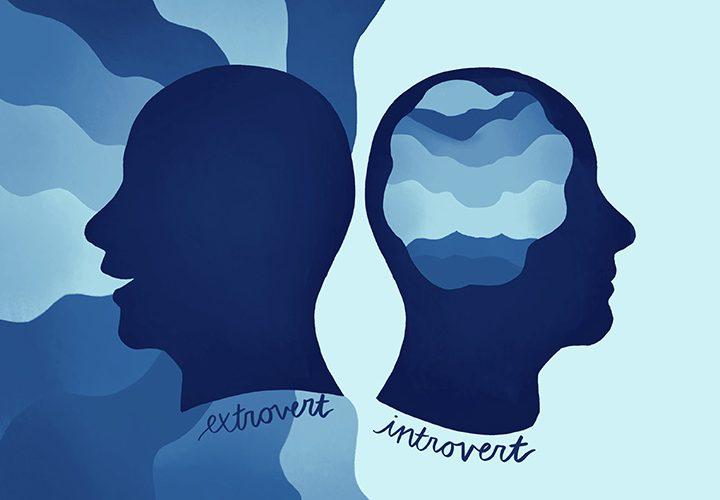
 Q: Would you consider yourself an introvert or an extrovert? What strengths and/or weaknesses come with this personality type in regards to book publicity and marketing, and how do you mine your strengths?


A: Writing is by its nature an introverted job, long hours spent lost in my thoughts. Some days I only speak to the creatures in my head. People who know me find it odd when I say I used to be shy, comfortable in small groups of friends but crowds freaked me out. The idea of reading in front of actual people caused panic. Echoes of growing up dyslexic, partly fear of being exposed as a fraud, a con-person, and partly I fight to write with honesty and that leaves me feeling vulnerable.


I have learned to let my inner extrovert flag fly. Here are some things that have changed me: 


1) I’m coming up on three decades of sobriety. In that time I’ve done a lot of public speaking, and I’ve learned not to over plan or get too cute with what I say. Just tell my truth. Plus my pal Nino once told me not to worry, most people are too busy looking inward to hear what you say anyway. 


2) As for readings, I once messed up a paragraph and instead of stopping I ad libbed until I found my way back to the text. I figured out I wrote the damn thing, I could do a verbal re-write if I chose. No one noticed, except the audio book narrator who happened to be there and Erika. Flow and performance were more important than exact words.


3) For panels, if I’m moderating I massively over prepare. Early on I was lucky enough to be on a panel moderated by Katrina Niidas Holm, she did serious research. I use her as the benchmark for how much preparation is needed. I always plan too many questions, then never fear of running out. On the day of, I forget all the prep and really try and listen to my fellow writers. And THAT is the key to enjoying being on a panel, listening. Actually that’s the key to everything.


When I find myself getting “self-conscious” in large groups, the answer is to shift my consciousness from self to others. Look for a lost new writer and ask them how they’re doing, and then really listen when they answer. It seems so obvious as I type it out, “Feeling self-conscious? Don’t focus on self.” Yet it’s easy to forget.


The truth is I love people, how we think, how we behave. The human mambo is fascinating. It’s the core of all writing. When I step outside my head, stop looking inward, I get to see the greatest show on earth, us.


I guess the answer is, I’m both. An introvert when writing, or doing any creative work. An extrovert when doing readings and panels and Zoom talks. Both have their place in this wild ride of getting stories out of my head and into yours. 


Thursday, June 3, 2021

Her name was Sally Canal . . .

 Introvert? I wish! 

If we take the dictionary definition of "introvert" - a shy, reticent person - then they are the lucky ones. Would a shy, reticent person spend the small hours after a book event tossing and turning wondering if they talked too much, shared too much, blabbed stuff they should have kept quiet about . . . ?

Do not draw attention to yourself

They would not. I do. Every time. "Oh my God! Why did I tell that joke?" "Oh my God! Why did I start that story?" "Oh my God, why didn't I just say 'search me', when that weird bloke asked if there was going to be a second independence referendum?"

It's an easy life if you're reserved and silent. (I almost mean that - hear me out.) Once everyone knows you won't pull your weight at a party, you're permanently absolved from ensuring parties are successful. Sweet deal if you can get it.

My best ever introvert impersonation
(with Jessie Chandler)

One time years ago, for reasons that don't matter now, my husband spent the afternoon with a beautiful (and didn't she know it), silent, self-contained woman while I was off doing something else. Now, this was an introvert's introvert. She glided around as if she was on castors, said nothing - like nothing, blinked every so often, flipped her hair in slow-motion every so often and rolled stinky little cigarettes.

When we met up again at the start of the evening, Neil was in a hilariously entertaining bad mood. "I'm exhausted!" he said. "I'm spent! I'm done! I've sweated right through my suit! My head's killing me! I've never worked so hard in my life - and I've spent a summer clearing the sludge out of the cooling tank of a papermill!"

This companion was more fun than you-know-who

Her name is still a by-word in this house for the utter selfishness of (some) introverts, who don't mind everyone else grafting away to keep them entertained. Say her name was Sally Canal, which it wasn't. All I have to do is say "shy" in Neil's hearing and, like Pavlov's dog when the bell goes off, he says "Shy? Or Sally Canal shy?" And then he gets in a bad mood all over again. It might stop being funny one day, but it's been twenty years and I'm laughing as I type this.

So, I'm not that sort of introvert, no. But the other defintion of verts goes like this: an introvert draws strength from solitude and uses it up in company. An extrovert draws strength from company and uses it up on solitude. By that definition, I'm an introvert. To wit: I've been fine this last 14 months, at home alone except for someone who wears earbuds 18 hours a day. I know I could never share a room at a convention, because sometimes I need to walk away from my dearest and most beloved friends and stare at a wall. I am always relieved, never disappointed, when something is cancelled.

So, I think I'm an introvert. One that doesn't mind standing up and talking to hundreds of people. One who can walk into a publisher's party at the Royal Opera House on her own when her agent is stuck at the airport. One who's not afraid of saying - hey my new book just came out in the UK last week and look what Kirkus said about it:


Cx


Wednesday, June 2, 2021

Coaxing the butterfly out of the chrysalis... by Cathy Ace

Q: Would you consider yourself an introvert or an extrovert? 

Interesting question, which I shall try to answer briefly: I’m an ambivert.

Short enough?

What does that mean? It’s a term that’s been around since the 1920s and denotes what the majority of humans are – a mixture of introverted and extroverted behavioral patterns, depending upon circumstances. It’s not a word Jung used (the chap who originally came up with the terms introvert and extrovert) but was coined, I believe, by Conklin. (Can you tell I'm a psychologist? LOL!)

Photo shoot for "thoughtful writer" 

I’m a pretty normal ambivert: many people who know me will have met a socially agile extrovert, happy to interact....dare I say "the life of the party"? Others (only a few) will have met a socially reclusive introvert, with an engaging internal life (and a constant internal monologue, in case you’re interested). In other words, I can pull the butterfly out of hiding when she’s needed but am usually quite happy cogitating inside my chrysalis.

New Year's Eve - Petra, Jordan, 1998

No, it’s not an “act” when you meet me at an event and I’m chatty and interested in other people, (though I do have to steel myself in my hotel room before I leave it to join a throng at a convention, for example, where I know that being “her” is what’s expected of me). The “other”, solitary and thoughtful, me isn’t the “real” me either – both types of behavior are the truth of me, and are what make me whole.

Without the quiet times I’d spin out of control (and I admit that's happened during my life), but, without those social interactions, I might stagnate.

My late father (see flash in reflection) took this of me in Seattle, in 2003

This mixture lends itself well, I believe, to being an author in the twenty-first century, as opposed to being a writer in the pre-internet age. I need my introverted self to be able to go within and create the books I write, then I need my extroverted self to try to earn a living: being a writer is a totally different part of me than being an author is, because an author’s expected to sell books, not just write them.

Dad took this in 1965-ish - maybe he knew I'd head west?

Fortunately for me I initially graduated in psychology, then all my post-grad qualifications were in marketing and marketing communications; I do my best to blend the two skillsets in my career as a writer/author. It’s a constant balancing act, and all any of us can do is try to stay upright as the see-saw wobbles beneath us. Each of us changes as we have new experiences, and the see-saw's been wobbling a lot this past year or so, so all we can now do is try to find a new balance, and keep hanging on!

Tomorrow my 15th novel is published (my 17th book overall), and I am proud of it…proud of what I created and wrote. Now I have to slough off the chrysalis and get the butterfly working, because the fruit of my isolation and cogitation will not “sell itself” (if only!!!!!) so here I am, shifting to extroversion, and asking you, quite bluntly, to PLEASE buy my new book. Which is something my introverted self would never dare do, because it’s rude to ask. Here's a handy dandy link (provided by my butterfly-self): CAIT MORGAN MYSTERIES — CATHY ACE CRIME WRITER


Tuesday, June 1, 2021

Intro or Extro?

Would you consider yourself an introvert or an extrovert? What strengths and/or weaknesses come with this personality type in regards to book publicity and marketing, and how do you mine your strengths?

From Frank

For years, I actually thought I was an extrovert. I thought this because I liked being around people. I enjoyed the camaraderie that comes with it, especially in smaller groups where you really make a strong connection. But I was also happy and comfortable spending long stretches alone. That sounds more like an introvert. So I started to question which one I truly was.

Then I learned the best definition of the difference I've heard to date. It doesn't have much to do with whether you like being around people or not. It's all about energy. An extrovert draws energy from being with people; being with people drains energy from an introvert. 

Bam. I'm definitely an introvert by this definition.

I like people. I enjoy talking with them, listening to them, being around them. But it doesn't energize me. It exhausts me. 

I know that can sound bad but it really isn't. Listen, I love hockey, too. I enjoy every second of a game, from getting ready in the locker room, to the play on the ice, to the cold beer with teammates afterward. But playing hockey exhausts me, too. So you can be exhausted by something you love without it being a negative.

I suspect most writers are introverts. Yeah, I know - not exactly a risky supposition to make. But I think writing suits us. The creative, emotional and intellectual effort that goes into writing can be exhausting (exhilerating, too!). I think that the added crush of whatever an extrovert feels when s/he is alone for that long would be overwhelming.

That's the strength of being an introvert - we can spend that time alone to create and feel happy and at home during the process. But then comes marketing and publicity, which seem more suited to an extrovert.

When I said I was an introvert, I'm sure that some people who know me a little might call BS. True, I'm not shy in groups, speaking in public doesn't faze me, and I do well at book events and the like. I very much enjoy my time with people. It just exhausts me. Therefore, I think the key to in-person marketing is pacing myself. Have a little down time/alone time to recharge.

Online publicity and marketing, on the other hand, is not an issue for me. We're all a half-step removed in those interactions, and they don't tend to be as draining (or, admittedly, quite as enjoyable... although I have forged some pretty solid friendships through this medium).

Honestly, I wish this was a question the entire panel of ten was answering and not just half of us, because I'd be very curious to hear the self-assessment, experience, and strategies from everyone. So if this is your off week and you feel like dropping a few nuggets in the comments - please do!


****************************

Blatant Self-Promotion

My newest book with Lawrence Kelter, No Dibs on Murder, is on sale for 99 cents (Kindle) this week. In fact, all three of my collaborations with Larry are discounted to just a buck - Fallen City and The Last Collar.

While the latter two are gritty procedurals, No Dibs is a dark comedy/mystery. 

Tanner Fritz has it all—he’s good-looking, well-liked, fabulously wealthy, and has a beautiful wife. He’s a veritable well of goodwill and happiness.

So why do his four best friends want him dead?

Each of them believes they have a genuine reason—he stole Marty’s wife, swindled Carson out of a fortune, caused Barry’s traumatic brain injury, and… well, no one is exactly sure why Serena wants to kill him.

The foursome’s grievances quickly escalate into something truly terrifying, planning Tanner’s murder—only to run into a seemingly insurmountable hitch. Who actually gets to do the deed? Who has suffered the most at his hands?

A cacophony of bumbling exploits follow as each tries to off Tanner Fritz, while the other three sabotage those efforts. Sprinkled with site gags and belly laughs to tickle both the cultured and the philistine, No Dibs on Murder pulls no punches… and neither do these harebrained would-be killers.

Monday, May 31, 2021

Typical Gemini: I'm Both

 Q: Would you consider yourself an introvert or an extrovert? What strengths and/or weaknesses come with this personality type in regards to book publicity and marketing, and how do you mine your strengths?

-from Susan


I once fantasized about buying a Cape Cod saltbox set deep in the woods around Chatham, of living a solo life surrounded by nature in four seasons, sitting by myself in front of a cozy fire, reading and…what? Knitting? Hardly. Eating crusty home-baked bread? Maybe. But that was when I was enmeshed in a high-energy demanding job that had me on the road (or more often, the air), spending a great deal of time with people I had to listen to and get to know, attending evening and weekend functions. I was newly divorced, my kids were pretty well launched, and my work life demanded I be an extrovert almost 24/7.  It was also before I allowed the tiny voice in my head to utter its secret wish: to write, not just read, mystery novels.


Fast forward twenty years. I’m in the most loving relationship I have ever had, I’ve made the decision to quit my day (and evening and weekend) job and career, and I have a first completed manuscript and am about to pitch an agent. I have a closet full of evening clothes, a lot of airfare points on my credit card, and a lot of commuter miles on my first hybrid car. I want nothing more than to have more quiet time, more thinking time, more writing time. Alone until sweetie comes home every day from his studio. My sons are loving but not dependant on my attention. I don’t have to move to the deep woods for introspection. I just need to change my professional focus, to pivot.


Throughout my adult life, I have had to balance being an extrovert and desiring to be an introvert. When I’m out in the world, I really enjoy seeing people, hearing what they’re up to, and cheering them on. I like eating in restaurants (remember restaurants?), hugging (ditto) friends and family, going to performances (ditto again). Being almost exclusively stuck in my house for fifteen months has tested that part of my introverted self that dreamed of a hidey hole in the deep woods. But that time also gave me the impetus to write a whole new book, work on another book project, and rise to my agent’s positive challenge (more later – fingers crossed, please). So, I guess the introvert in me was supported during the pandemic.


Today, I’m beginning to see friends and family again and hope the local opera company will rev up for an in-person 2022 season. When I have a new book out, I can’t wait to launch it in person, to speak at bookstores and conventions, to share what I’ve learned at writers’ conferences, to visit book clubs and blogs and participate on panels – the extrovert part of me thrives on book promotion. I like people, I like connecting with people. The extrovert will win out, but I’ll have to remind myself to listen to the quiet voice of my introvert reminding me that writing doesn’t happen in those settings. 


A lot of writers I know can say the same thing – we’re both. We have to be, and I’m not complaining!


Extrovert on her rounds after first book published - happy much?


Friday, May 28, 2021

Ch-Ch-Ch-Changes...

by Abir

Do you alter your personal reading based on what you are currently working on?

 Morning!


Friday again! I don’t know where you are, but where I am, it was raining for a month but finally stopped yesterday, so I’m feeling positive. The weather here has been abysmal. There was one point last week when I considered building a boat and collecting up all the animals, two by two.


Life seems to be returning to normal round here though. I went and sat inside a pub the other day for the first time in about a year. I had a few celebratory drinks and then promptly fell off my chair. It seems that during lockdown I may have forgotten how to drink beer. Rest assured, I shall practice all summer till I’m good at it again.


So, on to this week’s question: 


Do you alter your personal reading based on what you are currently working on?


The short answer is ‘no’, not least because ‘altering my habits’ suggests a degree of planning and general control over life which I sadly don’t possess. My reading habits are a bit like the ball baring inside a pinball machine, constantly bouncing from one thing to the next: I’ll start something and if I’m not hooked withing thirty pages, I’ll probably drop it; or I’ll be reading something, and then something else more shiny will come along and I’ll pick that up instead. This isn’t always the best way to go about things. Recently, I had to read a book for an event and the first thirty pages were turgid. If it wasn’t for the fact that I needed to be able to discuss it, I’d have chucked it in the bin, but as I kept going, the book got really good and drew me in. So my thirty page rule is a rubbish way of reading, but I’m a pretty rubbish person.


My tastes are eclectic. Like my friends on this thread earlier this week, my reading skews toward crime fiction, mainly because I get sent quite a few of these books to read and maybe provide a quote for, but other than that, I’ll read as widely as I can because I find I like trying new things.


I’ll generally read several things at once: some for pleasure; some to give quotes; some for research; and some in order to prepare for events that I’m taking part in. Right now, I’ve got the following on the go:


“Pushkin Hills” by Sergei Dovlatov – An unsuccessful writer and an inveterate alcoholic, Boris Alikhanov has recently divorced his wife and is running out of money. The prospect of a summer job as a tour guide at the Pushkin Hills Preserve offers him hope of regaining some balance in life as his wife makes plans to emigrate to the West with their daughter Masha, but during Alikhanov's stay in the rural estate of Mikhaylovskoye, his life continues to unravel.


I’d never heard of Dovlatov till last month when I came across a film about him on Netflix. He was a Russian author who found it impossible to be published during the Soviet era. He finally emigrated to the Sates where he died in the nineties. Posthumously, he’s now one of Russia’s most popular authors.


“In Cold Blood” by Truman Capote - a non-fiction novel detailing the 1959 murders of four members of the Herbert Clutter family in the small farming community of Holcomb, Kansas. I’m reading this as research for a true crime novella that I’m going to be writing.


“The Cut” by Christopher Brookmyre – Millicent, a special effects make-up artist whose talent is to create realistic scenes of bloody violence wakes to find her lover dead in her bed. Twenty-five years later, her sentence for murder served, she’s ready to give up on her broken life - until she meets troubled film student and reluctant petty thief Jerry. Together, they begin to discover that all was not what it seemed on that fateful night . . . and someone doesn't want them to find out why. This is my second reading of this fantastic novel as it’s preparation for the next episode of the Bloody Scotland Book Club which I’m hosting on 30th June. 


“The Order of Time” by Carlo Rovelli

Alongside fiction, I’ll always try and have one non-fiction book on the go, generally either history or science and normally on audiobook. I find it much easier to concentrate on non-fiction audiobooks than on fiction ones. One of the things that is currently fascinating me is the concept of time. I can’t profess to understand what’s going on, and after a couple of chapters, this book got pretty complicated for my small brain, but it was thought-provoking.


Returning to the question, I guessing it might have been posed with the thought that maybe writers don’t want to be influenced by other authors’ work when they’re writing their own novels. I’ll echo what my colleagues have said earlier this week, namely that I think by this point in our careers, we’ve all developed our own styles and authentic voices. I’m not scared I’m going to end up mimicking someone else’s style because I know it wouldn’t work for me. I can only write in my voice, and I’m too lazy to try and copy someone else’s,


That’s not to say I haven’t learned from other writers. The works of Philip Kerr definitely had an influence on what I write and how I write it; reading the work of Kingsley Amis had a profound effect on me in terms of opening my eyes to what a supremely gifted author could do with language; and the short stories of Frederick Forsyth and Jeffrey Archer helped me to see how to better structure my own short form work. Similarly, I’m reading Truman Capote’s ‘In Cold Blood’ to learn from a master. I won’t end up writing in his style (because I can’t), but if I can pick up a few gems of what might improve my own work, then it’s time well spent.


Re-reading the question, I guess my first answer was slightly wrong. I do alter my reading for what I’m writing, but it’s a positive alteration, in that I seek out books like Capote’s for research, rather than a negative alteration of avoiding certain work which might be similar to what I’m writing.


Yeah, probably best to just ignore everything I’ve just said.


Have a great weekend.


Thursday, May 27, 2021

Sprinting to the Finish Line from James W. Ziskin

 Do you alter your personal reading based on what you are currently working on?


No, other than reading research materials I need for the book I’m writing, I don’t really change my habits. I realize that research might not qualify as personal reading, but I’m going with it all the same. I try to keep reading to a minimum anyway when I’m in the “sprinting” stage of a project. That’s when I’m fully focused on getting the first draft done, and I have little time for anything else. Typically, my sprinting stage lasts about two or three months, with me writing an average of 1,300-1,500 words per day. Over the course of ninety days or so, that adds up to more than 100,000 words. A novel. My books tend to run about 105K words. That’s a length I enjoy. Enough to tell the tale fully, develop the characters, and describe the scenes I want to, but not so much that it’s hard to chew and swallow.

So what kind of things do I read when I’m sprinting? Historical references, period fiction, advertisements, telephone books, newspapers, memoirs, concordances, etc. When I’m not sprinting, I have more time to devote to reading for pleasure and business. When writers ask me to blurb a book, I call that business, even if it’s enjoyable. Mostly, I read within crime fiction. There’s such variety and so much that’s fresh and changing in our genre that I rarely find it a chore. Here’s a sampling of what I’ve read in the past couple of months. Three of them haven’t even been published yet! 

The Out-of-Town Lawyer, Robert Rotstein

Staged for Murder, Erica Miner

Murder at the Brand-New Jubilee Rally, Terry Shames

In League with Sherlock Holmes, anthology edited by Laurie R. King and Leslie S. Klinger

Murder in Old Bombay, Nev March

Blacktop Wasteland, S. A. Cosby

Implied Consent, Keenan Powell

Next, I’ve cleared the decks to dive into Susan Elia MacNeal’s latest, The Hollywood Spy, the latest in her super Maggie Hope historical series. The Hollywood Spy hits stores July 6. You won’t want to miss it. Maggie Hope is one of my most favorite protagonists in today’s fiction. And Susan’s historical research only serves to inspire me to do my own research deeper and better. Can’t wait.


Wednesday, May 26, 2021

Feeling bookish

Do you alter your personal reading based on what you are currently working on?

by Dietrich


Mostly, I read for entertainment and I read for inspiration. A book can be any genre, fiction or non-fiction as long as it lights me up. If it doesn’t do that, what would be the point of reading it? It’s about story, and it’s about rhythm and style. And if it’s good, then I want to read it, and if it’s great, I’ll likely feel inspired by that author’s voice and words.


"You cannot hope to sweep someone else away by the force of your writing until it has been done to you.” — Stephen King


It doesn’t matter what I’m working on, I often read crime fiction novels while I’m working. Another author’s cadence doesn’t interfere with my writing. And in all fairness, I write mostly in the mornings, going until about noon, aside from whatever reading I do based on what I’m curre
ntly working on, the fact-finding and research.


For personal reading, there are so many great books to discover, many more than there is time to read them, proving that life’s too short. So, I’m picky about what I read, and anytime I pick wrong, I don’t keep reading. I put down the book and pick another one.


Right now, I’m working on a fictionalized account of true events, a crime story set in the 30s. I’m about halfway through the second draft, and in that time, I’ve read quite a few books on the subject, but I’ve also read quite a few for entertainment. Here are some favorites among them: 


Hollywood Moon and Hollywood Hills by Joseph Wambaugh were perfect books for when I needed to laugh, and Wambaugh does a great job with this series, a humorous, sometimes tense look at the LAPD. 


Another dark and funny book that had me laughing was Florida Roadkill, the first in the Serge Storms series by Tim Dorsey. I’m looking forward to more of these.


Black Cherry Blues and A Morning for Flamingos by James Lee Burke, the third and fourth in the Dave Robicheaux series — somehow I previously missed these — were both pure inspiration. 


A Man in Full and Back to Blood, written by a true master, Tom Wolfe, were a joy to read, as well as a master course on how it’s done.


And for some great genre twisting — part coming of age, part horror, part mystery and thriller — there was Stephen King’s Later. Another great one from an author who seems to get better every time out.


Go to My Grave is a standalone psychological thriller written by our own Catriona. I loved this one, a great story by an author with a great voice and style.


Lastly, there were a couple of well-written autobiographies that had me riveted: Miles, the Autobiography by Miles Davis and Quincy Troupe. And Anger is an Energy by John Lydon.

Tuesday, May 25, 2021

Psst. Want to Buy a Story?


Terry Shames here: 

This week we have an intriguing question for authors: Do you alter your personal reading based on what you are currently working on? 

Right now I'm working on a thriller…or maybe it’s not a thriller….but it has thrills in it. Who knows? So if I altered my reading based on I’m working on, I couldn’t read thrillers. But I am reading them, along with just about any other type of crime fiction.

I just read One Mile Under, by Andrew Gross (a true thriller in the traditional style).


 In the past two weeks, I've read: Where I Can See You, Larry Sweazy (love his writing)—a solid, traditional mystery 


 Chinaman’s Chance, by Ross Thomas (published in the 70’s as you can tell by the title, which I don’t think would fly these days). It’s hilarious. A caper, sort of a cross between Elmore Leonard and Carl Hiaasen. 


 Sex and Vanity, by Kevin Kwan (who wrote Crazy Rich Asians)—not a mystery, but a hilarious send-up of rich people, Jane Austen novels, and romance novels. 


 And at the moment I’m reading one of Michael Connelly’s Mike Haller books, The Fifth Witness. 


 Every one of these books is astonishingly different from the others. Every writer has his own voice, his own intentions, his quirks of character and setting. And they are all profoundly different from my writing. 

 I read novels of women in jeopardy, private detective novels, the occasional “cozy,” humorous mysteries, historical, mysteries set in other countries, ecological thrillers, books set in different ethnic cultures—you name it. 

 I think I would stop reading a book if I ran across one that seemed too much like my “style” and subject—small-town Texas, chief of police, written in first person present tense, I might be worried that it would influence the book I was working on. I don’t read many such novels, so I don’t know if I would feel itchy reading something like that, but I suspect I would. 

 The question addresses whether reading something too close to what I am writing would in some affect my style or my plot or my characters. These days, I don’t think so. 

When I first started writing, I was a huge fan of Eudora Welty, and I wrote a story deliberately imitating her style. My writing professor said, gently. “Eudora Welty is a wonderful writer to emulate. But she’s Eudora Welty. She’s already established her voice and writing style, and subject and if you try to copy her, you aren’t your own writer—you’re copying someone.” You have to develop your own identity as a writer. It was a valuable lesson. 

 I occasionally run across a book that reminds me a lot of another book, and I always wonder if the authors have read each other and been influenced. I’ve even run across eerily similar plots. And I’ve once or twice come across instances of what looks like direct cross-pollination, if not plagiarism. For instance, I’ve read descriptions that seem to be lifted right out of another book. 

 Finding your own voice, your own style, your own tone and relationship with your characters is hard, but imperative for an author. If I thought reading someone else’s book would intrude on those elements of my writing, I’d shy away from it. I would hate to ever feel not only that I had been influenced to that extent by another writer, but that I had intruded on the ground they have established for themselves. Just as I would not want them to do to me.


Sunday, May 23, 2021

Reading and Writing (but not 'Rithmatic)

Do you alter your personal reading based on what you are currently working on?

Brenda Chapman here.

Like most writers, I'm an avid reader and usually have a book on the go. In fact, if I don't have a book on the go, I feel at loose ends.

My reading list normally defaults to crime fiction, but the selections by my bookclub are seriously broadening my horizons whether I like it or not (and I've grown to like it). I'm not precious about what I'm reading when I'm writing, finding someone else's work doesn't impact noticeably on my creative process, so this doesn't factor into my selection.

I suppose the worry for some authors is that they'll be influenced by another author's writing style or ideas as they write their own book if they're reading another crime novel simultaneously. I personally wouldn't know how to sustain someone else's style for an entire manuscript.  As for using another author's ideas, this would be tough too once I get rolling on a story. 

The writing process is a magical kind of endeavour. Every experience, conversation, relationship swirls around inside and comes out in some fashion on the page. If I inadvertently incorporated an idea or word from a book I'm reading, this would be filtered through the same hash of memories, senses and observations as everything else in my life. Kind of like making a smoothie in the blender. Chuck everything in there and see what comes out.

I recently read some of the domestic thrillers - Girl on the Train, Woman in the Window, Gone Girl ... I can write one of those girl/woman books, I thought to myself. So I spent the better part of a year trying my hand and having a great time, penning what I thought was a thriller. Turns out, it wasn't. Turns out I'm not meant to write a girl/woman book that will reap millions of dollars and become a movie on Netflix ... or at least not with this particular effort. I've set the manuscript aside and gone back to the more traditional mystery/police procedural that is my comfort zone. 

I suppose what I'm attempting to say is that if being influenced by reading somebody else's book were that easy, I'd be on the New York bestseller list along with all the other girl/women book-writers instead of continuing happily along my own path -- forging my own way, continuously adding ingredients to my blender, and sticking with my creative process. 


Website: www.brendachapman.ca

Twitter: brendaAchapman

Facebook & Instagram: BrendaChapmanAuthor


Friday, May 21, 2021

Ebb and flow or tidal wave and creek, by Josh Stallings

Q: Balancing work and home life, do you work set hours, or do you find the writing work flow demands different time from you depending on where in the process you are?

A: I have been writing around the clock for the last month. BALANCE, nope.


But if I widen the lens out to a year, it looks much more balanced. Every creative project has its ebbs and flows.


In the beginning of a new novel, I need gentle time to dream. I find gardening, walking the terrier beast, chopping wood for the winter, digging ditches, all work well during these times. I give my body work to do so it leaves the brain alone. These are also tasks that need to be done to keep the house running, so it combines thinking time with household chore time. 


Then there is the writing/researching part of the project. The early chapters start to take form. I’m searching for the bell tone of the book. 


My Agent: “How’s it going?”

Me: “I have a sentence or two that don’t suck.”

My Agent: “Good, keep going.” Luckily she gets how I work. 


A bell tone is the few sentences that don’t suck. That tone set against any new work will tell me instantly if what I’m doing fits with the book I’m writing.


Tone found, research mostly done, I enter a steady work time. 4 to 5 hours a day typing, a few more hours a day on the business side of my career, hopefully five days a week. With added driving and dog walking time for my dreamy brain to do its work. For a good part of the process this works well. Balance achieved.


Writing with velocity. A term Charlie Huston uses to describe that how you write effects what you write. Writing fast, typing with abandon, pushing myself to exhaustion, delivers prose that feels driven. 


The last third of my current MS needed to be driven beyond sanity. To achieve this I needed to type fast, pound keys until they break, swap in a new keyboard and keep going. I fell ill in the middle of this, sinus infection, fever, kept writing around the clock. During this last month, Erika has picked up the pieces that I dropped. If this was our year around life, you would have heard by now that Josh Stallings died in his sleep of pillow asphyxiation. 


We’re lucky to live very busy lives at present. We are part of the team that cares for our intellectually disabled son. Erika’s 92 year old father is needing more help with his life, she spends multiple days with him every week. The work at home largely falls to me. When coming into a heavy lifting/writing with velocity period, I am learning to let my partner know. “I’m going to become very protective of my writing time.” Translation, I’m about to ghost my family.

She’s also my first reader and editor, so it forewarns her of a storm heading her way. We batten down the hatches and get it done. It’s never easy, but it’s exciting. 


I know many writers whose books I love and admire write a set number of hours, at a set time every day. I respect them, and I have tried to emulate them. But my brain demands a more fluid way of working. To pull that off clear communication between me and Erika is absolutely essential.


When I was a young film editor I would call home and say, “Don’t worry, I’ll be home soon…” I’d make the same call every couple of hours until Erika said, “I’m going to bed, stop calling.” It took me longer than most to learn to be honest about what the work needed from me. I learned it was better to say, it’s going to be all night. Leave it at that, then if I made it home before sun up, she was pleasantly surprised.


At 2:45 AM last Monday I sent the draft to my agent… she sent an email: “Thanks! Wow. Will be in touch later this week. Now you can take a break! A”


With that in mind I worked in the garden, planted lupin and columbine. I cut down five small cedar trees that were crowding out a stand of young black oak. I sawed the cedar trunks into logs to season for next winter. I started vaguely dreaming about the next book, fighting to keep my head off the coming edits.


For this moment, balance is achieved. 


Thursday, May 20, 2021

Exit velocity looks a lot like a breakdown.

Q: Balancing work and home life, do you work set hours, or do you find the writing work flow demands different time from you depending on where in the process you are?

BSP upfront. Next Tuesday (UK). Buy and pre-order links here

Ha! This is a timely question, because I am at the dot-eyed and gibbering stage of getting a book finished. Which is to say, a first draft. By a week on Friday I want to have this story chipped out of the ground without breaking bits off (as Stephen King puts it). I want to have this baby born, as I put it, even if it's purple and squalling and covered in that waxy stuff and I then have to deal with the meconium and a good bit of stitching. 

So . . . there is no life/work balance at the moment. To wit, my day:

1.  open my eyes and wonder if that was real people I just dreamt about or if it was my characters. And if it was, can I use any of the dream? 

2.  will myself to stick to the morning exercise regime knowing that I'll feel better for doing it. The regime is called "field bounce Stacey" which means walk to the end of the field to sit in a chair and meditate with the cows, jump on my trampoline for the duration of a Radio 4 show (26mins), then work through one of the videos my yoga teacher sent out during the start of the lockdown.(By the way, I do know that having "walk to the end of your own field" as a possibility is why lockdown felt okay to me. So I'm jammy but, I hope, not actually sickening - like those people in an old rectory in Somerset with a swimming pool and a paddock full of donkeys wondering aloud why a single parent home-schooling three kids in a tower block is being so negative.) Sorry. Off-topic. My head is a bit fizzy because of the finishing a book thing.


3. sit at my desk and write like a dervish, making a thousand notes on scraps of paper about what I've messed up for now and can't fix just yet but shouldn't forget in draft two. These notes are illegible but that's okay because I'll never look at them.

4. Type and weep. 

5. Type and eat.

Typical end-of-book lunch scene

6. Type and weep.

7. Cook. Or interfere to no purpose if Neil's cooking.

8. Watch an episode of Cats Countdown or Pointless to try to stop thinking about the book.

9. Sit in front of an award-winning comedy or ground-breaking drama, stony-faced and miles away. Neil: Book? Me: Yep. Neil: It'll be ok- Sorry. Me: Good.

10. Lie in bed, staring up into the dark, wondering if there's any way to save this book.

But I'm not complaining. A week on Friday, I will print it out and dance around. Also, there's nothing else I'd rather do. Plus, my constant companion for this last fourteen months of being at home is every bit as focussed on his work as I am on my mine, so he's never scratching at the door whining for me to stop typing and play.

If I was going to complain, I'd complain about this: today is Doughnut Day aka 2+2 day. I'm two weeks past my second COVID jab and the world's my free Krispy Kreme if I show my vaccination card. But the next week is the one I mark in my diary as "say no to everything". Well, it's not as if I haven't been practising.


Wednesday, May 19, 2021

I confess.... by Cathy Ace

Q: Balancing work and home life, do you work set hours, or do you find the writing work flow demands different time from you depending on where in the process you are?

Looks like it’s confession time for me here again. Here goes: I’m not naturally good at the whole work/life balance thing. I’m one of those people who lives to work, as opposed to the (probably much more sensible) folks who work to live. But that’s me.

That said…Husband retired just over three years ago, and we had A Good Long Talk at that time. He used to be out of here at 5.30am, I was up at 7am with the dogs, then I’d work/sort the house & garden, he’d get home around 8.30pm, we’d eat, he’d go to bed, I’d go back to work at my desk. Repeat. We’d use his annual vacation and a few long weekends to the best of our ability. So, you know, a normal life. His long days meant I was able to get a lot done. Then…he was at home all day, and has been ever since (little lockdown joke there!). I LOVE IT!!!!! He’d put off his retirement by a couple of years so I could “see how this writing thing worked out”. He deserves my company now, and I deserve his.

So, back then, I promised: only one book per year (not the three I had been – somehow – writing); more team-time (we work in the garden, often a few acres apart, but we get done what needs doing); more exploring the world (you can guess how that’s going…but we managed the South Pacific, New Zealand, and Australia before the world closed for business).

Sydney, Australia, 2019


I’ve stuck to that so far.

So, overall, I think I have a better balance now.

When it comes to the more specific part of this week’s question – yes, the time I give to my writing varies significantly depending on the stage of the book I’m at. My most productive writing time is from about 9pm to 2am. Maybe that pattern is born from the time when Husband was in bed by then, as were all the dogs, but now there are no dogs, and we can stay up as late as we like because he doesn't have to get up at 4.30am any longer...but my creative juices pump best during those hours, so that's when I write. Plotting, researching, and even editing, I can do during daylight hours, so I tend to work at my desk during the day when I'm in those stages...except for plotting, which is all in my head, so the summer months in the garden allow me to indulge my green thumb and plot the next book. 


Me, plotting!!

Come the autumn, I’ll be able to snuggle by the fire and research, and that’s when we move plants around the garden. Pre-Christmas? House decorating, I reckon, final research and outlining. January first – bum at desk, and TYPE!!!! 

But now I have to go. Today’s our wedding anniversary and Husband just came back indoors having planted a tree…he rolled his eyes then laughed like a drain when I told him I was writing a blog telling people how much better I am these days at work/life balance!!!! We just have to wait for the chap servicing our generator to be finished, then we can go out to celebrate...we're off to our local nursery to pick out some special plants to commemorate our wedding day...altogether now...awww. 

May 17th, 2004, Honolulu


If you'd like to find out more about my work, check out my website: click here for website

If you'd like to pre-order the 10th Cait Morgan Mystery which will be published on 3rd June, click here: click here for Cait Morgan Mysteries