Wednesday, May 4, 2022

In the works

Adding description to a story is an art. Too much, and readers skip over it. Too little, and the sense of place and mood aren’t adequately drawn. What techniques do you use, and please provide examples from your work?


by Dietrich


For me, the process is more instinct than technique. The telling works in time with the pace, and the words fit into the moving scene that comes to life as I write. There are no rules or formula that I stick to. Instinct just guides the way. 


When I’ve finished a first draft, I go back over it, looking for anything that didn’t quite work the first time around, catching any description that needs to be trimmed, smoothed, or even added onto. More importantly, I’ve learned what needs to be left alone. 


When researching a story, I usually end up with far more than I can use, so I’ve also learned to be selective, using what I consider to be the best of it, and just enough to set the mood and to create images for the reader. For the sake of pace and moving the story along, I’ve reluctantly had to leave some interesting details behind.


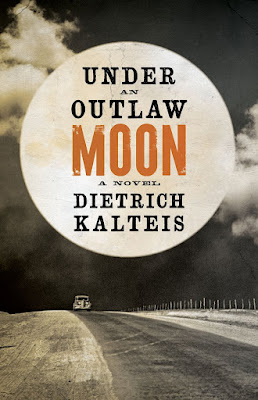
The question asks for examples, so here’s an excerpt from the my current novel, Under an Outlaw Moon, based on the true story of the FBI’s most wanted Bennie and Stella Mae Dickson, published by ECW Press. This was a departure for me, basing the story on actual events, and adding a lot of fiction to bring the characters and scenes to life.


. . . one

June 12, 1937


“Sixteen, huh? Well, I might’ve guessed older.” Flashing

her the honest blue eyes.

“Well, maybe you’d’a been wrong then, huh?” Said her

name was Stella Mae Redenbaugh, looking at him like she

saw something underneath his smile, this guy with the wavy

hair, skating around the roller rink, looking at her now and

then, finally coming over when she was alone next to the

boards. Making a fast stop and showing his moves.

Stella knowing her friend Liz and the other girls were

looking over from the concession stand, whispering and

giggling to each other. Made her feel good, lying to him

that she was sixteen.

“Well, I been wrong a time or two,” he said, “but still,
I guess you’d pass for older.”

“Older, like how much?” Crinkling her nose — Stella

guessed it looked cute like when she practiced it in the

mirror — smiling at him, liking the way this Johnny

O’Malley was flirting with her, something no boy had done

before. Not feeling that unease she often felt around men.

Been that way since her real father just walked off, Stella

thinking good riddance, happy her mother wouldn’t get hit

and bruised anymore. Her stepfather, Lester, being made of

better stuff, a quiet man working hard for the family. Maybe

dull in that way, but at least the man didn’t leave those awful

bruises on her mother.

Fifteen and Stella wasn’t sure what the look meant

that Johnny D. O’Malley was putting on her, but she was

thinking maybe she wouldn’t mind finding out.

“I don’t know, let’s see . . . eighteen maybe.” Johnny

grinned, saying, “Guess I ain’t saying it right.”

“Well, I think you’re saying it just fine.” She liked the

way his cheeks flushed then, yeah, starting to feel easier with

him. Not tall, but a nice build and good looking with the

blue eyes and wavy hair. Older by a mile, even if she had

been eighteen. Stella liking the way Liz was watching from

the refreshment stand, talking to some boys, the rest of the

girls gone home.


Bennie Dickson had been feeding lines to the pretty blonde,

this Stella Mae. Now he was getting caught up in it. Laid

it on pretty thick, saying he was a prize fighter in training.

That part was true, and Johnny O’Malley was the name he

used when he stepped through the ropes.

Not sure why he used the name on her, the name the

promotor had come up with, telling Bennie it gave him the

Irish edge, a young fighter showing promise, along with a

punishing right hook, something they could build on.

Bennie didn’t tell her anything about the trouble he’d 

been in, the stuff he got into back when his old man told him 

he was acting more loser than winner, anything but a Dickson

man. Strike one coming for the stolen car, doing time in

that reformatory and shaming the family. Bad Bennie not

learning life the easy way, then taking a second swing when

he got mixed up in the Missouri bank job, giving up six

more hard years in the Missouri pen, same place they kept

Pretty Boy Floyd, the place inmates called The Walls on

account of that high gray limestone surrounding the place.

Life’s lessons kicking Bennie hard that time. Working in

the prison library and learning to box while inside. Finally

convincing the parole board he got the message and wasn’t

going to make the same mistakes, released into his father’s

custody. Just turned twenty-six, and Bennie swore to go

straight this time.

Might have been partly why he was feeling more Johnny

than Bad Bennie right then, telling this girl about the job

he just took driving a cab, the money he made allowing him

to sweat and work the bag in the Hard Rock gym. Then

switching the focus, telling her she skated like a pro.

“You been watching me, huh?”

“Admit I was.” From over by the boards, betting all 

the boys looked her way. From the corner of his eye now, he

caught the three mutts eyeing him from over by the food

stand, the ones chatting to Stella’s friend. The looks meant

they guessed who he was and knew about the time he served.

Thinking they were better and wanting to prove it. Bennie

feeling glad his older brother Spencer had showed up 

at the rink today, two years older and born on the same day,

the two of them of the same blood. Spencer known around

town as a tough customer. And although the oldest of the

three wasn’t there that day, the same went for Darwin, a

reputation for watching out for his brothers, likely the main

reasons the mutts were keeping their distance. Still, they 

had that look, like they had something to prove.


“Me, pffft, nobody sees me. Just a place I meet Liz and the

girls and have a few laughs, is all.” Stella Mae thinking who

had money for roller skating, a nickel just to get in the place,

wondering again if Johnny meant what he said, that she

looked eighteen, maybe older. Could be on account of the way

she’d pulled her hair back that day, not wanting it in her eyes

when she skated around, the sweater showing the promise

of changes coming, and the ruby lipstick from her mother’s

dressing table completing the picture. Liked her lips red like

that, Stella doing it more these days when her mother was out

of the house. Always wiped it off before she went back home.

“How you like it, the music?” Johnny asked. Not sure 

what the number was piping from the speaker cone. Admitting 

to her he had a tin ear.

“This one’s Lionel Hampton, called ‘Hot Mallets.’ They

play it all the time, everybody skating to it. One the girls like

to dance to.”

“That right? Well, lucky for Lionel, how about it then,

let’s see you do it. Dance or skate, either one.”

“Just ’cause you say so, huh?” Stella acting indifferent, 

the smile letting him know she was playing too.

“Just like to watch you move.” The blush in his cheeks

betrayed him, and he pushed off the boards and skated around

the rink, turning and going backwards, moving faster between

and around the couples and singles, pretending he was doing

it to the music, moving his hips and clowning, looking her

way, smiling from across the rink. He swished around and

grabbed hold of the boards next to her, saying, “So, come on,

girl, catch up if you’re any good.” And he was off again, going

around and looking to see that she was watching. “I’ve Got a

Pocketful of Dreams,” coming through the speakers now. The

three mutts over at refreshments watching him too.

Standing with a hand against the boards, Stella glanced

over at Liz still talking to the boys, likely saying something

dumb. Pushing off, she windmilled her arms to gain her

balance, half the rink between them.

Johnny coming around and past her, calling out, “Hey,

slowpoke.”

Picking up speed on the rented skates, she ducked and

went under a couple with joined hands, nearly ended on

her butt as she bumped them apart. Johnny slowed and

let her catch up, holding out his hand, then catching her

again from falling, the two of them moving around the

rink, holding hands now. Going around two more times,

he stopped over by Spencer and introduced her, asking

how old Spencer guessed she was, mouthing eighteen

behind her back. Also pointed at himself and mouthed to

call him Johnny.

Spencer said, “It ain’t right to guess a lady’s age.” 

Smiling at her, offering his hand.

Stella liking this older brother calling her a lady, told

him it was nice to meet him.

Taking her hand again, Bennie did it like it was a natural

thing. Stella not pulling away, thinking maybe he did it to

keep her from falling, but she liked the way her friend Liz

kept looking, the three boys looking too. And she lost track

how many times she skated around with him, talking about

where they went to school, places around town they both

knew. Bennie saying he was serious about his boxing, and

driving a cab too. Then asking about her, where she lived,

how she liked the school she went to, getting to know her.

Letting him buy her a soda after, the two of them

just kept talking, not running out of things. Playing at

being eighteen, she pushed away thoughts of her mother

worrying about her being out as the afternoon gave way to

evening. Then realizing Liz had gone home, Stella told him

she’d better get on home too.

“Well, I got my car, can give you a lift if you want?”

Wanting to trust him, but knowing her mother’s rule

about getting in cars with boys. Saying, “I’m okay, I can

walk.”

“Well, I’m just offering is all.”

They stood talking a few more minutes. Bennie didn’t

push it, offering to return her skates to the rental desk,

asking, “So, how do I see you again?”

“Well, you come next Saturday and maybe you will.”

Smiling, she let him take the skates.

“Not the brush-off, I hope — I mean, you’re gonna 

show, right?”

“Guess you’re gonna find out.” Smiling, she started

walking, knowing he was watching her, not sure how she’d

get another nickel, but she’d get it, and she’d be here next

Saturday alright.


Copyright © Dietrich Kalteis, 2021

Tuesday, May 3, 2022


Terry here. This week’s topic is of particular interest to me: The art of description. Too much, and readers skip over it. Too little, and the sense of place and mood aren’t adequately drawn. It interests me because I find descriptions hard. I'm always thrilled when someone says they love my descriptions, because I have to work hard to get them right. 

 I can’t let anyone read my first draft, even in a critique group. If I do, readers keeps saying, “Where is all this happening?” I write my first draft as if everyone is standing on air with a hazy background.

On the second draft I start filling in the descriptive details. Where are the characters? What’s going on around them? Is there anything unusual in the setting that one of the characters notices? I look for places where I’ve written dialogue and I haven’t sufficiently described the scene. 

 Here’s an example from Dead Broke in Jarrett Creek. In the scene, Samuel is a passenger in a car with a man who is driving him to the scene of a newly-discovered murder. He is asking the man questions about who discovered the body, etc. In the second draft, I realized that I was having the two men talk, but I hadn’t brought the scene to life. They could have been driving across a desert for all the reader knew. So I inserted descriptions like the following paragraph: 

 “Reinhardt is driving faster than he ought to. I watch houses slip by. In this bleak time a few weeks after Christmas, it’s hard to believe there will ever be green in the landscape again. Everything is gray and brown—the grass dead from nights of hard freeze, the post oaks and pecans bare of all except curled brown leaves. Even the houses look like they’ve gone gray.”

 When describing setting, what keeps the reader interested is much more engaging if it’s written through the eyes of the characters. In the foregoing paragraph you know that Samuel is mindful of the law---the man is driving too fast. He’s also feeling the effects of the season, that dreary time after Christmas when winter seems to go on forever. I could have just written: It was cold and dreary. That would have described the setting well enough, but it would have been generic and wouldn’t have told the reader much about Samuel’s state of mind or the season of the year. So description isn’t just where the action is taking place, but also the atmosphere and the character’s state of mind. 

 I once was asked to critique a story set in a European city. The protagonist visited some well-known cathedrals, which should have been interesting. But the writer had clearly taken descriptions straight out of a travel book. I wanted to know how her character responded to the things she was seeing. Was she religious, and moved by the religious art and artifacts? Was she interested in architecture, so that her response was to that? Did she respond to the history? Was she a neat freak and could only think of how hard it must be to keep it clean? The point is, the setting is intimately connected to the character in the setting. 

 An example from The Last Death of Jack Harbin: “It’s already a sultry day. Climbing into my truck I pause and look off to the west. A few puffy clouds are piling up on the horizon, as if deciding whether to collect into something more serious. We could use the rain and a break from the heat.”
I could have just written: “It’s hot and I hope it will rain.” But the description illustrates not just the impending weather, but that Samuel is the kind of person who pauses and checks out his surroundings. There’s always the threat of drought in his area of Texas and he’s mindful of the need for rain. A different kind of character may complain about how hot he is, and that he’s sweating and needs a shower. Yet another may have no interest in the weather and may only be concerned with the fact that it’s dusty. Another may hate rainy weather and be indifferent to the need for rain. 

 I sometimes ask myself what Samuel Craddock sees in a particular setting that someone else wouldn’t see; and vice versa, what does he miss that someone else might notice. One reason I introduced Maria Trevino into the series was to get a different perspective. Not only is Maria young, but she’s also a woman, and Hispanic. I’m writing the ninth book in the series and make a point of the fact that Craddock depends on her to see things closely that he might miss. When I’m doing a close edit, if I run into a place that seems dull, I invariably find that it’s because I have done a lazy job of describing the setting from Samuel’s point of view. 

In The Necessary Murder of Nonie Blake, something seemed off about a description of a house that Samuel entered, where the victim had been staying. Then, I added this: 

 “I can’t help wondering how they keep things intact with a five-year-old in the house. But then I see that one large corner of the room is given over to a play area—an elaborate train set is the centerpiece, with boxes of plastic building blocks and toys shoved up against the wall. There’s an entire bookcase filled with children’s books.” 

 There’s nothing particularly exciting about this description—except that before I added it, I merely described an opulent living room. It was okay, but the description felt generic to me. And then I realized that I hadn’t taken into account that there was a five-year-old boy living there. Describing the boy’s part of the room suddenly brought it more into focus. And it also was another example that Samuel notices things. 

We just moved. Here are some recent photos. How would you describe them?

Sunday, May 1, 2022

Sinking into the Scene

Adding description to a story is an art. Too much, and readers skip over it. Too little, and the sense of place and mood aren’t adequately drawn. What techniques do you use, and please provide examples from your work.

Brenda Chapman

Writers are warned early on not to add too much description because readers tune out. This might not be as true for literary fiction as it is for crime fiction, but I'd wager even these authors need to be careful not to overdo.

Readers (myself included) love a moody, scented, sensuous sense of place. Immersing one's imagination anywhere from a lavender field in France to a haunted house on Elm Street to a cafe in the Byward Market and the author's job is to give enough sentient detail to make a reader feel as if they are there.

I work hard to select the correct details to draw a reader in, using the five senses as much as possible without overdoing. A lot goes on instinct. My primary method is to slip in the description, usually in a line or two between the dialogue or action. Here's a bit tucked into my protagonist's bike ride: 

The bushes and trees were seminude, their leaves spiralling in singles or clusters to the ground like so much confetti. The water in the canal was dark and muddy and smelled of dead fish.

Describing a room is a challenge. Giving enough details so the reader can picture it without boring them. A trick is to act like a camera - start at one point and describe as your eyes circle the space. Here's another passage from Blind Date:

To Ella's eye, the room was outlandish and garish, but everything somehow worked. The art on the walls was modern and vibrant, oil paint laid on thickly in wide brush strokes. There were high ceilings and floor-length drapes of crimson velvet, matched by jewel-toned furniture: a couch in emerald green and Queen Anne chairs in peacock blue. Plush, white, shag rugs lay scattered across the dark hardwood floor. Tony said Alex agreed to let them have the floors redone but refused to pay for the work, so he and Sander went ahead anyhow. Unlike her cramped, dark garret, this unit was blessed with floor-to-ceiling French doors that led onto a small balcony where Tony grew herbs and cherry tomatoes. Some classical music was playing in the background as she sank into one of the chairs and accepted a full glass of wine.

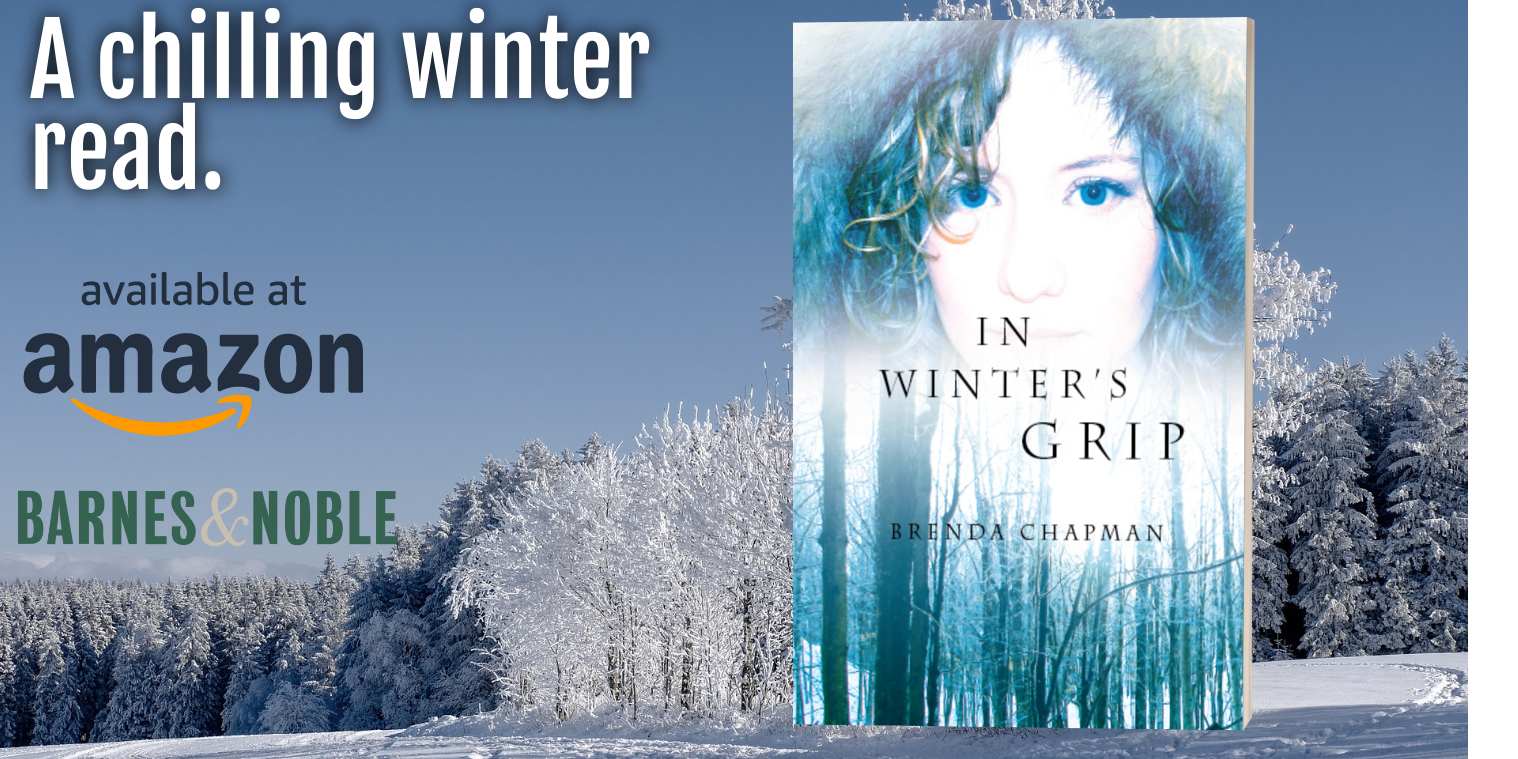
That was actually one of my longish bits of description, but has kind of stuck with me. I don't know if this happens to other authors, but there are bits of writing - scenes - that come back to me now and then. Often the passages evoke a mood. This one is from my standalone mystery, In Winter's Grip:

The light was starting to fade, and shafts of golden, watery sunlight broke through the trees. The tops of the spruce and pine formed a black, jagged line against the sky. The heavy cloud cover had progressed rapidly over the course of the afternoon, promising more snow. It would be a dark, difficult drive home on the winding, country road.

And sometimes, you just have to get ominous - also from In Winter's Grip

I forced myself to leave the bedroom and walk the length of the hallway, eerily layered in darkness. I stood at the head of the steep stairs and peered down into the shadowy blackness. "Tobias, is that you?" I called, my voice echoing hollowly in the stairwell. "Claire? Is anybody there?" I could sense another person in the house.

So, it's all about the words chosen to paint the picture and to ground the story. There must be enough detail to evoke the scene but not so much that the reader skips over the passage. The trick is in deciding what to focus on and the language that suits.


Website: www.brendachapman.ca

Instagram & Facebook: BrendaChapmanAuthor 

Twitter: brendaAchapman


Friday, April 29, 2022

Santa Monster by Josh Stallings

Q: Share memories of being read to. Or stories you read to those close to you. Have you written stories for friends or family, not for publication?


A: I was lucky enough to grow up in a family that loved stories. My mother read us Peter Pan and our father read us Winnie the Pooh. He also read us Catch 22, which might have landed better with my older brother and sister than us younger kids, but that story is for another therapy session. Dylan Thomas’ A Child’s Christmas in Wales was a holiday standard at our home. After the divorce Pops would entertain his wild brood by dropping a poster board on the floor, give us colored pens and have us work together mapping out a fantastical world. The older kids had read Tolkien, I hadn’t, I just thought making up worlds was cool. Who knew I’d be doing that the rest of my life?


When I became a dad I was lucky to parent with Erika, a life long reader she already had a collection of children's books and we made sure our boys had the bottom shelf of a bookcase just for them. I read to the boys most nights. Introduced them to some of my favorites. When they discovered I could make up stories they started asking for two picture books (one for each of them), one of my talking stories and a song. The bedtime routine stretched to 20 minutes or more, but they slept peacefully after that so it was worth it. 


My ability to make stuff up served me well as a dad. When three year old Jared asked me, “If Santa gives good kids presents, what about bad ones?” 

“Bad kids get visited by Santa Monster.” I said, keeping my eye on the car ahead of us I failed to see his face. In a non-Christian home navigating Christmas’ complex and contradictory rituals is tough, (Easter? Forget about it.) Jared didn’t ask any follow up questions so I figured I’d handled the good vs bad kids question pretty well.

Nope. 

Two days later a babysitter took Jared to the mall to see Santa. She brought back a picture of our son screaming in terror from his perch on jolly old St. Nick’s lap. Erika was rightfully angry, she explained to the babysitter that we didn’t force our children to sit on people’s laps. I thought I was off the hook until the sitter went home and the boys were happily watching Ninja Turtles, that’s when Erika gave me “the look.” I told her about Santa Monster. “Jared isn’t developmentally able to get your humor, or understand sarcasm.” She explained. “He takes what you tell him literally and believes it.” 

“That’s his mistake,” I almost said, but she was the only one of us with any early childhood education, so I just mumbled, “I’ll fix it…” 

This was one day before Christmas Eve. Santas would be triggering and unavoidable. What do I do? I didn’t want to say, “Sorry kid, you shouldn’t trust me.” I wanted Jared to grow up in a world where he could trust his father. I wanted this to be a funny story we joked about with his psychiatrist thirty-five years down the road.


My fall back plan: I stayed up all night writing and drawing a children's book staring baby Dracula and Franky, a baby Frankenstein, (yes I know Frankenstein was the doctor not the monster, but that seemed a bit complicated for a children's tale written at midnight the night before the book was due). In my story two sweet monster children tried to find out what they could expect for Christmas. Being monsters and thus bad by definition, would they get lumps of coal? If so what did one do with coal? What was coal? These monsters lived in LA and had never seen coal. Drac and Franky tried to stay up all Christmas Eve night, as they were drifting off to sleep they dreamed they saw a zombie looking monster in a red suit. The next morning under their tree they found a bicycle and a skateboard left for them by Santa Monster with a note wishing them a Merry Monster Christmas. (This is roughly the story, I wrote it forever ago so I may have gotten some details wrong.)


The book did its job. It helped Jared to not be afraid of Santa Monster, and to understand that all children deserve presents.


What I didn’t say was; Santa as seen by the predominant culture in the USA is one judgy bastard. What kinda guy spends his time spying on kids to see who he thinks is good or bad? Kinda Creepy, dude. And if we follow that logic, was the kid in school who’s folks could afford a radio controlled car to put under his tree better than me because I got a bike my dad built from found spare parts? If that’s true, if wealthy kids according to Santa are better than poor kids, then I say he’s the monster, not Zombie Santa.


SAFETY NOTE: If any precocious children stumble across this post, have your folks contact me and I’ll start working on “Santa Monster 2 Rudolph’s Revenge.”  


******

In other news...

Episode 2 of Dumpsterfireside Chats the podcast where Chantelle Aimée Osman and me try to makes sense of life, publishing, writing, and the crazy state of earth 2022 can be found here- 

https://www.wordsofpreypodcast.com/1751031/10516034


 *****

* Photo Credit Mark Lowrie

Thursday, April 28, 2022

Are you sitting comfortably? by Catriona

Life: Share memories of being read to.

That's not an inappropriate enquiry about colonic health, by the way. That's how Daphne Oxenford used to start "Listen With Mother" on BBC radio when I was wee. Next she'd say "Then I'll begin". After that, we were off! To the 100 Aker Wood, to Narnia, to Toad Hall, to tea with a tiger . . . to heaven.

That was mid-afternoon, just before Woman's Hour. A bit later, towards evening, Jackanory aired on the telly. In its 3,500 episodes (thank you, Wikipedia) it had the likes of Alan Rickman, Judi Dench and John Hurt sitting in that armchair reading stories to children.

Jackanory favourite (yes, of course I've still got it)

But still, the best thing of all was when Mummy came upstairs to read to us at bedtime. I have no memory of what she read, except that she didn't much care for Beatrix Potter so it was never those. (Huh! These days, she's got an actual collection of Jemima Puddleduck memorabilia. I'm just saying.)


I prefer her later, darker period (and yes, I've still got it)

I do remember, at the age of seven, agitating for fair treatment under the law when my poor mum - bringing up four of us, washing our clothes, cooking three meals a day, ironing every stitch everyone wore - suggested that, since I could read myself now (I could; my big sisters taught me), maybe she could put her feet up downstairs and have a cup of tea instead. I was outraged. I shared a room with my next sister up, see? And so she got to hear *my* story! Meaning that she was still getting a bedtime story at the age of nine! And yet I was being cut off two years younger? If I'd had a union rep I'd have been right on the phone to them. 


What I was reading under my own steam (yes I've ...)

That might have been when I decided to run away from home and live with my Godmother, Aunty Doreen, who always had time to sit and read. (Because her kids were grown up and we only visited her on a Sunday.) I packed my bag of essentials - storybooks and a pair of slippers - and said my goodbyes. Then my mum pointed out that I'd need a nightie and my toothbrush and my school clothes because if I ran away from home it was for keepsies. That hadn't occurred to me. I unpacked my slippers and reshelved my books. 


Running away plans also greatly hampered by stories about family (yes)

At some point, I graduated to goodnight kisses without any more drama. I'd even put a finger in my book to keep my place while I ripped my imagination away from mythical places like "Boston" and offered my cheek for the salutation. Kids, eh?


Hands-down favourite book I read and re-read to myself (y)


Wednesday, April 27, 2022

Thinking about Mum... by Cathy Ace

Life: Share memories of being read to. Or stories you read to those close to you. Have you written stories for friends or family, not for publication?

Great question…and great timing. I dare say I am not alone in having memories of both my parents reading to me when I was a small child; the delight of seeing familiar pictures and hearing familiar words being read aloud will endure. The photo at the end of this blog explains why this is great timing...

My favourite book when I was small was Little John Little (photo is of the copy I was read almost sixty years ago, which is still on my bookshelf) which I recall as a jolly tale with jolly pictures, and the evidence in the photo bears out these recollections.

I am still utterly convinced that this is how squirrels really live

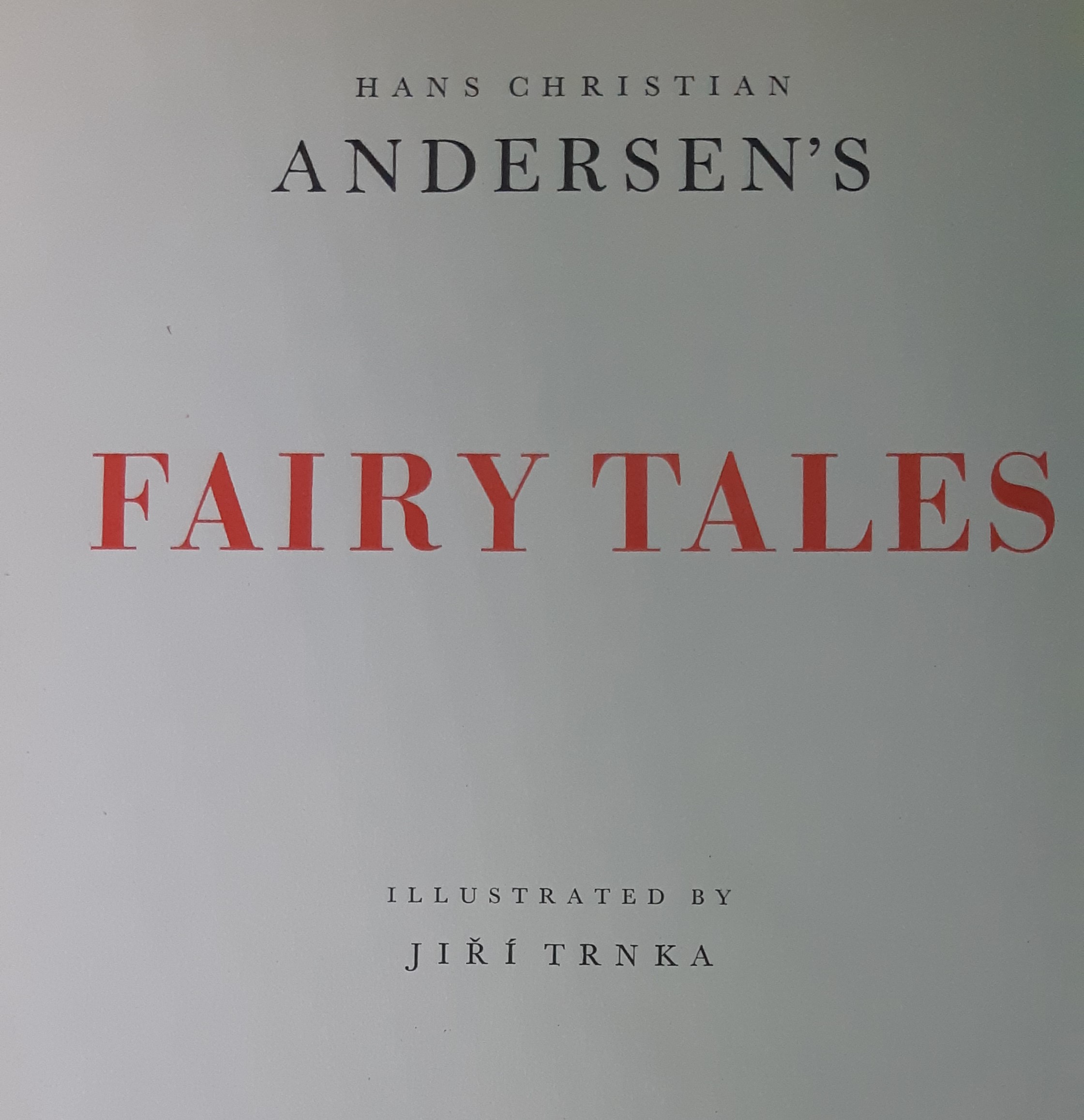
My other favourite was the version of Andersen’s Fairy Tales given to me by my Godmother. The stories were read to me, but – for those unfamiliar with the original Andersen tales – let’s just say they were sanitized a little when I was very young, so it wasn’t until I could read them myself that I saw all the pictures and read all the stories. The illustrations are fabulous, and certainly not all of the “chocolate box” variety!


This rather chilling picture accompanies the tale entitled The Nightingale.


This one illustrates The Little Mermaid.


Nowadays I get the chance to read to three of my six grandchildren every Wednesday morning (grandparenting day, when we do the school run). Their favourites are fairy tales too, though these are versions written for today…so much more palatable, though I’m pleased to say that the giant in Jack and the Beanstalk still bellows about “the blood of an Englishman”, which I recall used to draw hoots from the audience in Swansea’s Grand Theatre during pantomime season!

I haven’t written stories that are not for publication, though my mother is still my first reader. As you are reading this, the woman who first introduced me to the joy of reading will be awaiting my arrival at home, in Wales. The photo shows the last time I held her hand…there’ll be a lot more of this over the coming weeks.


When I'm in Wales, we'll also get the chance to celebrate the fact that my book The Corpse with the Iron Will has been shortlisted for the Crime Writers of Canada's Awards of Excellence Howard Engel Award for Best Crime Novel set in Canada.

I know that Mothers' Day is on the horizon in North America, but I missed being in Wales with Mum for Mothering Sunday, so we'll make up for that too. If Mum hadn't helped make me a reader, I wouldn't have become a writer...thanks, Mum xx

Monday, April 25, 2022

Life: Share memories of being read to. Or stories you read to those close to you. Have you written stories for friends or family, not for publication?

    Story time. 

    It was my favorite time of the evening. Me, my young son Jake--him in his dinosaur-print pajamas, me in my MSU sweats--a good book shared under a diffused yellow light. The last good, pure, wondrous act of the day. Never mind what kind of workday I may have had. Story time made up for (almost) all of the swamp-donkey steaming crap I may have slogged through in the ad biz, randomly created by empty-suit account executives struggling to turn 2 + 3 into 5; capricious creative directors smelling like illegal pharmacies and shame, and clients made flop-sweat-googly-eyed paranoid by their accountant lords. I did what I had to do, knives out and head on swivel, to get to this halcyon moment of the day. 

    “Two chapters tonight, dad. Please? Please!” 

    “Maybe,” I say already knowing I will. “We’ll see.” 

    And off we went, my arm around his narrow young shoulders, reading everything from five-page toddler board books to the extensive Dr. Seuss catalogue, Mary Pope Osbourne’s Magic Tree House series, Holly Black and Tony DiTerlizzi’s Spiderwick Chronicles and Lemony Snicket’s A Series of Unfortunate Events. Of course, a few of the classics made their appearances—Charlotte's Web, The Little Prince, Corduroy, Where the Wild Things Are

    Often, I would read ahead, so I could create just the right voices for characters. Just the right timing for the drama or comedy, suspense and surprise. When we got to Eoin Colfer’s Artemis Fowl series, my world was turned upside down. 

    “I’d like to read this on my own, Dad,” Jake said. 

    “Oh—uh—yeah, okay,” I said. “Sounds good, buddy. Don’t stay up too late. Love ya.” 

    “Love you, too.” And off he went on his own reading adventure . . . 

    . . . without me. 

    Without my meticulously-created, thoroughly rehearsed character voices. 

    Without my exactingly timed melodramatic pauses. 

    Without my multitude of theatrical movements and gesticulations. 

    And thus, story time faded away as he grew, leaving me inconsolably sad, forlorn and, yes, embittered; people without children could continue fulfilling their lives without ever knowing the crushing disappointment of being sent to early pasture by a child. They would never know the abysmal hurt of raising a child to be an avid reader—a learner—only to be replaced by that which they so strongly advocated. 

    Fortunately, before I could exact revenge on my young son by explicitly proclaiming Mondays, Wednesdays and Fridays “Mom’s Right Day” (already implied) and every other Sunday “Broccoli-and-Brussels-Sprouts Dinner Day”, he invited me to his room to read comics. We would each read our own comic, but we would be together reading our individual comics. (I had secretly spirited hordes of comics into the house for our shared reading pleasure and under the guise of “Spider-Man is how daddy came to appreciate classics like Homer’s Illiad.” Once discovered by my devote Catholic wife, she thusly proclaimed my comic hoarding as, and I quote, “God**** insane f****** bull****!” (My counter-claim remains presented to yet unargued before the international court at The Hague.) 

    Jake, who currently towers over me at 6’5”, now reads books about 15th century German philosophy, Korea’s north/south governmental divide, video game industry sociopolitical influence and, for whatever bizarrely lunatic reason, Paul Auster—none of which holds even the slightest of interest for me. He tries to explain the profundity of each to me and seems not to notice my head lolling on my neck or my eyes slowly rolling to the back of my head. 

    Of course, thinking back to days of reading to my son, I’ve had time—years!—to realize the importance of story time in the development of my own writing: Occasionally reading something I’ve written out loud. Narrative or dialogue. Sometimes reading your own writing aloud reveals the line or paragraph or page’s strengths or weaknesses, promise or shortcoming. The cadence and arrangement—the individual notes, bars and measures—of the music in your unique voice. 

    (On a side note, I have never written a story for any one person in particular for fear that such a story might later be entered as evidence in a stalking trial.)

Time to Read

 Q: : Share memories of being read to. Or stories you read to those close to you. Have you written stories for friends or family, not for publication?

- from Susan


Funny, I’m sure I was read to, but when I was really small, my father was in Europe as a WWII radio correspondent and my mother was a radio producer in New York. My rather sent back at least one disc of him talking to me but the disc and my memory of what he said are lost. I can hear my mother’s attractive voice, but she’s gone and I can’t ask her if she read to me. I’ve been a ferocious reader since about five, so I’m pretty sure someone read to me, in any case!


Skip to my being a parent when, yes, I read and read to my sons when they were small  – Winnie the Pooh, Stuart Little, Charlotte’s Web, Mary Poppins  – you name it, all the great ones. When they were reading themselves, they quickly moved on to stories I didn’t read – Treasure Island, others I can’t recall and fantasy fiction for the most part. They are, to this day, ferocious readers who read to their kids when they were younger, long after the boys could read on their own.


But here the links break down because their children are digital adopters and while they read voraciously through middle school, the habit pretty much dissolved after that when cell phones, iPads, and YouTube stepped in. I did score one notable success a few years ago with a gift of The Martian, by Andy Weir, for my grandson who was already interested in engineering. 


Tim Rose, my late artist partner, and I did create a book for all of our grandkids once. It was based on a true event, the time our cat brought a live mouse into the house via her mouth and set it down for me. I picked up the mouse and it was fine, thank you. Sat there in my palm cleaning its whiskers while the cat looked on curiously from a foot away! 


Friday, April 22, 2022

Resurrecting the Dead

by Abir

 “But I really want to use that quote.” Where do you go for legal and copyright advice? Do you ever use public or historical figures in stories? A song lyric? A meme you saw (after fact checking I hope)?


One of the things about being ‘the Friday guy’ on this blog is that all the clever, pertinent answers to the week’s questions have been provided by my illustrious colleagues already, leaving me, in the graveyard shift, to either come up with a new, not so good way of phrasing pretty much the same thing, or else going off on a tangent and talking about something else.


So let’s dispense with the bits that I have little more to add:


Song lyrics and quotes – listen to my colleagues. They know what they’re talking about. To be honest, Terry’s suggestion on Tuesday that you make up your own song lyrics is brilliant. I’d never thought of that before, but I might try it in future.


Memes – I’ve never used them in my books, possibly because I’m old and un-cool and have no idea what ‘the youth’ are talking about at the best of times. Putting a meme in a book would just highlight my ignorance of pretty much everything that has occurred in popular culture since the turn of the millennium.


That brings us to historical figures. Now on that part of the question, I do have a few things to say. 


Firstly, if you’re dealing with past events, especially if it’s around crime: say you’re fictionalising an account which might have featured a real-life criminal, it’s important to remember that victims or relatives might still be alive today. Even if your account is fictional, it’s important to tread carefully and respectfully. I know authors who’ve fictionalised true stories and changed details that they'd have preferred to have kept unaltered simply to protect the relatives of victims. I think that is the right approach.


As for me, to date I’ve never dealt with such subject matter, but I have included real people in my books. My Wyndham and Banerjee series is set in 1920s India, when the British were in charge, and I’ve introduced a number of real-life historical figures into the plots, people such as the Indian freedom fighters Chittaranjan Das and Subhash Chandra Bose, as well as Prince Edward, the Prince of Wales, who’d later go on to be a rubbish king and would abdicate and run off to France with Mrs Wallis Simpson.


History is generally written in broad strokes. We know the big details, we hardly ever know the smaller, more intimate stuff. For me, one of the joys of writing historical fiction is that you get to play in these dark, forgotten spaces between the recorded facts. I like to place my heroes, Sam Wyndham and Suren Banerjee in the slipstream of big historical events, interacting with real people. 


But like Starfleet officers, I obey the temporal prime directive. I don’t alter the past. I’m not interested in changing the outcome of World War 2 or of helping JFK get out of Dallas without a scratch. My job, or the job of Sam and Suren, is to help highlight forgotten history to readers who might not know much about the period of British rule in India. I’ll never change recorded facts, only show another side to the story.


And, if by chance, I write something controversial, it does help that you can’t libel the dead.