Sunday, January 26, 2025

Baby, It's Cold Outside, by Angela


How does winter affect you and your writing?

Sister Souljah wrote a book called The Coldest Winter Ever, a classic in the Black community. This is not the winter she meant, but I’m guessing plenty of folks would prefer her version at this point. It’s cold! That’s a bit of an understatement. There was a time where only we Northerners understood the brutality, joy, and yes, beauty of the frigid winter months that could start as early as October and linger well into April, sometimes even May.

 I live in Cleveland, Ohio, and there was once a surprise blizzard on Mother’s Day. We Clevelander’s never batted an eye. We just added a hoodie to our Sunday’s best and kept it moving. That’s what you do when you’re born and raised in a place that spends at least three months a year masquerading as Alaska. But now, the South has entered the chat and I dare say they are not loving this single digit air temperature mixed with freezing white stuff falling from the sky. It’s called snow, y’all. Don’t panic—it’ll be gone by the time your morning grits are finished cooking. But since we’re all here, lets talk about the upside of temperatures too cold for man or beast; more writing time!

Am I right? Sure, writing’s a great four-season (for those that have them) pastime, hobby, or job, wherever you are on your writing journey. But there’s something about sitting in my favorite writing space, looking out onto the world outside my window—shrouded in a blanket of snow, the sound of wind ripping through the naked branches of frozen trees, mixed with the occasional rumble of a snow plow—that just calls me to put more words on the page.

Maybe, it’s because, although I am a Cleveland native, I’m a bit squeamish about actually braving the elements; I prefer the picturesque view from indoors, thank you very much. And you can only watch so much reality TV. Don’t judge me. So, once I’ve watched Shay and Amara’s friendship implode one too many times, or solved yet another Dateline crime, I can lock myself in my little office, fling open the curtain, turn on Chopin radio (my current favorite station) and escape into the warmth of all those lovely words waiting to be born.

Sure, I write in the warmer months as well, but too often, it’s with half a mind on getting outside, or worrying about what I’m missing by not being outside. And as a thriller writer, you must agree the sun beaming through your window doesn’t exactly set the mood, not for writing, that is. So, summer writing tends to start later, which means ending later, which means less sleep, groggy days, and excuses. Lots and lots of excuses, that typically end with a promise to write more on the weekend. But then there’s BBQs and trips to the park, family vacations, and cold drinks with umbrellas, and guests. Fun fact: Clevelanders don’t visit each other during the winter, except for Thanksgiving, Christmas, and maybe New Years’. Okay, that may be an exaggeration, but only a small one.

Winter, on the other hand, is a thriller writer’s dream. I find it so much easier to escape to the lonely cabin in the woods where a maniacal killer awaits when the world seems wrapped in a cocoon of silence, the night comes faster, the bitter cold biting into your skin carries its own menace.

Also, I know I’ll be undisturbed because everyone is asleep by 7:00 o’clock.

I do have my own cabin in woods. It lives in my writer’s brain. And yes, it does look a lot like the cabin in Stephen King’s Secret Window, Secret Garden. It’s always winter there. There’s an old potbelly stove, a fireplace, and it’s full of books and a cat. And the only people there are me and all the characters that wander in and out. Some sit and stay a while, while some are just passing through. But it’s here that I can hear their voices the clearest. Some are evil, some are good. Some live. A lot of them die right there at the tips of my fingers. The cabin is always there just waiting for my arrival. But I have to say, it seems a little easier to get to from October through April when the world seems to be, if not in a deep sleep, at least a light doze.

Maybe if I were a romance writer, I’d find the cool rainy spring days and hot summer nights, the perfect inspiration for a love scene. But for me the short gray days and long cold nights, egg me on to one goal. More words. 


Photo by Dimitri Kolpakov on Unsplash


Thursday, January 23, 2025

Who’d Want to Hide Such a Beautiful Face? from James W. Ziskin

Is there a movie better than the book? And name a book that you think defies adaptation?


When I was a young man, I was a film buff. A cinephile. I loved watching movies, especially foreign films and classics. Somewhere along the line I lost my enthusiasm for the seventh art, at least to the extent that I no longer enjoy sitting in movie theater seats that have been sat in by people I don’t know.

Anyway, back when I was a devotee, I used to say that great books rarely made great movies. And not-so-great books often did. Why? Maybe it’s for the same reason a great baseball player doesn’t always make for a great basketball player. Both sports demand athletic talent and hard work, but a good eye and a strong arm in baseball might not translate to dunking and blocking shots on the basketball court. Likewise, while films and books both tell stories, they do it in completely different ways. For starters, books are usually longer than films. And, as such, they tend to be more thorough. At 70,000 words plus, novels have the luxury of time and space to describe, develop, evoke, and expand. They do it with words, leaving the visualization to the reader. Film, on the other hand, employs its own visual lexicon, which, for better or worse—no judgment intended—performs the heavy lifting for the viewer. Film shows us what the landscapes and characters look like. It gives voice and personality to the people on screen. And it provides musical accompaniment to help set the mood or create drama. Book readers have to perform all those tasks themselves. This is why book covers often show a figure—usually a woman from behind—face unseen, fleeing some unknown menace. Publishers know that readers want to paint their own portraits of the characters. But can you imagine a Hollywood studio opting to hide the face of the devastatingly handsome lead actor for the entirety of a film? Not likely. That’s why Lon Chaney—not Rudolph Valentino—played the Phantom of the Opera. Who’d want to hide such a beautiful face?

      
Lon Chaney
Rudolph Valentino


But what about great books and not-so-great movie adaptations? Or so-so books and superb films? 

Take The Grapes of Wrath. I think it’s a masterpiece of literature. And the movie version? Directed by legendary filmmaker John Ford, with a brilliant cast, starring Henry Fonda and featuring a slew of wonderful character actors, including John Carradine and Jane Darwell, the film is often counted among the all-time greats. And yet… The film’s ending is a complete dud when compared to the powerfully moving and less-optimistic close of the novel. I understand that 1939 Hollywood couldn’t possibly show young Rose of Sharon offering her breast to nurse a starving old man, but the feel-good ending of the movie doesn’t do the novel justice. It spoils it for me.

Censorship, or perhaps restrictive standards, accounts for a lot of the shortcomings in films adapted from novels. But not all. For reasons that escape me, Hollywood often makes major changes to storylines when adapting books to film. It’s the old story of “I love this! It’s perfect! Now let’s change it!”

The Talented Mr. Ripley typifies this baffling practice. The most recent film/TV versions (1999 and 2024) changed major and minor details, especially the ending. Some of the changes worked, others not so much. But I wonder why change the details at all? As much as I might have enjoyed parts of the filmed versions, I believe the original novel is superior.

I teach high school French. One of the books we study is The Count of Monte-Cristo (Le comte de Monte-Cristo). In class, to supplement the text, I show portions of the various film versions of the book, the French ones as well as the English-language ones. By the way, there’s a great meta-cinematic wink between two of the films. In the 1961 French version, Louis Jourdan plays the hero, Edmond Dantès, aka the Count of Monte-Cristo. But my sharp-eyed students also recognized Jourdan playing a different role—the evil prosecutor Monsieur de Villefort—in the 1975 American miniseries version starring Richard Chamberlain. In the first film, Jourdan is sent to prison by Villefort, while in the second, Jourdan does the sending and Chamberlain does the time.

    
Louis Jourdan (Edmond Dantès 1961) 
Louis Jourdan (M. de Villefort 1975)     

There have been at least thirteen filmed versions of The Count of Monte-Cristo, including recent ones in English in 2002 and 2022 and a French iterations in 1998 and 2024. All of these include MAJOR deviations from the plot. Characters change names and roles, plot details are totally flipped, and even the endings are different. In short, the filmmakers tried to fix a story that readers have eating up since 1845. It’s strange but, alas, typical.

Now, what about books that are pretty good, okay, or even bad? Can they make good films? Sure. There are lots of examples. I’ll cite just a few.

My (subjective) opinions follow: 

Great/really good movie, terrible book

Slumdog Millionaire

The Devil Wears Prada 


Better movie than book

The Godfather (I and II). This is more a nod to Coppola’s brilliant films than a knock against Puzo’s novel. That said, a book can be a sensation without being great literature…


Great book, okay film

Murder on the Orient Express (1974). A fine film…except for Albert Finney’s performance as Poirot. I love Albert Finney, by the way, but he’s terrible here. Overacting as he shouts his lines in a strangled, nasal accent with no recognizable provenance. The 2017 version with Kenneth Branagh? Meh. David Suchet is the greatest Poirot I’ve seen.


Great book, great film

The Day of the Jackal. I love both versions. Wish I had written the book.


Let’s face it. A great book is usually better than its film version. And a beloved book will always surpass its cinematic adaptation, at least to its adoring readers, just as a great film will always be better than its novelization. 


Wednesday, January 22, 2025

Roll ‘em or read ‘em

Is there a movie better than the book? And name a book that you think defies adaptation?

by Dietrich


I think it’s a tall order for a movie to be better than the book. While it’s a visual experience and can be well-acted and executed, the adaptation is a shortened version and many tasty parts found in the book often have to be left out. For instance, a novel can tell the reader what’s going on inside the characters’ heads, revealing their deepest thoughts and what their words aren’t saying. 


And visualizing scenes and picturing the characters while reading can often be better than what ends up on the big screen. The Harry Potter books are a good example. J.K. Rowling's imagination and powerful writing made that possible — and in spite of the outstanding performances in the film versions by Maggie Smith, Michael Gambon, Alan Rickman and Gary Oldman.


Although it was a good movie, I think Stanley Kubrick’s adaptation of Anthony Burgess’s fabulous A Clockwork Orange fell short of the novel.


I’m a fan of Hunter S. Thompson’s novels Fear and Loathing in Las Vegas and The Rum Diary, and for me, neither film version measured up. And don’t get me started on Elmore Leonard novels. The movie versions have paled and didn’t pay homage to his brilliant writing. Having said that, there were scenes in Get Shorty with Dennis Farina playing Ray Bones that still get me laughing. 


I feel the same way about George V Higgins’ The Friends of Eddy Coyle and Cogan’s Trade (Killing Them Softly). I much preferred the novels over the films.


There are exceptions. In spite of Tolkein’s rich and detailed fictional universe, I enjoyed watching the Lord of the Rings movies more than I liked reading the novels.


Adaptations of Stephen King’s stories have run hot and cold over the years. I enjoyed the film versions of The Shining, The Green Mile, Misery, The Shawshank Redemption, Dolores Claiborne and Carrie as much as the books. One that didn’t work for me was the adaptation of Maximum Overdrive, which King directed himself and later called a learning experience. I think what he learned was that he was better suited to writing than directing.


It’s hard to imagine that any of Cormac McCarthy’s stories could be better up on the screen. Having said that, I think the Coen brothers did a great job with No Country for Old Men. And I liked The Counselor which McCarthy wrote as a screenplay, and was directed by Ridley Scott. The Road on the other hand was an incredibly tense and well-paced post-apocalyptic novel that conjured all kinds of bleak and dark images — the movie version paled by comparison.


There have been films that I liked as much as I liked reading the original novels. One Flew Over the Cuckoo’s Nest, The Silence of the Lambs, The Help, True Grit, To Kill a Mockingbird, Deliverance and Forrest Gump to name a few. And the same goes for Mike Herron's Slough House novel series versus the Slow Horses TV series. They're both great.


As for books that defy adaptation, the story of Catcher in the Rye comes to mind. Not that it couldn’t be filmed, but JD Salinger did everything he could to block it from being turned into a film. The reclusive author was solicited by the elite of the film industry over decades. And he gave many reasons for turning them all down, calling The Catcher in the Rye "a novelistic novel … one that is essentially unactable." As it stands, The Catcher in the Rye will enter public domain in 2046, ninety-five years after it was first published. So for those of us wanting to see the film version, we’ll just have to wait a little longer.

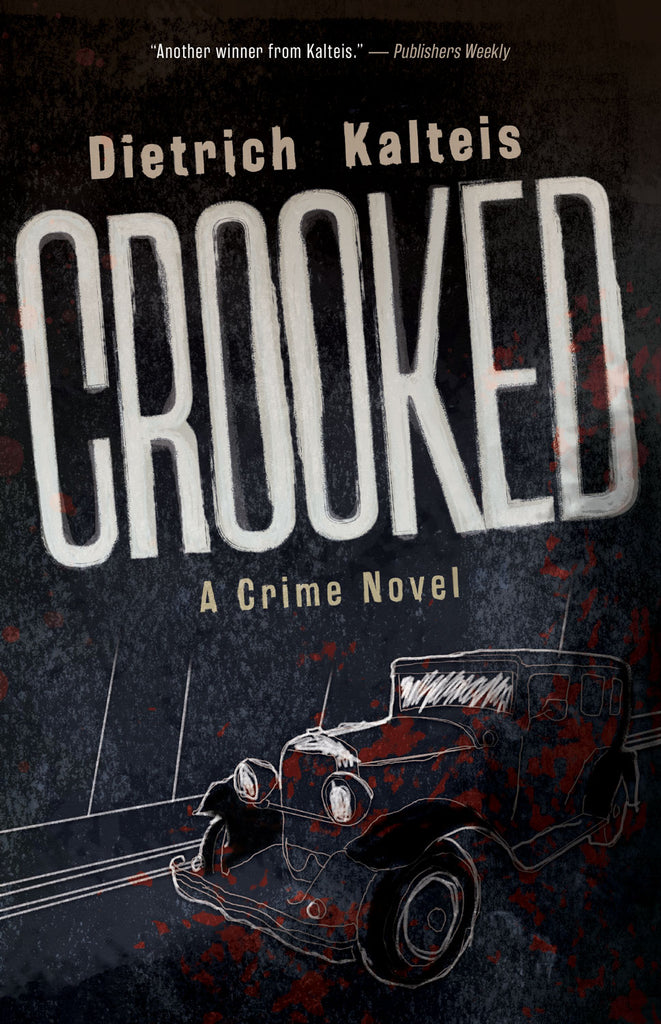
Cover: Crooked: A Crime Novel by Dietrich Kalteis


Tuesday, January 21, 2025

Books vs. Movies


Movie V. Book Terry here, with our question this week: Is there a movie better than a book? And is there a book that defies adaptation? 

I have to go with “better” being an undefinable concept. Books allow the reader to use imagination to visualize characters and to gain insight into their thoughts and emotions. Movies rely on the screen writer’s and director’s interpretation of those elements. What may strike one moviegoer as an appalling interpretation of a book, another viewer may find more enjoyable than the reading for a variety of reasons.

Seeing the scenes played out visually can be a treat. I’m thinking of the original movie of Tom Jones, adapted from Henry Fielding’s The History of Tom Jones, a Foundling. Who can ever forget the rakish Tom in the movie, while the book could be a little obtuse. War and Peace is another example. The movie was lush and vibrant to look at, it but the interpretation was romantic, while the book has scenes of brutal realism. I suspect the book defies adaptation unless you’re willing to sit through an eight-hour movie. 

 I’ve read books many that I thought couldn’t possibly be made into movies. Who would have thought that David Mitchell’s Cloud Atlas could have been put on the screen. But it was, and it was a terrific movie. Was it as good as the book? It was different. 

An actor can interpret a role in a way that illuminates a character, sometimes even more vividly than the book. I’m thinking of the recent adaptation of The Talented Mr. Ripley. (a TV series, not a movie, but I’m not going to quibble.) Andrew Scott’s portrayal of Tom Ripley was chilling. He inhabited the role in a way that makes me hope I never meet Mr. Scott in real life. He’s terrifying. Does that make the adaptation “better?” I don’t remember being so enthralled by the book, but I know for some readers it’s Patricia Highsmith’s masterpiece. 


There are scenes from some movies that have stuck with me years after I saw them, while scenes from the book slid into obscurity. The movie Sophie’s Choice is a case in point. The book, by William Styron, was brilliant, but when I think of the book, a movie scene comes immediately to mind, the one in which Sophie (played by Meryl Streep) has to make her choice. The horror that Streep’s face conveyed is haunting. Books usually have more breadth than movies. 

Someone writing a movie script from a book has to choose among a variety of themes and ideas, which means giving others short shrift. I was completely enthralled by William Faulkner’s The Sound and the Fury when I saw it as a young woman. But it was a box office flop, and considered one of the worst movies, ever. But it intrigued me so much that I tackled the book. And I found that the movie was extracted from one scene—one SHORT scene in the book. The rest of the movie was simply explaining what that scene meant. Does that mean the book defies adaptation? It does if you mean the whole book. But the movie got the point across that the family was decadent and rotting at the core. 

 As for crime fiction, the movies are a mixed bag. The adaptation of Stephen King’s The Shining is a classic. The combination of the story, the screen interpretation, and the acting is top-notch. 

Likewise, Carrie. It almost seems as if King’s books are meant to be adapted. There are twelve—which leaves out a lot of books, but I’m sure someone will get around to them. I’m curious to know what makes a book suitable for adaptation to movies. 

Several of Harlan Coben’s books have been adapted for TV movies or limited series. I watched a few, and every single one falls flat for me. The books are much better. Does that mean they defy adaptation? For me, they do. But that doesn’t stop directors from trying. 

 Sometimes I read a book that seems to cry out for movie adaptation. James Ziskin’s Bombay Monsoon seems perfect for a movie—atmospheric, with secrets and forbidden passion. 


Anything by Laurie King. You can’t ask for a more cinematic writer. Eric Beetner’s books beg to be on the screen—which makes sense, since he’s a TV editor and producer. There are countless World War II movies. The public never seems to get enough of them. Why, then, has J.L. (Janet) Oakley’s riveting The Jossing Affair not been picked up? It has everything that makes a World War II movie memorable—Espionage, revenge, and terror. 

And come on! My Samuel Craddock series may not be action-oriented enough for a movie, but it’s ripe for a TV series—all my friends say so! And my new Jessie Madison series is perfect for action films. Even my copyeditor said the second one, Deep Dive, coming out in the spring, was “compelling and dramatic.” 


Hello, Hollywood, where are you?

Sunday, January 19, 2025

Books Adapted to the Big Screen

Is there a movie better than the book? And name a book that you think defies adaptation?

Good Monday morning - Brenda here.

A subjective kind of question this week. I'm often amazed at how one person can love a book or movie that another avidly dislikes. For me, the book and movie experiences are completely different kettles of fish. As a rule, I prefer to read the book before seeing the movie and have been excited to see the adaptation for those books I've really enjoyed.

I remember reading Gone With the Wind (a verrry long book) in high school and then going to see the movie soon afterward. I found the movie boring because the story was still so fresh in my mind. Note to self: leave some time in between reading and watching.

I'm trying to think of a movie I liked better than the book. My book club read Bridget Jones's Diary and enjoyed it enough that we all went to the movie in a theatre together. We enjoyed the movie as much, if not more, than the book, particularly because one member found the movie hilarious and got us all laughing because she was laughing. This same book club rented Pride and Prejudice and from all accounts replayed Mr. Darcy diving bare-chested into the pond several times (I missed the meeting), so perhaps our standards for what's entertaining might differ from others. That said, I think some of the period novels translate very well to the screen - visual extravaganzas.

I loved reading the Giles Blunt's Cardinal crime fiction series, which was made into a television series. The screen writers changed the plots, not for the better in my opinion. I much preferred the books. Same with Louise Penny's books, which didn't translate as well to the screen, I think because there is so much beauty in her writing that is lost.

One television series I enjoyed on the screen, mainly because I like Kenneth Branagh, is the Wallander books. I'd say I enjoyed the tv series more than Henning Mankell's books. The director captured the Swedish setting beautifully, and of course, there's Branagh.

As for a book that I believe defies adaptation, it would be a book with a plot I didn't enjoy. I'm not a big fan of serial killers on the screen, so maybe those books don't translate well for me, although others like this kind of movie. I find some of the cozy mysteries too simplistic for adaptation, but others love these too.  

So, I've bobbed and weaved my way through this week's question. Let me know if there's a movie you've liked as much or more than the book - all suggestions welcome!

Website: www.brendachapman.ca

Facebook & Instagram & Threads: BrendaChapmanAuthor

Bluesky: @brendachapman.bsky.social