Tuesday, May 26, 2020

The Way Things Are

Terry here with a description of my lockdown life, and whether it has had any unexpected sweet spots in it… And what I am most looking forward to doing again afterwards.

I’ve always known I was a loner. Not to say I don’t love people, and love to be around them, but my go-to position has always been to be alone. I frequently go on long walks, and hardly ever go with anyone else. I hiked with a group for a few years, and that was fun, but I don’t mind a bit hiking/walking alone. I don’t mind going to a restaurant alone. I’m not sure I would like being totally alone in lockdown, but I have a husband and we have a student living with us.

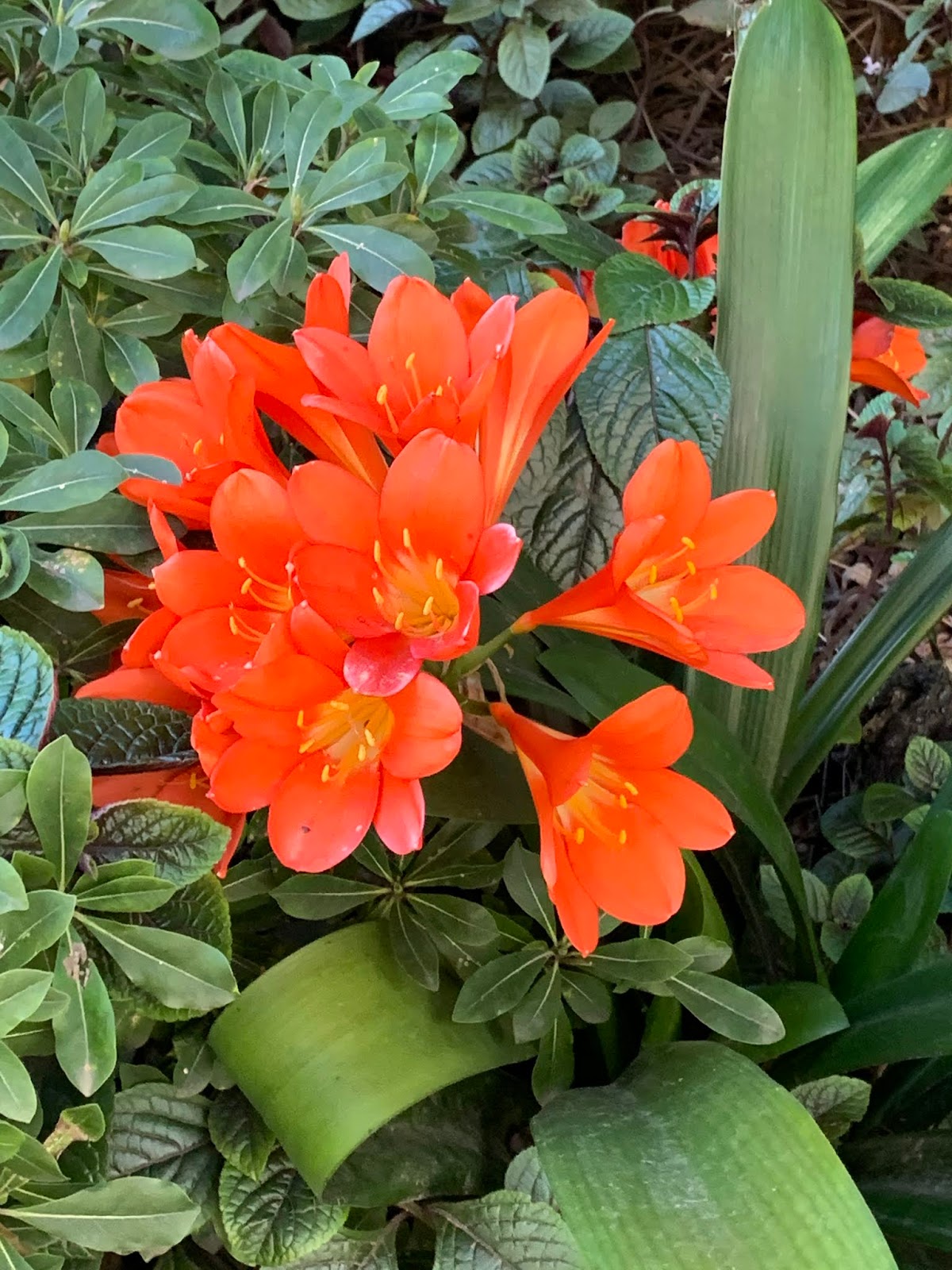
Here's a photo I took on a recent walk:


I get up at the same time as I used to, around six o’clock, and follow the same pattern—tea, check emails, read the newspaper on-line, rant on Facebook, work out, then get down to whatever business I’ve organized. In that past that meant writing, but I have been too distracted to do much writing.

The biggest change in my routine is that I only go to the grocery store every two weeks or so. And when I do go, it takes two to three hours between buying the groceries and wiping them down with disinfectant. Of course now, we’re being told surfaces probably don’t hold the virus anyway, but I take the news with a skeptical eye. Better safe than sorry, and all that.

I don’t write nearly as much as usual because I feel restless and unmotivated. Fortunately, once I make myself sit down and work, I do get engaged. And I sigh for the poor, lonesome manuscript that I turned in to my agent at the end of February—just before everything fell apart.

Here's one thing I'm doing that I don't need much focus for: 


Cooking is not a problem. I’ve always liked to cook. So far, we haven’t gotten any take-out, although I’m thinking one day I might just have to get a little Thai food.. I heard that people should be getting take-out food to help restaurants, and I do want to help restaurants, so I donate to East Bay Feed ER, which supports 78 local restaurants and has served 22,000 meals to 18 care sites. It was founded in our area by author Ayelet Waldman and has been a great success.

Some things that seem to bother a lot of people don’t give me much trouble. Like hair! When my hair started sticking out at odd angles, I snipped off the odd angle parts—which worked okay. Now if I could just get my husband to let me snip off his growing mullet, I’d be set. On the other hand, there's the pedicure I need, but am not getting anytime soon. 

I do miss getting dressed up to go places, so I decided to dress up for Zoom meetings. And I miss hugging people. I’m not sure we’ll ever be able to do that again safely unless everyone is wearing Hazmat suits, which sort of defeats the purpose. Or if that elusive vaccine gets developed. I’m not holding my breath.

Dressed up to be in a play a few year ago. Yep, that's me.

As for unexpected sweet spots, for some reason my husband and I laugh a lot more now and are much kinder to each other. I think it’s because there’s no outside pressure to be anywhere on time, or to do anything on time. There’s no packing for trips (boo-hoo) or having to race to get somewhere, or trying to decide what restaurant to go to or if we want to go out.

Which is ironic, because what I most look forward to is travel. 

At the same time, I’m gearing for never being able to travel again. As people of “a certain age,” my husband and I know we are in the danger zone. The thought of getting on an airplane gives me the shivers. But it doesn’t mean we can’t go anywhere. We live in a gorgeous area, with shorelines and beaches and hills. And there are national parks within driving distance. Once we figure out where to stay that’s safe, we can at least travel around here.

In fact, we are thinking of driving to Los Angeles to visit our son and his girlfriend. They have had to be extra-careful because his girlfriend has health issues that put her at particular risk. Which means we can trust that we can be with them safely. More irony.

But the bottom line is that I have a good life, with a beautiful house, a lovely backyard, great hiking trails nearby and the San Francisco Bay to drive to and walk along the shoreline when I need to get out. I live among people who mostly take the virus seriously. And with the ability to see people on-line when I talk to them, the pain of being apart is lessened.

I trust that before too long I’ll be back to writing several hours a day. The way things are now is starting to seem normal. There’s no way to know what happens next…but then, there never has been.

Sunset in the Bahamas, where we were last fall, and were supposed to be in April. Peace.


Sunday, May 24, 2020

Life in the Age of Covid

Describe your lockdown life. Has it had any unexpected sweet spots in it? And what are you most looking forward to doing again afterwards?

Brenda Chapman blogging today.

When Ottawa first closed down for the pandemic, we were still experiencing cold and snowy weather. Staying inside the house was not onerous since who wanted to be out in that dreary mess anyhow? My husband Ted and I hunkered down. Our two daughters wouldn’t let us do any grocery shopping because the virus was worse for older people and Ted has a condition that could spell trouble. The girls' partners and friends took alternate weeks filling our fridge. It was a time of deep unease.

Luckily, Ted and I are both self-motivated people. For the first six weeks at home, I'd spend the days writing, baking, cleaning, reading while Ted built stuff in his basement workshop. We'd meet in my office for happy hour every day around four o'clock for wine and music. Ted had taken to choosing three albums every morning from his music collection, all starting with a letter of the alphabet. A variation of Sue Grafton's Kinsey Malone series if you will. He'd post the day's selection on Facebook and friends made a game of guessing the next day's albums. Twenty-six days in and there was no sign of social distancing ending as we'd believed would happen. One day shortly after, the daily happy hour died a natural death.


Under the 'T'

The days flew by but they were also endless in a way hard to explain. I started to miss seeing people. There were the odd down days when the anxiety and terrible news got to me. Luckily, these days were few and far between and Ted and I always pulled each other up when we needed it the most.

Around week three, I learned how to operate Zoom and we began having meetings with friends and family. My book club has had two monthly meetings by video. The cold and snow continued to keep us indoors. By week six of social isolation, I'd had enough of relying on others for our food and set out to the store. I now make the trek once a week and this takes more organization than I'd like. The last few summers, I'd bike to the store every few days for food but now I take the car to load up with enough produce for an entire week. I've also discovered the joys of online shopping. Those first weeks, I had meat delivered from our local butcher. I also had (and still have) wine delivered from a winery in Niagara. I ordered books from an independent bookstore and had them dropped off at our front door.

Two weeks ago, the snow stopped for good, and last week not long after Mother's Day, temperatures climbed and garden centres opened. Since then, we've spent most of our days outside, getting the gardens ready, cleaning up the yard, having morning coffee on the deck. I've made several trips to buy plants, usually dissatisfied with the lack of choice but finding enough to keep me going. Our neighbors now visit but at a distance. We take turns in each other's yards, bringing our own drinks and lawn chairs. We discuss our gardens and what we're having for supper. My daughter drops by once or twice a week and we social distance in the back yard. I chat with my other daughter by phone and we've made plans to walk her dog. We don't feel so isolated even though we keep six feet apart from everybody.


Life has gotten very simple.

When this isolation phase is over, the things I'm going to most enjoy doing include hugging my daughters and their families and my friends. It'll be so good not to have to keep apart. I'll also like shopping without worrying about staying away from people or taking too long to make selections. I also look forward to eating supper in a restaurant, sharing a meal with friends, walking to our local pub to sit in the sun on the rooftop patio.

Our curling season was cut short and we're hoping to be back on the ice in the fall although this seems doubtful. Our daughters curl competitively and we often go to watch them in different cities and towns or on television throughout the winter. I usually follow baseball and golf so it'll be great when these are back. Travel is something else I'm looking forward to resuming. We had a month-long trip to France lined up that I've postponed a year and hope it's safe by then. If not, we'll wait until it is.This September, if we can travel within the province, we'll drive to Niagara to visit friends.

As for the book events, I virtually launched Closing Time in March but was unable to attend any signings or events so I'll be happy when I'm able to do some publicity and meet readers. While it'll be too late to hold a physical launch, the band I had lined up wants to have a party and I know it won't take much arm-twisting to get out a crowd. 

I suppose the biggest take away from this time of Covid-19 is how much we take for granted in our everyday lives -- our health, the ability to go where we like, the opportunities to get together with family and friends. The pandemic has also brought out a greater sense of community and a deeper respect and gratitude for front line workers, many of whom are putting their own lives in danger to care for the sick and dying. It's also helped to ease pollution as factories shut down and fewer of us are driving or taking transit. The number of people out walking and riding their bikes is unprecedented. Kids are spending more quality time with their parents and dogs are being walked more than ever before. Neighbors are checking in on neighbors and people are making a point of saying hello to strangers who might be spending this time alone.

We truly are all in this together even though we have to stay six feet apart ... for now. Yet I long for the day when a vaccine is readily available and hugging is back on the table.

website: www.brendachapman.ca

Twitter: brendaAchapman

Facebook: BrendaChapmanAuthor

Friday, May 22, 2020

I’ve Still Never Seen the End of Gravity’s Rainbow

Do you finish every book you start? Why (not)? And how do you decide when to give up?

by Paul D. Marks

No!

And ditto for movies.

I used to feel not only compelled but obligated to finish any book I started. (Okay, a little compulsive I know.) But as I’ve gotten older that just doesn’t work anymore. Life is too short. There’s too many books and too little time. I won’t even say there’s too many good books, because I won’t claim that every book I finish—and even like—is a “good” book. It might just be something I enjoy. A guilty pleasure.

I read a variety of things, non-fiction and fiction and various genres within that. These days I don’t often read a non-fiction book cover to cover like I used to. I bounce around, sometimes looking at the table of contents or the index for subjects I might find particularly interesting. And sometimes I just open to a page and start reading.

Fiction is, of course, different. You really have to read it from head to tail if you want to get the full flavor and depth of it. I’ll usually give a book about 80-100 pages. But I have to admit that I might read beyond that even if I’m not enjoying the book because hope springs eternal. And I guess I still have that expectation that it will get better. Unfortunately on some books I’ll read all 400 pages until hope turns to despair.

For movies I’ll give them about a half hour. That should take me to the end of Act I, give or take. If it doesn’t grab me by then: Hasta la vista, baby.


However, when I’ve been a judge for various competitions I have felt obligated to read every story from stem to stern. And I’ve pretty much succeeded at that, though it can be extremely time-consuming. But I have to admit there was one contest story that I just couldn’t finish. Because it wasn’t a “story” but more of a political diatribe disguised as a story and the characters were just mouthpieces for the author. But one clunker out of the tons I’ve read for various contests isn’t a bad batting average.

There is one very well-known book that I have still been unable to finish. Three times. Gravity’s Rainbow by Thomas Pynchon. I really want to read this book and I really want to like it. But I can’t seem to get past page 100. But maybe the fourth time (if there is one) will be the charm. Or maybe I should just read Gravity’s Rambo instead (and no, I didn’t make up that cover).


Sometimes I’ve started a book and for one reason or another just couldn’t get into it. Picked it up later and wow, what have I been missing.

A book doesn’t have to be a fast-paced rip-roaring page turner either. One of my favorite books is The Tartar Steppe by Dino Buzzati, about a soldier who is stationed at a remote outpost and spends his life hoping and waiting for the glory of battle. Though that’s really just what it’s about on the surface. Now, I admit this book is a slow read, so you’d think I would have stopped at some point. But I just loved it and it’s well worth the slowness in my opinion.

On another note, I don’t always finish novels or stories I start writing, but I guess that’s for another time.

~.~.~

And now for the usual BSP:

My short story "Fade-Out On Bunker Hill" came in 2nd place in the Ellery Queen Mystery Magazine Readers Poll. In lieu of the pre-Edgars cocktail party, we had a virtual awards ceremony. You can see the whole thing (including my bookshelves) on YouTube. I want to thank Janet Hutchings and Jackie Sherbow of Ellery Queen and, of course, everyone who voted for it!


I'm very happy to see that LA Jazz Scene features an excerpt from The Blues Don't Care on their current home page. Check it out if you have a minute.

The book drops June 1st and can be ordered at Down & Out Books, Amazon, B&N, iTunes and other places.  And I'm also running a GoodReads Giveaway. Enter to win 1 of 5 signed print copies.


Please join me on Facebook: www.facebook.com/paul.d.marks and check out my website  www.PaulDMarks.com

Thursday, May 21, 2020

Hand-selling minus the hands. by Catriona

Reading: "Do you finish every book you start? Why (not)? And how do you decide when to give up?"

One teeny tiny silver lining from living so quietly (this is week 10 of my lockdown) is that my annual reading list is still intact. 

I always start when I'm taking down the Christmas tree the morning after twelfth night, shelving the books I read on the couch over the holidays, and moving the diary I get in my stocking onto my desk. "This year," I tell myself. "I'll keep notes of everything I read, so that when it's nomination time again I'm all set."

It usually starts to fray because of travel (i.e. by the end of April) and is in tatters by the end of the summer. But 2020 isn't like other years.


To save you zooming in, that's 37 books:


  • 24 crime fiction (3 because I was blurbing them; 11 because I was on panels or shortlists with the authors; 10 just because)
  • 5 memoirs
  • 3 'literary fiction' (I think:- Colson Whitehead; Ann Patchett; Hilary Mantel)
  • 2 horror (well, Stephen King) 
  • 2 Scottish escapism (well, Jenny Colgan)
  • 1 romance! (because I realised I had opinions about the genre and hadn't read any of it for decades. 

And so far this year I haven't abandoned anything I've started. Last year, I gave up on two before the end of January (when my reading list was still functioning).

One was a much-hyped and expansively blurbed debut mystery - no one I know; no one who's going to read this blog - that was so over-written it should have come with a free packet of Tums.

The other was the US edition of a UK author's London-set novel that had been translated so that these English characters were swanning about talking of highways, vacations, deductibles rather than motorways, holidays, and excess. That's one sure fire way to make me close a book:- bad editing. 

And it really is bad editing. I've edited eight and counting contemporary UK-set novels for an American market and there's always a way around the problem of pants, fannies, and fags that doesn't make your British characters inauthentic. Always! 

Really glaring research errors sometimes make me give up on a book. If the author clearly doesn't have a grip on the world they're writing about I feel the same way as when a taxi driver won't stop scrolling through his texts and keep his eyes on the road. I can't realx and enjoy the journey.

Then there's the problem of finding out an author is a horrible person. I don't mean a flawed human, a holder of alien political views, a sloppy drunk, philandering spouse, or tax cheat. I mean a really awful stinky shameful wrong 'un. Basically, if I'd move away from them on a bus I don't want to spend 300+ pages in their world. 

But even if a book is full of errors, shoddily edited and written by a sociopath, I give it 100 pages - out of respect for the time it took, how hard it is to get published, even the carbon used up in making the object I'm holding (never mind that I want to shred it and stamp on the bits). 

Which brings me to the last reason I close a book and move on. If I'm still checking what page I'm on, on page 100, it's over between that book and me. 

Looking at my TBR pile right now, I don't see anything that looks touch and go. Maybe this year I won't abandon a single one.  Certainly my recent book mail is looking good and also looking pretty typical:


  • A mystery by an old friend (Jessie Chandler)
  • A missing series entry by a new-ish friend (Alexia Gordon)
  • The latest by a co-nominee for this year's MHCl (Carol Goodman).
  • And the obligatory new Stephen King.


Then there's this new category of book purchase that only just started ten weeks ago.  Don't you miss browsing? I do. And I had a hunch that booksellers probably miss hand-selling just as much. So when I'm ordering form an indie I get what I'm after and a wild-card. Hannah Jameson's THE LAST is a wild card from Devin at Once Upon a Crime in Minneapolis. And she's the one who first put Kristen Lepionka in my hands, so expectations are high . . .

Happy reading and/or guilt-free giving up,

Cx


Wednesday, May 20, 2020

Be careful what you wish for...by Cathy Ace


Reading: "Do you finish every book you start? Why (not)? And how do you decide when to give up?"


I’ll be honest and just say this up front: I often don’t read for months at a time. I know, I’m a writer I SHOULD read more, but I just can’t do it when I'm writing, or even editing. Not because I'm afraid I’ll “lose my voice” and start to adopt another author’s style, it’s just that I can’t seem to cope with more than one fictional reality in my head at a time. So, there are long periods when all I read is whatever it is I need to by way of research for my own work. Judge me as you will. Personally, I miss reading, but I have tried to do it as a break from my writing and I don’t enjoy it. At all. 


That said, when I do read, I read voraciously, and there will never be enough time for me to read every book I want to. I am laughably (tragically?) behind when it comes to my To Be Read pile (mountains!) and when it comes to the books I’ve got lined up on my Kindle? Don’t get me started!

My much-loved, and somewhat overworked Kindle


However, I am thoughtful about the books I buy – you can only spend money once, apparently, so I choose to spend it wisely. I usually go to amazon and “Look Inside” the work of any new-to-me author I’m thinking of trying, and there’s enough there to let me know if the book/s are likely to be “my cup of tea”. However I might, thereafter, choose to purchase the book in question, that process helps me avoid spending money on books that are likely to disappoint. Which means there are very few books I buy that I don’t finish. Which is good, because life’s too short to spend time wading through a book I’m not enjoying…and there’s that thing about only being able to spend money once. 


One caveat is this: I know myself well enough to be aware that different types of books appeal to me at different times, due to my mood or general headspace…so there are books I just don’t feel in the mood for at any given time, whereas they might appeal on another day. So if I’ve poo-pooed the idea of an author’s work at one point, I might still go back to the “Look Inside” to give it a go again. And, to be fair, there are some authors whose work appeals to me at all times, because I enjoy their “voice” whatever mood I’m in. There are too many of them to list here, and just because I enjoy them doesn’t mean you would, so I won’t list them right now.


All in all, I try to avoid spending my pennies on books that won’t engage me when I give them the chance…but when I am engaged, I’m likely to buy an entire backlist just so I can start at the beginning and work my way through. When I can. And this summer? I have a wonderful library to chomp my way through, and I’m very much looking forward to it.


In case my voice generally appeals to you, maybe you’d like to think about pre-ordering my 9th Cait Morgan Mystery, THE CORPSE WITH THE CRYSTAL SKULL, which will be launched on 29th June? Here’s a link to a spot where you can find out about all my books: CLICK HERE

Tuesday, May 19, 2020

Finish Your Vegetables!


Reading: "Do you finish every book you start? Why (not)? And how do you decide when to give up?"

-From Frank
This is a great question. I'm really curious to see the other answers to this one.


My answer is almost always YES. I've never started a book in any meaningful way (beyond just a few stray paragraphs) and not finished. But that's more a testament to my process than anything. I usually don't start something until I know I'm fully ready to go on it. A book or story might marinade inside my head for months or years getting to that point, but once I actually start writing it, I almost always finish it.

A quasi-exception, though, is my forthcoming River City novel, Place of Wrath and Tears. I had originally envisioned this as book #5 in the series. The central idea was in place by 2009, while I was still working on #4. My first draft of the book dates back to 2014, just six months after I retired. But it stalled.

It wasn't so much for creative reasons as personal ones. While I loved my career and am proud of it, the difficult, principle-based decision I made to retire when I did left me with some emotional scars. As a result, River City, which is a very thinly veiled Spokane, was not someplace I wanted to be. Really, it wasn't a place I could be, at least not inside of the police department.

So the book languished while I wrote other stories. Those are all stories I'm proud of, and was excited to explore. But at the same time, readers frequently asked me when the next River City novel was coming out. I lied and said, "soon." Maybe "lied" is a strong word, because I knew I would return to River City. I just didn't know how long it would take.

I dipped my toes in the water with some anti-hero works set in Spokane. I even wrote the third Stefan Kopriva novel in 2015 (Friend of the Departed), which is set in River City.

Eventually, around 2017, I felt ready to rejoin the RCPD, as it were. But in the meantime, another problem had occurred. I realized that before I could get to Place of Wrath and Tears, there was another entire book that had to happen in the timeline. This became The Menace of the Years, book #5. 

Finally, in early 2019, after finishing #5 and writing Charlie-316 with Colin Conway, I picked up the 48K words I'd written on Place of Wrath and Tears, and dove in. It was a bear, too, if I'm being honest. There are other reasons for that, enough to fill another complete blog post, so I won't go into them here. But at least these were challenges within the process of finishing, not something that kept me from actually sitting down to write the damn thing.

Because there were times that I thought I might not finish it. And given that River City is my flagship series, and that it references specific years and dates throughout, and that the events within this book are referenced elsewhere in the canon....well, it wasn't like I could just skip it entirely. There isn't enough retro in ret-conning to fix that. So I guess that's my answer to the second part of the question - when to give up.


The answer, for me, is never.

Final point of irony here. Or maybe it's a natural outgrowth of the experience of writing this one. But when I came to realize the theme of this book, it turned out to be a fitting one.

Resilience.

*******************************************************************************


Blatant Self-Promotion Brought to You By Me

My newest novel, Never the Crime, the second book in the Charlie-316 series, will be released on June 22. 

This book continues the saga of Officer Tyler Garrett, as he moves past the events of Charlie-316. 

Detective Wardell Clint is still trying to crack the biggest case of his career. 

Meanwhile, a series of city hall scandals draw in different members of the police department, forcing some difficult ethical decisions. Before all is said and done, people will learn that it is never the crime that does you in, but the cover up that follows. Will anyone come through unscathed?

Available for pre-order now. And check out the trailer:

Monday, May 18, 2020

The Clock Is Ticking

Q: Do you finish every book you start? Why (not)? And how do you decide when to give up?"

-from Susan

There is a right answer and then there is mine, which leaves me scratching my head at my own lack of common sense.

There are fiction books I know after 10 or 20 pages just aren’t going to cut it for me. Bad writing, cliché-ridden prose, vapid characters, torture porn, illogical in the extreme – and all in the first chapter! Those are easy to put down. A few are these free or 99-cent Kindle specials so it doesn’t cost me anything to say, “thanks but no thanks.” Some I paid more for, so damn them. Occasionally, I am disappointed in a non-fiction book I didn’t research well enough before buying it to realize that it’s either too facile or too dense for my moderately intelligent brain. Oh well.

There are way more books that tease me with a promise of being good reads but fade away at about page 100. Now, I have invested mentally in them and I get stubborn. Maybe they’ll get better? Maybe the protagonist will see through the crap the author is drowning her in? Maybe I’ll have that light bulb moment when I actually get what the scientist or historian is explaining? So I struggle on. Looking at just the fiction, I have to say that it’s rare the author recovers her story if she’s lost it by page 100. So, I am annoyed but grit my teeth for some reason and at least skim it to the end. Once, I was so annoyed that I not only gave up at page 150 but stood up, marched to the trash can, and threw the book in with force. But that’s too rare. 

One reason I’m not quicker to let go of something that’s not working for me is that I buy virtually all the books I read. At $15-$30 a pop, that’s a high cost for my mistakes. I’d use the library except that, if I do, the library book jumps to the head of the queue on my shelves, and reading doesn’t work that way for me. I’m attracted to a book because of my mood at the moment, and book return deadlines get in the way. If you could see my bookcases, you’d realize I cannot possible finish all the books I own if I read several a week until the end of my life. The real puzzle is why I keep buying more. 

Right now, good books in play with bookmarks in them:

Anil’s Ghost,by Michael Ondaatje
Timefulness,by Marcia Bjornerud
A Taste of Paris, by David Downie
A Killing Fire, by Faye Snowden

And there are authors and books I dearly want to re-read if I can squeeze in the eyeball + brain energy:

Anything by John McPhee
Ulysses,by James Joyce
The entire Forsythe Saga, by John Galsworthy
At least 6-7 Nero Wolfe mysteries by Rex Stout

…oh, the list goes on. How will I ever finish the books I’m trying to write?


Friday, May 15, 2020

Stick to the Facts

Posted by Abir

We're in the strangest time many of us have ever known right now. How do you decide how much of the outside world to include in your work?


Welcome to Friday, everyone. 

This week’s question is a good one and I’m going to try to answer it in two parts. First, I’ll talk about my own work to date, and then I’ll set out my thoughts regarding recent events that we’re all no doubt familiar with.

Starting with my own work, as all of my books date are set about a hundred years ago, they’re blissfully free of the need to keep things current. There’s no COVID-19 and, just as importantly, there are none of the banes of the modern world which make life difficult for the crime fiction writer. I don’t have to worry about mobile phones, which while useful in the real world, are a real pain in the backside when the knowledge that the serial axe murderer is waiting for you inside the house can be relayed to you instantly, thus saving your life, but more importantly, destroying any tension you’re trying to build. Similarly, I don’t need to worry about forensics and science, which, while brilliant, aren’t the sort of things I want to write about. And finally, I don’t need to keep up to date with all the developments in technology – I still have no clue what a Snapchat or a TikTok is and I wish to keep it that way. After all, by the time I get familiar with them, they'll no doubt have become staggeringly uncool and been replaced by something else. 


That’s not to say my books exist in a bubble, devoid of the outside world. Each of them incorporates the real history of the period I’m seeking to explore. My debut, A Rising Man, is set in the week of the infamous Jallianwala Bagh massacre, in which British troops mowed down and killed hundreds of unarmed men, women and children in the city of Amritsar in 1919; and the third book, Smoke and Ashes in the series highlights the secret mustard gas experiments carried out by British scientists on Indian troops. The stories may be fictional but they are hung on the bones of real facts.


More recently, with book four in the series, Death in the East, and book five, which I’m currently writing, I’ve tried to use the books as allegories for present day issues. Death in the East, whilst being a locked room mystery and my tribute to Agatha Christie, is also my commentary on the key issues of immigration, integration and what it means to be British. Book five, which is out next year, can be read as a commentary on the increasingly divisive and populist policies of right wing religious nationalists in India. 

So when it comes to the outside world, I’d have to say, it’s becoming increasingly relevant to what I write, even though I write stories set a century ago.

Moving on to the second part – I guess we need to talk about the elephant in the room. Or do we? Personally, I don’t see myself writing a book incorporating lockdown or utilising the COVID 19 virus in some way, not in the near term at least. It’s too soon, and for another, I don’t know if I want to. I like to think that I write in order to bring out an unusual perspective that most readers won’t have considered. In order to do that, I need to have a certain insight or angle on a subject. When it comes to Coronavirus, I’m not sure what I would have to say that would be unique or couldn’t be done far better by other writers.

A linked question, and one that is more of an issue for me, is whether to incorporate aspects of the lockdown in anything that I’m writing in the current timeframe. As I’ve mentioned here before, my next project will be to write a contemporary thriller set in the UK and US. I’m asking myself whether I should set it against the backdrop of the lockdown, but my gut is telling me 'no'. I’m not sure what it would add to the book and I don’t know if people will necessarily want to read about lockdown while this virus is still a threat. So for now, I’m just going to write as if it never happened.

Take care, everyone. Stay safe and look after each other. 

Thursday, May 14, 2020

Ten Characters in Search of an Exit by James W. Ziskin

We're in the strangest time many of us have ever known right now. How do you decide how much of the outside world to include in your work?

From Jim

In other words, have I included anything about the pandemic or quarantining in my writing? Not in the two months since the shutdown began, however...

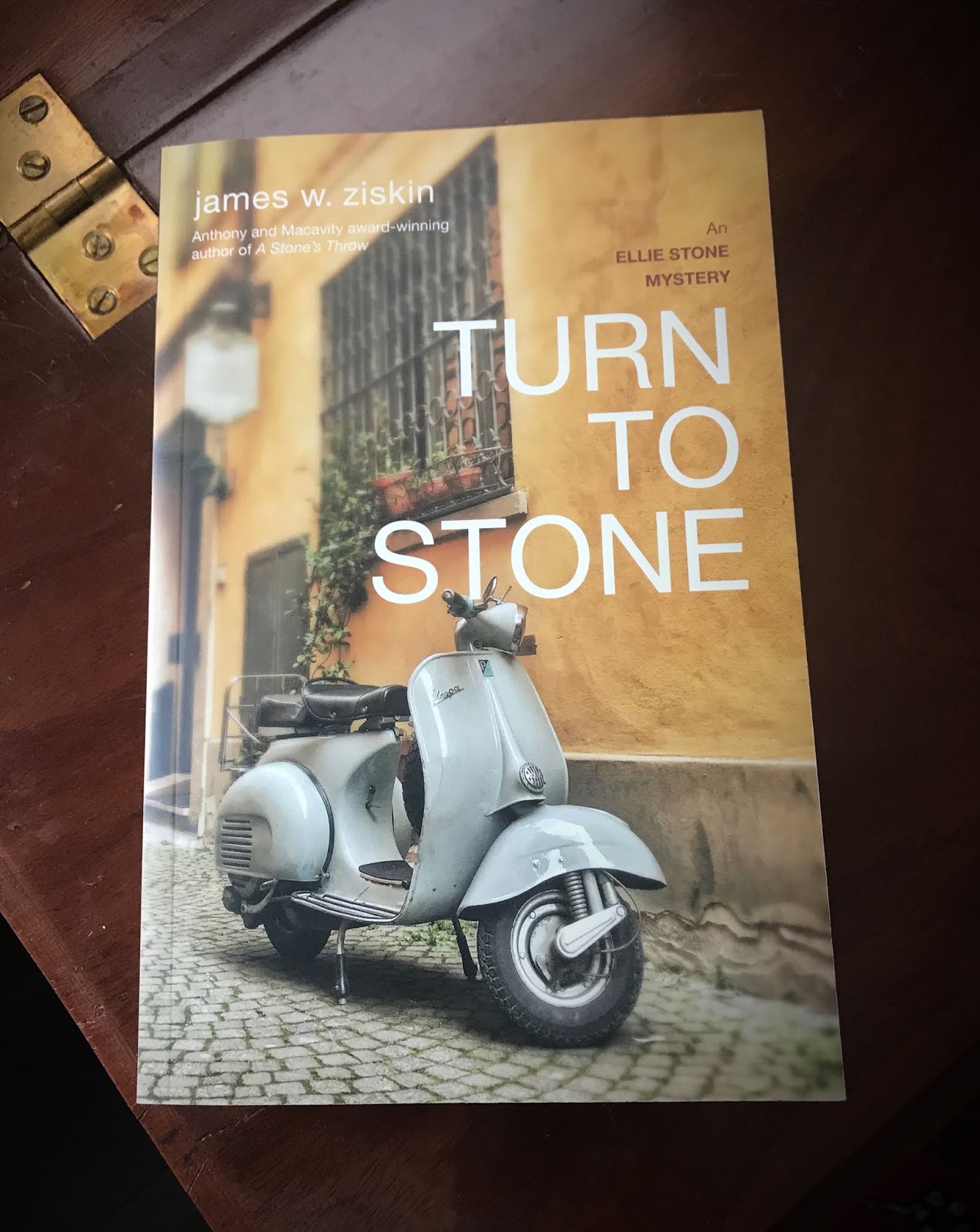
I sure did write a lot about quarantine when I was working on my latest Ellie Stone book, TURN TO STONE. It’s a coincidence that TURN TO STONE was released on January 21, 2020, one day after the first U.S. Covid-19 case was diagnosed. At the time, I doubt many people expected shelter-at-home orders or the closure of restaurants, beaches, and hair salons. But that’s where we are now, three-and-a-half months later. 

TURN TO STONE is, as you may already know, a book about a quarantine. I used the threat of German measles, or rubella, in 1963 Italy to trap my characters in a villa in Fiesole. I chose rubella because I wanted a disease whose symptoms were sometimes mild or non-existent for my story. Rubella, while extremely dangerous to unborn children, was not so for healthy adults. And, of course, there was no vaccine at the time. 

The bucolic setting, high above Florence, struck me as a fine way to create my own locked-room mystery. Locked-room mysteries normally confine the cast of characters to a house together with the eventual victim or victims. These houses are usually in the countryside, on a mountaintop, or on a rain-swept island cut off from the mainland. For TURN TO STONE, I decided to do a variation on a theme and quarantine my characters after the victim has already died.


That artifice allowed me to explore the effects—social, psychological, and sometimes humorous—of forced confinement on my ten characters. They eat, drink, and spin tales for entertainment during their quarantine. And, in the interest of building conflict, they disagree and argue about politics, religion, morality, and what kind of person Alberto Bondinelli—the dead man—really was. Through their recollections of a remarkably complex man, they provide Ellie with clues to what really happened to him.

Another important detail—and coincidence—about the book is that it pays homage to the Decameron, Giovanni Boccaccio’s fourteenth-century collection of stories. He framed his 100 tales against the backdrop of the Black Death that devastated Europe in 1348, with ten young people quarantining themselves for safety in Fiesole for ten days. And they tell stories to pass the time. 

In these modern times, we binge watch TV instead.


But I suspect people aren’t really interested in reading about quarantines. At least not now. I had no way of knowing we’d be in the spot we’re in today when I set out to write my book. TURN TO STONE does offer its characters—and readers—a brief respite from the bustle of the world. There are worse ways to spend a week than sheltering in a beautiful villa in Fiesole, after all. And there is plenty of fine Tuscan cuisine, wines, and other tempting alcoholic beverages to enjoy along with the mystery. My characters—like many of us—will leave their quarantine fatter and drunker for their trouble. 


No, I didn’t see the Covid-19 pandemic in a crystal ball. I only wanted to trap ten characters in an idyllic spot in order to tell my story. And that turned out to be one heck of a coincidence.

Stay safe. Read more.


Wednesday, May 13, 2020

Inside out

"We're in the strangest time many of us have ever known right now. How do you decide how much of the outside world to include in your work?”

by Dietrich

Strange times indeed, and I could go on about that, but the question is how much of the outside world do I include in my work?

When I stumble on some real-life event that I find interesting and story-worthy, I like to let my imagination run with it and come up with different twists and turns. And sometimes I find a few other real events that fit in as the story progresses. By the time I’m done, there’s not necessarily much that’s recognizable from any of the original real-life inspiration. 

In my novel coming out in the fall, Cradle of the Deep, there are references to news events and happenings from the early 70s, the period the story is set in. Using actual events lent some flavor and credibility, but the story itself is pure fiction. The one coming out after that is also complete, but it follows the real-life happenings of a little known bank-robbing couple who lived in the 30s, making that one more truth than fiction.

There’s obviously more latitude in creating pure fiction than in following actual events, and usually less research is involved in the former than in the latter, but I loved writing both of them. And I like finding challenges and new ways to keep the writing creative and interesting, and sometimes that means trying something different and taking a few chances.    

The whole process of writing a novel normally takes me up to a year, with edits and more edits coming later and tacked on top. So, the initial idea really has to grab me in order for me to want to invest that amount of time in it. And usually the kind of events that interest me most offer some levity. And right now, there’s just not much going on in the world that would make me want to write about it. Maybe it’s all just a little too close to home at the moment.

And how much of the outside world to include – well, that’s a case of balancing. Generally I want enough detail to paint the scene for the reader and still keep the pace moving. I’m usually stingy with the amount of description, and many a darling has been sacrificed along the way. 

In the writing community a lot has changed in recent months. Book stores and libraries have been closed, events and launches have been cancelled, postponed, or driven online. All of it leaving writers, agents and publishers scrambling for new ways to promote their upcoming titles.

As Cathy wrote in a post recently, I too am grateful to just to be able to do what I love to do, and I’ve managed to keep writing in spite of all that’s going on. So, here’s to all of us finding our way through these times, and to things getting back to what we like to call normal.

Tuesday, May 12, 2020

To Pretend or Not to Pretend


We were asked this week, in the light of the Covid 19 outbreak, how we decide how much of the outside world to include in our work. In other words, do we mention the virus and its impact, or pretend it isn’t happening.

What a question!

I sent a domestic suspense novel off to my agent at the end of 2019—before the virus was part of our lives.. She got back to me mid-January and said she loved the book, and that she  had a few “notes” for me to use for revisions. (By the way we discussed this over lunch in New York City—in mid-January.)

Mid-February, I sent the revised manuscript back to her. Within a few weeks, CRASH! BANG! SLAM! That’s the sound of things falling apart. The world was was shutting down, doors were slamming shut for the duration, and the publishing world started grinding to a halt. More crashes—the sound of me throwing things around in frustration. My book, of course, has nothing about the virus, because I wrote long before it happened.


Meanwhile, I’ve just finished the second go-round of edits for my next Samuel Craddock book—number nine. There is nothing about the pandemic in it. Nothing. I don’t even know how I would go about putting anything in about it. My imagination fails me. The book is set in July of an unnamed year—I always thought of it as July 2020. But now I have to think of it as July 2019. Otherwise it will be a lie.

Last week, almost two months into quarantine, I wrote an email to my agent asking how she was doing, whether editors were taking on work, and if she had any idea whether readers (or publishers) would have any interest whatsoever in books that don’t mention the virus, books that blissfully read as if there is no new normal. Would people want to read about how others handled the crisis, or would they crave books about the now seemingly mundane problems we had before? She replied that she can’t assess that yet. She said editors are beginning to peek out from under their sheltered states, but that she personally wasn’t ready to read with a sound critical eye. She lives in the middle of New York City, so I understand her state of confusion. Because we all feel that to some extent.


I often feel as if I’ve been plunged into a sci-fi plot, in which oddly capricious aliens have landed—they might kill you, they might ignore you, or they might just make you slightly sick. People have to respond to their capriciousness, much as you might respond to a drunken, enraged relative. You tiptoe around them and hope to avoid their notice. But am I ready to write a sci-fi novel about it? No.

It has been almost twenty years since 9/11 happened, and very few books tackle that shattering event head-on, although books mention it tangentially. And that even was small compared to current one. So if we still can’t write about 9/11, when willwe be able to tackle Covid?

I personally am enjoying reading books that have nothing to do with current reality. With a caveat. At the moment I’m completely immersed in James Ziskin’s latest, Turn to Stone. 


Set in Florence, Italy in the 60s, the lush, wonderful descriptions have me yearning to be back there—in Italy, I mean, not in the 60s. And periodically I have a heart-pang: will I ever get to go back there? Will there even be a there there? And then, of course, I remember that Florence has withstood centuries of plagues, wars, economic and social disasters. It will be there, and one day I hope to go back there.

But the point is, I am enjoying stepping out of my daily dose of horror, fear, bemusement, drudgery, isolation, and uncertainty to bury myself in reading about things the way they were. My question is, how fundamentally will things change? Will there be a time when all those books set “before” seem quaint and odd? Or will we want the steady influence of the past to lead us to a future—maybe not the same future we had been careening toward, but some version of it.

Do we lie and pretend the world hasn’t been slammed by a history-changing event? Jane Austen barely mentioned events in the world outside her characters’ lives, even though there were wars and systemic changes.  But events that happened outside Austen’s community were not instantly available by radio, TV, and internet, as they are to us. We can’t pretend we know nothing about our cataclysmic situation. But if you include it, how much do you include?  


I’m thinking it’s time to tackle that historic novel I’ve had on the back burner for many years. It’s set around the turn of the century—from the seventeenth to the eighteenth centuries, that is. So I won’t have to mention a plague. Although…there was that small matter of the Little Ice Age. 


So readers, what do you think? Do you want to read books that include the virus or not? I