Showing posts with label reading. Show all posts

Friday, May 24, 2024

Books That Kill, by Josh Stallings


Q: Have there been recent novels which had you laughing, crying, clinging to the edge of your seat?


A: That is a tall order, there are very few books I’ve read with that wide a swath of emotions. And seeing as Criminal Minds has the word Criminal in the title, it seems like the book's being crime fiction is implied. Also “recent” so the masters are out. Tall but not impossible.


First up is Charlie Huston’s CATCHPENNY. It is a quintessential LA novel. A young man follows his rock star dreams to LA. He has the looks and voice to make it, but the town being what it is chews him up, takes his love and leaves him broken and that is just the back story. When we meet Sidney Catchpenny he is a jaded sneak thief working for very dangerous people. It’s a crime novel. 


There is a missing 16 year-old girl who is needed to save human kind. It’s a thriller. 


And in his world magic is real. Sid can travel through mirrors, but pays highly every time he uses magic. It’s a fantasy novel or maybe urban-fantasy. 


It’s actually all of those things and more, and this points to the problem with rigid definitions in genre fiction. At its core it is about over coming the bleak world view that traumatic loss creates inside us.


“The whole internet is like a giant mirror. A swampy reflecting pool for the world. Viscous and unclean, mottled, distorting.” — Charlie Huston, CATCHPENNY.


It is about the power of hope to bring us together. For readers of Huston this may sound out of character, but trust me it’s not. It is a tough world that he never shies away from. His earlier works showed brilliantly how and why people could be broken, in CATCHPENNY he suggests a way we can heal. 


“I let myself imagine that it mattered, my voice. Vanity again. But also this. Imagine this. I let myself dream that my voice had a place in this that nothing else could have filled.” — Charlie Huston, CATCHPENNY.


For the last year I have been dipping in and out of an ever darkening depression. Reading CATCHPENNY something shifted. I saw a way to climb out. It is a brilliantly written thrill ride. The final chapters kept me reading all night. Charlie Huston has never been better.


"I absolutely loved it. Catchpenny is a brilliant book, full of heart and the language is pitch-perfect. If Elmore Leonard had ever written a fantasy novel, this would be it.” —Stephen King


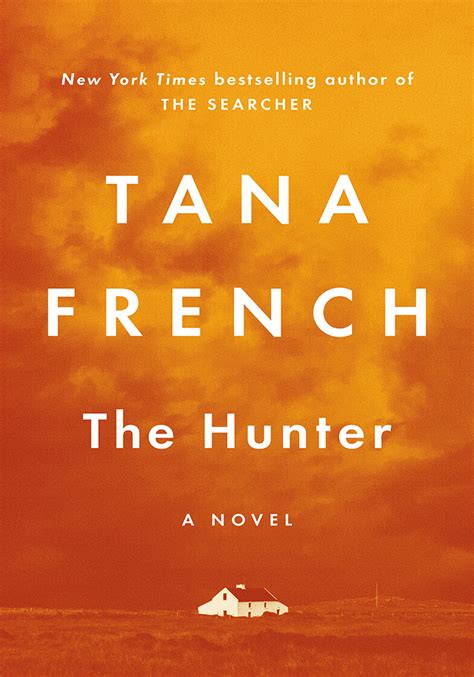
Tana French’s, THE HUNTER is the follow up to THE SEARCHER. Cal Hooper, is back as the blown-in retired Chicago Detective living in a small village in the West of Ireland. French captures the claustrophobic feeling and real danger of living in a community where everybody knows your business and rumors spread fast and have real consequences. Trey Reddy, the half-feral teenager Cal is training in life and carpentry has her life torn up when her criminal father comes home spreading dreams of a gold rush coming to town. It all goes to hell and town folk look for whom to give to the Garda.


In Cal and his woman friend Lena, Tana French gives us a portrait of flawed but truly moral people whose behavior we can all aspire to. THE HUNTER is scary and funny and poignant. Tana French is a writer who just keeps getting better.


Gary Phillips’, ASH DARK AS NIGHT follows Harry Ingram in Los Angeles 1965 as he documents and tries to make sense of the Watts uprising or riot depending on your neighborhood and political bent. On one level it is a pitch perfect detective novel. A photo journalist hired to find a man who disappeared in mayhem is beaten down by dirty cops and cruel gagsters. Zooming back you see it is also a social novel, looking at what was happing in 1965 and how it affected communities of color. Watts is not seen as a monolith. Phillips shows a wide palette of people and opinions. True believing Communists, a bank robbing activist, conservative business owners, and free thinking artists. Phillips’ love for them all creates a world I want to hang out in. It is also a scary world where LAPD can grab and beat you with no fear of repercussions. It is factually right on, and that makes it even more frightening.


“For thirty years Phillips has been a must-read writer, and One-Shot Harry is probably his best ever—tense and suspenseful, of course, but also deep, resonant and intelligent. It's a story that needed to be told, and therefore a book that needs to be read.” —Lee Child


ASH AS DARK AS NIGHT is the second in the A Harry Ingram Mystery series and should be mandatory reading for lovers of crime fiction and everyone else. Gary Phillips paints a more truthful picture of LA in the 60’s than any history book I’ve read. 


Phillips does all this with his trademark humor, heart, and unrelenting action. You will find yourself laughing, crying, and clinging to the edge of your seat, I know I did.


“In the tradition of Dashiell Hammett . . . Makes us feel that the war he’s waging is for our own salvation.” —Walter Mosley


Here are a few others that I’ve read in the last year and continue to reverberate in my head.


THE HEAVEN & EARTH GROCERY STORE, by James McBride.

PEDRO PARĀMO, by Juan Rulfo.

DEATH IN THE ANDES, by Mario Vargas Llosa.


What books tick all your boxes? How do you feel about genre and sub-genre definitions, helpful, hurtful, or ya don’t even think about them?


                                                 *******


What I’m reading now, THE FITH SEASON, by N.K. Jemisin. 

On deck to read next, THE FLAMETHROWERS, by Rachel Kushner.

Friday, September 11, 2020

Marketing in the Time of Covid

This year has thrown us plenty of curveballs. Have you (and your publisher) adapted new ways to market your books?

by Paul D. Marks

I have to admit that I just did a blog post recently over at SleuthSayers on this very subject before I looked to see what this week’s question is. So this will be a rerun of that for people who didn’t see it there. The one thing I’ll add is that in addition to everything below, I’ve also been trying some Facebook and Instagram ads, with some okay results. The Amazon ads we tried had virtually no results. And we use KDP Rocket and do whatever we’re supposed to do but for whatever reason not much came from it.

And so now to what I said a couple of weeks ago on SleuthSayers. Still valuable and definitely responds to this question:

We’re all hunkered down these days under house arrest. Some people are binging on Netflix, others catching up on all the cute cat videos they’ve missed. Others still are too anxious to do much of anything productive. I’m lucky in that my life hasn’t changed all that much on a day to day basis since I’ve worked at home for ages. I still walk the dog/s. Do my writing. Listen to music. Watch the old black and white movies that I love. Read. The one big change is that my wife’s been working at home since March. Luckily we seem to get along. Blame that on her more than me 😉.

But, as writers there have been some changes, most notably that in-person events have been cancelled. Most of the conventions and conferences that we enjoy have been zapped, Bouchercon, West Coast Crime (right in the middle of the actual convention), and others. In-store book events and launches have largely disappeared for now. But we live in an age of new-fangled thingies, an amazing age, an age of the internet, Zoom, Skype and other modern marvels.

My virtual acceptance speech for Ellery Queen Readers Award

So, the other day, as I was doing a Zoom panel for a writer’s conference, it dawned on me how cool it is to be able to do this. Not all that long ago it couldn’t have happened because the technology wasn’t there. With something like the Covid pandemic the event would just have disappeared. But with Zoom, Skype and others they just sort of morph into something virtual.

Since the lockdown began I’ve done several Zoom events. I haven’t yet hosted one though I’m thinking about doing that for the Coast to Coast: Noir anthology that I co-edited that’s coming out in September. That will be a new learning curve. But before that I had to learn how to Zoom as a guest. It’s not hard—and it’s really cool and fun. I also did a short (non-Zoom) video for Ellery Queen on coming in second in their readers poll since they, too, cancelled their in-person event in NYC. And I’ve done several panels and interviews and even virtual doctor appointments. As I write this a bit ahead of its posting date just a few days ago I did a Skype interview for a radio station in England. Could we have done that even twenty years ago? Maybe by phone, but with much more difficulty and expense.

E-flyer from Sisters in Crime/Los Angeles first House Arrest virtual reading

Remember long distance phone calls (and long distance could virtually be just across the street in some cases). They were ridiculously expensive. You’d call the operator before your call and request “time and charges,” then when the call was over the operator would call you back and tell you how long the call lasted and how much it cost. And you’d get sticker shock.

The "good old days".

In the near last minute my wife suggested doing a virtual launch for The Blues Don’t Care in June since there were no in person events happening. So we had to scramble to figure out how to do that. We weren’t sure if we should try Zoom or another service or stick to the old standby (yeah ‘old’ standby) of Facebook, which is what we ended up doing. And it turned out better than I had expected. We had a big group of people and questions flying back and forth. Plus I’d toss out tidbits of info on various things related to events that took place in the novel, like the gambling ships that lay off the SoCal coast back in the day. It was fun, if a little hectic, and I think people enjoyed it.

So we make do as best we can. And we don’t have to shower or drive to get to our meetings 😉. It’s also kind of cool to just see someone when you’re talking one to one with Zoom or Skype or other services. My wife’s family reunion was cancelled this year because of Covid but her and some of her cousins get together semi-regularly with each other via Zoom. Like they used to say, it’s the next best thing to being there.

So what’s next? Virtual reality meetings? Holograms? Mind-melding? Beam me up Scotty! There seem to be no limits to technology, but there is still something to be said for meeting people face to face. Standing close enough to whisper something, closer than 6 feet apart. Laughing, talking, sharing good food (and drink!) and good stories. So until we can do those things again, at least we have the virtual world, which is the next best thing.


~.~.~

And now for the usual BSP:

Thanks to Steve Steinbock and Ellery Queen's Mystery Magazine for the review of The Blues Don’t Care in the current September/October 2020 issue just out. Four stars out of four. My first time getting reviewed in EQMM. A great honor!

And our own Cathy Ace’s The Corpse with the Crystal Skull is also reviewed in this issue.


Please join me on Facebook: www.facebook.com/paul.d.marks and check out my website  www.PaulDMarks.com


Friday, August 28, 2020

I Don’t Recommend Books…But Try These

Do you recommend books to your fans? Do you recommend books like yours, or books you enjoy? Have you noticed your book tastes changing during quarantine?

Guest Post by Jonathan Brown
Jonathan Brown

I’m (Paul) taking a break today. Filling in for me is my friend Jonathan Brown. Jonathan writes the Lou Crasher series of books. He’s also the author of two historical fiction books: A Boxing Trainer’s Journey about Angelo Dundee (released 2019). Also: Character Is What Counts about Vince Lombardi (coming late 2021). And he’s currently writing a stand-alone Western about a Black wrangler falsely accused of being a horse thief. His book Don’t Shoot the Drummer drops in November 2020. He and his wife live in Los Angeles.

Take it away, Jonathan:

I Don’t Recommend Books…But Try These

I have a newsletter that I send out to those that are current, or soon to be, (hopefully) fans. In each issue I list the last three books that I’ve read. When I got into the crime writing game the books I read were primarily crime fiction. Somewhere along the way I began to miss books outside the genre. I’ve always been a variety/change-it-up guy. At first I worried about losing crime-reading fans by posting current affairs, biographies, historical books and so on.

Then I thought, ya know what? Ah, they probably don’t care. By sharing all the different things I read, well, they’re getting a clearer picture of the real me. I was especially worried about sharing the political books I read—what if my readers don’t share my political views? At that point I didn’t care because again, I is who I is. Besides, what they’d come to notice is I read left, right and center because after all, we learn by reading, listening and digesting from all sides. And for those that are curious, I’m an independent as in, independent thought. And I wish more people would exercise and implement independent thought instead of following the leader of a tribe.


And now, I step down from the soapbox. I don’t recommend books to readers, I just share what I read. Among close friends and family sure, but to strangers—who am I to recommend anything?

As far as reading habits during the pandemic I’d say my choices have certainly expanded. I always look for balance in all aspects of my life: balance in yoga poses, martial arts strikes, musical choices, shows I stream, my relationship with my wife and so on. Pre-pandemic I read mostly crime fiction. The reasons being: A. there are a ton of writers whose books I want to read. B. I interview crime writers on my blog and I have a policy of reading at least one of their books before I interview them. (jonathanbbooks.blogspot.com).

The lockdown, for me anyway, has caused me take a deeper look at the big picture. What is the (pardon the overused phrase) new normal going to look like? How are we treating each other during these stressful times? Are we wearing masks in an attempt to stay safe and protect others, or are we not buying-in, and letting the good times roll? These questions and more have raised my curiosity level, thus, I’m picking up books from all sorts of spectrums and universes.


Here’s a short journey to one of my reads. My wife and I watched Mrs. America on Hulu starring Kate Blanchett. I was particularly impressed with the character and real life activist/politician, Shirley Chisholm. I needed more Mrs. Chisholm than the show had given me. So, I hopped onto Amazon and ordered her book, Unbought & Unbossed, published in 1970. Due to COVID times and perhaps increased demand, the book took over a month to get to me. I received delay after delay emails from Amazon. Finally, the book arrived and, wow, what a powerful lady! I highly recommend this book…even though, as stated earlier, I don’t recommend books. (wink, wink).


The other two titles pictured below are books I enjoyed. Although, with Mary Trump’s book, Too Much And Never Enough, maybe the word ‘enjoyed’ isn’t the best word choice. Let’s say it was well written and incredibly…heavy! Breath was much more than just a book about, well, breath. It even got me exploring the Vim Hoff breathing method—and why not? When in quarantine: breathe, baby, breathe!

And now the slick part:

I absolutely recommend, no, require that you read Don’t Shoot The Drummer (releases date November 2020, Down And Out Books), because it’s got my name on it. O.K. That’s it. Don’t ask me for any more recommendations because it’s just not something I do. Stay safe. jonathanbrownwriter.com.


***

Thank you, Jonathan. And now to the usual BSP and stuff:

I want to thank Colman Keane of Col’s Criminal Library in England for this great review of The Blues Don’t Care. Here’s an excerpt and a link to the full review:

“A compelling 40s set LA murder mystery, concerning itself with questions of race and identity against the back-drop of the second World War.

I don't think I've encountered such an interesting protagonist for a long while in my reading. Bobby Saxon is a pianist trying to get a start in the music business. There's more to Bobby though than meets the eye.... he's conflicted, confused, secretive, naive, brave, talented and desperate.”

http://col2910.blogspot.com/2020/08/paul-d-marks-blues-dont-care-2020.html


Please join me on Facebook: www.facebook.com/paul.d.marks and check out my website  www.PaulDMarks.com

Friday, May 22, 2020

I’ve Still Never Seen the End of Gravity’s Rainbow

Do you finish every book you start? Why (not)? And how do you decide when to give up?

by Paul D. Marks

No!

And ditto for movies.

I used to feel not only compelled but obligated to finish any book I started. (Okay, a little compulsive I know.) But as I’ve gotten older that just doesn’t work anymore. Life is too short. There’s too many books and too little time. I won’t even say there’s too many good books, because I won’t claim that every book I finish—and even like—is a “good” book. It might just be something I enjoy. A guilty pleasure.

I read a variety of things, non-fiction and fiction and various genres within that. These days I don’t often read a non-fiction book cover to cover like I used to. I bounce around, sometimes looking at the table of contents or the index for subjects I might find particularly interesting. And sometimes I just open to a page and start reading.

Fiction is, of course, different. You really have to read it from head to tail if you want to get the full flavor and depth of it. I’ll usually give a book about 80-100 pages. But I have to admit that I might read beyond that even if I’m not enjoying the book because hope springs eternal. And I guess I still have that expectation that it will get better. Unfortunately on some books I’ll read all 400 pages until hope turns to despair.

For movies I’ll give them about a half hour. That should take me to the end of Act I, give or take. If it doesn’t grab me by then: Hasta la vista, baby.


However, when I’ve been a judge for various competitions I have felt obligated to read every story from stem to stern. And I’ve pretty much succeeded at that, though it can be extremely time-consuming. But I have to admit there was one contest story that I just couldn’t finish. Because it wasn’t a “story” but more of a political diatribe disguised as a story and the characters were just mouthpieces for the author. But one clunker out of the tons I’ve read for various contests isn’t a bad batting average.

There is one very well-known book that I have still been unable to finish. Three times. Gravity’s Rainbow by Thomas Pynchon. I really want to read this book and I really want to like it. But I can’t seem to get past page 100. But maybe the fourth time (if there is one) will be the charm. Or maybe I should just read Gravity’s Rambo instead (and no, I didn’t make up that cover).


Sometimes I’ve started a book and for one reason or another just couldn’t get into it. Picked it up later and wow, what have I been missing.

A book doesn’t have to be a fast-paced rip-roaring page turner either. One of my favorite books is The Tartar Steppe by Dino Buzzati, about a soldier who is stationed at a remote outpost and spends his life hoping and waiting for the glory of battle. Though that’s really just what it’s about on the surface. Now, I admit this book is a slow read, so you’d think I would have stopped at some point. But I just loved it and it’s well worth the slowness in my opinion.

On another note, I don’t always finish novels or stories I start writing, but I guess that’s for another time.

~.~.~

And now for the usual BSP:

My short story "Fade-Out On Bunker Hill" came in 2nd place in the Ellery Queen Mystery Magazine Readers Poll. In lieu of the pre-Edgars cocktail party, we had a virtual awards ceremony. You can see the whole thing (including my bookshelves) on YouTube. I want to thank Janet Hutchings and Jackie Sherbow of Ellery Queen and, of course, everyone who voted for it!


I'm very happy to see that LA Jazz Scene features an excerpt from The Blues Don't Care on their current home page. Check it out if you have a minute.

The book drops June 1st and can be ordered at Down & Out Books, Amazon, B&N, iTunes and other places.  And I'm also running a GoodReads Giveaway. Enter to win 1 of 5 signed print copies.


Please join me on Facebook: www.facebook.com/paul.d.marks and check out my website  www.PaulDMarks.com

Friday, September 6, 2019

A Clean Well-Lighted Place to Read

Where do you normally read? In bed? A favorite chair? Listen to audio when commuting?

by Paul D. Marks

Well, since I basically commute from the bedroom or kitchen to my home office, a distance of about thirty or forty feet, I don’t do much reading on my commute. But if I did – and if I had a self-driving car – I’d be reading a hardcopy book or one on a Kindle app. I find that if I try to listen to an audio book my mind drifts too much. I don’t know why.

These days I do most of my reading at home, because I’m home most of the time – you see, there’s a logic to it. There’s various spots I like, nothing out of the ordinary like sitting in a tree or while hang-gliding. There’s three or four places that I do most of my reading: in bed, a chair in the bedroom that faces out to the view, on the family room couch, a particular chair in the living room and outside on the patio. I don’t take many baths but when I do I like reading in the tub, but I’m very careful not to get anything wet…except me. Most of my books look unread and if I got one wet – or too wet – I’d freak out. Not really, but almost. I guess I’m pretty nitpicky about that, but I like to keep them pristine. So much so that sometimes we buy Amy, the wife, a separate book of the same thing so mine doesn’t get messed up. She’s not as particular as I am. And when we had a pool I liked reading outside on the deck or on a pool lounger. I wish I could say I read at the beach these days, but alas I don’t get there as much as I used to. We do live just outside the national forest and sometimes I think about going up there and reading but it’s pretty nice here and if I don’t have to go anywhere, I pretty much don’t.

Here's one of my favorite reading spots with the ubiquitous slip covers because of the dog hair everywhere. I forgot what the upholstery looked like until I took the cover off the ottoman.

When we travel I like to read on planes, as long as there’s no loud or obnoxious flyers, so that does limit plane-reading sometimes. And if we had a boat, ah, but I can dream, can’t I?

Like others have mentioned, I have stacks of TBR books all over the place and a virtual stack on the Kindle app. I have some audio books around that I listen to now and then, but as I said, I tend to lose focus. Amy reads on audio a lot, as she commutes to work on the train. However her brain is wired vs. the way mine is allows her to concentrate on audio books and her mind doesn’t seem to wander. She really enjoys her audio books and I’m envious because I would like to “read” them. It just doesn’t work out.
Buster was enjoying the July/August, 2019, issue of Alfred Hitchcock's Mystery Magazine, which includes my story Past is Prologue. Then he just zonked out using my leg as a pillow. Hope it wasn’t my story that put him to sleep.

And like Frank, I often have at least one non-fiction (though sometimes more) and one fiction book going. I usually don’t read more than one fiction book at a time, but I might be reading short stories while I have a novel going.

Here's the view at sunset from another of my reading spots.

How about you? Where do you like to enjoy a book? And now excuse me, I gotta go hit the hang glider and get some reading done.

~.~.~

And now for the usual BSP:

Don't forget to check out Broken Windows, the sequel to my Shamus award-winning novel, White Heat. Betty Webb at Mystery Scene magazine says: "Broken Windows is extraordinary."


Please join me on Facebook: www.facebook.com/paul.d.marks and check out my website  www.PaulDMarks.com

Friday, May 17, 2019

The Swag Man Cometh

Swag: what do you do about this knotty question? Have you wasted money in the past? What works best for you, and why? Do you have an annual budget?

by Paul D. Marks

I’m not a big swaggart. About the only thing I’ve done to this point swag-wise is bookmarks. I did have business cards printed, but almost never give them out, instead handing out the bookmarks. So the biz cards sit forlornly in my office gathering dust, but I do like the picture on them. And they helped keep someone employed, so I’m doing my bit for humanity.

I also had mugs made for White Heat, but just a handful. Then we changed the cover of White Heat and we made more mugs, another handful. Then we changed the cover again and… When Broken Windows came out, we tried to make combo mugs of White Heat and Broken Windows. And that’s a story in itself. We couldn’t get it right, so had to make them again. And then again. So now we have a lot of White Heat-Broken Windows mugs that are half good, but taking up precious space in our house. I just can’t seem to part with them, even though they’re flawed.

But even if the mugs came out perfectly – and we might still try again – they aren’t what I’d really call swag. They’re mostly just to give to family and friends. Not as a general give-out item at conventions and the like. They’re too expensive for that, though we might have given a couple of the earlier ones away here and there in gift baskets and for auctions and such – The Great Mug Affair of 2018.

And I’m not really sure how much good swag does, especially the bookmarks when they’re one of multitudes that people leave on tables and hand out at various events. Like grains of sand on the beach. Does any particular one stand out?
Iceland

Now, maybe if I could give out the swag they do at the Academy Awards, I’d get some attention. You know, things like trips to the Galapagos Islands, Iceland or stays at the Golden Door spa. Like Frasier and the Golden Door…and then the Platinum Door – well, you had to be there – and now you are:

Video Removed


And most recently at the Oscars jewelry or cannabis-infused face cream and bath salts. Because as Distinctive Assets (who provide the stuff) founder Lash Fary says, “After a stressful Oscar week, you need to relax.” Of course, life’s a bitch when you’re a pampered millionaire actor telling all the rest of us how to live. So the toilet plunger shaped like a poop emoji should really help you de-stress after that tough, grueling Oscar week – nothing like what our soldiers deal with in Afghanistan, Iraq and other stress-free places they get to go for fun and excitement. And what particular stress that poop emoji toilet plunger helps with I’m not sure, but I’m sure it does. But if it doesn’t, the phobia expert (another swag item) is sure to help.

And that Oscar swag is so good Christopher (Michael Imperioli) on The Sopranos robbed Lauren Bacall of hers:

Video Removed


So, if I could give out swag that was worth getting mugged for I guess I’d do more of it. But it seems to me that the expense of key chains, pens, magnets, etc., vs. the return on investment isn’t really worth it. But if you’d like a box of unused if a little dusty, biz cards, let me know. You could paper your walls with them.

So, while I like collecting free pens, I don’t give them out. Mostly I just do bookmarks. Bookmarks will remind people where they left off reading in Michael Connelly’s book. They’re inexpensive. Readers seem to enjoy them. And they don’t take up a lot of space in the garage. On the other hand, if I could bribe people with a Porsche in their choice of color, hmm, well if it would get them to buy a book it might be worth it.

What about you. Do you swag or not?
~.~.~

And now for the usual BSP:

White Heat -- Shamus Award-Winning mystery-thriller -- is a BOOKBUB Featured Deal on Sunday, May 19th. You can get the E-book for only $0.99.  https://tinyurl.com/y5oq3psq


***

New May issue of Mystery Weekly is out. And I'm honored to have my new story The Box featured on the cover. Hope you'll check it out. -- This link is to the Kindle version, but there's also a paper version available.

https://www.amazon.com/Mystery-Weekly-Magazine-2019-Issues-ebook/dp/B07RC8XS93


***

Please join me on Facebook: www.facebook.com/paul.d.marks and check out my website www.PaulDMarks.com

Friday, May 3, 2019

Location, Location, Location

When it comes to creating a sense of place in your work, how do you do it? (Research and real places? Invention and fictional ones?) What’s worked for you, and what hasn’t? 

by Paul D. Marks

This one’s going to be on the long side. Mostly because I’m using several excerpts from stories or novels and I’m focusing only on things set in L.A. or Southern California here.

There’s no end to the ways one can do research in terms of creating a sense of place. I tend to set a lot of what I write in Los Angeles and Southern California. And those areas become another character in my work, so much so that author Steve Lauden said, “…[it’s] almost as if the region was one of the main characters.” And I know SoCal pretty well. But it’s also changed a lot and I don’t go exploring as much as when I was younger. Back in the day, a friend of mine and I would get in one of our cars, point it in a direction and drive and explore. And we explored pretty much everything in Southern California.

There’s different kinds of “places,” not everything is a street or building, a park or landmark. Sometimes it’s just a room or other interior. And there are different ways of doing research: in person first-hand, internet, books and libraries – still, talking to people, maps, music, old movies and others. And I will do all or any of them in various combinations on any given project.

It’s always great to be able to do first-person research, to travel to a location and feel it, smell it, get to know the people, at least a little. But that isn’t always possible. I was hired once to do some polishing on a project that was set in the Amazon. I’d never been there, still haven’t, though it’s on my bucket list. But I have been to other tropical jungle type places. So I did research on the Amazon, probably in books in those days, but I also transposed my own jungle experiences from other tropical locales to that area so the characters could have a better feel for it. And I think it worked pretty well. 

So let me talk about some specific locations from some of my works. It’s hard to narrow it down to a handful of examples, but here goes:

Angels Flight is a funicular railway in downtown Los Angeles. Star of many films and many noirs, including Kiss Me, Deadly, Criss Cross and others. Chandler visits it in The High Window and The King in Yellow. As a young boy, my dad took me to the original Angels Flight (now moved down the road). And though I may not have known about noir films and hardboiled novels then, it was an experience I’ve always remembered. Such a cool little pair of trains going up and down that hill, the tracks splitting in the middle just as each car approaches the other and you think they’re going to smash into each other head on. Angels Flight slams back to me in memory every now and then and makes its way into my writing, most notably in the eponymous story Angels Flight (currently available in L.A. Late @ Night, a collection of five of my previously published stories), which I must say came out before Michael Connelly’s novel of the same name. And also in Ghosts of Bunker Hill (Ellery Queen, December, 2016).

Angels Flight

Angels Flight is about a cop whose time has come and gone, and that theme is still pretty relevant today. The world is changing and he’s having one hell of a time catching up, if he even wants to. He’s a dinosaur. And he knows that Angels Flight is an anachronism, just like he is. He says to the other main character:

“Will Angels Flight bring back the glamour of the old days? Hollywood’s lost its tinsel. Venice’s lost its pier. And there are no angels in the City of Angels. What can Angels Flight do to bring that back?”  
“Sometimes you need something for the soul,” the other person says.

I think that sums up a lot of my attitude not only toward Angels Flight but to the City of Angels as well. That said, here’s a little more Angels Flight, from Ghosts of Bunker Hill:

I stood at the bottom of the hill, staring up at Angels Flight, the famous little funicular railway in the Bunker Hill section of Los Angeles, that brought people from Hill Street up to Olive. I desperately wanted to ride those rails up to the top. But now the two twin orange and black cars were permanently moored in the middle, suspended in mid-air, ghosts from another time.

***

And there’s Bunker Hill itself, also from Ghosts of Bunker Hill. Bunker Hill was L.A.’s first wealthy enclave. But around World War I, the rich folk started moving west and it fell into disrepair. In the late 1960s, the grand Victorians were being torn down or moved to other parts of the city. I was lucky enough to have explored the area with friends before it was all gone and even “borrowed” the top of a newel post (see pic) from a stairway in one of those grand Victorians. In Ghosts of Bunker Hill Howard Hamm, the detective, inherits one of those moved Victorian mansions from his now-murdered friend:
 
My newel post from Bunker Hill

Howard and Nicole wanted to escape the past; I wanted to escape into it. For me, Nicole moved to our classic, refurbished Victorian on Carroll and I’ll love her always for that. In the 1960s someone had the brilliant idea to tear down the old Victorians on Bunker Hill, many of which had become SROs and flop houses, and build a sparkling new downtown of gleaming high rises, but it won’t be long till they’re shabby town too—high-rise shabby town. Luckily several of the grand old dames were saved, moved to Carroll Avenue a few miles away, including ours.

Every time I walked those creaky wooden floors, I felt the presence of the past. The people who’d lived there. Not ghosts, but history, something Los Angeles often doesn’t appreciate. Carroll Avenue was close to downtown, where I worked. But the whole short street looked like something out of early 1900s L.A. I loved everything about it.

***

Hollywood Forever Cemetery is the cemetery to the stars. It makes appearances in several things I’ve written, most notably Continental Tilt (published in Murder in La La Land anthology), a satirical mystery – what else can you write when you open on this place? A place where people sit outdoors on graves, eating brie and drinking wine, watching movies on the mausoleum wall. So how did I research this – well, I had to go to a movie there. And other things as well. I guess I’m just one of those people sittin’ on the graves...doin’ research, of course.

Movies on the mausolem wall at Hollywood Forever Cemetery

In the heart of Los Angeles, in the heart of Hollywood, a vampire movie played on a humongous silver screen. This wasn’t your usual movie venue, but the crowd of seven hundred loved it. Spread out on beach chairs and blankets, with bottles of wine and beer, Boba tea, doing wheatgrass shooters and eating catered Mexasian sushi, fusion food for the Millennial-iPod generation.

Did I forget to mention that the movie theatre was the Hollywood Forever Cemetery in the heart of Hollyweird? That over the summer they show movies on the mausoleum wall, while people sit on their beach chairs and blankets—Beach Blanket Bloodshed—and munch their munchies amongst the graves of movie stars, rock stars and even mere mortals? The back wall of the cemetery, clearly visible from the field of graves the watchers watched the movies from, was appropriately the back wall of Paramount Studios.

“Yeah, a movie in a cemetery, but hey, this is Hollywood,” I said.

 “Yeah, Hollywood—cemetery as theme park.” Mari lit a cigarette.

***

Venice Beach and boardwalk is the number one tourist destination in Los Angeles. People think it’s cool and flock to see the “freaks,” and maybe the nearby Venice Canals. Developer Abbott Kinney wanted to recreate Italy’s Venice in L.A., and he did, to some extent. But it didn’t quite work out. Many of the canals were drained and filled in, though some remain. They can be seen in several movies, too numerous to name. And, because Venice is another place I’ve done time at, it pops up in my short story Santa Claus Blues (from Futures), which opens with a bunch of kids playing along the canals and coming across a dead Santa floating in one of them (not quoted here),as well as my short story Windward (Best American Mysteries of 2018 anthology):

Venice Beach and Boardwalk
I’m talking about Venice, California. Los Angeles. Hey, the other one in Italy has canals and grand thoroughfares with colonnaded arches. We have grand canals and streets with grand colonnaded arches. Okay, so we don’t have such grand canals these days, most of them have been filled in, including the Grand Canal. And Venice didn’t quite cut it as the cultural paradise-by-the-sea that Abbott Kinney, its founder, had envisioned. Today it was an ever-changing kaleidoscope of people, dudes dancing on skates, musicians, artists. Maybe a few pickpockets here or there. But it was home. And I liked it here.

***

Hollywood Sign: And who doesn’t know the famous—or infamous—Hollywood Sign? Something I saw almost every day as a kid, and which a friend of mine and I hiked up to many, many years ago, before it was all fenced in and touristy. I guess that was presearch – pre-research, just in case I’d ever need it. In Free Fall (originally published in Gary Lovisi’s Hardboiled magazine, but available in the L.A. Late @ Night collection), a man recently separated from the service, heads west, as far west as he can go until he comes to the terminus of Route 66 in Santa Monica, near the Santa Monica Pier. This is the end of the road for him in more ways than one.


I kept looking at the Hollywood Sign, wondering about all the people down below, pretending to be in its glow. Where do they go after L.A.? There is nowhere, the land ends and they just tumble into the arroyos and ravines, never to be heard from again.

And the Sign from my novel Broken Windows:

The Hollywood Sign beckoned her like a magnet—or like a moth to a flame. The sign glowed golden in the magic hour sun—that time of day around sunrise and sunset when the light falls soft and warm and cinematographers love to shoot. Like so many others, Susan Karubian had come here seeking fame and fortune, hoping to make her mark on the world. Oh hell, she had come to be a star like all the others. And she would do it, just not quite in the heady way she’d anticipated.

The young woman drove her Passat down Hollywood Boulevard, turning up Franklin, passing the Magic Castle. She turned slowly up Beachwood Canyon, past the low-rent area north of Franklin, up through the towering stone gates with their “Welcome to Beachwood Canyon” signs. Past the movie star homes in the hills—past where she thought she’d be living by now. She drove in circles, past piles of rubble from the earthquake several months ago, figuring that sooner or later she’d hit the right combination of roads and end up where she wanted to be.

If she couldn’t be famous in life, she would be famous in death. But she’d make her mark one way or another. She hoped her fall from grace would be graceful, even if her life hadn’t been.


***

The Box: Well, what is the Box? It’s that small interview room in the cop shop that you don’t want to find yourself in. A small room with you on one side, a cop on the other. So what research did I do for this? Well, luckily I’ve never been “boxed” for real. But I have been in them, visiting – kind of like in Monopoly when you’re in jail but “Just Visiting” – people I knew who worked there. And, believe me, that’s the only kind of research I want to do for The Box (Mystery Weekly, May 2019):

The room grows smaller with every word coming from the man across the table. His stale, garlic, cigarette and bourbon breath slam me in the face—what the hell did he have for lunch? Or was it dinner? I’ve lost track of time. It might be bright daylight outside or dead of night. No clocks in this room. Neither of us wears a watch. Time stands as still as the air in the confined, windowless space—a room they call the Box. And the air, thick as tar and smelling just as good, suffocates me. I try not to show my discomfort. Try not to let my scratchy throat betray me. It’s not easy, but I think I’m pulling it off.

Nothing to look at. Bland, non-descript brighter-than-white walls nearly blind me. No pictures, no view. Nothing to focus on but the burly man in the rolling chair a few feet away. His chair has wheels. Mine doesn’t. His chair sits higher than mine, so he can look down at me while I have to crane my neck to look at him. No doubt who’s the alpha dog here.

***

A velvety whorehouse: Well, I won’t tell you what research I did for this one…in House of the Rising Sun (available in Switchblade Issue 9, released 4/19):

Tacky chintz and red velvet decorated the gaudy parlor. Looked like a New Orleans cathouse and that’s just how Mrs. Winter wanted it. Could have been right out of someone’s pervy Victorian fantasy. And that’s just how the boys wanted it. Yeah, the boys, the men who came and paid money for girls or women—women pretending to be girls and girls pretending to be women. Men who snuck out on their wives or girlfriends or wanted something they wouldn’t give them. Those boys. Hell, this might as well have been New Orleans. Inside the house in the Hollywood Hills you were in the Big Easy. It was a different world—away from the boys’ everyday world. But it was Vivien’s everyday world—and she wanted out of it, though she had nowhere to go anymore since her family was all gone. Mrs. Winter had even imported kudzu and a Bourbon Street beat. But this was Los Angeles, land of make-believe glamour and real life whores. So a phony Big Easy whorehouse fit right in. Right down to House of the Rising Sun—a song about a New Orleans whorehouse—playing in Vivien’s head. If this house had been in the real New Orleans it would have been in the red light quarter. The quarter she knew best.

***

The Rodney King Riots: I was in L.A. during the riots, and while I could see the smoke not all that far away, I was glad I wasn’t actually in the middle of them. But I’ve been in some hairy situations, some scary situations. So I used those experiences, those emotions and recast them into the riot situations and characters there. And I’ve had several people tell me, both cops and civilians, how real they thought those scenes were in my novel White Heat:

The crowd surged toward another small grocery/liquor store. We were caught in it. No escape. The store owner, shotgun in hand, hard-charged someone who’d broken off from the crowd. He waved the gun wildly, maybe at the man who’d broken from the crowd. But we were all in his kill zone. Through the smoke it was hard to tell if he was Mexican, Korean, Armenian—didn’t matter anyway. He was shouting. I couldn’t understand what he was saying. Neither could anyone else it appeared. It wasn’t English, and the din was too loud to figure out what it was. No one was listening anyway. He jacked the slide of his twelve gauge. People hit the deck, dispersed, fell all over each other. A blast rang out. A young woman fell. I rushed to her, tearing my belt off, making a tourniquet on her arm that was bleeding profusely. Tiny pulled me off. 

“It’s no use. We got business. Leave her be.” 

“Somebody’s got to.”

“She’s dead,” Tiny said. “Get it? She’s dead. Doesn’t matter what you do.”

I didn’t move. He lifted her head. The side that had been facing away from me was a mess of bloody hamburger. How could I not have seen it? Maybe I didn’t want to.

He pulled me away. I let him. 

We dashed across a gas station where two men were lighting a Molotov cocktail. Behind us the sound of shattering glass. I slid beneath a car on the street. Tiny hugged a wall. The gas station went up in an overwhelming fireball of light and heat. White heat. And it seemed as if the Post Modern Age had gone up with it.

 Welcome to the Apocalypse.

***

Los Angeles in the Mid-1940s during World War II – for The Blues Don’t Care (novel coming in 2020): I really enjoyed doing the research for this. I love that era. Yes, the war. But still there was the music, the movies. The feeling that we were on the side of right. But there was no way I could research this first-hand. I have a love of history so I already knew a lot about the era just sort of by osmosis over the years. But I didn’t know about specific things related to L.A. So I went to books, the internet. I listened to the music of era and watched movies for styles and slang. One of the best things I did was to get maps of L.A. from the era. Things have changed, streets and street names. And there were no freeways. One of the locations that’s repeated in the story is the Pike amusement park in Long Beach. How the hell did one get there before freeways? This is where the maps came in more than handy. I also remember a lot of “that” LA from when I was a kid. World War II was before my time, but when I was a kid Los Angeles hadn’t changed all that much…yet. But my best resource was my mom and her friends who were here then, who could tell me things that I wouldn’t find in books or on the net, And who I think really helped make the story and the locations that much more real:

Los Angeles – The Homefront, World War II

Bobby Saxon stood across Central Avenue from the Club Alabam, watching the crowds spilling into the street, lingering on the sidewalk. A near-lone white face in a sea of black. Dragging on his cigarette, trying to steady his nerves, he watched the people in their swanky duds entering and exiting the club, working up his nerve to go inside. Sure, he’d been in the Alabam before, but this time was different. He wasn’t there just to see the bands blow and the canaries sing.

Everyone played the Alabam, or wanted to, including Bobby. Young, inexperienced—white—he knew he could knock ’em dead, if only Booker Taylor, one of the band leaders, would give him a chance.

Central Avenue was something to see. The heart of colored Los Angeles in the 1940s during the war. And at the heart of Central was the Club Alabam, and the Dunbar Hotel next door. Neon marquees lit up the night sky, beckoning passersby to enter their realms of music and mystery and see the likes of Duke Ellington, Cab Calloway, Bill “Bojangles” Robinson and every other colored act you could imagine.

Cars, with their bright white headlights and trailing hot red taillights, crawled like lifeblood up and down the avenue. Cigarette smoke wafted in and out of the clubs, wrapping around street lights, forming halos in the L.A. fog, creating an ethereal world—another world. And it was another world from most of L.A. and the L.A. Bobby grew up in. A world that Bobby would have sacrificed almost anything to be part of.

***

Whitley Heights: One of my favorite L.A. neighborhoods, across the freeway from the Hollywood Bowl. Bowl, if you know L.A. Of course it was much bigger before the freeway took out a good chunk of it. The houses, mostly Spanish and Mediterranean, go up-or-downslope on the hillsides. My research for this consisted of knowing people who live there and exploring as much of it as I could on foot, both inside the houses and out on the streets. From my story Fade Out on Bunker Hill (Ellery Queen, March/April 2019):

Howard threaded the maze of tight streets, rills of amber light hitting the Mediterranean Revival houses dotting the hillside. He watched the unlit Hollywood Sign fade out in the increasing darkness the way so many actors’ careers seemed to dim to an early fade out. Like Sunset Boulevard and Sarah Gilmartin, and even her Whitley Heights neighborhood, that had once been home to the likes of Rudolph Valentino and Bette Davis, the sign was a ghost of Hollywood’s past.

***

The Salton Sea, in Southern California near Palm Springs, is a relic of a different time – a time when the SoCal Dream was everything to some people. It was going to be a tourist destination at one time, a resort, a place for people to live or get away…at one time. But those dreams went up in a puff of dead fish and hot desert air. And what research did I do for my novel Vortex – I spent more time at the Salton Sea than I care to think about:

So here I was at the Salton Sea in SoCal’s low desert, sitting at the edge of the water, a gusty breeze pitting my face with briny spray and fine, gritty sand. Watching that eddy swirl, sucking water and fish and whatever else down into its endless spiral and wondering where it all went wrong. It had to start somewhere, but there’s really no beginning and no end. It just happens. And you have to roll with it. Have to live with the choices you make. I sure as hell was living with mine.

Jess walked up, sat down next to me. “This isn’t my idea of heaven.”

“It’s not heaven, it’s Mecca.”

“Mecca’s farther north, this is Bombay Beach.” Mecca, Bombay Beach, Desert Shores, Salton Sea Beach, were towns that were on or near the Salton Sea. The original Mecca might be a place that people pilgrimage to for salvation. I didn’t think that was true of the Salton Sea’s Mecca or any of the other towns around here, filled as they were with the detritus of dreams gone bad. The American Dream crashed and burned right here at the Salton Sea.

***

So, there’s a variety of different types of research I did for several different stories or novels. What about you – how do you go about it?

~.~.~

And now for the usual BSP:

New May issue of Mystery Weekly is out. And I'm honored to have my new story The Box featured on the cover. Hope you'll check it out. -- This link is to the Kindle version, but there's also a paper version available.

https://www.amazon.com/Mystery-Weekly-Magazine-2019-Issues-ebook/dp/B07RC8XS93


***

Our own Dietrich Kalteis interviewed me at his blog Off the Cuff. It was a lot of fun and thanks for having me, Dieter.

https://dietrichkalteis.blogspot.com/2019/05/off-cuff-with-paul-d-marks.html?fbclid=IwAR1K9zIM6DpYnRFQ27FSeagqlqZ3L2-TAYqtNhVUSr3Qjm1w5O4wHClWIpk  

***

My short story House of the Rising Sun and lots of other great stories are in Switchblade - Issue 9, which is available on Amazon (Kindle version): https://www.amazon.com/dp/B07QW5GVZF. The paperback version to follow in May.


Please join me on Facebook: www.facebook.com/paul.d.marks and check out my website www.PaulDMarks.com