

Showing posts with label writers. Show all posts
Showing posts with label writers. Show all posts
Tuesday, October 13, 2020
How Did You Like It?
Terry Shames here. This week we are discussing the worst/funniest/most ridiculous review we’ve ever received on Amazon or Goodreads.
Reviews are a fact of life for writers—it’s one of the best ways to introduce readers to our work. Whenever we come out with a new book, we writers hold our breath, worried that reviewers will say that the books don’t work, or worse. But I suppose even a bad review is better than none at all. Because reader reviews are what alerts other readers that we’ve written a book.
There are two types of reviews, those from professional reviewers and from readers who want to comment on their experience with a book. I was always happy to say that I had never gotten a bad review from a “professional” reviewer—that is somebody who regularly reviews books in some kind of ongoing forum. That includes Publishers Weekly, Kirkus, Library Journal, Stop, You’re Killing Me!, Kathy Boone, Reel, Kevin Tipple, Kristopher Zgorski, and many others. In fact, I’ve received several starred reviews. So far, so good.
When I published my first book, I thought the reviews were okay, but not wonderful. Then my in-house publicist told me that in the scheme of things the reviews were terrific. I took the time to read some reviews of popular books by well-known authors, and discovered she was right. Some of the best in the business had received lukewarm or even scathing professional reviews. Whew!
So I was pleased with my reviews. And then, sometime after I published my fifth book someone (James Ziskin) sent me a review from a forum I didn’t know about. I read with pleasure the positive feedback and then went back to find out if the reviewer had featured others of my books. Oops. I found out. I would have been better if I’d left it alone. 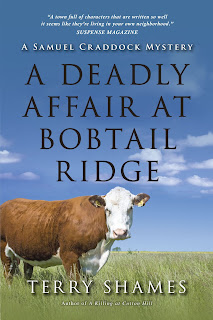 Not only had he had read my fourth book, A Deadly Affair at Bobtail Ridge, but he hated it so much that he threw it across the room! Did I weep and moan? No, I laughed, for three reasons. One, I was reading it long after it came out and he liked it. Two, I disagreed with his assessment. He said he didn’t believe such a thing could happen, and unfortunately I knew women to whom it had happened—including the woman that the story was based on.
The third reason was the biggest: I felt like I had finally joined the club of people who had gotten trashed in a professional review. It wasn’t lukewarm, or damning with faint praise, it was an out and out loathing of the book. I took it as a badge of honor. Pretty much every writer gets bad reviews at one time or other, and it’s something writers have to accept. Not everyone loves every type of book. I had finally gotten my “bad” one.
Reader-generated comments on books in Amazon and Goodreads are a whole different thing. These are much more scatter-shot. Some readers make astute comments, and some even go so far as to write, long, involved reviews that include synopses. Others are just a line or two. Sometimes you see reviews that are patently unfair—a one-star review because the book was damaged or wasn’t received on time. Or the reader expected a different kind of book, despite clear evidence of what the book was about.
I generally get good, solid, well-though-out Amazon and Goodreads reviews. But I have gotten a few funny ones. As anyone who reads my books know, I write a series set in Texas. One of my glowing reviews, “loved the book!” said the reader especially appreciated my wonderful descriptions of Oregon. Another reviewer said she couldn’t give me a 5-star review because she compared the book to all literature and it was a 3-star. If she was comparing it to all literature, I have to say I’m well-satisfied with three stars. Move over, Jane Austen! Take that, Ernest Hemingway! And then there is this one-star review: “A good read with a suspenseful plot. I would read more books by this author.” Uh, okay, but you do know that one star indicates you didn’t like the book, right?
I’ll close by saying that it’s useful for writers to get reader reviews on those sites, so if you’re reading this and have read my books, I’d appreciate a review. Even if you weren’t thrilled about it!
Not only had he had read my fourth book, A Deadly Affair at Bobtail Ridge, but he hated it so much that he threw it across the room! Did I weep and moan? No, I laughed, for three reasons. One, I was reading it long after it came out and he liked it. Two, I disagreed with his assessment. He said he didn’t believe such a thing could happen, and unfortunately I knew women to whom it had happened—including the woman that the story was based on.
The third reason was the biggest: I felt like I had finally joined the club of people who had gotten trashed in a professional review. It wasn’t lukewarm, or damning with faint praise, it was an out and out loathing of the book. I took it as a badge of honor. Pretty much every writer gets bad reviews at one time or other, and it’s something writers have to accept. Not everyone loves every type of book. I had finally gotten my “bad” one.
Reader-generated comments on books in Amazon and Goodreads are a whole different thing. These are much more scatter-shot. Some readers make astute comments, and some even go so far as to write, long, involved reviews that include synopses. Others are just a line or two. Sometimes you see reviews that are patently unfair—a one-star review because the book was damaged or wasn’t received on time. Or the reader expected a different kind of book, despite clear evidence of what the book was about.
I generally get good, solid, well-though-out Amazon and Goodreads reviews. But I have gotten a few funny ones. As anyone who reads my books know, I write a series set in Texas. One of my glowing reviews, “loved the book!” said the reader especially appreciated my wonderful descriptions of Oregon. Another reviewer said she couldn’t give me a 5-star review because she compared the book to all literature and it was a 3-star. If she was comparing it to all literature, I have to say I’m well-satisfied with three stars. Move over, Jane Austen! Take that, Ernest Hemingway! And then there is this one-star review: “A good read with a suspenseful plot. I would read more books by this author.” Uh, okay, but you do know that one star indicates you didn’t like the book, right?
I’ll close by saying that it’s useful for writers to get reader reviews on those sites, so if you’re reading this and have read my books, I’d appreciate a review. Even if you weren’t thrilled about it!

Friday, October 9, 2020
What a Long, Strange Trip It’s Been
Tell us about the first story/stories you ever wrote. First book, published or no.
by Paul D. Marks
Breaking News: Speaking of stories, and before I get back to the current question, Coast to Coast: Noir from Sea to Shining Sea, volume 3 in the Coast to Coast series of crime fiction anthologies that Andy McAleer and I co-edit dropped last week. Twelve noir stories from twelve terrific authors, with stories set throughout the US from…coast to coast. The “chronology” of the book (if that’s the right word) goes from the West Coast to the East Coast, noir all the way. The authors are: Colleen Collins, Brendan DuBois, Alison Gaylin, Tom MacDonald, Andrew McAleer, Michael Mallory, Paul D. Marks, Dennis Palumbo, Stephen D. Rogers, John Shepphird, Jaden Terrell, Dave Zeltserman. See the post I did earlier this week at SleuthSayers for more on this collection: Hope you’ll want to check it out:
 |
| Available at Amazon and Down & Out Books |
And now we return you to our regular programming already in progress: Another thing I remember is that I began by writing poems and song lyrics. I wanted to be a rock star—who didn’t? But I was always writing something.
One of my early novels—maybe my first completed novel, that’s also hard to remember—a satire about a screenwriter trying to make it in Hollywood, was almost published way back in the 80s. Almost. It was accepted for publication (if that's the right terminology) by a major publisher. But then there was a "housecleaning" at that publisher: the old team of editors and assistant editors got swept out. And the new team didn't want most of the old team's slate of projects, so I got swept out with the "new broom". So that one almost got published. But by the time it was put into “turnaround” it was too late for it as a lot of the humor was dated. Remember Fawn Hall, Jessica Hahn, Donna Rice and Gary Hart—see what I mean, dated. ’Cause even though it was about a guy trying to make it in Hollywood, it had a lot of topical and satirical humor of the day. I work on it every once in a while to remove the dated satirical elements and make it more neutral in terms of topicality. So one of these days it might see the light.
The first writing that I got paid for was a piece in one of the L.A. papers about John Lennon on, I believe, the one year anniversary of his murder. It wasn't fiction, but it felt awfully good to actually get paid for writing something. But even though it felt good to be paid, I had mixed emotions because of the subject matter. Appropriate that this should appear today as today is John Lennon's birthday.
 |
| Available on Amazon |
The title for Angels Flight was inspired by the famous funicular railway in downtown L.A. and my love for old Los Angeles. I think the story was inspired when they drained one of the lakes in L.A. and found all kinds of junk there. So in my story they drain Echo Park Lake, find a dead body and the story takes off from there. And even though it was originally published a looooooooong time ago, it's still one of my favorites. I think it's (hopefully) surprise ending brings to mind Shakespeare's quote, "There are more things in heaven and earth, Horatio, than are dreamt of in your philosophy."
 |
| Angels Flight |
After Angels Flight, I had more stories published and eventually my novel White Heat, and others. And then I happily reached one of my major short stories goals, getting published in Ellery Queen Mystery Magazine and its sister publication Alfred Hitchcock Mystery Magazine. Another thrill was to be listed on the cover of EQMM, as well as winning their Readers Award. So there’s always hope, don’t give up.
All I can do to end is quote another rock band, the Grateful Dead, "What a long strange trip it's been."
~.~.~
And now for the usual BSP:
The Blues Don't Care got a nice review from It was a Dark and Stormy Book Club.
“On one level it’s a mystery where Bobby Saxon, with secrets he wants no one to find out, works to solve a murder and clear his name under extraordinary racially tinged circumstances. With a lot of twists and turns, this is an excellent mystery. It takes place in World War II-era Los Angeles, and the author does a brilliant job that brings the long-gone era alive with memorable characters, scents, descriptions, and most of all, jazz. Highly recommended."

Buy on Amazon or Down & Out Books
***
And Tom Bergin at The Name is Archer Facebook page had this to say about Coast to Coast Noir:"This is the new book out that contains stories by Archer group members Paul D. Marks and Dennis Palumbo. There are 12 stories in all in this collection and so far I've read the stories by Paul and Dennis. They are both really good stories. Paul's story is called Nowhere Man. The story is set in Southern California and the year is 1965. The story does conjure up the Beatles song but is also a very clever nod to the 1944 movie Laura. The story by Dennis is titled Steel City Blues and is set in Pittsburgh in the year 1970. Here's the opening line of the story - I'm sitting at my usual spot on the roof, back against one of the brick smokestacks, the revolver across my upraised knees. Dennis never wastes any time getting the reader involved in his stories and Steel City Blues is no exception. Interestingly both of these stories deal with obsession. Both stories show what can happen when a man becomes obsessed with a woman. It's noir. Things don't go well. Check the book out. I have a feeling the remaining ten stories will be as good as these two."

Please join me on Facebook: www.facebook.com/paul.d.marks and check out my web site www.PaulDMarks.com
Friday, September 25, 2020
Testing one, two, three. Is this thing on?
Heard any good books lately? What are your thoughts on audiobooks?
The answer to the first question is “no”. The reason is because I don’t listen to audio books, much as I sometimes wish I did. My mind wanders too much. But when I read a paper book I don’t have that problem. I also like the heft and tactile sensation of paper books and still prefer those to e-books as well. Though I do read e-books.
Since I basically commute from the bedroom or kitchen to my home office, a distance measured in seconds rather than hours, I don’t do much reading of any kind on my commute. But if I did—and if I had a self-driving car—I’d be reading a hardcopy book or one on the Kindle app.
I don’t know why my mind wanders when simply listening, but it does. So, while I’ve tried to listen to audio books and have even completed some, mostly I don’t. I got The Girl on the Train in audio and kept losing my place so to speak. So I ended up buying the paper book and reading it with my eyes instead of my ears. And doing it that way, I got through the book and enjoyed it.
 |
| "The Girl on the Train" audiobook |
I have stacks of TBR books all over the place and a virtual stack on the Kindle app. I have some audio books around that I try to listen to now and then, but as I said, I tend to lose focus. My wife Amy reads on audio a lot—or did, before working from home during Covid, when she commuted to work on the train. However her brain is wired vs. the way mine is allows her to concentrate on audio books and her mind doesn’t seem to wander. She really enjoys her audio books and I envy her ability to do so.

Also, like Susan said earlier in the week, she was taken aback by the readings of some of her books. I haven’t had that experience, but I have had actors read scripts I’ve worked on. And sometimes it’s great and other times it’s a horror show. In those cases, I think it also depends on the director. S/he can give input into how to play a scene or a whole script. And I remember one time when the director directed the actors to play something for laughs that wasn’t at all meant that way. It was a nightmare. So it does also depend on the presentation.
 |
| Janet Hutchings, of Ellery Queen Mystery Magazine, and Paul D. Marks recording "Howling at the Moon" |
In response to the second question, I think audio books are great for people who enjoy them. I have nothing against them, they’re just (mostly) not for me. And, from what Amy says, I do think the reader has a lot to do with one’s enjoyment of them. As long as people are “reading” books, I pretty much don’t care about the medium they get them on.
 |
All that said, there is an audio recording for Ellery Queen of my story Ghosts of Bunker Hill, which won the Ellery Queen Readers’ Award for 2016. I’m not sure if it’s the best performance possible. The actor did as good a job as he could, but then he wasn’t a professional. Uh, it was me. Ellery Queen asked me to read the story for their Fiction Podcast Series. So if you want to hear Ghosts of Bunker Hill, read by the author, you can find it here: https://www.podomatic.com/podcasts/eqmm/episodes/2017-05-02T08_49_33-07_00 .

I also recorded my first story for EQMM, Howling at the Moon, for their series and you can find that one here: https://www.podomatic.com/podcasts/eqmm/episodes/2016-02-01T06_56_00-08_00 . But please remember, I’m not an actor, so don’t throw tomatoes.

So, bottom line, books and reading—in any form—are gifts that we should treasure.
~.~.~
And now for the usual BSP:Thanks to Steve Steinbock and Ellery Queen's Mystery Magazine for the review of The Blues Don’t Care in the current September/October 2020 issue just out. Four stars out of four. My first time getting reviewed in EQMM. A great honor!
And our own Cathy Ace’s The Corpse with the Crystal Skull is also reviewed in this issue.
You can find them here: https://www.elleryqueenmysterymagazine.com/current-issue/the-jury-box/

Please join me on Facebook: www.facebook.com/paul.d.marks and check out my website www.PaulDMarks.com
Click here to: Subscribe to my Newsletter
Friday, August 28, 2020
I Don’t Recommend Books…But Try These
Do you recommend books to your fans? Do you recommend books like yours, or books you enjoy? Have you noticed your book tastes changing during quarantine?
Guest Post by Jonathan Brown
I’m (Paul) taking a break today. Filling in for me is my friend Jonathan Brown. Jonathan writes the Lou Crasher series of books. He’s also the author of two historical fiction books: A Boxing Trainer’s Journey about Angelo Dundee (released 2019). Also: Character Is What Counts about Vince Lombardi (coming late 2021). And he’s currently writing a stand-alone Western about a Black wrangler falsely accused of being a horse thief. His book Don’t Shoot the Drummer drops in November 2020. He and his wife live in Los Angeles.
Take it away, Jonathan:
I Don’t Recommend Books…But Try These
I have a newsletter that I send out to those that are current, or soon to be, (hopefully) fans. In each issue I list the last three books that I’ve read. When I got into the crime writing game the books I read were primarily crime fiction. Somewhere along the way I began to miss books outside the genre. I’ve always been a variety/change-it-up guy. At first I worried about losing crime-reading fans by posting current affairs, biographies, historical books and so on.
Then I thought, ya know what? Ah, they probably don’t care. By sharing all the different things I read, well, they’re getting a clearer picture of the real me. I was especially worried about sharing the political books I read—what if my readers don’t share my political views? At that point I didn’t care because again, I is who I is. Besides, what they’d come to notice is I read left, right and center because after all, we learn by reading, listening and digesting from all sides. And for those that are curious, I’m an independent as in, independent thought. And I wish more people would exercise and implement independent thought instead of following the leader of a tribe.

And now, I step down from the soapbox. I don’t recommend books to readers, I just share what I read. Among close friends and family sure, but to strangers—who am I to recommend anything?
As far as reading habits during the pandemic I’d say my choices have certainly expanded. I always look for balance in all aspects of my life: balance in yoga poses, martial arts strikes, musical choices, shows I stream, my relationship with my wife and so on. Pre-pandemic I read mostly crime fiction. The reasons being: A. there are a ton of writers whose books I want to read. B. I interview crime writers on my blog and I have a policy of reading at least one of their books before I interview them. (jonathanbbooks.blogspot.com).
The lockdown, for me anyway, has caused me take a deeper look at the big picture. What is the (pardon the overused phrase) new normal going to look like? How are we treating each other during these stressful times? Are we wearing masks in an attempt to stay safe and protect others, or are we not buying-in, and letting the good times roll? These questions and more have raised my curiosity level, thus, I’m picking up books from all sorts of spectrums and universes.

Here’s a short journey to one of my reads. My wife and I watched Mrs. America on Hulu starring Kate Blanchett. I was particularly impressed with the character and real life activist/politician, Shirley Chisholm. I needed more Mrs. Chisholm than the show had given me. So, I hopped onto Amazon and ordered her book, Unbought & Unbossed, published in 1970. Due to COVID times and perhaps increased demand, the book took over a month to get to me. I received delay after delay emails from Amazon. Finally, the book arrived and, wow, what a powerful lady! I highly recommend this book…even though, as stated earlier, I don’t recommend books. (wink, wink).

The other two titles pictured below are books I enjoyed. Although, with Mary Trump’s book, Too Much And Never Enough, maybe the word ‘enjoyed’ isn’t the best word choice. Let’s say it was well written and incredibly…heavy! Breath was much more than just a book about, well, breath. It even got me exploring the Vim Hoff breathing method—and why not? When in quarantine: breathe, baby, breathe!
And now the slick part:
I absolutely recommend, no, require that you read Don’t Shoot The Drummer (releases date November 2020, Down And Out Books), because it’s got my name on it. O.K. That’s it. Don’t ask me for any more recommendations because it’s just not something I do. Stay safe. jonathanbrownwriter.com.

Thank you, Jonathan. And now to the usual BSP and stuff:
I want to thank Colman Keane of Col’s Criminal Library in England for this great review of The Blues Don’t Care. Here’s an excerpt and a link to the full review:
“A compelling 40s set LA murder mystery, concerning itself with questions of race and identity against the back-drop of the second World War.
I don't think I've encountered such an interesting protagonist for a long while in my reading. Bobby Saxon is a pianist trying to get a start in the music business. There's more to Bobby though than meets the eye.... he's conflicted, confused, secretive, naive, brave, talented and desperate.”
http://col2910.blogspot.com/2020/08/paul-d-marks-blues-dont-care-2020.html

Please join me on Facebook: www.facebook.com/paul.d.marks and check out my website www.PaulDMarks.com
Guest Post by Jonathan Brown
 |
| Jonathan Brown |
I’m (Paul) taking a break today. Filling in for me is my friend Jonathan Brown. Jonathan writes the Lou Crasher series of books. He’s also the author of two historical fiction books: A Boxing Trainer’s Journey about Angelo Dundee (released 2019). Also: Character Is What Counts about Vince Lombardi (coming late 2021). And he’s currently writing a stand-alone Western about a Black wrangler falsely accused of being a horse thief. His book Don’t Shoot the Drummer drops in November 2020. He and his wife live in Los Angeles.
Take it away, Jonathan:
I Don’t Recommend Books…But Try These
I have a newsletter that I send out to those that are current, or soon to be, (hopefully) fans. In each issue I list the last three books that I’ve read. When I got into the crime writing game the books I read were primarily crime fiction. Somewhere along the way I began to miss books outside the genre. I’ve always been a variety/change-it-up guy. At first I worried about losing crime-reading fans by posting current affairs, biographies, historical books and so on.
Then I thought, ya know what? Ah, they probably don’t care. By sharing all the different things I read, well, they’re getting a clearer picture of the real me. I was especially worried about sharing the political books I read—what if my readers don’t share my political views? At that point I didn’t care because again, I is who I is. Besides, what they’d come to notice is I read left, right and center because after all, we learn by reading, listening and digesting from all sides. And for those that are curious, I’m an independent as in, independent thought. And I wish more people would exercise and implement independent thought instead of following the leader of a tribe.

And now, I step down from the soapbox. I don’t recommend books to readers, I just share what I read. Among close friends and family sure, but to strangers—who am I to recommend anything?
As far as reading habits during the pandemic I’d say my choices have certainly expanded. I always look for balance in all aspects of my life: balance in yoga poses, martial arts strikes, musical choices, shows I stream, my relationship with my wife and so on. Pre-pandemic I read mostly crime fiction. The reasons being: A. there are a ton of writers whose books I want to read. B. I interview crime writers on my blog and I have a policy of reading at least one of their books before I interview them. (jonathanbbooks.blogspot.com).


The other two titles pictured below are books I enjoyed. Although, with Mary Trump’s book, Too Much And Never Enough, maybe the word ‘enjoyed’ isn’t the best word choice. Let’s say it was well written and incredibly…heavy! Breath was much more than just a book about, well, breath. It even got me exploring the Vim Hoff breathing method—and why not? When in quarantine: breathe, baby, breathe!
And now the slick part:
I absolutely recommend, no, require that you read Don’t Shoot The Drummer (releases date November 2020, Down And Out Books), because it’s got my name on it. O.K. That’s it. Don’t ask me for any more recommendations because it’s just not something I do. Stay safe. jonathanbrownwriter.com.

***
Thank you, Jonathan. And now to the usual BSP and stuff:
“A compelling 40s set LA murder mystery, concerning itself with questions of race and identity against the back-drop of the second World War.
I don't think I've encountered such an interesting protagonist for a long while in my reading. Bobby Saxon is a pianist trying to get a start in the music business. There's more to Bobby though than meets the eye.... he's conflicted, confused, secretive, naive, brave, talented and desperate.”
http://col2910.blogspot.com/2020/08/paul-d-marks-blues-dont-care-2020.html

Click here to: Subscribe to my Newsletter
Friday, August 14, 2020
All the News That Fits
Talk about newsletters. Do you or do not have one? If you do, how often do you send it out? On what venue? How did you get your newsletter list? If not, why not and how do you contact your readers instead? Are there any authors whose newsletters you think are particularly good?
by Paul D. Marks
Some people swear by newsletters. They say that’s the best tool for marketing. And I think they are a good thing. I have one called PostMarks (clever, huh). And if you’d like to sign up for it you can do it here or at the end of this post or just go to my website: www.PaulDMarks.com. There’s other “fun” stuff at my website, too, like my weird encounter with Cary Grant, my encounter with Gene Kelly and the time I pulled a gun on the cops and lived to tell about it.
I had a column in a small paper called PostMarks some time back so I stole my newsletter title from myself. But you know what they say, great artists steal, bad artists only borrow. I guess I’ll have to sue myself. Why not, it seems to be the national pastime these days.
I don’t send it out on any regular schedule. I do try to send it out about 4 to 6 times a year on average, particularly when I have something noteworthy to mention, like a new book or short story coming out. But I don’t send it out for every little thing that comes up like a new interview or guest post (like my recent post at CrimeReads).
I try to make the newsletter interesting and fun and more than just selling and BSP. It contains various sections. There’s a greeting, with a little news. Then a Current News section that talks about any new books or stories I might have coming up (or out). Sometimes it might mention interviews I’ve done or that are coming up as well. But then we get to the fun stuff. There’s a section on La La Land (Los Angeles). Anyone who follows me on Facebook knows I post a lot of pictures and articles about L.A. and in my newsletter I talk about various aspects of L.A. history. Often the topics are tied into L.A. locations in a novel or story of mine, so there’s sometimes that link. But sometimes they’re not related to my work. L.A. history is fun. In one of the recent newsletters, before The Blues Don’t Care came out, I talked about the gambling ships that used to lay off the Los Angeles coastline, just outside the 3 mile legal limit because some of the action in Blues takes place on one of those ships. From the feedback I got people found that fun and interesting.
Then, there’s often a section called Noirville, which can deal with noir aspects of my writing or just noir in general, maybe a little talk about a film noir that I like. In one of the recent newsletters I talk about the Nat King Cole song The Blues Don’t Care, from which I borrowed the title of the book and ask the question “can a song be noir”? There’s also a What’s Next section, which should be obvious as to what it’s about. And the penultimate section is usually Dog Tails where I talk about whatever critters (not necessarily just dogs) we have at the time and post pictures of them. And then The End of the Line, a farewell. Of course, there’s also ways to get my books, links to Amazon and also to my social media. So it’s a full deal. Doing the newsletter can be a little labor intensive, but it’s also fun.
Here’s a link to one of my recent newsletters if you’re interested: June 2020 PostMarks.
The venue I use is MailChimp. There might be other places out there. I’m not really familiar with all of them. And I don’t really remember why we chose to go with MailChimp. Maybe ’cause my wife likes the chimp logo. And I do like MailChimp. It’s fairly simple to use and it’s free if your list is under 2,000 people.

As to how I got the list of names, there’s various ways. When I meet someone I often ask if they’d like to sign up for it, I mention it when I’m speaking. And in the days when we did live events (remember those days?) I bring a clipboard with my newsletter signup sheet. I’ll just ask people if it’s okay for me to sign them up. And I let them know I won’t bother them too often, just a few times a year. No one wants to be bombarded with 20 emails a month.
I also recently added a popup to my website so that if people subscribe to my newsletter they can download a free copy of my novella Vortex. Unfortunately, it hasn’t really increased my subscriptions, but it was worth a try.
One of the questions above is, “If not, why not and how do you contact your readers instead?” Well, even though I do a newsletter it’s not the only way I stay in touch, of course. I have my website. I blog here and at SleuthSayers. I get interviewed in print or on radio or podcasts. I do events, though these days they’re all virtual on Zoom or Skype, etc. I did the book launch for The Blues Don’t Care on Facebook, and it was more successful than I’d imagined. There’s a whole host of ways to contact people and stay in touch and get the word out, including: Facebook, Twitter, Instagram and a host of others, but you have to limit yourself or all you’ll be doing is social media.
So, like with anything, newsletters have their pluses and minuses, but overall I think they’re a good way to stay in touch with friends and fans (I have 3.2 of the latter).
And now for the usual BSP:
I want to thank Living My Best Book Life for this great review of The Blues Don’t Care. Here’s an excerpt and a link to the full review.
“𝐓𝐡𝐞 𝐁𝐥𝐮𝐞𝐬 𝐃𝐨𝐧'𝐭 𝐂𝐚𝐫𝐞 by @pauldmarks is a mysterious historical fiction set in the WWII time period. It tackles topics like corruption, racism, and many others that we are still facing today. I was taken aback by Paul D. Marks's talented writing style. This story is powerful and Paul did a wonderful job developing his main character, Bobby Saxon...
…I was captivated from the very start. This author tackled so many subjects that few care to bring up. The detail of the story gave me an insight on all the injustices in the 1940's. I appreciated the heart of the story; a person chasing their dream and never looking back. Bobby Saxon is a well-developed character that was able to learn, grow, and hone in on his craft. There is a main secret of Bobby's that I didn't see coming. This is such a fascinating historical fiction that I thoroughly enjoyed!”
https://www.instagram.com/p/CC3_3gxAZq6/
by Paul D. Marks
Some people swear by newsletters. They say that’s the best tool for marketing. And I think they are a good thing. I have one called PostMarks (clever, huh). And if you’d like to sign up for it you can do it here or at the end of this post or just go to my website: www.PaulDMarks.com. There’s other “fun” stuff at my website, too, like my weird encounter with Cary Grant, my encounter with Gene Kelly and the time I pulled a gun on the cops and lived to tell about it.
 |
| My newsletter logo. |
I had a column in a small paper called PostMarks some time back so I stole my newsletter title from myself. But you know what they say, great artists steal, bad artists only borrow. I guess I’ll have to sue myself. Why not, it seems to be the national pastime these days.
I don’t send it out on any regular schedule. I do try to send it out about 4 to 6 times a year on average, particularly when I have something noteworthy to mention, like a new book or short story coming out. But I don’t send it out for every little thing that comes up like a new interview or guest post (like my recent post at CrimeReads).
I try to make the newsletter interesting and fun and more than just selling and BSP. It contains various sections. There’s a greeting, with a little news. Then a Current News section that talks about any new books or stories I might have coming up (or out). Sometimes it might mention interviews I’ve done or that are coming up as well. But then we get to the fun stuff. There’s a section on La La Land (Los Angeles). Anyone who follows me on Facebook knows I post a lot of pictures and articles about L.A. and in my newsletter I talk about various aspects of L.A. history. Often the topics are tied into L.A. locations in a novel or story of mine, so there’s sometimes that link. But sometimes they’re not related to my work. L.A. history is fun. In one of the recent newsletters, before The Blues Don’t Care came out, I talked about the gambling ships that used to lay off the Los Angeles coastline, just outside the 3 mile legal limit because some of the action in Blues takes place on one of those ships. From the feedback I got people found that fun and interesting.
 |
| An excerpt from my newsletter |
Then, there’s often a section called Noirville, which can deal with noir aspects of my writing or just noir in general, maybe a little talk about a film noir that I like. In one of the recent newsletters I talk about the Nat King Cole song The Blues Don’t Care, from which I borrowed the title of the book and ask the question “can a song be noir”? There’s also a What’s Next section, which should be obvious as to what it’s about. And the penultimate section is usually Dog Tails where I talk about whatever critters (not necessarily just dogs) we have at the time and post pictures of them. And then The End of the Line, a farewell. Of course, there’s also ways to get my books, links to Amazon and also to my social media. So it’s a full deal. Doing the newsletter can be a little labor intensive, but it’s also fun.
Here’s a link to one of my recent newsletters if you’re interested: June 2020 PostMarks.
 |
| Dog Tails :-) |
The venue I use is MailChimp. There might be other places out there. I’m not really familiar with all of them. And I don’t really remember why we chose to go with MailChimp. Maybe ’cause my wife likes the chimp logo. And I do like MailChimp. It’s fairly simple to use and it’s free if your list is under 2,000 people.
As to how I got the list of names, there’s various ways. When I meet someone I often ask if they’d like to sign up for it, I mention it when I’m speaking. And in the days when we did live events (remember those days?) I bring a clipboard with my newsletter signup sheet. I’ll just ask people if it’s okay for me to sign them up. And I let them know I won’t bother them too often, just a few times a year. No one wants to be bombarded with 20 emails a month.
I also recently added a popup to my website so that if people subscribe to my newsletter they can download a free copy of my novella Vortex. Unfortunately, it hasn’t really increased my subscriptions, but it was worth a try.
One of the questions above is, “If not, why not and how do you contact your readers instead?” Well, even though I do a newsletter it’s not the only way I stay in touch, of course. I have my website. I blog here and at SleuthSayers. I get interviewed in print or on radio or podcasts. I do events, though these days they’re all virtual on Zoom or Skype, etc. I did the book launch for The Blues Don’t Care on Facebook, and it was more successful than I’d imagined. There’s a whole host of ways to contact people and stay in touch and get the word out, including: Facebook, Twitter, Instagram and a host of others, but you have to limit yourself or all you’ll be doing is social media.
So, like with anything, newsletters have their pluses and minuses, but overall I think they’re a good way to stay in touch with friends and fans (I have 3.2 of the latter).
~.~.~
And now for the usual BSP:
I want to thank Living My Best Book Life for this great review of The Blues Don’t Care. Here’s an excerpt and a link to the full review.
“𝐓𝐡𝐞 𝐁𝐥𝐮𝐞𝐬 𝐃𝐨𝐧'𝐭 𝐂𝐚𝐫𝐞 by @pauldmarks is a mysterious historical fiction set in the WWII time period. It tackles topics like corruption, racism, and many others that we are still facing today. I was taken aback by Paul D. Marks's talented writing style. This story is powerful and Paul did a wonderful job developing his main character, Bobby Saxon...
…I was captivated from the very start. This author tackled so many subjects that few care to bring up. The detail of the story gave me an insight on all the injustices in the 1940's. I appreciated the heart of the story; a person chasing their dream and never looking back. Bobby Saxon is a well-developed character that was able to learn, grow, and hone in on his craft. There is a main secret of Bobby's that I didn't see coming. This is such a fascinating historical fiction that I thoroughly enjoyed!”
https://www.instagram.com/p/CC3_3gxAZq6/
Please join me on Facebook: www.facebook.com/paul.d.marks and check out my website www.PaulDMarks.com
Click here to: Subscribe to my Newsletter
Friday, July 17, 2020
I’ll Show You Mine If You Show Me Yours
Lately, some authors on social media are saying that it’s time authors shared details about their book contracts and income to break open the financial secrecy inherent in this business. Do you agree or disagree with this idea?
by Paul D. Marks

That’s an interesting question. And since I was just going over a contract yesterday it’s definitely timely. As I was going over the contract I was thinking, hmm, I wonder if this jibes with other people’s contracts. Do they have the same terms? Better? Worse?
Of course, if I go there, if I want to see their contracts then they would want to see mine. And do I really want them seeing mine? Whether my terms are better or worse than someone else’s, do I want them to know my personal business?
When I was a kid—and maybe it’s still a thing today—people would gauchely ask how much someone made. And the usual response was “we’re comfortable.” The reason people gave that response, I think, was to deflect from the real and specific answer to that question. People don’t like talking about their finances.
I know that Louise Penny and John Grisham make a HELL of a lot more money than I do as a writer. But I don’t know exactly how much more and I don’t really care to know. I also don’t know the other details of their contracts, but I can certainly imagine they have better terms than I do in a variety of ways.
If someone has a better deal maybe I’d be envious (and isn’t envy one of the seven deadly sins?). But it’s up to me or my representatives to negotiate the best deal I can. What if we knew John Doe’s terms? Does that mean we would or should get the same as him? Maybe Doe sells better, maybe he’s been around longer, maybe he has better reviews, awards, whatever? This isn’t like working at McDonald’s where you start at minimum wage and work your way up a pretty standard set of rate increases. There’s no standard formula. Plus a small indie publishing company certainly can’t compete with Random House. So, if you’re with magazine or book publisher A, who pays X dollars, but they’re a big publisher, and I’m with small publisher B, who pays Y dollars, how can I expect the same remuneration?
I think one of the reasons people want this is maybe to standardize contracts. But I don’t see how we can standardize rates. In Hollywood, if one is a member of the WGA, there is a rate structure, scale. But once you reach a certain level you work above the minimums. Do you think a William Goldman (before he died) or a Robert Towne make the same as a novice or journeyman screenwriter? Should they? I’m also not sure how it could practically be applied to fiction writing. Let’s take short stories, Ellery Queen and Alfred Hitchcock pay by the word, other magazines have a standard set fee and still others don’t pay anything at all. Or you might get a contributor’s copy and maybe royalties, assuming the book makes money, which often isn’t the case. Some small book publishers don’t give advances. Many of them are hanging on by a thread. So what good would it do to see their contracts? If you don’t like a publisher’s offer go somewhere else. And you can always hope for a better deal down the road with your current publisher or another one.
Would I like to make more money from my writing? Of course. That said, we all have different goals. Sometimes there’s things that are more important than actual money amounts, like being with a publisher that can get you exposure or will promote your work more (which hopefully in turn would mean more royalties). Sometimes we might be willing to sacrifice money for that extra reach. Or you might want more up-front money where another writer may not care as much about that as something else. We’re all different and want different things, so to compare contracts is like comparing the proverbial apples and oranges. And again will only create envy. There’s a Law & Order episode where (and I’m trying to remember the details but it’s been a while so I’m making up these numbers but you’ll get the idea) the cops are investigating a murder (so what else is new?). They’re talking to various people in a company about how much each received as a bonus. And each one thinks they maxed out. The guy who got 500K thinks he got the top deal and so does the guy who got 50 or 90K (whatever it was). But if they knew the truth that would only create tension in the company and then there’d likely be more dead bodies for the cops to investigate 😉. So nobody shares that info. The same would happen with authors. Well, maybe not more dead bodies (except hopefully on the page) but more tension.

I’ve given people general advice about certain things to look for in contracts and rights they might want to retain and things along those lines. But I never tell people about my contract specifics. And I don’t want to know theirs. There are places to find variations on standard contracts and I suggest you look them up. See what contracts look like. See what you can negotiate in or out of a publisher’s standard contract. There are some things they’ll give you and some they won’t. So you have to compromise, you have to decide which hill/s you’re willing to die on. If the terms are too onerous go to another publisher. But you need to take responsibility and do some homework and make the best deal you can. Even Brian Epstein didn’t get the Beatles the best contract in the early days and somehow they seemed to do okay in the long run.
Just negotiate the best contract you can, whether you do it yourself or have a lawyer or agent do it. And contracts are about more than just money. They’re about certain rights that you might want to retain, as well as other things. So ultimately I don’t want my personal details revealed nor do I want to know yours.
And now for the usual BSP:
“While The Blues Don't Care is a complex, sometimes brutal, story, it also has its glimmers of beauty and joy. Those glimpses come from Bobby's passion for music, and his awe when he sees celebrities such as Clark Gable and Billie Holiday. Wander into Bobby Saxon's world in Paul D. Marks' latest book. It's a world you won't easily forget.”
—Lesa’s Book Critiques
 Please join me on Facebook: www.facebook.com/paul.d.marks and check out my website www.PaulDMarks.com
by Paul D. Marks

That’s an interesting question. And since I was just going over a contract yesterday it’s definitely timely. As I was going over the contract I was thinking, hmm, I wonder if this jibes with other people’s contracts. Do they have the same terms? Better? Worse?
Of course, if I go there, if I want to see their contracts then they would want to see mine. And do I really want them seeing mine? Whether my terms are better or worse than someone else’s, do I want them to know my personal business?
When I was a kid—and maybe it’s still a thing today—people would gauchely ask how much someone made. And the usual response was “we’re comfortable.” The reason people gave that response, I think, was to deflect from the real and specific answer to that question. People don’t like talking about their finances.
I know that Louise Penny and John Grisham make a HELL of a lot more money than I do as a writer. But I don’t know exactly how much more and I don’t really care to know. I also don’t know the other details of their contracts, but I can certainly imagine they have better terms than I do in a variety of ways.
 |
| Louise Penny |
 |
| John Grisham |
 |
| William Goldman |
Would I like to make more money from my writing? Of course. That said, we all have different goals. Sometimes there’s things that are more important than actual money amounts, like being with a publisher that can get you exposure or will promote your work more (which hopefully in turn would mean more royalties). Sometimes we might be willing to sacrifice money for that extra reach. Or you might want more up-front money where another writer may not care as much about that as something else. We’re all different and want different things, so to compare contracts is like comparing the proverbial apples and oranges. And again will only create envy. There’s a Law & Order episode where (and I’m trying to remember the details but it’s been a while so I’m making up these numbers but you’ll get the idea) the cops are investigating a murder (so what else is new?). They’re talking to various people in a company about how much each received as a bonus. And each one thinks they maxed out. The guy who got 500K thinks he got the top deal and so does the guy who got 50 or 90K (whatever it was). But if they knew the truth that would only create tension in the company and then there’d likely be more dead bodies for the cops to investigate 😉. So nobody shares that info. The same would happen with authors. Well, maybe not more dead bodies (except hopefully on the page) but more tension.

I’ve given people general advice about certain things to look for in contracts and rights they might want to retain and things along those lines. But I never tell people about my contract specifics. And I don’t want to know theirs. There are places to find variations on standard contracts and I suggest you look them up. See what contracts look like. See what you can negotiate in or out of a publisher’s standard contract. There are some things they’ll give you and some they won’t. So you have to compromise, you have to decide which hill/s you’re willing to die on. If the terms are too onerous go to another publisher. But you need to take responsibility and do some homework and make the best deal you can. Even Brian Epstein didn’t get the Beatles the best contract in the early days and somehow they seemed to do okay in the long run.
Just negotiate the best contract you can, whether you do it yourself or have a lawyer or agent do it. And contracts are about more than just money. They’re about certain rights that you might want to retain, as well as other things. So ultimately I don’t want my personal details revealed nor do I want to know yours.
~.~.~
And now for the usual BSP:
“While The Blues Don't Care is a complex, sometimes brutal, story, it also has its glimmers of beauty and joy. Those glimpses come from Bobby's passion for music, and his awe when he sees celebrities such as Clark Gable and Billie Holiday. Wander into Bobby Saxon's world in Paul D. Marks' latest book. It's a world you won't easily forget.”
—Lesa’s Book Critiques
Click here to: Subscribe to my Newsletter
Friday, June 19, 2020
Who's Hiding Behind Your Characters?
Do you ever base characters on real people? Famous or people you know in your real life. And, if so, how do you deal with that?
by Paul D. Marks
This is sort of a two part question. First there’s the question of basing characters on people that you know. Then there’s the question of basing them on celebrities or historical figures. I do both.
A lot of my characters are based on people I know —including on myself. I think there’s a little piece of me in all of them. Or sometimes a bigger piece. But when I do base them on people I know or who I’ve come across they’re usually composites of multiple people. So far no one’s come up to me —probably because the people I know don’t read my books, just kidding —and wanted to bop me on the head for a portrayal. Most people see the good and the heroic in a character in themselves. They don’t see the bad.
Villains are often based on people I’ve come across one way or another. At least certain traits of theirs. But I don’t want to make them exactly like the real person for obvious reasons.
In my just released novel The Blues Don’t Care, the main character, Bobby, is loosely inspired by a real person. But that person didn’t become a detective in any way, at least to my knowledge. There are other characters in the book also inspired by real people. Tony Leach, the gangster who runs the gambling ship off the L.A. coast, is sort of a combination of infamous L.A. gangster Mickey Cohen and Tony Cornero, the guy who ran the real gambling ships off the coast. But probably a little kinder and gentler than either, though still a gangster under his fancy suits. Cary Grant’s real name was Archie Leach and the gangster’s last name was chosen because of that, so he has a little of Cary in there too. (See my website for my close encounter with Cary Grant.) Bobby’s tough guy pal, Sam Wilde, is based on some people I knew, though I knew them in contemporary times but set their character traits in the 1940s of the story. And there’s a character in The Blues Don’t Care, Mary Cooper, named after a girl I knew a long, long time ago. I’m sure she hasn’t thought of me in ages. But she crosses my mind every once in a while and since she’s a benign character in a small part I used her name. Others in that story are also composites of real people.
In Broken Windows, the second in my Duke Rogers series after White Heat, there’s a producer character named Joseph Hartman who, if you call him Joe the thunder will reign down. He is definitely patterned after a real person —or at least that affectation is patterned on a real producer. Though I think when I’ve mentioned him before I conflated him with another famous person who hung up on someone for calling them by their first name.

I sometimes pepper real people into a story because it hopefully gives the reader a sense of verisimilitude (one of my favorite words) —a sense that the world the characters inhabit is a real world with people they know and landmarks they might have heard of. But you have to use the people in small cameos and not show them in a bad light unless there’s something demonstrably provable that they did that you want to include. They might get only cameo parts but it gives the story a feeling of being set in the real world. For example, in Blues Don’t Care Bobby runs across Gable at the zigzag moderne Sunset Tower Hotel and Louis B. Mayer at the Coconut Grove, as well as others in various situations. The book is, after all, set in Los Angeles and seeing movie stars from time to time is part of the L.A. experience:
Someone bumped into Bobby.
“Excuse me,” the man said in a familiar voice.
Bobby was too flustered to respond to Clark Gable, as the King of Hollywood walked past. Bobby went to the front desk.
“May I help you?” the clerk asked.
“I’d like to see Tony Leach.” The words stumbled out. Bobby hoped his nervousness didn’t show. He’d heard that Leach lived here. Bugsy Siegel too, as well as several movie stars off and on. Infamous gossip columnist Hedda Hopper had said so.
“Can you just call up and tell him Bobby Saxon, from the ship’s band, is here.”
“You play in a band on his ship? I’m afraid he’s too busy for—”
And in Broken Windows, Duke, the main character, goes to a producer’s house above Sunset Boulevard. He finds two Jags in the driveway and expensive art in the house. The character who lives in the house is the Joseph Hartman character mentioned above. But in real life the producer who lived there was another person. And in real life, though he lived in the lap of luxury he wanted me to work for free.
And then there was the time that I based a character on another producer—a major ass—in a script I was rewriting…for him. He never made the connection. And I’m not telling what it was.
The character of Warren in White Heat is based on a friend of mine, though someone who isn’t as angry as Warren.
So, yes, I base characters on people I know or have come across. Which is a good way to have more realistic, well defined characters ’cause you have real life experience in how someone acts.
Everyone I come across is fodder, the way they look, the way they talk. Their character, etc. Not just people I know, but people I may cross paths with for only a few seconds or a few hours. A clerk, someone on a street corner. Someone in a bar. It’s like we costume our characters, disguise them and send them out into the world incognito.
The first novel I wrote, about a screenwriter trying to make it in Hollywood, was basically a roman a clef. All the characters were based on people I knew, some very well known, others obscure and struggling, including little ol’ me.

So, not only do I base characters on family and friends, but on people I dislike, too, enemies. And isn’t that fun? We get our little revenges against people who’ve wronged us and, as long as we disguise them somewhat, we get away with it. What’s better than that? Sometimes just naming the bad guy after someone can be a satisfying way to get back at someone who wronged us.
So, yes, everything, everyone, is fodder. So be nice or reach a gruesome death…at least on paper.
What about you? Tell us about how you base characters on people you know.
And now for the usual BSP:
The Blues Don't Care is getting some great reviews:
"It’s the first entry in what promises to be an entertaining and thoughtful series --- mysteries that not only have the requisite twists, turns, surprises and reveals, but also offer a penetrating look into our ubiquitous all-too-human flaws: greed, corruption, fear of the “other” and, especially, racism."
—Jack Kramer, BookReporter.com
"This is a beautifully noirish book, set firmly in the dark days of wartime and offering a sharp insight into the life and times of Los Angeles, 1940s style. Yes, it’s a mystery thriller, but The Blues Don’t Care is so much more than that, with historic detail, chutzpah, a cast of hugely entertaining characters, a really unusual protagonist and, best of all, a cracking soundtrack too."
—DeathBecomesHer, CrimeFictionLover.com

by Paul D. Marks
This is sort of a two part question. First there’s the question of basing characters on people that you know. Then there’s the question of basing them on celebrities or historical figures. I do both.
A lot of my characters are based on people I know —including on myself. I think there’s a little piece of me in all of them. Or sometimes a bigger piece. But when I do base them on people I know or who I’ve come across they’re usually composites of multiple people. So far no one’s come up to me —probably because the people I know don’t read my books, just kidding —and wanted to bop me on the head for a portrayal. Most people see the good and the heroic in a character in themselves. They don’t see the bad.
Villains are often based on people I’ve come across one way or another. At least certain traits of theirs. But I don’t want to make them exactly like the real person for obvious reasons.
 |
| Just released 6/1/20 |
I sometimes pepper real people into a story because it hopefully gives the reader a sense of verisimilitude (one of my favorite words) —a sense that the world the characters inhabit is a real world with people they know and landmarks they might have heard of. But you have to use the people in small cameos and not show them in a bad light unless there’s something demonstrably provable that they did that you want to include. They might get only cameo parts but it gives the story a feeling of being set in the real world. For example, in Blues Don’t Care Bobby runs across Gable at the zigzag moderne Sunset Tower Hotel and Louis B. Mayer at the Coconut Grove, as well as others in various situations. The book is, after all, set in Los Angeles and seeing movie stars from time to time is part of the L.A. experience:
Someone bumped into Bobby.
“Excuse me,” the man said in a familiar voice.
Bobby was too flustered to respond to Clark Gable, as the King of Hollywood walked past. Bobby went to the front desk.
“May I help you?” the clerk asked.
“I’d like to see Tony Leach.” The words stumbled out. Bobby hoped his nervousness didn’t show. He’d heard that Leach lived here. Bugsy Siegel too, as well as several movie stars off and on. Infamous gossip columnist Hedda Hopper had said so.
“Can you just call up and tell him Bobby Saxon, from the ship’s band, is here.”
“You play in a band on his ship? I’m afraid he’s too busy for—”
And in Broken Windows, Duke, the main character, goes to a producer’s house above Sunset Boulevard. He finds two Jags in the driveway and expensive art in the house. The character who lives in the house is the Joseph Hartman character mentioned above. But in real life the producer who lived there was another person. And in real life, though he lived in the lap of luxury he wanted me to work for free.
And then there was the time that I based a character on another producer—a major ass—in a script I was rewriting…for him. He never made the connection. And I’m not telling what it was.
The character of Warren in White Heat is based on a friend of mine, though someone who isn’t as angry as Warren.
 |
| Duke Rogers series |
So, yes, I base characters on people I know or have come across. Which is a good way to have more realistic, well defined characters ’cause you have real life experience in how someone acts.
Everyone I come across is fodder, the way they look, the way they talk. Their character, etc. Not just people I know, but people I may cross paths with for only a few seconds or a few hours. A clerk, someone on a street corner. Someone in a bar. It’s like we costume our characters, disguise them and send them out into the world incognito.
The first novel I wrote, about a screenwriter trying to make it in Hollywood, was basically a roman a clef. All the characters were based on people I knew, some very well known, others obscure and struggling, including little ol’ me.
So, not only do I base characters on family and friends, but on people I dislike, too, enemies. And isn’t that fun? We get our little revenges against people who’ve wronged us and, as long as we disguise them somewhat, we get away with it. What’s better than that? Sometimes just naming the bad guy after someone can be a satisfying way to get back at someone who wronged us.
So, yes, everything, everyone, is fodder. So be nice or reach a gruesome death…at least on paper.
What about you? Tell us about how you base characters on people you know.
~.~.~
And now for the usual BSP:
The Blues Don't Care is getting some great reviews:
"It’s the first entry in what promises to be an entertaining and thoughtful series --- mysteries that not only have the requisite twists, turns, surprises and reveals, but also offer a penetrating look into our ubiquitous all-too-human flaws: greed, corruption, fear of the “other” and, especially, racism."
—Jack Kramer, BookReporter.com
"This is a beautifully noirish book, set firmly in the dark days of wartime and offering a sharp insight into the life and times of Los Angeles, 1940s style. Yes, it’s a mystery thriller, but The Blues Don’t Care is so much more than that, with historic detail, chutzpah, a cast of hugely entertaining characters, a really unusual protagonist and, best of all, a cracking soundtrack too."
—DeathBecomesHer, CrimeFictionLover.com

Please join me on Facebook: www.facebook.com/paul.d.marks and check out my website www.PaulDMarks.com
Click here to: Subscribe to my Newsletter
Friday, June 5, 2020
The Hard Way – Keeping a Series Bible...Or Not
Do you keep a “bible” for your series characters and stories? If so, what does it look like? What does it contain? Do you use a specific program or just Word or Excel files? What do you put in it, how detailed are you?
by Paul D. Marks
I wish!

If I did it would make life so much easier. But why would I want anything to be easier? Why do anything the easy way when you can with even more ease do it the hard way?
I have good intentions to do bibles for all my work. But just like New Year’s resolutions, which start out bright and shiny and perky on January 1st, by the end of January—or sooner, much sooner—they’ve mostly fallen by the wayside.
I’ve tried keeping bibles for various things, such as my Howard Hamm series of short stories that’s been published in Ellery Queen Mystery Magazine. I have a couple of different Word files with various categories, everything from what furniture is in his house, and the layout of the house, to what gun he carries. I also started an Excel file. I made a chart in Word, distinct from the above-mentioned Word files. The problem is I don’t keep them up—any of them. I put a few things down then abandon the file, every time. So when it comes to the next story I have to go back to the earlier ones to see if X did or where Y lives, etc. And some readers remember those things a lot better than I do…
The problem is if you try doing a bible while you’re working on a project it slows or even stops the forward momentum. And you can’t stop writing, especially if you’re on a streak, to put X in the X bible category and Y in the Y category. If you do you might break your streak or forget where you were going, etc. So is it worth it to stop along the way?
And then, at the end of the writing day, when you could go fill in those blanks, well, who wants to do that? I’d rather be walking Buster.
That said, I’m working on the third in the series of Duke Rogers novels (White Heat, Broken Windows) and finding it frustrating to have to go back and look things up in the earlier books. You think you’ll remember everything but it’s really hard, especially when you’re working on multiple things at one time or have multiple series going.
It can be hard to remember what kind of gun X uses, what car Y drives, color, year—and that can change within a story, as where someone’s car gets blown up like Duke’s beloved Firebird in White Heat. So what’s he driving now? What cigs does Bobby in The Blues Don’t Care smoke? Viceroys. And Booker smokes Lucky Strikes. But I have to remember not to mix them up—which I did in the first draft of this post until I went and looked in the novel to verify. And Bobby drinks Bubble Up. What music does this character like as opposed to that one? Where does so and so live? If I describe his house/apartment this way have I messed up cause before it was that way? You can get mixed up.
Then there’s character arcs and relationships among characters—relationships that change. So am I picking up where I left off with that relationship? Timelines—same thing. And backstory. Habits, mannerisms, likes, dislikes. Physical details. Oh, how I wish I had a bible for these things.
When I started out I created forms (which if I can find any, since they’re from the old typewriter days, I’ll post here), some for characters and their backgrounds and descriptions. What they eat, music they like, etc. Some forms for rooms and how they looked. But I don’t do that anymore. I’m in too much of a rush. Too many things to work on—though that’s sort of penny-wise and pound foolish ’cause it would ultimately be easier to just look on a form or computer file. Now I mostly keep it in my head and often have to go back to previous stories in the series to get the details.
I write a lot my first drafts in screenplay format. And the script program generates lists of characters, locations, etc., that I sometimes transfer to Word when I begin working in it. That can be helpful, but becomes incomplete as I add or change characters in the Word version. And it’s also basically for a single story and doesn’t really act as a bible across several stories with the same character/s.
I believe Scrivener has a bible function. And I have a copy of Scrivener that I bought years ago. But the learning curve was so steep I gave up on it.
I keep thinking I should hire someone to do this, to make bibles for my various series. Easy job, you can work from home in your spare time—you know like those old ads at the back of magazines: Make Money Growing Mushrooms in Your Basement in Your Spare Time. Perfect for lockdown. Lousy pay. But if anyone’s interested…
And now for the usual BSP:
The Blues Don't Care released on June 1st. I had my first virtual book launch party on Facebook and despite not really knowing what I was doing, it turned out pretty good. I want to thank everyone who came and everyone who bought the book. As usual, Buster seemed to get the most likes.

The Blues Don't Care was reviewed on DiscoveringDiamonds.com and is short listed for their "Book of the Month."
"This story was a breath of fresh air, set in a familiar period, thanks to Sunday afternoon TV movies. Which means the author had to get his world-building right. The good news is - he did, and did it very well indeed."

I was also interviewed by Nancie Clare on her Speaking of Mysteries Podcast. You can check it out here.
And I did a Guest Blog on Stacey Alesi's BookBitch.com where I talk about how important conflict is in creating characters. I hope you'll check it out here.
by Paul D. Marks
I wish!

If I did it would make life so much easier. But why would I want anything to be easier? Why do anything the easy way when you can with even more ease do it the hard way?
I have good intentions to do bibles for all my work. But just like New Year’s resolutions, which start out bright and shiny and perky on January 1st, by the end of January—or sooner, much sooner—they’ve mostly fallen by the wayside.
I’ve tried keeping bibles for various things, such as my Howard Hamm series of short stories that’s been published in Ellery Queen Mystery Magazine. I have a couple of different Word files with various categories, everything from what furniture is in his house, and the layout of the house, to what gun he carries. I also started an Excel file. I made a chart in Word, distinct from the above-mentioned Word files. The problem is I don’t keep them up—any of them. I put a few things down then abandon the file, every time. So when it comes to the next story I have to go back to the earlier ones to see if X did or where Y lives, etc. And some readers remember those things a lot better than I do…
The problem is if you try doing a bible while you’re working on a project it slows or even stops the forward momentum. And you can’t stop writing, especially if you’re on a streak, to put X in the X bible category and Y in the Y category. If you do you might break your streak or forget where you were going, etc. So is it worth it to stop along the way?
And then, at the end of the writing day, when you could go fill in those blanks, well, who wants to do that? I’d rather be walking Buster.
That said, I’m working on the third in the series of Duke Rogers novels (White Heat, Broken Windows) and finding it frustrating to have to go back and look things up in the earlier books. You think you’ll remember everything but it’s really hard, especially when you’re working on multiple things at one time or have multiple series going.
 |
| I haven't read this book, but it looks like it might be good resource |
It can be hard to remember what kind of gun X uses, what car Y drives, color, year—and that can change within a story, as where someone’s car gets blown up like Duke’s beloved Firebird in White Heat. So what’s he driving now? What cigs does Bobby in The Blues Don’t Care smoke? Viceroys. And Booker smokes Lucky Strikes. But I have to remember not to mix them up—which I did in the first draft of this post until I went and looked in the novel to verify. And Bobby drinks Bubble Up. What music does this character like as opposed to that one? Where does so and so live? If I describe his house/apartment this way have I messed up cause before it was that way? You can get mixed up.
Then there’s character arcs and relationships among characters—relationships that change. So am I picking up where I left off with that relationship? Timelines—same thing. And backstory. Habits, mannerisms, likes, dislikes. Physical details. Oh, how I wish I had a bible for these things.
When I started out I created forms (which if I can find any, since they’re from the old typewriter days, I’ll post here), some for characters and their backgrounds and descriptions. What they eat, music they like, etc. Some forms for rooms and how they looked. But I don’t do that anymore. I’m in too much of a rush. Too many things to work on—though that’s sort of penny-wise and pound foolish ’cause it would ultimately be easier to just look on a form or computer file. Now I mostly keep it in my head and often have to go back to previous stories in the series to get the details.
 |
| A sample character development worksheet |
I believe Scrivener has a bible function. And I have a copy of Scrivener that I bought years ago. But the learning curve was so steep I gave up on it.
I keep thinking I should hire someone to do this, to make bibles for my various series. Easy job, you can work from home in your spare time—you know like those old ads at the back of magazines: Make Money Growing Mushrooms in Your Basement in Your Spare Time. Perfect for lockdown. Lousy pay. But if anyone’s interested…
~.~.~
And now for the usual BSP:
The Blues Don't Care released on June 1st. I had my first virtual book launch party on Facebook and despite not really knowing what I was doing, it turned out pretty good. I want to thank everyone who came and everyone who bought the book. As usual, Buster seemed to get the most likes.

The Blues Don't Care was reviewed on DiscoveringDiamonds.com and is short listed for their "Book of the Month."
"This story was a breath of fresh air, set in a familiar period, thanks to Sunday afternoon TV movies. Which means the author had to get his world-building right. The good news is - he did, and did it very well indeed."
I was also interviewed by Nancie Clare on her Speaking of Mysteries Podcast. You can check it out here.
And I did a Guest Blog on Stacey Alesi's BookBitch.com where I talk about how important conflict is in creating characters. I hope you'll check it out here.
Please join me on Facebook: www.facebook.com/paul.d.marks and check out my website www.PaulDMarks.com
Click here to: Subscribe to my Newsletter
Friday, May 8, 2020
Butcher, Baker, Troublemaker
Most of us - most writers everywhere - do something else first, or do something else alongside. What bits of your other career(s) have you found useful in the business of writing and what bits have you had to ditch?
by Paul D. Marks

Generally, I don’t like to talk about most of my checkered past. Nothing illegal or anything like that, just checkered. Maybe Chancellor of the Exchequer (or should that be Chancellor of the Excheckered?). But if it’s the “ex” chequer wouldn’t that make one the Ex Chancellor of the Chequer? But I digress.
I did a lot of things before my vaunted prose writing career. Juggler. Trapeze artist. Tail gunner in a B-17. Gumshoe. Well, the only one of those that even comes close to true is gumshoe and that’s only because I’ve had gum on my shoe…more than once even.
As you’ll see below (and above, too), I think this Covid-19 House Arrest is getting to me. I think virtually all of our experiences, good or bad, come into play in our writing one way or another. I’ve done a lot of things, written for radio, rewrites for films, made deliveries for a small business, worked in the mail room for a big company, pulled a gun on the LAPD and lived to tell about it (see the "about" section on my website for an abbreviated version of that story) and other things. But many things that play into my writing aren’t necessarily job-related.
Of some of the things I am willing to talk about:

I kidded the kidder:
I was visiting a friend on the set of “Mork and Mindy” during a rehearsal and I freaked out Robin Williams. They were blocking. No audience. I was the only stranger there, someone he didn't recognize. He was anxious seeing a stranger on the set, having had some recent trouble with the tabloids.
He asked me if I worked for the National Enquirer. Strange question, I thought. But I can give as well as receive, "Yes," I said, joking. He freaked, though he didn't get nasty or anything like that, just uptight. I finally told him I was kidding. After the rehearsal he apologized. It was fun kidding the kidder though.

I ran into him at a party for a rock star a couple weeks later. He smiled. We chatted a bit. He remembered “the incident”. He didn’t sic anyone on me. I count that as a victory. I don’t remember if I’ve used it in any writing, but it will make in there some day. But hey, I have to make this article interesting, don’t I? I did, however, use a Mork-Pam Da wber connection, Rebecca Schaeffer, as one of the inspirations for White Heat…
I did use this incident:
I went to a producer’s house in the Hollywood Hills above Sunset Boulevard. I drove up. Two Jaguars in the huge driveway. I go inside, nice (read expensive) art, nice (read expensive) furniture, expensive house (read insanely expensive) all the way around. Have my meeting with said producer and his partner and they want to option something…for free. All that ostentatious wealth and they don’t want to pay me for my property. That, in a roundabout way, made it into Broken Windows:
That was an easy one. But I was sick of being famous. I never asked for it. Sick of working for the Hollywood crowd, who thought they owned you just because they paid you, late more often than not, pleading poverty as they lived in the mansions above Sunset and drove Jags and Lamborghinis. Who knows, maybe it was all rented? Most of them were as much façade as the sets they filmed on. Which made me wonder about Susan Karubian? Why pick the Hollywood Sign to jump off? Another disappointed actress who didn’t know the ropes? Who didn’t know what it would take to make it in this town? She should have just gone home and slipped under the covers until the dream passed. Then she could have woken up one day with a smile and faced the world. After all, a new world’s born at dawn.

My friend Linda:
A long time ago, my friend Linda and I used to get in one of our cars, point it in a direction and drive. Go exploring L.A., from Pasadena to downtown to San Pedro and all points in between. It was fun. It was educational. We both love L.A. And we both love swing/big band music. So we’d also go to swing concerts, sometimes by unknown bands and sometimes by the remnants of the big bands from the 30s and 40s. We saw Tex Beneke, Glenn Miller vocalist and saxophonist, lead the Glenn Miller Orchestra. We saw Bob Eberly and Helen O’Connell sing their hits Tangerine and Brazil. And more (see my article https://www.sleuthsayers.org/2020/04/it-dont-mean-thing-if-it-aint-got-that.html at SleuthSayers). (And, unfortunately, this was all before digital cameras and the pix aren’t digitized or even easy to find.)
All of this has paid off in my writing. I’m a rock ‘n’ roll kid but I’ve been lucky to be exposed to all kinds of music and see much of it in person, too. And that certainly helped in my writing of various stories/novels, especially my upcoming novel The Blues Don’t Care (June 1st, 2020), a crime story set amidst the jazz scene on L.A.’s Central Avenue during World War II in the 1940s.
And all that driving around L.A. has certainly helped when I write things set in L.A., which I do a lot and sometimes maybe too much.
Linda and I both worked in the film biz. And that, too, has provided a lot of fodder for things in my stories. My 2019 story Fade-Out on Bunker Hill just placed second in the Ellery Queen Readers Poll (see the virtual awards ceremony on YouTube). It’s part of my Howard Hamm series. In that story, which riffs off the classic movie Sunset Boulevard, Howard Hamm gets “lost” on a Hollywood backlot. Whenever I had a meeting or other occasion to be at a studio I would always wander the backlots. I love them and the magic they stand for. So when Howard does his backlot wandering in Fade-Out it’s really me reminiscing about those days, though he finds much more trouble there than I did...

There are various Hollywood types in many of the things I write and you can bet that all of them are based to one degree or another on people I’ve met or worked with, though sometimes several people composited into one.
Much of my early Hollywood experiences made it into a satirical novel that was picked up by a major publisher and then dumped when they kicked out their old editorial staff for a new one and, as a new broom sweeps clean, my book was swept out with the new. The moral of that story is don't write topical humor, because by the time my book was thrown, er, swept out some of the humor was already dated so it was too late to try another publisher without a major rewrite. Though I will probably rewrite it one day sans topical humor cause I still like the story.
And people often ask how much of you is in your characters. There's a little of me in all my characters. Some corner or part of them is based on me—and those parts are, of course, based on my experiences. Other parts are based on people I've known or have come across. Of course, I write a lot about crime and murderers and I've never murdered anyone…except on paper. But still, you can reach into the dark side of yourself and draw on that for inspiration. At some point we all want revenge of varying degrees on people who dun us wrong and in a novel or story you can get that revenge without worrying about going to jail. So you reach into that dark corner of your mind and write as if you had a get out of jail free card.
So everything we do or experience turns up in our stories, if not directly then indirectly.
And then there’s the other things I did that I can’t tell you about ….or as they say “I’d have to kill you”.
And now for the usual BSP:
Frank Zafiro grilled me for the Wrong Place, Write Crime podcast. I survived...and so did he. Hope you'll want to check it out. (And thanks for having me, Frank!)
https://soundcloud.com/frank-zafiro-953165087/episode-75-open-shut-w-paul-d-marks
Coming June 1st from Down & Out Books – The Blues Don't Care:
“Paul D. Marks finds new gold in 40s’ L.A. noir while exploring prejudices in race, culture, and sexual identity. He is one helluva writer.”
—Michael Sears, author of the Jason Stafford series

by Paul D. Marks

Generally, I don’t like to talk about most of my checkered past. Nothing illegal or anything like that, just checkered. Maybe Chancellor of the Exchequer (or should that be Chancellor of the Excheckered?). But if it’s the “ex” chequer wouldn’t that make one the Ex Chancellor of the Chequer? But I digress.
I did a lot of things before my vaunted prose writing career. Juggler. Trapeze artist. Tail gunner in a B-17. Gumshoe. Well, the only one of those that even comes close to true is gumshoe and that’s only because I’ve had gum on my shoe…more than once even.
As you’ll see below (and above, too), I think this Covid-19 House Arrest is getting to me. I think virtually all of our experiences, good or bad, come into play in our writing one way or another. I’ve done a lot of things, written for radio, rewrites for films, made deliveries for a small business, worked in the mail room for a big company, pulled a gun on the LAPD and lived to tell about it (see the "about" section on my website for an abbreviated version of that story) and other things. But many things that play into my writing aren’t necessarily job-related.
Of some of the things I am willing to talk about:

I kidded the kidder:
I was visiting a friend on the set of “Mork and Mindy” during a rehearsal and I freaked out Robin Williams. They were blocking. No audience. I was the only stranger there, someone he didn't recognize. He was anxious seeing a stranger on the set, having had some recent trouble with the tabloids.
He asked me if I worked for the National Enquirer. Strange question, I thought. But I can give as well as receive, "Yes," I said, joking. He freaked, though he didn't get nasty or anything like that, just uptight. I finally told him I was kidding. After the rehearsal he apologized. It was fun kidding the kidder though.

I ran into him at a party for a rock star a couple weeks later. He smiled. We chatted a bit. He remembered “the incident”. He didn’t sic anyone on me. I count that as a victory. I don’t remember if I’ve used it in any writing, but it will make in there some day. But hey, I have to make this article interesting, don’t I? I did, however, use a Mork-Pam Da wber connection, Rebecca Schaeffer, as one of the inspirations for White Heat…
I did use this incident:
I went to a producer’s house in the Hollywood Hills above Sunset Boulevard. I drove up. Two Jaguars in the huge driveway. I go inside, nice (read expensive) art, nice (read expensive) furniture, expensive house (read insanely expensive) all the way around. Have my meeting with said producer and his partner and they want to option something…for free. All that ostentatious wealth and they don’t want to pay me for my property. That, in a roundabout way, made it into Broken Windows:
That was an easy one. But I was sick of being famous. I never asked for it. Sick of working for the Hollywood crowd, who thought they owned you just because they paid you, late more often than not, pleading poverty as they lived in the mansions above Sunset and drove Jags and Lamborghinis. Who knows, maybe it was all rented? Most of them were as much façade as the sets they filmed on. Which made me wonder about Susan Karubian? Why pick the Hollywood Sign to jump off? Another disappointed actress who didn’t know the ropes? Who didn’t know what it would take to make it in this town? She should have just gone home and slipped under the covers until the dream passed. Then she could have woken up one day with a smile and faced the world. After all, a new world’s born at dawn.

My friend Linda:
A long time ago, my friend Linda and I used to get in one of our cars, point it in a direction and drive. Go exploring L.A., from Pasadena to downtown to San Pedro and all points in between. It was fun. It was educational. We both love L.A. And we both love swing/big band music. So we’d also go to swing concerts, sometimes by unknown bands and sometimes by the remnants of the big bands from the 30s and 40s. We saw Tex Beneke, Glenn Miller vocalist and saxophonist, lead the Glenn Miller Orchestra. We saw Bob Eberly and Helen O’Connell sing their hits Tangerine and Brazil. And more (see my article https://www.sleuthsayers.org/2020/04/it-dont-mean-thing-if-it-aint-got-that.html at SleuthSayers). (And, unfortunately, this was all before digital cameras and the pix aren’t digitized or even easy to find.)
All of this has paid off in my writing. I’m a rock ‘n’ roll kid but I’ve been lucky to be exposed to all kinds of music and see much of it in person, too. And that certainly helped in my writing of various stories/novels, especially my upcoming novel The Blues Don’t Care (June 1st, 2020), a crime story set amidst the jazz scene on L.A.’s Central Avenue during World War II in the 1940s.
And all that driving around L.A. has certainly helped when I write things set in L.A., which I do a lot and sometimes maybe too much.
Linda and I both worked in the film biz. And that, too, has provided a lot of fodder for things in my stories. My 2019 story Fade-Out on Bunker Hill just placed second in the Ellery Queen Readers Poll (see the virtual awards ceremony on YouTube). It’s part of my Howard Hamm series. In that story, which riffs off the classic movie Sunset Boulevard, Howard Hamm gets “lost” on a Hollywood backlot. Whenever I had a meeting or other occasion to be at a studio I would always wander the backlots. I love them and the magic they stand for. So when Howard does his backlot wandering in Fade-Out it’s really me reminiscing about those days, though he finds much more trouble there than I did...

Much of my early Hollywood experiences made it into a satirical novel that was picked up by a major publisher and then dumped when they kicked out their old editorial staff for a new one and, as a new broom sweeps clean, my book was swept out with the new. The moral of that story is don't write topical humor, because by the time my book was thrown, er, swept out some of the humor was already dated so it was too late to try another publisher without a major rewrite. Though I will probably rewrite it one day sans topical humor cause I still like the story.
 |
| Crew member and me on the Warner Bros backlot |
So everything we do or experience turns up in our stories, if not directly then indirectly.
And then there’s the other things I did that I can’t tell you about ….or as they say “I’d have to kill you”.
~.~.~
And now for the usual BSP:
Frank Zafiro grilled me for the Wrong Place, Write Crime podcast. I survived...and so did he. Hope you'll want to check it out. (And thanks for having me, Frank!)
https://soundcloud.com/frank-zafiro-953165087/episode-75-open-shut-w-paul-d-marks
Coming June 1st from Down & Out Books – The Blues Don't Care:
“Paul D. Marks finds new gold in 40s’ L.A. noir while exploring prejudices in race, culture, and sexual identity. He is one helluva writer.”
—Michael Sears, author of the Jason Stafford series

Please join me on Facebook: www.facebook.com/paul.d.marks and check out my website www.PaulDMarks.com
Click here to: Subscribe to my Newsletter
Subscribe to:
Posts (Atom)