Showing posts with label White Heat. Show all posts

Friday, January 15, 2021

An Attitude of Gratitude

How do you decide who to acknowledge and who to dedicate a book to, and have you ever had an awkward moment in making an “in” or “out” decision?

by Paul D. Marks

Only the best doctors for me.
Before I get to today’s question:

I’ve been on forced hiatus for a couple of months now. I want to thank Cathy Ace for helping find replacement posters to fill my slots in that time and to also thank the various replacement posters. 

Towards the very end of October I wasn’t feeling well. Could barely stand up. Long story short, my wife and general practitioner “forced” me to go the ER. ER found cancer and said if I hadn’t come in when I did I probably would have been dead by the following weekend. Guess it’s a good thing I let Amy jam me into the car and down to the hospital.

I was in the hospital off and on for several weeks. It was torture in more ways than one. My body reacted strongly to the first dose of chemo. That is, the chemo worked—maybe too well. And threw off all of my other labs and numbers. It was and – to some extent—still is a mess. But I’m home—mostly—these days. With some return hospital visits scheduled. And following up with chemo and other treatments.

There’s a lot to deal with and I’m shorthanding this greatly. It’s going to be a long, tough road, but at least it finally looks like a little light at the end of the tunnel.

And I want to thank everyone who sent notes or commented/liked on my much rarer Facebook posts these days with updates.

Now to today’s question:

I tend to write often about things I know to one degree or another. So, in my first two Duke Rogers novels (set in the 1990s), White Heat and Broken Windows, I really just thank the folks at my publisher Down & Out Books. And I don’t think there were any acknowledgements in my stand-alone Vortex.


For my most recent novel, The Blues Don’t Care, that came out this past June, and which is set in the 1940s on the L.A. homefront during World War II, I had a few more acknowledgments. 


One of those was the actual city of L.A. itself. L.A. is such a part of me, such a part of who I am, for better or worse. And I definitely have a love-hate relationship with it. Although World War II was before my time, the city still had that Raymond Chandler ambience when I was a kid. It hadn’t turned to all steel and glass yet and the Powers That Be hadn’t destroyed the Bunker Hill neighborhood (which I would go exploring in) or much of the rest of its past. So I remember the city being that Chandler or John Fante city from back then. And that certainly informed The Blues Don’t Care. Click here to see an article I did on this for Sleuthsayers. 

And I love the movies and music from the 1930s and 40s. That helped greatly with research. As did books and the internet and all the other usual sources.

But the thing that helped me the most on this particular book was first person research with people who were there. My mom, a native Angelino, and her friends, also born here, helped greatly with memories of the war time period that you won’t necessarily find in books. Little tidbits that hopefully give the story a greater sense of verisimilitude. They were invaluable and were acknowledged.

Another first person source was my friend Clyde Williams (click here to see my piece on him over at SleuthSayers). Clyde and I became fast friends while working on a video that he was doing the voice over on. Clyde was a cowboy, a Viet Nam vet, served on an honor guard for President Kennedy. He was also an African-American artist whose work was exhibited at the famous Dunbar Hotel on Central Avenue in Los Angeles, where many famous black artists, musicians, politicians, etc., stayed when they couldn’t stay in white hotels. And though his time, too, was after World War II, he soaked up that ambience and history like a sponge. A good portion of Blues Don’t Care takes place at the Dunbar and Clyde’s insight was invaluable.

So these are the people I give acknowledgment to in this book. People who could particularly help with insight that maybe isn’t so easily found in the usual places.

There’s no particular formula for deciding who should get acknowledgments. It’s what seems right and fair.

And I must say that I am given acknowledgment in one of our fellow Criminal Minds, Jim Ziskin’s book Cast The First Stone. I was really glad to be able to help Jim out with some first-hand L.A, history. and it’s really a kick to be mentioned there. 

So that’s my take on it. I hope to be back more regularly in the future though there might be some occasions when medical issues keep me from posting. But hopefully not or at least not much.

~.~.~

And now for the usual BSP:

The Blues Don’t Care has been chosen by the terrific and well-respected crime magazine, Suspense, as The Best of 2020 Historical Fiction Novel. I’m grateful to the fans, staff and contributors of Suspense for this terrific honor, which came totally out of the blue. And, besides infusions of platelets, as you can imagine I needed an infusion of good news right now… 


And not only did Blues win a Best of 2020 Award from Suspense Magazine, but Coast to Coast: Noir, the third volume in our Coast to Coast crime stories series that I co-edit with Andrew McAleer, also won a Best of 2020 Award from Suspense Magazine in the Anthology category. So I’m thrilled about both of these awards:


And Blues Don’t Care was also on two other best of/favorites of 2020 lists:

DeathBecomesHer, Crime Fiction Lover: Top Five Books of 2020 

And

Aubrey Nye Hamilton, Happiness is a Warm Book:  Favorite Books of 2020

Please join me on Facebook: www.facebook.com/paul.d.marks and check out my website  www.PaulDMarks.com


Friday, May 8, 2020

Butcher, Baker, Troublemaker

Most of us - most writers everywhere - do something else first, or do something else alongside. What bits of your other career(s) have you found useful in the business of writing and what bits have you had to ditch?

by Paul D. Marks

Generally, I don’t like to talk about most of my checkered past. Nothing illegal or anything like that, just checkered. Maybe Chancellor of the Exchequer (or should that be Chancellor of the Excheckered?). But if it’s the “ex” chequer wouldn’t that make one the Ex Chancellor of the Chequer? But I digress.

I did a lot of things before my vaunted prose writing career. Juggler. Trapeze artist. Tail gunner in a B-17. Gumshoe. Well, the only one of those that even comes close to true is gumshoe and that’s only because I’ve had gum on my shoe…more than once even.

As you’ll see below (and above, too), I think this Covid-19 House Arrest is getting to me. I think virtually all of our experiences, good or bad, come into play in our writing one way or another. I’ve done a lot of things, written for radio, rewrites for films, made deliveries for a small business, worked in the mail room for a big company, pulled a gun on the LAPD and lived to tell about it (see the "about" section on my website for an abbreviated version of that story) and other things. But many things that play into my writing aren’t necessarily job-related.

Of some of the things I am willing to talk about:


I kidded the kidder:

I was visiting a friend on the set of “Mork and Mindy” during a rehearsal and I freaked out Robin Williams.  They were blocking.  No audience.  I was the only stranger there, someone he didn't recognize. He was anxious seeing a stranger on the set, having had some recent trouble with the tabloids.

He asked me if I worked for the National Enquirer. Strange question, I thought.  But I can give as well as receive, "Yes," I said, joking.  He freaked, though he didn't get nasty or anything like that, just uptight.  I finally told him I was kidding.  After the rehearsal he apologized.  It was fun kidding the kidder though.


I ran into him at a party for a rock star a couple weeks later. He smiled. We chatted a bit. He remembered “the incident”. He didn’t sic anyone on me. I count that as a victory. I don’t remember if I’ve used it in any writing, but it will make in there some day. But hey, I have to make this article interesting, don’t I? I did, however, use a Mork-Pam Da wber connection, Rebecca Schaeffer, as one of the inspirations for White Heat…


I did use this incident:

I went to a producer’s house in the Hollywood Hills above Sunset Boulevard. I drove up. Two Jaguars in the huge driveway. I go inside, nice (read expensive) art, nice (read expensive) furniture, expensive house (read insanely expensive) all the way around. Have my meeting with said producer and his partner and they want to option something…for free. All that ostentatious wealth and they don’t want to pay me for my property. That, in a roundabout way, made it into Broken Windows:

That was an easy one. But I was sick of being famous. I never asked for it. Sick of working for the Hollywood crowd, who thought they owned you just because they paid you, late more often than not, pleading poverty as they lived in the mansions above Sunset and drove Jags and Lamborghinis. Who knows, maybe it was all rented? Most of them were as much façade as the sets they filmed on. Which made me wonder about Susan Karubian? Why pick the Hollywood Sign to jump off? Another disappointed actress who didn’t know the ropes? Who didn’t know what it would take to make it in this town? She should have just gone home and slipped under the covers until the dream passed. Then she could have woken up one day with a smile and faced the world. After all, a new world’s born at dawn.


My friend Linda:

A long time ago, my friend Linda and I used to get in one of our cars, point it in a direction and drive. Go exploring L.A., from Pasadena to downtown to San Pedro and all points in between. It was fun. It was educational. We both love L.A. And we both love swing/big band music. So we’d also go to swing concerts, sometimes by unknown bands and sometimes by the remnants of the big bands from the 30s and 40s. We saw Tex Beneke, Glenn Miller vocalist and saxophonist, lead the Glenn Miller Orchestra. We saw Bob Eberly and Helen O’Connell sing their hits Tangerine and Brazil. And more (see my article https://www.sleuthsayers.org/2020/04/it-dont-mean-thing-if-it-aint-got-that.html at SleuthSayers). (And, unfortunately, this was all before digital cameras and the pix aren’t digitized or even easy to find.)

All of this has paid off in my writing. I’m a rock ‘n’ roll kid but I’ve been lucky to be exposed to all kinds of music and see much of it in person, too. And that certainly helped in my writing of various stories/novels, especially my upcoming novel The Blues Don’t Care (June 1st, 2020), a crime story set amidst the jazz scene on L.A.’s Central Avenue during World War II in the 1940s.

And all that driving around L.A. has certainly helped when I write things set in L.A., which I do a lot and sometimes maybe too much.

Linda and I both worked in the film biz. And that, too, has provided a lot of fodder for things in my stories. My 2019 story Fade-Out on Bunker Hill just placed second in the Ellery Queen Readers Poll (see the virtual awards ceremony on YouTube). It’s part of my Howard Hamm series. In that story, which riffs off the classic movie Sunset Boulevard, Howard Hamm gets “lost” on a Hollywood backlot. Whenever I had a meeting or other occasion to be at a studio I would always wander the backlots. I love them and the magic they stand for. So when Howard does his backlot wandering in Fade-Out it’s really me reminiscing about those days, though he finds much more trouble there than I did...


There are various Hollywood types in many of the things I write and you can bet that all of them are based to one degree or another on people I’ve met or worked with, though sometimes several people composited into one.

Much of my early Hollywood experiences made it into a satirical novel that was picked up by a major publisher and then dumped when they kicked out their old editorial staff for a new one and, as a new broom sweeps clean, my book was swept out with the new. The moral of that story is don't write topical humor, because by the time my book was thrown, er, swept out some of the humor was already dated so it was too late to try another publisher without a major rewrite. Though I will probably rewrite it one day sans topical humor cause I still like the story.

Crew member and me on the Warner Bros backlot
And people often ask how much of you is in your characters. There's a little of me in all my characters.  Some corner or part of them is based on me—and those parts are, of course, based on my experiences.  Other parts are based on people I've known or have come across.  Of course, I write a lot about crime and murderers and I've never murdered anyone…except on paper.  But still, you can reach into the dark side of yourself and draw on that for inspiration.  At some point we all want revenge of varying degrees on people who dun us wrong and in a novel or story you can get that revenge without worrying about going to jail.  So you reach into that dark corner of your mind and write as if you had a get out of jail free card.

So everything we do or experience turns up in our stories, if not directly then indirectly.

And then there’s the other things I did that I can’t tell you about ….or as they say “I’d have to kill you”.

~.~.~

And now for the usual BSP:

Frank Zafiro grilled me for the Wrong Place, Write Crime podcast. I survived...and so did he. Hope you'll want to check it out. (And thanks for having me, Frank!)

https://soundcloud.com/frank-zafiro-953165087/episode-75-open-shut-w-paul-d-marks


Coming June 1st from Down & Out Books – The Blues Don't Care:

 “Paul D. Marks finds new gold in 40s’ L.A. noir while exploring prejudices in race, culture, and sexual identity. He is one helluva writer.”
                                                               —Michael Sears, author of the Jason Stafford series


Please join me on Facebook: www.facebook.com/paul.d.marks and check out my website  www.PaulDMarks.com

Friday, August 23, 2019

It Was the Best of Lines, It Was the Worst of Lines

Paul's taking a bit of a break this week (his treatment is proving to be a bit exhausting, however he WILL be back) so here's a post - following this week's theme about openings - that he posted in August 2019. Depending on your perspective that's either "not every long ago" or is eons ago, in the "pre-COVID period". Either way, it's a fascinating, and insightful post. 

Readers often read the opening few lines or page to a book before deciding to buy. What makes an opening sentence stand out above the rest? Give examples of openings, including your own, that you believe work brilliantly. Any tips or lessons learned for new authors about what to avoid on that first page? 


by Paul D. Marks

“It was the best of times,
It was the worst of times.”

I don’t think you can beat Dickens and that opening line. And despite the title of this post, I’m not doing the worst lines here.

It’s interesting, when I first started writing this piece I went back to a lot of mystery/crime (and some non-mystery) books that I really like. And I found that a lot of them didn’t have what I would consider particularly catchy or hook-y opening lines. Though I did find some (see below). Yet for one reason or another I was still hooked into those stories. So this leads me to believe that, while a good opening line is a good thing, it’s not the only thing that one needs. Maybe these days it’s a little more important because everything is moving faster and people need to be hooked quicker. But I’m thinking that a good opening paragraph or even a few pages will do the trick.

Also, some of the lines I would have used have been snatched up earlier in the week. Not wanting to repeat those, I’ve come up with some other examples.

Re: my own openings, coming from a screenwriting background, I do usually try to open a story with a hook or teaser. You need something to draw readers in and give them a little taste of what lies in store for them. Like some of my fellow Criminal Minds have noted, it doesn’t have to be a body or a murder, but something intriguing has to happen. There has to be a compelling reason to keep reading. And clearly the style or genre of the story will make a difference in terms of the opening. So let’s get to it.

Here’s the openings from some novels that I like:


The Poet  – Michael Connelly:


Talk about a great opening line—the first sentence really intrigues you. You know this character is involved in crime—maybe a cop, a newspaper reporter? Death is a normal occurrence for him, but then comes the reversal, “But my rule didn’t protect me—.” Now the reader knows something unusual is happening, something different and this is not going to be your run of the mill murder story. This is, however, my favorite Michael Connelly story of all of them.


Nightmare Alley – William Lindsay Gresham:

Stan Carlisle stood well back from the entrance of the canvas enclosure, under the blaze of a naked light bulb, and watched the geek. 

This geek was a thin man who wore a suit of long underwear dyed chocolate brown. The wig was black and looked like a mop, and the brown greasepaint on the emaciated face was streaked and smeared with the heat and rubbed off around the mouth.

This opening sets an atmosphere that’s mysterious and piques your curiosity. You have no idea where the story is going, but the description gives you a visual image that is so strong you feel like you’re there and you want to know who the geek is? What’s he going to do? And where is this story going to take me?


Tell No One – Harlan Coben:


This opening creates so many questions. It lets the reader know that they’re in store for a mystery that will be complex and multi-layered. It sets us up to wonder what happened in the past and what happened that altered everything? Already your imagination starts going into overdrive.


The Grifters – Jim Thompson:


Three paragraphs into the story and we don’t know who Dillon is yet or what his problem is, but we immediately know he has problems. And we know they’re not your ordinary type of problems. And we’re sucked into Dillon’s life and dragged into all his issues. Again, this opening sets a tone and mood. You know you’re in for a rough ride.


Down There: A.K.A. Shoot the Piano Player – David Goodis:


Why were there no street lamps? Why was the man kneeling at the curb, spitting blood? That intrigues me in this, my favorite David Goodis novel. And don’t go by the movie where the action was changed to France.

This is an example where the opening starts at the end of the story and we go back to find out what led up to this. A great opening sets mood, tone and makes us ask questions. It draws you in.


Devil in a Blue Dress – Walter Mosley:


Here you have a great example of voice. We get a taste of the narrator’s (Easy Rawlins’) personality and we want to know more about him. Yes, we are intrigued by the white man who walks into the room, but the real grabber is Easy’s reaction and the little tidbit of his history that we learn about. His character draws us in.


And one I always site from Raymond Chandler’s short story Red Wind:

There was a desert wind blowing that night. It was one of those hot dry Santa Ana's that come down through the mountain passes and curl your hair and make your nerves jump and your skin itch. On nights like that every booze party ends in a fight. Meek little wives feel the edge of the carving knife and study their husbands' necks. Anything can happen. You can even get a full glass of beer at a cocktail lounge.

This is the classic opening that I’ve been inspired by again and again. What do I love about it? It describes a mood and setting that is so real you can feel it, taste it and smell it. And, of course, there’s Chandler’s voice, his acerbic wit and keen observation of human nature. He’s a master at openings.

Here are some openings from some of my novels:


Broken Windows:

The Hollywood Sign beckoned her like a magnet—or like a moth to a flame. The sign glowed golden in the magic hour sun—that time of day around sunrise and sunset when the light falls soft and warm and cinematographers love to shoot. Like so many others, Susan Karubian had come here seeking fame and fortune, hoping to make her mark on the world. Oh hell, she had come to be a star like all the others. And she would do it, just not quite in the heady way she’d anticipated.

I mostly write things set in L.A., so I like using film terms like “magic hour” to set a tone for the story. And I try to set up the mood and tone and describe the scene so readers can feel like they’re there. I want the reader to feel like they are in Susan’s place and empathize. And to wonder what she’s doing at the Hollywood Sign and why.


White Heat:

My father always said I was a fuckup, that the only reason we get along is ’cause he keeps his mouth shut. Maybe he’s right:

I fucked up high school.

Fucked up college.

Fucked up my marriage.

Fucked up my life by leaving the service.

And now I’ve fucked up a case.

Fucked it up real bad.

Teddie Matson was different. She had a golden life, until her path had the misfortune of crossing mine. I sat staring out the window of my office, k.d. lang playing in the background. It was a while till the sun would set, that golden hour when everything takes on a gilded glow.

Golden hour is the time when the light hits just right in the early morning or late afternoon. The time when movie cinematographers most like to shoot. The light is tawny and warm. Gentle. It makes the stars shine brighter.

Golden hour is the time when Teddie Matson was killed.

This opening introduces my character Duke and hopefully draws readers in in response to Duke’s voice. Again, I’m using film terms like “golden hour’ to set a tone and to contrast the illusion of the film world to the harsh reality of real life.


Vortex:

All I wanted was to forget the past. Put it behind me and never think about it again. But you can’t forget the past. Not really. It’s always there inside you, like a leech holding on, sucking blood and life from you every minute of every day. Sucking down part of your soul, holding you back and keeping you from moving forward. Like a shark, if you don’t—or can’t—move forward you die. The past is one harsh mistress. And it won’t let you forget it either.

I came home from the war and felt like I was on the front line again. To hell and back and back to hell again.

I guess this opening sums up my character’s philosophy and maybe makes you want to read more. It makes you wonder what happened that could be as bad as being in a war?


So, there you have it. What are some of your favorite openings?

~.~.~

And now for the usual BSP:

Please join me on Facebook: www.facebook.com/paul.d.marks and check out my website  www.PaulDMarks.com

Friday, November 30, 2018

Sacrificing to the Gods of Writing

What obstacles, if any, did you encounter on your road to becoming a writer? And how did you overcome them?

by Paul D. Marks

Starting out to be a professional writer is scary. There are a lot of obstacles to overcome. Different ones for different people, though there are many that we all have in common. I’ve always done some type of writing of one kind or another, starting with poems and songs, non-fiction and then screenplays, writing for radio, short stories and novels. Each one had its own set of issues and concerns. I never sold a song or poem, but bands have performed some of the songs.


To begin with, I had to learn to read and write English that could be understood by others. That sounds silly, but try reading things that some would-be writers write and you’ll see what I mean. But the lack of decent writing skills is really for another post. Luckily I learned these things in school and was able to improve those skills over the years. And this will sound silly, but I had to learn to type. I took a typing class in high school. I was bored, but there were a lot of girls so I liked that. After high school I didn’t use it for a while, but eventually I started to write and the typing skills I learned came back very quickly. And I’m a pretty good typist when I want to be. But often when I’m writing I’m just flying so I don’t care about typos. They can always be fixed. But I can touch type and that makes life a hell of a lot easier for someone who wants to be a writer.

Here are some things we all have to deal with at one time or another:


Rejection

We’re all scared of rejection. Some of us handle it better than others. For some that fear either keeps them from finishing something in the first place or sending it out if they’ve finished it. If you send something out and it gets rejected it’s as if someone says your baby is ugly and them’s fightin’ words. Still, it’s something we have to deal with. It’s okay to be scared. It’s not okay to let it paralyze you into doing nothing. When I was starting out and got rejections it only strengthened my resolve to “show them”.

Sacrifice
When I started out I don’t think I realized how much one had to sacrifice to be a writer. I don’t know about other people but for me it’s extremely time consuming. And I was very driven to be successful. That meant spending a lot of time at the typewriter (in those days). And that meant sacrificing other things I wanted to do sometimes, including hanging with friends. And I know it damaged some of my friendships. People who aren't into writing don’t understand the dedication it takes.

Sometimes I might want to procrastinate, so I would go out with friends. I’d even clean my apartment. Women I dated often commented on how clean my apartment was “for a man.” Well, it was less painful to do that than sitting down at the typewriter and opening a vein, to quote Hemingway.

I know a lot of people who want to be writers. They have an idea, it’s the greatest idea in the world. It will make millions. But they don’t have the discipline to put their butt in a chair and work on it. And ideas are a dime a dozen. They’re everywhere.


So, we have to sacrifice many things to the Writing Gods to overcome these obstacles. And the things we need to learn early on are discipline and motivation. I think I’ve touched on discipline above, but we also need to be motivated. We need to want to say something and have something to say. And if we believe that enough, we should be able to find the discipline we need and make those sacrifices.

Focus
I also had to learn how to focus on the job of writing. It has its moments of glamor and fun but the actual writing part is often sitting in room by yourself trying to create something out of nothing. As I’ve probably mentioned here before and definitely in other places, when I started writing I had romantic visions of Hemingway and expats on the Left Bank, sipping absinthe and talking about things that matter. So I tried drinking and writing, but I just wanted to play. And then I tried hanging out at Joe Allen’s a bar in LA, but that wasn’t writing. So I quickly figured out that I need to be in my home office in a chair, working on projects.

And these days with the internet there are certainly distractions that you don’t even have to get up to procrastinate. I love looking things up – research – jumping from hyperlink to hyperlink. I love looking at rock videos and other things on You Tube. And sometimes I do get distracted. But ultimately I return to work and do what I need to do. So you need to maintain focus and shut out the outside world – figure out how to do that for you.

Dealing with stupid people
Another obstacle to overcome is dealing with petty and stupid people. People who want to change your voice or don’t see your vision. People who don’t know who fought on which sides in World War II. People who tell you that your story doesn’t work because people don’t take trains anymore. Don’t do what I did on several occasions and tell them what jerks they are to their faces. It’s not good for your brand. Fight for what you believe in in your work and compromise on other things. Learn to compromise!

Never argue with stupid people. 
They will drag you down to their level
 and then beat you with experience.
 –Mark Twain

Experience
I think one of the biggest obstacles that I had to overcome was life experience. Many people go from grade school (or whatever it’s called today) to junior high (or whatever it’s called today) to high school (or whatever it’s called today) to college (or whatever it’s called today) to graduate school (ditto) and then want to be writers. But what do they have to write about? Maybe that’s why there’s so many retreads out there? It’s good to have lived a little bit of life outside of school to both give you something to write about and perspective on it.

So that’s my two cents on the subject. What about you?

~.~.~

And now for the usual BSP:


I’m honored and thrilled – more than I can say – that my story Windward appears in The Best American Mystery Stories of 2018, edited by Louise Penny and Otto Penzler, which just came out this week. I wrote a blog on that on SleuthSayers if you want to check it out: https://www.sleuthsayers.org/2018/10/the-impossible-dream.html .

I’m doubly thrilled to say that Windward won the Macavity Award at Bouchercon in September. Wow! And thank you to everyone who voted for it.


And I’m even more thrilled by the great reviews that Broken Windows has been receiving. Here’s a small sampling:

Kristin Centorcelli, Criminal Element

"Although it’s set in 1994, it’s eerie how timely this story is. There’s an undeniable feeling of unease that threads through the narrative, which virtually oozes with the grit, glitz, and attitude of L.A. in the ‘90s. I’m an ecstatic new fan of Duke’s."

"Duke and company practically beg for their own TV show."

John Dwaine McKenna, Mysterious Book Report:

"This electrifying novel will jolt your sensibilities, stir your conscience and give every reader plenty of ammunition for the next mixed group where the I [immigration] -word is spoken!"

Betty Webb, Mystery Scene Magazine:

"Broken Windows is extraordinary."


Please join me on Facebook: www.facebook.com/paul.d.marks and check out my website www.PaulDMarks.com


***

Friday, September 7, 2018

Favorite Lesser-known Writers

What’s your favorite lesser-known novel? Who are your favorite lesser known writers? In your genre and outside of it? Why? And have they influenced your work? How?

by Paul D. Marks

Well, that depends on what/who you mean by lesser-known? One person’s lesser-known author is another’s major influence. But that aside, I’ve been influenced by a lot of people and books at one time or another. The standards, like Raymond Chandler, Ross Macdonald and James Ellroy—my favorites. I’ve also been influenced by movies, especially film noir. And certainly not lesser known, but outside of our genre, Alexandre Dumas and The Count of Monte Cristo, the ultimate revenge story. Also, Somerset Maugham, especially The Razor’s Edge, which influenced me in so many ways both in regard to writing and also life.

So, those are some of my influences from major writers. Now to answer the question and I may have mentioned some of these before, but they’re worth mentioning again. Some may not especially be lesser-known, or at least weren’t in their day, but they might be somewhat forgotten today. And in no particular order:

The Tartar Steppe by Dino Buzzati: a novel about waiting for something that never happens—and no, it’s not about waiting for your clams in some snobby restaurant so you can put tartar sauce on them. And no, it’s not about waiting for some guy name Godot. A soldier is posted at the Tartar Steppe, hoping to be called upon to show his courage and bravery in the glory of battle. Time slips by—he grows old—and the wished for attack and chance for glory is always just beyond the horizon. Lots of subtext here.

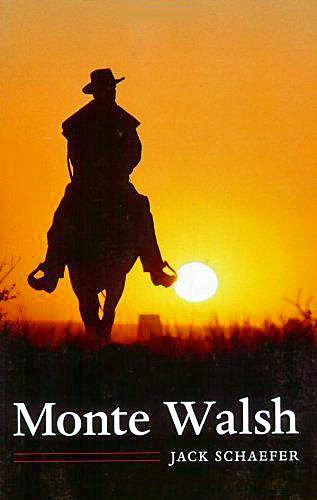
Monte Walsh by Jack Schaefer (who also wrote Shane), and The Shootist, by Glendon Swarthout. Both were made into movies. Monte Walsh was made twice, first in 1971 with Lee Marvin and then in 2003 as a TV movie starring Tom Selleck. I like both versions. And The Shootist was John Wayne’s last movie. And, as with movies, they were all changed a bit from the books they’re based on. But I truly love the books. Both are about people who’ve outlived their times and their usefulness. The world is changing, modernizing, passing them by. A theme I both like reading about and writing about. And it is something I write about a fair amount, people out of time—people who’ve outlived their time, so to speak. “Dinosaurs” who don’t understand the rapidly changing world around them.

Tapping the Source: These days Kem Nunn is arguably better known as the co-creator of the TV series John from Cincinnati, as well as a writer on Sons of Anarchy and Deadwood. But he’s also the author of, I believe, six novels. Tapping the Source (1984) is his first and is something special. If it’s not the novel that invented the “surf noir” genre it’s certainly an early and foundational entry. This is not the Beach Boys’ version of sun, sand, surf and surfer girls, but a much darker vision of life on SoCal’s storied beaches. Ike Tucker, an aimless young man, treks to Huntington Beach (a.k.a. ‘Surf City’) to find his missing and possibly dead sister. There he gets hooked up with bikers, sex and drugs. No Gidgets or Moondoggie’s here. And Ike will be lucky if he gets out alive. I like this one so much that I looked into acquiring the film rights. Unfortunately they were already taken. Now, if whoever has them these days would just make the damn movie already. Tapping is good for anyone who loves surf, sun and murder.


David Goodis: Of course, I probably mention Goodis a lot. And he’s probably better known today than years back when I discovered him and had to settle for ratty paperbacks in used book stores as his books were out of print. Dave Moore's description of Goodis as the "poet of the losers" is an apt portrayal of his stories about people on the skids. Best known for Dark Passage and Down There, two works made into films. The first with Bogart and Bacall, the second a French movie by Francois Truffaut under the title Shoot the Piano Player. The former takes a good novel and makes it better, the latter takes a great novel and is played out of tune. Down There is a great novel that works with Goodis' favorite theme of people not being able to escape their pasts—and is my favorite Goodis by far. Nobody can escape their past in Goodis, including Goodis. And if you want to find out more about him check out Goodis: A Life in Black and White by Philippe Garnier, recently translated into English. And my short story Born Under a Bad Sign, originally published in Dave Zeltserman’s HardLuck Stories magazine is my straight out attempt at a Goodis-type story and an homage to him. Now available in the collection L.A. Late @ Night  ( https://www.amazon.com/L-Late-Night-Mystery-Streets-ebook/dp/B00I9289HM )


John Fante has sort of come into his own in the last decade or two. A movie was made of his most famous book, Ask the Dust. It didn't quite capture the magic of the book, as gorgeous as it is to look at. Ask the Dust is a must-read for any writers living in Los Angeles. If for nothing else but to marvel at how someone could eke out a living writing short stories. It’s also a must read for anyone interested in L.A. The setting is downtown Los Angeles in the 1930s, in the “shabby town,” in Raymond Chandler’s words, of Bunker Hill. I discovered Fante and this book before the new surge of interest in him and was so impressed that I wrote to him at his home. Unfortunately he was already so sick by then that I didn’t hear back, or maybe I wouldn’t have anyway after some of the things I’ve heard about him. He was known to be an angry man. But a great writer.


Here’s some other “lesser-known” writers and books I like, though I’m not sure how lesser-known some of them really are: White Noise by Don DeLillo, various Paul Auster books. Walker Percy’s The Moviegoer, Steve Ericson’s Days Between Stations. Soldier’s Home, a Hemingway short story, and if I had to pick one favorite short story from any genre this would be it, for a variety of reasons. And so many more.

***

Thanks for stopping by. Tell us some of your favorite lesser-known authors and books. And I’d love to hear your comments, though I might not be able to respond right way, but I appreciate your stopping by.

***

And now for the usual BSP:

Broken Windows, the sequel to my Shamus Award-winning novel, White Heat, releases on September 10th and is available for pre-order now at AmazonBarnes & Noble and Down & Out Books.


Peter Anthony Holder interviewed me for the Stuph File. It’s short, 10 minutes. You might enjoy it. It’s episode 0471 at the link below. And check out the Stuph File too:


And I was also interviewed by Dave Congalton at KVEC radio: 


Please join me on Facebook: www.facebook.com/paul.d.marks and check out my website www.PaulDMarks.com

Friday, July 27, 2018

The Man Behind the Curtain

Overheard at a recent convention: “I don’t read the way I used to before I was a writer.” Is this something you can relate to? What does it mean for you? Pros and cons?


This is definitely something I can relate to. And no, I don’t read the same. 

I’ve been writing one thing or another for most of my adult life. First screenplays, then some non-fiction, then stories and novels. And for all these types of writing working “behind the scenes,” so to speak, has skewed the way I watch a movie or read.

It’s kind of like seeing the little man behind the big curtain in The Wizard of Oz. On a different level, it’s like the old saw about sausage making, they may taste good but do you really want to see how they’re made? Or seeing how a magician does a trick—it just sort of loses its magic. Things lose their majesty when you see the little man behind the curtain or know how a story is put together.

So, when I’m watching a movie or reading a book I’m often thinking about all those things that go into the making of it, structure, dialogue, foreshadowing, character arc, etc. Of course, some stories do things differently, like Pulp Fiction, where things are out of sequence, but if you put it together in sequence even that pretty much follows the infamous Three Act Structure.

My mom read a lot and we would discuss books often. A lot of times she would enjoy something and I wouldn’t, because I was seeing the skeleton beneath the surface with all its flaws. She would say she just read for pleasure. Well, I read for pleasure and escape too…but while I’m doing that I often can’t help but notice the structural elements beneath the “skin”.

For example, while I think The Da Vinci code is a fun book and a fun ride, I think it’s very poorly written. And that affected how I liked it overall and whether I chose to read anymore of Dan Brown’s works. But for my mom it was just a fun ride.

Making it even harder is when I personally know the author/writer of something. Then I see them behind the characters and sometimes that makes it hard to separate the two. I know when I write there’s a little of me in some characters and some of me in all characters and everything (pretty much) is based on my life experience or at least filtered through it. So when I know the writer I see them in what they’re writing and that, too, can make it difficult to suspend disbelief, but I’m getting better at it. I’m pretty guarded, but people who know me well say they see a lot of me in the things I write, and how could it be otherwise? Though they haven’t said if it affects how they view the finished product.

So, if something really sweeps me up, whether a book or a movie, and I don’t see the nuts and bolts holding it together, then it’s magic. Raymond Chandler does that. When I read him I get totally lost in the story, the characters and his remarkable description that takes me back to another time and place. And I forget that I’m reading a book because I’m there, with those people, in those locations. Another book that totally swept me up was The Tartar Steppe by Dino Buzzati, which I’ve probably mentioned before. The story of a young soldier waiting for something momentous to happen—waiting and waiting and waiting, like so many of us do. Also, Tapping the Source by Kem Nunn. I’m there. At the Huntington Beach pier, feeling the sting of the saltwater, hearing the rev of motorcycles and I don’t see the girders holding up the story. The same goes for The Count of Monte Cristo, my favorite revenge story and I love revenge stories—who doesn’t want to see justice done? And my favorite book of all, The Razor’s Edge by Somerset Maugham. When I read that I’m transported to that post World War I era. I’m absorbed—so absorbed I’m not thinking about all the ingredients that go into the pie. And there’re many other books that will carry me away like that. But unfortunately there’s also many books whose skeletons show through the story and when I’m paying attention to that I know I’m not really enjoying them.

I’m always hoping a book will carry me away so I forget my surroundings, forget my little troubles and get wrapped up in the story and characters. That’s what I’m hoping for when I crack the cover. And when it happens it’s sublime. What about you?

***

Broken Windows – Sequel to my #Shamus-winning White Heat drops 9/10/18. A labyrinth of murder, intrigue and corruption of church and state that hovers around the immigration debate. #writers #mystery #amreading #thriller #novels  


Available for pre-order now on Amazon.


Please join me on Facebook: www.facebook.com/paul.d.marks and check out my website www.PaulDMarks.com

Friday, June 1, 2018

If I Had Two Heads I’d Have Two Points of View

Question: Point of view is pesky. What's the hardest aspect of POV you deal with in your storytelling with one or more POV?

by Paul D. Marks

I'm not too proud to admit that when I first started writing prose I didn't get Point of View. I had come from a screenwriting background where POV isn't generally a big issue. Basically in a screenplay your POV is the camera. You are the camera. You can shoot over someone's shoulder or be a fly on the wall. You can view everything from a 360 degree aerial shot or from under a glass table. Hell you can walk through walls if you want. But prose POV is trickier and the key I've found is just keeping your readers in mind.

In my early attempts at writing prose my POV would be all over the place, switching from character to character even in the same scene. I guess you’d call it omniscient, but I didn’t realize that omniscient POV was archaic. Then I started to realize how confusing this was to the reader. When it's your own writing you don't see this right away because you know in your mind who your characters are and what each one is thinking and doing but you forget that your readers can’t read your mind.

I think some early writing advice I received was to write in one POV and only change POV at a break or chapter break. This can work sometimes but you always have to step back and read it as if you’re reading someone else's writing and make sure you aren't filling in the missing identifiers in your own head. You have to ask yourself is it clear that Mr.X is thinking this? And Ms. Y is the one feeling anxious?


These days, I often find it is easier to stick to one POV at a time, like the first person narrative in my Duke Rogers detective series (White Heat and Broken Windows). Though there are sections – the B stories or subplots in both – where the story is told in third person. But the shift of POV is very clear. One reason I wanted to tell the story from Duke’s POV is so I could filter Duke’s sidekick Jack through Duke’s point of view. Jack is a bit of a difficult character and I needed my readers to see that Duke was fond of him despite his flaws. Without that POV people might have ended up hating Jack and not understanding him the way Duke does. But I also wanted to step out of Duke's POV from time to time to see other things happening outside his perspective and that’s where a second POV can be useful. So in both White Heat and Broken Windows (it’s sequel dropping – love to use those hip words or is that already archaic – in the fall) there are subplots or B stories that Duke isn’t present for. And this allows us to see things that Duke can’t see or know at the time.

Of course there’s also omniscient POV and 3rd person. The former is still used these days, though maybe not as often as it once was. The latter is used often, but more often than not it’s over the shoulder of a particular character, so, in essence, we see the action from that character’s POV, though not in first person as if they’re recounting the tale.

Often, the type of story I'm trying to tell will dictate which POV to use. For my Ghosts of Bunker Hill series the use of the ghost’s POV helped me be able to tell the story from a distance so the reader could feel the historical perspective of the fictional and historical people influencing Howard Hamm's (the detective’s) view of the world. That POV works for HH but wouldn't have worked for Duke Rogers.

Sometimes the length of the piece will limit the POV. For example, in a short story you really don’t have the space to write from the POV of 3 or 4 characters (maybe not even two, though that’s more plausible), but in a novel you can. Like in Robert Crais’s novel The Promise that has chapters in the POV of various characters. It can heighten the suspense when you move around from different POVs, when one character knows something that the others don’t. On the other hand, if you write from too many POVs your reader can feel disconnected – who am I supposed to be rooting for? And confused. So sometimes you might  go for the first person single POV to keep the reader in sympathy and connected to your character. Tana French is a good example of a writer who can do multiple POVs with her Dublin murder squad and it adds some nice layers to the story when you get different perspectives of the same thing (sort of Rashomon type of thing).

The bottom line is do what’s right for the story and to find out what’s right you might have try it different ways.

***

And now for the usual BSP:

I’m thrilled – I’m Doubly Thrilled – to announce that my short story “Windward,” from the anthology Coast to Coast: Private Eyes from Sea to Shining Sea (edited by Andrew McAleer and me) is nominated for a Best Short Story Shamus Award – and that the anthology as a whole is nominated for a Best Anthology Anthony Award. Thank you to everyone involved!


~.~.~

And my Shamus Award-Winning novel White Heat was re-released on May 21st by Down & Out Books. It’s available now on Amazon.

Publishers Weekly calls White Heat a "...taut crime yarn."


Please join me on Facebook: www.facebook.com/paul.d.marks and check out my website www.PaulDMarks.com


Friday, May 18, 2018

Margaritas and Mysteries

You've invited an author (living or dead - fantasy okay) to dinner and you're nervous. What will you serve that you think will make her or him your greatest admirer?

by Paul D. Marks

Hmm. Well, I haven’t had too many dinners with stratospherically famous authors, but judging from what I’ve read about them, I’d serve a long list of various booze, including absinthe – even though today’s absinthe isn’t what they might have been used to on the Left Bank in the 1920s. I also say this because I have had meals with various film and rock stars and you definitely gotta have the booze flowing, but add some dope too.

And depending on what time of my life it would be someone different than it might be today. So as of this day, 5/18/18, who would I want to have dinner with? The choices range from Somerset Maugham (Gin Pahit) to Alexandre Dumas, père (wine, French, of course), John Fante (wine), David Goodis (whiskey). The one-name, a la Cher, recognizables: Hemingway (mojitos and absinthe), Fitzgerald (gin). Kerouac (margarita). Also Raymond Chandler (gimlet), Ross MacDonald (Scotch) and Jim Thompson (whiskey) to contemporaries like James Ellroy, Walter Mosely, Carol O’Connell, Michael Connelly, Robert Crais, Kem Nunn, Dino Buzzati Tim O’Brien and Anne Tyler, to many more, though I wouldn’t want to guess what these more contemporary writers drink.

And, of course, mint juleps with Walker Percy.

The problem with famous people is, to paraphrase from the Jose Ferrer/John Huston version of the movie Moulin Rouge: “One should never meet a person whom they admire. What they do is always so much better than what they are.” This may or may not be true in any specific case, but I know from the famous people that I have met and dealt with on one level or another that it’s true as often as not. So I wouldn’t want to be disappointed by an author whose writing I admire, but who I don’t already know personally.

So, I’d bet on a sure thing. I’d have dinner with someone I know and admire and like. Someone I know I wouldn’t be disappointed by. I’d have dinner with Art Taylor. Yes, our own Art, previously of this blog. Well-known short story writer and novelist. Winner of multiple awards. Someone I know and like and can talk to and listen to. We could have our own little mini Algonquin Round Table or our very own My Dinner with Andre, er, My Dinner with Art. And if he was to come out to the West Coast, I’d serve West Coasty food. Margaritas and Mexican food. Albondigas soup and enchiladas with molé. Chili rellenos and tamales. Plenty of hot sauce and guacamole. Nothing weird or nouveau. Just stuff I like and would hope that he would, too. And cerveza.

This would be our feast (minus the sour cream)

 And then we’d retire to the salon with our after dinner drinks.

We would talk about the relative merits of Dashiell Hammett and Raymond Chandler. Which is better, the book or film version of In a Lonely Place? Is the Robert Altman version of Chandler’s The Long Goodbye a good flick? Maybe we’d talk about the state of the publishing biz, and along with that bookstores (I hear Barnes and Noble is on the verge of bankruptcy – that would make “good” dinner conversation), NYC vs. LA vs DC, over those drinks, while we watched the sun set over yon mountains. And, of course, we’d gossip about other writers and dish on everything under the sun.


I’d wish him luck on his Anthony nomination. And then we’d put our tipsy heads together and come up with a plan for world peace.

It would definitely be a fun and stimulating evening.

***

And now for the usual BSP:

I thrilled to announce that Coast to Coast: Private Eyes from Sea to Shining Sea, edited by Andy McAleer and meis nominated for an Anthony for Best Anthology. And Art Taylor's story "A Necessary Ingredient" from that anthology is also nominated for Best Short Story!
~.~.~

Only three days till White Heat launches! My Shamus Award-Winning novel is being reissued on May 21st by Down & Out Books. It’s available now for pre-order on Amazon.

Publishers Weekly calls White Heat a "...taut crime yarn."


Please join me on Facebook: www.facebook.com/paul.d.marks and check out my website www.PaulDMarks.com