Showing posts with label Kem Nunn. Show all posts

Friday, July 31, 2020

Writers to Read

Please recommend an author who may not be widely known to readers and tell us about them and their book(s). In addition, what books are on your bedside table for July and why did you select them for summer reading?

by Paul D. Marks

I’m not sure these authors are “widely unknown” to readers, but I also don’t think they’re widely known, at least in the larger realm. And I’ll stick with crime writers here, with one exception at the end.

Carol O’Connell:

On the Penguin Random House page it calls Carol O’Connell a NY Times best-selling author, but whenever I mention her to anyone almost to a person they haven’t heard of her. She does stand-alones but is best-known for her tough-as- nails NYPD detective Kathy Mallory. In the first Mallory book, Mallory’s Oracle (1994), NYPD detective Kathy Mallory is a hard-as-nails cop and not just because of her bright red nail polish. As the first in the series, Mallory’s Oracle is probably the best place to start. Even Mallory’s creator, O’Connell, describes Mallory as a “sociopath”. I’ve talked with people about Mallory and recommended the Mallory books to several people over the years. And it seems people either love or hate her. I’m in the former category. I love her no-nonsense, doesn’t suffer BS approach to her job. Nothing, including the law, will stand in her way, at least in this fictional world. Not that I’d necessarily like to be friends with her if she suddenly came alive and jumped off the page. I think the Mallory books would be good for someone who likes solid crime stories, strong female characters and doesn’t mind one who’s a sociopath…


According to Wikipedia, O’Connell started as an artist, but when she couldn’t make it there she started writing mysteries. The art world’s loss is our gain.


Kem Nunn:


Photo by Etonnants Voyageurs - Philippe HUET, Kem NUNN, Leonardo PADURA, Justo VASCO : Regards noirs at 06:20, cropped, brightened, CC BY-SA 3.0Link


Nunn is another successful writer that a lot of people haven’t heard of, though when I mention him to others there is more recognition than with O’Connell. These days he’s arguably better known as the co-creator of the TV series John from Cincinnati, as well as a writer on Sons of Anarchy and Deadwood. But he’s also the author of, I believe, six novels. Tapping the Source (1984) is his first and is something special. If it’s not the novel that invented the “surf noir” genre it’s certainly an early and foundational entry. This is not the Beach Boys’ version of sun, sand, surf and surfer girls, but a much darker vision of life on SoCal’s storied beaches. Ike Tucker, a naive and innocent young man from Bakersfield, treks to Huntington Beach (a.k.a. ‘Surf City’) to find his missing and possibly dead sister. There he gets hooked up with bikers, sex and drugs. No Gidgets or Moondoggie’s here. And Ike will be lucky if he gets out alive. Tapping is good for anyone who loves surf, sun and murder. I liked this book so much that I wanted to option the film rights for it. I had them checked out, but they had already been optioned/bought. That had to be at least 25 years ago, probably more, a lot more. But to this day there is still no movie version of this story. It is, however, said that Point Break, with Patrick Swayze and Keanu Reeves was, uh, inspired by Tapping the Source. The story is different and imho not nearly as good.


Several decades ago a friend of mine in the WGAw turned me onto Nunn and some other authors, telling me how terrific they were. Thank you, Elliot. Tapping the Source is Nunn’s first novel and with it he pretty much invented his own genre: surf noir. I guess I’m not the only one who likes it since it was a finalist for the National Book Award.


David Goodis:

Goodis, who I’ve probably mentioned before, has been called the “poet of the losers” by Geoffrey O’Brien and his stories of people on the skids certainly bear that out. I came to Goodis through the movies, which is how I’ve come to several writers and/or novels. I’m a fan of the Bogie-Bacall movie Dark Passage, so after having seen it a couple of times I decided to check out the David Goodis novel it was based on. I liked it enough that I began to read pretty much anything of Goodis I could get my hands on, but this was before he came into vogue again so mostly I had to pick up very scarred paperbacks (many, though not all of his books were only published in paperback), and I devoured his whole oeuvre. And, though I liked pretty much everything to one degree or another, Down There (1956) (a.k.a. Shoot the Piano Player, after the Truffaut movie based on it) really stood out for me. It’s the story of a World War II vet, a former member the elite Merrill’s Marauders who, for a variety of reasons, is down on his luck—way down. Francois Truffaut made the book into a movie called Shoot the Piano Player which, to be honest, I don’t like very much, but that’s why the title of the book was changed from Down There and is probably better known today as Shoot the Piano Player. I think it would be good for fans of classic noir, old movie buffs, and others.


When it comes to noir, David Goodis is the man. His stories deal with failed lives and people who are definitely on the skids. They’re often people who weren’t always in this position though and the interesting part is seeing how they deal with their downfall—not always so well. Goodis inspires me so much that I wrote a story that might be considered an homage to him. Born Under a Bad Sign was originally published in Dave Zeltserman’s Hard Luck Stories magazine, but is now available in LA Late @ Night, a collection of some of my previously published stories.


Dan Fante:
Dan Fante photo by Camila Emar
As a bonus, I’ll add Dan Fante, yes Dan, not John. Dan is John ‘Ask the Dust’ Fante’s son (And Ask the Dust is one of my favorite novels in any genre.) Dan’s books are what I would call an acquired taste. They can be rough and gross in a lot of ways. But I turned my mom onto him, thinking she probably wouldn’t like his work. So imagine my surprise when she did. You might want to start with Mooch (2001) and Chump Change (1998).


Oh, and another lesser-known writer you might want to check out is some dude called Paul D. Marks, who just had a new book come out in June that’s getting pretty good reviews:

"I hate saying a book transcends the genre and I honestly usually don't like books that do. This one however does and might win some awards because of it."
                                                                          —Jochem Vandersteen, Sons of Spade


~.~.~

And now for the usual BSP:

Please join me on Facebook: www.facebook.com/paul.d.marks and check out my website  www.PaulDMarks.com

Wednesday, August 14, 2019

Summer reads

Out of all the books available to read and limited time, what influences your choices? What books have you read this summer and which would you rate as your top recommendation?

by Dietrich

When I open a new book I want to be engaged by page one. The genre doesn’t matter as much as the quality of the writing. There are so many good books, both written by authors I’m familiar with and those I haven’t read before. So this year I’ve made more time for reading, and although I don’t have an absolute favorite, here are the standouts that I’ve read so far. 

I’ve been catching up on Richard Stark’s Parker novels. Topping the four I’ve read this year is The Sour Lemon Score, one that came out in 1970. It’s number twelve in the series, in Stark’s typical clipped style, about a bank heist that goes right until one of the four partners gets greedy and starts bumping off his partners. The trouble is he doesn’t shoot Parker first.

Then there was Charlie 316 by our very own Frank Zafiro, co-authored by Colin Conway. Without putting some spoilers out there, I’ll just say if you like a convincing cop story that jumps from the opening, with some twists you won’t see coming, then give this one a read.

I’d been anticipating the release of Don Winslow’s The Border, the conclusion of the epic cartel trilogy. I can’t say enough about this series, and this book is awesome, making Winslow one of my favorite authors writing today.

Also high on my list is the new one by James Ellroy. This Storm is part two of the second L.A. Quartet, and it takes readers back to the early forties: a story of crime, debauchery and some fast and loose history, told in Ellroy’s jazzy, excellent style.

Chance by Kem Nunn focuses on Dr. Eldon Chance as he gets more than professionally involved with a corrupt cop’s wife. Chance is no match when confronted by the cop, that is until he befriends D, a street-wise character skilled in the art of the blade. From there it’s a bumpy, often hilarious, ride to the end. Highly recommended.

The Year of the Flood is Margaret Atwood’s view into the near future. A relevant and powerful tale that looks at environmental collapse and a hope for a future. A great imagination and matching writing skills, by one of the greats.

Dirty Who? by Jerry Kennealy is another well-told cop story. Set in 1970 San Francisco, it’s about Inspector Johnny O’Rorke who bends a few rules after he’s assigned to investigate the disappearance of several gay men and to help find locations for an upcoming film that will star Frank Sinatra. It’s a convincing and well-told story by another former cop and private investigator.

The Jealous Kind by James Lee Burke is about a teen coming of age in 1952 Houston and focuses on classes, pride and loyalty. I’ve long been a fan of Burke’s Robichaux and Purcell stories, and in this one, the second in the Holland family saga, Burke’s words are as powerful as ever and conger some great images of a bygone time.
Another great story I read as part of a collection is The Birds by Daphne Du Maurier. Originally published in 1952, it's a classic and hasn't lost any of its edge and certainly stands the test of time. Masterful writing.

Friday, January 11, 2019

Can You Judge a Book by its Cover?

What makes a great book cover? Is it the title or the graphics? Do you have favorites that you think work?

by Paul D. Marks

You can’t judge a book by its cover, but its cover might just be what draws you into it in the first place. The thing that makes you pluck it off the shelf and crack that cover to see if it’s something you might want to read. So, covers are definitely important.

As to what makes a good book cover, the title or graphics, I think it’s both. An intriguing title makes me want to read something as do mysterious or evocative pictures and graphics. It’s a symbiotic thing, each element works in conjunction with the others to create a whole that, if it’s done well, will grab my attention.

I think the best way to explain is to show this is by comparing different covers of the same book. As many of you know, I like classic crime fiction from the 20th century (that sounds really weird) so let’s take some of those covers and look at them. I’m using some of the books I mentioned in my December 14, 2018 post of year-end book recommendations:
( https://7criminalminds.blogspot.com/2018/12/classic-year-end-reads.html ) .

And I will tell you up front that the pictures pretty much go in the order that they attract me. So on single rows the ones towards the right end are the ones I like better. On double rows the bottom (and more to the right side) are the ones I like better. What attracts me to them? It’s hard to say. It’s an image that evokes some kind of reaction in me. Sometimes it could simply be that the cover that I first read the book under is if not the one I like best at least towards that end. But, I’m not a purist. I don’t necessarily have to go for the original cover or the first cover I saw on a book and often don’t as you’ll see.

So, after you’ve checked out my choices, let us know what you think.

DOUBLE INDEMNITY – JAMES M. CAIN

I don’t really like any of the covers on the top row. The woman in the second from right pic reminds me of Kim Novak in Vertigo, which isn’t a bad thing if it’s a Vertigo cover. On the bottom row I like them better as they go from left to right. Though the last two on the right are pretty much tied for my faves.


THE CHILL – ROSS MACDONALD

My favorite Ross Macdonald book is The Chill. Here’s a selection of covers from it. Which one/s do you like? Which one/s suck you in and make you want to at least check the book out without knowing anything else about it.


TAPPING THE SOURCE – KEM NUNN

Another book I like a lot is Tapping the Source by Kem Nunn. Here’s a sampling of covers for that. Again, which ones do you like?


THE RAZOR’S EDGE – SOMERSET MAUGHAM

The Razor’s Edge by Somerset Maugham is my favorite book of all time. I like the last cover because of its ethereal feel.


L.A. CONFIDENTIAL – JAMES ELLROY

L.A. Confidential might be James Ellroy’s best known book, probably because of the movie based on it. I like the original cover and I also like the last shot, which is from the movie.


DOWN THERE / SHOOT THE PIANO PLAYER – DAVID GOODIS

Down There, a.k.a. Shoot the Piano Player, is my favorite David Goodis book. Goodis has been called the “poet of the losers” by Geoffrey O’Brien. And, while I like the original cover (2nd to last), I really like the Black Lizard cover (last). I do, however, like the original title, Down There, better than Shoot the Piano Player, which came about because that’s the name of the Truffaut movie based on the book. And I have to say I absolutely hate the cover on the left and I don’t much like the movie either.


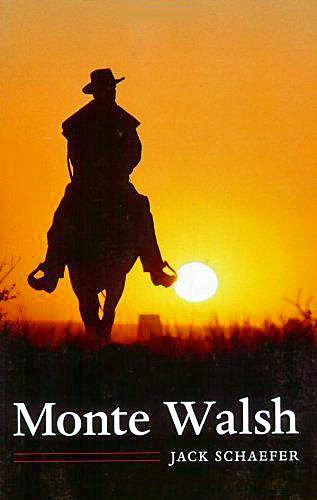
MONTE WALSH – JACK SCHAEFER

I don’t read a lot of westerns. But I really like Monte Walsh, the story of a man who’s basically outlived his time. And I really like the last cover here. It’s so evocative of a man alone in the West. A man riding into the sunset.


THE GRIFTERS – JIM THOMPSON

Except for the last cover, the Black Lizard cover, I don’t like any of these other covers. They’re just so cheesy, but not good cheesy.


DEVIL IN A BLUE DRESS – WALTER MOSLEY

The book that introduced Easy Rawlins and I’ve been hooked from day one. I really don’t like any of the covers on the top row, though I can tolerate the last two. But the first two just don’t do it for me. All four on the bottom row are fine, but I like them from left to right, the last being my fave, which also happens to be the original cover.


WORLD’S FAIR – E.L. DOCTOROW

I really like this book for a lot of different reasons, but that’s for another post as this is about covers. I like all these covers, except the first one. But my two faves would be the last two on the bottom row.


ASK THE DUST – JOHN FANTE

Another favorite book. If you’re into L.A. at all you have to read this – and maybe its sequels. I like all these covers in descending order except for the first, which I don’t like at all. And though the building in the last one is hardly what Bandini would have lived in in Bunker Hill in the 1930s, the whole ambience of it works for me. And I think the palm tree seals the deal.


WHITE HEAT – UNKNOWN AUTHOR 😉

Okay, I couldn’t resist. And I gotta be honest, I like both of these covers. But ultimately it’s what’s in between them that counts for all of these books.


So, what do you think? What are the ones that speak to you from above? And in general. And why?

~.~.~

And now for the usual BSP:

Dave Congalton of KVEC Radio interviewed me. Check out the podcast here. My part comes in at 20 minutes, 30 seconds into the recording.

***

And Broken Windows has been getting some great reviews. Here's a small sampling:

Kristin Centorcelli, Criminal Element: 

"Although it’s set in 1994, it’s eerie how timely this story is. There’s an undeniable feeling of unease that threads through the narrative, which virtually oozes with the grit, glitz, and attitude of L.A. in the ‘90s. I’m an ecstatic new fan of Duke’s."

"Duke and company practically beg for their own TV show."

John Dwaine McKenna, Mysterious Book Report:

"This electrifying novel will jolt your sensibilities, stir your conscience and give every reader plenty of ammunition for the next mixed group where the I [immigration] -word is spoken!"

Betty Webb, Mystery Scene Magazine:

"Broken Windows is extraordinary."


Please join me on Facebook: www.facebook.com/paul.d.marks and check out my website www.PaulDMarks.com


Friday, September 7, 2018

Favorite Lesser-known Writers

What’s your favorite lesser-known novel? Who are your favorite lesser known writers? In your genre and outside of it? Why? And have they influenced your work? How?

by Paul D. Marks

Well, that depends on what/who you mean by lesser-known? One person’s lesser-known author is another’s major influence. But that aside, I’ve been influenced by a lot of people and books at one time or another. The standards, like Raymond Chandler, Ross Macdonald and James Ellroy—my favorites. I’ve also been influenced by movies, especially film noir. And certainly not lesser known, but outside of our genre, Alexandre Dumas and The Count of Monte Cristo, the ultimate revenge story. Also, Somerset Maugham, especially The Razor’s Edge, which influenced me in so many ways both in regard to writing and also life.

So, those are some of my influences from major writers. Now to answer the question and I may have mentioned some of these before, but they’re worth mentioning again. Some may not especially be lesser-known, or at least weren’t in their day, but they might be somewhat forgotten today. And in no particular order:

The Tartar Steppe by Dino Buzzati: a novel about waiting for something that never happens—and no, it’s not about waiting for your clams in some snobby restaurant so you can put tartar sauce on them. And no, it’s not about waiting for some guy name Godot. A soldier is posted at the Tartar Steppe, hoping to be called upon to show his courage and bravery in the glory of battle. Time slips by—he grows old—and the wished for attack and chance for glory is always just beyond the horizon. Lots of subtext here.

Monte Walsh by Jack Schaefer (who also wrote Shane), and The Shootist, by Glendon Swarthout. Both were made into movies. Monte Walsh was made twice, first in 1971 with Lee Marvin and then in 2003 as a TV movie starring Tom Selleck. I like both versions. And The Shootist was John Wayne’s last movie. And, as with movies, they were all changed a bit from the books they’re based on. But I truly love the books. Both are about people who’ve outlived their times and their usefulness. The world is changing, modernizing, passing them by. A theme I both like reading about and writing about. And it is something I write about a fair amount, people out of time—people who’ve outlived their time, so to speak. “Dinosaurs” who don’t understand the rapidly changing world around them.

Tapping the Source: These days Kem Nunn is arguably better known as the co-creator of the TV series John from Cincinnati, as well as a writer on Sons of Anarchy and Deadwood. But he’s also the author of, I believe, six novels. Tapping the Source (1984) is his first and is something special. If it’s not the novel that invented the “surf noir” genre it’s certainly an early and foundational entry. This is not the Beach Boys’ version of sun, sand, surf and surfer girls, but a much darker vision of life on SoCal’s storied beaches. Ike Tucker, an aimless young man, treks to Huntington Beach (a.k.a. ‘Surf City’) to find his missing and possibly dead sister. There he gets hooked up with bikers, sex and drugs. No Gidgets or Moondoggie’s here. And Ike will be lucky if he gets out alive. I like this one so much that I looked into acquiring the film rights. Unfortunately they were already taken. Now, if whoever has them these days would just make the damn movie already. Tapping is good for anyone who loves surf, sun and murder.


David Goodis: Of course, I probably mention Goodis a lot. And he’s probably better known today than years back when I discovered him and had to settle for ratty paperbacks in used book stores as his books were out of print. Dave Moore's description of Goodis as the "poet of the losers" is an apt portrayal of his stories about people on the skids. Best known for Dark Passage and Down There, two works made into films. The first with Bogart and Bacall, the second a French movie by Francois Truffaut under the title Shoot the Piano Player. The former takes a good novel and makes it better, the latter takes a great novel and is played out of tune. Down There is a great novel that works with Goodis' favorite theme of people not being able to escape their pasts—and is my favorite Goodis by far. Nobody can escape their past in Goodis, including Goodis. And if you want to find out more about him check out Goodis: A Life in Black and White by Philippe Garnier, recently translated into English. And my short story Born Under a Bad Sign, originally published in Dave Zeltserman’s HardLuck Stories magazine is my straight out attempt at a Goodis-type story and an homage to him. Now available in the collection L.A. Late @ Night  ( https://www.amazon.com/L-Late-Night-Mystery-Streets-ebook/dp/B00I9289HM )


John Fante has sort of come into his own in the last decade or two. A movie was made of his most famous book, Ask the Dust. It didn't quite capture the magic of the book, as gorgeous as it is to look at. Ask the Dust is a must-read for any writers living in Los Angeles. If for nothing else but to marvel at how someone could eke out a living writing short stories. It’s also a must read for anyone interested in L.A. The setting is downtown Los Angeles in the 1930s, in the “shabby town,” in Raymond Chandler’s words, of Bunker Hill. I discovered Fante and this book before the new surge of interest in him and was so impressed that I wrote to him at his home. Unfortunately he was already so sick by then that I didn’t hear back, or maybe I wouldn’t have anyway after some of the things I’ve heard about him. He was known to be an angry man. But a great writer.


Here’s some other “lesser-known” writers and books I like, though I’m not sure how lesser-known some of them really are: White Noise by Don DeLillo, various Paul Auster books. Walker Percy’s The Moviegoer, Steve Ericson’s Days Between Stations. Soldier’s Home, a Hemingway short story, and if I had to pick one favorite short story from any genre this would be it, for a variety of reasons. And so many more.

***

Thanks for stopping by. Tell us some of your favorite lesser-known authors and books. And I’d love to hear your comments, though I might not be able to respond right way, but I appreciate your stopping by.

***

And now for the usual BSP:

Broken Windows, the sequel to my Shamus Award-winning novel, White Heat, releases on September 10th and is available for pre-order now at AmazonBarnes & Noble and Down & Out Books.


Peter Anthony Holder interviewed me for the Stuph File. It’s short, 10 minutes. You might enjoy it. It’s episode 0471 at the link below. And check out the Stuph File too:


And I was also interviewed by Dave Congalton at KVEC radio: 


Please join me on Facebook: www.facebook.com/paul.d.marks and check out my website www.PaulDMarks.com

Friday, July 27, 2018

The Man Behind the Curtain

Overheard at a recent convention: “I don’t read the way I used to before I was a writer.” Is this something you can relate to? What does it mean for you? Pros and cons?


This is definitely something I can relate to. And no, I don’t read the same. 

I’ve been writing one thing or another for most of my adult life. First screenplays, then some non-fiction, then stories and novels. And for all these types of writing working “behind the scenes,” so to speak, has skewed the way I watch a movie or read.

It’s kind of like seeing the little man behind the big curtain in The Wizard of Oz. On a different level, it’s like the old saw about sausage making, they may taste good but do you really want to see how they’re made? Or seeing how a magician does a trick—it just sort of loses its magic. Things lose their majesty when you see the little man behind the curtain or know how a story is put together.

So, when I’m watching a movie or reading a book I’m often thinking about all those things that go into the making of it, structure, dialogue, foreshadowing, character arc, etc. Of course, some stories do things differently, like Pulp Fiction, where things are out of sequence, but if you put it together in sequence even that pretty much follows the infamous Three Act Structure.

My mom read a lot and we would discuss books often. A lot of times she would enjoy something and I wouldn’t, because I was seeing the skeleton beneath the surface with all its flaws. She would say she just read for pleasure. Well, I read for pleasure and escape too…but while I’m doing that I often can’t help but notice the structural elements beneath the “skin”.

For example, while I think The Da Vinci code is a fun book and a fun ride, I think it’s very poorly written. And that affected how I liked it overall and whether I chose to read anymore of Dan Brown’s works. But for my mom it was just a fun ride.

Making it even harder is when I personally know the author/writer of something. Then I see them behind the characters and sometimes that makes it hard to separate the two. I know when I write there’s a little of me in some characters and some of me in all characters and everything (pretty much) is based on my life experience or at least filtered through it. So when I know the writer I see them in what they’re writing and that, too, can make it difficult to suspend disbelief, but I’m getting better at it. I’m pretty guarded, but people who know me well say they see a lot of me in the things I write, and how could it be otherwise? Though they haven’t said if it affects how they view the finished product.

So, if something really sweeps me up, whether a book or a movie, and I don’t see the nuts and bolts holding it together, then it’s magic. Raymond Chandler does that. When I read him I get totally lost in the story, the characters and his remarkable description that takes me back to another time and place. And I forget that I’m reading a book because I’m there, with those people, in those locations. Another book that totally swept me up was The Tartar Steppe by Dino Buzzati, which I’ve probably mentioned before. The story of a young soldier waiting for something momentous to happen—waiting and waiting and waiting, like so many of us do. Also, Tapping the Source by Kem Nunn. I’m there. At the Huntington Beach pier, feeling the sting of the saltwater, hearing the rev of motorcycles and I don’t see the girders holding up the story. The same goes for The Count of Monte Cristo, my favorite revenge story and I love revenge stories—who doesn’t want to see justice done? And my favorite book of all, The Razor’s Edge by Somerset Maugham. When I read that I’m transported to that post World War I era. I’m absorbed—so absorbed I’m not thinking about all the ingredients that go into the pie. And there’re many other books that will carry me away like that. But unfortunately there’s also many books whose skeletons show through the story and when I’m paying attention to that I know I’m not really enjoying them.

I’m always hoping a book will carry me away so I forget my surroundings, forget my little troubles and get wrapped up in the story and characters. That’s what I’m hoping for when I crack the cover. And when it happens it’s sublime. What about you?

***

Broken Windows – Sequel to my #Shamus-winning White Heat drops 9/10/18. A labyrinth of murder, intrigue and corruption of church and state that hovers around the immigration debate. #writers #mystery #amreading #thriller #novels  


Available for pre-order now on Amazon.


Please join me on Facebook: www.facebook.com/paul.d.marks and check out my website www.PaulDMarks.com

Friday, November 3, 2017

Murder X 5 – 5+ Crime Novel Gift Ideas

With Thanksgiving coming up in the USA – please take the chance to give us five titles or criminally good books you think would make great gifts…and tell us for whom they’d be suitable.

by Paul D. Marks

Only five? There’s so damn many good mystery-crime books out there cutting a list down to five is, well, criminal. I also run the risk of being repetitive since I’ve probably mentioned some of these books here in the context of other questions. For this week’s question I’ll stick just to crime/mystery novels. And my tastes probably tend to run to darker, harder-edged stories.

The Poet: Michael Connelly is probably best known for the Bosch books. And I’m among Bosch’s fans. But I’d have to say my favorite Connelly book is the stand-alone The Poet (1996), though Jack McEvoy, the main character does appear in other books. The story follows reporter McEvoy as he investigates a string of cop suicides, including his own brother’s and ends up going down a hellish spiral into a world of pedophiles. It also introduces FBI agent Rachel Walling, who shows up in other Connelly novels. The Poet is dark and unsettling, but I think the reason I like it so much is that it is so well plotted, with a lot of twists and turns, and that it really keeps you on edge the whole time. I think this story is for anyone who likes a good crime yarn, but it’s not for the squeamish.

Tapping the Source: These days Kem Nunn is arguably better known as the co-creator of the TV series John from Cincinnati, as well as a writer on Sons of Anarchy and Deadwood. But he’s also the author of, I believe, six novels. Tapping the Source (1984) is his first and is something special. If it’s not the novel that invented the “surf noir” genre it’s certainly an early and foundational entry. This is not the Beach Boys’ version of sun, sand, surf and surfer girls, but a much darker vision of life on SoCal’s storied beaches. Ike Tucker, an aimless young man, treks to Huntington Beach (a.k.a. ‘Surf City’) to find his missing and possibly dead sister. There he gets hooked up with bikers, sex and drugs. No Gidgets or Moondoggie’s here. And Ike will be lucky if he gets out alive. I like this one so much that I looked into acquiring the film rights. Unfortunately they were already taken. Now, if whoever has them these days would just make the damn movie already. Tapping is good for anyone who loves surf, sun and murder.

Down There (a.k.a. Shoot the Piano Player): David Goodis has been called the “poet of the losers” and his stories of people on the skids certainly bear that out. I came to Goodis through the movies, which is how I’ve come to several writers and/or novels. I’m a fan of the Bogie-Bacall movie Dark Passage, so after having seen it a couple of times I decided to check out the David Goodis novel it was based on. I liked it enough that I began to read pretty much anything of Goodis I could get my hands on, but this was before he came into vogue again so mostly I had to pick up very scarred paperbacks (many, though not all of his books were only published in paperback), and I devoured his whole oeuvre. And, though I liked pretty much everything to one degree or another, Down There (1956) really stood out for me. It’s the story of a World War II vet, a former member the elite Merrill’s Marauders who, for a variety of reasons, is down on his luck—way down. Francois Truffaut made the book into a movie called Shoot the Piano Player which, to be honest, I don’t like very much, but that’s why the title of the book was changed from Down There and is probably better known today as Shoot the Piano Player. I think it would be good for fans of classic noir, old movie buffs, and others.

Mallory’s Oracle: NYPD detective Kathy Mallory is a hard-as-nails cop and not just because of her bright red nail polish. Even her creator, Carol O’Connell, describes Mallory as a “sociopath”. Mallory’s Oracle (1994) is the first in the Mallory series and probably the best place to start. I’ve talked with people about Mallory and recommended the Mallory books to several people over the years. And it seems people either love or hate Mallory. I’m in the former category. I love her no-nonsense, doesn’t suffer BS approach to her job. Nothing, including the law, will stand in her way. Not that I’d necessarily like to be friends with her if she suddenly came alive and jumped off the page. I think the Mallory books would be good for someone who likes solid crime stories, strong female characters and doesn’t mind one that’s a sociopath…


Devil in a Blue Dress: Pretty much anyone who knows me knows I have a thing for L.A., past and present. LA history. LA culture. And novels and movies set in the City of the Angels. Walter Mosley’s Devil in a Blue Dress (1990), the first Easy Rawlins novel, hits all those bullet points. And, much as I Iike Easy, I really dig his psychopath friend, Mouse. Not someone you want to get on the wrong side of but certainly someone you’d want to have your back when the you-know-what hits the fan. (I wonder how Mouse and Mallory would hit it off?) Devil in a Blue Dress, and the other Easy novels, would be good for LA history buffs, noir fans, general mystery fans.


The Big Nowhere: James Ellroy’s The Big Nowhere (1988) is the second of his LA Quartet books [the others are The Black Dahlia (1987), L.A. Confidential (1990) and White Jazz (1992) ]. All are good, but if I had to pick one as a fave it would be The Big Nowhere. To try to describe Ellroy’s fever dream style is an exercise in futility. The story is set in LA in the 50s right after WWII. In part, it follows Sheriff’s deputy Danny Upshaw through the investigation of a series of mutilation crimes and exposes corruption and hypocrisy amid the “red scare” . I used to go to many Ellroy book events and signings and he truly is the Demon Dog of American Crime Fiction. At one event he even had a band with him. He’s a trip. His writing is a trip. His books are a trip. They would be good for anyone who’s into new noir with a retro setting, LA history buffs and the usual suspects.

The Grifters: Since math has always been a weak subject for me—you should have seen me trying to do diving physics…—I guess I’m doing more than five books here. Jim Thompson’s The Grifters (1963) is a good book and an even better movie. If you like people living on the down low, if you like con artists, and if you like the grift, this is the book for you. It would be good for fans of Jim Thompson (how’s that for stating the obvious?), noir fans, hardboiled mystery readers.

Bonus Round #1: White Heat / Vortex / LA Late @ Night (uh, all by me): Well, since I’m not
above a little BSP I couldn’t very well leave out this trio. White Heat is a noir detective thriller set during the Rodney King riots. Vortex is about a soldier returning from Afghanistan and finding more trouble in LA than in the war. LA Late @ Night is a collection of five of my previously published stories. And all three would be good for everyone! Well, anyone who likes hardboiled, noir and detective fiction.

Bonus Round #2: As many of you know, I have a thing for both Raymond Chandler and Ross Macdonald. I think they’re in spheres by themselves, especially Chandler, but Macdonald too. I don’t think you could go wrong with any of Chandler’s or books—because he’s just such a damn good writer. And Macdonald blows me away with his explorations into the psychological aspects of crime and stories that boomerang back on the characters—the past always comes back to haunt them. I like pretty much everything by both of them, but if I had to pick I think I’d choose The Long
Goodbye (1953) for Chandler and The Chill (1964—a good year for the Beatles too!) or The Galton Case (1959) for Macdonald. These books would be good for pretty much anyone interested in mysteries and the crime fiction genre, but especially as an intro to a young or new reader of mysteries. And as an introduction to classic mystery and detective fiction.

What about you? What books would you recommend as gifts for the people in your life?

***


And now for the usual BSP:

Please check out the interview Laura Brennan, writer, producer and consultant, did with me for her podcast, where we talk about everything from Raymond Chandler and John Fante to the time I pulled a gun on the LAPD and lived to tell about it. Find it here: http://destinationmystery.com/episode-52-paul-d-marks/