Showing posts with label John Fante. Show all posts

Friday, January 11, 2019

Can You Judge a Book by its Cover?

What makes a great book cover? Is it the title or the graphics? Do you have favorites that you think work?

by Paul D. Marks

You can’t judge a book by its cover, but its cover might just be what draws you into it in the first place. The thing that makes you pluck it off the shelf and crack that cover to see if it’s something you might want to read. So, covers are definitely important.

As to what makes a good book cover, the title or graphics, I think it’s both. An intriguing title makes me want to read something as do mysterious or evocative pictures and graphics. It’s a symbiotic thing, each element works in conjunction with the others to create a whole that, if it’s done well, will grab my attention.

I think the best way to explain is to show this is by comparing different covers of the same book. As many of you know, I like classic crime fiction from the 20th century (that sounds really weird) so let’s take some of those covers and look at them. I’m using some of the books I mentioned in my December 14, 2018 post of year-end book recommendations:
( https://7criminalminds.blogspot.com/2018/12/classic-year-end-reads.html ) .

And I will tell you up front that the pictures pretty much go in the order that they attract me. So on single rows the ones towards the right end are the ones I like better. On double rows the bottom (and more to the right side) are the ones I like better. What attracts me to them? It’s hard to say. It’s an image that evokes some kind of reaction in me. Sometimes it could simply be that the cover that I first read the book under is if not the one I like best at least towards that end. But, I’m not a purist. I don’t necessarily have to go for the original cover or the first cover I saw on a book and often don’t as you’ll see.

So, after you’ve checked out my choices, let us know what you think.

DOUBLE INDEMNITY – JAMES M. CAIN

I don’t really like any of the covers on the top row. The woman in the second from right pic reminds me of Kim Novak in Vertigo, which isn’t a bad thing if it’s a Vertigo cover. On the bottom row I like them better as they go from left to right. Though the last two on the right are pretty much tied for my faves.


THE CHILL – ROSS MACDONALD

My favorite Ross Macdonald book is The Chill. Here’s a selection of covers from it. Which one/s do you like? Which one/s suck you in and make you want to at least check the book out without knowing anything else about it.


TAPPING THE SOURCE – KEM NUNN

Another book I like a lot is Tapping the Source by Kem Nunn. Here’s a sampling of covers for that. Again, which ones do you like?


THE RAZOR’S EDGE – SOMERSET MAUGHAM

The Razor’s Edge by Somerset Maugham is my favorite book of all time. I like the last cover because of its ethereal feel.


L.A. CONFIDENTIAL – JAMES ELLROY

L.A. Confidential might be James Ellroy’s best known book, probably because of the movie based on it. I like the original cover and I also like the last shot, which is from the movie.


DOWN THERE / SHOOT THE PIANO PLAYER – DAVID GOODIS

Down There, a.k.a. Shoot the Piano Player, is my favorite David Goodis book. Goodis has been called the “poet of the losers” by Geoffrey O’Brien. And, while I like the original cover (2nd to last), I really like the Black Lizard cover (last). I do, however, like the original title, Down There, better than Shoot the Piano Player, which came about because that’s the name of the Truffaut movie based on the book. And I have to say I absolutely hate the cover on the left and I don’t much like the movie either.


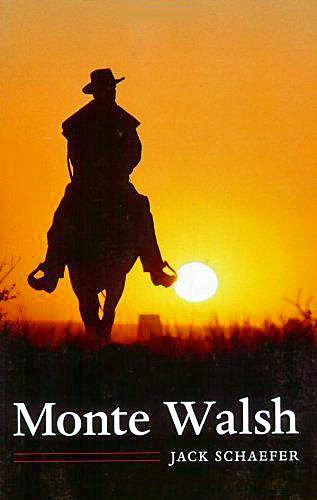
MONTE WALSH – JACK SCHAEFER

I don’t read a lot of westerns. But I really like Monte Walsh, the story of a man who’s basically outlived his time. And I really like the last cover here. It’s so evocative of a man alone in the West. A man riding into the sunset.


THE GRIFTERS – JIM THOMPSON

Except for the last cover, the Black Lizard cover, I don’t like any of these other covers. They’re just so cheesy, but not good cheesy.


DEVIL IN A BLUE DRESS – WALTER MOSLEY

The book that introduced Easy Rawlins and I’ve been hooked from day one. I really don’t like any of the covers on the top row, though I can tolerate the last two. But the first two just don’t do it for me. All four on the bottom row are fine, but I like them from left to right, the last being my fave, which also happens to be the original cover.


WORLD’S FAIR – E.L. DOCTOROW

I really like this book for a lot of different reasons, but that’s for another post as this is about covers. I like all these covers, except the first one. But my two faves would be the last two on the bottom row.


ASK THE DUST – JOHN FANTE

Another favorite book. If you’re into L.A. at all you have to read this – and maybe its sequels. I like all these covers in descending order except for the first, which I don’t like at all. And though the building in the last one is hardly what Bandini would have lived in in Bunker Hill in the 1930s, the whole ambience of it works for me. And I think the palm tree seals the deal.


WHITE HEAT – UNKNOWN AUTHOR 😉

Okay, I couldn’t resist. And I gotta be honest, I like both of these covers. But ultimately it’s what’s in between them that counts for all of these books.


So, what do you think? What are the ones that speak to you from above? And in general. And why?

~.~.~

And now for the usual BSP:

Dave Congalton of KVEC Radio interviewed me. Check out the podcast here. My part comes in at 20 minutes, 30 seconds into the recording.

***

And Broken Windows has been getting some great reviews. Here's a small sampling:

Kristin Centorcelli, Criminal Element: 

"Although it’s set in 1994, it’s eerie how timely this story is. There’s an undeniable feeling of unease that threads through the narrative, which virtually oozes with the grit, glitz, and attitude of L.A. in the ‘90s. I’m an ecstatic new fan of Duke’s."

"Duke and company practically beg for their own TV show."

John Dwaine McKenna, Mysterious Book Report:

"This electrifying novel will jolt your sensibilities, stir your conscience and give every reader plenty of ammunition for the next mixed group where the I [immigration] -word is spoken!"

Betty Webb, Mystery Scene Magazine:

"Broken Windows is extraordinary."


Please join me on Facebook: www.facebook.com/paul.d.marks and check out my website www.PaulDMarks.com


Friday, December 14, 2018

Classic Year-End Reads

Okay, let’s have it, your end-of-year reading recommends. 

by Paul D. Marks

To be honest, I never like answering questions like this. The main reason, as I believe I’ve mentioned before, is because if I recommend a contemporary’s book – or several contemporaries’ books – inevitably other people will be left out. And since I know a lot of contemporary writers I always feel bad recommending someone’s book but not someone else’s. I may even like the left out book but just forgot to include it or I may not have read it – or I may not have liked it. So why go there? I’m not a critic who works critiquing books. So, instead I think I’ll just recommend some classics and older books that I like.

If I mention Raymond Chandler or Alexandre Dumas, who lived a couple hundred or so years ago, I don’t think anyone can feel left out or hurt that I didn’t mention their current book. I’ve probably mentioned all of these before in one form or another but they’re worth another mention, another look and for those who aren’t familiar with them a first-time experience. Most are in the crime field, but several aren’t. And a couple are semi-contemporary, though not in the crime field so I don’t feel bad including them.

And, there’s always an exception to every rule: Broken Windows. I guess that’s contemporary since it came out a few weeks ago. See the review excerpts in the BSP at the end of this post and maybe give it a shot.

My favorites in the crime genre are Raymond Chandler, Ross Macdonald and James Ellroy. Chandler for his elegant descriptions, metaphors, characters, depiction of the mean streets and his ville fatale relationship with Los Angeles, will always be on top, MacDonald with his psychological insights and Ellroy with his corrupt and sultry grittiness.

The Big Sleep (1939), by Raymond Chandler. This is the book/story that really turned me onto crime fiction. Whatever issues it might have, it’s still a wonderful piece of writing. My mom had a two volume Treasury of Great Mysteries with a very sinister cover of a mysterious cloaked man that was half on one volume, half on the other. I saw that book on her shelf for years until one day I finally decided to crack it open, starting with The Big Sleep. I’ve been hooked on crime ever since.

Pretty much all Chandler would be on my list. I don’t think you could go wrong with any of his books – because he’s just such a damn good writer. But if I had to pick a favorite I think I’d choose The Long Goodbye (1953), though I’m not sure it would be the best introduction him. Better to start at the beginning. 

The Chill (1964) – Ross Macdonald. This is the story that turned me onto him. A book club sent me a three-novel anthology of his books (The Chill, The Galton Case and Black Money – all good) by mistake. I wasn’t about to spend money to return it, that was on them. So I read it and was hooked on Ross M. He blows me away with his explorations into the psychological aspects of crime and stories that boomerang back on the characters – the past always comes back to haunt them. I like pretty much everything by both him and Chandler. And, at the moment,  I’m rereading the Zebra Striped Hearse.


Both Chandler and Macdonald would be good for pretty much anyone interested in mysteries and the crime fiction genre, but especially as an intro to a young or new reader of mysteries. And as an introduction to classic mystery and detective fiction.
The L.A. Quartet (The Black Dahlia, 1987; The Big Nowhere, 1988; L.A. Confidential, 1990; White Jazz, 1992) by James Ellroy. All are good, but if I had to pick one as a fave it would be The Big Nowhere. To try to describe Ellroy’s fever dream style is an exercise in futility. The story is set in LA in the 50s right after WWII. In part, it follows Sheriff’s deputy Danny Upshaw through the investigation of a series of mutilation crimes and exposes corruption and hypocrisy amid the “red scare”. I used to go to many Ellroy book events and signings and he truly is the Demon Dog of American Crime Fiction. At one event he even had a band with him. He’s a trip. His writing is a trip. His books are a trip. They would be good for anyone who’s into new noir with a retro setting, LA history buffs and the usual suspects.

Down There (a.k.a. Shoot the Piano Player) (1956) by David Goodis. David Goodis has been called the “poet of the losers” and his stories of people on the skids certainly bear that out. I came to Goodis through the movies, which is how I’ve come to several writers and/or novels. I’m a fan of the Bogie-Bacall movie Dark Passage, so after having seen it a couple of times I decided to check out the David Goodis novel it was based on. I liked it enough that I began to read pretty much anything of Goodis I could get my hands on, but this was before he came into vogue again so mostly I had to pick up very scarred paperbacks (many, though not all of his books were only published in paperback), and I devoured his whole oeuvre. And, though I liked pretty much everything to one degree or another, Down There really stood out for me. It’s the story of a World War II vet, a former member of the elite Merrill’s Marauders who, for a variety of reasons, is down on his luck – way down. Francois Truffaut made the book into a movie called Shoot the Piano Player which, to be honest, I don’t like very much, but that’s why the title of the book was changed from Down There and is probably better known today as Shoot the Piano Player. I think it would be good for fans of classic noir, old movie buffs, and others.

Ask the Dust (1939) – by John Fante. A must read for any writers living in Los Angeles. If for nothing else but to marvel at how someone could still eke out a living writing short stories. It’s also a must read for anyone interested in L.A. The setting is Los Angeles in the 1930s, in the “shabby town,” of Bunker Hill in Chandler’s words. I discovered Fante and this book before the new surge of interest in him and was so impressed that I wrote to him at his home. Unfortunately he was already so sick by then that I didn’t hear back, or maybe I wouldn’t have anyway after some of the things I’ve heard about him.

Monte Walsh (1963) – by Jack Schaefer & The Shootist (1975) by Glendon Swarthout. I put these two westerns together because they’re both about men who’ve outlived their time – and time is passing or has passed them by. This is a theme I enjoy reading about and write about often myself.

The Grifters (1963) by Jim Thompson. A good book and an even better movie. If you like people living on the down low, if you like con artists, and if you like the grift, this is the book for you. It would be good for fans of Jim Thompson (how’s that for stating the obvious?), noir fans, hardboiled mystery readers.

Devil in a Blue Dress (1990) by Walter Mosley. The book that introduced Easy Rawlins. That’s enough.

Double Indemnity (published in a magazine 1936) / The Postman Always Rings Twice (1934). Classics that made even better movies than the books.

The Razor’s Edge (1944) by W. Somerset Maugham. My favorite book of any genre. A book which is, at the risk of sounding corny, about a man seeking the meaning of life. But a book that I could relate to on many levels and which deeply affected my life in many ways, Larry Darrell’s disillusionment after the war (WWI), and his search for peace and meaning in life.


The Count of Monte Cristo (1844) by Alexandre Dumas (père): The ultimate revenge novel needs no description. But I believe this is what led to the saying “revenge is a dish best served cold”. I love revenge stories and this is the Big Daddy of them all. And the way Edmond Dantes gets revenge on his nemeses is clever, brilliant and very satisfying and revenge is so satisfying, served cold or otherwise.

The Tartar Steppe (1940) by Dino Buzzati. A novel about waiting for something momentous to happen that never happens – waiting and waiting and waiting, like so many of us do. And no, it’s not about waiting for your clams in some snobby restaurant so you can put tartar sauce on them. And no, it’s not about waiting for some guy name Godot. A soldier is posted at the Tartar Steppe, hoping to be called on to show his courage and bravery in the glory of battle. Time slips by – he grows old – and the wished for attack is always just beyond the horizon.

World’s Fair (1985) by E.L. Doctorow (or maybe I should leave the periods out of his initials…). Probably my favorite coming of age story about a boy growing up around the time of the 1939 World’s Fair.

Chronicles Vol. 1 (2004) by Bob Dylan. Dylan talking about, uh, Dylan. Fascinating. Wish he’d come out with Vol. 2 already.

High Noon: The Hollywood Blacklist and the Making of an American Classic (2017) by Glenn Frankel. I’m fascinated by the Blacklist and that era. And this is a good look at it via the making of a one particular movie. But, because of the people involved, it covers much more than just that movie. I knew one of the Hollywood Ten somewhat and found it very interesting talking to him and getting a first-hand account of those years.

The Waste Land (1922) a poem by TS Eliot that shouldn’t be forgotten.

What are your choices?

 ~.~.~

Happy Holidays to everyone!


***

And now for the usual BSP:

Holiday shopping? Consider Broken Windows for the mystery fans on your list. H

Here’s a small sampling of some of the great reviews:

Kristin Centorcelli, Criminal Element

"Although it’s set in 1994, it’s eerie how timely this story is. There’s an undeniable feeling of unease that threads through the narrative, which virtually oozes with the grit, glitz, and attitude of L.A. in the ‘90s. I’m an ecstatic new fan of Duke’s."

"Duke and company practically beg for their own TV show."

John Dwaine McKenna, Mysterious Book Report:

"This electrifying novel will jolt your sensibilities, stir your conscience and give every reader plenty of ammunition for the next mixed group where the I [immigration] -word is spoken!"

Betty Webb, Mystery Scene Magazine:

"Broken Windows is extraordinary."


Please join me on Facebook: www.facebook.com/paul.d.marks and check out my website www.PaulDMarks.com


***

Friday, September 7, 2018

Favorite Lesser-known Writers

What’s your favorite lesser-known novel? Who are your favorite lesser known writers? In your genre and outside of it? Why? And have they influenced your work? How?

by Paul D. Marks

Well, that depends on what/who you mean by lesser-known? One person’s lesser-known author is another’s major influence. But that aside, I’ve been influenced by a lot of people and books at one time or another. The standards, like Raymond Chandler, Ross Macdonald and James Ellroy—my favorites. I’ve also been influenced by movies, especially film noir. And certainly not lesser known, but outside of our genre, Alexandre Dumas and The Count of Monte Cristo, the ultimate revenge story. Also, Somerset Maugham, especially The Razor’s Edge, which influenced me in so many ways both in regard to writing and also life.

So, those are some of my influences from major writers. Now to answer the question and I may have mentioned some of these before, but they’re worth mentioning again. Some may not especially be lesser-known, or at least weren’t in their day, but they might be somewhat forgotten today. And in no particular order:

The Tartar Steppe by Dino Buzzati: a novel about waiting for something that never happens—and no, it’s not about waiting for your clams in some snobby restaurant so you can put tartar sauce on them. And no, it’s not about waiting for some guy name Godot. A soldier is posted at the Tartar Steppe, hoping to be called upon to show his courage and bravery in the glory of battle. Time slips by—he grows old—and the wished for attack and chance for glory is always just beyond the horizon. Lots of subtext here.

Monte Walsh by Jack Schaefer (who also wrote Shane), and The Shootist, by Glendon Swarthout. Both were made into movies. Monte Walsh was made twice, first in 1971 with Lee Marvin and then in 2003 as a TV movie starring Tom Selleck. I like both versions. And The Shootist was John Wayne’s last movie. And, as with movies, they were all changed a bit from the books they’re based on. But I truly love the books. Both are about people who’ve outlived their times and their usefulness. The world is changing, modernizing, passing them by. A theme I both like reading about and writing about. And it is something I write about a fair amount, people out of time—people who’ve outlived their time, so to speak. “Dinosaurs” who don’t understand the rapidly changing world around them.

Tapping the Source: These days Kem Nunn is arguably better known as the co-creator of the TV series John from Cincinnati, as well as a writer on Sons of Anarchy and Deadwood. But he’s also the author of, I believe, six novels. Tapping the Source (1984) is his first and is something special. If it’s not the novel that invented the “surf noir” genre it’s certainly an early and foundational entry. This is not the Beach Boys’ version of sun, sand, surf and surfer girls, but a much darker vision of life on SoCal’s storied beaches. Ike Tucker, an aimless young man, treks to Huntington Beach (a.k.a. ‘Surf City’) to find his missing and possibly dead sister. There he gets hooked up with bikers, sex and drugs. No Gidgets or Moondoggie’s here. And Ike will be lucky if he gets out alive. I like this one so much that I looked into acquiring the film rights. Unfortunately they were already taken. Now, if whoever has them these days would just make the damn movie already. Tapping is good for anyone who loves surf, sun and murder.


David Goodis: Of course, I probably mention Goodis a lot. And he’s probably better known today than years back when I discovered him and had to settle for ratty paperbacks in used book stores as his books were out of print. Dave Moore's description of Goodis as the "poet of the losers" is an apt portrayal of his stories about people on the skids. Best known for Dark Passage and Down There, two works made into films. The first with Bogart and Bacall, the second a French movie by Francois Truffaut under the title Shoot the Piano Player. The former takes a good novel and makes it better, the latter takes a great novel and is played out of tune. Down There is a great novel that works with Goodis' favorite theme of people not being able to escape their pasts—and is my favorite Goodis by far. Nobody can escape their past in Goodis, including Goodis. And if you want to find out more about him check out Goodis: A Life in Black and White by Philippe Garnier, recently translated into English. And my short story Born Under a Bad Sign, originally published in Dave Zeltserman’s HardLuck Stories magazine is my straight out attempt at a Goodis-type story and an homage to him. Now available in the collection L.A. Late @ Night  ( https://www.amazon.com/L-Late-Night-Mystery-Streets-ebook/dp/B00I9289HM )


John Fante has sort of come into his own in the last decade or two. A movie was made of his most famous book, Ask the Dust. It didn't quite capture the magic of the book, as gorgeous as it is to look at. Ask the Dust is a must-read for any writers living in Los Angeles. If for nothing else but to marvel at how someone could eke out a living writing short stories. It’s also a must read for anyone interested in L.A. The setting is downtown Los Angeles in the 1930s, in the “shabby town,” in Raymond Chandler’s words, of Bunker Hill. I discovered Fante and this book before the new surge of interest in him and was so impressed that I wrote to him at his home. Unfortunately he was already so sick by then that I didn’t hear back, or maybe I wouldn’t have anyway after some of the things I’ve heard about him. He was known to be an angry man. But a great writer.


Here’s some other “lesser-known” writers and books I like, though I’m not sure how lesser-known some of them really are: White Noise by Don DeLillo, various Paul Auster books. Walker Percy’s The Moviegoer, Steve Ericson’s Days Between Stations. Soldier’s Home, a Hemingway short story, and if I had to pick one favorite short story from any genre this would be it, for a variety of reasons. And so many more.

***

Thanks for stopping by. Tell us some of your favorite lesser-known authors and books. And I’d love to hear your comments, though I might not be able to respond right way, but I appreciate your stopping by.

***

And now for the usual BSP:

Broken Windows, the sequel to my Shamus Award-winning novel, White Heat, releases on September 10th and is available for pre-order now at AmazonBarnes & Noble and Down & Out Books.


Peter Anthony Holder interviewed me for the Stuph File. It’s short, 10 minutes. You might enjoy it. It’s episode 0471 at the link below. And check out the Stuph File too:


And I was also interviewed by Dave Congalton at KVEC radio: 


Please join me on Facebook: www.facebook.com/paul.d.marks and check out my website www.PaulDMarks.com

Friday, September 22, 2017

Rainy Day Rewind


If you were kitting out a holiday cottage (vacation rental) what would you put on the bookshelf for rainy days?

by Paul D. Marks

Rainy days and reading just seem to go together, don’t they? Besides the obvious of being stuck inside I wonder why, something about atmosphere and ambience. I’m going to talk about books that I’d like to re-read. There’s an argument to be made for not re-reading but only reading new things, but you get more out of something the second time. You already know the plot so you can pick up on the nuances. Plus, I almost never like to talk about contemporary writers because I know many of them and if I were to leave someone out I wouldn’t want to engender hurt feelings, so I’ll stick with the tried and true.

Rainy weather’s always good for reading mysteries, so I’ll start with some of those. But it’s good for other things as well.

So, in no particular order, books for a rainy day to re-read:

The first thing that comes to mind for a rainy day in my kitted out cottage would be Raymond Chandler and Ross Macdonald, of course. I’m always up for re-reading both of them, maybe The Long Goodbye and The Galton Case respectively. And the atmosphere in Chandler’s books seems to beg for a rainy day.


Another book I would love to re-read is Down There by David Goodis. I’ve probably talked about this before, but I discovered Goodis through the movies. (That’s how I came to Chandler as well.) I love the Bogie-Bacall movie Dark Passage. After having seen that movie several times I decided to look up the writer who wrote the book it’s based on. It was Goodis. So I gave Dark Passage a read and the rest, as they say, is history. I loved the dark vision of the “poet of the losers”. My fave of his is Down There, on which the Truffaut movie Shoot the Piano Player is based. But I don’t like the movie very much at all.

Monte Walsh by Jack Schaefer, the guy who wrote Shane, and The Shootist, by Glendon Swarthout. Both are about people who’ve outlived their times. The world is changing, passing them by. A theme I both like reading about and writing about.


Double Jeopardy by Martin A. Goldsmith. This is the novel that Detour, the quintessential B noir movie, is based on. It’s the only book on this list that I haven’t read already. It’s my understanding that it’s somewhat different from the movie and I’m curious to see how. I love the movie, abbreviated as it is, and I really want to check out the novel.

Tapping the Source, by Kem Nunn, is a cult novel that the term “surf noir” might have been invented for. A young guy goes to Huntington Beach to find his missing sister. Simple enough. He soon becomes involved in the surfing lifestyle and the rivalries between surfers and bikers…and surfing bikers. I absolutely love this book! So much so that I checked into the film rights for it, but they were taken. So apparently I’m not the only one. And it’s my understanding that the movie Point Break is a consolation prize of sorts for those filmmakers, who also wanted to do Tapping the Source, but couldn’t.


The Tartar Steppe by Dino Buzzati, is a novel about waiting for something that never happens – and no, it’s not about waiting for your clams in some snobby restaurant so you can put tartar sauce on them. And no, it’s not about waiting for some guy name Godot. A soldier is posted at the Tartar Steppe, hoping to be called upon to show his courage and bravery in the glory of battle. Time slips by – he grows old – and the wished for attack is always just beyond the horizon. Lots of subtext here.

The Count of Monte Cristo by Alexandre Dumas (père): The ultimate revenge novel needs no description. But I believe this is what led to the saying “revenge is a dish best served cold”. I love revenge stories and this is the Big Daddy of them all. And the way Edmond Dantes gets revenge on his nemeses is clever, brilliant and very satisfying.


Ask the Dust by John Fante is a must read for any writers living in Los Angeles. If for nothing else but to marvel at how someone could still eke out a living writing short stories. It’s also a must read for anyone interested in L.A. The setting is Los Angeles in the 1930s, in the “shabby town,” in Chandler’s words, of Bunker Hill. I discovered Fante and this book before the new surge of interest in him and was so impressed that I wrote to him at his home. Unfortunately he was already so sick by then that I didn’t hear back, or maybe I wouldn’t have anyway after some of the things I’ve heard about him.

World’s Fair by E.L. Doctorow (or maybe I should leave the periods out of his initials…). Probably my favorite coming of age story about a boy growing up around the time
of the 1939 World’s Fair.


And, of course I would want to re-read my favorite book: The Razor’s Edge by Somerset Maugham. A book which is, at the risk of sounding corny, about a man seeking the meaning of life. But a book that I could relate to on many levels and which deeply affected my life in many ways.

What about you? What are you packing off for your holiday rainy days, to read anew or re-read?


***

And now for the usual BSP.

I’m happy to say that my short story “Bunker Hill Blues” is in the current Sept./Oct. issue of Ellery Queen. It’s the sequel to the 2016 Ellery Queen Readers Poll winner and current Macavity Award nominee “Ghosts of Bunker Hill”. And I’m surprised and thrilled to say that I made the cover of the issue – my first time as a 'cover boy'! Hope you’ll want to check it out. Available at Ellery Queen, newstands and all the usual places.


My story “Blood Moon” appears in “Day of the Dark, Stories of the Eclipse” from Wildside Press, edited by Kaye George. Stories about the eclipse. Twenty-four stories in all. Available on Amazon.


Friday, November 11, 2016

Book 'Em

This is the time of year when thoughts turn to gift-giving. Could you suggest four books that would be ideal for "x" type of person - you get to define "x", or a book for each of four different types of person...again, your choice of types.

by Paul D. Marks


Before I get to this week’s question, I just want to salute all of our veterans today, Veterans Day, and every day. And Happy Birthday to the USMC: Semper fi, even for those who weren’t/aren’t Marines.


Now to the question at hand, which I think I misunderstood. So I listed a lot more books than I probably should have. But you know what they say, you can't have too many books, so:

I guess we all have various types of people in our lives. So I’ve picked out four types rather than four specific people. And since it is appropriate to have the right book for the right type of person here goes:


For that friend who likes to lurk in dark corners, wearing a fedora and trenchcoat (watch that trenchcoat…): how ’bout American Noir from Library of America. Two volumes of pretty good noir. Volume 1) Crime Novels: American Noir of the 1930s & 40s: The Postman Always Rings Twice by James M. Cain, They Shoot Horses, Don’t They? by Horace McCoy, Thieves Like Us by Edward Anderson, The Big Clock by Kenneth Fearing, Nightmare Alley by William Lindsay Gresham, I Married a Dead Man by Cornell Woolrich.  Volume 2) Crime Novels: American Noir of the 1950s: The Killer Inside Me by Jim Thompson, The Talented Mr. Ripley by Patricia Highsmith, Pick-Up by Charles Willeford, Down There by David Goodis, The Real Cool Killers by Chester Himes. — I’ve actually given this to a couple of people (hope you liked it if you’re reading this post) and I have it myself. Though the version I have was before this cool version in a slipcover. I bought each volume individually. But I wish I’d waited ‘cause l love the double volume and the artwork on the slipcover.


For the narcissist in your life: Well, let’s see. How ’bout we start with Toxic Parents, co-written by pal Craig Faustus Buck, with Susan Forward. Or The Wizard of Oz and Other Narcissists: Coping with the One-Way Relationship in Work, Love, and Family by Eleanor Payson, or Narcissists
Exposed, 75 Things Narcissists Don't Want You to Know by Drew Keys. Books on narcissism also work for friends who talk too much about themselves, agents and editors who don’t respond (yeah, sure, they’re just busy). And nieces and nephews who never send thank you notes. Hell, they’re good for almost everyone.


For the jerks who give you bad reviews: Miss Manners' Guide to Excruciatingly Correct Behavior by Judith Martin and Gloria Kamen, Etiquette For Dummies by Sue Fox, Emily Post's Etiquette, 18th Edition by Peggy Post, Anna Post, Lizzie Post, Daniel Post Senning, or any one of a million other etiquette books. And don’t forget what your mother said, if you can’t say something nice about someone keep your damn mouth shut. These also work for the jerks who talk on their cells in restaurants, elevators, doctor’s offices. But a .45 works even better.


For the crazy ex: HowDunit – The Book of Poisons, by Serita Stevens and Anne Bannon, Strangling Your Husband Is Not an Option: A Practical Guide to Dramatically Improving Your Marriage, by Merrilee Browne Boyack, How to Tell If Your Cat Is Plotting to Kill You (The Oatmeal) by The Oatmeal and Matthew Inman. This one might work for people too, I’m not sure. I also didn’t know that oatmeal could write, but hey, anything’s possible. So, try it, with your oatmeal. And, of course, there’s this:

VIDEO REMOVED


And for you, my friends: Well, it depends on who you are, of course, but here’s some of my favorite books and authors that I would give to people I actually like: Pretty much anything by Chandler or Ross Macdonald, James Ellroy’s L.A. Quartet (The Black Dahlia, The Big Nowhere, L.A. Confidential, White Jazz). Pretty much anything by Carol O’Connell, though I do love her Mallory character. Down There/Shoot the Piano Player by David Goodis. The double Noir volume mentioned above. The Poet by Michael Connelly, Tapping the Source by Kem Nunn. (I liked this one so much when I first read it I tried to buy the movie rights to it. Unfortunately, they were already taken. Too bad nobody’s done anything with it.) Walter Mosley’s Easy Rawlins books. And getting away from the mystery/thriller genre: Monte Walsh by Jack Schaefer, The Tartar Steppe by Dino Buzzati, Chronicles Vol 1 by Bob Dylan (Hey, Bob, when the hell is Vol 2 coming out?), Tune In: The Beatles: All These Years by Mark Lewisohn, The Count of Monte Cristo by Alexandre Dumas. (The greatest revenge story of all time…and I love revenge.). Paint it Black by Janet Fitch, Ask the Dust by John Fante. A Tree Grows in Brooklyn by Betty Smith. The Book of Laughter and Forgetting by Milan Kundera. Neon Noir by Woody Haut. And The Razor’s Edge, by Somerset Maugham, my favorite book of all time, because I relate to it on so many levels. — I’d give any of these to any of you because I think they’re all good and you might enjoy them.

And oh so many more.

And for anyone with taste, high and especially low: White Heat, Vortex, LA Late @ Night and various magazines and anthologies where my stories reside.


*Disclaimer: I haven’t read all the books mentioned here, especially those in the narcissists, crazy ex and jerk graphs. So I don’t vouch for them. But I do vouch for the titles of those books – I like them. That’s why I chose them. Though, on the other hand, I have read some of them…

***

Check out Akashic's St. Louis Noir anthology with my short story Deserted Cities of the Heart.

www.PaulDMarks.com

Click here to: Subscribe to my Newsletter

Friday, April 29, 2016

The Vandals Took the Handles…or in this case the Newel Post

What is the strangest thing you’ve done while researching a book?

by Paul D. Marks

The things we do for our art: I’ve braved riots, vandalized classic Victorian buildings, suffered through the rich and delish food of New Orleans. It’s a tough life.

Does pre-research count? Did I just invent a term?

I’m not sure I’ve done anything particularly unusual while specifically researching a book in advance, pretty much all the usual stuff that’s been talked about here earlier in the week. But I have lived life to some extent and many of the experiences I’ve had make their way into my stories or inform them one way or another.

Los Angeles - "Rodney King" Riots
Way back in the 90s, I lived through the “Rodney King” riots in Los Angeles. It was an ugly and scary time. Smoke rising, traffic snarled, looting, people in panic mode, etc. My novel White Heat takes place during those riots. PI Duke Rogers screws up an easy case and inadvertently causes someone’s death. To make amends he wants to find the killer. To do that he backtraces the victim, going to see her family in South Central LA the day the riots break out. He’s harassed by angry mobs, his car is torched and he’s stranded in the middle of South Central while everything erupts into chaos around him. And that’s just the beginning of his problems.

Of course that just touches on what the book is about. But one of the things that made me happiest was hearing people who were in the thick of it, cops, rioters, civilians in the wrong place at the wrong time, say how real my descriptions of the riots were. How well I captured them. One person even told me she had to skip over those parts because they were too real and brought back too many memories. Not that I want to cause someone discomfort, but what better compliment could I have? So maybe living through the riots helped me write a story that rang true.

My short story Howling at the Moon (Ellery Queen 11/14) takes place in Southern California’s Death Valley, the lowest and hottest spot in the US. Though it’s been some years since I’ve trekked there, I have been there and drew on those experiences to hopefully give the story a sense of verisimilitude. I remember how hot it was – hotter than hell and if you squinted just right that’s where you thought you were.
Death Valley, California

I recently sold another story to Ellery Queen called Ghosts of Bunker Hill (no publication date yet). This one takes place in an area of downtown LA, not the famous Revolutionary War site in Mass. And today’s Bunker Hill is very different than what it used to be.

Bunker Hill was LA’s first wealthy residential neighborhood, right near downtown. But it got run down after WWI and became housing for poor people. Lots of film noirs were shot there (Criss Cross, Cry Danger, Kiss Me Deadly and many others). It’s also where John Fante lived when he wrote Ask the Dust and other books. But in the late 60s it was all torn down and redeveloped. They even flattened the hills. Ghosts of Bunker Hill is set in and around there in the present.

Bunker Hill, Los Angeles
I love the old Bunker Hill and was lucky enough to “explore” it under the radar before it was totally razed. A friend and I went down there and did some “self-guided tours” of many of the grand old Victorian houses before they were torn down or moved to other locations. I took a souvenir from one of those Victorian houses, the finial off a newel staircase post (if I have the terminology correct). It’s a prized possession and since I want to write more stories with the characters in Ghosts of Bunker Hill, I see the finial as the “logo” for that series. What makes it really special to me is that it’s not just any old finial, but one I actually took from Bunker Hill. So it has both real and personal history.

Bunker Hill is also where the famous Angels Flight funicular railway is/was, from which Michael Connelly takes the name of one of his novels and which I used as a short story title before his novel came out. And I got to ride the original Angels Flight as well, which I’ve used in multiple stories including the eponymous Angels Flight. It was later moved up the street and a “new and improved” Angels Flight was put there, but it closed not too long after it opened.

Back in the day, my friend Linda (though not the friend I explored Bunker Hill with) and I used to go around LA, just point the car and drive and explore. We would just get in the car and head out in any direction, exploring “old” Los Angeles. We’d go anywhere and everywhere. We explored much of So Cal and I treasure those memories and what I learned while we were having fun doing that. And, of course, I’ve used much of what we saw in my writing.

But something just occurred to me that wasn’t pre-research. I was working on a screenplay set in New Orleans and I had never been there. Now, I could have researched it in books in those days or asked people about it – I could have gone to New Orleans Square at Disneyland – but I felt I needed to have the real feel for the place. So I just had to go there and see it for myself. I don’t know if it made the screenplay any better or more real, but it sure made me and Amy happy to be there.


And now that Bouchercon is going to be there in the fall, I guess it’s time for more research.

So, in terms of research, I draw on all of these experiences, plus others, as well as traditional research methods, such as book learnin’, the internet and talking with people, to hopefully give my stories a feeling of really being in the place or with characters who come off as real.

***


Friday, November 13, 2015

To Choose or Not to Choose

Do you prefer reading “classic” mysteries or contemporary mysteries? Why?

by Paul D. Marks

There’s something to be said for both. And sometimes it just depends on my mood. I probably go through periods where I read more classics than contemporary and then vice versa. But overall I probably read more new mysteries these days. And every once in a while I get a strong urge to reread something, particularly by Chandler or Ross MacDonald.


I once heard James Ellroy at a signing, I believe, say he didn’t read his contemporaries in the mystery-crime field because he wanted to do his own thing and not be influenced by them. And also because of the time involved in reading them.

I don’t feel that way. I think it’s good to see what’s going on, what the competition, so to speak, is doing. What they’re talking about, what the trends are, what’s in, etc. But that doesn’t mean I have to, or should, follow those trends or be influenced by them. I like to do my own thing and I guess if there was a report card for this the teacher would check off the box that says “not good at taking direction or following trends.” I’d hope so anyway. I spent many years “taking direction” when doing script rewrites. And one of the reasons I wanted to write fiction is to be my own boss. I understand there are editors and such, but still there’s more freedom here, if not total freedom.

Of my top 3 favorite mystery-crime novelists, two are classics, one is current. Number one with a bullet is Raymond Chandler (big surprise, huh?). Nobody can touch him. It’s like the Beatles for me. As many other rock bands that I love, they are in a class by themselves. Sui generis. I feel that way about Chandler.

My two other faves are Ross MacDonald and James Ellroy. Though I’m not as hot on Ellroy as I was at one time for a variety of reasons. And though he’s not a crime writer, I’m going to include John Fante here because I think his style and tone fit in well with Chandler and Hammett and Cain.

Other current faves are Carol O’Connell, Michael Connelly, Kem Nunn. And other classic faves are David Goodis, James M. Cain, Hammett and Dorothy B. Hughes.

When I read those classics I’m transported to a different time and it satisfies my sense of saudade for times and things that I may not even have experienced. I’ve always had a fantasy of being born in 1920, which would make me old enough for that “film noir” era after the war, as well as the war, of course. The war influenced film noir in many ways, but that’s for another post or maybe a book. And I do remember LA as a kid, when it was still the city that Chandler describes and pieces of which can still be found here and there. So, when I want to visit that time and place I either read books by these classic authors or watch movies set in that era, some filmed then, some filmed today, like LA Confidential.


So why limit yourself to one era or genre? There’s a whole world of great crime fiction out there. More than we’ll ever have time to get to, unfortunately.


***
And now for the usual BSP:

Vortex is on sale in e-form at all the usual places.

And there’s Goodreads Giveaway for Coast to Coast: Murder from Sea to Shining Sea running for a few more days. Maybe win a FREE copy. https://www.goodreads.com/giveaway/show/161413-coast-to-coast-murder-from-sea-to-shining-sea