Showing posts with label #amwriting. Show all posts

Friday, February 2, 2024

Writing Undeniable Fiction, By Josh Stallings


Undeniable, is that even possible? 


Today is the fifth week in the month so we decided it would be blogger’s choice. I’ve decided to muse or mumble on what’s rattling around in my brain. 


As a reader I’m always looking for a book that surprises me both in content and form. It has been said there are only a certain number of stories, and Shakespeare already told them all. In a reductive sense that’s true. But here’s another truth, every human is distinctly different if you are willing to look closely at them. How would you have written Romeo and Juliet? Maybe she was raised in the 1960’s by feminist parents. Same elevator pitch but a very different play.  


No two writers have lived the exact same lives. When we write honestly from our heart and soul no two writers have the same voices. How we lived our lives effects the lens we see a story through. I was raised poor, by well educated politically aware activists. I can’t help seeing the humanity in all characters, the good, the bad, and the ugly.


How do we get to authentic writing? My experience has been that we all have wonderfully unique voices, AND we all have a very similar committee of critics in our heads. So if we want to write unique stories we need to kill the internal critics. You know, the ones that say, “That idea will never sell.” Or, “Great idea, but are you really the one to write it?” Or, a personal greatest hit from my early days, “You can’t even spell, why do you think you could write a book?”


Some of this is imposter syndrome. Ask most writers and you’ll find out they suffer or suffered from this in one form or another. For me I discovered that none of this rears its ugly head when I’m actually typing. I am filled with self doubt when thinking about a new book, not when writing it. I pay those intellectual bullies in my head little to no attention. It seems to help quiet them.


How do I find books that surprise me? 


I don’t limit the kinds of books I read. I follow my intuition from book to book. My siblings or other readers suggest books. What I’m working on effects what I read. The last MS I wrote was about LA, in it is a gang leader, part of writing him was discovering what books he would read. Through this I discovered Paco Ignacio Taibo II and his brilliant fresh take on the detective novel. I’ve now read every book of his that has been translated into english.


Part of my newest work in progress takes place in Ecuador and that introduced me to Poso Wells by Gabriela Alemán. An absolutely original voice, and must read for fans of weird crime fiction. I also discovered City of the Beasts by Isabel Allende, a fantastic Amazonian adventure tale where the old religions are real.  


How do I apply this desire to surprise myself to my writing?


By any means necessary.


How does any means necessary look? 


I was 10,000 words into my current work in progress, had it mapped out. Knew where it was headed, and then… I had a fresh idea. An idea that scared me and would take the novel into an uncharted direction. So I started reimagining, restructuring, and rewriting. Now at 19,000 words I’m excited to keep going. It is my voice, my kinda writing but not like anything I’ve written before. There are one million reasons to not write this book. I don’t care. I am willing to keep going purely on faith. I have a fragile belief that this is the book I should be writing. Fragile, i.e., it can be broken easily, must be handled with care.


Books all start with me in a place of fear. And I must keep slogging through — paying the fear no attention — until at some point the book takes on a life of its own. That is when it becomes undeniable. When it becomes a fully formed world, then it is up to me to shepherd it home.  


How do you write a book that sells? 


That's what we all wanna know. What’s the trick, where’s the secret? Wendy, a friend I walk dogs with reminded me, “Write the book you want to read and you at least know one person will like it.” That’s the truth. 


There are no sure paths to writing a NY Times best seller. You can write a book that's good, and maybe with editing and help you can make it damn good, but will it sell? That my friends is a roll of the dice.


I believe in the two universal forces, chaos and serendipity. Hard work and talent ups your odds of serendipity striking your book. But there are no guarantees. I also believe writing a good book needs to be its own reward. What denotes a good book is absolutely personal. 


My goals have become disconnected from sales. That’s not to say I wouldn’t love big sales numbers, it’s just not my goal. I want to write a book that thrills me to think about. Build a world that is fresh and doesn’t feel like drudgery to play in. And to believe that I have something to say worth saying. As do all of you reading this.


If there is a trick, this might be it:


Have the courage to speak your truth. Speak it well. Surprise yourself.  

Friday, February 12, 2021

The Question That Can Not Be Named

What interview question do you wish someone would ask you but never has? What’s the answer?

by Paul D. Marks

How does it feel to win an Edgar Award? No one’s ever asked because I’ve never won or been nominated for an Edgar, but I wish I was in that position to be asked that question.

But seriously I’ve done a lot of interviews both as the interviewer and the interviewee, I’ve moderated panels and had to come up with questions, so I’ve asked and answered a lot of questions. The truth is I wish someone would ask me a question that would surprise me. One I’ve never heard before and never even thought of. So I don’t know what that question is, cause I haven’t thought of it yet, but I’ll be excited and happy to answer it when it happens.

But since that doesn’t really address the blog question here, I’ll say one question that I would like to be asked: what other things besides books have inspired your writing? I probably have been asked that question in some form, but it’s one I don’t think I’ve ever fully answered. 

I think to really answer the question would probably take at least 1,000 pages so I’ll try to be brief:

1) The art of Edward Hopper. I like the loneliness and alienation depicted in his pictures. Probably the same reason I like noir films from the 30s and 40s. 

2) The music of the sixties, the Beatles in particular. Although I love lots of different kinds of music. The music of the sixties probably influences me the most. It was a time of a lot of creativity and change in the music world. I remember the excitement of waiting for a new album to be released and rushing out to buy it or calling in to radio stations and asking them to play a certain song. Everything was fresh and new and changing all the time. 

Peace, Love, and Crime anthology edited by Sandra Murphy
 and including my story "Can't Find My Way Home"

3) The films of the 30s and 40s. Film Noir in particular. See #1 above. 

4) My life experiences. I think my life experiences have drawn me towards writing about people who are outsiders, noir anti-heroes. Not because I grew up on any mean streets, but because I grew up in an abusive environment and I guess I want to see justice. And if not justice then at least revenge. That’s one of the reasons I love the Count of Monte Cristo. Revenge at it’s best.

So that’s short version of my answer. Now ask me about that Edgar!

~.~.~

And now for the usual BSP:

I just sold my short story "A.K.A. Ross Landy" to Alfred Hitchcock Mystery Magazine. Stay tuned for more.


Please join me on Facebook: www.facebook.com/paul.d.marks and check out my website  www.PaulDMarks.com

Friday, July 31, 2020

Writers to Read

Please recommend an author who may not be widely known to readers and tell us about them and their book(s). In addition, what books are on your bedside table for July and why did you select them for summer reading?

by Paul D. Marks

I’m not sure these authors are “widely unknown” to readers, but I also don’t think they’re widely known, at least in the larger realm. And I’ll stick with crime writers here, with one exception at the end.

Carol O’Connell:

On the Penguin Random House page it calls Carol O’Connell a NY Times best-selling author, but whenever I mention her to anyone almost to a person they haven’t heard of her. She does stand-alones but is best-known for her tough-as- nails NYPD detective Kathy Mallory. In the first Mallory book, Mallory’s Oracle (1994), NYPD detective Kathy Mallory is a hard-as-nails cop and not just because of her bright red nail polish. As the first in the series, Mallory’s Oracle is probably the best place to start. Even Mallory’s creator, O’Connell, describes Mallory as a “sociopath”. I’ve talked with people about Mallory and recommended the Mallory books to several people over the years. And it seems people either love or hate her. I’m in the former category. I love her no-nonsense, doesn’t suffer BS approach to her job. Nothing, including the law, will stand in her way, at least in this fictional world. Not that I’d necessarily like to be friends with her if she suddenly came alive and jumped off the page. I think the Mallory books would be good for someone who likes solid crime stories, strong female characters and doesn’t mind one who’s a sociopath…


According to Wikipedia, O’Connell started as an artist, but when she couldn’t make it there she started writing mysteries. The art world’s loss is our gain.


Kem Nunn:


Photo by Etonnants Voyageurs - Philippe HUET, Kem NUNN, Leonardo PADURA, Justo VASCO : Regards noirs at 06:20, cropped, brightened, CC BY-SA 3.0, Link


Nunn is another successful writer that a lot of people haven’t heard of, though when I mention him to others there is more recognition than with O’Connell. These days he’s arguably better known as the co-creator of the TV series John from Cincinnati, as well as a writer on Sons of Anarchy and Deadwood. But he’s also the author of, I believe, six novels. Tapping the Source (1984) is his first and is something special. If it’s not the novel that invented the “surf noir” genre it’s certainly an early and foundational entry. This is not the Beach Boys’ version of sun, sand, surf and surfer girls, but a much darker vision of life on SoCal’s storied beaches. Ike Tucker, a naive and innocent young man from Bakersfield, treks to Huntington Beach (a.k.a. ‘Surf City’) to find his missing and possibly dead sister. There he gets hooked up with bikers, sex and drugs. No Gidgets or Moondoggie’s here. And Ike will be lucky if he gets out alive. Tapping is good for anyone who loves surf, sun and murder. I liked this book so much that I wanted to option the film rights for it. I had them checked out, but they had already been optioned/bought. That had to be at least 25 years ago, probably more, a lot more. But to this day there is still no movie version of this story. It is, however, said that Point Break, with Patrick Swayze and Keanu Reeves was, uh, inspired by Tapping the Source. The story is different and imho not nearly as good.


Several decades ago a friend of mine in the WGAw turned me onto Nunn and some other authors, telling me how terrific they were. Thank you, Elliot. Tapping the Source is Nunn’s first novel and with it he pretty much invented his own genre: surf noir. I guess I’m not the only one who likes it since it was a finalist for the National Book Award.


David Goodis:

Goodis, who I’ve probably mentioned before, has been called the “poet of the losers” by Geoffrey O’Brien and his stories of people on the skids certainly bear that out. I came to Goodis through the movies, which is how I’ve come to several writers and/or novels. I’m a fan of the Bogie-Bacall movie Dark Passage, so after having seen it a couple of times I decided to check out the David Goodis novel it was based on. I liked it enough that I began to read pretty much anything of Goodis I could get my hands on, but this was before he came into vogue again so mostly I had to pick up very scarred paperbacks (many, though not all of his books were only published in paperback), and I devoured his whole oeuvre. And, though I liked pretty much everything to one degree or another, Down There (1956) (a.k.a. Shoot the Piano Player, after the Truffaut movie based on it) really stood out for me. It’s the story of a World War II vet, a former member the elite Merrill’s Marauders who, for a variety of reasons, is down on his luck—way down. Francois Truffaut made the book into a movie called Shoot the Piano Player which, to be honest, I don’t like very much, but that’s why the title of the book was changed from Down There and is probably better known today as Shoot the Piano Player. I think it would be good for fans of classic noir, old movie buffs, and others.


When it comes to noir, David Goodis is the man. His stories deal with failed lives and people who are definitely on the skids. They’re often people who weren’t always in this position though and the interesting part is seeing how they deal with their downfall—not always so well. Goodis inspires me so much that I wrote a story that might be considered an homage to him. Born Under a Bad Sign was originally published in Dave Zeltserman’s Hard Luck Stories magazine, but is now available in LA Late @ Night, a collection of some of my previously published stories.


Dan Fante:
Dan Fante photo by Camila Emar
As a bonus, I’ll add Dan Fante, yes Dan, not John. Dan is John ‘Ask the Dust’ Fante’s son (And Ask the Dust is one of my favorite novels in any genre.) Dan’s books are what I would call an acquired taste. They can be rough and gross in a lot of ways. But I turned my mom onto him, thinking she probably wouldn’t like his work. So imagine my surprise when she did. You might want to start with Mooch (2001) and Chump Change (1998).


Oh, and another lesser-known writer you might want to check out is some dude called Paul D. Marks, who just had a new book come out in June that’s getting pretty good reviews:

"I hate saying a book transcends the genre and I honestly usually don't like books that do. This one however does and might win some awards because of it."
                                                                          —Jochem Vandersteen, Sons of Spade


~.~.~

And now for the usual BSP:

Please join me on Facebook: www.facebook.com/paul.d.marks and check out my website  www.PaulDMarks.com

Wednesday, March 4, 2020

A hundred balls in the air

What element of the craft is the one you most need to improve?

by Dietrich
My aim is to constantly improve every element of the process. I never want to think I’ve mastered anything, and I never want to stop considering new ways. Not allowing things to evolve means the whole process would become stale.

Right from the jump when I started writing, I made the effort to improve my knowledge of grammar, vocabulary, and sentence structure – like the tools of the trade. And from there, I played with genres and styles and ended up balling up a lot of paper, going for three-pointers in the trash bin. 
I played with plotting tight, tried it loose, tried writing standing, lying, and sitting. I learned to keep detailed sheets on each of my characters. A reliable memory just doesn’t cut it, so I learned to make careful notes and keep timelines to avoid making the kind of slips that are so easy to make, and then miss at the editing stage.
I constantly study how people actually speak to and behave with one another, and I bring a version of that to my make-believe characters, letting each of them come to life by sounding unique and real. I also learned to let them show their worlds through their own points of view, without me stepping all over the scenes and taking over the narrative. And I learned to pepper in dark humor, and not to overdo it – just the right amount. I learned to detail the scenes and settings, and to choose the best angles from which to describe them. Putting in all the needed details without letting the overall pace drag, yet allowing those spots where the action needs to slow – when a scene needs to breathe – before picking it up again. 
Working on voice and style, I got to a point where I felt I could keep everything consistent from the start of a novel to the final page. And I learned to tighten everything up going from a first to a second draft and so on. And I learned to edit; and just as important as that, I learned when to stop editing and call the whole thing done.  

Those are the mechanics that I learned and honed. Then there are the things that come by instinct. Like knowing what to put in, and what to take out, whose POV to tell a scene from, when to ramp up tension, or take a sharp corner and throw in a surprise – something I didn’t plan on – the kind of thing a reader wouldn’t see coming from several pages back. And feeling when something’s the right thing to do. 
Every writer’s going to have a best way that works for them, this is just my way. And for me, the creativity wants to flow freestyle, without too many rules or planning standing in the way. Over the years, I’ve gained confidence and become more efficient working through the process, and I’ve learned to trust my instincts. But, I never want to feel I’ve mastered anything, and I’m always looking for new ways to explore, and hopefully doing it better.

Friday, January 17, 2020

House of Plots

When it comes to your writing, what is the most important element to you: plot, theme or something else?

by Paul D. Marks

Pease, porridge, plot. Pease, porridge, theme. Pease and porridge in the plot, nine days old. Some like it plot, Some like it theme. Some like it character right on the beam. Okay, I’m a little off the beam here…. But down to business:

Putting the cart before the horse, the bottom line is that everything needs to work together symbiotically, plot, theme, dialogue, pace, character and all the other things that I’m forgetting to mention here. It’s like a house, you can have a foundation without the structure on top, but it wouldn’t be much fun living there. And you can have the structure, minus the foundation. But you might wake up one day with everything having fallen all around you. You need it all. And one doesn’t work without the other. But back to writing, and since we’re writing mysteries/thrillers here, there’s two main elements, character and plot.

You need to have an exciting plot that moves forward, has some twists, turns and surprises. But you also need good and interesting characters or no one will care what happens to them. Theme tends to spring from these things as you write, at least it does for me. I don’t generally set out to write some theme, but because I’m me I have certain things that resonate with me and they tend to come out in my characters and writing. These include outcasts, people who are damaged, often dealing with or “recovering” from some physical or psychic wound. Others are dinosaurs (people who time has passed by one way or another), fish out of water, etc.

Things like dialogue, description, the business characters do while they’re talking, etc., are like the accoutrements in your house: wooden floors, paintings on the wall, sculptures and landscaping. They’re nice, but they’re on the surface. And, while they’re important, they won’t really matter if you don’t have a good foundation of character.

I once had a producer talk to me about the story vs. the plot. We were talking about a script and she kept saying “that’s the plot, but what’s the story?” I didn’t quite get what she was talking about. Aren’t plot and story the same thing? But then I finally got it: Plot is the chronological events that form the screenplay. Story is the underlying meaning, the human element—maybe what we’d call the B Story. In essence, story is what happens, to paraphrase John Lennon, while you're busy making other plans.

To use an example we all know, Casablanca: The plot of Casablanca is—Rick helps his ex-girlfriend and her husband get away from the Nazis. The Story is—a man struggles with his own selfish desires over the greater good of mankind; he ultimately becomes a better human being.  And this can be applied to prose stories as well.

Sometimes I get an idea for a character and have to come up with a story to build around that character. Other times I have an idea for a plot or situation or just a snapshot of a scene that intrigues me and things build out from there.

But the thing I like best are the characters, who they are and how they interact with each other. Their struggles with others and with themselves. What their motivations are. What they want and what they’ll do to get it. Of course, you don’t want to hit the nail too on the head with any of this, but it does come out in the wash, so to speak.

I also like flawed characters, like Duke Rogers, the P.I. in White Heat. Or his partner Jack, who is very unPC. He’s a tough character. But I like to say that Jack might say the wrong things but he pretty much does the right thing. And people of all political persuasions seem to like him. And Duke is battered from growing up with an abusive father and that affects the actions he takes.


Ray Hood in Dead Man’s Curve (Last Exit to Murder anthology) is a man who’s lost his focus, his dreams and his purpose, and is desperately trying to get them back. The question is, how far will he go to get all of that back? When I submitted that story to the anthology editors I was worried they might cut out certain things that were more character-related than plot or moving the plot forward bits. They didn’t. Which made me very happy but also I think adds to the texture of the story and is really the most interesting part for me.


Winger, the Weegee-like photog in Poison Heart (from the Deadly Ink anthology), is so desperate for recognition that he finds pleasure in doing photo recreations of grisly murder scenes...until it all gets out of hand and becomes too real.

Darrell Wood in Howling at the Moon (Ellery Queen Mystery Magazine, Nov. 2014,) is jaded by war and life in general. He’s lost touch with his roots, causing him to question his priorities. He also shares a collective memory with his native American ancestors and that shapes his actions in the story.

In Windward (Best American Mysteries of 2018 anthology and winner of the Macavity Award for Best Short Story), P.I. Jack Lassen has retreated from the world to some extent and into in his bunker. He does come out to do his job, but he’s given up doing some of the things he loved, like surfing. And, though he takes pride in doing his job and doing it well and by the rules, maybe breaking some of those rules can get back some of his mojo back.


In my novella Vortex, Zach Tanner is physically wounded by war and mentally changed by it. This sends him on a collision course with the past and decisions he made that he deeply regrets now. That affects how he moves forward.

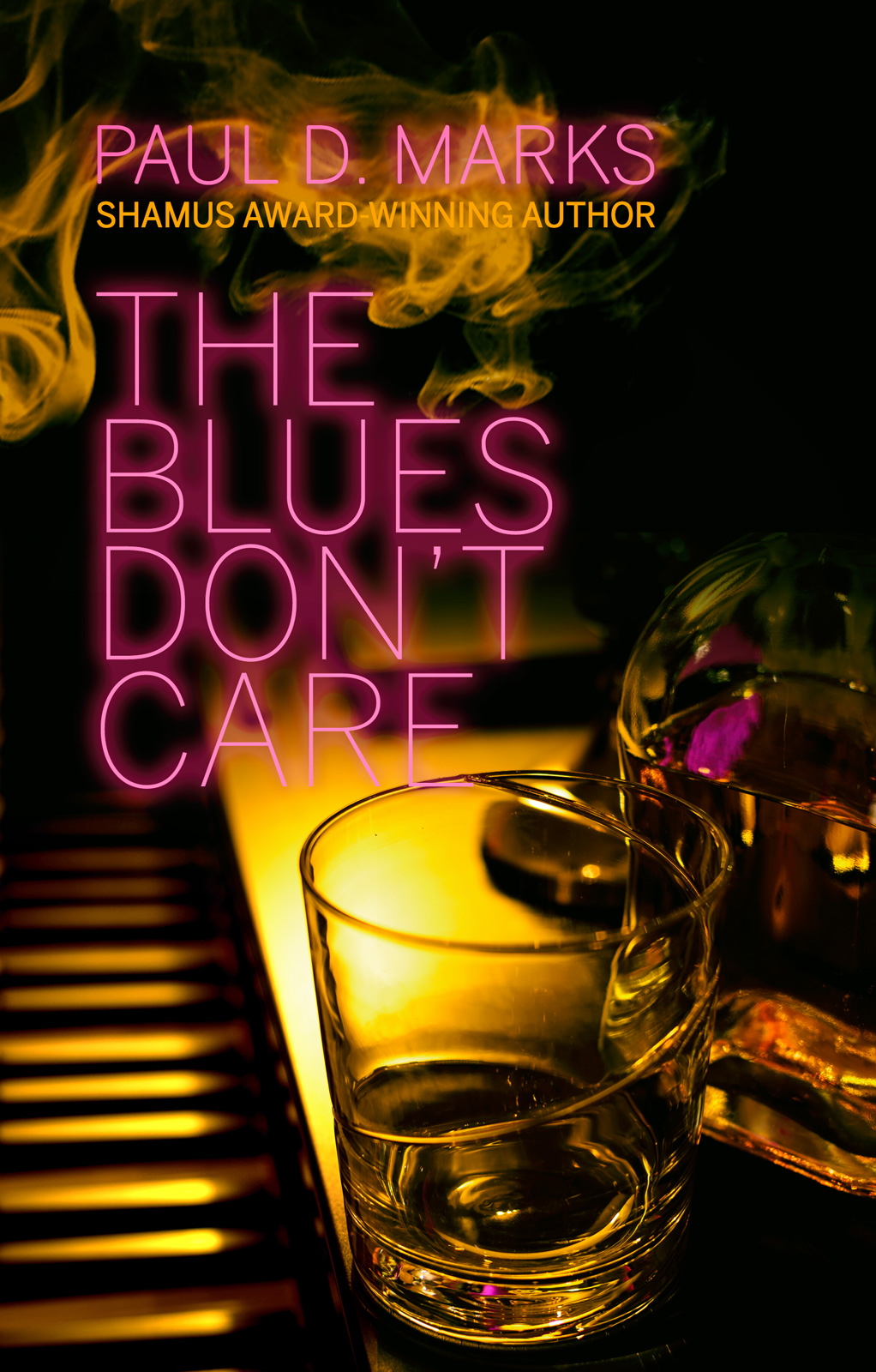
In my upcoming mystery-thriller The Blues Don’t Care (Down & Out, June 2020), Bobby Saxon has a lot to overcome. Not only is he the only white musician in an all-black swing band during World War II, he also has to deal with a society that’s not ready to accept him…in more ways than one. More to come on this.


All of these characters have to overcome their issues to survive and come out on the other side...if they can.

Another is the theme I’m drawn to of memory and the past and how those things affect the characters in the present.

Howard Hamm in my Ghosts of Bunker Hill series that’s been appearing Ellery Queen Mystery Magazine (the latest of which is Fade-Out on Bunker Hill, from the March/April, 2019 EQMM) is a very modern man, but his best friend, Kevin, who’s murdered in the first story, is immersed in the past and lived in one of the old Victorian mansions that had been moved from the Bunker Hill neighborhood of Los Angeles to another neighborhood when Bunker Hill was being redeveloped. After Kevin’s murder, Howard begins to see the past and Kevin’s obsession with old-timey things in a different light. And many of the mysteries revolve around conflicts that start in the past and find a way into the present.


Bringing it back ‘round to the beginning, all of the elements really need to work together. I might have a preference for playing up character over plot or theme/action/description/dialogue, but you still need all the elements for a story to stand up on its own. And if you overlook any one element the story will not have the connection you want it to have with your readers.

~.~.~

And now for a little BSP:  I’m running a free promotion for people who subscribe to my newsletter. You can get a FREE e-copy of my novel Vortex. Just subscribe. And if you’re already a subscriber and want the novel contact me via my website or e-mail and I’ll send you the link for the download.


***

I'm also excited to announce that I've got a new book coming out in 2020: The Blues Don't Care. It's a little different for me. It's set in 1940s Los Angeles jazz scene during World War II. I hope you'll keep checking in for more news on this exciting new release. (See book cover above.)

***

On a different level, I hope you’ll check out my recent post at SleuthSayers: More Stars Than There Are In Heaven: My interview with Steven Bingen, one of the authors of MGM: Hollywood’s Greatest Backlot. Today at SleuthSayers.


Please join me on Facebook: www.facebook.com/paul.d.marks and check out my website  www.PaulDMarks.com


Thursday, February 21, 2019

Metaphors in the Attic

READING: What book did you not enjoy, but motivated you in your own writing?

by Catriona 

This is timely. In the last month I've given up on a recent hit crime novel  - lauded as "original", "a triumph", "blisteringly real", "utterly compelling", "beautiful"  and "astonishingly good" . . . I made it to page fifty before breaking my "give it a hundred pages" rule over my knee and throwing both bits behind me.

Then I read Flowers in The Attic.  Oy, oy, oy.


Flowers in The Attic was yet another bit of American popular culture I felt I'd missed out on that would be worth catching up with. And enough reliable pals praised it - looking at you, Kristopher Zgorski - for me to give it a go.

SPOILERS AHEAD

The incest - consensual between siblings, not child abuse by an adult - was believable in the context and served as evidence of the mess these kids were in. BUT the lingering over the details was still - here comes a literary theory analysis - icky. And I learned nothing. I already knew that the authorial stance you take in relation to potentially titillating details is crucial.

Then - seriously, SPOILERS - one of the kids died. A little boy with golden curls who'd tamed a mouse and learned to play the banjo . . . died.  Not since I switched off that episode of season one of The Wire and sat staring at the black telly screen, have I been so reluctant to believe what my eyes just told me. "Maybe he's been hidden? They didn't see the body. Keep reading."

But no. He died. I didn't exactly learn anything from that. I already knew it was wrong because Stephen King (curtsy) said, on a discussion about the difference between a short story and a novel - "Misery" or Misery -  that "no one wants to root for a guy over three hundred pages only to discover that between chapter sixteen and chapter seventeen . . ."


Of course, little Cory wasn't the hero of FitA. But still there was something off-kilter about his death and its aftermath. It served as a reminder that if you're going to kill a child in fiction, you need to get it right. I think it can't be tidy, facile, quickly handled, plotty, or convenient. It can't be a lesson. It shouldn't have the look of a fridge-magnet homily.  

I think if you're going to kill a fictional kid it should be like that episode of The Wire. It should be shocking. 

But what I really learned from FitA was the importance of pacing. And that's a lesson I badly need*. The book - after Cory's death - fell off a cliff. The plot start to move faster and faster and the resolution I'd been rooting for for three hundred pages wasn't just rushed. It was cursory. I was left with the suspicion that, sometime towards the end of the writing, Andrews got the idea that it was going to be a series and didn't want to leave herself with nothing to say in book two.

I have no evidence for that. But I took it to heart anyway. Forget the career. When you finish a book you should be completely spent; everything on the page and nothing up the sleeve.

*My editor fixes the results of this habit of mine before anyone else ever sees it, by the way. I close the draft with a bang. She pleads for another chapter or two. I moan and do them. She's right. I'm wrong. The book is better than the draft was.

So, all in all, I'm glad I read Flowers in the Attic. I could have lived a happy life without the image of that amaryllis stalk swelling into a plump bud, mind you. That was worse than Hitchcock's worst.

Should have left it here, Hitch.
And the recent "vivid gem", "tragic and brave", "poignant" and "unputdownable"? It was a debut. And it taught me to stop worrying that I maybe don't have another book in me after twenty five of the things have come out of me. Instead, I'm going to be glad I'll never write a first book again.


Wednesday, January 30, 2019

Finding what works

Have you ever written fan fiction? A pastiche? Tell us about that. If not, did you start out writing derivative fiction before finding your own voice? And you can tell us about that, too.

by Dietrich

I’ve never taken a popular character from an original work and created a story from that. And I haven’t purposefully tried to imitate another writer’s style, although there are plenty of authors who’ve inspired me to write. I like to make up my world and characters, yet the new book I’m working on now is based on a true story that intrigued me, and it sure feels different from writing pure fiction. It takes more research to make it accurate, getting how these people thought, behaved and how they spoke. And there’s a good mix of fiction in there too. In the end, whatever gets a writer inspired to write a story, or whatever gets a new writer working to find their own voice and style is probably worth a shot. 

It’s not automatic. Like anything, it takes practice to become good at it.
I think the most important thing for a writer is to find their own voice so they can tell their own story, and that takes some work. I started out writing short stories, and aside from my love for reading short stories, it allowed me to play around with genre and style, working at it to find what best suited me, long before I tackled something novel length. And after writing a lot of shorts, I finally did stumble on what worked. And from there, I just played on those strengths and kept going.

In a Time interview, Elmore Leonard was asked if he had any advice for young writers. “I would say just start writing. You’ve got to write every day. Copy someone that you like if you think that perhaps could become your sound too. I did that with Hemingway, and I thought I was writing just like Hemingway. Then all of a sudden it occurred to me, he didn't have a sense of humor. I don't know anything he's written that's funny.”

And I know I’m not alone in believing that reading is very important for a writer. I try to choose books that will inspire me, those novels that have me shaking my head at how good they are, those writers with soul in their words.

“It’s inspiring to read great writing. Read everything — trash, classics, good and bad, and see how they do it. Just like a carpenter who works as an apprentice and studies the master. Read! You'll absorb it. Then write. If it is good, you'll find out.” — William Faulkner 

“Reading is the sole means by which we slip, involuntarily, often helplessly, into another’s skin, another’s voice, another’s soul.” — Joyce Carol Oates 

We’ve all got our own idea of what’s good, and a writer has to know where they want their writing to go. To make it work for me, there has to be a drive and a love for what I’m writing. There’s an excitement to starting with a single idea for a scene and seeing the world it turns into, all the while characters are growing and plots and subplots are taking shape, and twists and turns keep coming as I work on the story. What could be better than that?

Wednesday, August 15, 2018

What’s in a name?

How do you choose your titles? Put a bunch of words in a hat and pull them out at random? Use a title generator? Does your publisher do it? Do you find it easy or hard? Do you start with a working title, or just start writing? Has the title ever stayed the same? Is there a title you wish you could steal?

by Dietrich Kalteis


Sometimes the title comes to me before the story even takes shape, sometimes it comes from a scene or a line I’m writing, and often it changes long before I submit the story. 

A title has to grab the reader. Maybe you can’t judge a book by it, but a strong title will surely get somebody to pick it off a store shelf and have a look. 


Title ideas can come from just about anywhere, and there’s nothing hard about coming up with them, it’s more about knowing when I’ve got the right one. Some of my story ideas sit on the back burner long before I start writing them, and I sometimes think about them while still working on the last story. So, by the time I start that first draft, I’ve often got a working title. And it may not be perfect, but I keep it until something better comes along. The same goes for ideas for scenes and the names of characters.

I’m fortunate to have a creative family to bounce ideas off, and I always ask my wife and son what they think of my titles and other ideas I come up with. Sometimes the thumbs go up, and sometimes they go down, but it always helps. And sometimes they come up with something better – like when my wife came up with the title Poughkeepsie Shuffle, which replaced the working title I had at the time.

The titles for House of Blazes and Zero Avenue came as soon as I started thinking about the stories, and they just felt right. Triggerfish started with a different working title, which changed as the story took shape. The same thing happened on the one I’m working on now.

A couple of my favorite book titles started out with working titles. To Kill a Mockingbird was originally called Atticus. And Jacqueline Susann’s Valley of the Dolls was originally called They Don’t Build Statues to Businessmen. A couple of good examples of why you want to get the title right.

Sometimes the name or a line from a song can make a perfect title. The Deadbeat Club came from a song by The B52's. It just suited the story. And I’ve been asked if my first one Ride the Lightning came from the Metallica album of the same name. It actually came from police slang, meaning to get tasered. And I understand the expression can also mean to fry in the electric chair.

The worst thing about coming up with the perfect title is doing a search and finding out that the perfect title has already been used. Although it gives you a sinking feeling, it might not be a big problem if the other book is in a completely different genre and hopefully printed a long time ago.

Coming up with a title is part of the creative process, and I wouldn’t want to rely on something like a title generator. I need to trust myself to come up with it and know when it’s right. The bottom line is that by the time the novel goes to my publisher, I have to feel 100% sure about every aspect of it.

And the last part of the question: Is there a title you wish you could steal? Here are a few from across the genres that really grabbed me: Cat on a Hot Tin Roof by Tennessee Williams, The Gathering Storm by Winston Churchill, The Hitchhiker’s Guide to the Galaxy by Douglas Adams, A Clockwork Orange by Anthony Burgess, Death to Smoochy by Danny DeVito, Go the Fuck to Sleep by Adam Mansbach, Of Mice and Men by John Steinbeck, The Electric Kool-Aid Acid Test by Tom Wolfe, The Winter of Frankie Machine by Don Winslow, and One Flew Over the Cuckoo’s Nest by Ken Kesey. I could probably go on and fill several pages.