Showing posts with label Zero Avenue. Show all posts

Wednesday, April 20, 2022

Better safe than sorry

“But I really want to use that quote.” Where do you go for legal and copyright advice? Do you ever use public or historical figures in stories? A song lyric? A meme you saw (after fact checking I hope)?


by Dietrich


A few years back, I wrote Zero Avenue, a story which centers around a female punk rocker trying to break into the punk music scene during the late seventies. I wanted to use lines from song lyrics in the chapter titles, having never bumped into copyright issues up until that time. My publisher and editor shook their heads, cautioned me, and set me straight.
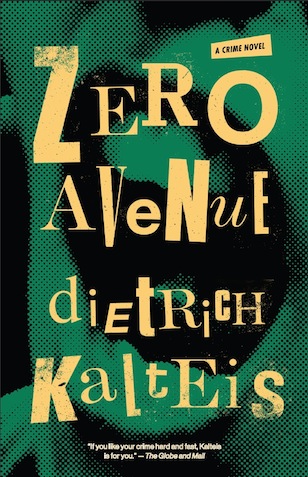

Looking it up, I found out there’s a no-number-of-words rule, meaning permission is needed for as little as one lyric line. And there’s no percentage or minimum word count, so even a partial line might be considered copyright infringement. If the material is protected under copyright then even substantial similarity means it’s best to get permission. And it’s interesting to note that while lyrics are protected by copyright, song titles aren’t. I was also surprised to find out the Beatles’ “Yellow Submarine” and David Bowie’s “Ziggy Stardust” are trademark protected.


So, for Zero Avenue, I was free to mention song titles, but my character, Frankie del Rey couldn’t sing any actual song lyrics, but she was free hum along, or being punk, she could bang her head against a wall or table to the beat of the music.


Do I need permission to use quotes? I tune in to the way people speak and exchange with each other, and I often jot interesting expressions or exchanges down — not something I’m likely to get into hot water over. If it’s a quote by a famous person, and if it’s used in a positive way, along with proper attribution, then it’s probably alright.


As I understand it there are limitations to copyright.: After a copyright holder’s death, the work falls into public domain and is from then on no longer protected by any intellectual property laws. The public owns these works, and anyone can use them without having to seek permission.


Have you ever used public or historical figures in stories? As a matter of fact I have, and although there may be a few gray areas here, a public figure’s right to privacy expires after they die, so it’s okay to mention or use them in fictional settings.


In order to avoid confusing fictional characters with living people, there’s often a disclaimer along with works of fiction, something like: The characters in this book are entirely fictional. Any resemblance to actual persons living or dead is entirely coincidental. 


Copyright and memes: Since a meme is a derivative work, the meme’s creator isn’t likely the legal copyright holder of the original work in the first place. But, I’m way over my head here, so it would be best to ask a copyright lawyer about it.


Being far from an expert on the subject of copyright, I live by one simple rule: When in doubt, I seek any necessary permission or professional advice from a lawyer specializing in copyright law, because it’s far better to be in my studio writing than in a courtroom trying to explain things to a judge. 

Wednesday, April 10, 2019

On a Roll

Has your approach to writing changed during the time you’ve been published? What was the change in response to? Or, if not, have you considered other approaches and rejected them? What were they, and why?

by Dietrich

There are times I think it’s best to stick to what works, and then there are times I want to try something new. 

Since I started writing the process has become easier. Confidence came along, and I generally know when I’ve got it right. I’ve also learned to recognize when it’s time to stop. But, I don’t want to become so comfortable that the writing becomes routine. So, it’s good to take a new approach or a chance now and then. I’ve tried different genres, different points of view and perspectives and explored various settings and eras.

My first three novels were unrelated modern-day crime stories written in third person, all set on Canada’s west coast where I live. Then I tried a historical novel, House of Blazes, set in San Francisco during the great quake and fire of 1906. It was interesting and involved a lot of research and fact checking. Then it was back to Vancouver for the onset of the punk rock era during the late seventies. It was an intriguing period in music and that one, Zero Avenue, was seen through the eyes of a female protagonist. I followed it with the current one, Poughkeepsie Shuffle, written in first person and set in the mid-eighties in Toronto where I used to live, and alternating between upstate New York. The one coming out in October is Call Down the Thunder, and it’s set in Kansas during the dustbowl days of the late 1930s. Again, there was a lot of research. And I followed that with a story that starts in Vancouver and takes readers up to Alaska. It’s due out next year. Right now I’m focused on a true story about a couple of lesser-known bank robbers who were at large in the Plains during the late thirties.

I wrote my third and fourth novels simultaneously, alternating between drafts. I thought that taking a long break from the first draft of one while getting started on the next one could be a good way to go. Then I alternated back and forth until they were both complete. It did work out in the end, and they were both finished in about a year and a half, but I doubt that I’ll try it again.

My first drafts are usually penned in longhand. There’s something organic about it. Then I type the second draft into my computer. It’s so much easier to deal with the amount of changes I make at that stage. Plus, I can only imagine my publisher’s reaction if I sent them a manuscript written in longhand.

I generally do my best writing early in the day, and I often go from the time I get up until about noon. Sometimes I write again in the early evening. I just have more energy and a clearer head at those times.

One thing that remains the same for me, it’s a creative expression, one that needs a high level of belief and enthusiasm in what I’m doing. And that level needs to carry me through from beginning to end. I think if I couldn’t maintain that, then I doubt a reader would want to stick with the story either.

For inspiration I read a lot, and I like anything from crime novels to science fiction to autobiographies, as long as I feel the writing is good. I’ve recently revisited a couple of old favorites: A Clockwork Orange by Anthony Burgess, published in 1962, and Deliverance by James Dickey, published in 1970. I also just finished George Pelecanos’ The Man Who Came Uptown, The Good German by Joseph Kanon, and House of Earth by Woody Guthrie. All very good and all very inspiring.

Wednesday, August 15, 2018

What’s in a name?

How do you choose your titles? Put a bunch of words in a hat and pull them out at random? Use a title generator? Does your publisher do it? Do you find it easy or hard? Do you start with a working title, or just start writing? Has the title ever stayed the same? Is there a title you wish you could steal?

by Dietrich Kalteis


Sometimes the title comes to me before the story even takes shape, sometimes it comes from a scene or a line I’m writing, and often it changes long before I submit the story. 

A title has to grab the reader. Maybe you can’t judge a book by it, but a strong title will surely get somebody to pick it off a store shelf and have a look. 


Title ideas can come from just about anywhere, and there’s nothing hard about coming up with them, it’s more about knowing when I’ve got the right one. Some of my story ideas sit on the back burner long before I start writing them, and I sometimes think about them while still working on the last story. So, by the time I start that first draft, I’ve often got a working title. And it may not be perfect, but I keep it until something better comes along. The same goes for ideas for scenes and the names of characters.

I’m fortunate to have a creative family to bounce ideas off, and I always ask my wife and son what they think of my titles and other ideas I come up with. Sometimes the thumbs go up, and sometimes they go down, but it always helps. And sometimes they come up with something better – like when my wife came up with the title Poughkeepsie Shuffle, which replaced the working title I had at the time.

The titles for House of Blazes and Zero Avenue came as soon as I started thinking about the stories, and they just felt right. Triggerfish started with a different working title, which changed as the story took shape. The same thing happened on the one I’m working on now.

A couple of my favorite book titles started out with working titles. To Kill a Mockingbird was originally called Atticus. And Jacqueline Susann’s Valley of the Dolls was originally called They Don’t Build Statues to Businessmen. A couple of good examples of why you want to get the title right.

Sometimes the name or a line from a song can make a perfect title. The Deadbeat Club came from a song by The B52's. It just suited the story. And I’ve been asked if my first one Ride the Lightning came from the Metallica album of the same name. It actually came from police slang, meaning to get tasered. And I understand the expression can also mean to fry in the electric chair.

The worst thing about coming up with the perfect title is doing a search and finding out that the perfect title has already been used. Although it gives you a sinking feeling, it might not be a big problem if the other book is in a completely different genre and hopefully printed a long time ago.

Coming up with a title is part of the creative process, and I wouldn’t want to rely on something like a title generator. I need to trust myself to come up with it and know when it’s right. The bottom line is that by the time the novel goes to my publisher, I have to feel 100% sure about every aspect of it.

And the last part of the question: Is there a title you wish you could steal? Here are a few from across the genres that really grabbed me: Cat on a Hot Tin Roof by Tennessee Williams, The Gathering Storm by Winston Churchill, The Hitchhiker’s Guide to the Galaxy by Douglas Adams, A Clockwork Orange by Anthony Burgess, Death to Smoochy by Danny DeVito, Go the Fuck to Sleep by Adam Mansbach, Of Mice and Men by John Steinbeck, The Electric Kool-Aid Acid Test by Tom Wolfe, The Winter of Frankie Machine by Don Winslow, and One Flew Over the Cuckoo’s Nest by Ken Kesey. I could probably go on and fill several pages.

Wednesday, March 14, 2018

There is a line

Research is a little like an iceberg. A lot of it doesn’t show. How do you decide how much research to put into your work?

by Dietrich Kalteis

Depending on the story I’m writing I may go about the research differently from book to book. I look for interesting facts and details that lend authenticity and accuracy, which allows the reader to believe the settings and what’s going on in the story. When I wrote House of Blazes, set during San Francisco’s earthquake and fire of 1906, I found a wealth of historical information: archives, newspaper articles from the time, first hand accounts and diaries, historical books, archives, web pages. I also found hundreds of photos from the times. There was so much, I had to put blinders on, being careful not to turn the novel into a history lesson. The photos alone gave me fantastic descriptive images, and I picked up some great expressions of the times from the first-hand accounts and diaries. 

One of the best parts of researching a story is going to the location I’m writing about. Of course, it’s not always possible, but it helps to experience the where, as well as to meet the people, see the architecture and so on.

I didn’t have to work as hard or go as far when I researched for Zero Avenue, which is set during the early days of the Vancouver punk music scene. Although I didn’t live in Vancouver right at the time, it’s home now, and I know it well, along with most of the locations I wrote about. I’m also a longtime fan of the music which helped make it easier. And the same went for the next novel, Poughkeepsie Shuffle, (Sept. 2018), set in Toronto in the mid-eighties, where I lived at the time.

The folly of including too much information is a writer can step all over the story’s pace. The details are important, sure, but the story also needs that flow to hold the reader’s attention. So, it’s important to include the strongest images for the reader to paint the scenes I’m describing, all without slowing the story.

And the descriptions have to suit my voice. And more often they have to suit the voices of my characters if something is told from their point of view. Sometimes the details are just snippets and they get tossed around quite casually.

Accuracy is key in any research, so I try to cross-check the reliability of any information I find. If the details end up in the narrative then they have to be right; not so much if it’s coming from a character. They’re allowed to be flawed, the writer isn’t.

Surrounding and immersing myself with a sea of research, sketching diagrams, writing notes to myself, listening to music from a particular period, talking with people who experienced what I’m writing about, all of it helps get me into the setting, imagining what a different time or place was like.

And since I don’t usually plot ahead, it’s amazing what comes along via the research. Sometimes an account, fact or news story comes along and adds a subplot, lending another layer to the whole thing.

When I think of William Faulkner writing the outline for A Fable across his office walls, I appreciate how working on a computer makes the whole process easier and faster these days. I can edit or Google something in mere moments without even getting up. But there is something to the organic process, and I like to go to a library and look things up, and I like to write first drafts in longhand.

So how much research to put into the work? I go for details that paint the best visuals for the reader. It’s key to never let any detail slow the pace. The whole thing to move along with interesting visuals created through the help of careful research. Above all, the writing has to sound authentic.

Wednesday, January 17, 2018

A hell of a party

You are having a dinner party for eight, including yourself, in a memorable setting. Where is this setting and which seven characters in crime fiction would you invite and why?

by Dietrich Kalteis


This question makes me feel like I’m about to sit down at a dinner table of strangers in an Agatha Christie novel, just as the lights are about to go out. It also reminds me of the board game Clue. 

So, I’m thinking along the lines of an Agatha Christie mystery, but instead of setting the party in the dining salon of a Nile steamer, I’ll make it Vancouver and invite my character Rene Beckman from Triggerfish. He not only lives here, but he’s cool and he’s got a boat, and we could hold the party onboard. He could take us to some cove on the backside of Bowen Island where we could anchor and party on a remote beach.

And since it’s a make-believe dinner party, we’ll need a chef. Julia Child would be perfect, or if she’s unavailable, Meryl Streep could play Julia. Neither of them are from crime fiction, but somebody’s got to cook. And since the guests are from crime fiction and might be shady, we’ll need some security. Hercule Poirot would seem appropriate, but I’ll go with Inspector Clouseau to solve any potential crimes that might pop up. Hercule would get the job done, but Clouseau’s more likely to add some humor to the situation.

Now, the dinner guests. There are so many interesting characters in crime fiction, and as much as I’d love to invite Lew Archer, Mike Hammer, VI Warshawski, Phillip Marlowe, Amos Walker, Eddie Coyle, Easy Rawlins, Harry Hole, Jack Reacher, Lisbeth Salander, Travis McGee, Jackie Burke, Dave Robicheaux, Raylan Givens and Sam Spade, things would likely get too intense. And Spenser would be wise-cracking all night, Matt Scudder would drink all the booze, and Parker would likely make off with the silverware.

So, aside from Rene Beckman, I’d love to chat with Dara Addie, from my novel The Deadbeat Club, and Frankie del Rey from Zero Avenue, because they’re both cool and would likely get along, and Frankie could bring along her guitar and play some tunes. Besides, what writer wouldn’t want to meet some of his or her own characters — kind of like a dream come true, or finding yourself on a movie set. And along with Rene, Dara and Frankie, I’d invite Karen Sisco and Jack Foley from Elmore Leonard’s Out of Sight. If nothing else, there’s sure to be some interesting dinner conversation. We’ll just have to make sure Karen isn’t armed. Another couple that would be interesting, although scheming and possibly dangerous, would be Frank Chambers and Cora Papadakis from James M. Cain’s The Postman Always Rings Twice. Although it would be safer to opt for Marge and Norm Gunderson from the movie Fargo. He’s not exactly a crime fiction character, but he is married to the chief of police of Brainerd, Miinesota, and they’re a cute couple. 


The guest card is full, but maybe we can sneak one more onboard as a bartender or something. And it would be a toss-up between Hoke Moseley from Charles Willeford’s Miami Blues fame, or CW Sughrue from James Crumley’s The Last Good Kiss. They’re both intriguing characters, and either would know their way around mixing the drinks. And also, they could lend Rene a hand with the boat and help Clouseau keep an eye on the rest of the guests. 

It would surely be a memorable evening, one guaranteed to have good food, good drink, good music and lots to talk about. One thing I would bring along is one of those long handled flashlights just in case all the lights suddenly went out.

Wednesday, October 25, 2017

Getting out there

by Dietrich Kalteis

Many of us who blog here belong to writerly organizations (like Crime Writers of Canada, Mystery Writers of America, Crime Writers Association (UK), Sisters in Crime, International Thriller Writers etc.) and some don’t. What benefits do those who belong to such groups feel they derive from their membership, and – for those who don’t belong to any – why have you chosen that route?

I have to admit I’ve let some memberships lapse lately as I’ve become caught up in my own writing and all that goes with it. And I know there are a couple of writers on this blogsite who have spent countless hours working to make these organizations happen, and I can just hear them going tsk tsk if they read that. But, let me say, organizations like Mystery Writers of America, Crime Writers of Canada, and so on, are all worth checking out, especially for any aspiring and new mystery and crime writers. It’s a great way to connect to the local writing community, as well as a good way to network and get yourself and your work known. There are newsletters, opportunities to attend chapter meetings and take part in local writer events, promote books on their websites, and post events on online calendars.


Writing is pretty much a solo effort, so it’s important to step away from imaginary friends and get away from the desk once in a while. And another way to connect with other writers is through the various conferences and festivals that take place each year, like Thrillerfest, Bouchercon and Left Coast Crime. Most of which are also connected with writer organizations. Bouchercon and Left Coast Crime are held in a different city each year, and although traveling and attending can be costly, it’s a fantastic opportunity to network with the mystery and crime-writing community. The first Bouchercon I attended was in Albany NY in 2013, a great experience of meeting authors and readers and taking in author panels. It was also an opportunity to meet with authors in their natural habitat, the convention bar, standing around with a bunch of talented writers having a great time. These conventions are the perfect opportunity to take part in various panel discussions, pitch your stories to agents and publishers, and it’s also a chance to meet and chat with avid readers. One convention I’m looking forward to is Left Coast Crime which will be here in Vancouver in 2019. Although I haven’t been, the Harrogate Festival and Bloody Scotland would be awesome to attend.

Writing associations are also worth checking out. Aside from meeting others who write, you can listen to guest speakers, attend regular meetings, workshops and seminars. Then there are events like Noir at the Bar which are popping up all over. I organize a couple of these events in Vancouver each year, and I’ve attended and taken part in N@B events in L.A., Seattle, Toronto and Raleigh, NC. These events are another great chance to meet, mingle and hear other authors read from their latest works. If you’re an aspiring or debut writer, it’s a shot at joining the line-up and reading your work to a roomful of eager listeners. The events are always well attended, and many talented authors have graced our events with their presence, coming from as far as Toronto, Edmonton, Philadelphia, San Francisco, Denver and Seattle. So, if you’re in the neighborhood, you’re welcome to check out the next one here on Wednesday, November 1st. And as part of a book tour for Zero Avenue, I’m also taking part in a Noir at the Bar in Seaside, California on Friday, October 20th. A guaranteed good time. 
Social media is another good way to network, and I’ve made many connections with writers online who I eventually ended up meeting later on at some writing event. When I started writing, I joined Zoetrope, Frances Ford Coppola’s online workshop, where writers submit their screenplays and short stories and trade peer reviews. And I met some interesting writers there, got valuable help and even ended up having a couple of screenplays optioned through people I met. 

So, whether it’s for inspiration, information, promotion or socialization, it’s important to get away from the desk now and then and hang out with others who do what you do. And it’s amazing how helpful, friendly and supportive people who write about crime and some pretty gruesome stuff can be.

Wednesday, September 27, 2017

Closing thoughts on opening lines

by Dietrich Kalteis

As a writer, what do you make of readers who flip to the end and see what happens last first?

Flipping to the end of a novel to find out how it ends is like reaching under the Christmas tree when no one’s around and unwrapping a present, getting a sneak-peek, then rewrapping it, and trying to act surprised Christmas morning. To me, that just ruins the moment. 

The ending to a good novel is the wrap up of everything that came before. At times the author may hint at several possibilities to a story’s ending, or throw some last minute twists and surprises to keep the reader from predicting the ending. Maybe for some people, novels should come with spoiler alert stickers. 

William Goldman said, “The key to all story end­ings is to give the audi­ence what it wants, but not in the way it expects.”

While the ending to a good story is like the punchline to a good joke, I’m more interested in the first few pages of a book — the opening. If it doesn’t grab me, I may not read much more before putting the book down. If it doesn’t grab me, I won’t keep turning pages to see what the ending holds in store.

There’s a lot of promise in a strong opening, and it’s hard to imagine putting a book down that starts like this:

Some years later, on a tugboat in the Gulf of Mexico, Joe Coughlin’s feet were placed in a tub of cement. Twelve gunmen stood waiting until they got far enough out to sea to throw him overboard, while Joe listened to the engine chug and watched the water churn white at the stern.
Dennis Lehane, Live by Night

As Roy Dillon stumbled out of the shop his face was a sickish green, and each breath he drew was an incredible agony. A hard blow in the guts can do that to a man, and Dillon had gotten a hard one. Not with a fist, which would have been bad enough, but from the butt-end of a heavy club.
Charles Willeford, Miami Blue

When I finally caught up with Abraham Trahearne, he was drinking beer with an alcoholic bulldog named Fireball Roberts in a ramshackle joint just outside of Sonoma, California, drinking the heart right out of a fine spring afternoon. — James Crumley, The Last Good Kiss

Dennis Lenahan the high diver would tell people that if you put a fifty-cent piece on the floor and looked down at it, that's what the tank looked like from the top of that eighty-foot steel ladder. — Elmore Leonard, Tishomingo Blues

Great opening lines are real grabbers, but a great book is a combination of all the story elements that have to work together to keep me turning the pages. It’s the writer’s voice, the pace, plot, conflict, setting, and the characters and their dialog. And when it’s all working together, it’s like magic. I recently finished The Force by Don Winslow and it was like that for me, the story just fired on all cylinders. Another one I just read that was hard to put down was Trouble in Paradise, Robert B. Parker’s second Jesse Stone novel, and one of his best.

While I love to discover authors I’ve never read before, the greats are always worth revisiting because they just did everything so well. And although I already know the story’s outcome, I like to reread classics by Hemingway, Steinbeck and Salinger from time to time — those rare authors who mastered every aspect of a great story, from the opening line to the final scene. And there are great crime writers who I’ve read more than once authors like Raymond Chandler, Elmore Leonard, James Crumley, and Charles Willeford.

So, if a novel can be this great adventure, with a killer opening, interesting characters and dialog, with exciting and unexpected twists, and told in a voice that resonates, why flip to the last few pages to see how it ends?

Wednesday, August 16, 2017

The bits and pieces

Writers gather a huge miscellany of info - drafts, notes, contracts, plot ideas, pix, reviews, etc; do you have any tricks for keeping it all organized?

by Dietrich Kalteis

I don’t plot or outline my stories, it’s all seat-of-the-pants stuff, but under the surface I’m fairly organized. Electronic files and folders, that’s the key. I keep a general file on my computer for each category of what I write: novels, short stories, screenplays, etc. Then there are sub-folders for the drafts, edits, final files, cuts, reference files, character files, character names used, references, timelines, graphics, photos, marketing files, and so on.

When I finish a novel, I cull through the files and folders and toss out anything that I don’t need anymore. Clearing the clutter. And I start new ones for whatever I’m working on next. The trick is to keep it simple and organized, and in the end I just hold onto what I really need. 

Right now, I’m sifting through the final files for Zero Avenue, and except for copy edits, I’m pretty well finished the one after that, Poughkeepsie Shuffle. Meanwhile, I’m close to sending my publisher a final draft of a new story I’ve been working on, and I’ve got a longhand draft ready to key into the computer for the one after that. Then there are a couple of short stories I’ve been working on. So, with all that going on, I have to stay very organized.

I back up all electronic files on two separate drives. Everything. Every day. Hitting ‘command save’ has become a reflex — as my character Zeke Chamas from Zero Avenue might say, “It’s automatic, like scratching.” And it’s something I learned back when I was in the graphics field (saving, not scratching) — and yes, I learned it the hard way, by losing something I had been working on.

I write first drafts in longhand, keeping the pages in old-school folders. There’s something organic about working with pen in hand. Then the second draft gets keyed into my computer. I wish I could write the whole thing in longhand, but I edit and add too much, and my studio would just end up being a sea of crumpled paper by day’s end. Before the computer came along, I did type out a novel on my old Selectric. Working drafts were a mess of lines scratched out and scribbled notes, and the final draft was painted in Wite-Out and had cut strips of paper taped across the pages, not individual letters like a ransom note, but pretty close. There was never a clean final copy. It was all smoke, mirrors, correction fluid and tape by the time I had a submission ready to photocopy and send out. I guess I sometimes have this love/hate relationship with my computer, but it sure saves me a lot of time.

I still write myself little notes for whatever story I’m working on, and these litter my desk. They’re the little ideas that pop into my head and need to find their way onto the page.

When I wrote House of Blazes I did more research than for the novels set in present-day. The setting was the 1906 San Francisco earthquake, and in addition to the usual files, I had to keep some on ships, autos, dress, which buildings were destroyed, street maps, statistics, newspapers, files on army involvement, ships involved in rescue, a time sequence of actual events that ran concurrent with the story’s events, personal accounts, and so on. When I started out, I thought all that research and organization would drive me nuts, but I actually liked it and learned so many interesting facts along the way. After which I’ve gone on to write more novels steeped in history.

Back when I was writing mainly short stories, I kept lists of where each story had been submitted, often making simultaneous submissions to three publishers for each story, keeping track of rejections and what was still out there. Once a rejection came in, I’d send the story right back out to another publication, keeping track of all that.

In the end, coming up with a system that keeps me organized and avoids disaster sure gives me a lot more time for writing. 

Wednesday, August 2, 2017

Counting on words

Do you write to a specific pre-determined manuscript length? Does your publisher require you to stay within a word-count range?

by Dietrich Kalteis

I don’t outline or plot out my novels, so I don’t really know when I start out where it will end up, or how many words or pages there will be. A novel is generally considered to be north of 50,000 words, and nowadays publishers seem to prefer the length to be in the 70,000 to 100,000 word range. My novels average toward the lower end of that, but that’s how long it takes me to tell a story.

Of all the things that my publisher and I have talked about, novel length has never come up. I’m sure if my stories ran too short or long, it would get mentioned. Generally, my style is spare, and I try to be economical with my words and selective with description, and I’m always looking to cut anything that tends to slow the pace. If an editor feels parts of a story need trimming or something needs to be added, they make those recommendations.

When I’m writing first drafts, they often run light, maybe less than two hundred pages. Then on a second pass I generally expand and add some new ideas. And sometimes on a third draft I might even trim some of what I added in the second draft, taking out what isn’t working. If there’s a fourth draft, that’s usually reserved for cleaning up grammar and catching anything I missed on the previous rounds.

Along the same lines as pre-determined manuscript length, it would also feel restrictive to set a word count for myself every day. I just start tapping on the keyboard, and sometimes if I get through a couple of pages, I’m okay with that as long as they’re good words on those pages. Other days I breeze through a couple thousand words. It depends on the chapter(s) I’m working on. It also hinges on which draft I’m working on. For instance, when I’m working on a second draft, I’m often reading a lot of the characters’ dialog out loud, making sure their words sound authentic for each of them. So that takes away from how many new words or pages I get typed that day. 

There are talented authors who live by daily word counts, and there are many who write detailed outlines and plot every inch of the story and have a good idea of the novel’s length before they get started. In the end, there’s no right or wrong way to do it, it’s whatever gets it done.

Outside of classics like Animal Farm that ran about 30,000 words, or War and Peace which was about 500,000 words, there are probably readers who perceive a value to the number of pages of a modern-day novel. If a novel of two hundred and fifty pages retails for the same as one with three hundred pages, it could be equated to value. And perhaps a longer novel could be taken more seriously and seen as having greater depth and a stronger story line. 

Sometimes I reach for a longer or shorter book just based on how much time I figure I’ll have to read it. If I’m going on a trip, I might grab a couple of paperbacks, guessing how long it will take me to get through them. I sure wouldn’t want to run out of reading material while traveling. Being old-school I prefer paper, but e-readers would be perfect for traveling, letting one bring as many books as one likes, but books versus e-readers, let’s save that topic for another time.

And for those interested, my publisher ECW Press has put some advance copies of my upcoming novel Zero Avenue up on Goodreads, for giveaway during August.


Wednesday, May 10, 2017

Whatever works

by Dietrich Kalteis

Agatha Christie fueled the muse by munching apples in the bathtub, Jack Kerouac typed On the Road on an endless scroll. James Joyce laid on his stomach in bed, wearing a white coat, holding a blue pencil. Are there tricks you use to get yourself into that space where everything just flows onto the page?

I start writing between four and five every morning, with music playing through the headphones. Maybe that’s a little strange, but it’s something I started doing years ago when I sought a quiet corner to write. Away from kids, cats and dogs, and phones. At first the music just cut out any noise that distracted me. Then I found it kind of worked with the rhythm of whatever I was writing. Now, it’s a habit and I never write without music; and I play tunes to suit the mood and go with the rhythm of the scene I’m working on. For Zero Avenue which is set during the early days of the West Coast punk scene, I got my hands on as much of that sound as I could find and played punk rock for nine months until the novel was done. 

And I felt less strange about it after I found out that some of the greats had some writing quirks of their own to get themselves into that space: Zora Neale Hurston hired a guy to plug her ears while she typed to give her the silence she needed. Thomas Wolf wrote leaning on his fridge. Hemingway, Charles Dickens, Virginia Woolf, Thomas Wolfe, Lewis Carroll, Philip Roth wrote standing. Mark Twain, George Orwell, Marcel Proust, Robert Louis Stevenson, Truman Capote did it lying down. Edith Sitwell wrote lying down in an open coffin. 

Rudyard Kipling smoked cigars while he wrote, so did Amy Lowell, George Sand and H.L. Mencken. Maya Angelou’s fuel of choice was sherry. John Cheever and Victor Hugo wrote in their underwear. Agatha Christie, Benjamin Franklin, D.H. Lawrence, Edmond Rostand and Victor Hugo wrote in the bath. Carl Sandburg, Henry David Thoreau, Wallace Stevens and William Wordsworth took long walks before they sat down to write. William Burroughs and Hunter S Thompson did it stoned. Stephen King said in On Writing he writes with the door closed, and rewrites with the door open. 

Another habit, I carry a little notepad with me to jot down ideas that come to mind when I’m away from my desk, that way I won’t forget them, and my desk is usually littered with these little bits of paper. And I like to write first drafts and scenes in longhand before typing them into my computer. It feels somehow more organic. I also found some of the greats were particular what they wrote on: Vladimir Nabokov wrote his novels on 3X5 index cards, Jack Kerouac wrote On the Road on a 120 foot scroll, and Eudora Welty pasted her stories together in long strips. 

Okay, maybe getting up early, playing music and writing little notes to myself aren’t so strange, but they help get me in that space where everything flows on the page, and in the end, it just boils down to whatever works for each of us, right?

Wednesday, April 12, 2017

Crime novels to transport the reader

by Dietrich Kalteis
Many readers like to travel vicariously with a good book without having to move from the comfort of their armchair. Are there any crime novels that you particularly enjoyed that transported you to a place or time you had wanted to visit?

A good crime novel transports me, whether to another place and time and into some character’s world. Good writing does that, it draws you in and creates that world. Even a story set in my hometown needs to do that. Sam Wiebe’s Last of the Independents set in my home town is a good example.

And there are plenty of crime novels set in places I haven’t been or in other times in history. When it’s done right, the words on the page paint a picture and draw me in and transport me. And in a crime novel, there’s the thrill of experiencing what the story’s characters go through, things most of us would never do, a little like living on the edge without paying any of the consequences.

I recently reread Elmore Leonard’s Djibouti, one of his last about a film maker named Dara Barr, her grip Xavier LeBo and some happy-go-lucky pirates, al-Qaida terrorists and a Texas billionaire and his elephant gun. It’s often hilarious through Elmore Leonard’s quirky characters and sharp dialog. The story takes the reader around the waters of the Horn of Africa as Dara and Xavier get caught up in an attempt to blow up a hijacked tanker filled with enough liquified natural gas to take out the African city the book’s named after.  
 
Then there’s the classic Gorky Park by Martin Cruz Smith, set in Moscow toward the end of the soviet era. An excellent thriller that transports the readers, following chief inspector Arkady Renko through the streets and squad rooms of Moscow as he tries to solve the murder case of three corpses found in an amusement park. I’ve never been to Moscow, but this book makes it real and brings the setting to life because the writing is so convincing.

Eye of the Needle by Ken Follett takes the reader back to 1940 just ahead of the Allied Invasion of Normandy. A German spy in England, Henry Faber is called The Needle and obtains crucial information about the Allied offensive. Allied counter-intelligence came up with a scheme to convince the Germans the D-Day landings would occur in Calais. When the Needle finds out the landings will happen at Normandy, he tries to get the news to his command. He becomes a hunted man by the British, and must go on the run across Northern England and to Aberdeen, Scotland where he tries to rendevous with a U-Boat. This book just doesn’t let up as the Needle tries to escape.
 
James M. Cain’s The Postman Always Rings Twice was published back in ’34, and has been turned to film a couple of times as well. It’s a story of lust, murder and betrayal that holds up and takes the reader back in time, tells of a drifter named Frank Chambers who stops at some out of the way California diner and ends up working there. When Frank falls for Cora, the owner’s wife, they start an affair and plot to kill her husband. After they succeed, the police suspect them, and Cora gives Frank up for a lighter sentence. When the case falls apart, Frank and Cora try to reconcile, but in Cain fashion, there’s no neat ending in store for either one.

My next one’s called Zero Avenue, due out in October. It’s about Frankie del Rey, a promising musician and leader of the punk band Waves of Nausea. Frankie makes ends meet by running dope for a local gangster. She falls for club owner, Johnny Falco. When he finds out from Ernie, the Waves’ bass player, about the gangster’s pot fields out by Zero Avenue along the U.S. border, Johnny rips off one of the fields in hopes of keeping the doors to his struggling club open. And he might have got away with it, if it wasn’t for Ernie finding out what he did and trying to rip off one of the fields on his own. Ernie gets caught and the trail leads back to Johnny and Frankie. The story is set during the early days of the punk rock scene in Vancouver. I had a great time reliving the music and researching the bands and music of that time, most of which was pretty obscure.

I’ve written stories set in different times and places, from dustbowl Kansas to San Francisco at the time of the big earthquake, and I like the fact-finding that gives me all the bits and pieces to make these settings come to life. I love a story that transports me, so I guess it’s natural that I’d enjoy creating them.