
by Paul D. Marks
Pease, porridge, plot. Pease, porridge, theme. Pease and porridge in the plot, nine days old. Some like it plot, Some like it theme. Some like it character right on the beam. Okay, I’m a little off the beam here…. But down to business:

You need to have an exciting plot that moves forward, has some twists, turns and surprises. But you also need good and interesting characters or no one will care what happens to them. Theme tends to spring from these things as you write, at least it does for me. I don’t generally set out to write some theme, but because I’m me I have certain things that resonate with me and they tend to come out in my characters and writing. These include outcasts, people who are damaged, often dealing with or “recovering” from some physical or psychic wound. Others are dinosaurs (people who time has passed by one way or another), fish out of water, etc.
Things like dialogue, description, the business characters do while they’re talking, etc., are like the accoutrements in your house: wooden floors, paintings on the wall, sculptures and landscaping. They’re nice, but they’re on the surface. And, while they’re important, they won’t really matter if you don’t have a good foundation of character.
I once had a producer talk to me about the story vs. the plot. We were talking about a script and she kept saying “that’s the plot, but what’s the story?” I didn’t quite get what she was talking about. Aren’t plot and story the same thing? But then I finally got it: Plot is the chronological events that form the screenplay. Story is the underlying meaning, the human element—maybe what we’d call the B Story. In essence, story is what happens, to paraphrase John Lennon, while you're busy making other plans.

Sometimes I get an idea for a character and have to come up with a story to build around that character. Other times I have an idea for a plot or situation or just a snapshot of a scene that intrigues me and things build out from there.
But the thing I like best are the characters, who they are and how they interact with each other. Their struggles with others and with themselves. What their motivations are. What they want and what they’ll do to get it. Of course, you don’t want to hit the nail too on the head with any of this, but it does come out in the wash, so to speak.
I also like flawed characters, like Duke Rogers, the P.I. in White Heat. Or his partner Jack, who is very unPC. He’s a tough character. But I like to say that Jack might say the wrong things but he pretty much does the right thing. And people of all political persuasions seem to like him. And Duke is battered from growing up with an abusive father and that affects the actions he takes.

Ray Hood in Dead Man’s Curve (Last Exit to Murder anthology) is a man who’s lost his focus, his dreams and his purpose, and is desperately trying to get them back. The question is, how far will he go to get all of that back? When I submitted that story to the anthology editors I was worried they might cut out certain things that were more character-related than plot or moving the plot forward bits. They didn’t. Which made me very happy but also I think adds to the texture of the story and is really the most interesting part for me.

Winger, the Weegee-like photog in Poison Heart (from the Deadly Ink anthology), is so desperate for recognition that he finds pleasure in doing photo recreations of grisly murder scenes...until it all gets out of hand and becomes too real.
Darrell Wood in Howling at the Moon (Ellery Queen Mystery Magazine, Nov. 2014,) is jaded by war and life in general. He’s lost touch with his roots, causing him to question his priorities. He also shares a collective memory with his native American ancestors and that shapes his actions in the story.
In Windward (Best American Mysteries of 2018 anthology and winner of the Macavity Award for Best Short Story), P.I. Jack Lassen has retreated from the world to some extent and into in his bunker. He does come out to do his job, but he’s given up doing some of the things he loved, like surfing. And, though he takes pride in doing his job and doing it well and by the rules, maybe breaking some of those rules can get back some of his mojo back.

In my novella Vortex, Zach Tanner is physically wounded by war and mentally changed by it. This sends him on a collision course with the past and decisions he made that he deeply regrets now. That affects how he moves forward.
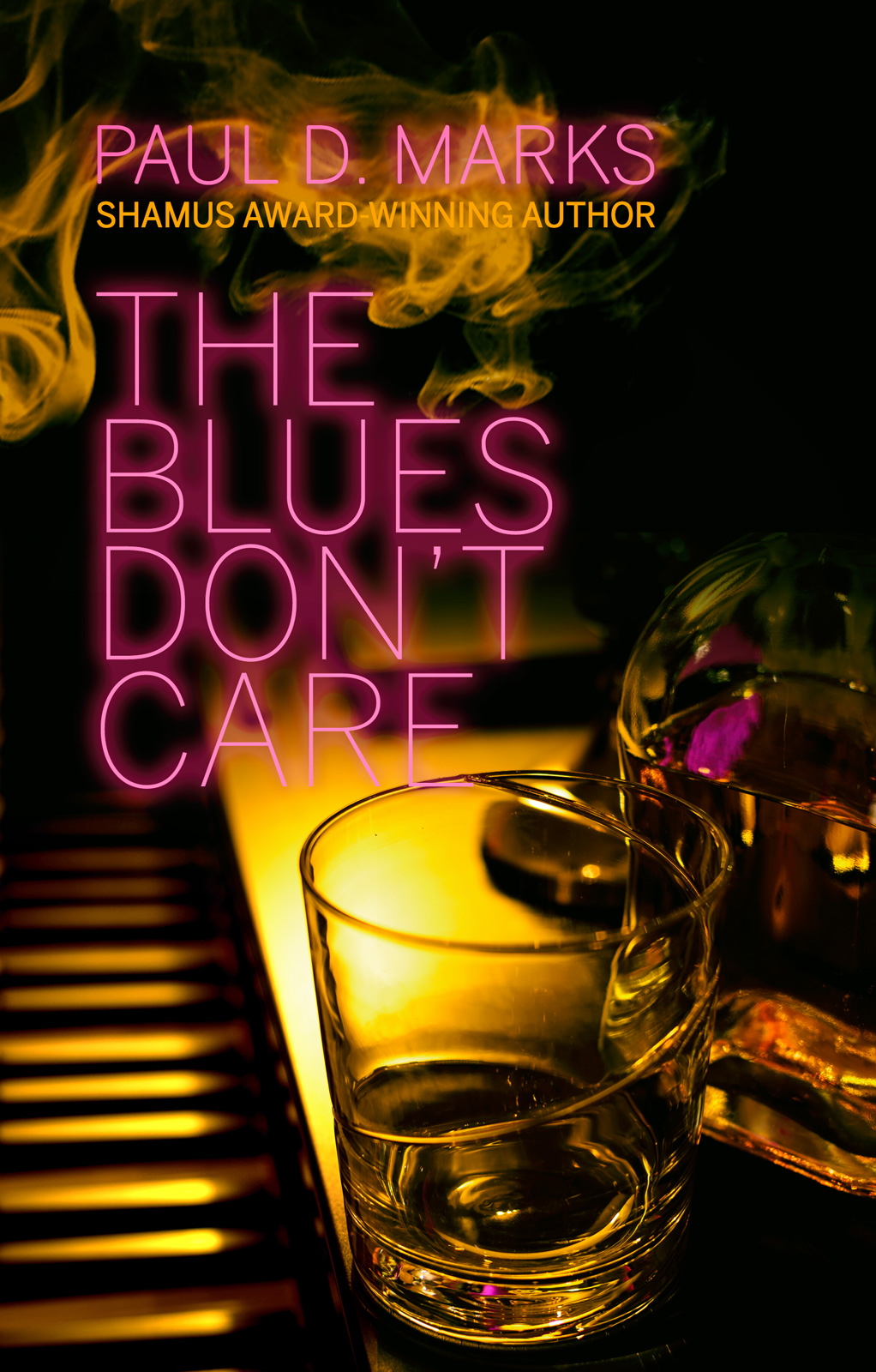
In my upcoming mystery-thriller The Blues Don’t Care (Down & Out, June 2020), Bobby Saxon has a lot to overcome. Not only is he the only white musician in an all-black swing band during World War II, he also has to deal with a society that’s not ready to accept him…in more ways than one. More to come on this.
All of these characters have to overcome their issues to survive and come out on the other side...if they can.
Another is the theme I’m drawn to of memory and the past and how those things affect the characters in the present.
Howard Hamm in my Ghosts of Bunker Hill series that’s been appearing Ellery Queen Mystery Magazine (the latest of which is Fade-Out on Bunker Hill, from the March/April, 2019 EQMM) is a very modern man, but his best friend, Kevin, who’s murdered in the first story, is immersed in the past and lived in one of the old Victorian mansions that had been moved from the Bunker Hill neighborhood of Los Angeles to another neighborhood when Bunker Hill was being redeveloped. After Kevin’s murder, Howard begins to see the past and Kevin’s obsession with old-timey things in a different light. And many of the mysteries revolve around conflicts that start in the past and find a way into the present.

Bringing it back ‘round to the beginning, all of the elements really need to work together. I might have a preference for playing up character over plot or theme/action/description/dialogue, but you still need all the elements for a story to stand up on its own. And if you overlook any one element the story will not have the connection you want it to have with your readers.
~.~.~

And now for a little BSP: I’m running a free promotion for people who subscribe to my newsletter. You can get a FREE e-copy of my novel Vortex. Just subscribe. And if you’re already a subscriber and want the novel contact me via my website or e-mail and I’ll send you the link for the download.

***
I'm also excited to announce that I've got a new book coming out in 2020: The Blues Don't Care. It's a little different for me. It's set in 1940s Los Angeles jazz scene during World War II. I hope you'll keep checking in for more news on this exciting new release. (See book cover above.)
***
On a different level, I hope you’ll check out my recent post at SleuthSayers: More Stars Than There Are In Heaven: My interview with Steven Bingen, one of the authors of MGM: Hollywood’s Greatest Backlot. Today at SleuthSayers.
Please join me on Facebook: www.facebook.com/paul.d.marks and check out my website www.PaulDMarks.com
Click here to: Subscribe to my Newsletter


