Showing posts with label Big Band. Show all posts

Friday, June 19, 2020

Who's Hiding Behind Your Characters?

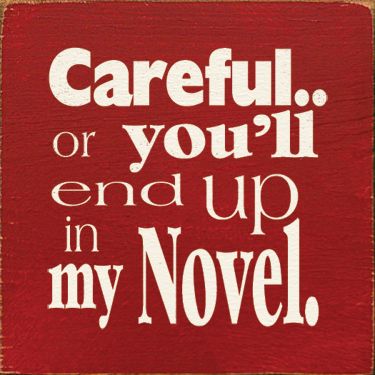
Do you ever base characters on real people? Famous or people you know in your real life. And, if so, how do you deal with that?

by Paul D. Marks

This is sort of a two part question. First there’s the question of basing characters on people that you know. Then there’s the question of basing them on celebrities or historical figures. I do both.

A lot of my characters are based on people I know —including on myself. I think there’s a little piece of me in all of them. Or sometimes a bigger piece. But when I do base them on people I know or who I’ve come across they’re usually composites of multiple people. So far no one’s come up to me —probably because the people I know don’t read my books, just kidding —and wanted to bop me on the head for a portrayal. Most people see the good and the heroic in a character in themselves. They don’t see the bad.

Villains are often based on people I’ve come across one way or another. At least certain traits of theirs. But I don’t want to make them exactly like the real person for obvious reasons.

Just released 6/1/20
In my just released novel The Blues Don’t Care, the main character, Bobby, is loosely inspired by a real person. But that person didn’t become a detective in any way, at least to my knowledge. There are other characters in the book also inspired by real people. Tony Leach, the gangster who runs the gambling ship off the L.A. coast, is sort of a combination of infamous L.A. gangster Mickey Cohen and Tony Cornero, the guy who ran the real gambling ships off the coast. But probably a little kinder and gentler than either, though still a gangster under his fancy suits. Cary Grant’s real name was Archie Leach and the gangster’s last name was chosen because of that, so he has a little of Cary in there too. (See my website for my close encounter with Cary Grant.) Bobby’s tough guy pal, Sam Wilde, is based on some people I knew, though I knew them in contemporary times but set their character traits in the 1940s of the story. And there’s a character in The Blues Don’t Care, Mary Cooper, named after a girl I knew a long, long time ago. I’m sure she hasn’t thought of me in ages. But she crosses my mind every once in a while and since she’s a benign character in a small part I used her name. Others in that story are also composites of real people.

In Broken Windows, the second in my Duke Rogers series after White Heat, there’s a producer character named Joseph Hartman who, if you call him Joe the thunder will reign down. He is definitely patterned after a real person —or at least that affectation is patterned on a real producer. Though I think when I’ve mentioned him before I conflated him with another famous person who hung up on someone for calling them by their first name.


I sometimes pepper real people into a story because it hopefully gives the reader a sense of verisimilitude (one of my favorite words) —a sense that the world the characters inhabit is a real world with people they know and landmarks they might have heard of. But you have to use the people in small cameos and not show them in a bad light unless there’s something demonstrably provable that they did that you want to include. They might get only cameo parts but it gives the story a feeling of being set in the real world. For example, in Blues Don’t Care Bobby runs across Gable at the zigzag moderne Sunset Tower Hotel and Louis B. Mayer at the Coconut Grove, as well as others in various situations. The book is, after all, set in Los Angeles and seeing movie stars from time to time is part of the L.A. experience:

Someone bumped into Bobby.
“Excuse me,” the man said in a familiar voice.
Bobby was too flustered to respond to Clark Gable, as the King of Hollywood walked past. Bobby went to the front desk.
“May I help you?” the clerk asked.
“I’d like to see Tony Leach.” The words stumbled out. Bobby hoped his nervousness didn’t show. He’d heard that Leach lived here. Bugsy Siegel too, as well as several movie stars off and on. Infamous gossip columnist Hedda Hopper had said so.
“Can you just call up and tell him Bobby Saxon, from the ship’s band, is here.”
“You play in a band on his ship? I’m afraid he’s too busy for—”

And in Broken Windows, Duke, the main character, goes to a producer’s house above Sunset Boulevard. He finds two Jags in the driveway and expensive art in the house. The character who lives in the house is the Joseph Hartman character mentioned above. But in real life the producer who lived there was another person. And in real life, though he lived in the lap of luxury he wanted me to work for free.

And then there was the time that I based a character on another producer—a major ass—in a script I was rewriting…for him. He never made the connection. And I’m not telling what it was.

The character of Warren in White Heat is based on a friend of mine, though someone who isn’t as angry as Warren.
Duke Rogers series

So, yes, I base characters on people I know or have come across. Which is a good way to have more realistic, well defined characters ’cause you have real life experience in how someone acts.

Everyone I come across is fodder, the way they look, the way they talk. Their character, etc. Not just people I know, but people I may cross paths with for only a few seconds or a few hours. A clerk, someone on a street corner. Someone in a bar. It’s like we costume our characters, disguise them and send them out into the world incognito.

The first novel I wrote, about a screenwriter trying to make it in Hollywood, was basically a roman a clef. All the characters were based on people I knew, some very well known, others obscure and struggling, including little ol’ me.


So, not only do I base characters on family and friends, but on people I dislike, too, enemies. And isn’t that fun? We get our little revenges against people who’ve wronged us and, as long as we disguise them somewhat, we get away with it. What’s better than that? Sometimes just naming the bad guy after someone can be a satisfying way to get back at someone who wronged us.

So, yes, everything, everyone, is fodder. So be nice or reach a gruesome death…at least on paper.
What about you? Tell us about how you base characters on people you know.

~.~.~

And now for the usual BSP:

The Blues Don't Care is getting some great reviews:

"It’s the first entry in what promises to be an entertaining and thoughtful series --- mysteries that not only have the requisite twists, turns, surprises and reveals, but also offer a penetrating look into our ubiquitous all-too-human flaws: greed, corruption, fear of the “other” and, especially, racism."
—Jack Kramer, BookReporter.com

"This is a beautifully noirish book, set firmly in the dark days of wartime and offering a sharp insight into the life and times of Los Angeles, 1940s style. Yes, it’s a mystery thriller, but The Blues Don’t Care is so much more than that, with historic detail, chutzpah, a cast of hugely entertaining characters, a really unusual protagonist and, best of all, a cracking soundtrack too."
—DeathBecomesHer, CrimeFictionLover.com


Please join me on Facebook: www.facebook.com/paul.d.marks and check out my website  www.PaulDMarks.com

Friday, May 8, 2020

Butcher, Baker, Troublemaker

Most of us - most writers everywhere - do something else first, or do something else alongside. What bits of your other career(s) have you found useful in the business of writing and what bits have you had to ditch?

by Paul D. Marks

Generally, I don’t like to talk about most of my checkered past. Nothing illegal or anything like that, just checkered. Maybe Chancellor of the Exchequer (or should that be Chancellor of the Excheckered?). But if it’s the “ex” chequer wouldn’t that make one the Ex Chancellor of the Chequer? But I digress.

I did a lot of things before my vaunted prose writing career. Juggler. Trapeze artist. Tail gunner in a B-17. Gumshoe. Well, the only one of those that even comes close to true is gumshoe and that’s only because I’ve had gum on my shoe…more than once even.

As you’ll see below (and above, too), I think this Covid-19 House Arrest is getting to me. I think virtually all of our experiences, good or bad, come into play in our writing one way or another. I’ve done a lot of things, written for radio, rewrites for films, made deliveries for a small business, worked in the mail room for a big company, pulled a gun on the LAPD and lived to tell about it (see the "about" section on my website for an abbreviated version of that story) and other things. But many things that play into my writing aren’t necessarily job-related.

Of some of the things I am willing to talk about:


I kidded the kidder:

I was visiting a friend on the set of “Mork and Mindy” during a rehearsal and I freaked out Robin Williams.  They were blocking.  No audience.  I was the only stranger there, someone he didn't recognize. He was anxious seeing a stranger on the set, having had some recent trouble with the tabloids.

He asked me if I worked for the National Enquirer. Strange question, I thought.  But I can give as well as receive, "Yes," I said, joking.  He freaked, though he didn't get nasty or anything like that, just uptight.  I finally told him I was kidding.  After the rehearsal he apologized.  It was fun kidding the kidder though.


I ran into him at a party for a rock star a couple weeks later. He smiled. We chatted a bit. He remembered “the incident”. He didn’t sic anyone on me. I count that as a victory. I don’t remember if I’ve used it in any writing, but it will make in there some day. But hey, I have to make this article interesting, don’t I? I did, however, use a Mork-Pam Da wber connection, Rebecca Schaeffer, as one of the inspirations for White Heat…


I did use this incident:

I went to a producer’s house in the Hollywood Hills above Sunset Boulevard. I drove up. Two Jaguars in the huge driveway. I go inside, nice (read expensive) art, nice (read expensive) furniture, expensive house (read insanely expensive) all the way around. Have my meeting with said producer and his partner and they want to option something…for free. All that ostentatious wealth and they don’t want to pay me for my property. That, in a roundabout way, made it into Broken Windows:

That was an easy one. But I was sick of being famous. I never asked for it. Sick of working for the Hollywood crowd, who thought they owned you just because they paid you, late more often than not, pleading poverty as they lived in the mansions above Sunset and drove Jags and Lamborghinis. Who knows, maybe it was all rented? Most of them were as much façade as the sets they filmed on. Which made me wonder about Susan Karubian? Why pick the Hollywood Sign to jump off? Another disappointed actress who didn’t know the ropes? Who didn’t know what it would take to make it in this town? She should have just gone home and slipped under the covers until the dream passed. Then she could have woken up one day with a smile and faced the world. After all, a new world’s born at dawn.


My friend Linda:

A long time ago, my friend Linda and I used to get in one of our cars, point it in a direction and drive. Go exploring L.A., from Pasadena to downtown to San Pedro and all points in between. It was fun. It was educational. We both love L.A. And we both love swing/big band music. So we’d also go to swing concerts, sometimes by unknown bands and sometimes by the remnants of the big bands from the 30s and 40s. We saw Tex Beneke, Glenn Miller vocalist and saxophonist, lead the Glenn Miller Orchestra. We saw Bob Eberly and Helen O’Connell sing their hits Tangerine and Brazil. And more (see my article https://www.sleuthsayers.org/2020/04/it-dont-mean-thing-if-it-aint-got-that.html at SleuthSayers). (And, unfortunately, this was all before digital cameras and the pix aren’t digitized or even easy to find.)

All of this has paid off in my writing. I’m a rock ‘n’ roll kid but I’ve been lucky to be exposed to all kinds of music and see much of it in person, too. And that certainly helped in my writing of various stories/novels, especially my upcoming novel The Blues Don’t Care (June 1st, 2020), a crime story set amidst the jazz scene on L.A.’s Central Avenue during World War II in the 1940s.

And all that driving around L.A. has certainly helped when I write things set in L.A., which I do a lot and sometimes maybe too much.

Linda and I both worked in the film biz. And that, too, has provided a lot of fodder for things in my stories. My 2019 story Fade-Out on Bunker Hill just placed second in the Ellery Queen Readers Poll (see the virtual awards ceremony on YouTube). It’s part of my Howard Hamm series. In that story, which riffs off the classic movie Sunset Boulevard, Howard Hamm gets “lost” on a Hollywood backlot. Whenever I had a meeting or other occasion to be at a studio I would always wander the backlots. I love them and the magic they stand for. So when Howard does his backlot wandering in Fade-Out it’s really me reminiscing about those days, though he finds much more trouble there than I did...


There are various Hollywood types in many of the things I write and you can bet that all of them are based to one degree or another on people I’ve met or worked with, though sometimes several people composited into one.

Much of my early Hollywood experiences made it into a satirical novel that was picked up by a major publisher and then dumped when they kicked out their old editorial staff for a new one and, as a new broom sweeps clean, my book was swept out with the new. The moral of that story is don't write topical humor, because by the time my book was thrown, er, swept out some of the humor was already dated so it was too late to try another publisher without a major rewrite. Though I will probably rewrite it one day sans topical humor cause I still like the story.

Crew member and me on the Warner Bros backlot
And people often ask how much of you is in your characters. There's a little of me in all my characters.  Some corner or part of them is based on me—and those parts are, of course, based on my experiences.  Other parts are based on people I've known or have come across.  Of course, I write a lot about crime and murderers and I've never murdered anyone…except on paper.  But still, you can reach into the dark side of yourself and draw on that for inspiration.  At some point we all want revenge of varying degrees on people who dun us wrong and in a novel or story you can get that revenge without worrying about going to jail.  So you reach into that dark corner of your mind and write as if you had a get out of jail free card.

So everything we do or experience turns up in our stories, if not directly then indirectly.

And then there’s the other things I did that I can’t tell you about ….or as they say “I’d have to kill you”.

~.~.~

And now for the usual BSP:

Frank Zafiro grilled me for the Wrong Place, Write Crime podcast. I survived...and so did he. Hope you'll want to check it out. (And thanks for having me, Frank!)

https://soundcloud.com/frank-zafiro-953165087/episode-75-open-shut-w-paul-d-marks


Coming June 1st from Down & Out Books – The Blues Don't Care:

 “Paul D. Marks finds new gold in 40s’ L.A. noir while exploring prejudices in race, culture, and sexual identity. He is one helluva writer.”
                                                               —Michael Sears, author of the Jason Stafford series


Please join me on Facebook: www.facebook.com/paul.d.marks and check out my website  www.PaulDMarks.com