Thursday, April 21, 2022

Copyright Is Not the Right to Copy by James W. Ziskin

Our question this week is about legal and copyright issues: “But I really want to use that quote.” Where do you go for legal / copyright advice? Do you ever use public or historical figures in stories? A song lyric?


Bombay Monsoon, copyright 2022 James W. Ziskin

Where do I go for legal/copyright advice? To the public domain, of course! No angry authors or songwriters waiting to sue (rightly so, by the way) for infringement of intellectual property. The fact that my books all take place in the past makes this strategy a little easier. But books and songs from the 1960s and 1970s—when my books are set—are still under copyright, so it’s not as if everything is free to use. How I envy authors who write about the 19th century and before. Anything goes.

In my books, I’ve occasionally cited song titles, but I’ve stayed away from quoting them directly. In Turn to Stone, which takes place in the late summer of 1963, for example, I mentioned several Italian pop songs from the late 1950s and early 1960s. I even had one of my characters singing the songs to Ellie, but no more than a couple of words appeared in the text. And I made liberal use of the lyrics from other songs that are out of copyright, including the Italian hymn of the partigiani, “Bella ciao.” No issues there.

For Turn to Stone, I borrowed from Boccaccio’s Decameron. But not only is that work out of copyright, it never was copyrighted in the first place! No such thing in the 14th century when it was written. I used the setting of that collection to frame my own novel, and inserted modified versions of a couple of the stories to provide clues to the mystery.

I had lots of fun with a couple of Beatles songs in Turn to Stone as well, but I didn’t quote the lyrics directly. I named the songs, of course: “She Loves You,” “Please Please Me,” and “From Me to You.” Mariangela, the fourteen-year-old daughter of the victim in the story, introduces Ellie to the Fab Four via those three songs. She exacts a promise from Ellie to make sure America discovers the Beatles, who in September 1963, were still a couple of months away from stardom in the US. I’ll leave it to readers (and common sense) to decide whether Ellie is responsible for the Beatles’ success in America.

In previous Ellie Stone books, I’ve included lots of classical music, though most of those pieces have no lyrics. In Heart of Stone, however, there’s an important clue revealed in Puccini’s aria “Mi chiamano Mimi,” but, again, copyright is no longer an issue.

Finally, have I ever inserted historical figures in my books? Not really. I mention famous people from the times, but I’ve never felt comfortable putting words into the mouths of real people. With one exception. In Cast the First Stone, set in 1962 Hollywood, William Hopper—he of Paul Drake fame on the Perry Mason Show—makes a quick cameo appearance. His one line to Ellie is, “Hiya, beautiful.”

Or is it two exceptions? There was the appearance of Jaipur and Ridan, the two Thoroughbreds who dueled in the 1962 Travers Stakes in Saratoga Springs. Those two champions ran to glory in A Stone’s Throw, as you can read in my last post (April 7, 2022). That thrilling contest was the greatest in the 150-year history of the race. And if we’re mentioning the two horses, I should also include Bill Shoemaker, who rode the winner and appeared in the winner circle.

So, my advice to writers is to avoid the risks of running afoul of copyright laws. Invent your own songs and poems to cite in your work. Or quote works that are already in the public domain. Copyright is not, after all, the right to copy.

 

Wednesday, April 20, 2022

Better safe than sorry

“But I really want to use that quote.” Where do you go for legal and copyright advice? Do you ever use public or historical figures in stories? A song lyric? A meme you saw (after fact checking I hope)?


by Dietrich


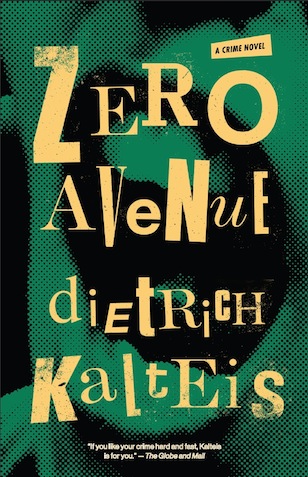
A few years back, I wrote Zero Avenue, a story which centers around a female punk rocker trying to break into the punk music scene during the late seventies. I wanted to use lines from song lyrics in the chapter titles, having never bumped into copyright issues up until that time. My publisher and editor shook their heads, cautioned me, and set me straight.


Looking it up, I found out there’s a no-number-of-words rule, meaning permission is needed for as little as one lyric line. And there’s no percentage or minimum word count, so even a partial line might be considered copyright infringement. If the material is protected under copyright then even substantial similarity means it’s best to get permission. And it’s interesting to note that while lyrics are protected by copyright, song titles aren’t. I was also surprised to find out the Beatles’ “Yellow Submarine” and David Bowie’s “Ziggy Stardust” are trademark protected.


So, for Zero Avenue, I was free to mention song titles, but my character, Frankie del Rey couldn’t sing any actual song lyrics, but she was free hum along, or being punk, she could bang her head against a wall or table to the beat of the music.


Do I need permission to use quotes? I tune in to the way people speak and exchange with each other, and I often jot interesting expressions or exchanges down — not something I’m likely to get into hot water over. If it’s a quote by a famous person, and if it’s used in a positive way, along with proper attribution, then it’s probably alright.


As I understand it there are limitations to copyright.: After a copyright holder’s death, the work falls into public domain and is from then on no longer protected by any intellectual property laws. The public owns these works, and anyone can use them without having to seek permission.


Have you ever used public or historical figures in stories? As a matter of fact I have, and although there may be a few gray areas here, a public figure’s right to privacy expires after they die, so it’s okay to mention or use them in fictional settings.


In order to avoid confusing fictional characters with living people, there’s often a disclaimer along with works of fiction, something like: The characters in this book are entirely fictional. Any resemblance to actual persons living or dead is entirely coincidental. 


Copyright and memes: Since a meme is a derivative work, the meme’s creator isn’t likely the legal copyright holder of the original work in the first place. But, I’m way over my head here, so it would be best to ask a copyright lawyer about it.


Being far from an expert on the subject of copyright, I live by one simple rule: When in doubt, I seek any necessary permission or professional advice from a lawyer specializing in copyright law, because it’s far better to be in my studio writing than in a courtroom trying to explain things to a judge. 

Tuesday, April 19, 2022

Who Said That?


Our question this week is about legal and copyright issues: “But I really want to use that quote.” Where do you go for legal / copyright advice? Do you ever use public or historical figures in stories? A song lyric? 

 In my third book, Dead Broke in Jarrett Creek, I had a famous country and western singer, Angel Bright, as a character.
You've probably never heard of her. Why? Because I made her up. I also wanted to use lyrics from a famous country and western song in the book but I didn’t want to deal with what I had heard were stringent legal issues regarding song lyrics. So I made up two songs for her: “I Just Called to Say Remember When,” and “Too Late to Come Home.” I even made up the tunes to go with them. I’ve always thought I should have the songs recorded, but never got around to it. But the point is, I could use the lyrics any way I wanted to, because I made them up myself. 

Here's a sample from "Too Late to Come Home": 
 "It’s Laura and Annie and Susie, 
Not to mention your old flame Jeanette. 
As far as I can tell you’re not planning to leave me, 
But you’re not done two-timing me yet." 

 And here's the chorus from "I Just Called to Say Remember When": 

 "Remember when you held me ever so tight? 
Remember when you and I lit up the night?
Remember when we were much more than just friends?
I just called to say remember when." 

 Maybe these lyrics won't stop the traffic, but for my purposes they worked fine. I’m sure some authors have important reasons to use real lyrics and real quotes, but I always think “made up” works better. Then, you don’t have to worry about using someone else’s creativity or being liable for money you didn’t intend to spend. 

 An author friend wanted to use words from a famous poem in the intro to his book. I understood why he wanted to use it. It melded perfectly with the sinister character he was using. He ended up paying several hundred dollars for the right to use the poem. He’s a good writer, and I wonder if he could just as well be served by writing a poem himself. 

 Here’s a question I have, though. Suppose you want to date your story by referring to a well-known band from the past like The Beatles. Would it be legal to refer to a song by them that they didn't really record? Something you have made up, and that you quote from? Like, “We were listening to The Beatles’ famous song ‘Arty Farty.’ I always loved the part where they sang, ‘If you want to sound smart, Pretend you know about art.’” 

 The Author’s Guild has a legal team that will give members advice about such matters. And I have friends who are entertainment lawyers who might even give me free advice, but whom I’d be willing to pay if particularly copyrighted material was important to me. 

Free "advice” about using song lyrics or copyrighted material is pretty easy to come by, but I wouldn’t use the advice from googling or from hearsay. Nor would I just go ahead and use it without worrying about whether what I was doing was legal. Because if you do run afoul of legal rights to material, it can be expensive. 

 There’s another realm in which you can get in trouble if you aren’t careful, and that’s use of photos. I use images from a photo app, for which I pay a subscription that seems expensive to me. But I always worry that if I use supposedly “free” photos, someone may pounce on my usage and demand payment. There are people who constantly troll websites and blogs for photographs that should have been paid for before usage. There are limits to usage demands, but the laws are obscure, and I don’t want to tussle with someone who has legitimate rights to their creative output. I am willing to pay to be sure I have the right to us it. And I actually prefer to use my own photographs when I can, because then I know I’m not infringing on anyone else’s creative output. For example, why would I use someone's else photo of an elephant, when I can use my own?
 

 Or as a more pertinent example, I knew I'd be wanting some photos of motorcycles when my book set at a motorcycle rally comes out next fall. So, I started taking random photos of motorcycles.
As for using historical or prominent figures, I do know that most usage of prominent figures is allowable, unless you are deliberately libeling them. So I would freely use the name of a governor or president or other prominent current or historical figures. But unless it was vital to the story, again I see no reason not to make it up. 

 So bottom line, when it comes to using lyrics or quotes or even photos, I mostly I make it up.

Sunday, April 17, 2022

The Legalities

“But I really want to use that quote.” Where do you go for legal / copyright advice? Do you ever use public or historical figures in stories? A song lyric? A meme you saw (after fact checking I hope)?

Brenda Chapman here.

This week's question brings up an important issue that I wasn't aware of when I started writing. Many times, I've wanted to use a song lyric in my story, or a quote at the start of the book to emphasize a theme or to enhance a passage. I discovered early on, however, that using more than six words (or is it nine) from someone else's work cannot be done without permission and likely reimbursement to the creator or the work. I recall another author telling me they'd paid $250.00 to use a song lyric, having contacted the composer and settling on this price.

The reason the rule is in place is to protect every writer's work so that it cannot be copied or used without permission while they're alive and for fifty years (I could be wrong on the exact length of time) after their death, something I've come to appreciate. Writers, composers and other creators should be fairly compensated, but too often we are not. 

I used to think though, that using a line of song or a line from a book would help to promote that song or composer or writer as long as they were given credit. While I still think this is true, I also respect the need to pay for the use of someone else's work.

The only advice I've gotten thus far on copyright has come from my publisher and editor as well as other authors. To date I haven't used public or historical figures in my work except for a passing reference, such as, he has 'Mick Jagger lips' or something similar. I'm quite certain this doesn't need the legal department's approval.

I use quotes at the start of my books in line with the theme, but only select from authors long, long gone - Shakespeare, for example. Work now considered in the pubic domaine.

I would add an annoying and downright illegal activity taking place amongst the unscrupulous, who copy an entire book and put it up for 'free' on the internet. The reasons include getting somebody's credit card information (they usually charge a small 'fee') or infecting their computer with malware, so readers are well advised not to click on these sites and to pay for their books from reputable sellers. 

Speaking of legitimate booksellers, here's a terrific review by a local paper for my latest release, Blind Date: A Hunter and Tate Mystery, available around the world on Amazon.


Website: www.brendachapman.ca

Facebook: BrendaChapmanAuthor

Twitter: brendaAchapman

Friday, April 15, 2022

Do You Get Tense When Dealing with POV? by Josh Stallings

Q:  Do you have tricks for writing multi protagonist stories?

A: Confession, I am a self taught writer. My dyslexia and contrarian personality made the odds of getting into a good writing program, or surviving had I conned my way in, down somewhere below zero. 


As a result, I panic  when I hear things like 1st person? Wait, I know that one, 1st person is like voice-over in classic detective movies and books. 

“I needed a drink, I needed a lot of life insurance, I needed a vacation, I needed a home in the country. What I had was a coat, a hat and a gun. I put them on and went out of the room.” - Raymond Chandler - Farewell, My Lovely. 1st person, got it. 


2nd person? Two people speaking in their heads at once? Nope. Um…(I check my Garner’s Modern English Usage… not under POV, or point of view… sends me to viewpoint… doesn’t help… Google…Got it.) 2nd person speaks to the reader as if describing them as the protagonist, “You walk into a room and pick up a pen…” never used it… yet.


3rd person, I have heard this called “God’s eye view,” but which god? Odin’s raven eye? Thor’s? Freja’s? Maybe better to leave theology out of it and just say it’s a POV that allows you to see beyond your character’s brain. “Josh sits typing, wondering if he has made this all more complicated than it needs to be.”

To write a novel I need to discover a small hand full of things. Two biggies are; why this book, what in it calls to me loud enough to sustain a year or more of work? And what technically is in it that I haven’t tried before? This second part is what I want to talk about. Think about a writing career as an extended graduate school. 


In the first Moses McGuire book (Beautiful, Naked & Dead) it was easy, what I had never done was write a novel so I did that. Being a fan of Chandler and Crumley I naturally wrote in first person past tense. “I have found that a barrel in your mouth forces you to pause, take a moment, ask that all important question.”

With the second Moses book (Out There Bad) I wanted a mysterious hunter character. To differentiate their voice from Moses’ I wrote them in 1st person present tense,“Down a fresh alley. Deeper into the labyrinth. Broken hollow-faced girls stare out of the shadows. Olive skin, brown eyes. Broken. I must keep on point. Solve what I came to solve. Fight for all and you will win none. Simple math.”

In the third and final Moses book (One More Body) I mixed 1st person for Moses and 3rd person for other character’s story lines. When writing a young woman who had been trafficked it was important to be in her skin, but with the slight distance that 3rd person gives. This got me to the key learning. Even in 3rd person, it needs to have a clear POV.


Young Americans was written in 3rd person past tense but it was told from Sam and Jay’s POV. Whether it changes chapter to chapter, or paragraph to paragraph isn’t important, but without a POV it feels unmoored. Even though I’m not speaking in Sam’s voice, I insure that the “narrator” doesn’t use language she wouldn’t. In that way I guess I write in a hybrid of 1st and 3rd person. 


Fine… Why the hell does POV matter? In Tricky I wrote in 3rd person, but tightly from Detective Madsen’s POV. I am not comfortable writing from an intellectually disabled person’s POV, particularly a character I’m basing on my son Dylan. He is bright and wonderful and can do many things brilliantly, but he wouldn’t be suited to read and comment on my work. He couldn’t tell me if I got it wrong. I know how he behaves but not how it feels to be in his head. The difference between writing Cisco as seen from Madsen’s POV and writing Cisco from his own POV is huge. Besides the ethical questions, it also creates suspense by not letting the reader know if Cisco is intellectually disabled or a brilliant killer who is faking it. 

My big takeaway - Everything we write has a POV, intended or not. It is important for me to decide A) Who is the protagonist or key character of any section? B) How close do I want the reader to be to this person’s inner thoughts?

A great way to play with this is to write a scene from one character’s POV then write the same scene from another character’s POV. I’m always amazed by the difference a POV shift makes. And the great thing about being a writer is, we get to decide which we like and delete the one we don’t before anyone sees it. 


Thursday, April 14, 2022

Another voice in the chorus, by Catriona

It sounds - from the title of my post - as if I might be answering the question. I'm not. Because today is UK publication day of a new book for me. And it's a book that's closer to my heart than any other has been since . . . oh probably The Child Garden. I'll tell you why.

I've written about Scotland in the Dandy Gilver series and had more fun than I can believe. I've written a character quite like me in the Lexy Campbell Last Ditch series and, again, enjoyed every word of it. And then I've written Opal, Jess, Keiko, Gloria, Jude, Ali, Donna, Finnie and Tash in the standalones. 

But.

The books set in Scotland are about a posh English lady. The books about a lippy Scottish girl take place in California, and the standalone crew?  They're from all over the shop and their stories are their own.

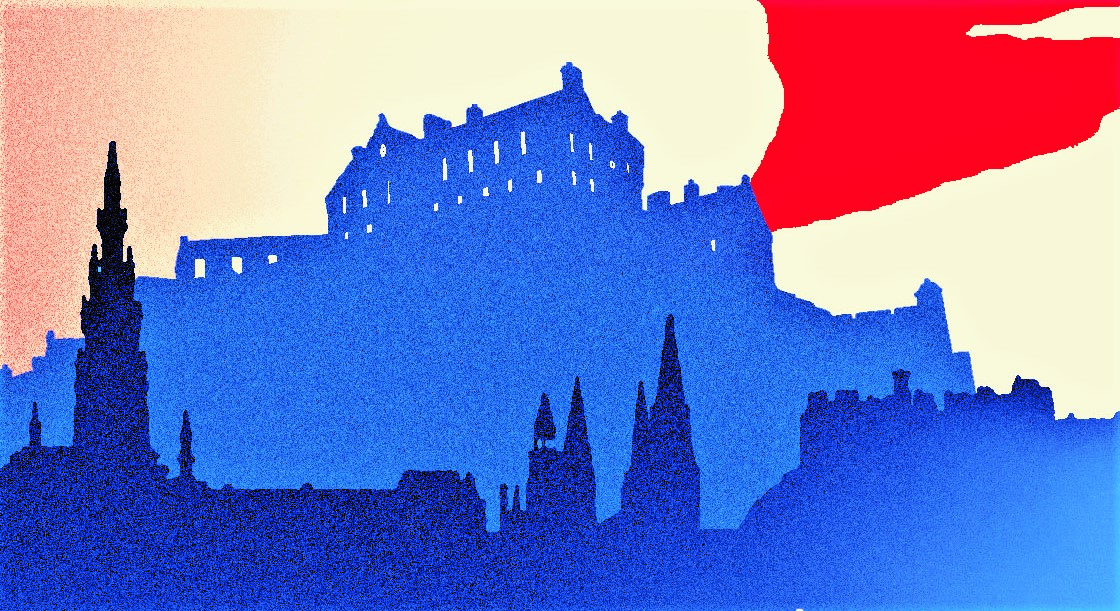
Now, though: a working-class woman, a book set in Scotand, and a historical backdrop (i.e. my spiritual home). Let me introduce . . . drumroll . . . Helen Crowther. You can call her Nelly:


She is a wife, a daughter, a sister and an upstart and she lives in the tenements of Edinburgh. She is just about to wriggle free from the rigid respectability of her parents, Greet and Mack; the scorn of her annoying wee sister, Teenie; the control of her overbearing benefator, Mrs Sinclair; and even the sad puzzle of her new husband, Sandy. 

It's July, 1948, and Helen's going to work, not in the bottling hall of the Fountainbridge brewery, or in the kitchens of a big house in the suburbs, but as a welfare officer in a doctor's surgery, while the brand-new National Heath Service swings into action throughout the UK.

There was a rousing slogan for this initiative in Britain. But when I was looking for a title for the book - The Upstart? not crimey enough; A Fountain Filled with Blood? Julia Spencer-Fleming has written it; From the Cradle? Too similar to too many other things - it never occurred to me that no one else had used this slogan as a title for fiction before. It's so perfect. And now it's mine!


To be cared for "from the cradle to the grave, in place of fear" was a big change for the people of Britain when they were still recovering from the ravages of WWII.  Actually, the two things were closely related. It was the shocking state of conscripts' health - undernourished, poxy, weak and short of teeth - that made War Office doctors start to agitate for action once the fighting was done.

And speaking of big changes (segues are hard!) a new job as a medical welfare officer is a huge step for Helen. She's terrified, but determined to help. When I set out to write her, I was also slightly terrified but determined to follow this story wherever it took me. Strange as it sounds, I was relieved when my mystery-fiction muse kicked in and Helen found a body in chapter three.

What a heartbreak. Just as Helen begins to organise wheelchairs, spectacles, nit powder and maternity care for the poorest of Edinburgh's people, she discovers that an apparently healthy young girl, wearing only a hospital gown, has died alone right outside her door. And in this city of lawyers, bankers, and bishops, no one is willing to risk a scandal in the name of justice. So, Helen now has another job to do.

I'm proud of In Place of Fear. There, I said it. The research drew on a lot of my time working in the local studies department of Edinburgh City Libraries, augmented by phoning home and saying "Hey, Mum, when you were wee . . .?" about fifty times. The writing took more drafts than I've ever ploughed through before, until the war, the city, the factories, the shops, the trams, the doctors, the patients, the family, and the plot all started thrumming along together. The elevator pitch took everything I've got too. It's a book full of warmth with quite a few laughs, but I managed to make it sound solemn somehow!  So I gave up trying to describe it on its own terms and went down the time-honoured route of the comp. 

In Place of Fear: "Modern Sherlock meets Call the Midwife". (In Edinburgh.) I hope you give it a go. 


Buy links are here

Cx


Wednesday, April 13, 2022

Here's looking at you, kid... by Cathy Ace

Craft: POV. Do you have tricks for writing multi protagonist stories? Multi POV stories? 

This is an interesting one! I write in different ways across the range of my books, so here goes…

My Cait Morgan Mysteries are all told in the first person, from Cait’s point of view (POV). Why? Well, a couple of reasons. The first novel I ever wrote was the first Cait Morgan Mystery (The Corpse with the Silver Tongue) and it felt completely natural to me to write the entire book from Cait’s POV, because Cait is quite similar to me in many ways, and I felt it was the most direct way to connect the reader to the character who is telling her story. The other reason is a bit more sneaky (contrived?); I wanted to subvert the tradition of all those hard-boiled private eye books being written from the PI’s POV, and use it in what is a series of traditional, golden-age-inspired mysteries. I did diverge from Cait’s POV for a short part of the 8th book in the series (The Corpse with the Ruby Lips), when Cait is (no spoilers) let’s say “indisposed” and therefore unable to tell her side of the story. At that point I used the third person, observational POV, allowing the story to progress for the reader, despite Cait not being capable of being the storyteller. Hopefully, using this first person POV really does make the reader feel as though they are not just beside Cait, but actually inside her head as they read…and letters I get from readers suggest that at least some do. Click here for more information about the Cait Morgan Mysteries


My WISE Enquiries Agency Mysteries are written in the third person, but each chapter adopts a different character’s POV. I do my best to use the sort of vocabulary and syntax that character would use in their heads…which is always fun to do. This is a series featuring four professional private eyes, so – again – I wanted to subvert the traditional way that PI books are written by using various POVs. With this style of writing I find it’s important to tell the reader quickly, at the start of each chapter, whose POV they are reading, and – in these books – I did that within the text, rather than in the chapter heading. Click here for link to amazon


In The Wrong Boy I challenged myself to use a specific POV for each chapter. I signaled this by telling the reader in the chapter heading who it was they were “with” at that time, and allowed the story to progress across a range of characters…with only the reader knowing the full story. Why? Well, The Wrong Boy is a tale of psychological suspense, but I’d read a lot of that type of book as part of my preparation and had become rather annoyed by how many “unreliable narrators” were out there. Thus, I used a bit of a sneaky device for telling the story…everyone who tells their story is equally reliable/unreliable as they are all telling the reader their truth – but, as in real life – we all only ever know a part of what’s going on at any given time. I wanted the reader to be the one who pieces everything together right up to the end of the book, where they are the only person with a full knowledge of what’s happened, and why. Apparently, it worked well. Click here for more information about THE WRONG BOY


But back to Cait, and Bud, and their latest trip to the desert…the 12th Cait Morgan Mystery, The Corpse with the Turquoise Toes, was published last week, and it’s already doing very well (thank you to everyone who’s chosen to spend some more time with Cait and Bud!) and the first review is in! 

Crime Fiction Lover says: “In The Corpse with the Turquoise Toes, Ace has crafted another taut puzzle for Cait and Bud to solve. Alongside the murder mystery itself, the highly atmospheric story weaves together contemporary concerns, Native American mythology, international cuisine, thwarted romance and cult-based craziness, leaving the daring detective duo with plenty of avenues to follow in their quest for the truth.” WOOT! Full review here


Monday, April 11, 2022

A Tale of Three POVs

 Q: Do you have tricks for writing multi protagonist stories? Multi POV stories? 

- from Susan

No tricks. It’s what we’ve all heard, observed, and admired when it works. Basically, each character with a voice and a unique perspective needs to be as distinct from every other POV as you can make her, him, or them. Each POV character has a responsibility to the story that goes beyond mere dialogue or personal tic. Each POV advances the story by action, voice, and distraction. Here’s a simple example. Let’s say you have three distinct point of view characters in a crime fiction novel.

Character #1 will represent the “normal” persona, someone the reader may identify with. The character seems to view the world through a lens not unlike the readers, is angry or sad when the reader might be, likes and dislikes the same food, work situation, or cultural touch points. When Character #1 is telling the story, the reader believes them*. Character #1 acts and moves the plot along according to their values, professional or social position, and day to day logic. This character uses language in one way, probably linguistically clear, and perhaps echoing the way the reader talks.

Character #2 will seem less transparent, may have bad habits like lying, losing their temper, or living like a slob. They may be defensive, mean to other people, be stubborn, and drink too much. It’s apparent Character #2 is biased, careless, and may lead the reader astray. In fact, Character #2 is themself often going off at tangents, making things happen in the plot without seeming to plan that. This character may speak in non-sentences, may offer non sequitors, swear or otherwise cloud their narratives.

Character #3 is perhaps a child, or some other innocent, who looks at what is happening and reports it in literal, undigested ways, without the ability to synthesize and without an understanding of nuance. And yet, character #3, moving along a line, may be the one who generates the twists and turns, sets up crises, and acts as a magnet for trouble without being self-aware. This character speaks differently from the others, in simpler syntax, perhaps, or in dreamy similes.

Readers are led to trust Character #1, distrust Character #2, and fear for the safety of Character #3. 

But – the big aha – characters and their points of view serve the plot. So, after leading the reader along, the author may twist the true meaning of the points of view the reader accepted. The reader’s led to believe Character #1, even to like them, but Character #1 turns out to be a corrupt person who uses their persona to mislead the reader and the other characters, killing with impunity. Character #2, who could be the villain because the author disguises their strengths behind a wall of distraction, trusts their instincts, doesn’t accept what’s presented, and discovers the false nature of Character #1. And character #3? Their simple understanding of right and wrong allows them to report faithfully to the reader what’s really happening in front of them, even though the reader didn’t give them credit for the reporting until the end.

Different personas, different postures to the world, different language, different habits, different points of view, all of which are catnip to the author. 

*This post is an experiment about the proposed language changes that eliminate gender. I found it awkward at times – what do you think? 

Friday, April 8, 2022

Motivation, Invigoration, Obfuscation...

 What do you read to blow out the cobwebs and invigorate your inner writer?


Morning. Abir here, and today I’m writing to you from my sickbed. I have, you see, after two and a bit years, finally succumbed to the Covid. It was bound to happen sooner or later, I guess, but it’s still a bit of a pain.


I caught it in France last weekend while attending Quai du Polar, the country’s biggest, most prestigious crime and mystery festival. In hindsight I suppose it was always going to happen. French crime festivals are different from British ones. In the UK, a writer’s time at a festival consists of one hour on a panel, one hour signing books, and the remaining two and half days sitting in the pub getting drunk with readers and other writers. All very civilised, I’m sure you’ll agree.


French ones are very different. French festivals make you work hard. Yes, you have to do panels, and yes, they provide all the food you can eat and all the wine you can smuggle into your suitcase, but for most of time, they place you in a big hall surrounded by other writers and get you to shill for business, selling your books to the passing crowd. It’s actually good fun, but over three days can be rather exhausting. Anyway, my tactic: using my poor, broken French to elicit pity and book sales appeared to pay handsome dividends, yielding decent sales and a high number of selfies. However, the downside of such glad-handing was the risk of catching something. I expected it to be a calculated risk. In Britain we’ve pretty much given up worrying about Covid. It’s now as permanent and unremarkable in our fair isle as the rain that meets us every morning. But France – that should have been different. The French take these things more seriously than we do – as befits a country with a presidential election in the offing – so I thought I’d be safer there. No such luck, and here I am, coughing into my computer and penning this missive to you in my delirium with a temperature of a hundred and six and word count of three hundred and sixty without having actually answered the question. 


Signing books at Quai du Polar


So let’s get to it. Let’s talk about le question du jour: What do I read to blow out the cobwebs and invigorate my inner writer? 


It’s not a question I’ve actively considered before. What drives me to write tends to be issues I want to talk about rather than inspiration I’ve received from reading books. Having said that, I am inspired by beautiful prose. When I read something where the language is out of the ordinary – be it the dialogue or the description or even an ingenious turn-of-phrase – that is what gives me pleasure and what pushes me forward in my own writing. 


In that respect, some of the authors who’ve inspired me are Martin Amis, Denise Mina, and more recently, Imran Mahmood. The ability to tell a cracking story with a deftness of touch and a beautiful use of language is for me, the holy grail. I greatly admire writers who can do this.


I realise my actual answer Is pretty short, so let’s widen the discussion. What other things motivate me to write?


I suppose the most important thing is routine. Having a set time and a set place – mornings, after the kids have gone to school, from 9am to 12 noon, sitting on my bed, is when and where I tend to do my most creative work. Afternoons are tougher for me – I find it harder to concentrate – so I’ll generally focus on editing or admin matters in the afternoon.


Other than routine, other factors that help me are heat – I tend to have my best ideas sitting in the sauna – no I don’t know why; and sunshine – I write better in good weather – which is rather depressing, given I live in a country which has approximately four good days of weather per annum.


And then there is that one final factor which motivates me more than anything else: a deadline. There is nothing that focuses my mind more than a date in the calendar by which I’m supposed to submit my work. Deadlines are important to a writer. Deadlines drive the whole process for the launch of a book. You might think that a few weeks’ delay makes little difference, but it can mean that you miss your slot in your editor’s diary (they have many books to edit); that can then delay your re-drafts and can have knock on dates for marketing and publishing – and most importantly, for when you receive the next instalment of your advance. I cannot emphasise this last point enough. It’s all good and well being motivated by other writers, but for me, that is easily trumped by the motivation to stop my bank account falling into overdraft.


And on that bombshell, I should get back to work. I have a deadline looming and an electricity bill to pay.


Wishing you all a happy and safe weekend.

Thursday, April 7, 2022

Get Your Motor Running (with apologies to Steppenwolf) from James W. Ziskin

What do you read to blow out the cobwebs and invigorate your inner writer?

When I’m ready to write—really ready to dive in and write the first draft of a novel—I stop reading other authors’ work for the duration. Unless it’s research, that is, which is usually non-fiction. The research certainly can inspire me and give me new ideas. That’s often the case, in fact. I start writing a book with the beginning and end in mind, get the car moving, then interrupt the journey with detours for research. Some of my best ideas come to me that way.

While writing Cast the First Stone, for instance, I checked the weather in Los Angeles in February 1962, when the book’s action is set. It turned out that month was one of the rainiest on record. That new information gave my story an entirely different mood, as I drenched LA and poor Ellie Stone for 350 pages. A leak in a roof, caused by a clogged rain gutter, even played a pivotal role in the discovery of an important clue. The hidden object in question would have made for a terrific MacGuffin if Ellie hadn’t actually found it. But she did, of course.

A similar thing happened with the next Ellie Stone mystery, A Stone’s Throw. While researching the 1962 Thoroughbred meet at Saratoga (New York), I came across a video of the Travers Stakes from that year. The Travers is the signature race of the season in Saratoga, one that has featured the sport’s greatest champions over the past 150 years. And the greatest Travers Stakes of all just so happened to have taken place on August 18, 1962, right in the middle of my story. An epic duel from post to wire between the two heavy favorites, Jaipur and Ridan. It took a mile and a quarter of neck-and-neck back and forth to decide the winner—by a nose—in a photo finish. They led the entire way, never separated by more than a neck. A moving, powerful, beautiful performance.

You can read A Stone’s Throw if you want to know which horse won. Or you can watch the race here. Two magnificent champions. Neither deserved to lose. 

https://www.youtube.com/watch?v=-rKCAhELwhc

After stumbling across that superb race, I gave the 1962 Travers Stakes a prominent place in the story of A Stone’s Throw. It is the event of the season in Saratoga, after all. To have left it out would have been wrong. A sin of omission. Especially since it was the greatest duel in the history of the race.

Similar scenarios have played out in all my books. Something I read somewhere gives me an idea that works, improves the story, adds a plot twist, emotional depth, or much appreciated flavor.

All of this to say that I find lots of inspiration to invigorate my “inner writer” in reading and researching. But I don’t rely solely on books to get me going. Far from it. Instead, there’s a deep drive within me to create. To tell a story. To play with language and emotions. Imagine living in a world with no books. A prison, if you will. It would be hell, of course. But even without books to read and inspire me, I would still write.

Because I’ve got to. I like to think other writers feel the same way.


Wednesday, April 6, 2022

A jump on the day

What do you read to blow out the cobwebs and invigorate your inner writer?


by Dietrich


Sometimes it’s more about what I don’t read. Doom and gloom’s often got a way of springing from the headlines and news feeds, and that can be anything but invigorating. I don’t mean to ignore what’s going on in the world, but at the same time, I don’t go looking for something that could squash a good writing day.


My inner writer’s routine: That early coffee helps to crank the engine and gets my eyes focused on my work-in-progress. Early is the best time for me to dive in. It’s when my home and the outside world are still, and writing at that hour gives me a feeling like I’ve got a jump on the day. 


What invigorates my inner writer? I’ve always loved to read, and lately I’ve been enjoying audiobooks too, listening anytime I can’t sit down and pick up a book. And what I read or listen to covers a span of genres, everything from old favorites to debut authors who are new to me. Some recent titles worth passing on: The Book Thief by Markus Zuzak, Where the Crawdads Sing by Delia Owens, Strip Tease by Carl Hiaasen, Dragon Teeth by Michael Crichton, Washington Black by Esi Edugyan, and Hero Found by Bruce Henderson.


For inspiration, there’s my go-to list, those authors who’ve turned out the kind of writing I want to aspire to write. I often reread the greats like Elmore Leonard, James Crumley, and Charles Williford. And I love to read anything that makes me laugh too. Tim Dorsey and Carl Hiassen sure can add some levity to my day. If you’re not familiar with them, give Dorsey’s Serge Storm series a try, or Hiassen’s Squeeze Me, or Razor Girl.


What else blows out the cobwebs? I like to dabble in different forms of creativity. Sometimes I feel the urge to pick up a camera and take it to the woods or to the streets, searching for some interesting shots. And I’m a long-time music hack, picking up my guitar and learning something new. Other times, I might set up an easel, or clear a spot on the floor, and get in front of a canvas with pencils and paints. 


Whenever I can, I have music playing —  anything from jazz to punk to rock, whatever suits the mood — tunes that feed the soul. Something’s always playing when I’m writing.  


A final thought: As I’m writing this, our province just announced this week it’s relaxing its Covid mandates, and that sure brought a smile under my mask. That means there’s a good chance I’ll be able to take part in more reading events, festivals and conferences other than what’s online, and that sure sparks some optimism and invigorates my inner writer.


Tuesday, April 5, 2022

Reading for Inspiration


 Reading: What do you read to blow out the cobwebs and invigorate your inner writer? It happens to everyone at one time or another. Writer’s ennui. That listless feeling that nothing you write is good enough. It doesn’t have any depth. The writing doesn’t flow, and you wonder why you put yourself through the endless drudgery of putting one word after another down on the page, when in the end there’s nothing much to show for your effort. Blah.
Sometimes taking a few days off helps, or writing something new, or different, or going to an art museum or a concert, seeing a good movie. Something to spark your feeling of creativity. And sometimes plunging into certain authors will help. I’m not talking about writers who entertain or those whose books you read as soon as a new one comes out. I’m talking about the truly inspirational books. 

I sometimes find that books on writing inspire me. I’ll dip into Bird by Bird, Annie Lamott’s warmly encouraging book on writing. Or John Gardner’s classic, The Art of Fiction. Or sometimes I like to read snippets of writing advice from Alexandra Sokoloff, who started as a screen writing and has developed writing methodologies that she shares. And then there’s the more recent How to Write A Mystery from Mystery Writers of America, edited by Lee Child and Laurie R. King. It’s crammed full of writing advice from some of the best mystery authors writing today. And it inspires creativity. 

Sometimes it’s mainstream fiction I crave. When I am most in need of encouragement, I head to classics. Jane Austen inspires me with her wit and sly innuendo. Her plots may be formulaic, her characters standard, but her turn of phrase is genius. Every time I reread one of her books I discover little gifts of understanding that I didn’t notice the previous times I read it. A writer who particularly spurs me to pick up my pen (metaphorically speaking), is Truman Capote. His short stories are absolute gems. By the time I finish one of them, I’m itching to get back to writing. I’m not even sure why Capote’s writing so inspires me, but he’s one of those writers whose sentences often make me think, “I recognize this feeling; it’s one I’ve had many times, and yet never saw it described accurately before.” He has an ability to describe things in a room which make me certain I’ve been there. 
He describes characters in such a way that I know I’ve met them. 

For inspiration, there’s also a poet who makes me remember how much I love words, and what can be done with them. When I read Wallace Stevens “Ideas of Order at Key West,” it transports me to a place that I recognize in my bones. The poem is about the interdependence of imagination and reality—and isn’t that what writers struggle with every time they set out to write? 

There is something about this turning point in the poem that perfectly describes to me the attempt to make intimate the experience we have of the world: 

“Ramon Fernandez, tell me, if you know, 
Why, when the singing ended and we turned 
Toward the town, tell why the glassy lights, 
The lights in the fishing boats at anchor there, 
As the night descended, tilting in the air, 
Mastered the night and portioned out the sea…”
Until that point the poem has been philosophical and suddenly it becomes visceral. I could weep with reverence when I read it. When I open Stevens' Collected Poems, the book automatically falls open on it. I think the best writing tries to bridge the gap between what we think of the world, and what we experience in it. We do it through descriptions and dialogue and setting, and unless we are very lucky, it often falls short. That’s where reading “the best” comes to my aid, and that’s where my inspiration lies.

Sunday, April 3, 2022

Reading is Life

What do you read to blow out the cobwebs and invigorate your inner writer?

Happy Monday! Brenda Chapman at the keyboard.

I generally have a book on the go at all times and it's usually, but not always, a mystery. Since I was knee high to a grasshopper, crime fiction has been my go-to for enjoyment and escapism. When I'm writing, I take breaks to read a few chapters and always finds this invigorates me. 

Perfect Books, one of my local independent bookstores, has a good selection of mysteries and the owner, Jim Sherman, has recommended a couple of authors whose work I keep going back to. The latest is Jane Harper, an Australian writer who tells a heck of a good tale. I started with The Dry and highly recommend it.

A few years ago, Jim introduced me to Adrian McKinty and I've become a devoted fan ever since. A good book of Adrian's to start with is The Cold Cold Ground introducing Sergeant Duffy. McKinty lately wrote a standalone thriller called The Chain, which is also good but I prefer his Duffy series set in Northern Ireland in the early 1980s. Brilliant writing.

The last book I read based on Jim's recommendation is The Thursday Murder Club by Richard Osman, lighter fare with a cast of elderly folks at a retirement home who meet every Thursday to work on solving cold cases. They become involved with the murder of someone they know and somehow worm their way into the police investigation. Quite a charming story -- light, humorous fair that provides good escapist reading, much needed these days.

Lately, I've been reading short stories before bed to wind down the day. I own a few Canadian anthologies that I've been enjoying, the latest called The Whole She-Bang. I'm looking forward to a new anthology to be released by Crime Writers of Canada in May called Cold Canadian Crime, a publication to mark their 40th anniversary. I'm pleased to have a story called "The Final Hit" included and can't wait to read stories by the other authors, many of whom are among the country's top crime fiction writers.

The other genre that I turn to now and then is poetry. I studied it in university and have always loved sinking into the beauty of language and imagery in well crafted stanzas. I turn to T.S. Eliot and my Canadian Anthology whenever I need a moment of quiet reflection.

If you're like me, you cannot contemplate a world without books. The countless hours I've spent reading and imagining have enhanced my life immeasurably and helped to get through good and not so good times. Reading fiction is a pleasure I've passed on to my daughters as well -- they love a good book, and like me, usually have one on the go and are always open to the next recommendation!

Website: www.brendachapman.ca

Instagram & Facebook: BrendaChapmanAuthor

Twitter: brendaAchapman


Friday, April 1, 2022

Bookclub for Dyslexics by Josh Stallings

Q: Book club members are usually free to say anything about the book they just read. People attending author events usually say nice things or nothing. But what about when authors visit bookclubs? Do rules exist? Should we invent them?


A: I love books. I love reading, aways have. I’m not averse to clubs. When we were teens my siblings, friends and I built The My-O-My Club, a disco for teenagers. I’m currently a member of Costco, AA and AAA. 


Clearly I like books and clubs, but combine the two into a Bookclub and my dyslexic brain panics.


In school a reading list always felt like a long list of tasks I would fail. Yet as long as I can remember I have had a book  I was reading. Just slowly. 


When a friend tells me they are reading X and I should too so we can discuss it… Even though we start at the same time, by the time I finish the book, odds are they will have moved on and are thinking about a new book. 


Weird thing about my reading superpower, when I was in 3rd grade they ran some tests to try and figure me out. They discovered that my reading speed was several grades below where I should’ve been. My comprehension was several grades above where I should’ve been. Additionally, my vocabulary was advanced. Looking back I can see that my brain doesn’t allow skim reading. I have to read every word or they scramble. So when I read a book, I read every word. 


Knowing all this, you can guess that I’ve never been a member of a book club. I have yet to be asked to speak to a book club. I do love talking books, mine and other writer’s. I have opinions. Every reader does. A great book taps into our personal experiences. For that reason they effect each of us differently. I can talk craft easily, or why this book moves me.


If I were to put one rule into a book discussion group it would be that we remove vague value judgments. “It sucks.” “It was dull.” “It was great.” They give me nothing to chew on. 


“The fluid way they drift through multiple time periods was great.” That statements leads me to think about how some writers put time stamps at the beginning of chapters while others leave it loose and catch up the reader with a prop (a pager, or a payphone) to tap you into the year. The point is by being specific in how you speak about a book you lead others to join in. 


We live in an era of thumbs up or down. How many likes did the cute picture of my curated life get? We are left to feel that our’s and other’s feelings are more important than critical thinking. 


Cormac McCarthy’s Blood Meridian is a brutal book. Not in a blood orgy cheap way. It is bloody. But it neither glorifies nor condemns violence. McCarthy just shows it to us. Add to that his crystal clean prose. Like a poet he has no time for extra words. Hell he doesn’t even have time for quotation marks. I have been lost in his writing but I always catch up. Clarity is sacrificed for pace and rhythm. Do I LIKE Blood Meridian? No, that is too tame a word. I love it. I need it in the world. It was a hard read. I don’t know that I will ever read it again. Subjectively it’s brilliant. Objectively, I grew up with Quaker/nonviolence advocating parents who got violent with us kids. Then my father left when I was eight, leaving me confused as to what a “man” was or how to become that mythical beast. I used movies as a cultural starting point. The recipe they gave me was; two shakes of Taxi Driver and a pinch of Dirt Harry and just a splash of "Gravedigger" Jones. Confusing, right? I was also prone to irrational rages. This is a taste of the violent gumbo in my head that Cormac McCarthy helped me sort out. And that is personal. Critically I can say, McCarthy deals with the cost of violence to both the victim and the perpetrator. And I believe that is important to see in a book dealing with violence. 


I believe a book must be about something bigger than the plot. As a writer I don’t aways know what a book is about until I’m deep into the writing. Any messages we want to place in a book should be covert not overt. 


If I tweeted, “Intellectually disabled people are humans too.” I might get some likes. If I made it cleverer it might go viral. But if I wrote a book, say TRICKY and let the reader experience the truth of that statement. Introduced them to Cisco and had them spend time with a complex intellectually disabled character, I might help them have a richer sense of all the ways a neurodiverse person can be. 


What I like or don’t like is far less important than what moves me, helps me grow, and alters my viewpoint.


*****


Here’s a few more thoughts on neurodiversity -

https://crimereads.com/crime-fiction-needs-neurodiversity/