Friday, February 16, 2024

How To Fall in Love With Your Work, by Josh Stallings

Q: What hooks you into an idea enough so that you want to write it? Character, setting, plot, genre? Or …?


A: Anything I’ve ever written that I felt was of value, came from a place of pure intuition. My most intricate and well laid out plans inevitably led me to drivel. I wish that wasn’t true. If I knew how to come up with the big idea and then write it, I would. Just isn’t how my process works.


What pulls me into an idea? I am attracted to writing about worlds and genres I haven’t done before. The challenge of the unknown excites and terrifies me. But that is often a secondary consideration. First thing that gets my attention is a glimmer I see in my periphery. Stare too intently it will disappear. I will think about it while walking in the woods. With no pressure to develop it farther. 


I was eleven years old when I fell in love with the film Butch Cassidy and the Sundance Kid. I read anything I could find on the real life outlaws. In a book written by Butch Cassidy’s sister I discovered the true story of how it ended. After that famous freeze frame, Sundance was dead, Butch wasn’t so lucky. This tickled my pre-teen creative brain. Four years later I heard The Who’s Behind Blue Eyes. In a flash I saw a film I wanted to write. I wanted to tell the story of Butch’s life after Sundance was killed. How did he go back to ranching after all he’d seen and done? I never got that story written, but it still feels like a cool idea. 


Elvis Costello’s Oliver’s Army led me to write a screenplay about a young man who lies to a group of mercenaries, telling them about his demolitions expertise. It wasn’t bad, almost got made for a minute. Point is those two ideas sparked from listening to music. 


My most recent work came from driving with my son Dylan making up songs. By accident we came up with the theme song to a story that didn’t exist. So I decided I should write it. Like a faithful detective I have hunted that story down, following the leads where they take me. 


One of the concepts I felt strongly about in TRICKY was the danger of confirmation bias. Bad things happen when a homicide detective believes they know what happened before they have all the facts. The same applies to writing, but with less dire consequences. If I believe I have all the answers I will never discover the truth in a story. Knowing everything limits what I learn along the way.


Does this sound crazy? Yes, it does. But it’s the only way I know to access the intuitive part of my brain. The part that knows what I don’t know.


Sometimes I know a character from page one, Cisco in TRICKY was based on Dylan. But as I wrote he slowly morphed into his own person. Cisco has Dylan’s humor. But Cisco also carries a heavy load of guilt. Cisco worries that his past makes him a bad man. Dylan seems sure he’s a good guy who makes mistakes. I wouldn’t have discovered these differences if I had decided I already knew who was who and how they should be reacting. I try to take this into real life. Realizing I know very little about what other people are thinking or feeling, allows my view of them to evolve.  


Sidebar: Is there anything worse than having come up with a very clever plot turn only to discover that your character wouldn’t do what you have them doing?


My first book Beautiful Naked & Dead started from an opening line that I heard in my head. That opening line is the only thing that survived all the many drafts. And it is still the best opening I’ve written. It contained the entire DNA sequence of what the novel would become. 


Regardless of where the spark comes from, I am aware of how damn hard writing a book is. It’s also joyous and thrilling and frustrating and big fun and hard work. To take the writing of a book on I need to find a reason to fall in love with it.


A couple of days ago Erika and I celebrated our 44th Valentine's Day together. That’s a long time to love someone. And it all started when I met a pretty girl with a sweet smile, a wicked intelligence, and a strong heart that called to me. Along the way it’s been hard work mixed with long days of riotous joy. Sometimes we cut each other deep. Danger of pain from unintentional cruelty comes in equal proportions to how much and how long you love a person. I have felt loving support and tender words at the exact moment I needed them. 


The late night I asked Erika to marry me, I was a scared kid running from everything. There was no logical reason for us to expect getting hitched was a good idea. At the time I dreamed of making it in film or theater, but I had no job or backup plan. All I had was a deep feeling that this was the correct next move. Pure intuition. Faith in her. Faith that I wouldn’t irrevocably fuck it up. Turns out by trusting our guts we beat the odds. 


This is the same as falling in love with a story idea. Intuitively I have to know that it won’t be easy but the book will be worth whatever the cost it extracts from me.


All faith is blind. 


Following intuition is by definition illogical. 


It is also the only way I know to discover stories worth writing.


****** 


My latest reads: 


Chain Gang All Stars by Nana Kwame Adjei-Brenyah. The New York Times named this one of the 10 best books of 2023. It is one of the best novels on incarceration in the USA. It is a dystopian world where prisoners can fight and kill each other for reduced sentences. But it is so much more, it speaks to the morals involved with who we as a nation are becoming. It also has flawless footnotes to keep you tethered to the factual basis of the not far fetched story. It isn’t for the squeamish, but damn it is important.   
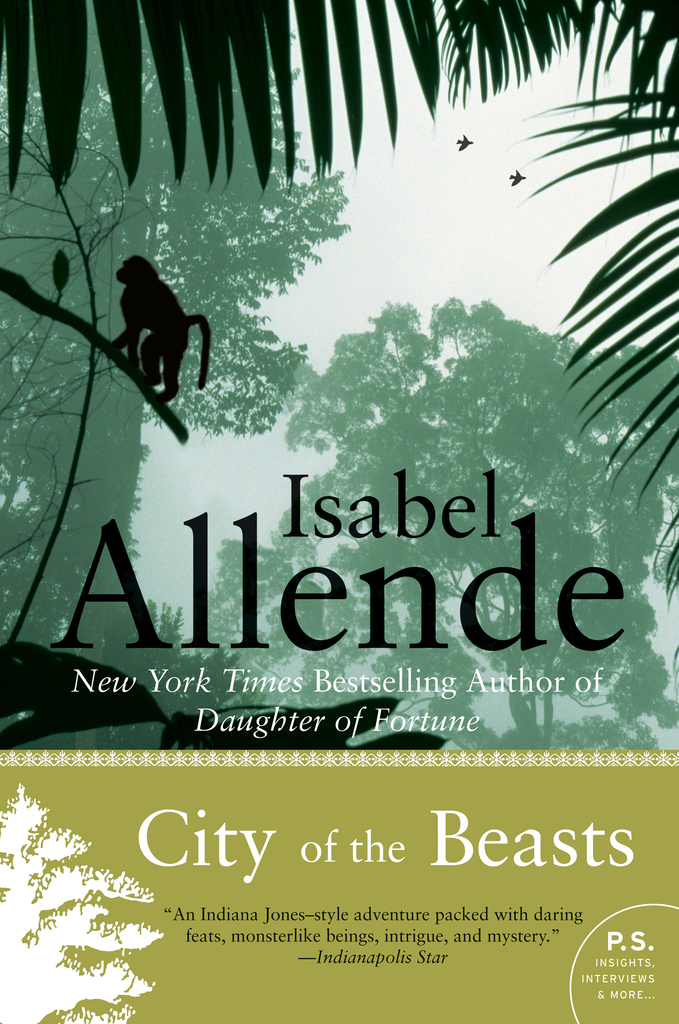


City of the Beast by Isabel Allende, translated from Spanish to English by Margaret Sayers Peden. Published in 2002. A fun YA book set in the Amazonian rain forest. While on an anthropological search two teenagers come in contact with real magic and local gods. My only problem with the book was its use of the word “Indian” to describe the indigenous people. This may be from the translation, or it may just be that in the last twenty years we’ve learned to use more accurate language when speaking of first nation folk.   


Thursday, February 15, 2024

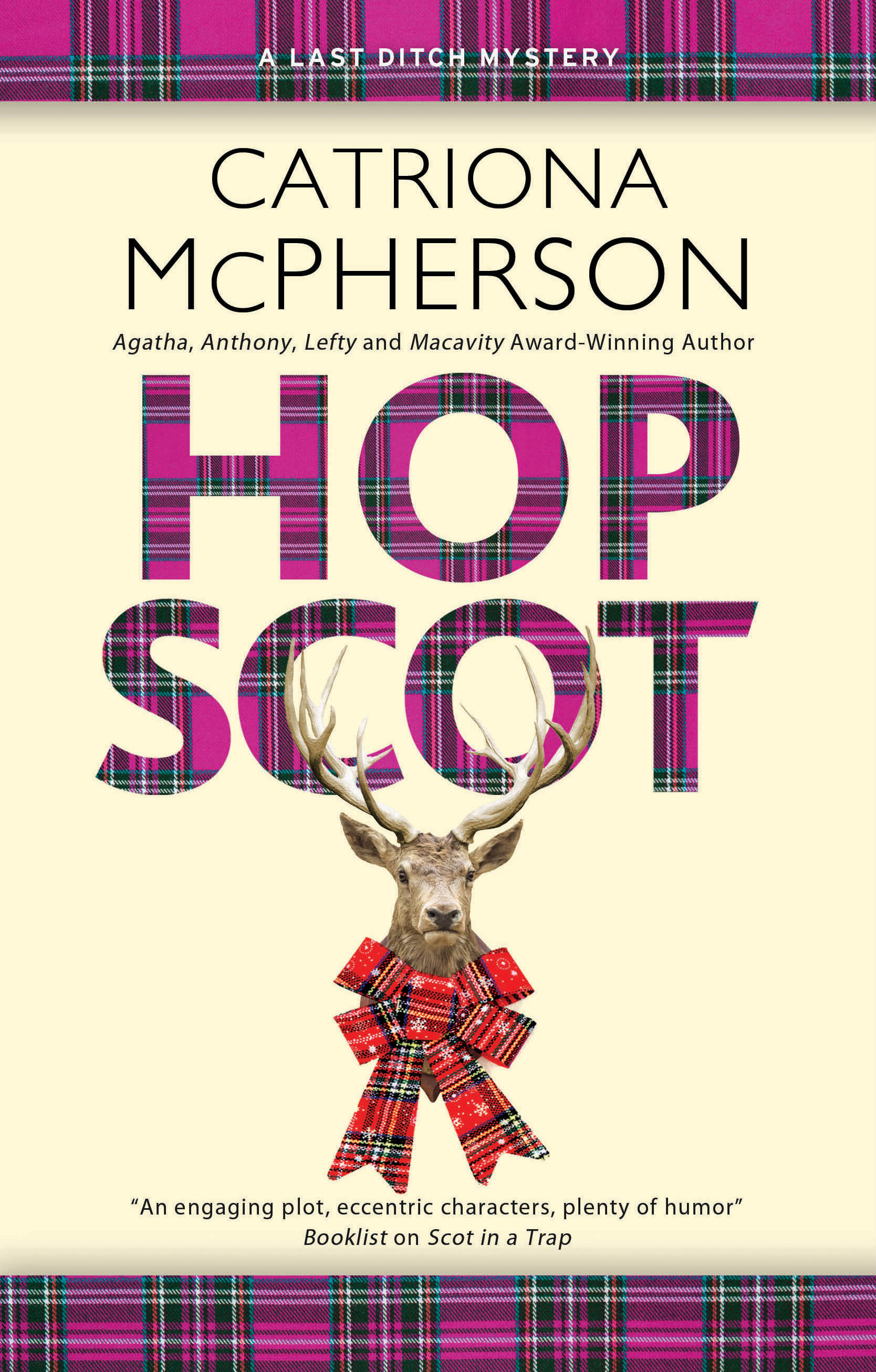
Fizzy Pips, by Catriona

What hooks you into an idea enough so that you want to write it? Character, setting, plot, genre? Or …?

Definitely "Or . . ." for me. 

Well, genre is a given. I've spoken before about the unpleasant experience of not writing a crime novel: in short, I found out that my time-travel caper was women's fiction (because I was a woman, I think) except it wasn't quite there yet so it needed to be changed and softened and clipped and packaged until I was scared I'd end up publishing a book I wouldn't read. I fought back. Lost on the title but kept most of the humour.

If you know, you know.

So crime-fiction it is. But I often find myself casting around for a setting, so it's definitely not that that lights the spark. With Dandy Gilver, I study the map of Scotland for locations she hasn't been and try to find an interesting social or institutional background nearby: a school in Wigtwonshire; a hotel in the Borders; a publishing house in the city of Dundee ...

For the standalones, it seems I try to find the bleakest, grimmest, most depressed area of either poor agricultural land or post-industrial-decline towns and plonk my characters there. And then I make sure it rains every day. Unless there's a hailstorm.

Case in point. Pre-order here

The Last Ditch Motel setting is easy. Big clue in the name, right? Except that last time I sent them to Scotland for Christmas (where it rained every day, except when it was snowing). The new series - Can I say series when there's only one out and the second one is sitting in draft form on my desk? - is the same deal. It's set in about half a square mile of Edinburgh - a pretty grim bit with lots of smells. It actually didn't rain every day of book one, mind you.

Edinburgh is much less glam inside

Is it character? Sometimes a character comes along early and stakes a claim. Lowell in QUIET NEIGHBORS was based on a bookshop owner I saw once for about twenty minutes in Norfolk. He made a huge impression, mostly cardigan-based, and sprang into the book fully-formed. Other times, I've had to write numerous desperate notes to myself in my oh-so-swanky notebook. Notes like "Who is this though?" and "Yeah but who is it who does this?" and "WHO IS ANY OF THIS EVEN HAPPENING TO????"

Complete with left-handed smudge

Another kind of note I write to myself a lot during the first draft is "What's going to happen?" and "What is this book about?" and "Yes but where is ANY of this GOING????" So plot definitely isn't there in the beginning. Sometimes, plot is so late showing its face that I get quite panicky and have to remind myself that it always works out in the end if I just keep on writing. MAN, though, I wish I was a plotter. I don't think anyone ever wishes they were a pantser. You'd have to be clinically insane.

So what is it? Well, it starts with a pip, like a pebble in my shoe, something that keeps just sitting there, troll under a bridge, toad under a rock, doing nothing useful. This pip could be something like "It's not illegal to buy and sell skeletons in the US, except in three states" or "Could a dental hygienist tell if a severed head belonged to a right- or left-handed person?" or "Capgras Delusion - blimey!" 

None of those pips turned into this 

But then, every so often, one pip brushes against another. "People get married in graveyards?" or "Punch and Judy men are called Professors!" or "Cotard's Syndrome - blimey!" and together the two pips start to fizz and a story grows around them like something I can't quite remember from chemistry lessons at school. They attract settings and characters and - eventually - a plot.

Nor this - and check out
picture-postcard Britain, eh?

I wouldn't recommend it. I don't enjoy it. I certainly won't make my fortune running workshops that teach it. But that's the way it starts for me. Thirty-eight times and counting. 

Cx


Tuesday, February 13, 2024

What Hooks you? by Eric Beetner

 What hooks you into an idea enough so that you want to write it? Character, setting, plot, genre? Or …?


I have often told other writers not to take anything from my method of working in the early stages of a book. I know it’s silly. You see, I tend not to write down the amazing ideas I get. I’m sure I have lost many certain best sellers to this technique, but I like to let things roll around in my head for a while. If it’s still there weeks or months later, I know I might be on to something.

Let’s say I get to that point – I have what I think is a killer idea. I have that hook, the thing that will be the one-liner on the book jacket or in the press materials that makes people think “I want to read that”. 

I’m still not ready to start.


Any writer worth their ink will have a collection of false starts, dead plots and frustrating close calls with stories. Those happen when someone starts a novel before it is ready to go. A good hook is not enough. A killer plot isn’t even enough, though some have gone ahead and written those books and invariably, they come off as thin and unsatisfying.

It’s the characters. The people involved in your killer plot are what the reader is going to attach on to. They are what moves that plot forward. Once you set your amazing story in motion, if it pushes the characters along then it’s not going to work. But if the protagonist the antagonist and the side characters all contribute to moving the STORY along, then you’ve got something.

When I get a story stuck in my craw long enough that I think it’s going to stay there until I write the book to dislodge it, then I start writing in my head. Again, not putting anything on paper yet. And yes, again, I have probably lost great stuff this way. I never said I was smart. But when the characters start to talk, when I get an insight into how they act and feel and move through the story, that’s when I know it is time to start getting this down on paper.

For my newest book, The Last Few Miles Of Road (out Feb 27th!) I had my hook – an elderly man who gets a life-threatening diagnosis and decides to right a decades old wrong and kill and man who was responsible for the death of our hero’s daughter – but until I started hearing how Carter McCoy would talk and gave him some details like his guitar playing, his favorite restaurant, the kind of truck he drives, then I wasn’t ready to begin.

Once all that came together and I knew who Carter was, I hit the page running and never looked back. 

So don’t do it like me. But if you want a story to really stick I’d say however you do it, the characters are the ones who give the go ahead and tell you when to start typing.


Hook, Line, and Reader by Gabriel Valjan


What hooks you into an idea enough so that you want to write it? Character, setting, plot, genre?

In his Acknowledgments in Bound for Gold, author William Martin discussed his first foray into screenwriting at my alma mater, the University of Southern California, and he said something about writing that I believe is worth the block quote.

Though I had little writing experience, I had already rejected the advice that you should write what you know. I believed then, as I do now, that you should write what you want to know, or where you want to go, or who you want to meet when you get there.

While I’m on the road with quotes, I’ll not quote E.M Forster’s “The king died and then the queen died” as a definition of Plot, but rather choose John le Carré’s “The cat sat on the mat is not a story. The cat sat on the dog’s mat is.”

In my mind, Forster is interested in How and then What, whereas le Carré’s is asking, Why?

When I write, Plot is the premise. I am more interested in Character, his or her motivation. In my next Shane Cleary adventure, THE BIG LIE, Shane is hired to find a missing dog. In of itself, an odd request, but the request is more Conflict than Plot because the person who hires Shane has tried to kill him before. Why would Shane take the case?

Character + Why = Story.

Life tends towards chaos. People are not predictable. The unexpected happens. While there are twists and turns in fiction, Plot on the page must maintain a certain logic of Cause and Effect, or Action and Reaction. I don’t focus so much on Plot because I know savvy readers can guess all the possible outcomes. My interest is in human psychology. Why do people do the things they do?

I choose to write Genre because there’s an agreement between Reader and Writer. There are Rules and there are Expectations. I like to break Rules. Writers cannot kill the dog or the cat in their story. In cozy mysteries, violence is best left off-screen. In literary fiction, which I have written, Plot is a loose goose, not as important. With literary fiction, readers suspend Rules and Expectations because they want to be surprised. In genre, they know how the story will end. Readers of literary fiction can take in, for example, the use of language, which brings me to my beef with most literary fiction: a lot can happen or nothing of consequence.

Once I am hooked to a premise, I write as if I plan to meet someone on the road. It could be the Stranger as in a Character I have created, or it could be some aspect of myself during the creative process that I have not acknowledged.

It still comes down to why people do what they do. History is full of unanswered questions to Why. How could the most philosophical people in the world listen to a clumsy Austrian with a funny moustache, and believe he was the leader of the master race? Or how could cunning Italians accept from their leader the ridiculously pompous prose of a former elementary school teacher and failed journalist from a God-forsaken Emilian village? How could Spaniards, another people with a centuries-old civilization, believe a flaccid petit-bourgeois from Galicia with royalist delusions was their caudillo?

People, you think you know them, until you don’t.

Monday, February 12, 2024

"What If" Stories

 Q: What hooks you into an idea enough so that you want to write it? Character, setting, plot, genre? Or …?

-from Susan

What grabs me is anything that tickles me and sticks in my head. If it fires my imagination and begins to grow on its own into "what if?"  my job is to keep feeding the idea to see how well it grows. 

Character?  The language, tone of voice, perspective someone in my head speaks to me. The way they begin to look so that I see them in three dimensions. Their quirks, vulnerabilities, and sources of joy. One example, the slightly cynical voice of the character of Dani O'Rourke, perhaps a bit like me. She's unlikely to take someone at face value given her experience of the world.

Setting? Some place I know, usually, and that takes on details quickly. If not, somewhere I have fantasized about being. I love Santa Fe, New Mexico, which I relished making a major part of my first mystery. I'm a native of Manhattan and had the privilege of staying there on business often and putting on a black-tie gala in the elegant Metropolitan Club one year, so that worked its way into my second Dani mystery. Everyone knows I love France, but I wanted to share the quieter delights of rural Burgundy since so many wonderful crime fiction authors set their work in Paris.

Plot? Ah, here, I have to rely on "what if?" and "What comes next?" Some of my reader reviews grumble that my plots are slow. For me, murder, trauma, danger don't come flying at my characters in a rush. It's my belief in verisimilitude. I also don't include magic, fantasy, and aliens. What can I say? I create works in which what happens feels to me like it could happen.

Genre? Well, all of my books are mysteries, and lie somewhere on the scale between traditional amateur sleuth and cozy. It's what I saw wonderful authors writing when I decided to try it myself, and it's probably my comfort zone, although right now I have two very different manuscripts partially done. Neither one is cozy and both include humor.

Writers bring a big part of themselves into what they choose to write and how they do it. The best create a voice and style is distinctly theirs no matter what they're writing about and what they choose to write, don't they?


Friday, February 9, 2024

Deadlines, Sudoku, Advice Columns, by Harini

 Is life/work balance, a myth? When you are pulled away from the middle of a manuscript by life having more important priorities for you, how do you mark the place where you are in your head and how do you find your way back into it quickly? A second question do you work on more than one project at a time? And is that confusing?

By Harini Nagendra

This question comes at the perfect time for me. Jan-Feb is the time of year that I work on producing a rough-rough first draft of the next book in The Bangalore Detectives Club series - I'm now working on book 4. 

While writing book 1, I was without a contract or deadlines, and had the luxury of time. I could take 14 years to complete the book, change the plot three times, and then rewrite it once more. Now, I'm on contract to write one book in the series each year, squeezing it between work, family and all the rest of it. This is the schedule that works for me - writing 10,000 words each week through Jan and Feb to complete that basic messy draft, then editing it into reasonable shape through March and April. 

Editing is easy - I have raw material to work on. Writing the first draft is the hard part. Especially when there are interruptions, which is most of the time. I write historical mysteries, set in 1920s Bangalore. Even minor interjections from the outside world can pull me right out of the book's colonial period and firmly back into the 21st century, especially if it's something like a cell phone ringing with an Amazon delivery, or needing to edit a powerpoint presentation for work - that kind of stuff makes it very difficult to get back into a world when computers had yet to be invented, and electricity had just made its appearance in Bangalore's bungalows! 

But I'm on a deadline, so I have to find my way back to the book. I love deadlines. I have a book due to the publisher in May, and that makes me anxious. Because I'm anxious, I know I have to get back into the book, so I... procrastinate. 

I have to find the right kind of procrastination, that helps me make my way back into the book. 

I've disabled all social media on my phone, as that's an easy source of procrastination, but it makes everything worse. A game of Sudoku works brilliantly, though. It gets my brain active and focused on something else, so I can calm down a bit and get into the writing zone. When Sudoku fails, there's always advice columns. People write in with the strangest problems, and reading the comments section usually gets my brain working... helping me see a way past the plot point where I'm stuck (plus I'm an advice column junkie. I admit it freely). 

Deadlines, Sudoku, Advice Columns. That's my magic formula.

Onto question two - yes, I often work on more than one project at a time. Alongside the Bangalore Detectives Club book, I'm usually writing nonfiction... a research manuscript, newspaper column, ecology book... these demand a very different style of writing, more technical and less imaginative or speculative. I need to stay on track with a linear narrative, simplifying complex issues for a wider audience. There is less leeway for digressions or literary turns of phrase, and because I must write to a tight word count, my sentences are short and snappy. 

For a long while, my non-fiction voice interfered with my fiction voice. I've learnt to deal with it by separating the times when I write them. I can write non-fiction after I've written a bit of fiction, but can't do it the other way around. So - I reserve my fiction writing for early mornings, late nights and weekends, and try and write my non-fiction during the workday. 

Is it confusing to work on these simultaneously? Often yes. But also, such fun! And in the end, that's why we all write, isn't it - because it is such a heady experience to get words out onto paper, and we can't imagine a life in which we couldn't write. 

Speaking of fun, I've really enjoyed reading what my other Criminal Minds friends have had to say on this topic, so please look up Brenda, Terry, Dietrich and James's terrific responses to this question!  

Thursday, February 8, 2024

Turbocharge Your Writing — 12,000 Words in Two Hours! from James W. Ziskin

Is life/work balance, a myth? When you are pulled away from the middle of a manuscript by life having more important priorities for you, how do you mark the place where you are in your head and how do you find your way back into it quickly? A second question do you work on more than one project at a time? And is that confusing?

I have no work-life balance. It’s an inner-ear thing. That’s why I compartmentalize my work, my play, my family, and my writing. I teach high school French, and when school’s in session, I don’t write. I concentrate on the obvious tasks required of educators: prepping lessons, teaching classes, correcting tests, and screaming at students. En français, ça va de soi. I simply can’t multitask and get any writing done from September to June. But then over the summer, I dedicate my time to churning out a first draft of something new. Last summer, I managed to write 85,000 words in forty days. While it’s true that 3,659 of those words were “the,” I spelled it right every time.

Should I be embarrassed that 4.3% of my book was the definite article? If so, perhaps I shouldn’t mention that the indefinite articles A and AN accounted for another 2.3% of the book. 


SOLID-GOLD WRITING TIP: 

For your books and short stories, write all your definite and indefinite articles first. Once you get those out of the way, you can attack the tougher words like AND, OF, and TO. In my last book, those came to 6,343 more words. So, last summer, using just six words, I wrote 11,986 words out of a final total of 85,000 in just a couple of hours. That’s 14.1% of the book! Who said writing was hard?

I actually wrote all those words in about two hours. Disclaimer: Not all at once, but spread out over forty days.

(Wrestling my tangent into submission…)

Back to the question at hand, how do I find my way back into a book or story I’m working on when I’ve been pulled away? I sometimes imagine my ideal reader reading my book. Somehow that makes me feel as though I’m not completely wasting my time. I also re-read what I wrote the day before, and that helps. I also use music—no vocals—when I’m writing. Lyrics tend to muck up things when you’re trying to put words on paper. But instrumental music helps me.


SOLID-GOLD WRITING TIP: 

I’ve mentioned this once before in this space, but since no one reading this blog had the good sense to see the genius of it, I’ll repeat it now. A swift-moving fugue will get you writing in a trice. Something about the rhythm and tempo hot-wires my brain. The synapses fire, sending sparks to my fingers, which tap along merrily to the music. It really works. My favorite example is Bach’s passacaglia and fugue in C minor, transcribed for orchestra. Here it is. https://www.youtube.com/watch?v=x9Sbk3E8-ws I’m using it as I type this. Try it!

As for whether I work on multiple projects simultaneously, the answer is no. As I mentioned above, I can’t multitask. PAY ATTENTION, FOR GOD’S SAKE! In fact, in life and work, I tend to obsess and zero in on one thing at a time. I don’t like to water down the efficiency and energy my single-mindedness brings to the exercise, just as I dislike diluting the Scotch I drink. Speaking of which, time for a drink. See you in two weeks’ time. I expect you to write at least 12,000 words by then. And no misspellings!


Wednesday, February 7, 2024

One-man band

Is life/work balance, a myth? When you are pulled away from the middle of a manuscript by life having more important priorities for you, how do you mark the place where you are in your head and how do you find your way back into it quickly? A second question do you work on more than one project at a time? And is that confusing?

by Dietrich


There are times I need to adjust my routine to accommodate real life, and sometimes I get pulled away when I’m right in the thick of it, and that’s just the way it goes — working the ‘imaginary stuff’ around the ‘life stuff.’


I usually write without distraction, and when I do have to stop for a while, I can get right back into it without much trouble. I’ve even sat in an airport waiting-area when an idea for a story popped into my head, and it wanted to be worked on right then, so I got out my pad and started writing. By the time my flight was called, I had a number of pages written. Okay, it needed a lot of editing afterwards, but still …


As I’m writing this, there’s a conversation going on in the next room, and while I can hear it on the surface — and once or twice, I’ve even thrown my two-cents into the discussion — I can stay focused on the writing. I admit this isn’t an ideal way to go about it, but when I’m really into it, I can keep going (again, there’s always editing later). Plus, there’s a door I can close and a volume knob on Spotify. 


I’m a habitual early-riser, so it’s easy to kick off the day by getting into whatever story I was working on the day before, picking up where I left off. That’s when the house is quietest, long before the ‘life stuff’ kicks into gear, and by the time the rest of the world is up, I’m already well engaged.


Have I worked on more than one story at a time? This question calls up an image of a one-man band: a drum on the back, a banjo on the front, a harmonica in the mouth, cymbals on the knees, that kind of thing. 


I did write two novels more or less at once a few years ago, and it worked out okay. The books, Triggerfish and House of Blazes are standalones, and when I finished a draft of Blazes, I let it sit and started on Triggerfish, going back to the first with fresh eyes, then switching again through to completion. I only did it the one time, and I can see that it could become confusing depending on the stories, but it worked back then. And while I might consider doing it again, the key thing is always the quality of the writing, not the quantity of pages.


Tuesday, February 6, 2024

Life Intervenes


Terry here: 

Our question this week: When you are pulled away from the middle of a manuscript by life having more important priorities for you, how do you mark the place where you are in your head and how do you find your way back into it quickly? A second question do you work on more than one project at a time? And is that confusing? 

My computer is littered with manuscripts that I was pulled away from and never got back to. There’s Astrid—a book I completed but which has major issues. Life intervened, and I haven’t had a chance to get back to it. I sometimes spend time thinking about what needs to be done to bring it to completion. There’s another one, Dangerous Innocence, that I’ve worked on intermittently for a few years and which I still love. It only needs a little TLC to be ready to submit. I worked on it a bit this summer, but there were holidays, and a Craddock book coming out, and edits on the new Jessie Madison series, and a new Craddock to complete and turn in. So it got shoved aside. And there’s the Drummons book. Love the plot, but the characters needs reworking. And there’s the no-name one that I am still intrigued by that I had to put aside about a woman who works for a company that does educational videos. And Triple or Nothing, about a woman who loses her job, her apartment and her boyfriend all at the same time…and then her boss gets murdered. Etc., etc., etc. All wonderful projects that got shoved aside not necessarily by “life” but by other priorities. 

 The manuscripts that I prioritize are ones that I have contracts for. If they get interrupted, I have to get back to them. To find my way back into any of them I read what I’ve already written. That usually puts me right back where I need to be to continue. 

 I don’t often let it get to the point where I can’t remember what I was up to. We took a month-long trip to Africa a few years ago.

We were busy all day, every day. But I took an Ipad with me with a tiny keyboard and I wrote 500 words a day most days, snatching time whenever I could—riding on the bus to our next destination, working in the afternoon when others were napping (thank goodness I don’t need a nap). 

What I’m realizing by writing this blog post is that not much pulls me away from writing. When I had a full-time job in tech, where I sometimes worked eighty-hour weeks, I’d sneak out at lunch and sit in my car and write a few pages. When my son was a baby, I’d snatch time when he was asleep to put words to paper.  And I wrote my first Samel Craddock book on our catamaran, Black Pearl. 


 The only time I ever remember completely dropping my writing habits was when we lived in Florence, Italy for eighteen months. Just before we left I had gotten a note from my agent saying that he had been unable to place my manuscript. I was discouraged. It seemed like there was no point in continuing. So while we lived in Florence, I lived life. Thoroughly. With great enjoyment. Without consideration for writing. It might have been a break that I needed. Because I don’t remember feeling any regret about not writing. I only remember spending day after day immersing myself in the beauty that surrounded me. And when I got home, I started to write again. 

As for whether I work on more than one project at a time, I often dip into other writing when I’m focused on getting a book done. It gives me a little break and allows me to refresh my brain. I have no trouble keeping the projects separate. I think that’s because I write character more than plot. The characters that inhabit one book, would be lost in another one. A Samuel Craddock police procedural has no connection with a Jessie Madison thriller. The female private eye book in the background has no connection with either of the others. 

 Oh, yeah, and I just remembered the Mendocino books. Two of them. And Substitute for a Day, a fun cozy I'm about halfway done with. All ready to be tackled …when I have time.

Sunday, February 4, 2024

Keeping All the Balls in the Air

Is life/work balance, a myth? When you are pulled away from the middle of a manuscript by life having more important priorities for you, how do you mark the place where you are in your head and how do you find your way back into it quickly? A second question do you work on more than one project at a time? And is that confusing?

Brenda here.


I'll answer the last question first. I only write one manuscript at a time; however, I often have to stop to edit the previous manuscript as it nears publication. This can be confusing, trying to keep the two stories and plots separate. I much prefer to have one book written and completely edited before I delve into the next story, but this rarely, if ever, happens. As for short stories, I write them in between completed book manuscripts, almost like a palate-cleanser.


So, the life/work balance debate. I've not had too much difficulty maintaining one because life always comes first for me. I've never set aside family time for writing; I plan my day/week/life so that I write or do book stuff when it doesn't conflict. When I first began writing, I worked full time and my daughters were younger. Those were busy years! I sometimes wonder how I got any books written, but I always managed. I'm fortunate that I can start or stop easily and can work through noise and chaos once my mind is engaged. It's all about focus. My husband likes to come into my office to chat or share a cup of coffee, and I always shut my laptop and take a break. I've never had a closed office door when it comes to family.


I'm lucky now that I write full-time and can plan chunks of time during the day to do book stuff. More and more, writing has taken on the look of a part-time job that I work at seven days a week, unless some family or social activity takes precedence. Housework, however, never takes precedence. That I don't mind neglecting! When I was in my twenties, an older colleague told me how she did housework every day of her married life, only to have her husband leave her for a younger woman. She said that she spent all those years working hard with nothing to show for it. Her advice was not to sacrifice your own dreams, and Ellen, you'll be satisfied to know that I've never forgotten.


Returning to a manuscript after life has pulled me away takes some rereading of what I've already written. Now, I take notes as I go and keep a character list. My latest organizational trick is to jot down the chapter highlight, along with day of the week and weather on a post-it note for each chapter. I arrange the notes on a blank sheet of paper, and this helps to keep me organized and helps immensely with editing. Since I'm on the pantser end of the spectrum, this ends up serving as an outline once completed. 


I would also add that making life a priority, means periods of time when I don't write. As a result, I've never had writer's block -- I'm always refreshed and eager to get back at the computer when I do have time to write. My mind works on the plot in quiet moments during the breaks. If you would like to follow along with my writing week, I blog every Saturday morning -- a quick catch-up read over a morning cup of coffee :-)


Website: www.brendachapman.ca


Instagram & Facebook: BrendaChapmanAuthor


Twitter (X): brendaAchapman

Friday, February 2, 2024

Writing Undeniable Fiction, By Josh Stallings


Undeniable, is that even possible? 


Today is the fifth week in the month so we decided it would be blogger’s choice. I’ve decided to muse or mumble on what’s rattling around in my brain. 


As a reader I’m always looking for a book that surprises me both in content and form. It has been said there are only a certain number of stories, and Shakespeare already told them all. In a reductive sense that’s true. But here’s another truth, every human is distinctly different if you are willing to look closely at them. How would you have written Romeo and Juliet? Maybe she was raised in the 1960’s by feminist parents. Same elevator pitch but a very different play.  


No two writers have lived the exact same lives. When we write honestly from our heart and soul no two writers have the same voices. How we lived our lives effects the lens we see a story through. I was raised poor, by well educated politically aware activists. I can’t help seeing the humanity in all characters, the good, the bad, and the ugly.


How do we get to authentic writing? My experience has been that we all have wonderfully unique voices, AND we all have a very similar committee of critics in our heads. So if we want to write unique stories we need to kill the internal critics. You know, the ones that say, “That idea will never sell.” Or, “Great idea, but are you really the one to write it?” Or, a personal greatest hit from my early days, “You can’t even spell, why do you think you could write a book?”


Some of this is imposter syndrome. Ask most writers and you’ll find out they suffer or suffered from this in one form or another. For me I discovered that none of this rears its ugly head when I’m actually typing. I am filled with self doubt when thinking about a new book, not when writing it. I pay those intellectual bullies in my head little to no attention. It seems to help quiet them.


How do I find books that surprise me? 


I don’t limit the kinds of books I read. I follow my intuition from book to book. My siblings or other readers suggest books. What I’m working on effects what I read. The last MS I wrote was about LA, in it is a gang leader, part of writing him was discovering what books he would read. Through this I discovered Paco Ignacio Taibo II and his brilliant fresh take on the detective novel. I’ve now read every book of his that has been translated into english.


Part of my newest work in progress takes place in Ecuador and that introduced me to Poso Wells by Gabriela Alemán. An absolutely original voice, and must read for fans of weird crime fiction. I also discovered City of the Beasts by Isabel Allende, a fantastic Amazonian adventure tale where the old religions are real.  


How do I apply this desire to surprise myself to my writing?


By any means necessary.


How does any means necessary look? 


I was 10,000 words into my current work in progress, had it mapped out. Knew where it was headed, and then… I had a fresh idea. An idea that scared me and would take the novel into an uncharted direction. So I started reimagining, restructuring, and rewriting. Now at 19,000 words I’m excited to keep going. It is my voice, my kinda writing but not like anything I’ve written before. There are one million reasons to not write this book. I don’t care. I am willing to keep going purely on faith. I have a fragile belief that this is the book I should be writing. Fragile, i.e., it can be broken easily, must be handled with care.


Books all start with me in a place of fear. And I must keep slogging through — paying the fear no attention — until at some point the book takes on a life of its own. That is when it becomes undeniable. When it becomes a fully formed world, then it is up to me to shepherd it home.  


How do you write a book that sells? 


That's what we all wanna know. What’s the trick, where’s the secret? Wendy, a friend I walk dogs with reminded me, “Write the book you want to read and you at least know one person will like it.” That’s the truth. 


There are no sure paths to writing a NY Times best seller. You can write a book that's good, and maybe with editing and help you can make it damn good, but will it sell? That my friends is a roll of the dice.


I believe in the two universal forces, chaos and serendipity. Hard work and talent ups your odds of serendipity striking your book. But there are no guarantees. I also believe writing a good book needs to be its own reward. What denotes a good book is absolutely personal. 


My goals have become disconnected from sales. That’s not to say I wouldn’t love big sales numbers, it’s just not my goal. I want to write a book that thrills me to think about. Build a world that is fresh and doesn’t feel like drudgery to play in. And to believe that I have something to say worth saying. As do all of you reading this.


If there is a trick, this might be it:


Have the courage to speak your truth. Speak it well. Surprise yourself.  

Thursday, February 1, 2024

The Joy of Lex, by Catriona

It's blogger's choice (Why does that make me thing of Rapper's Delight? Who knows.) and first up I need to credit Prof Katie Wales for the title. She was my boss at the University of Leeds in the late nineties and she was one of the bright spots in a grim few years. As soon as I saw her Mickey Mouse earrings and heard what she had called her book on lexicography, I knew she was a good'un.

Anyway, words were in my mind for two reasons over the last few days. First, I found out that the chemotherapy drug someone I care about is currently having shot into their body is called Retuximab. Isn't that a horrible word? Doesn't that just sound exactly like something that's going to make you as sick as a dog? My cat's medicine has got better names than that! Serenia, Solensia, fish oil capsul- okay maybe just the first two, but come on.

Serenia and Solensia allow Rachel to keep working
at her job of typing assistant

Then, on Facebook, Ben McPherson (no relation) asked what words in a person's vocabulary would ensure that they didn't get a second date with you. His was "distaff". Mine? Entrepreneur. Especially if it was pronounced "entreprenOOR". Yergh.

But, if this mythical first date didn't say "entrprenOOR" and the conversation carried on, I might well ask about favourite words and offer mine. There are lots. Some are in the "fun to say" category - flibbertigibbet, amoebic dysentry, diplodocus . . . When I called a minor character in the Last Ditch Motel series "Amaranth Aaranovitch", I made sure that all the other characters said it a lot, just for the frilly feeling they get in their mouths. Try it now. I bet you say it more than once.  

Amaranth Aaranovitch has a great 
scene in this one

Then there are the beautiful words. I've got a lot of time for elbow but my hands-down favourite is oak. With some conditions. It's got to have a monophthongal vowel (i.e. sounds the same all way through) not a diphthong, so not "owk" or "ewk", and the consonant should be chalky, not clicky. I just listened to all 48 hours of Barbra Streisand's memoir on Audible (Hooo boy, she can settle a score!) and at least half the enjoyment came from the fact that she was reading it, Brooklyn accent intact after decades on the West Coast and the chalkiest Ks I've ever heard. Bliss.

I learned a lot of new Yiddish too, since there were numerous concepts Barbra reckoned English didn't have a word for. I know the feeling. I've put a Scottish glossary in IN PLACE OF FEAR, since there are indeed untranstable meanings. One of them is also one of my favourite "fun to say" words: perjink. (Stress on the second syllable, by the way - perJINK). It's an adjective that means . . . natty, not exactly dainty, sort of well-ordered and almost smug with it but not quite. I was convinced everyone would understand it without explanation. Thank God my editor is English.

Helen looks gey perjink here.

Mind you, there are words that symbolise their meanings in a very direct way. I checked out a hunch about one mere days ago, when I asked Neil (of the arm, above) whether he had ever come across the word munter. He hadn't. I told him it pertained to level of attractiveness in a human - as in "I went on a blind date. She turned out to be a munter." - and asked him if he thought it was positive or negative. He got it right. I bet you will too. Isn't that interesting?

Or maybe it's just me. I know I've been fascinated by words pretty much since I learned to talk. When I was a tiny wee girl, ny answer to "What do you want to be when you grow up?" was procurator fiscal. Now, I had no clue what one of those was (it's the name for a Scottish public prosecutor), so really what I was getting at was that I wanted to be a linguist. Possibly a writer. And that all worked out quite well in the end, even though a job needs more than a boss with puns and cute earrings.

I'd love to hear some of your favourite (or least favourite) words. Hit me!

Cx