Wednesday, March 15, 2023

It's about the writing...and the gnarly bits by Cathy Ace

Business - What is the best advice you received from an agent, editor, publisher, writer, or florist? For bonus credit what was the worst? 

 Personally, I prefer to focus on the positive, so here goes:


Best advice from a writer: Thanks to Ann Cleeves
Best advice from a writer

Context: I’d been dumped by a publisher, who wouldn’t sell me back all my rights (they eventually allowed me to buy them all, except the print rights, which puzzled me, but there you have it). My other publisher had been bought up, and they’d sent their new standard contract to my agent, which I didn’t like, but she said I should sign it (I didn’t, in the end, and walked away from them, and her, too).

Where & when: At Bouchercon in Toronto, 2017. I was Chair of Crime Writers of Canada at the time; one third of our members were attending the convention and I was organizing a LOT of events…and I was on antibiotics, due to a head/chest thing. Feeling awful, hardly sleeping, trying to do my best. Pretty low all round (though I hope no one noticed this at the time). I was sitting at a table having a moment (not a happy one) and Ann Cleeves asked if she could join me, as she hung around between her own “bookings”. She’s a talented, supportive, and sympathetic person, and I told her what was going on as we chatted.

The advice: It’s all about the writing (we chatted for ages, but this was the essence of it).

How it’s helped: In 2018 I set up my own company to publish my own writing, and haven’t looked back. Still haven’t got an agent, still enjoying the writing. There’s an awful lot about earning a living as an author that isn’t “about the writing”, and whenever that’s getting me down, I remember what Ann said. Given her current fantastic success it’s hard to believe she, too, has faced uphill struggles in terms of being published. Her first book came out in 1986, 26 years before my first was published; she’s seen so many changes in the business that her advice really resonates.

Thank you, Ann Cleeves.


Anna, on the left 

Best advice from an editor

 Context: I’d had one substantive editor, and three different proof editors, at my first publishing house, then met a new editor at my second publisher.

Where & when: at a lunch my publisher set up, in London, so my new editor and I could get to know each other before we worked together.

The advice: You write you, and I’ll sort out the gnarly bits.

How it’s helped: shortly after we’d met, this editor left the publishing house, but was still used by them as a freelancer on my books. She’s now edited all ten of the books I’ve published through my own company. I still write me, and I always hope there’ll be fewer gnarly bits.

Thank you, Anna Harrisson.


Worst advice?

Publisher: Set your books in the Cotswolds, not Wales.

Agent: Just sign the boilerplate contract.

Florist: Keep the vase in a sunny spot.

My 7th WISE Enquiries Agency Mystery 

THE CASE OF THE CURSED COTTAGE

 (which is set in Wales, not the Cotswolds, and edited by Anna, through my own publishing company) 

is AVAILBLE NOW in hardcover, paperback, and for ebooks.

https://www.cathyace.com/wise-enquiries-agency-mysteries


Tuesday, March 14, 2023

It was the best Advice, the worst Advice by Gabriel Valjan


What is the best advice you received from an agent, editor, publisher, writer, or florist? For bonus credit what was the worst?


Prescriptive advice is like One-Size-Fits-All clothing. It’s generic and safe. I’m not a fan of How-To books because I prefer to teach myself the What and Why I like someone’s writing and analyze How it works for me. I’ve also not had any luck with agents, so the advice that I’ve received has been haphazard and varied.

I’m a literary delinquent. I dislike monolithic THOU SHALT NOT statements. I do, however, believe it is foolish to ignore the expectations that accompany genre. Crime fiction needs a crime; romance, a relationship hoped for, or frustrated, etc. Once you know the Rules, it’s fun to test them.  

I feel most alive when I write, so there’s an indescribable joy that comes with the translation from what is inside my head onto the page. Nonetheless, I have heard or received unsolicited advice. Sarcasm Mode is ON.


BEST ADVICE ON CRAFT

Don’t chase trends. Like bell-bottoms and other fashion trends, there are fads that have their season in the sun. They live, die, and return, not unlike vampires, dystopias, and the PI who has a drinking problem, yet is stupendous in bed and can take a licking (fights meant here, not sex).

Beginnings matter. The pressure to connect with readers hard and fast is real. F. Scott Fitzgerald said, ‘There are no second acts in American lives.’ First impressions matter, but there is no pleasing everyone. Some readers permit you one chapter, while others are your ex disguised as a judge for the Olympics who doesn’t want to see you stick the landing. It’s easier to criticize than create—and lest we forget, writers are notorious for both Inner Critic and Imposter Syndrome, so why beat yourself up when others will do it with glee. Do the best you can at where you are as a writer.

In medias res. Latin for ‘in the middle of things,’ in medias res is another way of saying Beginnings Matter. Throw the reader sans lifejacket into the deep end.

Sink or swim, mon lecteur.

            It’s sound advice, except when there is no context for what is on the page. There’s no romance and no foreplay. It’s great and memorable when done well; not so much when it isn’t. In medias res should address some or all of the 5 Ws: Who, What, When, Where, and like the vowel, sometimes Why.

            I like ‘in medias res’, but not when the advisor gets the Latin wrong and writes ‘in media res.’

Kill your darlings. I think Faulkner’s counsel meant not to fall in love with your writing at the reader’s expense. Delete or edit anything that doesn’t move the story forward. I’m a ruthless editor and I’ll cull the herd, but it doesn’t mean I’m not humane. I take what I have removed and place it in a shelter, where it’ll be adopted and placed in another story.

Where this advice doesn’t work for me is when you need to give your reader time to think about what has happened.  It’s not a call for filler, but an opportunity for jazz, to alter the rhythms of pacing and plot and offer insights into your characters and their world.

Let it go. By far the best advice I’ve received on craft. I cringe at what I wrote ten years ago, but that’s a good thing. I have either learned from my mistakes or honed techniques and narrative strategies. I’m not that guy who churns out formula, which might be safe, monetarily successful, but ultimately is bland as cornflakes. There is something to be said for growth, for sweat equity, and for Trial and Error.


BEST ADVICE ON BUSINESS

Listen and observe. Be slow to anger and speak with respect. This was life advice, given to me by an unlikely source. I apply it to social media, and it’s how I conduct myself in the writing community.

Social media is a cesspool. It’s a mashup of both Big Brother and Gilead. The court of public opinion is swift to cancel people, with little or no justification. Trolls exist. There are attention seekers. Anonymity makes keyboard warriors of them all. Don’t hand them the gun and the ammo.

The heart of this particular advice is that you’re accountable, 24/7/365. What you say on the internet lives forever. Writers watch, as do agents and publishers. Behave in a way that you don’t have to fear walking into a room with someone behind you.


BONUS: WORST ADVICE

You need to have something published every month. Context: Since I was first published in 2012, I’ve written two novels a year. I have not submitted all of them for publication because I’m particular about what I put out in the world. The advice here meant that I would not enjoy success (in this case, financial) because I’m not constantly in front of readers.

            I’ll leave that one on the back burner.


Monday, March 13, 2023

It's All About the Work

 Q: What is the best advice you received from an agent, editor, publisher, writer, or florist? For bonus credit what was the worst? 

-from Susan


I’ve gotten some gems – good advice that has influenced my fiction writing career since it began in earnest in 2008. But the very best might sound simplistic: Never submit a manuscript to an agent or an editor unless it is the absolute best you can produce. 


It sounds easy or “duh,” but it’s not. Before you have an agent, you have a lot to prove, and it’s so easy for overburdened agents or their interns to find a flaw and use that to stop reading. After all, there are 200 other manuscripts piled up in front of them. Why waste time on a writer who hasn’t resolved a plot problem, or whose writing is flawed in some obvious and correctible way? If the writer is making more work for the possible agent even before she or he has been accepted, it suggests there will be more time and attention required later on, so why take that on?


Of course, my absolute best today may not be the same in six months, but it means being honest with myself, reading the manuscript more than once, digging out the typos and the tense flaws, listening to the dialogue, searching for an overabundance of adjectives and adverbs, being truthful with myself about places where laziness has crept into my writing. It‘s a lot of work. 


It was my first agent who told me that right after she signed me. She said that my manuscript was ready to send out to editors, and that it gave her confidence in me as a client. 


I hear often about writers who rely on their agents to come back to them with suggestions when they turn in a new book later on, so they don’t worry too much if something hasn’t been worked out quite right. I’m still leery of that. I know more now, I’ve been in an agent’s office and seen the massive stacks of manuscripts, and heard about computer folders that are just as packed. There’s an almost desperate attempt to get things out of the way. The last thing a writer wants is to be tossed on the discard pile - or dropped as a client -  with a sigh of relief because the writer gave the reader an excuse.


I have twice been given advice that I don’t like and find difficult to accept. “Editors aren’t buying [fill in the sub-genre] so you shouldn’t spend time on it.” The problem with that, and I see it on bookstore shelves in a year or so, is that what they were buying or not changes. All it takes is for one good book in that unpopular genre to rocket onto the bestseller list and everyone is buying manuscripts like it! 


The other is “Choose the publisher that will give you a hard cover first run, because the prestigious print reviewers won’t touch it otherwise.” Well, that ship has sailed! Now that hard cover books cost around $30, it’s hard to sell out a print run of 2500 copies. And I’m happy to see at least some trade paper books getting reviews in places like the NYT Book Review Crime column these days. Now, if they would only publish it every week…

 Sorry, the florist thing escapes me. I can’t even remember asking for advice from a florist unless it was about the chances of my getting a parking ticket if I didn’t refill the meter in front of her San Francisco store. Answer: Yes!


                             New book out this week - currently available in hard cover (ouch) or e-book.  


“The quirky village residents make this an appealing series debut… recommended for fans of M.L. Longworth, Martin Walker, and Serena Kent” – Library Journal


Thursday, March 9, 2023

On the Shoulders of Giants

 Are there books you love so much that you find their tone creeping up in your work? Where is the line between homage and plagiarism?


By Abir


There’s an old adage that to be a writer you need to first be a reader. Most writers, I think, are voracious readers. It goes with the territory after all. Reading not only widens our horizons, but for a writer, it also helps us better understand the craft and the possibilities of language, setting, plot and character. A lot of writers were first inspired to write after reading a particular book that touched them deeply, maybe a book that made sense of the world for them, or which took them on a journey of plot twists and adrenaline highs. 


For me there are certain authors and certain books which stand out: books which influenced my views; books I became engrossed in; books in which I saw myself and which helped me understand myself a little better. The ones that stand out are George Orwell’s '1984', Jhumpa Lahiri’s 'The Namesake', Martin Cruz-Smith’s Arkady Renko series, Philip Kerr’s Bernie Gunther novels and Ian Rankin’s Rebus books. These writers and works have, in different ways, brought me joy and informed me about the world and about myself. They’ve all influenced me in different ways. My love of crime fiction may not have started with Gorky Park, but it was certainly cemented by that book; and I’ve said many times that I would probably not have written my Wyndham and Banerjee books if I hadn’t read Philip Kerr’s work.


Yet I don’t write like them. I can’t write like them. I’m not sure I would want to. Writing in the style of another writer might seem like a guide when you first start writing, but I think it quickly becomes a straightjacket. I’d worry that it would limit your ability to experiment, to adapt and to grow as a writer. I imagine the vast majority of writers feel the same. That’s not to say we don’t learn from our heroes; of course we do. Our favourite writers show us what is possible; what we should aspire to, and with enough luck and talent, what we should hope to one day eclipse. And if we ever do reach that point, we would have done so in large measure because of them and their works, because they are the giants whose shoulders we’re standing on.


Badfinger and the Beatles from James W. Ziskin

Are there books you love so much that you find their tone creeping up in your work? Where is the line between homage and plagiarism?


No, I do not imitate my favorite writers. 

At least I don’t believe I do. Could be wrong, of course, but I doubt it. The reason why is because, when it comes to writing, I follow my own linguistic idiosyncrasies—semantic and syntactic—with utmost zeal and devotion. I love language, from the teensiest morphemes and phonemes to the long-windiest monuments of rhetorical invention; from punctuation to capitalization; malapropisms to spoonerisms; etymology to entomology. (Well, maybe not entomology. Bugs give me the willies.) I’m fascinated by both prescriptive and descriptive grammars, enjoying—as one does—an inadvertently funny dangling modifier nearly as much as I appreciate the correct usage of “beg the question” or “crescendo.” Yes, I love it all. Which is why, in my writing, I agonize over each word, every clause—the subordinate as well as the sassy insubordinate ones—aching to achieve something approaching adequate. Or perhaps memorable. But language is so nimble, too elastic for us ever to run out of alternative possible phrasings. Yet even if we could find the ideal words, more possibilities would be lurking, tempting, beckoning us to try—just once more—to improve on them.

I labor on the words I put into my stories and novels. The plots, too. Everything has to fit into the puzzle in my brain. Of course I fail sometimes, though it’s not for lack of trying. Everything has to ring pure and true in my ear. And I don’t know any other writer’s tone anywhere near as well as I know my own.

So, no, I don’t believe I could or would ever imitate another writer’s work.

Oh, wait… Forget what I just said.

I wrote a short story a couple of years ago that was a finalist for the Edgar, Agatha, Anthony, and Macavity awards. It was called The Twenty-Five-Year Engagement, a Sherlock Holmes pastiche. In writing that story, I did everything in my meager powers to conjure echoes of Arthur Conan Doyle’s tone and style. In some respects I may have succeeded. But not really. Sure, I used only words and expressions I knew were in use in England during Conan Doyle’s time. And I lifted a few tried-and-true phrases from the Holmes canon. But, I’m sure, under cursory scrutiny, my story could never pass for a lost manuscript of Doyle’s. Because Doyle had his style and I have mine. I can try to wrestle mine into submission, but only for so long. Eventually my own voice will escape the half-Nelson and re-assert itself for a count of three slaps on the mat.

So, never mind my retraction above. I’ll go back to what I said before. I don’t appropriate or imitate other writers. 

Except when I do. Kind of like Badfinger and the Beatles.

Don’t get me wrong. I love Badfinger. They recorded some great songs. And they certainly suffered unjustly from inevitable comparisons to the Beatles. And there was great tragedy, too.


Wednesday, March 8, 2023

Finding true north

Are there books you love so much that you find their tone creeping up in your work? Where is the line between homage and plagiarism?

by Dietrich


The first question had me considering a list of favorite authors and the fiction that I grew up with, books I’ve cherished over the years. And that’s likely where every writer starts out — by reading when they were kids. I think that’s what a great novel does — it entertains and stays with us, even years later. For writers, it also inspires us to find our own authentic tone, rhythm, and pace, and to set the bar just a little higher.


Consider that Ray Bradbury found inspiration reading Edgar Rice Burroughs, J.K. Rowlings found it in the pages of Jane Austen’s Emma, and Jane Austen enjoyed reading Lord Byron. Stephen King’s biggest influences included Mary Shelley and Bram Stoker.


For me, there’s something special in the works of Elmore Leonard, his economy of words and his tone. He named Ernest Hemingway and John Steinbeck among his biggest influences. Another favorite of mine was George V. Higgins — to me nobody wrote dialogue like that. And Charles Willeford had a way of putting humor with violence and making it all work, and James Crumley wrote the most amazing characters. Then there are Carl Hiaasen and Tim Dorsey who often have me laughing out loud as I read their zany stories. 


“I always introduce my work by explaining that I am a bastard child of Raymond Chandler. Line by line by line, image by image, he always has hold of the reader.” — James Crumley


Arthur Laurents wrote the book West Side Story, adapted for the musical by Jerome Robbins, music by Leonard Bernstein, and lyrics by Stephen Sondheim. The story is a homage to Shakespeare, based on the outline of Romeo and Juliet.


Another way to pay homage is to write another author into the story as Joyce Carol Oates did in the story collection Wild Nights! in which she used the voices of five famous authors on their final days.


Robert B. Parker wrote forty Spenser novels in his lifetime, and Ace Atkins paid tribute to the author and the series by penning ten more after Parker’s death.


Coming up with a great story involves being inspired by other works, then drawing on one’s own creativity and from everything else around, then turning it into something original and special.


As for the second question: Where is the line between homage and plagiarism? Homage and plagiarism are simply worlds apart. One is about tribute and respect, the other is simply theft.

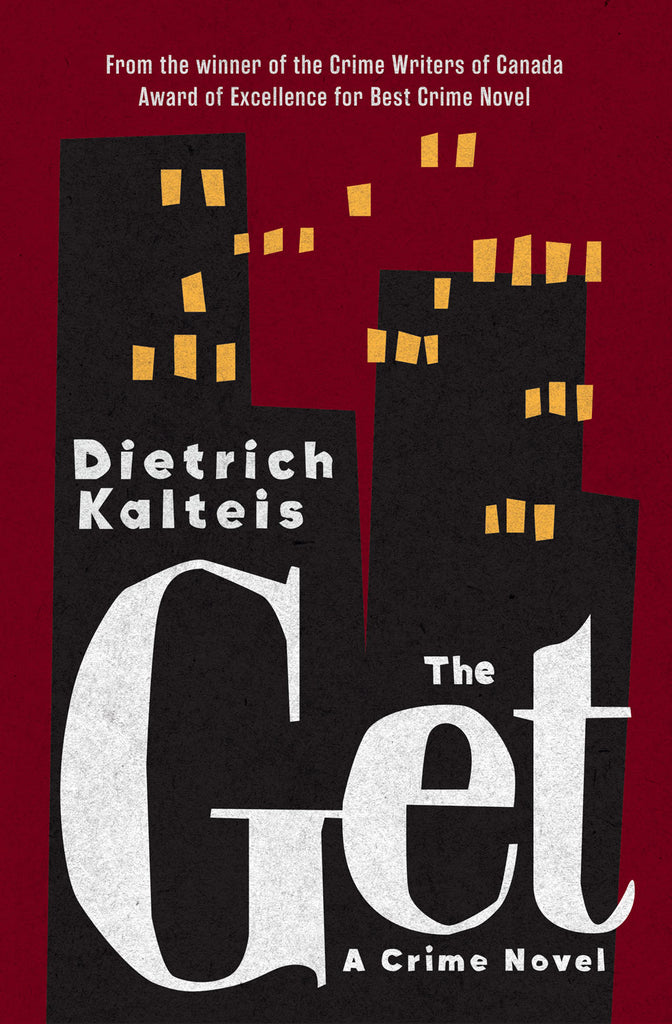
Coming June 6, 2023, from ECW Press. Check it out on their website.


Tuesday, March 7, 2023

Ta Da - Book Launch Day!

 My thanks to Terry for letting me take her Tuesday spot. Today’s the official launch date for MURDER VISITS A FRENCH VILLAGE and I wanted to celebrate with my fellow Minds and readers. It’s a new series, but with benefits. Thanks to my new publisher, characters from the last two French village mysteries have been allowed to slip into the new series. The new protagonist is Ariel Shepard and here’s how her new life begins: 

The sound of a key turning in the lock made her turn. With a quick glance at the large mirror in the foyer to pull any stray lengths of hair into the trendy style her new Madison Avenue stylist had insisted on, Ariel opened the door.


“Hey, sweetheart,” Dan said, giving her a tight hug. He sighed and held on to her for a long moment. “I hope you know the best part of my day is opening the door and seeing you.” He dropped his briefcase on the big glass-topped table in the foyer and ran a hand through his silver-streaked hair. “Whew, it’s warm in here. They keep this building too hot. Even the heater in the car seemed way high, although Luis swears it’s like it always is.”


“Tough day?” Ariel said. “You look kind of pale. Are you feeling okay?”


“Fine, not to worry. Just tired.”


“How about a glass of wine to relax before dinner?”


Dan ran a hand roughly over his mouth. “Maybe I’ll just sit for a minute. I probably shouldn’t have had that steak frites lunch.” He tried to grin.


“Then, let’s just sit and look at the view,” Ariel said. “Dinner can wait.” She turned toward the living room but spun around seconds later when she heard a loud crash behind her.                                    


The new widow finds out her husband bought a rundown château they had seen on their honeymoon four years earlier. He meant to have it restored as a surprise gift and now, left with the proceeds of the sale of their posh Manhattan condo, she decides to take up the challenge herself. Sadly, Christiane, a lovely scholar she meets in Noyers who offers to research the château’s history, dies shockingly in the property’s dry moat, and the reasons why are a complete mystery.


Château de Champs-sur-Serein, my imaginary château, is a kilometer outside the real Noyers-sur-Serein, one of France’s 100 Most Beautiful Villages, a walled medieval town clustered below the ruins of an ancient fort. I’ve visited many times and I love the place. Noyers is in the Yonne district of the province of Burgundy, a pastoral region decorated in season with neon yellow rapeseed flowers and white Charolais cattle. The first two French village novels I wrote were set in an imaginary town that, in my mind, was near Noyers, so it makes sense that Katherine and Pippa, two other ex-pats and the protagonists of the first two, become her first friends and then her co-investigators. 


Part of the challenge of writing this was learning more than I ever wanted to know about drainage, electrical engineering, the matrix in stone walls, roof repair, etc. I kept reminding myself this wasn’t a how-to manual, I only had to avoid (fingers crossed) the most egregious errors so my imaginary château didn’t collapse! 


 Anyway, the book’s out today in hard cover and e-book formats, with the promise of a paperback sometime in the future. I’m so happy to be back in the Burgundy countryside, with a cast of new characters and some welcome friends from before. I’m deep into the follow-up, which is such a treat.


“The quirky village residents make this an appealing series debut. Characters from Shea’s “French Village Murder” series also appear in this book. Recommended for those who enjoyed the author’s previous series and for fans of M.L. Longworth, Martin Walker, and Serena Kent.” – Library Journal


Noyers-sur-Serein town center
Bon voyage even if it’s armchair travel!

Sunday, March 5, 2023

Emulating Favourites

Are there books you love so much that you find their tone creeping up in your work? Where is the line between homage and plagiarism?

Brenda 

I've read widely since I was a kid and have had different favourite books along the way. I particularly loved Harper Lee's To Kill a Mockingbird -- the characters, the plot, the message -- and reread it several times. Hemingway's sparse style also appealed to me, painting pictures with few words and dialogue. While I studied English lit at university, I continually read crime fiction, my chosen genre for writing short stories and books.

Which crime fiction books have I loved so much that I'd want to emulate the tone ... and do I?

There've been so many over the years. Maybe it comes down to the type of book I like best: strong, relatable characters, interesting, plausible plots, suspense, a bit of grit, well drawn settings. Voice is also key. Some authors who've got all this going on include Denise Mina, Adrian McKinty, Elizabeth George, Jane Harper, Ann Cleeves, Deon Meyer, Val McDermid ... I can go on and on. And I haven't even touched on my fellow Canadian authors (you can find a list of treasures to discover at Crime Writers of Canada website).

I'd like to believe that I've absorbed and learned from all these authors and come up with my own voice. If a tone creeps into my work, it's only an echo because much as I'd like to write like some of them, I ultimately cannot. Every time I face a blank page, I pull from my own imagination. Plagiarism would be to copy someone else's words or to take one of their passages and change the odd word, and this I would never do. Plot lines and settings are fair game, however. Nobody holds the copyright on these; it's how the author uses them that makes their stories and writing original.

Friday, March 3, 2023

Writers We All Should Be Studying, Or Does Genre Matter? by Josh Stallings

Q: Besides manuals, which books do you think make good masterclass material for crime writers?


A: I’m not a big fan of genre and sub-genre. As a reader they limit my exposure, “Oh you like hardboiled, you’ll love book X.” But wait I also love books from other sections, or I might if you ever showed me them. Does bitching about the algorithm sound hopelessly 2019? 


As a writer I find genre and sub-genre very useful. We write books that live in a linage of other books. I want to know what came before. What is expected by readers of the genre? I want to know the rules before I toss them out.


When writing Young Americans I needed to know how heist novels worked. I started with Donald E. Westlake’s The Hot Rock. It is a romp full of fun eccentrics and stunning plot twists. Then I read Jim Thompson’s The Getaway. An entirely different take on a heist novel, dark, brooding, and violent. Instead of focusing on the planning, assembling of the team and tools etc., it dealt with the getaway from a robbery gone wrong. Both are amazing books, together they show the breadth possible within this sub-genre.


My crime fiction first love was Hardboiled. It started as it should with Raymond Chandler’s The Long Good Bye. It contains so many recognizable tropes, and he’s a brilliant enough writer that it never feels hokey. They weren’t tropes when he invented them. After that look at Walter Moseley’s Devil in a Red Dress. A modern masterpiece of hardboiled writing. Moseley shows us a Los Angeles seen through a Black janitor and part time detective’s eyes. Where Marlow haunts mansions and high class gambling establishments, Easy hangs out in Jazz clubs and bungalows. POV changes everything. There are very few new stories, but giving us new eyes to witness them through allows us to experience the world anew.


When my first books were published I was categorized as a “Street Writer”. The conference panels I was on always had either “Street” or “Gritty” in the description. Gritty. I hate that term. The first thing it makes me think of is sand in a tunafish sandwich. I realized later that street writer was code for didn’t go to college, and had actual experience in the low level criminal worlds we wrote about. After I met a few of these “street writers” I saw it was badge of honor. Pearce Hansen and Ian Ayris are two the finest practitioners of honest street-level crime writing alive. Hansen’s Stagger Bay is brilliant, haunting, heart breaking and heart healing. Ayris’ John Sissons trilogy (Abide with Me, April Skies, Everybody Hurts) is a massive story about growing up desperate, poor, proud, angry, in love. It is about real humans struggling to be honorable.


Both Pearce Hansen and Ian Ayris deserve to be taught in a master class called “Lies we use to tell our truth.”  

Thursday, March 2, 2023

Seven Pillars of Writing Wisdom, by Catriona

Besides manuals, which books do you think make good masterclasses for crime-writers?

I write this simmering with annoyance, after hearing a guest on a radio book programme say he was grateful to have been given an excuse to read a mystery thriller. Which turned out to be so much more than a mystery thriller. Because it was good.

The reason I'm simmering with annoyance rather than boiling with rage is that his snobbish dismissal of our beloved genre was accomplanied by that admission that he's the poodle of his own arrogance and can't freely choose what to read. Pitiful.

So I'm picking only crime novels to answer this question. Take that, book snob. (voiceover: he wouldn't be able to take it)

On the understanding that no one writer can do absolutely everything better than everyone else (coughRaymondChandler'splottingcough, sneezeAgathaChristiesminorchracterssneeze), I reckon this reading list would stand a fair few beginning mystery authors in good stead, one way or another.

Joy Fielding is first up for me still, when it comes to characters and psychological conflict. KISS MOMMY GOODBYE or SEE JANE RUN or any other example of Fielding's celebrations of believable nastiness will give any writer at all something to shoot for next time the laptop gets switched on. 

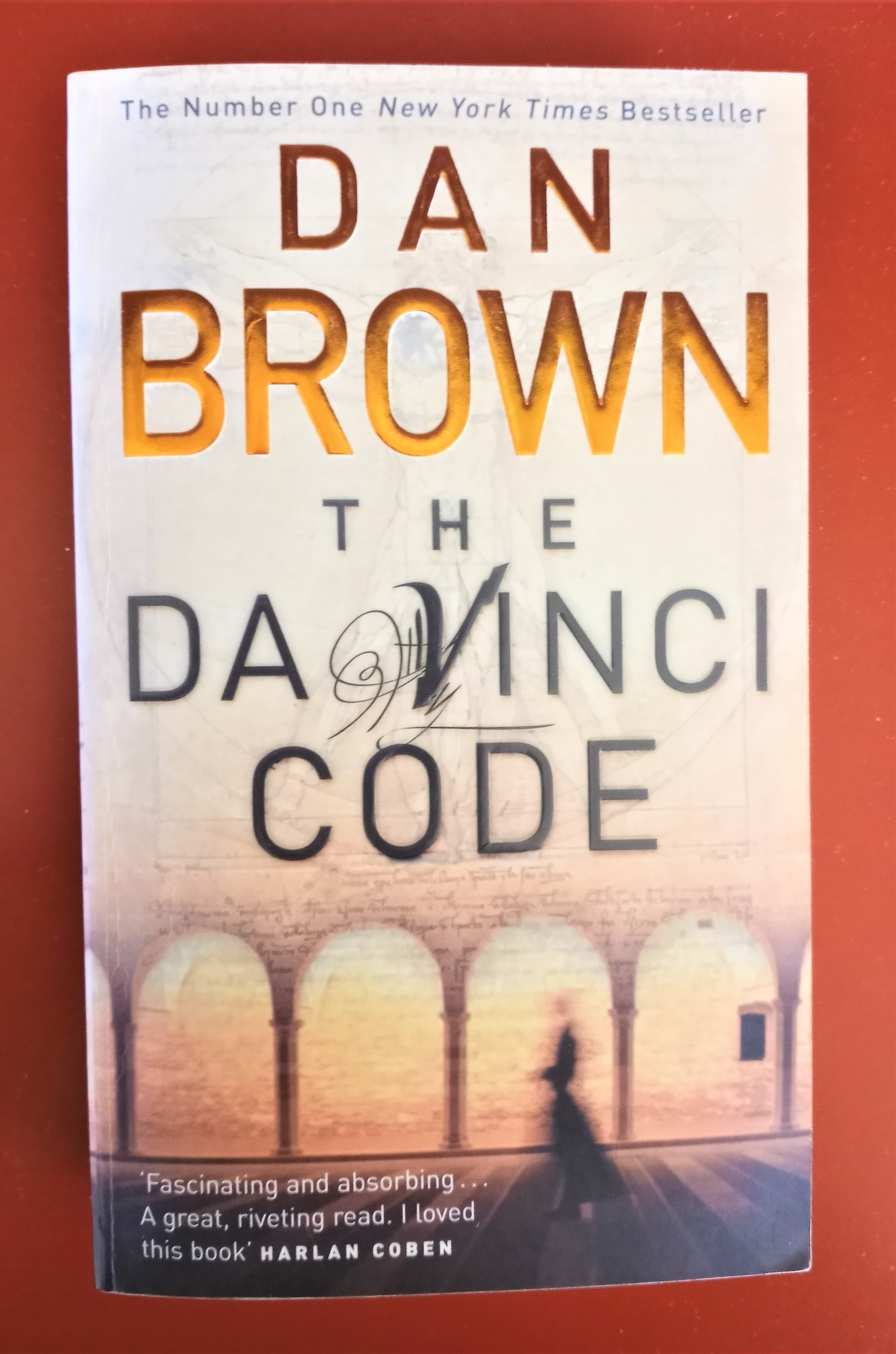
But then contrast Dan Brown - and why not go for THE DA VINCI CODE? - where it's something quite different that's being mastered. Dan Brown absolutely nailed "high stakes" and "plotting chutzpah" with this one, didn't he? It's still the highwater mark for what we can get away with if we just do it. (If we just do it first. It was delicious to see the sour grapes from other crimewriters who hadn't thought of this plot!)

Another thing Dan Brown does is switch points of view. But for a masterclass in how to do this boldly and cleanly - so no one ever skips a chapter to stay with the story you want them to step aside from, and no one ever forgets who any of the many narrators are - I'd advise looking at any of the late and loved Mary Higgins Clark's many novels. She was also a ninja at titles so MHC-ish they were practically a declaration of her brand. I'VE GOT YOU UNDER MY SKIN is no exception.

Harlan Coben says he learned plotting from Mary Higgins Clark. But I think DARKEST FEAR or any of his other Myron Bolitar series are a masterclass-in-waiting for authors of themed cozies. Hear me out! He weaves (present tense because I really hope there'll be another one one day) the small-business details into the puzzle plot in just the right mixture, and nails the lovely cozy day-to-day of colleagues working together. Okay yeah one of Myron's colleagues is a sociopath. My point stands.

More specifically regarding the culinary cozy, I recommend Leslie Karst's Sally Solari series (the latest is THE FRAGRANCE OF DEATH) for how to pepper the story with plenty of food, all of which earns its place in the plot, without the meals or even the recipes at the end feeling like one course too many.

And speaking of avoiding the literary equivalent of a seven-course tasting menu where every course comes with mashed potato, Naomi Hirahara in CLARK AND DIVISION offers a masterclass close to my own heart. C&D is a historical novel about a sobering period in US history - the internment and displacement of Japanese Americans in WWII - written by someone with a journalist's background, who knows a forty-foot-shipping-container-load of stuff about the subject . . . but spares us! The history is detailed, authentic, convincing, satisfying and balanced just right. I understand the feelings of any historical writer thinking "I took a year to learn this; I'm damn well going to pass it on" but a "Further Reading" section, as given here, is the way to go.

I lied about sticking to crimewriters. My last masterclass suggestion is RECITATIF by Toni Morrison. And I want to recommend it without exactly saying why, because if anyone isn't familiar with this little jewel, I don't want to be the one who spoils it for you. I heard it read on NPR, knowing nothing about the unsolved and unsolvable puzzle at its heart. Confirming everything Morrison was suggesting when she wrote it, I didn't even know I'd missed anything! Then I read it, with an introduction by Zadie Smith, and marveled. If there's a better, neater, more unsettling, lighter, more sly, more irresistible way to hold up a mirror to your readership, I don't know where to find it. And it's only 40 pages long too.


Cx


Wednesday, March 1, 2023

Happy St David's Day! by Cathy Ace


HAPPY ST DAVID’S DAY, Patron Saint of Wales...

…and please forgive me if I take this opportunity to celebrate the release, on 20th February of my latest novel, THE CASE OF THE CURSED COTTAGE, which is set in…yes, you guessed it...WALES! 


The 7th book in the WISE Enquiries Agency Mysteries series was just published, and I want to thank everyone who pre-ordered the book, has downloaded it since its publication, has ordered it at their local book shop, or has asked their library to get it for them: 
THANK YOU SO MUCH! DIOLCH YN FAWR!

Wondering how much more Welsh today's post can get? Hmm...let me see...

The whole post is in red, white and green; I'm looking at a vase of daffodils as I type; I'll be having leek tart for dinner tonight...and the book that just came out? Well, yes, it's set in Wales, and the cover art photo is of a real cottage in Gower, one of the world's most beautiful and scientifically interesting areas - and that's not just me saying that: Gower was the FIRST area designated as an Area of Outstanding Natural beauty (AONB) in the UK, back in 1956, and now has dozens of specially conserved Sites of Special Scientific Interest (SSSIs) .

The specific cottage in the photo is of a style that's common in Gower: whitewashed stone walls, a slate roof, with dark or black gloss trim. That might sound either generic, or specific to you - but it's what I grew up seeing, and knowing, and it still pulls at my heart strings.

Even more specifically, this cottage is on the Penrice Estate in Gower. The Penrice Estate dates back to the 11th century, when the knight, de Penrice, was gifted the land after the Norman Conquest. The last of the de Penrice line died in the 15th Century, but the line married into the Mansel family, so the land went with it. 

I come from the Gower family of Aces, and was born and raised in Manselton - a Victorian planned community, with dwellings built by the Mansel family to house workers at the local copper works (Swansea was known as Copperoplois for a long time due to its prominence in the global copper trade).

Thus...Gower, Penrice, Manselton...they are all connected in my mind, and in my soul. And this book allows me to indulge the process whereby inspiration and invention are allowed to work in harmony within the mind of a writer of fiction.

Here's the blurb:

‘IT MURDERED ONE OF OUR GUESTS, AND NOW IT’S TRIED TO KILL MY HUSBAND.’

When the women of the WISE Enquiries Agency are approached by the frantic owner of a historic cottage in a picturesque Welsh seaside hamlet, they agree to help. After all – there can’t be any such thing as a killer cottage, can there? And isn’t a cursed cottage just as unlikely? They’re about to find out – when Christine and Annie take up residence.

Meanwhile, Carol goes undercover to investigate a day spa with some dangerous treatments, leaving Mavis to stake out a man who might be incapacitated because of a work-related accident. Will this bricklayer become belligerent if he spots her on the job?

Because our engaging private investigators are busy with paying clients, it falls to Henry, eighteenth duke of Chellingworth, to try to solve the riddle of the miss
ing silver mugs, which is a pressing priority for his mother, the dowager, as she seeks to take over the organisation of the christening of his son and heir.

Early spring in Wales is a busy time for the WISE women, and the titled Twyst family – join them to find out how they cope, in this, the seventh book in the series.

If you haven't read books 1-6 yet, now's the time! 
The first 4 are available for just $3.99 for all four (for Kindle).
Details of all the books, and purchase links, are here: https://www.cathyace.com/wise-enquiries-agency-mysteries


“…a gratifying contemporary series in the traditional British manner with hilarious repercussions (dead bodies notwithstanding). Cozy fans will anticipate learning more about these WISE ladies.” 
Library Journal, starred review

Tuesday, February 28, 2023

I gotta be Me, and You gotta be You by Gabriel Valjan

Besides manuals, which books do you think make good masterclass material for crime writers?


When it comes to gifts, parents fear the words: SOME ASSEMBLY REQUIRED. I feel the same way about HOW TO advice vis-à-vis the books that made me the writer before you because it would be disingenuous on my part.

            Remember the Pritchard Scale in the movie Dead Poet’s Society? If you do X and Y as a Writer, there is this desired effect in the Reader. Robin Williams as Professor Keating calls BS on Pritchard because the academic approach is devoid of passion or individuality, and yet there will always be that one student in class who’ll raise his or her hand and say, “What do I have to do to get an A in this class?” I don’t know about you, but I had one of them in every one of my literature classes. The takeaway here is don’t think that if you follow Dr. J. Evans Pritchard’s advice, you will create Literature.

            Let’s do the roll call of contemporary masterclass materials: Lawrence Block’s Spider, Spin Me A Web; George V. Higgins’s On Writing; Natalie Goldberg’s Writing Down the Bones; Lamott’s Bird by Bird; Snyder’s Save the Cat; Vonnegut’s Pity the Reader; Zissner’s On Writing Well; and King’s On Writing.

            None of them did a thing for me as a writer because I’m gonna be me. Let me explain.

I was an only child, which means two things. One, I was left to my own devices and I figured out things on my own.  I’m self-reliant, in the Emersonian tradition. Two, faced with the choice of pleasing others or being contrarian, I’ll choose anti-authoritarian. The reason why is that I learned long ago that the education system and society are all about conformity. It’s one massive game of Whack-A-Mole. As education is no guarantee for success, neither is having read everything. Maya Angelou, Ray Bradbury, Charles Dickens, and William Faulkner never graduated college. I’ve known doctorates whose writing is as dead as a wet match.

What’s a latchkey kid to do?

Read and read some more, but analyze why you enjoyed book X. Don’t do this the Pritchard way. Do this as if you were Frank Sinatra singing “My Way.” The nuance to analysis here is to uncover the less obvious beneath the surface. Writing is like learning a foreign language, you can drown in endless resources, or you can jump in and start talking, learn along the way, and make mistakes.

Context helps. Literary works are not monoliths. Chandler was a frustrated poet, which is why he was besotted with similes and metaphors. Most of them worked, some were roadkill. Both Hammett and Hemingway created a style in reaction to the never-ending paragraphs of writers such as Henry James. A less obvious observation is that, while Chandler is more poetic and Hammett is spare, Marlowe is far more cynical than the Continental Op. Marlowe is world weary and tired of the grind (think of all those scenes when he eyes his razor in the morning) while the Op sees his gig as a job. Observations like these lift you up from mere imitation and put you on the road to writing your way.

The list of crime fiction authors I have enjoyed is simply too lengthy. Burke. S.A. Cosby. Highsmith. Higgins. Hughes. Lehane. To cite a WHY, let me cite the example of Leonardo Sciascia’s The Day of the Owl because he showed me that for organized crime to work, it needs cooperation at all levels of society. That was a profound insight to me. I learn something from every writer, but I don’t want to write like them. On that note, my other advice is to read bad literature. Like that famous judicial pronouncement on what defines obscenity: you’ll know it when you see it.

When I hear writer advice or writing masterclass, I’m thinking that wannabee writers want a coach, someone who will inspire them to write every day. It’s not that I can’t appreciate how another mind thinks, but I don’t need a cheerleader. Some people need to feel the boot in the can. Neil Gaiman and Walter Mosley have interesting things to say in their Masterclasses online, but if you listen carefully, they discuss what worked for them.

I like what I like. I can try to explain why, but it’s indigenous to Me.

I can’t explain how I write the way I do because I simply do it. Homo faber.


For better or worseevery author I have read has influenced me. I latched onto the fact that attention spans have dwindled, so I read the Hemingway and Fitzgerald of journalism, Jimmy Breslin and Pete Hamill. If there’s one book that helped me the most, it was Dave King’s Self-Editing for Fiction Writers because I needed to teach myself how to line-edit, which is a different skill from proofreading and developmental editing. The chapters in his book are a tour of the kitchen and you learn how to take a knife to your prose. What you teach yourself, you never forget.

Understand that what works for you won’t for someone else.

Trust your instincts.

At the close of day, You gotta be You.