Tuesday, November 27, 2018

Learning to be a Writer


The question we are answering this week is, “What obstacles, if any, did you encounter on your road to becoming a writer? And how did you overcome them?”

Terry Shames here:

I could take up the whole week answering this question, but I’ll try to keep the obstacles I encountered to a few.

1)    Myself. People often tell me they are amazed at my output. I feel like a slacker in comparison to some writers, but in comparison to myself when I was younger, I guess it’s pretty good. But having reasonable output did not come easily. It took me years to get over being….okay, what’s the word? Lazy? Not exactly; but close. I was always a a hard worker. I started working to buy some of my own clothes when I was 12. In high school I knew if I wanted to go to college, I’d have to pay for it myself, so I worked afternoons and weekends during school, and full-time during summers. I worked while I went to college. I have always had a good work ethic. But the kind of lazy I’m thinking of is the kind that lets me off the hook for working hard toward a personal goal. I wanted to be a writer, but I didn’t have the rigor to really push myself to become good at writing. Which leads me to the second obstacle:

2)    Kidding myself. I somehow had the idea that when I got around to writing, all the words I wrote would be golden. When I finally decided to get serious about writing, I kept a cartoon on the door of my office. It showed two babes soaking in a hot tub. One says to the other, “I’d write a book, too, if I just had the time.” The cartoon was an admonishment to myself. When I was in my twenties and thirties I wrote a lot. I wrote half-books, half-stories, story ideas, twenty pages of books. Get the picture? I was fooling around. I told myself that if I actually wrote a book, it would be good. I just had to get around to doing it. I remember having a conversation with Roger Hobbs about his first novel, Ghostman, which won critical acclaim. He told me that he had written a few other novels, but that he didn’t think any of them were good enough to submit. What a concept! If only I had had the same understanding of quality when I was his age (he was twenty-six) I might have made things a lot easier on myself.

3)    Not doing my homework. What this amounted to was not having any understanding whatsoever of the publishing industry—and not doing the work to gain that understanding. Again, it was that particular brand of laziness that afflicted me. The first book I ever wrote was a science fiction book. When I had written about half of it, I chose a publisher at random, sent a  few chapters to them, and….wonder of wonders, they said they liked it, and asked me to send the rest. I was so terrified that I didn’t write another word for almost a year. And I never got back to them.  If I had done my homework, I would have known not to send anything until the whole manuscript was ready, or at the very least I would have been honest and told the publisher that I was only halfway through with the book. As it was, I squandered an opportunity to have the book judged fairly. I wish I could remember my thought process, but it’s clear in retrospect that I hadn’t paid enough attention to what it meant to work at writing and publishing.

4)    Or rather, this is 3) plus. Still not doing my homework. Finally I decided to dig in and really write. I wrote one book after another, got one good agent after another, and nobody could place the books. There are so many things I did wrong with this—so many obstacles I created for myself—that I’m still amazed that I ever managed to get over it.. Instead of working with an agent who had shopped my book, the next time I wrote a book, I looked for a different agent. I suppose to be fair, none of them had impressed on me that they would work with me to perfect my next project, but from my end I simply moved on. If I had bothered to find out about agent/writer relationships, I would have known to work with the same agent on the next project.


5)    The usual. I got over those personal obstacles by attending some mystery writing workshops, joining MWA and Sisters in Crime, and working with a very serious writer’s group. all of which taught me a professional approach to being a writer. The lesson, in short, is to write the best book you can write, have it critiqued, send the work to agents who are right for your manuscript. And you have to persevere.  By taking myself seriously, I finally I found a home for my books.

 There’s not enough room to write about the question of how much of my obstacle creation was laziness and how much was fear. But what I do know is that whatever the root of my problem, had I been more professional I might have overcome the obstacles sooner. I wish I could go back and tell myself that a professional approach might have short-circuited what became a years-long slog to being published. So bottom line? My biggest obstacle was myself.


ANNOUNCEMENT: The publishing date of my next Samuel Craddock novel, A Risky Undertaking for Loretta Singletary, has been delayed. I will update readers as soon as the new date has been firmed up. Stay tuned!


Monday, November 26, 2018

When You wish upon a Star

Q: What obstacles, if any, did you encounter on your road to becoming a writer? And how did you overcome them?

- from Susan

The story I’m sharing on Criminal Minds today is intended to help writers just starting down this path. Others have similar personal stories from which people beginning this journey may take hope and practical tips. Bottom line: If you really are driven to write fiction, know there is a way forward!

I’ve always been a professional writer, always had writing and editing and some form of communications among my job responsibilities. There’s not much else I can do well, truth be told. My transition from non-fiction to crime fiction took awhile. I suppose a lack of courage was the biggest obstacle, but I will defend myself. Left broke during the bad vibes of divorce, I was determined never to be in that situation again. I worked hard at my profession, did well, rebuilt my finances. 

I started writing crime fiction novel #1 in the evenings, but realized I had no business writing about a Latina policewoman in San Francisco since I didn’t know any Latina woman well enough to try and characterize one, and knew only the smallest bit about the local police procedure. Into the drawer. I started writing crime fiction #2 about a high tech crime after writing a long profile piece for an alumni magazine about a Silicon Valley entrepreneur, but was derailed my lack of understanding of the sharp knives in that industry. (I know more now, which is why a sharp Silicon Valley lawyer plays a central role in MIXED UP WITH MURDER.) 

All this time, I was working as a consultant with clients all over the US, then executive director of a world famous institute, and then as an exec in higher education. None of those jobs could ever be described as 9-to-5, so the fiction writing was starved for attention. But my treat to myself every couple of years was attendance at a crime writers’ conference, which kept my dream alive.

Then, my wise artist partner gave me the best advice a timid writer could ever receive: Meet with a financial advisor. Share your goals and find out how much savings you need in order to quit the day job without fear of becoming a bag lady. When you reach that magic number, QUIT the day job. Do not think, “Oh if I work another year I’ll be so much more secure.” 

So I did. And knowing the day was coming, I sailed into crime novel #3, really throwing myself into it. When the magic day came, I made my move, and had the time and energy to finish what became MURDER IN THE ABSTRACT, the first of the first series. 

So, my fear was not a fear of artistic failure, it was a fear of what happens when you don’t have the money to take care of yourself or your kids. For other writers, it will be something entirely different. But if you see a bit of yourself in my story, take heart and never give up your writerly dreams.

Thursday, November 22, 2018

Do as I Say

Happy Thanksgiving!

What advice would you offer a new writer wanting to get their first novel published in today’s highly competitive publishing environment?

From Jim

I’ve just spent three long days moving into our new house in a new city. And there’s still lots more to do. Where did we get all this stuff? And weren’t there any houses available without stairs? Anyway, I’ve fallen far behind on everything else in life, including writing this blog piece. I’m tired and sore and looking forward to Thanksgiving. So I’m offering some brief advice.

Find your own voice.
Don’t give up, no matter how many rejections.
Keep learning.
Read.
Write.
Treat writing as a career. Be professional.
Don’t wear a hat.
Challenge every word.
Use the right word.
Look for an agent when your book is ready, not before.
Don’t settle. Go for the deal you’ve always dreamt of.
If you self pub, do it right. Get a good editor and a cover designer.
When you find a publisher, be a collaborative author, not a prima donna.
Understand that there are millions of books published every year.
Celebrate your writing.
Celebrate having written.
Write something new.
Write every day. Or as often as you can.
Write books. Writers write.
Revise.
Root, root, root for the home team.
Let go.
Demand the best of yourself, but be good to your hardworking self.
Do book signings. 
Attend writers conferences.
Be generous with other writers.
Be considerate of other writers.
Cherish your readers.
Pass Go. Collect $200.
Never respond to Amazon or Goodreads reviews. 
Write something outside your comfort zone. 
Do your research. Especially about guns. 
Keep a spreadsheet to track your writing progress. 
Lather, rinse, repeat. 
Revise, revise, revise. 
Revise again.
Revise some more. 
I mean it. Revise a lot. That’s where you’ll make a book.
You’re not revising!
Come up with great ideas. 
Write great books. 
Have fun.
Practice a compelling, succinct elevator pitch.
Eat, drink, and be merry. 
If you think you’re ready to query an agent, don’t do it until you’ve read ALL of Query Shark’s archives. Best training anywhere. http://queryshark.blogspot.com/

Happy Thanksgiving!


Wednesday, November 21, 2018

One word at a time

What advice would you offer a new writer wanting to get their first novel published in today’s highly competitive publishing environment?

by Dietrich

We all have different habits and routines that help get it done. If you’re new to writing, it may help to read a couple of how-to books like Stephen King’s On Writing, or Elmore Leonard’s 10 Rules of Writing. And listen to those who have been at it for a while. Check out associations like The Author’s Guild, Mystery Writers of America, Crime Writers of Canada. Some offer directories, workshops, seminars, events and conferences where you can connect with your tribe.  

Listening to writers at talks and panel discussions can be a big help. Most of the writers I’ve met along the way are generous with helpful advice and support, willing to share their experiences and point a new writer in the right direction. Then take everything you hear and adapt what works best for you.

Look up writer events like ’Noir at the Bar’ in your town, find out who organizes them and try and get in the lineup. It’s a chance to read your work in front of other writers and a receptive crowd.

Be patient. Don’t be anxious to get a story published before it’s time. Write for the simple joy of getting lost in the worlds and characters you create. Write as often as you can, develop a voice and a style that just flows out of you. Get lost in it, block out the real world and all the white noise. Find your way into it every time you sit down to write.

“Abandon the idea that you are ever going to finish. Lose track of the 400 pages and write just one page for each day. It helps.” — John Steinbeck

“If I started to wait for moments of inspiration, I would never finish a book. Inspiration for me comes from a regular effort.” — Mario Vargas Llosa

When you have a first draft complete, step back from it. Take a break, and then look at it with fresh eyes. This way it’s easier to spot things that need to be reworked, parts that should come out, or something new you want to include.

Read what inspires you to write. Read a lot.

“You cannot hope to sweep someone else away by the force of your writing until it has been done to you.” — Stephen King

Avoid all things negative. Anything that drags you down will mess up the creative flow, get you second-guessing yourself and keep you from writing at your best.

Every great or even every very good writer makes the world over according to his own specifications. It’s akin to style, what I’m talking about, but it isn’t style alone. It is the writer’s particular and unmistakable signature on everything he writes. It is his world and no other. This is one of the things that distinguishes one writer from another. Not talent. There’s plenty of that around. But a writer who has some special way of looking at things and who gives artistic expression to that way of looking: that writer may be around for a time.” — Raymond Carver

Don’t submit a story until it’s really ready. Don’t rush because you’re dying to get something into print. It’s more important to find your voice and work on a style all your own. Polish your story and make it as tight as you can before letting anybody see it.


Don’t try to write a best seller. You can’t force something like that, plus there’s no magic formula to writing one. Don’t try to sound like anybody else, just write from the heart and put out the best book you can. Write it for yourself.

Monday, November 19, 2018

Advice for New Writers Looking to be Published


Question: What advice would you offer a new writer wanting to get their first novel published in today’s highly competitive publishing environment?

Brenda Chapman here.

The publishing world is almost the exact opposite from the creative, solitary world of a writer. Whereas an author must open themselves up to feelings and intuition, publishing demands a business-like, pragmatic approach. Contracts, agents, advances, royalties … every aspect can be intimidating and overwhelming for an author embarking on their search for a publisher.

I cannot speak to the world of self-publishing since I have no experience in this arena, but I still believe that having the distribution and marketing force of a publishing house not to mention the validation in the industry that comes from having a publisher trumps self-publication. Those self-published authors I’ve spoken with have said that they do not get reviewed by established publications and they have difficulty getting their books into stores or even getting on panels in some book conferences, such as Left Coast Crime. However, on the flip side, they do maintain control of their work and can make more profit from each sale. So, my first bit of advice is to do your research and consider all the pros and cons when deciding your path in the publishing world.

Next, I would say for those looking at finding a publisher for their first novel, write the best book that you can — take extreme care in editing and polishing your manuscript and pay particular attention to the first chapters, which serve as your gateway. Publishers normally decide whether to read an entire manuscript based on the first few pages. Another tip that I gleaned from an acquisitions editor was to have a hook in the storyline. This editor was looking for something marketable that would set the book apart; likely they were not the only one with this requirement.

Publishers are working to stay afloat in a tough environment, and as a perspective new author, you need to keep this reality in mind. Pitch your book as if you are selling it to readers. Study book covers of books similar to yours and look at the wording of the blurb. Use similar wording (geared to your book) in your submissions letter. You need to sell the storyline and sell yourself in the process. Publishers want to know your credentials, whether it be your expertise in the subject matter or your writing history. They’re looking for writers they can work well with, in what is for them, a business venture.


Once your book is accepted — and this could be after much rejection and rewriting — realize that your work is only beginning. You’ll need to roll up your sleeves and become an active member of the editing, publicity and marketing teams. The entire process, from the moment you cross the last ‘t’ in your manuscript becomes one of selling: selling your book to a publisher, selling your book to readers, selling yourself to media and book festivals. Be prepared for more rejection, whether it be from a store customer who says your book is not for them, reviewers who criticize your work or festivals that overlook you for their event.

Yet, not all is dire or difficult. You will find successes in many unexpected places — a solid review, a flattering email from a reader, an invitation to a book club, your book front and centre in a store window! Gradually, you’ll gain confidence, and one day, you’ll accept that you truly are a writer. You’ll have joined the select group of people who’ve actually completed a novel and had it published … no small feat.


My last bit of advice is to keep writing. Start another project as soon as you can and learn from the first. Don’t lose sight of the joy that comes with telling a story and creating a world that readers will want to visit and recommend to their friends :-) 

www.brendachapman.ca

Twitter: brendaAchapman

Facebook: BrendaChapmanAuthor 

Friday, November 16, 2018

Never Say Never

We all write the kind of novels we want to write. What kind of novel would you never write?

by Paul D. Marks

Well, as Sean Connery learned when he said he’d never make another James Bond movie, “never say never,” unless you want to make a latter-day Bond called “Never Say Never Again.” However, in that case he probably should have said no, if not actually never.

And in checking out Wikipedia  (where else am I gonna go?) I can’t believe how many genres and sub-genres of fiction there are, but I’ll only touch on a handful.

So, that said, is there a type of novel I would (probably) never write?


Romance would be up there, especially bodice rippers. I don’t have anything against them or the people who read them, but it’s not something I read and would probably feel very uncomfortable writing.

Horror – Well, I thought I’d never write horror and I haven’t done a horror novel…yet. But I was asked to write horror stories for two different horror anthologies. So I took it as a challenge and gave it my best shot. And both stories were accepted by their respective editors and are in the anthologies Journals of Horror, edited by Terry M. West, and Simple Things, edited by Franklin E. Wales.


Fantasy – doubtful I’d write something in this genre. I don’t read it and I’m not much into it. I prefer things – at least these days – set in the real and present world that deal with things and people that I recognize to one degree or another. That could change over time, but only time will tell.

Dystopian – Again, it’s not something I read much of these days, though I did more in the past. I think I have some dystopian ideas in my idea file, but nothing I’m planning to work on any time soon.

Young Adult – It’s been a while since I’ve been one so I don’t know if I can relate 😉.

Science Fiction – I actually did a sci-fi type story or two a very long time ago. They weren’t published and I haven’t tried again lately. Though I did work on some sci-fi scripts in my previous life.

Western – Again, haven’t written any western prose, though one of my favorite books is Monte Walsh. And again, I did some work on a western screenplay.

Zombie/Vampire – If you would have asked me this a few years ago, I would have said I’d never work on a vampire story. Then I started on one ’cause I thought it would be fun. And it was, but I wanted to get back to what I generally do, mystery, noir, etc. So I abandoned it. Besides, there were so many out there the world didn’t need another bloodsucker.


What I do write are mostly mystery and mostly in the hardboiled/noir vein. But I’ve also written and had published satirical stories, mainstream and other things.

My three novels, White Heat, Broken Windows and Vortex, are all on the hardboiled/noir side of things. But my short stories are all over the place. The Ghosts of Bunker Hill series that’s been appearing in Ellery Queen has a supernatural element to it. My stories Continental Tilt, The Practical Girl’s Guide to Murder and more recently There’s an Alligator in My Purse, from Florida Happens, the 2018 Bouchercon anthology, are all satirical/humorous. Windward, the story that won the Macavity and was chosen for the Best American Mysteries of 2018, is a pretty straight forward PI tale set in Venice, CA. And the first novel that I completed is a satire on Hollywood. It was accepted for publication at a major publisher. Then the editorial staff was replaced and, as a new broom sweeps clean, my novel got swept out with them. And since the humor was topical it was already dated. Remember Fawn Hall and Donna Rice… see what I mean. But instead of rewriting it, I moved on to other things, though I might come back to it someday. But I did learn something from that experience: don’t write topical humor, unless you know something will be published fairly quickly.

So, never say never. And never write topical without a ready market. My wisdom for the day 😀.

~.~.~

And now for the usual BSP:


I’m honored and thrilled – more than I can say – that my story Windward appears in The Best American Mystery Stories of 2018, edited by Louise Penny and Otto Penzler, which just came out this week. I wrote a blog on that on SleuthSayers if you want to check it out: https://www.sleuthsayers.org/2018/10/the-impossible-dream.html .

I’m doubly thrilled to say that Windward won the Macavity Award at Bouchercon a few weeks ago. Wow! And thank you to everyone who voted for it.


And I’m even more thrilled by the great reviews that Broken Windows has been receiving. Here’s a small sampling:

Kristin Centorcelli, Criminal Element

"Although it’s set in 1994, it’s eerie how timely this story is. There’s an undeniable feeling of unease that threads through the narrative, which virtually oozes with the grit, glitz, and attitude of L.A. in the ‘90s. I’m an ecstatic new fan of Duke’s."

"Duke and company practically beg for their own TV show."

John Dwaine McKenna, Mysterious Book Report:

"This electrifying novel will jolt your sensibilities, stir your conscience and give every reader plenty of ammunition for the next mixed group where the I [immigration] -word is spoken!"

Betty Webb, Mystery Scene Magazine:

"Broken Windows is extraordinary."


Please join me on Facebook: www.facebook.com/paul.d.marks and check out my website www.PaulDMarks.com


***

Thursday, November 15, 2018

Would I?

It's publication day for me today, so I'm exercising my right to hijack the question (What would you never write?) and do the BSP-dance. It's a can-can with jazz hands, by the way.

Would I write a book about a bored upper-class lady in 1922, who goes to a house-party where some diamonds are stolen and decides to find them? Yep.


But would I write a novel set in the village where I was born and starring my Godmother as a six-week-old winning the bonny baby competition? Uh-huh.


So would I write a novel set where my husband was born and populate it with wall-to-wall witches? You betcha.


But there are limits.  Would I write a book set in a circus at Christmas-time, or is that a step too far? Guess.


How about sending a gently-born detective undercover as a lady's maid in a grand house during a general strike? [curtsy]


And if playing at houses was too much like fun and not enough like work, would that stop me playing at shops in the ladies' wear departments of rival family emporia? Why of course not, madam.


But surely you can't get away with channeling your inner Enid Blyton to write a book about a girls' boarding school on a breezy cliff-top? Oh, really.


Did you play at doctors and nurses when you'd played at houses, shops and schools enough? Me too.


And what's the worst thing you could find in a barrel of salted herrings? I agree.


But where better to look for a bit of glamour to take the smell of herrings (etc) away than in a ballroom? Nowhere, that's where.


And where better to go after all that dancing, for rest and reflection, than a convent on a lonely moor-top? Pretty much anywhere, as it turned out. But who knew.


Then there's the book that had to be written. Simon Brett did it. Ngaio Marsh did it. Jo Nesbo did it. Was I going to miss out on all that schlocky fun? Nope.


But after a doomed production of Macbeth in a crumbling castle with relations at war and bitter secrets leaking poison, where is there left to go?

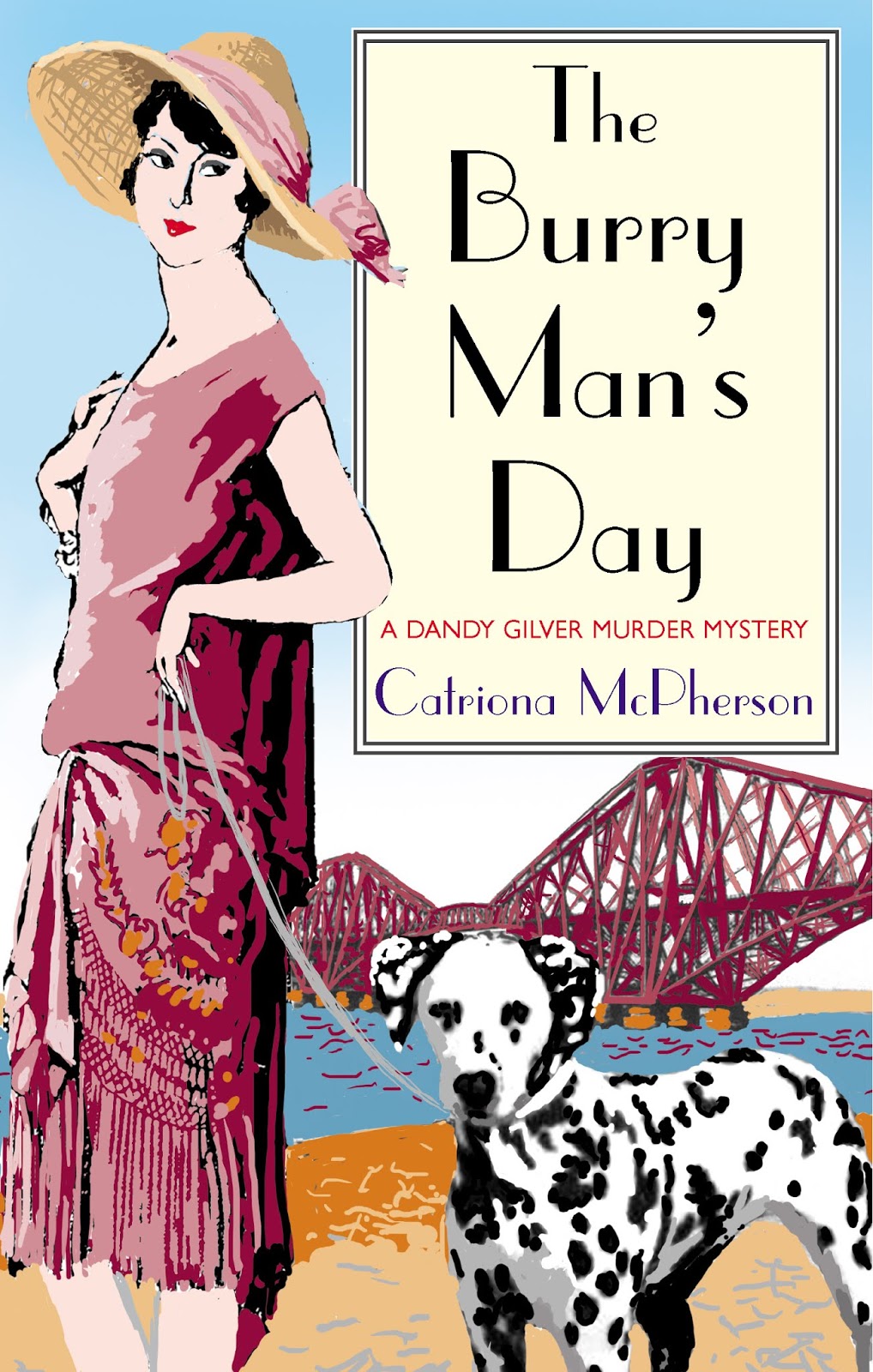
Are you kidding? Relations, secrets, poison and doom:- it's a family wedding. Dandy Gilver Book 13, is out today.


Here endeth the blatant self promotion.

Wednesday, November 14, 2018

Why...or why not? by Cathy Ace


Craft - We all write the kind of novels we want to write. What kind of novel would you never write?

This is going to be a looooong list! I honestly don’t think I could write literary, fantasy, sci-fi, romance, or erotic…so I’m pretty much left with “crime”. 


Even within my chosen sub-genre I don’t think that legal, forensic, procedural, military, global, scientific, historical or action thrillers are within my wheelhouse either. So I suppose I’m left with traditional, cozy, psychological and suspense...and twisty! All of which I have written. I'll admit to two procedural novellas too, but that's all!

Now I have to ask, and therefore answer, the critical question – why, or why not?

I think it all comes back to the fact that I try write the kinds of novels I like to read and, whilst I have read all of the above list of “not for author me” types of books, and have enjoyed many of them, all I could do while reading them was spot what I didn’t want to to do be able to write a good book of that type.


I don’t want this blog to become a moaning critique of all the reasons why I don’t “find the idea appealing” to write certain types of books, because I’m as happy to sit down with a historical global action thriller based upon a medico-scientific premise that’s led to a dystopian vision of the world as the next person. But…I don’t want to do the research and world-building that would be needed to be able to write one. 

I feel I want to be able to specifically draw on my experiences of life when I write. Luckily for me (and maybe my readers?) I’ve lived what some might call “a fairly colorful life”, and – upon reflection – there are certainly elements of my list of “no thanks” that appear across my books.

Cait Morgan has visited places where I have lived or worked, and which I know intimately. I wanted to be able to write books set in many countries around the world, and to examine different cultures, but to try to not appropriate any of those cultures. I hope that having Cait always be a “visitor” allows me to do this. And I gave her a late-in-life relationship to deal with, as I myself experienced. 


The women of the WISE Enquiries Agency Mysteries also inhabit a world of which I have real experience (yes, even Henry Devereaux Twyst, the eighteenth duke of Chellingworth, is based upon an ex-boyfriend…but I can’t tell you who, because I could end up in The Tower!) but the books also allowed me to portray the way people from the four Home Nations of the United Kingdom live and work together, without the apparition of Brexit hanging over them – hence “cozy”, because it’s so far from the reality of life in Wales and the “UK” at the moment. Another thing – the main characters are all female, and I wanted to explore how a group of disparate women can and do work well together as a supportive team.


The Wrong Boy (publication date January 9th 2019) reflects life in Wales (still without the Brexit issues) in part in the way I know it – though it’s not a national history, so you’ll only get a few drops of the entire flavor of the Wales of today, and yesterday. The book’s allowed me to examine some of the themes of my life, by giving those themes to others to deal with. I can’t say more than that, sorry, because of spoilers…I suppose you’ll have to read the book for yourself and try to work out what on earth my life’s been like. (Wink, wink!)

All that being said, there’s a great deal more I could (and might) write, that differs somewhat to the places (physical and psychological) I’ve taken readers to to date. Maybe I’ll get to it, one day.

I'd be honoured if you'd consider reading my work: http://www.cathyace.com/