Friday, March 13, 2020

The Beat of a Different Drum

What book(s) surprised you by the impact it had on you?

by Paul D. Marks

There’s been many books over the years that have had an impact on me one way or another.
And I know that a lot of people were influenced by Catcher in the Rye, but I didn’t read it till I was an adult. Others were inspired by Tolkien, but I’ve never read him. Sorry, I’m just not into fantasy. Music had and still has a great influence on me, as does Edward Hopper’s art, but that isn’t the question.

So, if I was going to pick a crime novel it would probably be Raymond Chandler’s The Big Sleep, even though it’s not my favorite Chandler. That would be The Long Goodbye. But if we’re talking about a book—of any genre—that truly surprised, maybe more than any other, it wouldn’t be a crime novel. And, in fact, this question did actually bring up a lot of “stuff” for me, because the book that I’m going to talk about is The Razor’s Edge by Somerset Maugham. If I have to pick one book that really surprised me with the impact it had on me this is it. As with a lot of books, I had seen the movie with Tyrone Power first and I liked it a lot. I related a lot to his character. So I figured I’d read the book.


The Razor’s Edge is the story of Larry Darrell, a World War I vet who’s traumatized and disillusioned by the war, and looking for meaning in its aftermath. Larry’s struggle for meaning in a seeming meaningless and insane world struck a chord with me. As did the things he gave up to achieve some kind of meaning and inner peace (I’m still working on the last thing in particular…).

After high school I couldn’t wait to get out of the house, unlike kids these days. I did some interesting things that are maybe better left for another time. But eventually you have to settle down and figure out what you’re going to do with your life and find some kind of equilibrium. For Larry the answer, at least somewhat, can be found in Eastern religion. And though the story is very personal to me, I didn’t do what Larry does in terms of going to India and meeting with a guru, or even getting into Eastern religion, that’s not my style. But his struggle for meaning and purpose certainly resonated with me. I’m still searching because like Socrates said, “The unexamined life is not worth living.” Though the unexamined life is probably a lot more fun than the examined one.


Larry wants to “loaf,” take things slowly, stop and smell the roses, not something I’m good at. But, like Larry, I certainly didn’t go the approved path that my parents would have preferred and I think they might have thought I was loafing sometimes ’cause they didn’t understand the life of an “artist”. I hope that doesn’t sound too pretentious.

I always had this fantasy of being an expat on the Left Bank like Hemingway and the Lost Generation after World War I. Instead I went to bars in Hollywood and West L.A. and hung with other writers there. I don’t think it was quite the same. But what I did do was dedicate myself to being a writer and trying to have some success at it. As we all know that comes with many ups and downs and rejections and it’s the few and far between who are the overnight successes. But most of us toil in obscurity and do it because we can do nothing else. And if we’re lucky we do achieve some level of success.

There’s been two movies, that I’m aware of, based on this book. They are the 1946 Tyrone Power version and the 1984 Bill Murray version. I like the former better, though the latter is growing on me. And, as an aside, I remember seeing Bill Murray on the Warner Brothers lot, though it was probably called The Burbank Studios at the time, the day after it opened, reading the reviews in the paper.


So to bring this full circle: I think The Razor’s Edge helped me achieve a level of some sort of sanity and peace, though not always. Ask people who knew me when I was younger and they’ll tell you about all the fights, verbal and physical, they saw me get into (and I ain’t a big guy). My wife has also helped calm me, but I still have my moments. But the Razor’s Edge surprised in the sense of how much I related to it. How much I related to the character of Larry and what Maugham was writing about. It really spoke to me and helped give me a better perspective on life. Now, if I could just keep that in mind more of the time…


What about you? What book/s surprised you and why?

~.~.~

And now for the usual BSP:

Coming June 1st from Down & Out Books - The Blues Don't Care:

“There are all the essential elements for an engrossing read: good guys, bad guys, gangsters and crooked policemen, and through it all, an extremely well written sense of believable realism.”
            —Discovering Diamonds Reviews, Independent Reviews of the Best in Historical Fiction (https://discoveringdiamonds.blogspot.com/)


Please join me on Facebook: www.facebook.com/paul.d.marks and check out my website  www.PaulDMarks.com

Thursday, March 12, 2020

Danny Glick at the Upstairs Window.

Reading - What books surprised you by the impact they had on you? - by Catriona

Well,Wolf Hall gave me a major crush on Thomas Cromwell. Didn't see that coming. 


Hilary Mantel's completion of the trilogy is out now. I could buy it today at Sacramento airport and read it on the plane to Left Coast Crime, San Diego. I need a book to read on the plane and at the con because I made a shocking discovery yesterday. I don't own a copy of my planned reading choice: Stephen King's The Stand. How is that possible? I've read it twice and there's no way I would have thrown it out. There's certainly no way I lent it to someone and forgot, because I can remember every un-returned book from people who think they're still my friends, going back at least thirty years all the way to R.L. who borrowed Cicely Martin's Marriage As A Trade when we were students.

Anyway. 

The scariest book I ever read in my life and one that freaked me out as a child was about a little girl who drew pictures which, when she went to sleep, formed the world of her dreams. For some reason, the scene that sticks in my mind was her daytime attempt to scribble out a house and the night-time fact of the dream house now being bound in thick black rope trapping the     stick people inside. If anyone knows the name of this book, please don't tell me.

It must only have been a year later that I read Salem's Lot and Pet Sematery, neither of which troubled me over much. (Except for that one bit . . . see blog title. If that didn't scare you you are an alien with a substandard disguise.)

But nameless dream-scribble book wasn't the scariest one I read in my life. That honour goes to Persuasion, by Jane Austen. Surprised? Here's why. I read it in the first year of my university degree study in English literature and I hated it. I was bored and sulky. I skipped bits. I rewarded myself with biscuits for finishing a chapter. 


There were two possible explanations. One - Jane Austen wrote a bad book. Two - if I did a degree in English literature I would never enjoy another novel again as long as I lived. I found myself considering the point that if Jane Austen had written a bad book, it would totally have been the one we were made to study. (After all, our Shakespeare was The Winter's Tale and our Chaucer was The Tale of Melibee. No witches and slapstick for us!) But even the fact of me knowing that meant I was onto them. I ditched the degree in literature. I love Persuasion. It was a scary moment with a very happy ending.


Wednesday, March 11, 2020

SURPRISE! I wasn't expecting...this... by Cathy Ace


Reading - What book(s) surprised you by the impact it/they had on you?


I’ve thought about this one long, and hard. It’s so difficult to mention one title among so many. What is an impact, after all? Being stunned by how terribly disappointed I was after all the hype? Being astonished by the fluidity of the prose, but the vacuity of the message? Being transported by the humour…or the energy of the telling of a wonderful tale? For me, here, I shall tell you about the impact of JOY! The best impact of all, because I read for JOY!


Maybe I am a horrifically cynical person, but little surprises me any more. 

But there was a book that I didn’t think would be the book it was. 

There was I book I read knowing what to expect – but it wasn’t that.


I was fooled. And I was happy about it.


I enjoy Lawrence Block’s books: Matthew Scudder is a private eye I enjoy reading about, and investigating with; Bernie Rhodenbarr is the most sympathetic burglar out there. So, when I saw a deal on BookBub for “Evan Tanner, Book #1 by Lawrence Block...THE THIEF WHO COULDN'T SLEEP”, I thought I'd give it a go, because...well, it was by Lawrence Block, so it probably wouldn't be awful! Hey, it might have been first published in 1966, but I realised this was a book written by one of my favorite authors when he was really quite young, so I thought I’d give it a try.


OH MY WORD…WHAT A FIND!!!!


Look – if you haven’t read the Evan Tanner books, you should! 

Here’s the set up – a veteran of the Korean war, Evan suffers total sleep deprivation due to a shrapnel injury. He is the epitome of the hapless – yet somehow fabulously successful – international man of...well, mystery isn't the right word...but I love, love, love, the characters, plots, and utter ridiculousness of the Evan Tanner books. 

Evan himself is a truly unique creation. No, I won’t tell you about him…find out for yourself. 

The books make me laugh, make me cry…make me happy to suspend my disbelief and travel beside Evan along previously untrodden paths to face bizarre challenges and absolutely unpredictable victories and losses. 

Okay, okay, I have only read three of the eight books in the series so far (numbers 1, 2 and 3...which is unusual for me, because I rarely read a series in order...because I am disorganised and greedy!) but I have enjoyed all three of them so far. 


I don’t possess Block’s abilities, and don’t dare reproduce here what he writes. Just check out the Evan Tanner books. They surprised me. In the best possible way. If you don't know them ( which I accept you might, because I still have so much to discover in this world, which others have long enjoyed before I even knew of its existence) then have at them...and enjoy!


And in today’s world? Oh…my…word. Just read them…go on…

Oh, and by the way...for all my stuff, CLICK HERE.


Tuesday, March 10, 2020

Hoisted On My Own Petard

What book(s) surprised you by the impact it had on you? 
- From Frank

Followers of this blog probably know that the questions are the rotating responsibility of the contributing members. After joining 7 Criminal Minds last year, my first go at providing the questions came this month. So if you like the questions all month long, know that I wrote them. If you don't like them, know that I stole them from Jim. Or Cathy. Yeahhhhh, that's the ticket.

So as I looked at the question I wrote for this week, I realized that I was stumped. I'd made the mistake of not selecting questions to which I already had a brilliant answer.

Rookie mistake, Frank, rookie mistake.

So I thought about it. I mulled it over. I kicked it around inside my admittedly rather vacant mind...and I kept coming up blank. Not that there hasn't been books that have moved me, but the "surprise" part was what I kept snagging on.

Slowly, a few came to me. Here they are (AND BE THEE CAUTIOUS, FOR SPOILERS ABOUND!).

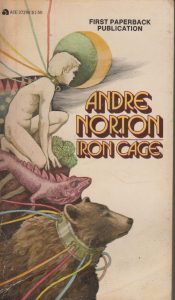
The Iron Cage by Andre Norton. I read this science fiction novel when I was pretty young.In fact, it was first read to me in my fourth grade classroom. It's a fairly straightforward tale but also serves as a not-so-veiled allegory on how we treat animals. As a kid, it really stuck with me and had an impact on how my own empathy developed.

The surprise? That it had such a formative impact, and stayed with me for so long.

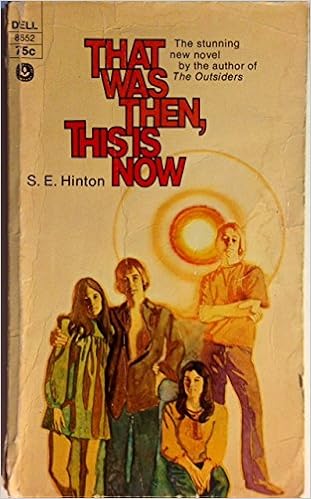
Image result for that was then this is nowThat Was Then, This Is Now by S.E. Hinton. From the author of The Outsiders, this was one I read when I was in middle school. It featured two friends who were as close as brothers, and tells the tragic tale of how their friendship ultimately ended. For a thirteen year old, to see how relationships can change when other people enter the picture, or how far apart people can grow had a big impact on me. When you're young, you think everything, including life, is forever. This book made me realize that maybe it wasn't. It was also one of the most bittersweet young adult books I've ever read, and when I re-read it last summer, it held up very well.

The surprise? How one thin novel brought me face to face with adult realities  and evoked emotions that I still feel as keenly almost forty years later.

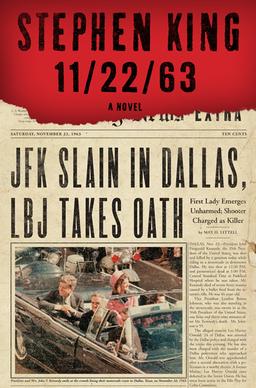
11-22-63.jpg11/22/63 by Stephen King. King has written a lot of good books, and I almost listed Duma Key here, because of how much the death of a particular character affected me. But the scope of 11/22/63, and the questions about human nature, destinty, not to mention time and space, really resonated with me. Are there more realities than the one we experience? Other dimensions? Are they interwoven or separate? What kind of an effect does one small ripple of change have on people's lives?

The surprise? That in the midst of all the metaphysical and alt history machinations, I discovered that King had written an achingly bittersweet (yes, that word again) love story, one that ends in such an honest fashion that I can still feel the emotion of that final scene in my chest as I write this...and I read that book when it first came out almost a decade ago.

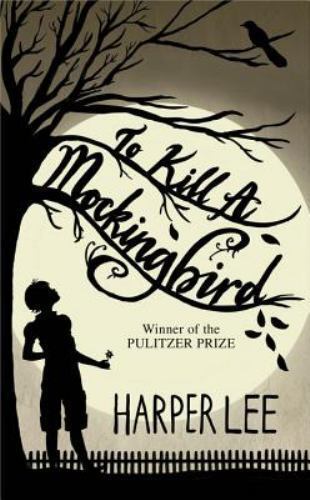
To Kill a MockingbirdTo Kill a Mockingbird by Harper Lee. Okay, true confession. Somehow I never read this in school. I never saw the movie. And if you've read my previous posts, you'll know I grew up in a lily white town in the Pacific Northwest, largely ignorant of the racism that was going on around me. You may also have gleaned that my wife is a middle school Language Arts teacher. Guess what is on the curriculum? Well, when she found out I hadn't read it, she suggested I would like it. I ended up not only reading it, but recording some of the chapters for her course so that students could listen and read along if they wanted.

The surprise? Well, the first surprise was how funny I found Scout and Jem, but the real surprise was how angry the later events made me. Yes, I know it is fiction, but I also know the history it is closely based upon. I'd read accounts of similar events and seen statistics of bad acts like what she depicts, but somehow this fictional account gave it more of a singular face. And that made me angry, and led me to think about the topic in ways I probably hadn't before.

Image result for the last of usThe Last of Us. Okay, I'm cheatng for this last one. It's not a book. It's a video game from a developer called Naughty Dog, available only on the Playstation platform. Why is it on this list? Well, let me ask you this - has a video game ever made your cry for any reason other than frustration?

The Last of Us is a post-apocalyptic tale about Elllie, a young girl whose brain may hold the secret to a cure for the fungal infestation/plague that has turned much of humanity into zombie-like creatures. Escorting her to the location where they can hopefully generate this cure is Joel, a broken man who tragically loses his daughter in the first fifteen minutes of the game. Their relationship is the crux of the storytelling that takes place within (and frankly overshadows) the gameplay. Essentially, this becomes a fifteen-hour, interactive visual novel.

The surprise? I already gave it away. That a story told in this medium had the same impact as 11/22/63 or The Iron Cage.  It just goes to show that good writing is good writing, period.

------------------------------------------------------------------

Blatant Self Promotion Brought To You By Me

Speaking of good writing (hopefully) my new novel, In the Cut, is available now from Down and Out Books.
This novel is the second in my SpoCompton series, which focuses on telling stories from the perspective of those on the wrong side of the thin blue line -- the criminals. 

Boone has been prospecting with the Iron Brotherhood outlaw motorcycle gang for almost a year, trying to earn his patch with the club. When a simple muscle job goes terribly wrong, his world changes forever. He is quickly plunged deeper into a world of drug and intimidation, and the lines between right and wrong blur. The bonds of brotherhood that he forges with other members clash with the dark actions they take. His girlfriend, Faith, represents a danger of another kind, but Boone can’t stop himself where she is concerned, either.


When someone closest to him dies, and rampant rumors of a rat in the clubhouse puts everyone in danger, Boone comes to learn what it really means to live his life…in the cut. 


I hope you give it a try, and are both surprised by the twists in the tale, and maybe even by how much you like it.


Monday, March 9, 2020

No Human Involved

Q: What book(s) surprised you by the impact it had on you?

-from Susan

A: So many, for so many different reasons, at different times in my life. Maybe the thrust of the question is crime fiction books, so I’ll go with that. Casting about in my mental bookshelves for something that fits…

I know! Barbara Seranella’s first mystery, NO HUMAN INVOLVED. Let me quote the review by Poisoned Pen, which gives readers who don’t know her work a sense of the book: “Every so often a first novel is so strong, so original and so well written that it is obviously the beginning of an important career. Seranella has written such a book.”

There’s no one quite like Munch Mancini, a drug addict, motorcycle gang’s mistreated “old lady,” ace auto mechanic, slouching away from anything like authority or the law. Her troubles are grim, and grimy. She doesn’t want people to like her, just to leave her the hell alone. And I could not get enough of her.

While I waited impatiently for the next in what became a series, I learned more about Barbara Seranella, and that staggered me. She had a past a little like Munch’s, had turned her life around, pushed herself to become a writer. Then I met her and was completely wowed. Modest, articulate, generous, honest, always working on her craft. 

So, she and her Munch Mancini series with its look at a rough life affected me then and have stayed with me for decades. Sadly, she died of a disease probably brought on by her former lifestyle, but in the end she lived the life she wanted and triumphed. 


Friday, March 6, 2020

Such a Lazy Boy

By Abir

What element of the craft is the one you most need to improve?


Friday again, eh? The weekend’s almost here, and hopefully a well deserved rest for many of you out there. It won’t be relaxing for me however, because I’ve got two deadlines coming up, (actually one of them was last week, so that’s been missed already) and another is at the end of the month (which I’m also going to miss) and I think, ‘I’ve had twelve months to work on the book I’m supposed to hand in at the end of March, so why am I going to miss the deadline?’ and then I remember that, ‘oh yes, I am very very lazy’.


Actually it’s not quite as simple as that. The trouble runs deeper. It’s true, I am lazy. I’m the sort of person who waits for the last lifeboat to leave the Titanic before getting up off my arse, not because I’m brave, but because the deckchairs are comfy. You don’t believe me? I’ve had two weeks to write this blog post – two whole weeks – and yet here I am, at 8.46 on Friday morning UK time writing it, when it should have been posted several hours ago. (I’ve learned that as long as I have it written before North America wakes up, no one really notices my tardiness). I come on here and I see that some of my fellow writers have their pieces drafted weeks in advance - weeks in advance! -  and I say to myself ‘That’s so sensible. I’m going to start doing that. No more last minute mad rush for me.’ But then of course, the next month comes and I’m still here at 8.46 am wondering what happened.

What was I talking about? Oh yeah, my other fatal flaw (ok, it’s not fatal, but it’s pretty damn ridiculous.) I am a grown man. I am forty-six years of age (I know what you’re thinking, but God gave Indian people genes that means some of us can be in our forties and still look twelve. (It’s actually a curse. I had to grow a beard just to be taken seriously.) But I digress. My point is that I am an adult. I can, apparently, make my own decisions. I know when I’m able to take on new projects or do events, and I know when I should say 'no' because I’m too busy, and yet the fact is I can’t seem say ‘no’ to anything. 

Here are some real examples which I just made up:

Them: ‘Abir, there’s a book group in the Outer Hebrides who’d love you to come along to their bi-weekly meeting. The journey will involve a plane, a boat and possibly half an hour on the back of a donkey. Will you do it? 
Me:  Of course!

Them: Abir. Will you judge this year's competition for best novel written by an Instagram or YouTube star? Warning. Half the text is basically emojis. 
Me: Sign me up!
Them: Great, we’ll send the three hundred and sixteen entries over by lorry next week. Pick the winner by tea time a fortnight from now.

Them: Abir. Would you like to speak to a room full of germ-ridden seven year olds about the importance of time and place in historical mystery writing?
Me: Naturally!

Them: Abir! What do you actually do all day? Will you please get off your fat arse and clean the house?
Okay, that last one’s my wife, but you get the idea.

I say yes to everything, even when I don’t have enough time to do the things I’ve already said yes to. I don’t know why this is. It’s probably something psychological and rooted in my childhood (which means it’s not my fault, and I’m not a psychologist, but if I were, I’d probably blame my dad. Silly old dad – I get my worst qualities from him.) 

Silly old dad. Font of all my bad qualities. He is 96 in this photo. I told you about those Indian genes.


I think I say 'yes' because I just don’t want to let anyone down. But then, I miss their deadlines and let them down anyway. It’s pretty mental. I wish I could say 'no' to more things, but I can’t. What's more, a little bit of me actually does worry that if I did say ‘no’ to more things, and if I did have enough time to meet my deadlines, I’d miss them anyway, because, as I said, I am lazy.

So there you go. Once again Mukherjee fails to make any sort of intelligible dent on the question of the week. But that’s because, as you can see, I have bigger issues to fix first.

It’s 9.38am now. I should really post this before y’all wake up.

Thursday, March 5, 2020

Physician, Heal Thyself from James W. Ziskin

What element of the craft is the one you most need to improve?

This week’s question is a tough one. Many writers are unaware of which elements of their craft they need to improve. If we knew, we’d probably already have corrected them and hit the bestseller lists or won great critical acclaim. 

To answer the question, I’ve decided to look at two elements I do NOT feel I need to improve, and four that I do (might) want to improve.

Here are two areas I feel don’t need improvement:

1. Spelling
This is not usually a problem, what with spell check and editors and my own efforts to get it right.

2. Grammar 
The same. While I’m sure I make mistakes, either intentionally or unintentionally, I consider myself a pretty good grammarian in general. I keep an eye peeled for dangling modifiers, subject-verb agreement, comma usage, and the like. 


So what might I want to improve in my writing? 

1. Speed 
I’d like to produce more than one book a year. But, let’s face it, quantity over quality is not the solution. Also, speed is more about self-discipline than craft. It’s not my typing speed that’s holding me back on my daily word counts. It’s the staring off into space, searching for ideas or the mot juste. I should remind myself that the first draft is just the beginning. Nobody expects it to be perfect, so why should I? And the cold, hard truth is that you can’t get your book ready to send to your editor until you’ve revised it several times. And you can’t revise anything until the first draft is complete. 

Jim’s advice: Vomit the first draft onto the page, and clean it up later.

2. Brevity
Most of my books tend to be on the long side of the mystery genre’s word-count spectrum. The low end of word counts for a novel typically starts around 60,000 words. (By the way, did you know The Great Gatsby is only 47,000 words long? That’s really a novella, not a novel.) Most murder mysteries weigh in at 70,000 to 85,000 words. Thrillers are usually longer. Below is the list of my Ellie Stone mysteries with their word counts.

Styx & Stone, 85,000
No Stone Unturned, 87,000
Stone Cold Dead, 112,000
Heart of Stone, 99,000
Cast the First Stone, 97,000
A Stone’s Throw, 93,000
Turn to Stone, 111,000

So maybe I should pare down my books. But here’s the thing: I enjoy description. I love showing the reader the world through Ellie’s first-person-narrator’s eyes. I realize many readers prefer less description, more action, more dialogue. That’s what makes a horse race. Vive la différence. 

I also like to include the occasional “tail fin,” as I like to call it. Tail fins are details that aren’t strictly necessary to a car’s design. In my books, they are the details that do not necessarily advance the story, but are fun/interesting/informative/decorative. The appearance of Little Leon, the pug that appears in every Ellie Stone book, is a good example of a tail fin. He has nothing to do with any of the plots, except perhaps a tiny influence in No Stone Unturned. He’s there for fun.

3. Appeal

Wouldn’t it be great if my books were irresistible page-turners? Better sales would surely follow the popularity, wouldn’t they? But just what is the secret formula? And would I trade my soul to get that formula? I doubt it. I don’t believe I could write something I didn’t believe in or didn’t love just to make money. So I think I’ll continue writing what I would like to read and hope for the best.

4. Third-person Narrator
My Ellie Stone mysteries are all written in the first person. Some of my short stories have third-person narrators, but I’ve never done it in a novel. I like first-person narrators because they tell us so much about themselves. And they give the author remarkable leeway with some the “grammar” or “stylistic” rules that so many experts toss around. It’s the same with prospective dating partners: personality goes a long way.

There are certainly advantages to third-person narrators, as well, and I want to try writing one someday. But I will do so with a whole different set of expectations, limitations, and advantages not found in the first person. Knowing what’s inside your characters’ heads is just one pro. Or is it a con? I guess I’ll find out.


Wednesday, March 4, 2020

A hundred balls in the air

What element of the craft is the one you most need to improve?

by Dietrich
My aim is to constantly improve every element of the process. I never want to think I’ve mastered anything, and I never want to stop considering new ways. Not allowing things to evolve means the whole process would become stale.

Right from the jump when I started writing, I made the effort to improve my knowledge of grammar, vocabulary, and sentence structure – like the tools of the trade. And from there, I played with genres and styles and ended up balling up a lot of paper, going for three-pointers in the trash bin. 
I played with plotting tight, tried it loose, tried writing standing, lying, and sitting. I learned to keep detailed sheets on each of my characters. A reliable memory just doesn’t cut it, so I learned to make careful notes and keep timelines to avoid making the kind of slips that are so easy to make, and then miss at the editing stage.
I constantly study how people actually speak to and behave with one another, and I bring a version of that to my make-believe characters, letting each of them come to life by sounding unique and real. I also learned to let them show their worlds through their own points of view, without me stepping all over the scenes and taking over the narrative. And I learned to pepper in dark humor, and not to overdo it – just the right amount. I learned to detail the scenes and settings, and to choose the best angles from which to describe them. Putting in all the needed details without letting the overall pace drag, yet allowing those spots where the action needs to slow – when a scene needs to breathe – before picking it up again. 
Working on voice and style, I got to a point where I felt I could keep everything consistent from the start of a novel to the final page. And I learned to tighten everything up going from a first to a second draft and so on. And I learned to edit; and just as important as that, I learned when to stop editing and call the whole thing done.  

Those are the mechanics that I learned and honed. Then there are the things that come by instinct. Like knowing what to put in, and what to take out, whose POV to tell a scene from, when to ramp up tension, or take a sharp corner and throw in a surprise – something I didn’t plan on – the kind of thing a reader wouldn’t see coming from several pages back. And feeling when something’s the right thing to do. 
Every writer’s going to have a best way that works for them, this is just my way. And for me, the creativity wants to flow freestyle, without too many rules or planning standing in the way. Over the years, I’ve gained confidence and become more efficient working through the process, and I’ve learned to trust my instincts. But, I never want to feel I’ve mastered anything, and I’m always looking for new ways to explore, and hopefully doing it better.

Tuesday, March 3, 2020

What is the book about?

Our question this week is What element of the craft is the one you most need to improve?

Terry Shames:

In answer to the question, I’m actually tempted to say “everything.” But in fact, I think I write pretty good dialogue. Everything else? Description, pacing, setting, plot? I could use some improvement.

Plot is the one I feel shakiest about. Readers often say my plots are great, and I’m always surprised. I feel like when I’m writing a book the plot is either too thin or too convoluted. It takes huge effort to wrestle the plot into some kind of coherent thread. I’ve written entire books that, when I got to the end, I realized the plot made no sense. But why? I think the problem is often that I don’t have a clear idea of the premise of the book. I know the characters and have some vague idea of the beginning, but that’s it.

I admire people whose plots seem convoluted and deep, and yet completely understandable. I always wonder how they got to that point. Did they know before they began writing how the plot was going to unfold (i.e., did they map out the book before they began writing), or did it just “grow.” This is more than an “outline” vs. “free writing” question. It’s about what the writer has in mind before she even begins to outline or to let the characters start to tell their story.

The adage is that plot grows from character, but I think something has to come before the characters are turned loose. And that “something” is premise. I often start with an image or a few characters when I think about a book, and it has taken me a long time to understand that those things aren’t enough. I have to get some sense of what the book is about, before I can let my characters loose on the page. If I don’t, no matter what the characters do seem to be nothing more than flailing around.  I don’t have to know the end, but I do have to know what the characters are going to be grappling with. That’s where I need to improve.

Here are some examples of books I’d like to know how the plot unfolded—whether the writers started with an image, a premise, and/or a plot. I wonder if they knew how the book was going to end before they even started.

Susan Bickford’s Dread of Winter. A Short Time to Die, and “Dread” grows organically from the first. I wonder if she knew from the beginning that she would end up with a harrowing story that seems perfectly suited for the setting and the characters from the first book. Did she have any sense of the end? Did she know she would be writing about the difficulty of extricating yourself from  a pernicious situation when you love your family?
I read her first book,


Laura Lippman, The Lady in the Lake. 

I can imagine that this story began with an image, because the opening images are so strong. But did Lippman know how the book would unfold from that image? Did she know what the book would be about? Her writing is so sure-footed that I always wonder if she knows from the beginning what she’s setting out to accomplish.


Deborah Crombie’s A Bitter Feast. I know that Crombie works hard at her craft and that it takes several months to write her books. But what I don’t know is how she comes up with her plots. A Bitter Feast is absolutely solid, a plot that stayed with me for months after I read it. Where did she begin? Did she want to write about chefs and cooking? Did she have an image of the countryside in bad weather? Did she have an actual plot that fit into the scenes before she even began?


Thomas Perry. I most recently read The Bomb Maker and The Old Man. 
Both are tutorials on how to write thrillers. The next time I see Perry I intend to ask him what he starts with—an image, an idea, a plot hook? Does he know the premise—what the book is going to be about?


Other writers that I read everything they write: Catriona McPherson and James Ziskin (two of our 7CM authors).

 I’d love to know how much plot is in their minds when they start their books, and whether they start with a premise, an image, or even a wisp of an idea. 


Rhys Bowen with her Lady Georgie series and her standalones. How does she come up with plot after plot that intrigues and satisfies?


These authors make it look easy, as if their plots are full-blown before they get started. Sometimes I have to write 20,000 words before I know what the book is going to about—and that’s before I even consider what the plot might consist of. Surely there’s an easier way. That’s what I need to learn.

Here's the book that I knew from the beginning what it was about. I can't remember if it was easier to write, but I do know it has remained a favorite:


Sunday, March 1, 2020

If I Could Change One Thing ... Some Self-Reflection by Brenda Chapman

What element of the craft is the one you most need to improve?

One of the constants of writing, as in life, is that there's always room for improvement, I’d say, in every aspect of the craft. Yet this week’s question asks to select the element that gives me the most trouble. 

Hmmm.

The first thing that comes to mind is organization -- i.e., keeping the plot points and details straight. I'm definitely a fly-by-the-seat-of-my-pants kind of writer. After a few chapters, I always think, I really should make notes  ... of the characters, their defining attributes, and plot points. Sometimes, I even start start keeping track. Usually, by chapter ten,  I've mislaid my notebook but instead of stressing, I decide to keep winging it. Keep the momentum going.

The trouble comes when I start backtracking and realize if x happened then y could not possibly. This leads to tinkering, rewriting (sometimes big chunks of text) and a reworking of the plot. I don't always catch the errors before submitting the manuscript. The book can be going through its final review with my editor when one comes to light. For example, in one of my earlier books, I had a character driving a van in the first chapters but the van morphed into a car later on. I only caught this after the book had gone to the printer, but we managed to make the change in time. On a few occasions, the book is already in print when a sharp-eyed reader finds an inconsistency.

Another failing that feeds into this issue is my terrible memory for names. Usually, at least once in a manuscript, I get somebody's name wrong. Happily, my editor has caught most of them but once in a while, an incorrect name slips past all of us. On my urging, the editor has put a note on my file for the copy editor to search for these slip-ups.

I confess that I've always worked best in a bit of chaos. Even back in university, my desk would be stacked with papers and books and disarray. Yet I'd always manage to pull the pages of notes and quotes into a coherent essay ... and those were the days before computers. I probably would have given up writing novels by now if it wasn't for the computer. (I understand there's a software writing program to help with organizing a manuscript but I haven't gotten myself organized enough to order it.)

I can't tell you how many times I've started and stopped cleaning out my office, a space that resembles the inside workings of my brain. The best move I made in this regard was to buy a filing cabinet which I've filled with papers and files that used to  clutter up my desk. I keep meaning to go through the lot when I get a chance, but turns out, I'd rather cut off an arm. (Plus I can't see any of it in the filing cabinet.)

To counter this self-professed element most needing improvement, I'll also provide one where I excel. I'm really good at ignoring mess and carrying on as if Martha Stewart is in charge of my life. I've learned to work around my disorganized self to get done what needs doing, and to not stress about my failing. I've learned to  find happiness in simply keeping the momentum going and closing my eyes to the rest ...

www.brendachapman.ca

Twitter: brendaAchapman

Facebook: BrendaChapmanAuthor

Friday, February 28, 2020

To Be or Not to Be Easy Rawlins or Raymond ‘Mouse’ Alexander

This week's 7 Criminal Minds question: What black character would you want to be for a day? 

by Paul D. Marks

Denzel Washington as Easy Rawlins
As a sort of Part II to my last 7 Criminal Minds post (Easy Does It), in which we were asked to talk about “a source of inspiration you’ve derived from a black American author,” and where I talked about Walter Mosley and his characters Easy Rawlins and his psychopathic friend Mouse, in response to this week’s question, I would have to say that I’d want to be either Mouse or Easy for a day.

Part of me would rather be Mouse. He doesn’t care who he fucks up or what he does. But much as I like Mouse and his quick-draw instant retribution and justice, part of me would rather be Easy for a day…because it would be easier since, for the most part, he lives a normal middle class life.

Mouse is probably always looking over his shoulder, paranoid, waiting for someone to pop him. And while this happens to Easy sometimes and he gets into that frame of mind I think it’s less so for him and he lives a more normal life. He’s a property owner, he has kids and a house. He has friends. I’m not sure Mouse has many true friends. Some yes. But with a guy like Mouse are they friends or friends out of fear? Do they really respect him or do they just fear him? I think, on the other hand, Easy is actually respected and has friends who like him for himself.

Don Cheadle as Mouse
Yet, on the other hand, Mouse knows the streets. It would be hard to sneak up on him or get something by on him. Mouse is the guy you want backing you up and Easy goes to him when he needs fearless muscle.

Mouse
Mouse is (mostly) loyal and a good friend, but that doesn’t mean an insult, perceived or otherwise, won’t set him off to the point of almost killing you, or even going all the way in that regard.

Walter Mosley
Mosley says of Mouse at Crime Fiction Lover ( https://crimefictionlover.com/2013/06/interview-walter-mosley/ ) “I always describe Mouse as small with rodent features—a light coloured [sic], light eyed black man who would kill you without a moment’s hesitation. The contradiction of his appearance and potential is what makes him so scary.”

Don Cheadle as Mouse (center)
Easy was born in 1920. And I’ve often said, when asked what other time I’d like to be born in, that I’d want to be born in 1920, then I’d be twenty in 1940. Do my bit in World War II, hopefully survive, and come out into the mid and late forties noir world. Okay, I know it wasn’t so great on a lot of levels, but there is that swing music, those noir movies, and those hats and trenchcoats.

And who wouldn’t want to be played by Denzel Washington in the movies? Who wouldn’t want to be the good guy like Easy, who saves the day?

All that said, fuck it, I’d rather be Mouse.

Raymond 'Mouse' Alexander
~.~.~


And now for a little BSP:  I’m running a free promotion for people who subscribe to my newsletter. You can get a FREE e-copy of my novel Vortex. Just subscribe. And if you’re already a subscriber and want the novel contact me via my website or e-mail and I’ll send you the link for the download.


I'm also excited to announce that I've got a new book coming out in 2020: The Blues Don't Care. It's a little different for me. It's set in 1940s Los Angeles jazz scene during World War II. I hope you'll keep checking in for more news on this exciting new release.


***


Please join me on Facebook: www.facebook.com/paul.d.marks and check out my website  www.PaulDMarks.com