Friday, September 7, 2018

Favorite Lesser-known Writers

What’s your favorite lesser-known novel? Who are your favorite lesser known writers? In your genre and outside of it? Why? And have they influenced your work? How?

by Paul D. Marks

Well, that depends on what/who you mean by lesser-known? One person’s lesser-known author is another’s major influence. But that aside, I’ve been influenced by a lot of people and books at one time or another. The standards, like Raymond Chandler, Ross Macdonald and James Ellroy—my favorites. I’ve also been influenced by movies, especially film noir. And certainly not lesser known, but outside of our genre, Alexandre Dumas and The Count of Monte Cristo, the ultimate revenge story. Also, Somerset Maugham, especially The Razor’s Edge, which influenced me in so many ways both in regard to writing and also life.

So, those are some of my influences from major writers. Now to answer the question and I may have mentioned some of these before, but they’re worth mentioning again. Some may not especially be lesser-known, or at least weren’t in their day, but they might be somewhat forgotten today. And in no particular order:

The Tartar Steppe by Dino Buzzati: a novel about waiting for something that never happens—and no, it’s not about waiting for your clams in some snobby restaurant so you can put tartar sauce on them. And no, it’s not about waiting for some guy name Godot. A soldier is posted at the Tartar Steppe, hoping to be called upon to show his courage and bravery in the glory of battle. Time slips by—he grows old—and the wished for attack and chance for glory is always just beyond the horizon. Lots of subtext here.
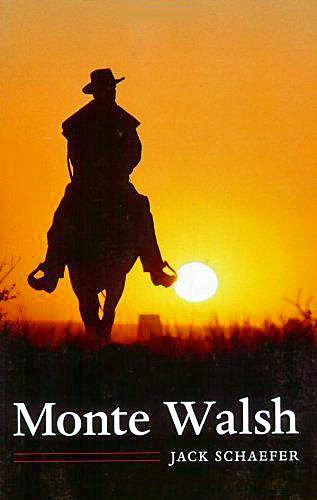
Monte Walsh by Jack Schaefer (who also wrote Shane), and The Shootist, by Glendon Swarthout. Both were made into movies. Monte Walsh was made twice, first in 1971 with Lee Marvin and then in 2003 as a TV movie starring Tom Selleck. I like both versions. And The Shootist was John Wayne’s last movie. And, as with movies, they were all changed a bit from the books they’re based on. But I truly love the books. Both are about people who’ve outlived their times and their usefulness. The world is changing, modernizing, passing them by. A theme I both like reading about and writing about. And it is something I write about a fair amount, people out of time—people who’ve outlived their time, so to speak. “Dinosaurs” who don’t understand the rapidly changing world around them.

Tapping the Source: These days Kem Nunn is arguably better known as the co-creator of the TV series John from Cincinnati, as well as a writer on Sons of Anarchy and Deadwood. But he’s also the author of, I believe, six novels. Tapping the Source (1984) is his first and is something special. If it’s not the novel that invented the “surf noir” genre it’s certainly an early and foundational entry. This is not the Beach Boys’ version of sun, sand, surf and surfer girls, but a much darker vision of life on SoCal’s storied beaches. Ike Tucker, an aimless young man, treks to Huntington Beach (a.k.a. ‘Surf City’) to find his missing and possibly dead sister. There he gets hooked up with bikers, sex and drugs. No Gidgets or Moondoggie’s here. And Ike will be lucky if he gets out alive. I like this one so much that I looked into acquiring the film rights. Unfortunately they were already taken. Now, if whoever has them these days would just make the damn movie already. Tapping is good for anyone who loves surf, sun and murder.


David Goodis: Of course, I probably mention Goodis a lot. And he’s probably better known today than years back when I discovered him and had to settle for ratty paperbacks in used book stores as his books were out of print. Dave Moore's description of Goodis as the "poet of the losers" is an apt portrayal of his stories about people on the skids. Best known for Dark Passage and Down There, two works made into films. The first with Bogart and Bacall, the second a French movie by Francois Truffaut under the title Shoot the Piano Player. The former takes a good novel and makes it better, the latter takes a great novel and is played out of tune. Down There is a great novel that works with Goodis' favorite theme of people not being able to escape their pasts—and is my favorite Goodis by far. Nobody can escape their past in Goodis, including Goodis. And if you want to find out more about him check out Goodis: A Life in Black and White by Philippe Garnier, recently translated into English. And my short story Born Under a Bad Sign, originally published in Dave Zeltserman’s HardLuck Stories magazine is my straight out attempt at a Goodis-type story and an homage to him. Now available in the collection L.A. Late @ Night  ( https://www.amazon.com/L-Late-Night-Mystery-Streets-ebook/dp/B00I9289HM )


John Fante has sort of come into his own in the last decade or two. A movie was made of his most famous book, Ask the Dust. It didn't quite capture the magic of the book, as gorgeous as it is to look at. Ask the Dust is a must-read for any writers living in Los Angeles. If for nothing else but to marvel at how someone could eke out a living writing short stories. It’s also a must read for anyone interested in L.A. The setting is downtown Los Angeles in the 1930s, in the “shabby town,” in Raymond Chandler’s words, of Bunker Hill. I discovered Fante and this book before the new surge of interest in him and was so impressed that I wrote to him at his home. Unfortunately he was already so sick by then that I didn’t hear back, or maybe I wouldn’t have anyway after some of the things I’ve heard about him. He was known to be an angry man. But a great writer.


Here’s some other “lesser-known” writers and books I like, though I’m not sure how lesser-known some of them really are: White Noise by Don DeLillo, various Paul Auster books. Walker Percy’s The Moviegoer, Steve Ericson’s Days Between Stations. Soldier’s Home, a Hemingway short story, and if I had to pick one favorite short story from any genre this would be it, for a variety of reasons. And so many more.

***

Thanks for stopping by. Tell us some of your favorite lesser-known authors and books. And I’d love to hear your comments, though I might not be able to respond right way, but I appreciate your stopping by.

***

And now for the usual BSP:

Broken Windows, the sequel to my Shamus Award-winning novel, White Heat, releases on September 10th and is available for pre-order now at AmazonBarnes & Noble and Down & Out Books.


Peter Anthony Holder interviewed me for the Stuph File. It’s short, 10 minutes. You might enjoy it. It’s episode 0471 at the link below. And check out the Stuph File too:


And I was also interviewed by Dave Congalton at KVEC radio: 


Please join me on Facebook: www.facebook.com/paul.d.marks and check out my website www.PaulDMarks.com

Thursday, September 6, 2018

A Walk Along Lonely Street (but with a good book, which makes all the difference)

"READING: What’s your favorite lesser-known novel? Who are your favorite lesser known writers? In your genre and outside of it? Why? And have they influenced your work? How?"

Catriona writes: I'm at Bouchercon, in St Petersburg. But by lucky chance one of my favourite people on this little blue-green planet is on a blog tour to celebrate her new novel. Lillian Bell is a staunch friend, a terrific writer, and one of the very few who could make a funeral home adorable. 

Lillian, over to you!


Every once in a while, you read the exact right book at the exact right time in your life for it to have maximum impact. I’ve been lucky. It’s happened to me a few times. Most of the books have been pretty well-known, but one of them isn’t: Heartbreak Hotel by Gabrielle Burton.

I read Heartbreak Hotel at about the time it came out in 1986. It was on the New Book shelf at the library. I was a big library user, largely because I was super broke and couldn’t afford to buy books and I was also pretty unhappy and books were my escape from the unfortunate situation I’d managed to get myself into.

I picked the book because of the title. I’m a huge Elvis Presley fan. How could I pass up a book with that title, even though the cover copy made it absolutely clear that the book had nothing to do with the song?


It was a wild book. I’d never read anything like it and I haven’t read anything like it since. It was magical realism swirled with experimental fiction baked in a crust of feminist manifesto with sprinkles of dark humor scattered over the top. (Yes. I may be watching too much Great British Baking Show.)

In terms of plot, it followed seven women living in the Heartbreak Hotel in upstate New York. They’re all on rest leaves from the Museum of the Revolution, a museum about being a woman with exhibits like the Menstrual Show, a revue performed in redface. The museum is about to be closed down and one of the women is in a horrible motorcycle accident and is in a coma and somehow all the women are the same woman even though they’re different, except maybe they’re not. To me, it was about all the many facets of who we can be and how they don’t have to be mutually exclusive and maybe really can’t be mutually exclusive and how we’re all lost, but can help each other find our ways through because we’re all connected.

I was in my early twenties and really trying to figure out who I was supposed to be and how I was supposed to get to be that person. I felt like Burton had written Heartbreak Hotel personally to me, down to choosing a title that would catch my eye. After I read her book, I started taking steps that would eventually lead out of my unhappy situation.

Heartbreak Hotel won the Maxwell Perkins Prize for outstanding first novel. I figured Burton would have another one out in a year or two. That’s how those things work, right? I made sure to check for books by her nearly every time I went to the library.

None came.

Years went by. Eventually she wrote a screenplay for a movie directed by one of her daughters and starred in by another one of her daughters and a novel about the Donner Party. Burton died in 2015. I would have loved to meet her to tell her how much her book meant to me and how it was one of the things that gave me the courage to get myself out of that unhappy situation. I’ll always be a little sad that I didn’t manage to do that.

Is there a book that you’ve read just when you needed to read it? A book that spoke to you on some kind of soul level? Did you let the author know?

Lillian Bell lives and writes in northern California and feels very lucky to be doing what she does where she does it. She also writes as Eileen Rendahl, Eileen Carr, and Kristi Abbott. She is hoping to add one more pseudonym so she can be a basketball team all by herself. 

Find her at:www.EileenRendahl.comwww.KristiAbbotAuthor.comwww.Lillian-Bell.com


Wednesday, September 5, 2018

Going rogue...COVER REVEAL! by Cathy Ace


The photograph was taken by Emma Mugford, born and raised on the Gower peninsular, South Wales

This post will appear on the day I travel to, and arrive in, Florida for Bouchercon 2018, and it’s also the day I am choosing to show off the cover of my forthcoming novel THE WRONG BOY. The book will be released on 9th January 2019 – so if you’re a Brit that’ll be 9.1.19, if you’re in the USA it’ll be 1.9.19, and if you’re in Canada…well, take your pick!

I promise to let you know when it's available for pre-order. It will be published in hardcover, trade paperback, and as an e-book.


The book will soon be available as an ARC, and the cover art is still, therefore, susceptible to detail-changes, though the overall vision will remain. I hope you like the look of it, and that it’ll whet your appetite for what is something of a departure for me. I’ll do my best to respond to comments as I traverse the continent! Here’s the cover blurb:


THE WRONG BOY by Cathy Ace

Perched on a Welsh clifftop, the ancient, picturesque hamlet of Rhosddraig has its peaceful façade ripped apart when human remains are discovered under a pile of stones. The village pub, The Dragon's Head, run by three generations of women, becomes the focal point for those interested in the grisly find, and it’s where layers of deceit are peeled away to expose old secrets, and deep wounds. The police need to establish who died, how, and why, but DI Evan Glover knows he can’t be involved in the investigation, because he's just two days away from retirement. However, as the case develops in unexpected ways, it becomes irrevocably woven into his life, and the lives of local families, leading to disturbing revelations – and deadly consequences ...


(Pronunciation note: Rhosddraig is pronounced: Ross as in the man's name; th as in the; ri as in ride; g as in gag, so ross-th-ri-g = Rhosddraig)

I'd be honoured if you'd consider reading my work - you can find out about it, and me, here: cathyace.com


Tuesday, September 4, 2018

Who Are You?


 READING: What’s your favorite lesser-known novel? Who are your favorite lesser known writers? In your genre and outside of it? Why? And have they influenced your work? How?

Terry Shames

People who have heard of Eudora Welty often think of her as that little old Southern maiden lady who wrote gentle, well-bred, short stories. Having read every word she wrote more than once, I think she could rightfully by called one of our best American writers. And there is nothing gentile about her stories—including her novels. Her richly descriptive language is full of violence, her stories full of the threat of treachery, betrayal, and discord.

Her atmosphere is often one of dread, and rightfully so, because many of her characters are one step from losing their tenuous grip on dignity. Since she writes humor with a sure hand, that often serves to mask the dread just below the surface. Take away the humor in one of her most famous stories, “Why I live at the P.O.,” and you see a family story full of betrayal and disappointment. As funny as its narrator is on the surface, she’s deeply wounded by her family.

Welty’s book Losing Battles is as epic as any American novel, but hardly known at all. It should take its place alongside anything by Faulkner, or, more currently, Daniel Woodrell.

If I have an influence, it has to be Miss Welty. In fact, in a critique of the first short I ever wrote outside of school, Max Apple gently said it was too obviously a bow to Eudora Welty’s work. He went on to say that a budding writer could do worse that to emulate a writer she admires, but that in the end I had to develop my own voice. I hope that while I did develop my own voice, I kept the sense of uneasiness that Welty’s work has, along with a touch of humor.

By the strangest luck, in Berkeley, CA, I lived next door to a woman who grew up down the street from Eudora Welty. She said her memory was of a woman whose door was always open, and that she was often to be seen sipping a glass of bourbon. I love to think of her as sitting at her desk, glass close at hand, think up wicked ways to torment her characters—which is what most crime writers do.


As for lesser known writers in the mystery field, I often pick up a book and read with great pleasure and at the end wonder why the author is not better known. I’ve sung this song before, but I don’t understand why Timothy Hallinan’s books are not in every airport bookstore. I love Don Winslow’s books, but I’m baffled why his books went viral while David Corbett’s books are lesser known. Both Corbett and Hallinan write deeply satisfying books that not only have a mystery, but also probe the human condition. They are books you have to think about and savor. That isn’t to take away from Winslow’s books; just to say that those two writers deserve the same wide audience. A truly lesser-known, this one from the past, is James McClure. He writes about a team of detectives, one white, one black in apartheid South Africa. His descriptions are sure-fire, his plots fascinating. It baffles me that he is not on everyone’s list of classic crime writers. I’d like to say that McClure influenced me, since I read him when I was young, but his books are muscular and haunting, while mine are more intimate.


There are so many underappreciated women crime writers! The books of Rachel Howzell Hall come to mind. I read her books when I was on a panel with her, and I think she will one day have the wide audience she deserves. Although J. Carson Black is a New York Times best-selling author (for real), I don’t think her books get the recognition they deserve. She plunges the reader into the story with as sure a hand as John Lescroat, but doesn’t have nearly the name recognition. There are too many to go into here, and for a more in-depth look at the extent to which female writers, not just in crime, but in all aspects of publishing are undervalued by publishers and reviewers, I suggest taking a look at this article: https://psmag.com/social-justice/gender-bias-in-book-reviews.


Monday, September 3, 2018

Thanks for the memories...and the inspirations

Q: What’s your favorite lesser-known novel? Who are your favorite lesser known writers? In your genre and outside of it? Why? And have they influenced your work? How?

- from Susan

Today, Anthony Trollope is a lot lesser known than he should be, less well known than he was in the mid 19thcentury when he published one of my favorite Trollope novels Barchester Towers. It’s a wonderful story of ecclesiastical politics set in the cathedral city of Barchester, England as a new bishop is to be installed. The old bishop was well-loved and the local Church of England priests kind of assumed someone of his gentle kind would be appointed. But…of course it gets complicated and heated and there are heroes and villains. 


In addition to enjoying Trollope’s omnipotent and occasionally snarky narrator, a devise that is is anathema in today’s fiction, I love hating his chief villain, a really dreadful cleric named Slope. The author’s ability to create a character so petty, so slimy, so underhanded impressed me when I first read the book a million years ago, and all over again when I read it a few years ago. I know what Rev. Mr. Slope is going to do, but I wait, spellbound anyway. “He has a pawing, greasy way about him,” Trollope’s narrator says by way of introduction. 

Don’t you love it? Some day, one of my novels will require someone like the Rev. Mr. Slope and I will go back and pore over Trollope’s ability to make me turn the page quickly to find out what the bastard has done now!

Louise Ure is less well known as a crime fiction writer, but that’s only because she stopped writing mysteries and changed direction after several wonderful books, among them her award-winning debut, Forcing Amaryllis, and The Fault Tree,about a blind woman’s race to catch a killer. Louise once told me she wouldn’t ever try that again – really hard to develop a detecting method that eliminates sight from the investigator’s tool box! She influenced me in many ways, but most importantly by becoming my mentor and cheerleader before I even had an agent, answering my dumb questions about the business and helping me with my query letter. She wrote the first blurb I ever received, and I still treasure it. 


I want to throw in one more name, not because of her fiction, but because she wrote a book that was a revelation to me: Bird by Bird, by Annie Lamott. I first read it sitting in a losmen (guest house) in a rice paddy in Bali and it was like a drug mainlining into my body and soul. Write, write, write! I’ve never forgotten the surge of adrenalin it gave me, every page. If ever a writer influenced me to believe I could do it, surely it was funny Annie telling tales on herself, nudging the reader to stop whining and making up reasons not to sit down and get to it.