Friday, March 1, 2024

How to Write a Query, an Outline, or a Synopsis, by Josh Stallings & friends

Q: A query, an outline, and a synopsis walk into a bar, and a writer/bartender has a panic attack. Publishers and agents often want one or all of these thinga-ma-jobbies. Any advice for writers who are flummoxed by how to create them?


A: Truth time, I wrote this question hoping I wouldn’t have to answer it. I have skated by never having to learn how to write a good query, outline, or synopsis. The entire idea flummoxed me. A smart person is one who knows a lot of facts, a wise person is one who knows what they don’t know, and whom to ask for help.


I have been blessed to know many very smart writers and publishing professionals. Here are four brilliant friends who each in their own way tackled these problems and broke them down to simple steps and modes of working. I’ve learned much from them and I know you will too.


From Amy Moore-Benson Literary Agent: 


As an agent – a publishing professional who receives multiple queries a day – the query is everything. And every writer should put the work into getting it right before sending it off. It’s the writer’s one opportunity to get through the door, to make enough of a positive impression to engage an agent, to create a sense of interest and urgency to compel the agent to ask for more. I think of it as the same as the relationship between back-cover copy and a potential book buyer: there needs to be enough plot to make a reader think, “Wow, what next…?” and enough distinctive voice to make a reader think, “I want to experience how this story is told.”


The fact that your query should be professionally conceived is a given. Do your research, know what the agents you are querying are looking for, what they’re selling. Make sure that the description of your work is concise and has a narrative flow, not too long (for me, max two short paragraphs), and that it is infused with your voice, your confident and unique writerly calling card. Only use comps if they’re interesting and accurate, and add something biographical that doesn’t sound like a resume.


An outline or a synopsis are what I turn to after I’ve asked for the manuscript, after I’ve read enough to know I’m interested in the work to want to know where the story is going. They are a necessary part of the process, but for me, they should be straightforward and logical, and should give me the confidence that you know your story.


****


From Victoria Helen Stone, WSJ bestselling author of Jane Doe. Her upcoming book, FOLLOW HER DOWN comes out June 4th.


I hate writing synopses. Absolutely HATE them. Given free rein, I’ll start writing a book with just a basic idea of where I’m going, because at the beginning, I don’t know these people. I know their backstory and what nightmare I’m going to drop them into, but how they’ll respond? How they’ll think and act out and plan and regroup? I have no idea until I spend time with them.  


Tragically, my publisher doesn’t seem to trust that I’ll (probably) puzzle out the plot eventually. When I’m under contract, they ruthlessly demand blood. And by blood, I mean an outline.  


So here’s my trick: after spending years plodding through ten pages of boring plot points, I’ve started including dialogue. That’s the flavor. The spicy meat of the story. Not point A to B to C, but my actual writing voice and the personality of the people in my head. Instead of describing how the characters react to chaos, I sprinkle in a few exchanges, a few disagreements, some funny asides. This makes it so much easier for me to write, and I assume it’s easier for my editor to read too. 


Now once the publisher has the outline and I get my approval? Well, who’s going to remember the exact story I proposed when I turn in the manuscript six months later? My editor has been living a busy life the whole time. And so have my imaginary friends. 


****  


From Jamie Mason who writes more whydunnits than whodunnits because the why in stories is her favorite part. She is the author of Three Graves Full, Monday’s Lie, and The Hidden Things.


It’s not like writing a novel isn’t hard enough. I understand why we have to write queries. But understanding it doesn’t make me hate it any less.

All the advice I have here for querying probably mostly applies to written queries. It’s the only kind I’ve ever done. In all honestly, I don’t understand in-person pitches for novel-length written material. I mean, it’s great and all if you can conjure up your inner salesperson and put your query material into a competent song and dance. I’m just not much of a performer. Asked to pitch my book out loud and I’m just as apt to swallow my own tongue as getting anything useful out.

It’s always made more sense to me to pitch a page on a page.

But maybe if you get a good query summary written down, you can rehearse it in front of the mirror and find a way to make a short speech out of it.

Anyway.


As far as I can tell, the query serves two purposes: to demonstrate that you actually know what you’ve written, and to show a prospective agent or editor that you’re not a crazy person.


The horrible part is capturing the interest and essence of what you’ve accomplished in 100,000 words in less than two hundred or so.


One thing I’ve found helpful and effective is to go to one of your favorite lines in your story. Something that when you wrote it made you go awwwwww yeah, hell yeah. Revisit it and see if it can be repurposed as an anchor for a recap of what happens in your story. Not all great lines will work, but it’s worth a try. If you can explain what in the story got you to that great line, what was happening in the plot that resulted in that run of seven to twenty brilliant words, you might be on the way to the framework for a query-style summary of your novel.


There’s also a trick that I guess I would call “layering.” But you have to do this one quickly. You can take one straightforward, unadorned sentence to articulate the main problem that incites your plot. Maybe two sentences—absolutely tops. Then come in with the razzle dazzle of how the problem is actually much worse than all that for your protagonist.


Basically, I would say polish the setup and wrap up the query summary with assurances that it all gets resolved to immense satisfaction. Make the problem really sexy and you can exit the query summary with a knowing nod and wink conveying that you sorted it all out by The End, rather than attempting to explain all the twists and turns.


As for the rest of the query—the part where you give the impression that you’re not a crazy person—it’s pretty basic. Don’t compliment your own work. You’ll look like a crazy person. If you have relevant life experience that makes you extra qualified to write the type of story or characters you did, great! If not, don’t try to make it sound so. You’ll look like a crazy person. Probably don’t go on about how much you like to read or how much you’ve always wanted to be a writer. It’s kind of a given and if you make too big a deal of the obvious, you’ll sound like a. . . you get the idea.


A longer synopsis, if asked for, can be less frustrating than a query, but not by all that much. Some of the same sensibilities that work for querying also apply to writing a synopsis. In fact, last time I wrote out a full synopsis, the first two paragraphs were my query summary and then I just fleshed it out, point-by-point, in the rest of the document. In a summary, you’ll have to describe a little more about how the sausage of the resolution gets made.


I think in a query you have to show some flair. You have to do it in “voice”. I guess that’s why I like to use the query summary as an opener for a synopsis, because then you can switch into a more school-book-report style and just explain what happens. That way, you’ll show what you do artistically and then don’t have to reinvent the wheel of your novel to explain what happens in it.


As for anyone asking for an outline, I just have to really, really hope this doesn’t happen anymore. I do outline my work, but for my own purposes and in my own style. If anyone wanted to see that, I might as well send them a paper bag with some onion rings and a few Viking rune stones in it for all they will be able to make of it.


I hope this helps anyone out there in one of these hard parts of this hard business. My heart is with you. Best of luck! 


****


From Lenore Van Horne, editrix extraordinaire:


I have a super foolproof method for query writing, it’s an easy formula and it goes like this:


Paragraph 1: Your name, title of book, word count, genre, is it a series?, one-two sentence longline. 


Why do we need this? So that the reader (agent, editor, whoever) knows a little bit about it, like if they represent/publish your genre, or if you’ve for some reason written a 200,000 word rom-com…stuff that we need to know before committing further to the project.


Paragraph 2-3: Your mini-synopsis. Hold a sec for how to write this until we get to the synopsis part. But a couple of quick notes. Just focus on the protagonist, their wants, the roadblocks in the way, and the overall journey. No detours.


Last Paragraph (or, the “about me” paragraph): This is just a value-add so if none of these things apply to you, you don’t need this paragraph. Just say thanks for reading, hope to hear back, and go on about your life (riddled with anxiety until they get back to you). If you DO decide to include this paragraph, it should only (ONLY) contain the following:


1) Anything that makes you a “professional writer,” you’ve got an MFA, you’ve published multiple non-fiction journal articles (yes, this counts), you’ve won an award, you have published other books, you are the president of your local writing group…this sort of thing.


2) Anything that makes you an “expert” on your topic. Your book is about serial killers and you, yourself, are a serial killer (hopefully this doesn’t apply). Your book takes place in Spain and you spent 3 years there, drinking wine and communing with Guernica. Your protagonist is a lawyer and your parents were both lawyers and you escaped to become a writer…that sort of thing. 


3) Anything that makes you independently marketable. You climbed Mt. Kilimanjaro with Johnny Cash. You won an Olympic medal. Something that if you were being interviewed you could talk about over and above your book. (Hordes of social media followers go in this category, too.)


That’s it. You’ve got your query letter. As an FYI you’ve also got your in-person pitch if you’ve got your query letter. Same dealio, you just sit down and start with, “My name is, I’ve written x book, it’s x words long, and this genre…” and go on from there with your query letter. Just out loud.


Okay, now time for the scariest thing about the submission process: The Synopsis. I’m not joking. This IS the hardest thing for a writer to write. How to condense your brilliant 80k word baby into one page? It’s impossible. So here’s my quick and easy cheat. Pretend that you were up all night reading your own book. It was SO good you couldn’t put it down. The next morning, you’re meeting a friend for coffee and they say, “Why do you look so tired?” And you say, “You have to read this book.” Well… “What’s it about?” Now answer that! First practice doing it with a movie or book you’ve recently read. Record yourself on your phone giving the synopsis to someone else. You’re going to see what you focus on, what you leave out. Then do it for YOUR book. Transcribe what you say. Then polish it a little. That’s all there is to it. 


****


It’s Josh again, I wanted to thank these four brilliant creatives for taking the time to help educate me and our readers. All of them are busy people who prove what I discovered a long time ago about the writing community, reach out for help and they will reach back. They pay it forward and backwards and sideways. If you have questions don’t hesitate to ask, if I don’t know the answer I know somebody who does. 

Thursday, February 29, 2024

Two out of three ain't bad, by Catriona

A query, an outline, and a synopsis walk into a bar, and a writer/bartender shoots themself. Publishers and agents often want one or all of these thinga-ma-jobbies*. Any advice for writers who are flummoxed by how to create them? 

*In Scotland,"jobbie" means turd. An extra layer of meaning to the question, I say.

And onto the question - which is three separate questions. Or rather, it's one question about writing and two questions about not-writing. 

The question about writing is "how to outline". My answer is . . . not a clue. Not a scooby-doo. My guess would be . . . write down what's going to happen in the book you're planning? 

If you're a outliner/plotter, or think it sounds like fun, scroll down and read Eric's post from yesterday. If you're a non-outliner/pantser, or think it sounds like fun, then come with me, Gentle Reader. But either way, don't worry about it. Neither method, nor any mixture of them, is better or worse than the other and it won't show up in the finished book.

Pantsing that first draft is messy, mind you

I hope no one mistakes my "dunno" for veiled advice. The related and frequent question "Should we or shouldn't we outline?" is unanswerable. God, I wish it was unaskable. It doesn't matter! We are all free to write that Anne-Lamotty first draft or produce a lavish outline and I cannot for the life of me work out why anyone cares what anyone else does. It's right up there with "Mac or PC". 

However, the other two bits of the question - regarding queries and synopses - are a different matter entirely. If we want to pursue tradional publishing, with an agent, we need to write queries and synopses. How? Well, I would say we need to pull on our big knickers, remind ourselves that there is no job in the world where every last sub-task is pure joy, and crack on with it. It's not writing; it's not worth the angst of a writer.

Querying is admin.  Hang on, not quite.  But it is ancillary to writing, like choosing a laptop or attending a convention. So it's fine - maybe even preferable - if your query letter is brisk and business-like even though your prose style is lush and lyrical. I'd say a good start would be Janet Reid's Query Shark website. Anything I wrote here would be duplication. Maybe even theft.

Synopses are admin. No, they're not, but I liked the echo. It too is ancillary to writing, like  designing new bookmarks or updating a website. It won't be a surprise to hear that I can't write synopses until I've finished the first draft of the book - until I've chipped it out of the ground without breaking any bits off, as Stephen King puts it. Which is not to say I've never done it. I've recently written one-page synopses for books 7, 8 & 9 in the Last Ditch Motel series - complete with titles - and I'm hoping that A. I forget what I promised before I try to write it and B. no one at Severn House holds me to it over the next few years. They're more aspirations than they are manifestos.


But a jacket-copy-style zippy synopsis of a book that's out of my head and onto the paper? Love 'em. I can even write them for other people (and have done several times). What Eric said yesterday is spot-on. You need to be able to recognise what the grabby bit is and what you can miss out. 
How do you recognise the grabby bit, though? It's helpful to think which bits of the plot would be in the trailer of the film. That keeps your jacket-copy-style synopsis spoiler-free, for a start, and forces any kind of synopsis to stick to big, clear moments that don't need too much set-up to make sense. 

My only further advice is to miss out great big chunks - whole sub-plots and entire characters - rather than trying to snip away until you've got a smidge of everything. It's like a buffet: I'd always rather have a lot of a little than a little of a lot.

As well as that, I'd advise to name the main character early. Mary Higgins Clark's method of starting each chapter with a character's name has never been bettered, as a way of handling POV switches: so simple, so effective. The same goes for synopses. The fewest further characters you can get away with naming, the better.

I've read every word she ever wrote

Also, I'd counsel you to say where the book takes place. Does that sound too obvious? Would you prefer to allude to a landmark or a custom, rather than say "in Chicago" or  "across England"? I'm not convinced a synopsis is the place to be leaving a trail of breadcrumbs, frankly. Even if the book itself is a crime novel with twists like a pretzel that's needing a pee. Because synopses aren't writing. 

Cx

Wednesday, February 28, 2024

To sum up… by Eric Beetner

A query, an outline, and a synopsis walk into a bar, and a writer/bartender shoots themself. Publishers and agents often want one or all of these thinga-ma-jobbies. Any advice for writers who are flummoxed by how to create them? 

 So this is the post where I fear I make a lot of enemies. I don’t mind synopses. I outline all my books, and I’ve rarely had to query. 
Still with me? 
The synopsis can be a daunting task to many writers, but I feel like most people overthink it. It’s really just a boiled down version of your story. But let’s boil that down even further – it’s the hook. That thing that made you write the story in the first place. The thing you’d read on the back cover that makes you take the book home. I find far too many books miss this crucial step in the execution of the full novel. (perhaps this happens when people don’t outline? Who’s to say?) 
But if you’re cornered at a party and it slips out that you’re a writer, invariably someone will ask what your latest book is about. Do you start from page one and tell them chapter by chapter the entire story? No. You give them the hook. You give them that first twist that makes us want to know more. And here’s a tip when you’re writing the full manuscript: if that hook doesn’t happen until page 50, rethink the top of your book. How many times have I picked up a book and read about it inside the jacket flap and then had to slog through 20, 30, 40, 50 pages of nothing until we get to that thing you used to sell me the book in the first place. THAT’S your story. Start there. 

 As for outlining – again, you’re overthinking it. We all outline. Yes, even you pantsers. Don’t pretend you don’t, because I’m here to tell you that you do, in that you go through the same process, just at a different time that an outliner. At some point, we all make up the book from a blank page. Whether you make it up in notes and bullet points or you make it up in paragraphs and chapters, it’s the same thing. You get it all down after thinking it all up. I feel that creating an outline makes the writing easier and allows me to be more focused and concentrate on prose and details when I get into the scene, because I already know the basics of it. Some people don’t, and that’s fine because it works for them. No wrong answers. 
If you want to wing it, again, you’ll end up in the same place, just at a different time. You’ll do it in revisions. I have very light revisions and you’ll never hear me complain about a messy first draft. That notion has got to go. “Your first draft should terrible,” is, to me, the WORST writing advice you can ever give or get. 
Why would you not work to make the first draft as close to the real thing as you can? You don’t build a house with crooked walls, holes in the roof and no bathrooms and think, “Eh, I’ll fix it later.” That would be crazy, right? 

 As for queries, don’t try to write them for what you think someone wants to read. Be honest about your book and return to that spark that made you take the weeks, months or years to commit to write that book in the first place. If it was that interesting to get you to go through the process, then it should be good enough to hook and agent or a publisher. If it doesn’t, then they story isn’t for them and no amount of spit and polish you put on it will fix that. Surely we’ve all read some big best seller that didn’t connect with us. You just don’t get how that could have been the talk of the town last summer. Well, someone loved it. Taste is subjective. The market is vague and shifting like smoke. Write for you. Describe your story in a way that would make YOU excited to read on. You’ll find that kindred spirit who feels the same way and that’s the right agent or publisher for you, not the one who was tricked by your fancy query letter. Then you hand in the manuscript and they want to change it all around because it’s not the same voice in the query. Give them you and your style, right from the first thing they read of yours. It’ll save you agony later. 

 So to synopsize this – don’t overthink it. Get to the core of your story and trust it. 

 With that in mind… My new novel, The Last Few Miles Of Road is hot of the presses and it is about Carter McCoy, a 72-year old man who just received a terminal diagnosis. With his final days he decides to make a bold choice and do something he’s thought about for decades: to kill the man responsible for his daughter’s death. But Carter is no killer…yet. Can he right this injustice and still remain the man he has been his whole life? And once you kill, can you ever go back?


Tuesday, February 27, 2024

Walk That Talk by Gabriel Valjan


A query, an outline, and a synopsis walk into a bar, and a writer/bartender shoots themself. Publishers and agents often want one or all of these thinga-ma-jobbies. Any advice for writers who are flummoxed by how to create them?


I’d rather endure a visit to the dentist than write any of these items because they all sound like lingerie ads to me, or worse, descriptions for wine or perfume.


A refresher for those who don’t know the subtext. The query letter should have a Hook aka Log Line that “grabs” the agent. Everyone is pressed for time, mere seconds to read an email. Sorry, that is the harsh reality.


A Synopsis should state word count, identify genre and the potential audience for your work. Translation: the What and Why. Word count gives an agent and publisher an idea of print costs and an estimate for an editor’s time. Savvy authors will often bypass these headaches if their Log Line is catchy, memorable, and does the work for them.


Here’s a trifecta for Benjamin Stevenson’s Everyone in My Family Has Killed Someone:


Knives Out and Clue meet Agatha Christie and The Thursday Murder Club.


A chef’s kiss. This opener has cinematic and literary allusions, and it cleverly identifies several demographics for an audience.


I’ll be honest. I’ve not heard of authors asking to submit an Outline until after there is an active interest in the manuscript. The good news is that there’s plenty of great resources on how to craft a query letter, a Log Line, and synopsis that would make Don Draper envious. I recommend readers plumb the depths of sites, such as Career Authors, Jungle Red Writers, and the Education and Webinars at Sisters in Crime.


Since most submissions are online, make sure you follow directions. If an agent wants a synopsis that is 100 words, they don’t mean 150. You are not that special exception. You’d be shocked at how many authors do not format their manuscripts properly or have the correct margins. If you can’t follow simple directions, you’re telegraphing a potential problem.  


Where my advice may differ from others on today’s topic is that I strongly encourage writers to take advantage of conferences. Almost all of them have Pitch Sessions or workshops on how to write the Items above or practice your 20-second elevator pitch, and these masterclasses are often taught by agents. What not to do is as important as what to do right.


Present yourself as a professional at conferences. Impressions count. Agents will look at your social media and web site, in part to see how you do marketing and what image you project. I don’t, for example, respond to trolls. I don’t express my personal opinions. At worst, I am a cipher. At best, nobody can say anything negative about me.


My take is nobody knows what will sell tomorrow, and reading tastes are subjective. Focus on making a connection so the conversation continues. Be prepared for opinions. Don’t take rejection personally, and remember that people are people. There are jerks and there are stand-up individuals. An agent may love your work but may not know if they can sell it. Let’s not delude ourselves: this is a business and writers may write for love and dream of champagne and press junkets, but agents, like us, need to pay the bills.


I’ll repeat it: research. See if you’re a fit. The mechanics of writing a query, synopsis, and outline can be learned. In addition to meeting agents at a conference—and face time is not to be underestimated, along with a business card in hand—talking to other writers can save you time and grief. Authors are people and they have experiences, so talk to members of your tribe. Take what they say with a grain of salt, but there’s often an element of truth in the drink at the bar or water cooler. Writers have introduced other authors to their agents, and the rest is history. A door otherwise closed has opened, and someone walked in. Learn who is excellent, who works hard for their clients, and who doesn’t. You’ve paid a hefty price to attend a conference, probably traveled far, so take advantage of the time there.


Monday, February 26, 2024

Hurdles to Publication


Q: A query, an outline, and a synopsis walk into a bar, and a writer/bartender shoots themself. Publishers and agents often want one or all of these thinga-ma-jobbies. Any advice for writers who are flummoxed by how to create them?


From Susan


I remember how high a mountain it seemed to write that query letter for the first book, how much advice, some of it contradictory, we got in classes and workshops and writing groups. Like most of us, I sweated bullets trying to be sparkly and smart and concise and friendly and informative and brief and specific to the agent’s professed interests and positive without being egotistical. I probably wrote it twenty times at least, had it shredded by fellow classmates, wrote again, and got to the point where it became so much harder than writing the 75,000 word novel. I confessed my desperation to a published, award-winning author and member of SinC, who, blessed be her, took me on as a mentee and helped me set aside all the internal finger-wagging and led me to a good final version. She even let me use her name and a brief blurb she wrote for me in the query as a way of saying I really had written something work looking at. It worked and the agent used some it in in her pitches to publishers. I’ve never had to write another, for which I am deeply grateful.  


Advice re queries, 18 years later: Agents are even more inundated with pleas for representation now. Their requirements for communication are strict and I have been told that the smallest violation by someone submitting may get their email dumped because agents need any way they can find to stem the avalanche. Second bit: use every honest, legitimate touchpoint you have to get their attention. You met them at a conference – mention it specifically and thank them for even a brief moment of connection there. A published author they know or represent has recommended you to their attention. (Make sure that author has given you permission to use their name.) There’s more but there are other sources than me, a handful of whom will be covering this in the coming days, so stay tuned.


Outline: Ugh. I’m awful at it, fortunately never had anyone ask for it. To me, they’re soulless and only prove the author can write an outline, not enticing text.


Synopsis: Ah, now, there’s a format I’ve learned to like. This will sound crazy, but the biggest obstacle for me was sharing the solution to the mystery before the synopsis reader read the book. I can write flap copy easily, but that only includes the hook, not the cooked fish! Agents might request a one, two or four-page synopsis and with any of them I think there are a couple of vitally important things to keep in mind. The agent is looking for the same level of tasty prose they expect to see if they then ask for pages. Don’t rush it and miss the opportunity to show your talent and creativity. Even with a tight word limit, don’t give up a few telling details of character, or setting, or tension. Second, the agent wants to see how well you’ve organized your story. Don’t skip around, don’t waste space on back story or flashbacks or side explanations or history of the setting. Focus, focus, focus is critical here. You can do it because you were focused enough to write an entire manuscript that is in the best shape you’re capable of making it before submitting. 


Be strong, be brave, be creative and be optimistic!


MURDER AND THE MISSING DOG is up for pre-order and comes out in early March. It's set in my favorite Burgundy town, includes more than one mystery, and was fun to write. I'll be doing some guest blogs (and will talk more about it next time I'm up here) and a few appearances. I hope to catch up with you somewhere! 


Thursday, February 22, 2024

Of dragons - and the human quest to dominate nature - by Harini Nagendra

 What is the most surprising book you’ve read in the last few years? 

This week's question is a tough one. As we all have, I've read so many books that moved me to tears, annoyed me, got me angry, feeling dejected, feeling positive - all shades of the rainbow. But what's been the most surprising? I had to think for a long while.

And then, when I got the answer, I was surprised - how obvious it seemed in hindsight.

So, dear readers, wherever you are - here is my most surprising recent read. Although I picked up the first in the series over ten years back, it's still the only book that comes way at the top of my list. 

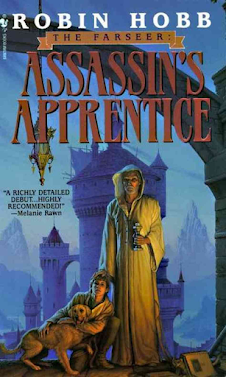
And that would be Robin Hobb's Farseer series - starting with the first book of the first trilogy, Assassin's Apprentice, and going all the way to the last book in the last trilogy, Assassin's Fate. 


For those of you who love discovering new series and authors, you're in for a real treat if you haven't read Hobb yet - while I like her other work, including the Soldier's Son series (set in a different time and space), and the Liveship series (set in the same world as the Farseer series, but with a different set of characters) - I don't think they hold a candle to her other Farseer series: beginning with the Farseer Trilogy, and then moving to the Tawny Man Series, then the Rain Wild Chronicles, and finally, the Fitz and the Fool trilogy.

So many books. And surprising, I said. Why surprising?

Apart from writing 1920s historical mysteries, in my alter life I am an ecologist. As someone who teaches one of the classic dismal disciplines, speaking of topics as grim as climate change, biodiversity collapse and pollution to young people, it is clear that there are no easy techno-fixes for the world. Moving to renewable energy, driving electric cars, finding biodegradable alternatives to plastic - yes, we need to do all of this, and much more. BUT - unless we, as humans, rethink our approach to dominating the planet, and understand that nature is far bigger, grander and more intricately organized than we can fathom in our very utilitarian imaginations - we are doomed to failure.

Science and scientists have tried, and failed, to communicate this to the rest of the world. But fiction can succeed in a way that science cannot manage alone. Hobb speaks to these big picture issues in her work. While I don't want to get into the specifics of the story - please do read the books - she imagines a world in which dragons used to dominate the skies, and shape the rhythms of everyday life, but vanished forever one day - hunted, caged, and butchered by people. The question at the heart of the book is this - what happens to humanity, when we no longer have nature - nature at its grandest, most terrifyingly dominant - to remind us of our own finitude, our limitations? 

We grow arrogant.

The heroes at the heart of the book set out to rescue dragons, restoring them to the world of people. Not because they are biodiversity enthusiasts, or dragon aficionados. Not even because returning dragons to the world will be good for humanity. But they do so because we need dragons - to be reminded that we are only one of the species that live in our planet, to be reminded of the need for humility, introspection, and of wonder. 

Magic is wonder. Nature is magic. And writers like Hobb, by keeping us in touch with our inner selves, remind us of these important issues.

Are there books that did the same for you? I'd love to know about them... 

A Secret Surprise from James W. Ziskin

What is the most surprising book you’ve read in the last few years? 

It took me some time to decide how I was going to answer this week’s question. Because the book that most surprised me in recent years was one I had little interest in reading. I didn’t know how to present the book without sounding condescending or dismissive about the subject matter.

Let me explain. I’m not a fan of comics. I don’t read them and I don’t watch movies about superheroes or anyone traipsing around or swinging above the metropolis in tights and a cape. A couple of years ago, a book called SECRET IDENTITY came out. It was a mystery set in the comics industry in 1970s New York. Award-winning author Alex Segura wrote it. I know Alex from writer conferences and we’re friends on social media. We were even up for an Anthony Award once. (He won.) Alex is wildly talented and a stand-up, good guy, too. So when I started hearing great things about SECRET IDENTITY, I decided to leave my comfortable little bubble and explore something I wouldn’t ordinarily read.

LINK TO PURCHASE ON AMAZON

And, as things turned out, SECRET IDENTITY surprised me. Delighted me. I was floored by it.

Maybe it’s the way Alex writes dialogue. Easy, natural, but sharp and on point. Or maybe it‘s the way his characters are so distinctive, believable, and engaging. So rich and unexpected. Odious one minute, seemingly sincere the next. Never stencils or borrowed from popular imagination.
Or maybe it’s his voice and the layered emotional description. Alex takes his time to show us what his characters do, think, and wonder. How they debate with themselves before giving a response. This patient storytelling pulls you in deep. You know these people better. You might dislike them or despair at their bad decisions. But they’re full and real, not just stock characters, placeholders, or clichés. I found myself growing more impressed—and I confess, somewhat jealous—with each chapter read.
Anyway, never mind all that. Whatever it is that wowed me, Alex wrote one hell of a book. His heroine, Carmen Valdez, is a sparkling character. She sizzles in only the most contentious ways. Her courage, her foibles, her bad choices, and her talent all conspire to make her unforgettable and iconic. An inspiration to girls, boys, women, and men, the underrepresented, the dreamers, and even the patriarchy. At least she is if those folks are paying attention.
Alex’s feel for the 70s, his portrait of a decaying, bankrupt New York City, and the incestuous comic book industry are painted to what feels to me like perfect authenticity. Remember, I knew nothing about comics and, in all honesty, I hadn’t been interested in learning anything about them. But this book showed me how wrong I’d been.
SECRET IDENTITY got lots of attention and earned starred reviews from Publishers Weekly, Kirkus, and Booklist. It was named one of NPR’s best mysteries of the year, and was a finalist for the Barry and Lefty awards. Finally, it won the prestigious Los Angeles Times Book Prize for Mystery/Thriller.
My advice is to read this book. Like me, you might be surprised.

Here’s the synopsis, provided by Macmillan Publishers: 

It’s 1975 and the comic book industry is struggling, but Carmen Valdez doesn’t care. She’s an assistant at Triumph Comics, which doesn’t have the creative zeal of Marvel nor the buttoned-up efficiency of DC, but it doesn’t matter. Carmen is tantalizingly close to fulfilling her dream of writing a superhero book.

That dream is nearly a reality when one of the Triumph writers enlists her help to create a new character, which they call “The Lethal Lynx,” Triumph's first female hero. But her colleague is acting strangely and asking to keep her involvement a secret. And then he’s found dead, with all of their scripts turned into the publisher without her name. Carmen is desperate to piece together what happened to him, to hang on to her piece of the Lynx, which turns out to be a runaway hit. But that’s complicated by a surprise visitor from her home in Miami, a tenacious cop who is piecing everything together too quickly for Carmen, and the tangled web of secrets and resentments among the passionate eccentrics who write comics for a living.

Wednesday, February 21, 2024

Moved by THE HELP

What is the most surprising book you’ve read in the last few years?

by Dietrich


It’s hard to boil it down to just one book, but here goes . . .


While I loved the movie, The Help, it wasn’t until some time later I read the book by Kathryn Stockett, and wow, I was blown away. It was such a treat to read, a balance of hope, courage, with a good mix of humor.


It’s powerfully written and set in 1962 Mississippi, turbulent times indeed. The story looks at women subjugating women, inequality and civil rights in that time and place.


The details around the setting paint vivid pictures, and Stockett has a keen ear for dialogue too, it’s perfect and adds much to bring the main characters like Skeeter, Minnie and Abileen to life. Although they all seem world’s apart, the women come together and form a wonderful bond, while dealing with hate and mistrust all around them. And the characters will stay with you long after you set the book down.


And to think this was Kathryn Stockett’s debut novel. It’s an instant classic, and I’d put it on the top shelf right next to To Kill a Mockingbird. I can’t wait to see what her next novel’s going to be.


Tuesday, February 20, 2024

Surprise!


Terry here, with an interesting question this week: What is the most surprising book you’ve read in the last few years? 

 I read so much that I thought it would be hard to choose. In thinking about this question, I wondered whether it means the most surprisingly good book or the most surprisingly bad book. Whether it means I was surprised that a writer I considered pedestrian came up with a gem of a book—or vice versa, if someone who I thought of as a stunningly good writer laid an egg. 

I decided on a different tack. A writer I was unfamiliar with who surprised me. I went to my trusty Reading lists, which thank goodness I started keeping a few years ago. I didn’t have to work hard to find what I consider the most surprising book I’ve read in a while. Most surprising for several reasons. 

 The book is Dance of the Returned, by Devon A. Mihesuah.
Briefly, it’s about American Indian time travel. Leroy Red Bear Ears is the instigator of the portal to the past for this Choctaw tribe. The book is beautiful and poetic. The reason it surprised me is that I don’t generally go in for paranormal books. I like sci-fi and time travel, but woo-woo turns me off. And this book is seriously woo-woo. But I loved it. Which goes to prove how good writing can sweep away a reader’s hesitation. 

 I would never have read the book if I hadn’t been invited to moderate a panel at Tucson Festival of Books last year. The panel was a strange one in that the books written by the three writers on the panel had almost nothing in common. One was a techno-thriller, one a police procedural, and this American Indian time travel book. What they had in common, though, was an ability to write great characters in chilling situations. The time travel in "Dance" was fraught with a hint of danger that was largely felt rather than apparent. 

 Mihesuah is a member of the Choctaw tribe and a serious writer. She mostly writes non-fiction about American Indian culture. But a few years ago she got the urge to write fiction centered on the non-fiction work she’d done. I don’t know if she discovered her poetry or knew it was there all along, but her words are lyrical, the descriptions lush, and the story grounded. It think the latter is why the story worked so well. Even though you know that mystical time travel is happening, it feels real and substantial. 

I highly recommend it if you're looking for something a little out of your zone.

Sunday, February 18, 2024

Surprising Reads

 What is the most surprising book you’ve read in the last few years?

Brenda

This question is a thinker. I usually like to have a crime fiction novel on the go, but I belong to a book club, and our choices range far and wide. I'll therefore pick from both categories.

I suppose in the 'surprising' crime fiction category, I'd have to go with Denise Mina's standalone Conviction. I'd read many of Mina's books, my favourites including her Paddy Meehan series, but Conviction is original and a departure from her other books that I'd read up until that point. It is a 'Reese's pick' and New York Times Best Novel of the Year, so not too shabby accolades. My book club also read and loved this book to a person - best accolade of all! Here is the synopsis on the Amazon site:

The day Anna McDonald's quiet, respectable life exploded started off like all the days before: Packing up the kids for school, making breakfast, listening to yet another true crime podcast. Then her husband comes downstairs with an announcement, and Anna is suddenly, shockingly alone.

Reeling, desperate for distraction, Anna returns to the podcast. Other people's problems are much better than one's own -- a sunken yacht, a murdered family, a hint of international conspiracy. But this case actually is Anna's problem. She knows one of the victims from an earlier life, a life she's taken great pains to leave behind. And she is convinced that she knows what really happened.

The writing is what makes this a stunning read, in my opinion. And being a fan of Mina's earlier work, it is refreshing to read an accomplished author stretching, growing and taking on new challenges.

Now as for the most surprising 'literary' or general fiction book that I've read recently, the award goes to Yellowface by R.F. Kuang. The manager of a local bookstore recommended it to me, saying it was 'hilarious'. My reaction to the story was the opposite -- I found the book troubling and depressing, to be honest. Topics of privilege, appropriation, authenticity and power structures within the publishing industry are raised. The random way a book is picked to be a bestseller is painfully mapped out, and the role of social media in making or breaking an author is also portrayed. The stunning thing for me about the book is how many industry taboos the author speaks bravely about, albeit fictionally. The plot is like a train wreck that you can't take your eyes off of until it reaches its inevitable climax. All in all, a worthwhile and illuminating read for those both in and outside the publishing industry.

Website: www.brendachapman.ca

Twitter (X): brendaAchapman

Facebook & Instagram: BrendaChapmanAuthor